

For business owners considering the luxury SUV market, understanding vehicle maintenance is crucial. The Infiniti QX60 has emerged as a popular choice, praised for its blend of luxury and utility. However, discerning whether it qualifies as a high-maintenance vehicle requires a close examination of its maintenance schedule, warranty offerings, and overall reliability. This article delves into three key areas: the standard maintenance schedule that dictates service intervals, the manufacturer’s comprehensive warranty and service program designed to mitigate ownership costs, and the reliability of the engine and transmission that underpins long-term performance. Together, these factors will illuminate whether the Infiniti QX60 is a sound investment for the budget-conscious business owner.
Balancing Act: How the QX60’s Routine Care Keeps It from Crossing into High-Maintenance Territory
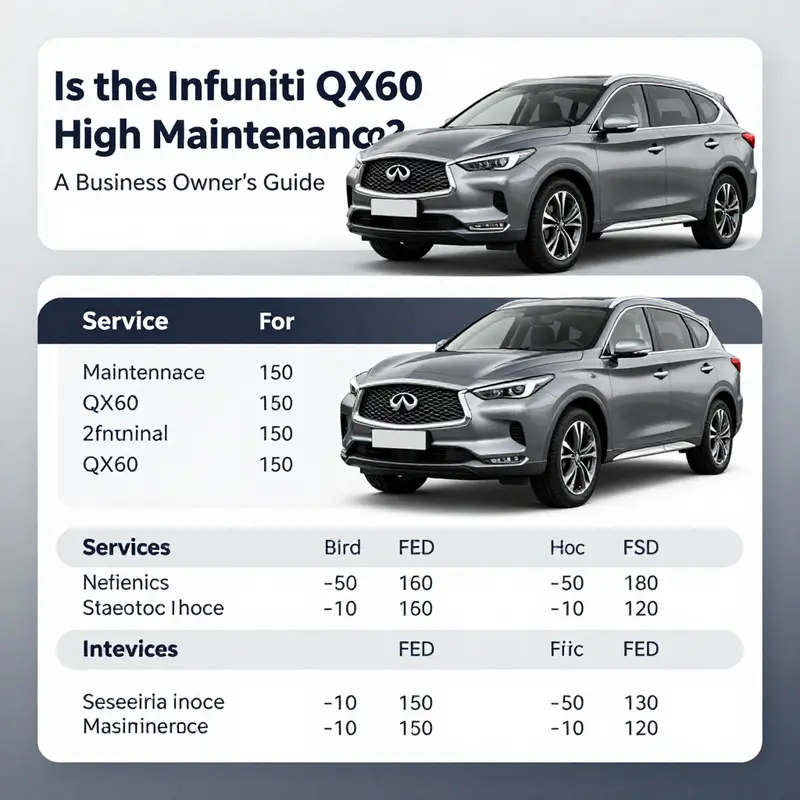
When contemplating any luxury family SUV, a common fear surfaces: will the vehicle demand more time, more attention, and more money than it’s worth? For the Infiniti QX60, the answer rests in the rhythm of its routine care. This chapter explores why the QX60’s maintenance profile leans toward the mainstream rather than the realm of high maintenance, and how that profile holds up over time for drivers who prioritize reliability, predictability, and value. The baseline is simple: maintenance is structured, predictable, and backed by a substantial service program that shifts some cost and inconvenience away from the owner during a critical period of ownership. The vehicle’s core powertrain—a robust 3.5-liter V6 paired with a continuously variable transmission—anchors this narrative. In real-world terms, a powertrain that behaves with steady confidence tends to reduce the emotional and financial volatility that often accompanies more complex systems. The CVT, when tuned for durability, is less a reminder of drama and more a signal of efficiency and smooth operation. Even when a hybrid variant joins the lineup, the underlying transmission architecture remains a CVT, designed to deliver a unified experience rather than a chorus of specialized repair requirements. This foundation matters because maintenance burdens are rarely isolated from the components that drive performance, efficiency, and daily usability. The calendar and the odometer, not surprise bills, shape most owners’ perception of the vehicle’s upkeep. The QX60’s maintenance schedule reflects that reality: services are recommended at consistent intervals, with tasks that are common across many mainstream SUVs. The standard protocol calls for attention roughly every five thousand miles or six months, whichever comes first. This cadence aligns with mainstream expectations for an everyday family SUV that sees a mix of highway, city, and weekend driving. The services bundled into that rhythm are intentionally straightforward: oil and filter changes to protect the engine’s longevity; tire rotations to even out wear and preserve grip; a thorough brake inspection that looks at pads, rotors, and lines; and fluid checks for coolant, brake fluid, and transmission fluids. The emphasis is not on chasing exotic failure modes but on catching wear and tear early, before it cascades into more costly concerns. The predictability of these intervals is empowering for owners who track maintenance with reminders or a log. It’s not merely about routine tasks; it’s about creating a straightforward pattern of care that translates into consistent performance and reliable responses from the vehicle when it’s needed most. The maintenance itself is designed to be manageable, which matters more than it might appear at first glance. When a maintenance schedule feels approachable, drivers are more likely to stay on track, which in turn reduces the risk of neglected service that can lead to serious issues down the line. This is a meaningful distinction from vehicles whose maintenance demands are less predictable or more expensive as mileage climbs. In this respect, the QX60’s routine care is a practical feature in its own right, one that enhances ownership satisfaction by making the upkeep feel predictable rather than burdensome. The vehicle’s comfort, quiet operation, and reliability benefits from this disciplined approach to service, reinforcing the sense that the QX60 is a well-rounded tool for daily life rather than a project car in disguise. A crucial element in this story is the complimentary maintenance program that some buyers inherit when they purchase the vehicle after mid-2020. Infiniti introduced a Carefree package that covers a substantial stretch of early ownership: up to six years or 120,000 miles, whichever comes first. During this period, essential items such as engine oil, oil filters, gaskets, and the basic labor required for routine servicing are included. This is not a cosmetic perk; it translates into real, tangible savings that reduce the out-of-pocket cost of the standard maintenance tasks that keep the engine and its supporting systems healthy. It also has a psychological benefit. When a new owner starts their journey with a built-in maintenance cushion, the perceived burden of ownership shrinks. The car remains reliable, and the owner experiences fewer anxious moments about the next service appointment or the next bill after a service visit. The gains are not only financial; they are also experiential. The sense of stewardship that comes with a well-maintained vehicle feeds a smoother ownership experience. Yet every owner will eventually cycle beyond the complimentary window, just as with any vehicle, and that reality shapes long-term planning. After the free maintenance period ends, the ongoing responsibility shifts back to the owner. The question becomes not whether maintenance is necessary, but how to approach it in a way that preserves value, comfort, and performance without turning upkeep into a financial burden. The good news is that the QX60’s design and service philosophy typically render this transition manageable. With its core reliability and a maintenance framework that emphasizes routine tasks, the vehicle maintains its value well relative to many luxury rivals whose systems may demand more frequent attention or higher repair costs. The practical takeaway is straightforward: the car rewards regular attention with consistent performance, predictable costs, and a degree of financial predictability that is often valued by families and busy professionals who need a dependable weekly routine. The state of the drivetrain, the health of the CVT, and the integrity of the hybrid components all ride on the same steady maintenance rhythm. This cohesion matters because when maintenance tasks are well-timed and well-executed, the likelihood of unexpected failures drops. Owners are not faced with sudden, high-cost repairs in the middle of life’s busy seasons; instead, they encounter a steady, manageable cycle of service that supports daily usability. In other words, the QX60’s maintenance profile—defined by its simple, predictable intervals, the broad scope of routine services, and the security of a generous complimentary program—frames ownership around reliability and practicality rather than perpetual upkeep stress. It is a profile that, over time, becomes part of the vehicle’s value proposition. It signals a user experience defined by ease of ownership, rather than the murkier path of high-maintenance assumptions. For prospective buyers who weigh the cost of maintenance against the social and practical needs of a family vehicle, this is a decisive factor. It reframes maintenance from a fear of expensive repairs into a clear, actionable plan that aligns with everyday life. A reader might wonder how these maintenance patterns translate into real-world costs and sentiment. The answer lies in the blend of routine tasks and the protection of a service program that offsets the most common, recurring expenses. It’s not merely about the cost of an oil change or a tire rotation; it’s about the reduced anxiety that comes with knowing many of these needs are covered for a substantial portion of ownership. Couple that with a robust warranty framework surrounding the vehicle’s engine and powertrain, and the net effect is a vehicle that stays on the road—where it belongs—without becoming a frequent source of financial friction. As with any vehicle, the experience of maintenance is filtered through individual use. Drivers who rack up high annual mileage, frequent short trips, or operate in extreme environments may find the maintenance window needs to adapt in practice. Short trips can shortchange the engine’s warm-up process and battery, while dusty or extreme-temperature environments can accelerate certain wear patterns. Yet even in these conditions, the maintenance schedule remains applicable; it simply becomes a matter of applying the guidance from the owner’s manual more conscientiously. The essential idea is that predictable, manufacturer-guided service intervals help prevent small issues from blooming into bigger, costlier concerns. When owners view maintenance as a proactive rather than reactive discipline, the QX60 behaves like a steady tool rather than a high-maintenance liability. The vehicle’s reputation for reliability does not emerge from a single component or feature alone. It emerges from the integration of a well-documented maintenance cadence, a level of service accessibility, and a powertrain that performs consistently under a broad range of conditions. The result is a vehicle that adapts well to family life, long road trips, and daily commutes alike. To anchor this discussion in practical terms, consider the maintenance guide as a map. It points owners to the important nodes—oil, filters, tires, brakes, and fluids—while keeping the route simple enough to follow without constant detours or surprises. The value here is not just in what gets serviced, but in how often and how transparently it can be planned. The simple truth is that a vehicle whose upkeep is straightforward and whose service program reduces immediate out-of-pocket costs is less likely to be categorized as high maintenance. The QX60 embodies that principle through a combination of clear intervals, comprehensive coverage during the early years, and a powertrain that inspires confidence. For readers exploring the broader landscape of luxury family SUVs, this combination often translates into better total cost of ownership and a more predictable user experience. The narrative of maintenance is, in many ways, a narrative of peace of mind: knowing that essential care is both practical and affordable, and that the vehicle’s essential systems are tended to on a schedule designed for real life, not for showroom drama. If the goal is a vehicle that can carry a family with assurance and dignity, then the QX60’s approach to maintenance deserves a closer look. It reminds us that high maintenance is not merely about the diagonal line of a repair bill or the complexity of a system. It’s about the total ownership experience—the friction between care needs and the convenience of addressing those needs. In this sense, the QX60 refuses to be boxed into a high-maintenance stereotype. It offers a balanced blend of routine care, predictable service costs, and a commitment to making maintenance as painless as possible for a broad range of drivers. This is the core message: maintenance, when structured and supported, can be a strength rather than a liability. If you want to explore the idea further and see how routine care can translate into practical wisdom, consider starting from a broader definition of vehicle maintenance and how it informs ownership decisions. In particular, you can read about the fundamental concept of vehicle maintenance here: What is vehicle maintenance. That primer helps frame the kind of disciplined approach that keeps the QX60 from drifting into high-maintenance territory while preserving the comfort, safety, and reliability that modern families expect. For those who want to verify how this kind of maintenance philosophy is reflected in official guidance, a visit to the manufacturer’s information page offers a baseline set of expectations for service intervals and coverage. External resource: https://www.infiniti.com/vehicles/qx60.html
null

null
Steady Pulse, Steady Costs: Examining the Infiniti QX60’s Engine and Transmission Longevity Against Long-Term Maintenance Realities
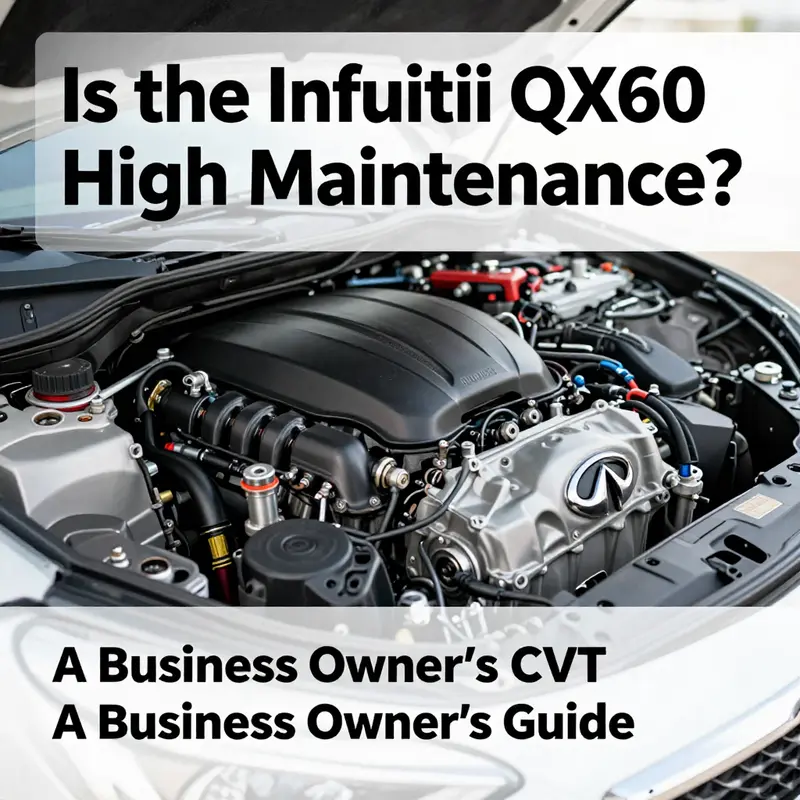
The engine and transmission of a mid-size luxury SUV are often the most telling indicators of how a vehicle will wear with time. In the case of the Infiniti QX60, the relationship between design intent and real-world performance emerges most clearly when one looks beyond sticker prices and initial wow factors. The core powertrain—a robust V6 paired with a continuously variable transmission—creates a dynamic balance between power, efficiency, and longevity. Long-term ownership data reinforce a narrative that is sometimes overlooked in early-ownership hype: with diligent maintenance, the QX60’s heart can beat steadily for many miles, offering dependable daily performance rather than fleeting bursts of luxury speed. That reliability becomes especially relevant when evaluating whether the vehicle is high maintenance or aligned with mainstream practicality. The portrait that develops from owner reports and industry analyses shows a durable powertrain that, when treated with respect, can outlast many expectations held for vehicles in this category. In other words, reliability here rests not on exotic engineering but on disciplined upkeep and clear maintenance planning, a combination that keeps the vehicle performing well as it ages.
At the center of this reliability is the balance achieved by the engine’s design and the transmission’s implementation. The 3.5-liter V6 delivers a predictable torque curve and smooth power delivery that suits the daily needs of a family-focused SUV. While a CVT can raise eyebrows among drivers who associate it with a lack of traditional gear changes, the Infiniti implementation has built a following for its durability in real-world use. The CVT’s role is to maintain steady propulsion while maximizing efficiency, a pairing that, when maintained properly, minimizes abrupt load fluctuations that can hasten wear. The hybrid variant, which combines the same V6 with an electric motor, continues to rely on the CVT setup, but its hybrid architecture adds another layer of efficiency without forcing the drivetrain into more aggressive or abrupt operation. In this context, the reliability story becomes less about novelty and more about consistency, a trait that matters when a vehicle is expected to function as a family workhorse and road trip companion for many years.
One of the clearest signals of long-term viability comes from ownership data that track how far these vehicles travel before major reliability concerns arise. Notably, a sizeable portion of owners—roughly forty-four percent—achieve at least 200,000 miles over the vehicle’s usable life. That statistic does not guarantee every owner will hit four figures without incident, but it does suggest that with regular care, the powertrain can endure well beyond conventional lifespans. In the context of a luxury SUV, this is meaningful. It speaks to a design that prioritizes dependable components and sound engineering choices rather than one that courts novelty at the expense of durability. The implication for prospective buyers is straightforward: if the goal is a vehicle that remains capable and comfortable over many years, the QX60’s engine and transmission offer a credible path to that outcome when supported by consistent upkeep.
Understanding the long-term maintenance needs starts with recognizing the maintenance cadence prescribed by the manufacturer. The QX60’s service philosophy emphasizes regular, timely attention to critical wear points rather than sporadic, extensive interventions. The official guidance recommends that fundamental services occur at every 5,000 miles or six months, whichever comes first. After that, the schedule scales to a more standard cadence of 10,000 miles or 12 months for the major services. This rhythm is characteristic of mainstream family SUVs, a cadence designed to prevent minor issues from becoming major expenses while keeping the vehicle operating at peak efficiency. The implication for owners is practical: with consistent service, the engine remains well-lubricated, seals stay in good shape, and the overall health of the powertrain remains robust over time. A routine oil and filter change every 5,000 miles, paired with timely tire rotations every 5,000 miles, contributes not only to the engine’s longevity but also to the reduction of drivetrain wear. Fresh oil protects the cam and bearing surfaces, while tire rotation protects the drivetrain by distributing wear evenly and preventing imbalanced loads that could strain the transmission, differential, or axle components.
For a vehicle where family life, school runs, and long-distance road trips are common, the predictability of maintenance becomes a practical virtue. The QX60’s routine oil and filter changes, alongside the regular rotation of tires, create a stable baseline of maintenance that reduces the likelihood of unexpected failures. When the maintenance is performed with the recommended intervals, the engine’s internal tolerances stay within design limits, which minimizes the chance of heat-related wear and unseen deposits that can accumulate with neglected oil changes. The CVT, meanwhile, benefits greatly from clean lubrication and a balanced drive load. While CVTs often provoke concerns about longevity due to their unique design and sometimes different maintenance needs, the real-world experience of Infiniti owners has frequently indicated that a properly maintained CVT can deliver years of dependable operation, particularly when combined with a comprehensive service plan and faithful adherence to the manufacturer’s guidelines.
An additional layer of reassurance for those weighing long-term ownership is the brand’s maintenance program introduced for vehicles purchased after mid-2020. The Carefree package, available during the early years of ownership, covers up to six years or 120,000 kilometers of no-cost basic maintenance. This program typically includes essential items such as engine oil, oil filter, gaskets, and labor for routine service, all designed to reduce the immediate out-of-pocket burden for new owners. The practical effect is to lower the total cost of ownership during the most intensive maintenance period, a factor many buyers consider carefully when evaluating the ongoing affordability of luxury features in the context of daily driver use. The value here is not just the dollar amount saved, but the signal that the manufacturer recognizes the importance of routine maintenance as a cornerstone of long-term reliability. When this complimentary maintenance window ends, the owner still benefits from a well-structured maintenance schedule, and the once-free services translate into an ongoing habit of care that becomes a habit rather than a burden.
The long-term maintenance conversation would be incomplete without acknowledging the hybrid variant’s role in reliability and maintenance planning. The QX60 Hybrid continues to rely on the same fundamental CVT architecture, but it introduces an electric motor-assisted approach that can deliver superior efficiency and potentially different maintenance considerations. In practice, hybrid models tend to require similar intervals for engine oil changes and other routine services, but the added complexity of the hybrid system can prompt owners to stay vigilant about battery and electrical system health, particularly as the vehicle ages. The CVT’s durability in the hybrid configuration is a focal point for many owners, and the real-world data suggest that the integration of electric propulsion, when paired with disciplined maintenance, does not inherently erode reliability. Instead, it can yield a powertrain that remains smooth, efficient, and resilient across the vehicle’s lifespan, provided maintenance is kept on schedule and key components are monitored according to the manufacturer’s guidelines.
In translating these observations into practical guidance, a recurring theme emerges: the maintenance burden of the QX60 is aligned with mainstream SUVs rather than some of the higher-cost luxury models that rely on more intricate systems. The engine and transmission are not designed to demand continuous, highly specialized care; rather, they reward patients who follow a straightforward maintenance plan, attend to oil quality and level, ensure timely tire maintenance, and respect the intervals that keep critical seals and gaskets in good condition. This is a meaningful distinction for buyers who want a vehicle that delivers consistent daily usability without a constant cascade of expensive, abnormal repairs. Yet, as with any long-lived vehicle, there is a right-sizing of expectations. The ultimate maintenance costs and frequency will reflect the individual’s driving habits, climate conditions, and how well the vehicle is cared for in the early years. Once the complimentary service period ends, owners should budget for regular maintenance, including oil changes, filter replacements, and the routine checks that keep a powertrain healthy as it ages. The goal remains the same: prevent small issues from growing into larger, costlier problems and preserve performance through attentive care.
For readers who want to explore official maintenance guidance directly, the manufacturer’s service guidelines provide a year-specific map of servicing intervals and part-replacement timelines. This resource is a practical companion to the general principles discussed here, offering model-year specificity that can help owners plan their service trips with confidence. It is worth noting that the most accurate, up-to-date recommendations come from the owner’s manual or the official maintenance page for the vehicle line, where the intervals reflect current engineering updates and service packaging options. Understanding these guidelines helps owners translate a broad reliability narrative into concrete steps they can take in their garage or at the shop to maximize efficiency and uptime. If you want a concise starting point for general maintenance concepts, consider reading about what vehicle maintenance typically encompasses, which can lay a solid foundation for understanding the day-to-day care that keeps a powertrain healthy. What is vehicle maintenance?
Taken together, the reliability story of the Infiniti QX60’s engine and transmission rests not on the presence of advanced or exotic components, but on the disciplined rhythm of maintenance. Regular oil changes, timely tire rotation, and adherence to the manufacturer’s service cadence form a dependable spine for the vehicle’s longevity. TheCarefree maintenance window adds a reassuring cushion for new owners, translating long-term care into a more affordable and predictable experience during the critical early years of ownership. The hybrid variant reinforces the message that improvement in efficiency does not have to come at the expense of reliability. Instead, well-executed engineering, aligned with steady maintenance practices, yields a powertrain that can endure well beyond typical lifespans, provided owners commit to routine service and proactive checks. As with any long-term purchase, the decision to view maintenance as a cost of ownership versus an ongoing investment in vehicle longevity depends on how closely and consistently a driver adheres to the prescribed care—the difference between a rolling, dependable companion and a vehicle that arrives at the shop more often than it should.
In the end, the engine and transmission reliability of this mid-size luxury SUV is best understood as a balance between robust engineering and disciplined maintenance. The numbers and early ownership stories suggest that the vehicle can deliver strong durability, as long as its owners treat maintenance as a priority rather than an afterthought. A steady schedule, practical maintenance off-ramps, and a manufacturer-backed maintenance program together form a compelling argument that this vehicle, while not immune to wear and tear like any mechanical system, does not belong in the category of high-maintenance vehicles. Rather, it sits closer to mainstream SUVs in terms of ongoing maintenance demands, with a clearly defined pathway to long-term reliability that, when followed, yields a vehicle capable of reliable service over many miles. The practical takeaway for potential buyers and current owners is simple: commit to the service cadence, leverage the maintenance program while it lasts, and stay attentive to the usual wear items. With those steps, the QX60’s engine and transmission can support an exceptional lifespan, turning what some might fear as a luxury maintenance burden into a dependable, predictable ownership experience that aligns with the realities of modern family transportation.
External reference for further reading: Infiniti Official Maintenance Schedule. https://www.infinitiusa.com/owners/maintenance
Final thoughts
Evaluating the Infiniti QX60 through its maintenance schedule, warranty programs, and engine reliability provides a comprehensive understanding of its long-term ownership costs for business owners. With manageable service intervals, a significant warranty offering that mitigates out-of-pocket expenses, and a strong reputation for reliability in its core components, the QX60 emerges favorably against some luxury competitors. Business owners can feel confident that they are investing in a vehicle that not only meets elegance and performance expectations but also aligns with fiscal responsibility. The key takeaway? The Infiniti QX60 generally does not classify as a high-maintenance vehicle, making it a pragmatic choice for those balancing luxury with costs.