

Choosing the proper oil for your Jeep Renegade is crucial not just for optimal performance but also for ensuring the longevity of your engine. Business owners who rely on their vehicles for daily operations must prioritize this aspect of vehicle maintenance. In this guide, we’ll delve deep into the intricacies of engine oil selection, its impact on engine longevity and efficiency, and maintenance practices that optimize oil usage. With this knowledge, you’ll be equipped to make informed decisions that enhance your Jeep Renegade’s performance and reliability.
null
null
Oil Mastery for the Jeep Renegade: Why 5W-30 Synthetic Keeps the Power On

The Jeep Renegade relies on clean, reliable lubrication to handle city streets, highway climbs, and light off-road duties. A synthetic 5W-30 provides dependable cold-start protection and stable film strength across a broad temperature range. The right oil helps reduce wear, maintain fuel efficiency, and extend engine life, especially under higher loads or heat.
Choose a synthetic 5W-30 that meets API SN/SP and ACEA A5/B5, and verify it matches your engine type (such as 1.6L or 2.0L variants) as called out in your owner’s manual. If you drive in extreme heat, heavy traffic, or frequent towing, consider adhering to shorter change intervals within the recommended window.
Also pair the oil with a high-quality filter and a service schedule that aligns with climate and driving style. The manual is the trusted compass for exact viscosity, service intervals, and API/ACEA specifications. Following these guidelines helps sustain optimal engine performance, efficient fuel use, and smooth operation across seasons.
Jeep Renegade Oil Type Essentials: A Cohesive Strategy for Optimal Performance and Durable Maintenance
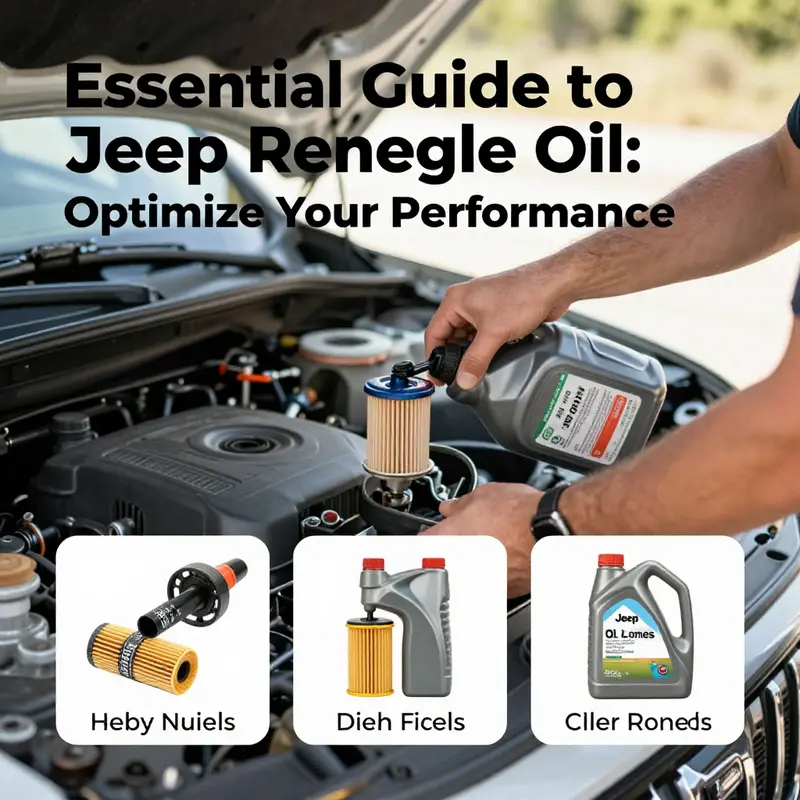
Choosing the right engine oil for your Jeep Renegade is more than a routine decision; it shapes start-up reliability, protection under load, and long-term engine health. When you see SAE 5W-30 on the bottle, you are looking at a specification that unlocks consistent lubrication across a wide temperature range. This viscosity grade is known for smooth cold starts and stable film strength when the engine reaches high operating temperatures. For most Renegade models, the manufacturer specifies 5W-30 synthetic oil as the baseline. This choice balances ease of starting in cold weather with protection during hot summer commutes. If your driving spans city streets and off-road exploration, the 5W-30 grade helps your engine maintain efficiency and resilience without requiring constant oil changes or extra maintenance actions. The core message is practical: select the right viscosity, then ensure that the oil quality and standards align with the engine’s demands and your climate realities. From there, you can build a maintenance routine that supports performance, efficiency, and peace of mind behind the wheel.
Viscosity numbers encode how oil behaves across temperatures. The W indicates winter performance, and the numbers on either side describe cold-start behavior and high-temperature protection. A 5W-30 oil remains fluid enough to reach bearings quickly on cold mornings, yet thick enough to maintain a protective film when the engine is hot. In daily use, that means smoother starts in winter, steadier lubrication during highway runs, and reliable protection when you push the Renegade through hills and over uneven terrain. This balance is especially important for engines with tighter tolerances and turbocharged configurations, where any thinning of the oil film at high rpm can translate into wear. The practical upshot is a quieter, more confident engine that delivers consistent power across climate swings. It also minimizes parasitic drag, helping you conserve fuel without sacrificing protection.
The Renegade’s engine lineup includes variants such as a 1.6-liter and a 2.0-liter turbo. Both share the objective of stable lubrication across operating conditions, yet the exact oil specification can shift with model year and tuning. Your owner’s manual is the definitive source for the precise requirement per configuration, and adhering to that specification matters. Following the recommended oil type, particularly a high-quality synthetic, supports warranty coverage and ensures peak efficiency under load. Synthetic oils deliver dependable viscosity retention, robust oxidation resistance, and a wide temperature operating window. In practice, this translates into smoother operation under acceleration, less heat buildup in demanding conditions, and a reduced risk of sludge formation that can impede performance over time. The outcome is a Renegade that feels responsive and steady whether you’re navigating city traffic or carving a trail.
Standards matter as a measure of oil reliability. The API certification and ACEA classifications are not mere labels; they signal how well an oil maintains viscosity, resists oxidation, and supports engine cleanliness under stress. Oils bearing API SN or newer are designed to resist modern deposits and to keep engines cleaner as they comply with tighter emission standards. ACEA A5/B5 designations describe performance expectations for both gasoline and turbocharged engines under demanding driving. Oils meeting these criteria provide a robust lubricating film across tight tolerances, reducing metal-to-metal contact and prolonging component life. Choosing oil that aligns with these standards gives you more than compliance; it translates into tangible benefits like quieter operation, steadier fuel economy, and reduced emissions. In a compact SUV used for a mix of urban, highway, and off-road driving, this level of protection translates into real-world durability and consistent performance year after year.
Maintenance timing provides the next practical touchstone. A commonly advised interval for many Renegade models is every 7,500 miles or every 12 months, whichever comes first. This cadence balances maintenance cost with the need to keep the oil clean and free from sludge-forming byproducts. Reality, however, often complicates that ideal. Short trips, frequent stop-and-go traffic, towing, or rough terrain can accelerate contamination and degradation. Each of these conditions pushes you toward a shorter interval to stay ahead of wear. Sludge formation, if left unchecked, can thicken oil and reduce its ability to flow, hindering lubrication at the exact moments the engine needs it most. Regular changes flush contaminants, protect bearings, and keep cooling and lubrication systems aligned. The simple takeaway is to treat the oil as a consumable that supports power and reliability, not as a fixture that can endure neglect. Your own driving pattern will determine whether you adhere strictly to the baseline cadence or adopt a slightly more proactive schedule.
Beyond the interval, the quality of the oil matters as much as the timing. A top-tier synthetic that truly meets API and ACEA standards resists oxidation and thermal breakdown as it ages. Real-world experience shows that such oils maintain their viscosity better during prolonged operation and resist the formation of varnish in the valve train and piston crowns. In daily terms, you will notice smoother idle, steadier torque delivery, and more predictable temperatures under load when you stay within the recommended spec. The synthetic formulation’s resistance to shear under mechanical stress means less metal-to-metal wear on cam lobes, lifters, and bearing surfaces. Over thousands of miles, these small but meaningful advantages accumulate into measurable gains in reliability and overall engine feel. It is not merely about avoiding a failure; it is about sustaining the Renegade’s responsiveness and efficiency over time.
Choosing a synthetic oil is also a decision about how your oil behaves amid different driving realities. If your routine includes heavy stop-and-go urban driving, your oil endures repeated thermal cycles and moisture exposure. In hot climates, extended idling on rough roads can push oil temperatures higher and test the film strength. The 5W-30 grade provides a robust compromise, but the actual protection depends on the base stock and additives inside the bottle. A high-quality synthetic with a carefully designed additive package resists oxidation, deters deposit formation on pistons and turbochargers, and helps support catalytic efficiency. Detergency keeps surfaces clean, anti-wear agents reduce metal contact, and dispersants manage soot byproducts. The synergy between base stock and additives yields practical benefits: steadier idle, more consistent acceleration, and more reliable temperatures under load. Over the life of the Renegade, this steadiness becomes a quiet but valuable contributor to reliability, resale value, and a calm ownership experience across long trips and daily commutes alike.
Engine performance is not independent of environment. The oil you choose must adapt to the miles, weather, and terrain you encounter. If you spend most of your time in city traffic, the oil will cycle through more frequent thermal stress and moisture exposure. In scorching heat or dusty regions, oil temperature and oxidative stress increase, demanding resilient protection. A robust synthetic meeting SN or SP standards can handle these conditions better than a lesser formulation. In cold climates, the oil must flow quickly to bearings at startup, with enough Film strength to protect during the first few seconds of engine rotation. The 5W-30 category is designed to cover these scenarios broadly, provided you select a true synthetic with proven stability. The overarching idea is continuity: the same fundamental choice—5W-30 synthetic—paired with a quality formulation that meets recognized standards, yields consistent performance across driving styles and environments.
Maintaining oil quality also means taking care of oil filters and seals. If you change oil but neglect the filter, you miss out on the full protection of the chosen viscosity and additive system. A clean filter ensures that particulates and varnish precursors do not circulate and load the oil with contaminants. Similarly, intact seals and gaskets prevent oil loss, which can skew the level and undermine lubrication. Routine checks of the oil level, with the vehicle on level ground and the engine at normal operating temperature, are simple habits with outsized payoff. After a drive, allow the oil to settle, then verify the level against the dipstick. Avoid overfilling, which can cause foaming, and avoid underfilling, which can starve the pump and bearings. If your Renegade faces extreme use—heavy towing, steep climbs, or long, hot drives—you may adjust your schedule to preserve optimal lubrication under stress. These small steps reinforce the larger strategy: stay aligned with factory recommendations, and treat oil maintenance as a core component of safeguarding performance.
Top-offs are touched with care. It is wise to maintain the level between changes, but topping off is not a substitute for a full oil change. A small amount added between intervals can be helpful on long trips if a dip is detected, yet it does not restore the oil’s original properties or its protective film. The goal is to reset the clock with a fresh change, ensuring that additives remain effective and that the base oil has not degraded beyond its protective value. Service manuals emphasize disciplined adherence to schedules while encouraging practical adjustments based on driving realities. The bottom line is clear: follow the schedule, monitor the level, and treat oil refresh as a quarterly ritual aligned with climate and terrain realities.
Oil quality is not a single variable but a composite of base stock, additives, and the compatibility with your engine’s tolerances. A high-quality synthetic, with a well-engineered additive pack, resists oxidation, deposits, and thinning under heat. This translates into steadier performance, smoother power delivery, and stable temperatures under load. Over the course of ownership, the continuity of performance adds up to a measurable improvement in reliability and even resale value. The Renegade’s engine benefits from this stability, and the maintenance routine becomes a predictable, manageable part of ownership rather than a recurring mystery. The practical effect is a more confident driving experience, one that responds consistently to accelerator input and handles temperature shifts with composure.
Because oil technology and engine design evolve, staying connected with official resources is prudent. The owner’s manual and the official maintenance guidance provide model-year specifics and notes about warranty coverage when using any oil outside the recommended class. For the most accurate information tailored to your exact Renegade, consult the official resource hub. The official site organizes current oil specifications, change intervals, and capacity details for each engine variant, along with guidance on formulation class. This is not a sales document; it is a technical reference designed to support drivers who depend on their vehicles in varied climates and terrains. Aligning with those specifications adds confidence about coverage and predictable performance across seasons and miles.
Finally, picture a Renegade navigating a weekend that blends city errands, highway miles, a rugged trail, and a chilly morning. The 5W-30 synthetic is designed to handle cold starts, protect narrow clearances during heat-up, and maintain a stable film as you contend with heat and dust. It is not the flashy headline of high-performance parts, but it is the quiet backbone of performance, efficiency, and durability. If you want a practical touchstone, consider exploring related discussions that connect weather, terrain, and vehicle performance in broader contexts. For instance, you can read a piece that examines how Jeeps perform in snowy conditions: Are Jeep Wranglers Good in the Snow.
Always confirm guidance from official sources to avoid missteps. The Jeep brand hosts an owner portal and a maintenance guide that outlines the exact oil specification, change intervals, and service recommendations for each engine variant. The official pages emphasize that the best way to protect your investment is to adhere to factory-recommended oil and a disciplined maintenance schedule. By committing to the prescribed 5W-30 synthetic, you safeguard the engine’s lifeblood and enhance the Renegade’s ability to perform reliably across seasons and miles. The practices described here bridge general guidance and the specifics of your vehicle. You’ll drive with more assurance, knowing your oil choice supports power, efficiency, and long-term health of the engine.
External resources provide the final word on exact capacities and service intervals. Access to the authoritative reference helps remove ambiguity from oil selection and the maintenance calendar. Keep the reference handy and consult it whenever you prepare for maintenance or a long trip into variable climates. The practical outcome is staying aligned with the manufacturer’s intent, reducing risk, and extending the Renegade’s service life on and off the pavement. For official guidance, see the maintenance guide linked on the manufacturer’s site: https://www.jeep.com/maintenance/.
Final thoughts
In conclusion, the right oil type and maintenance practices are vital for maximizing the performance of your Jeep Renegade. By understanding oil viscosity, selecting high-quality synthetic oils, and implementing effective maintenance routines, you can significantly enhance engine longevity and efficiency. This proactive approach not only protects your investment but also ensures your vehicle remains reliable and efficient for your business needs. Make informed choices today to keep your Jeep Renegade running at its best.