
For business owners, time is money, and losing access to your vehicle because of locked keys inside can be a costly and frustrating experience. This predicament can happen to anyone, whether you’re juggling multiple tasks or hurriedly making your next appointment. Understanding efficient and safe methods to unlock your Jeep Cherokee without damaging your vehicle can save both time and expenses. In the following chapters, we will delve into various solutions ranging from easy spare key use, calling professional unlocking services, leveraging Jeep’s customer support, and understanding the emergency measures you may consider when in a bind. Each chapter will equip you with knowledge to handle this common issue smoothly and effectively.
Spare Keys as a Fast, Safe Route to Unlocking a Jeep Cherokee When the Keys Are Inside
The moment you realize the keys are inside the vehicle can feel stressful, but there are safe, legal options to regain access quickly. A spare key, when available, provides a legitimate path back in without damage. If you have a spare key, use it through the proper, authorized method described in your vehicle’s manual and by your dealer; do not attempt to break windows, pry seals, or defeat security systems.
If you do not have a spare or prefer professional help, contact roadside assistance, your vehicle manufacturer, or a licensed locksmith. They can unlock the door with specialized tools and proven procedures that minimize the risk of damage and avoid triggering alarms. Many manufacturers also offer remote unlocking through a connected service or mobile app; check your account or app settings for available options and any subscription requirements.
Once access is restored, plan any necessary follow‑ups. Verify that all keys are accounted for and arrange for reprogramming or replacement if needed to restore full remote functionality and security. Consider storing a spare key in a secure location outside the vehicle so you can recover access quickly in the future.
Prevention remains the best approach: keep keys on your person when you leave the vehicle, choose a consistent backup storage spot, and consider a smart key or app‑based unlock feature where available. If a battery or network outage affects remote features, the spare mechanical key remains a reliable fallback.
From a safety perspective, never attempt to force entry or use improvised tools. Aggressive entry attempts can damage the vehicle, trigger alarms, and complicate future service. When in doubt, professional unlock services are the prudent choice.
External reference: https://www.jeep.com/
Keys Inside, Pathways Outside: A Calm, Fast, and Safe Guide to Unlocking a Jeep Cherokee
The moment you realize the keys have found a one-way trip inside the cabin, the world can feel like it’s narrowing to a single, frustrating problem. Yet a calm, informed approach turns a moment of anxiety into a sequence of practical steps that preserve the vehicle, protect its warranty, and get you back behind the wheel without unnecessary drama. For the Jeep Cherokee, as for many modern vehicles, there are multiple legitimate pathways to regain entry, each with its own prerequisites, timelines, and safeguards. The best route is the one that aligns with your situation, your time constraints, and your willingness to engage with authorized professionals. To understand how to move from problem to solution, it helps to see the landscape clearly: a spare key waiting somewhere, a professional service that can unlock doors without damage, official channels that can guide you through the correct procedures, and, in some configurations, remote unlock capabilities linked to your connected account. The goal is not quick improvisation at any cost but fast, safe access that respects the vehicle’s security systems and avoids any risk to the glass, the wiring, or the coordination between the key fob, the receiver, and the car’s lock actuators. As you navigate, you will encounter both the practical realities of getting back in and the larger framework that supports legitimate unlocking for Jeep Cherokee owners through authorized channels and trained technicians who understand the vehicle’s electronics as a system rather than as a set of hacks. This is where the distinction between quick fixes and proper procedures matters most. In the pages that follow, the path to entry is laid out with careful emphasis on non-destructive methods, clear verification of ownership, and the roles of different service providers in delivering a solution that protects your vehicle and your time.
A spare key remains the simplest and most direct option, provided it is readily available, authorized for use, and physically compatibles with the specific Cherokee you own. If another key is within reach—perhaps tucked away in a home drawer, in a family member’s bag, or on your person—the door handling becomes almost routine. It is worth noting that many owners underestimate how often a spare key is overlooked until a moment of need arrives. The advantage here is straightforward: there is no third party involved, no wait for a technician, and no questions about ownership or identity beyond the usual verification you would expect for any vehicle access. Of course, the practicality of this option depends entirely on whether you have that spare key and whether it is in working condition. In the moment of crisis, locating and using a spare key can feel almost like magic, especially when the door pops open with that familiar click. Yet spare-key reliability can be undermined by a lost spare, a key that has battery or fob issues, or a key that is not programmed for the exact configuration of the Cherokee in front of you. Even then, a short discussion with a professional can often reveal a path that preserves the lock cylinders and the door seals rather than forcing entry through forceful means.
Beyond the spare key, professional unlocking services offer a dependable, non-destructive option that respects the integrity of the vehicle’s security architecture. Reaching out to a roadside assistance provider or an automotive locksmith who is authorized to work on Jeep models can yield rapid unlocks performed with specialized tools designed for modern doors. These professionals are trained to work with the kind of locking mechanisms that exist in recent Cherokee models, including those that interface with smart keys and in-car networks. They typically have a toolkit that allows for precise, targeted entry without prying, cutting, or other high-risk approaches that could compromise glass, weatherstripping, or interior panels. The outcome is a protective approach to entry: the door is unlocked cleanly, the chance of interior damage is minimized, and the vehicle’s electronics remain in a known-good state after the service is completed. A properly executed professional unlock balances speed with safety, ensuring that the unlocking action does not inadvertently trigger fault codes or set off any anti-theft responses. This is especially important for vehicles that are integrated with immobilizer systems and discreet security features designed to prevent unauthorized access.
In discussing professional unlockers, it is useful to differentiate between the two main streams: authorized dealerships and certified technicians who operate within established service networks. Authorized dealerships are the most direct route to unlocking and rekeying services when needed. They have access to the official service protocols, the most up-to-date diagnostic tools, and the authority to perform key programming or reprogramming if the lock system requires it. For a Cherokee, this means that a dealer can verify ownership, confirm the exact model and configuration, and provide any needed programming for smart keys or proximity fobs. The dealership pathway also aligns with warranty considerations; if your vehicle is still under warranty, legitimate service channels help ensure that any unlocking action does not inadvertently void coverage or create warranty disputes in the future. Certified technicians, often part of mobile or regional service networks, can perform non-destructive entry in many cases and can provide on-site support at the location where the vehicle is parked. They bring the same level of training and equipment as a dealership, but with the convenience of on-site service for a door that is stubborn or an owner who cannot reach a dealership easily. In both cases, the emphasis is on preventing damage, preserving the mechanical integrity of the door and window systems, and safeguarding the electronic components attached to the door lock cylinder and the vehicle’s central computer. The emphasis on safety is not merely about avoiding a scratch or a dent; it also concerns avoiding inadvertent glass breakage, which can lead to costly repairs and additional safety hazards.
The decision to contact official channels is often reinforced by the assurance that these routes adhere to national regulations and to the standards set by the vehicle’s maker. The broader ecosystem surrounding the Jeep Cherokee emphasizes standardized service networks and comprehensive after-sales support. In essence, official support structures exist to ensure that unlocking is not a one-off, risky act but a service performed within a framework designed to safeguard the consumer and the vehicle’s security guarantees. This is not merely about getting back inside quickly; it is about ensuring the long-term reliability of the car’s locking and immobilizer systems. The manufacturer’s approach to service emphasizes training for repair centers, standardization across service networks, and careful adherence to the vehicle’s security architecture. While the specifics may vary by region, the underlying principle remains consistent: authorized professionals have access to the right tooling, the right software, and the right process to unlock and, if necessary, reprogram keys without compromising the car’s safety features. The clarity of this framework makes it a preferred option for many Cherokee owners who value a durable, legitimate solution that does not jeopardize warranties or future service eligibility.
Remote unlocking through connected services adds a modern option for those whose Cherokee is equipped with the applicable features. If the vehicle is linked to a mobile app or connected service account, it may be possible to trigger a door unlock remotely, provided the vehicle is online and not in a power-down state. The remote unlock feature relies on a secure communication channel between the vehicle and the owner’s account, authenticated devices, and the software that governs access control. Not every Cherokee will support this capability, and even when it is available, it may be contingent on subscription status or regional availability. The key point here is that remote unlocking is a legitimate, manufacturer-supported pathway to regain entry when conditions permit. It represents the culmination of a broader trend in the auto industry toward connected car solutions, where access control is managed through digital channels with strict security protocols. As with other secure entry methods, the remote unlock requires proper verification of ownership and account credentials, and it should be used in the context of legitimate access rather than as a substitute for a lost key without follow-up action.
If you ever find yourself facing an urgent situation where time is of the essence and you have no spare key or available remote unlock option, the option to seek emergency entry through a professional still stands. A trained technician can assess the scenario on-site with an eye toward safety and a high likelihood of success, minimizing the risk of interior damage. When engaging a professional, you should be prepared to provide several details that help them verify ownership and expedite the service. The vehicle’s year, make, and model are a given, but you may also be asked for the VIN, which is typically found on the dashboard near the windshield, on the driver’s side door jamb, or in your vehicle documents. Proof of ownership—such as a registration card or insurance document—may be requested, particularly if the vehicle is not within reach of the owner’s identity. In most cases, a simple confirmation of identity tied to the registered owner’s contact information is sufficient. The more information you can provide up front, the quicker the technician can verify legitimacy and proceed to unlock. The technician’s toolkit is designed to work with the Cherokee’s locking mechanisms and windows, with careful attention to the interior finish so that panels and trim remain pristine. A well-equipped technician can navigate variables such as the door’s weather seal, the seat position, and the angle of approach to ensure that no part of the interior is rubbed, scratched, or stressed during the entry attempt.
In a world where the aspiration to “do it yourself” collides with the risk of damage to critical systems, the case for professional unlocking becomes clearer. It is not just about access; it is about safeguarding the vehicle’s nuanced electronic infrastructure that integrates the door locks, immobilizer, and central computer. Modern Jeeps, including the Cherokee, feature sophisticated security measures designed to deter unauthorized access. Any entry attempt that bypasses these measures can, even unintentionally, trigger a maintenance cycle or a security alert. A professional unlocker understands these fragile boundaries and works within them to preserve the car’s security posture. This is a crucial distinction from improvisational methods that might seem tempting in the moment but carry the potential for lasting consequences. The appropriate choice respects the vehicle and its security architecture while delivering a reliable return to operation—an outcome that matters not just for this moment but for the ongoing reliability and resale value of the car.
As you weigh the options, it is worth recalling the broader message that connects the micro-scenario of a keys-inside moment to the larger landscape of vehicle care and ownership. The chapter of your ownership story in which you address misplacement or lockout is best written with a plan that prioritizes safety, legitimacy, and long-term integrity. The presence of official channels—whether a dealership, a certified technician network, or an authorized roadside service—offers you the confidence that you are handling a sensitive security system properly. In many cases, the most prudent course is a short pause to verify your options: check for a spare key, assess whether remote unlock is currently possible, and contact a reputable professional who can provide non-destructive entry. The quiet practicality behind this approach is the sense of control it affords you in a moment that could otherwise feel like helplessness. And in the background of that control, there exists an ecosystem of information and support—the kind of ecosystem that helps you move from crisis to resolution without compromising the very systems your Cherokee relies on to keep you safe on the road. As you consider the next steps, you may also want to consult broader resources that discuss mechanical entry and electronic security for modern vehicles. For readers who want to explore practical vehicle tricks beyond this situation, there is a helpful hub that condenses many such strategies and techniques into a single reference point. Learn more about these tricks at Vehicle Tricks.
To connect this guidance to real-world steps and a broader network of advice, begin with the simplest option if it is available: the spare key. If it isn’t or if the spare can’t be used for any reason, turn toward professional unlockers who operate within legitimate service networks. If your Cherokee is equipped with connected services and you have an active account, a remote unlock could be a fast path to entry. If none of these options are accessible at the moment, prioritize a professional intervention that minimizes risk and preserves the integrity of the vehicle’s security systems. In all cases, avoid any forceful entry methods that can cause glass breakage, door panel damage, or inadvertent triggering of alarm and immobilizer features. The aim is not simply to regain entry but to restore full function with the fewest possible complications. The careful balance of speed, safety, and legality is what distinguishes a good outcome from a problematic one. As you navigate these choices, you are also reinforcing a prudent habit: making sure you have a plan for key management, including secure storage for a spare and a clear understanding of how remote access features work in your Cherokee. This proactive approach reduces the likelihood of a repeat situation and supports a smoother ownership experience overall.
If you want a concise, practical pointer you can act on now, start by locating any spare keys and confirming their status. Then, if no spare is accessible, call a professional unlocking service that is authorized and insured. When you speak with them, have the vehicle’s year, model, and approximate location ready, along with any proof you can provide of ownership. If your vehicle supports remote unlock via connected services, ask whether that feature is currently enabled and available for your account. It is also worth asking whether the service can provide a written confirmation of the steps taken and any fees involved, so you have a record for your files and the vehicle’s service history. These steps, while seemingly simple, reflect a disciplined approach to vehicle access that respects the car’s security systems and reduces the risk of inadvertent damage. They also align with best practices that manufacturers and service networks advocate for owners who encounter lockouts. The total experience—how quickly you regain entry, how safely the process is executed, and how well the incident is documented—matters as much as the immediate outcome. For many Cherokee owners, this structured approach translates into peace of mind and a faster return to the road, whether you’re commuting, traveling, or simply running errands that day.
In the spirit of useful resources, consider this pathway as part of a larger library of vehicle-care wisdom. If you want to broaden your toolkit for everyday vehicle situations, you can explore related topics and tips in the vehicle tricks arena. The broader ecosystem is there to help you think through a range of challenges—from lockouts to routine maintenance—so you can handle future situations with greater confidence. The key is to appreciate that the modern Jeep Cherokee, with its smart keys and connected services, responds best to solutions that respect both the hardware and the software that bind it together. When you approach with this mindset, the options you choose will not only solve the current problem but also reinforce a practical, educated stance toward car ownership that serves you well in the long run.
In closing this pathway of options, the practical takeaway is clear. A spare key, if available, is the fastest route. A professional, authorized service network provides the safest, most reliable entry when a spare isn’t at hand. Remote unlocking, if enabled, offers a modern convenience that can save precious minutes. And the discipline of verifying ownership and following proper channels helps protect both the vehicle and your own interests. Each option has its place in a thoughtful, prepared approach to Cherokee ownership, and each reduces the risk of damage and warranty concerns that can accompany improvisational methods. For those who want to explore more practical tips and tricks in the broader world of vehicle care, the Vehicle Tricks hub offers a thoughtful collection of guidance built to complement the knowledge in this chapter and beyond. Vehicle Tricks.
External resource: For official service and warranty guidance, consult the Jeep Warranty & Service Information page: https://www.jeep.com.cn/zh/warranty-service.html
Leveraging Jeep Customer Support for Quick, Safe Unlocking Assistance
Locked out of a Jeep Cherokee with the keys inside is a situation that tests calm planning as much as it tests access to the vehicle. The guidance that follows is built on a simple premise: when time matters and safety matters, stick to official channels and risk-free options. This approach minimizes the chance of damage, preserves your warranty, and gets you back on the road with the least disruption possible. In practice, leveraging the vehicle’s support network means understanding what is available, how to access it quickly, and what a professional unlock entails. It also means recognizing the limits of remote capabilities and where human hands, expertise, and proper tools truly matter. The aim is not to obtain a quick hack or a shortcut, but to secure a solution that respects the car’s electrical systems and the integrity of its security features while ensuring your personal safety remains the top priority.
A cornerstone of this approach is the 24/7 roadside assistance framework that Jeep and its authorized service network make available. This program is designed to be a lifeline in emergencies—whether you are stranded on a highway shoulder, stuck in a remote area during a late hour, or navigating a difficult terrain where being locked out compounds the challenge. The service is accessible around the clock, every day of the year, and is intended to cover a wide range of scenarios, including entry assistance when keys are inside. The reliability of this network means you can initiate help without hesitation, knowing a trained professional will respond. Importantly, the availability is not limited to short windows; it remains active across time zones and borderlines as long as the vehicle is eligible for coverage and properly enrolled in the service program. This assurance of constant accessibility is what turns a moment of frustration into a trackable, manageable sequence of steps toward resolution.
When you reach out to roadside assistance, you’re not simply requesting entry—you’re initiating a coordinated response. The dispatcher will typically verify ownership and vehicle particulars, confirm the GPS location, and gather critical details such as a contact number, the vehicle identification number (VIN) if possible, and any relevant safety concerns. The process flows toward safety: professionals arrive with the appropriate tools and protocols to unlock the doors without compromising the vehicle’s electronic systems. This non-destructive approach is particularly important for modern Jeeps, whose entry systems and integrated electronics are designed to function in harmony with the vehicle’s security and safety networks. Rather than resorting to improvised methods that could scratch glass, strain window motors, or damage weather seals, you’re guided toward a method that preserves the long-term reliability and safety of the vehicle. The professional unlock is not merely opening a door; it is reestablishing secure access while maintaining the integrity of the electrical architecture that supports immobilizer systems, airbags, and critical sensors.
Beyond the immediate act of unlocking, a broader advantage comes from understanding the diagnostic and service ecosystem that surrounds Jeep vehicles. Authorized service centers, equipped with advanced diagnostic tools, can assess the situation with precision if there is any doubt about the vehicle’s electronics after entry. Modern Jeeps rely on integrated networks and software that track entry attempts and battery status, among other things. When a door is unlocked by a professional, those systems are checked as needed to ensure there are no inadvertent faults or warnings triggered by an external entry attempt. The technicians’ access to verified, genuine parts—a core aspect of maintaining warranty integrity—ensures that any subsequent service needs are handled with components that meet factory standards. This alignment between unlocking, diagnostics, and parts sourcing is essential for maintaining vehicle reliability and long-term performance, especially for Cherokee models that may see a mix of urban commuting, highway cruising, and infrequent off-road excursions.
In tandem with the physical act of entry, the digital ecosystem surrounding Jeep includes tools and services that can reduce the odds of lockouts in the first place, or speed up resolution when they occur. The digital environment that accompanies many Jeeps enables owners to monitor and manage service information, schedule maintenance, and view the status of ongoing work. While remote unlocking capabilities depend on the vehicle’s connectivity and the specific features activated for the account, there is a legitimate path toward remote entry in models that support connected services. If the Cherokee is enrolled in a connected services plan, and the vehicle is online, the unlock function can sometimes be carried out through a secure remote interface. This is especially useful when you are in a location where assistance is readily accessible but a physical presence is not yet possible. The key caveat is that remote unlock requires that the vehicle remains connected to the service network and is not in a state that disables remote access, such as a fully powered-down battery or an immobilizer lockout due to security protocols. In practice, remote unlocks tend to complement rather than replace on-site professional assistance, offering a bridge that can save time and minimize risk when used correctly and within the vehicle’s supported configuration.
There is also a broader, warranty-minded rationale for prioritizing official channels. A legitimate unlock service performed by an authorized provider aligns with the vehicle’s warranty terms and standards for servicing. Improvised methods or third-party repairs can, in some cases, inadvertently void portions of the warranty or introduce issues that complicate future maintenance. By contacting official customer support and requesting a recommended service provider, you preserve the vehicle’s integrity, maintain a clear service history, and ensure that any follow-up work remains covered under the dealership or maker’s warranty framework. This is not about rigid compliance for compliance’s sake; it is about safeguarding your investment and ensuring that entry, once obtained, does not compromise safety systems or the vehicle’s documented repair history. The digital service records accessible through the connected ecosystem further support this, providing a transparent trail of maintenance and entry-related actions that service advisors can reference during future visits, should you need further assistance down the line.
In scenarios where the Cherokee is an electric variant or features advanced battery management systems, the emphasis on trained technicians grows even more important. Electric powertrains require specialized handling, and entry procedures themselves can interact with battery safety and the vehicle’s electronic architecture. A properly coordinated unlock by a certified team minimizes the risk of triggering fault codes, draining auxiliary systems, or creating unsafe battery conditions. The emphasis remains, as always, on safety first: if you are in a location where weather, traffic, or terrain introduces danger, pull to a safe spot, contact the support chain, and wait for professional assistance. Trying to improvise a solution in such conditions increases risk for yourself and for the vehicle, and can complicate a rescue operation for the responders.
From a practical standpoint, there are a few immediate steps you can take while you wait for assistance to arrive. First, confirm that you are safe and assess your surroundings. If you have a passenger, designate a point of contact inside the vehicle to communicate with the dispatcher or the responder. Keep your mobile device charged and within reach, ready to receive updates or directions. When you speak with the dispatcher, clearly communicate your location, whether you have a visible landmark, and whether you have any access to a spare key, as this information can influence the most appropriate response. If you have the VIN handy—found on the dash plate or insurance documents—sharing it can help the responder verify the exact vehicle model and configuration, expediting the process. While you wait, you can also use a tablet or phone to review your vehicle’s service history if you’ve kept digital records. This may not directly affect the unlocking, but it can simplify later steps if the technician needs to perform a diagnostic check once inside.
A subtle but valuable part of this process is preparing for future lockouts. The guidance above aligns with a broader industry approach that emphasizes prevention and preparedness. Simple habits, such as carrying a spare key or enabling a remote entry feature where available, significantly reduce the risk of a prolonged lockout. Even within the official channels, there are often recommended steps to minimize risk, such as ensuring that the vehicle remains within approved entry windows and avoiding any attempts to pry the door or manipulate the glass. The caution is explicit: avoid destructive methods that can permanently damage the vehicle’s body, windows, or interior trim, and avoid actions that could compromise the vehicle’s security or trigger airbags or other sensors. Preparedness also includes having a plan for the event of a lost or inaccessible key, such as a trusted contact who can authorize a service call if you are unable to provide proof of ownership on the spot. Although these suggestions may seem straightforward, their practical value becomes evident in the minutes after you realize you’ve locked the keys inside.
To connect the dots between the different strands of support—roadside assistance, certified service centers, digital service history, and remote unlock capabilities—consider a simple mental map when you are confronted with a lockout. The fastest path to resolution is usually the one that leverages official channels with the least friction: call the designated roadside line, provide essential details, and await the arrival of a trained technician who can unlock the vehicle safely. If the vehicle is equipped with connected services, and you can access the secure app, you might have an additional option to request a remote unlock, but only if the system confirms the vehicle is online and compatible with the service. In any case, the objective remains consistent: restore access with minimum risk, maintain the vehicle’s integrity, and keep a clear line of communication with the service provider so that the subsequent steps—whether a brief diagnostic check or a reminder to replace a battery key fob—happen smoothly.
For readers seeking further context on safe driving and preparedness that complements this chapter, a related piece discusses how vehicles perform in challenging conditions and how to plan for emergencies: Are Jeep Wranglers Good in the Snow?. This resource highlights practical considerations when you’re away from urban centers and underscores that safety and preparedness extend beyond the moment of entry.
In closing, approaching a keys-inside scenario with a calm, methodical plan centered on official support services is the most dependable course. It aligns with the vehicle’s built-in protection, respects warranty terms, and leverages a network designed to respond quickly and correctly. The emphasis on non-destructive solutions not only protects your Jeep Cherokee but also preserves your peace of mind during a frustrating moment. As you prepare for future trips, consider reinforcing your entry strategy with a spare key plan, a secure digital option where available, and an understanding of how to initiate support efficiently. These steps—anchored in official channels and prudent practice—form a reliable framework for turning a potential setback into a manageable, well-supported service experience.
External resource: https://www.jeep.com/support/roadside-assistance.html
Swift, Safe Entry: Emergency Measures for Retrieving Keys from a Locked Jeep Cherokee
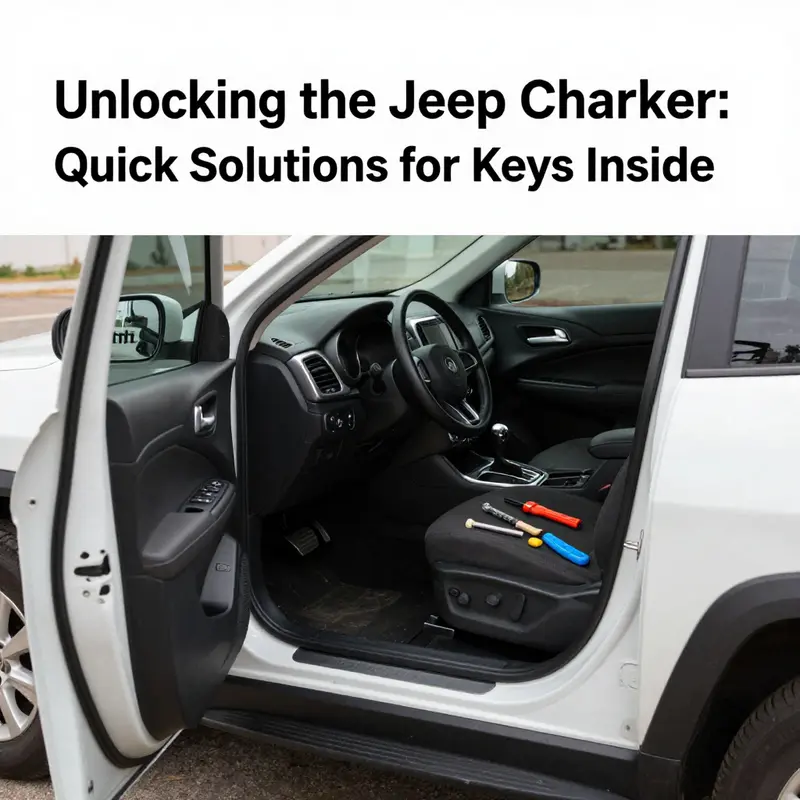
When you realize the keys are inside a locked Jeep Cherokee, the first impulse can be nerves. But the most reliable path to quick access is a calm, methodical approach that prioritizes safety, avoids damage, and leverages the Cherokee’s designed entry options. This chapter walks through a sequence of practical steps that align with how these vehicles are built to be entered in emergencies. It’s not about brute force or improvisation; it’s about using the right tools, the right techniques, and the right help at the right time. The goal is to regain entry quickly, without compromising the vehicle’s security systems or your own safety, while also building habits that prevent future lockouts from becoming crises. The Cherokee family has several built‑in safeguards and support options, from spare keys and emergency mechanical keys to remote unlocking capabilities and digital keys, all of which can be summoned with careful steps and clear decisions. Starting from the simplest, most damage-free solution often proves quickest, especially if there’s a spare key within reach, either at home or on a trusted person nearby. A spare key is the most reliable, the least risky to the paint or seals, and typically requires no technical finesse beyond turning the key in the lock. If you’re fortunate enough to have a spare, retrieving it can cut through the anxiety and reduce any risk of setting off door sensors or unintended alarms. In larger or more complex outdoor environments, though, a spare may not be readily accessible, and that’s where a deeper understanding of the Cherokee’s emergency access features becomes essential. The next best option is to work with the mechanical emergency key that is embedded in many remote key fobs. These devices are designed precisely for situations like this. The release mechanism on the fob will free a slim metal key that fits into the door’s lock cylinder, often located on the driver’s door. To use it, locate the release on the side of the fob and slide out the metal key. With the driver’s door, you’ll typically find a recessed slot or a small cover over the lock cylinder that can be pried open with a fingernail or a fingernail‑friendly tool. Once the cover is removed and the cylinder is exposed, insert the mechanical key and turn it, usually clockwise about 90 degrees. It’s a straightforward, almost mechanical process that, when performed carefully, unlocks the door without triggering alarms or damaging the seals. It’s worth noting that this mechanical path is a rescue tool in the truest sense: it relies on physical access and the integrity of the lock cylinder, not the electronic system. If your aim is to preserve the vehicle’s electronics, the mechanical key route can be the gentlest way to regain entry when the fob is unresponsive due to battery failure or signal interference. The moment you consider attempting the remote unlock, you shift from a physical approach to a digital one. If you’re near the car and the key fob still has some battery life, a deliberate attempt at remote unlocking can sometimes succeed where a rushed try failed. Interference from nearby electronics, a momentary signal blackout, or a tiny delay can prevent an immediate response. It helps to pause for a beat, take a breath, and press the unlock button again with a deliberate, steady press rather than a quick jab at the moment you suspect it’s not working. The Cherokee’s remote system is designed to be robust, but like any wireless protocol, it benefits from a calm, deliberate approach. If the vehicle is outfitted with the Jeep App and the Digital Key feature, a smartphone may offer a powerful alternative. In newer Cherokees, the app can unlock doors remotely, provided the vehicle is connected and the feature has been set up in advance. If you can access the app and your phone is recognized by the car, you can unlock the doors with a few taps. This digital route is not a guaranteed fix in every situation—both connectivity and app configuration matter—but it remains one of the most efficient, non‑destructive options when it works. When these steps fail or aren’t available, confident escalation to professional assistance becomes prudent. A professional auto locksmith or a trusted roadside assistance service is equipped with tools and training to gain entry with minimal risk to the vehicle’s paint, weatherstrips, and electronic systems. They typically operate with specialized tools that can release a door without prying or forcing panels, and they can also address underlying causes, such as a dead fob battery or a malfunctioning door sensor, so you’re less likely to face a repeat scenario in the future. If the situation is not an immediate emergency—no children, no pets, and no risk from heat or cold—calling for professional help is a sensible choice that preserves the vehicle’s electronics and keeps warranties intact. In true emergencies where someone is inside a vehicle and cannot breathe or regulate heat, the calculus changes. Emergency services should be contacted immediately. Fire and rescue teams have the training and the equipment to gain safe entry quickly, prioritizing the safety of anyone inside. Time matters most when heat or dehydration become a real risk, and responders can assess the interior environment, open the door with controlled techniques, and provide a safety check once access is restored. The conversation around prevention threads through every step. After you’ve navigated a lockout, turning attention to prevention is essential to reduce future stress. The most reliable prevention is a habit: always check that keys are on your person before you leave the vehicle. It helps to establish a designated spot for keys—near the door, on a hook, or in a dedicated pocket—so that your attention isn’t split when you step away. If you anticipate frequent lockouts, consider a digital key system or a remote unlocking capability that is properly configured and tested in a safe environment. These features reduce the risk of lockouts by letting you verify access through a smartphone before approaching the vehicle, and they can be tethered to your daily routine much like a familiar reminder system. The narrative around these options should also acknowledge practical cautions. In the heat of a moment, it can be tempting to improvise with nonstandard tools or forceful methods. The Cherokee, like many modern vehicles, employs sensors and anti‑theft safeguards that can be damaged by aggressive entry attempts. Prying at door panels, applying leverage to weatherstrips, or using improvised hooks or wires can scratch paint, bend metal, trigger alarms, or even compromise the locking mechanism. The consequences go beyond immediate damage; warranties may be affected, and certain repair costs can be substantial. The most prudent path is to stay with approved procedures and trained professionals when necessary. Model years vary in how they implement remote unlocking and digital keys. The Jeep Owner’s Manual is the definitive source for unlocking procedures and any emergency features. A quick consult of the manual for your specific year and configuration ensures you’re applying the recommended method for your Cherokee. Not every model supports every feature; some may rely more on the mechanical key, while others integrate the digital key, and still others offer a hybrid approach with remote unlock alongside a digital key that can operate from a distance. Keeping a small note in your wallet or phone that lists the most reliable entry options for your exact vehicle year can be a valuable precaution. Weather and environment can complicate lockouts, too. In icy or snowy conditions, for instance, the exterior locks can freeze, making turning the cylinder with the mechanical key more challenging or even risky. In those moments, a careful, steady touch and a warm, dry approach are safer than wrenching or forcing the key. If you anticipate cold conditions, warming the key gently with your hands or a small amount of body heat can help the metal slide more easily into the lock. And if you must rely on the remote or app options, ensure that you have prepared and tested them during mild conditions so they operate when you need them most in winter or rain. For the curious reader who wants to explore adjacent concerns, a related resource covers how weather affects Jeep performance and entry strategies in winter. Are Jeep Wranglers Good in the Snow? Winter Performance Unveiled provides broader context on how rough weather can influence vehicle response, including entry and remote unlocking reliability in cold environments. This resource complements the practical steps described here by expanding the conversation to environmental constraints that can shape decision making during a lockout. Are Jeep Wranglers Good in the Snow? Winter Performance Unveiled. Read more at the linked article: https://vehicletricks.com/blog/are-jeep-wranglers-good-in-the-snow-winter-performance-unveiled. While the Cherokee and Wrangler share a family lineage in off‑road design philosophy, the core message remains: safety, minimal damage, and appropriate tool use matter most when you’re dealing with a lockout. The path to regaining entry is not a single technique but a sequence of considered actions that respect the vehicle’s engineering and your own safety. After you’ve regained entry, reflect on what happened and how to reduce the odds of a repeat incident. Replacing a misplaced or compromised fob battery is a simple, often overlooked maintenance task. If the battery is weak, a remote may fail to respond until it’s near the vehicle or you press the button repeatedly. Regularly checking and replacing the battery in your fob can avert the time wasted in a lockout. Another preventive measure is to consider a spare key stored in a safe, designated location that you can access quickly. For those who travel with a family or carpool frequently, it can be wise to designate a single person as the keeper of the spare key and share a brief plan for what to do in a lockout, making sure everyone knows how to locate the spare. Finally, it’s essential to maintain perspective about the security features and the practical realities of day‑to‑day life with a modern vehicle. The remote unlock and digital key capabilities are powerful, but their functionality depends on battery power, network connectivity, and proper setup. If you invest the time to understand and test these features in advance, you’ll find that emergencies become manageable rather than panic‑inducing. The core message remains consistent: within minutes, you can regain access to your Cherokee with methods that respect the vehicle, your safety, and your time. The path to quick unlock isn’t about rapid improvisation; it’s about prepared steps, clear priorities, and knowing when to call for professional help. The Cherokee’s design anticipates lockouts as a solvable scenario, not an end in itself, and treating it as a solvable situation preserves the vehicle’s condition and your confidence for future journeys. External resources can provide additional safety guidance and practical considerations, especially in high‑risk environments. For broader safety guidelines and vehicle entry best practices, refer to trusted national safety resources that offer general advice on lockouts and emergency entry. External resource: https://www.nhtsa.gov
Final thoughts
In conclusion, having access to your vehicle is essential for business owners, and understanding how to handle a situation where your keys are locked inside your Jeep Cherokee can make all the difference. From utilizing spare keys to professional unlocking services, and harnessing customer support options, you have several tools at your disposal. Always consider the precautions needed, as emergency measures can sometimes lead to costly repairs. Stay prepared, and your business will never lose valuable time to a locked car again.