
In the realm of vehicle maintenance, documentation plays a pivotal role in ensuring efficient operations and compliance. Throughout this guide, we will explore when a vehicle maintenance shop necessitates five specific sheets of documentation, reflecting their importance for business owners focusing on operational success. Each chapter will delve deeper into the context, necessary documentation, and the correlation between effective operational efficiency and precise record-keeping that these five sheets provide.
Five Sheets, One Purpose: Reading the Context Behind a Busy Vehicle Maintenance Shop
A repair bay during peak season feels like a coiled spring. Each vehicle arrives with a history, a set of symptoms, and a schedule that may collide with others waiting in line. In such moments, a maintenance shop often relies on five sheets: five distinct canvases on which the story of a vehicle is told, a clear record of work to be done, and a path that keeps technicians aligned. These sheets can be physical tablets, notebooks, or digital forms on a touchscreen, but the principle remains the same: five controlled spaces that reduce confusion, speed decisions, and preserve the integrity of a vehicle’s service history.
Think of the five sheets as lanes on a busy highway of repair. The intake sheet starts the journey. It gathers essential customer details, vehicle identifiers such as make, model, year, and VIN, and the reason the car arrived. It records the current mileage, prior service notes, and any warranty or enrollment in a maintenance program. The goal is to capture a snapshot that is both precise and portable, so any technician who touches the case can understand where it began without chasing down scattered notes. In some shops the intake sheet also notes promises made to the customer, including timelines for estimates or repairs and any special requests the driver has voiced. This first sheet is not a mere form; it is the contract that secures the momentum of the entire process.
Next comes the diagnostic sheet. Here the technician documents the findings, the symptoms observed, and the tests performed. This sheet becomes a living map of causes and effects. If a fault code appears, the notes explain its context and any preliminary assumptions. If a noise or leak is heard or seen, diagrams or sketches may be added to show location and direction. Photos can be attached, even in a purely paper workflow, to reduce ambiguity when a later expert reviews the case. The diagnostic sheet is not about final answers alone; it is about building a credible trail that others can follow, validate, and compare against the original problem statement.
Then the parts and estimates sheet enters. This page is where the shop translates diagnosis into action. It lists required parts, compares substitutes, and records supplier options, lead times, and price ranges. The estimate section communicates to the customer what the repair will cost and how long it will take. In high volume shops this sheet acts as a translator between the technical language of the bay and the business language the customer understands. It also serves as a checkpoint for inventory control, ensuring that parts are not promised to a customer while sitting in backorder somewhere else. The parts and estimates sheet becomes a living ledger that links the problem to the purchase, the schedule, and the final bill. In some environments the estimate viewer is seamed to the service advisor’s desk, so the two people can compare notes before the customer walks in again with decisions to approve, defer, or cancel.
Alongside it runs the repair actions sheet. This is where the concrete steps appear, one by one, in the order they will be executed. The sheet records technician names, the tasks performed, the tools used, and the time required for each step. When multiple vehicles share the same bay, this sheet helps prevent confusion by making clear who works where and when. It also protects the shop from overstatement of work or double entry. A well maintained actions sheet reduces the odds that a task will be missed, duplicated, or mispriced. It supports the discipline of a methodical repair, from engine service to electrical diagnostics, from fluid changes to software calibrations. It is the heartbeat of the shop’s day, a ledger of labor that can be audited later if questions arise about what happened and when.
The fifth sheet covers follow-up, scheduling, and customer communication. It tracks the promised return times, the recommended maintenance intervals, and the next service window. It notes who will call the customer with updates and what instructions the customer should follow after leaving the shop. In practice this sheet keeps the line from going cold. Even when the car leaves the bay, the story continues here, with reminders for future visits, details about warranty coverage, and a record of any additional estimates given after the vehicle test drive. In a busy shop, this sheet is the difference between a one-off fix and a durable, ongoing care plan. It creates continuity from the moment the customer arrives until the next appointment is scheduled, a thread that ties each service event to the next.
To understand why five sheets matter, it helps to imagine the complexity of modern maintenance. Some repairs unfold over hours, some over days. Some vehicles come with a history of small issues that repeat themselves, others present unusual symptoms that require careful cross-checking. The five sheets provide a structure without overburdening the team. They avoid losing important details in a sea of notes by giving each issue its own container. Without such a framework, information tends to drift: a measurement is recorded verbally and never transcribed, a part number is misread, a test result is forgotten. Before long the repair drifts off course, and the customer pays for the detours in time and cost. The five-sheet approach preserves accountability, allowing managers to see at a glance which vehicle is in which phase, which technician is attached to which task, and how much time remains before the next step must occur.
Modern shops increasingly blend this paper logic with digital tools. The car on the lift may be logged into a touchscreen system that mirrors the five sheets, but the same core idea remains: five distinct data tracks that must stay synchronized. In this view, routine maintenance becomes a matter of standard operating procedure rather than luck. Tesla maintenance guidelines, for example, emphasize tracking maintenance actions such as overdue or due soon, and they outline procedures for recording maintenance via a vehicle touch screen. The crossover between this digital capability and the five-sheet mindset shows that the approach can scale. The sheets are not relics of the past; they are early scaffolding that supports a digitized workflow, one that keeps every action anchored to a clear source of truth. If you want a concise baseline for maintenance, you can consult resources on what counts as vehicle maintenance, such as What is vehicle maintenance.
Consider the practical realities of a shop in peak hours. Five sheets are a buffer against the chaos of multiple vehicles sharing a single lane, a mental model that helps technicians transition from one case to another without losing track. When a second car is brought in, the intake sheet opens a new page; the diagnostic sheet for the first car is closed, but its history remains accessible on the five sheets so the second car can be seen as a separate thread rather than a duplicate problem. The ability to segment information in this way reduces the risk of misinterpretation. Reading a page that contains customer notes, vehicle symptoms, and a test result in one go is more efficient than scanning a pile of scattered papers. The five-sheet method also makes it possible to train new technicians. With a consistent format, a trainee quickly learns where to look for the information they need and how to record new findings without disrupting the workflow.
From a managerial perspective, the five sheets provide a simple target during performance reviews and audits. Supervisors can verify that intake details are complete, that diagnostic reasoning is documented, that estimates reflect the work, that actual labor aligns with the plan, and that follow-up commitments have been fulfilled. The discipline of this framework translates into shorter cycle times, higher customer satisfaction, and a more predictable revenue stream. It is not a guarantee, but a reliable scaffold that reduces variance across jobs. Some shops keep a small spare pad of five sheets on a clip near the desk so that when the line grows, there is immediate access to a ready-made template. Others digitalize those templates, converting the original five sheets into a five-part digital form that mirrors every column and section. The essence remains: five dedicated spaces, each with a purpose, that help translate intent into action in a tangible, verifiable way.
Beyond the mechanics, the five-sheet approach invites a broader reflection on what vehicle maintenance means in a service culture. It is not merely about the mechanical repair; it is about stewardship of a vehicle owners trust. Each sheet is a promise that a technician has not forgotten a step, that a sequence has been completed, and that the customer will receive accurate information about cost, timing, and next steps. The sheets function as a visible record, a traceable chain of decisions linking problem to solution. They also offer a means of continuous improvement. When a repair consistently requires a particular sequence of steps, the efficiency gains become writable on the action sheet and then tested in future jobs. In that sense, five sheets are both a tool and a discipline, a way to convert complexity into clarity without sacrificing the nuance of the work.
While the five-sheet framework is not universal, it provides a meaningful baseline for shops navigating fluctuating demand. It helps to recognize that five is not a hard limit but a modular starting point. Some operations may discover that three sheets suffice for certain classes of service, while others by necessity expand to six or more tracks. The key is to maintain alignment across the sheets so that the sequence of information follows a consistent arc: intake, diagnosis, planning, action, and follow-up. A well-constructed set of five sheets can become the backbone of an efficient repair operation, one that supports rapid throughput while preserving accuracy and accountability. In the long run, a shop that masters this framework can adapt, scale up, and migrate toward more automated and integrated systems without losing the human touch that makes maintenance meaningful to the customer and to the technician alike.
From the standpoint of training and culture, five sheets contribute to a shared language. New staff learn to refer to the intake sheet first, the diagnostic sheet second, the parts and estimates sheet third, the repair actions sheet fourth, and the follow-up sheet fifth. This shared language removes guesswork, reduces cross talk, and accelerates collaboration. It also helps managers assess bottlenecks across the repair pipeline. If the intake sheet consistently shows incomplete information, the shop can adjust the intake protocol. If the diagnostic sheet rarely includes diagrams or photos, the shop can reinforce the practice of visual documentation. If the follow-up sheet shows delays in customer communication, coaching can focus on the scheduling role that exists between the service advisor and the technician. In this way, the five sheets become a living framework for continuous improvement rather than a static checklist. It is a system that invites reflection with each job rather than a ritual that is forgotten after the last key turn in the bay.
Finally, the role of five sheets in information integrity deserves emphasis. The moment a vehicle leaves the shop, the record does not disappear. A clean, legible intake card combined with precise diagnostic notes and a clear estimate stands as a lasting reference. It helps in warranty claims, in recalls, or in future maintenance planning. It also supports transparency with the customer, who can review the path from problem to repair and understand how the final result was achieved. In a culture that values reliability, this continuity matters most. The five sheets thus serve not only the present repair but the memory of every service event that the vehicle will receive over its lifetime. The concept is simple, yet its impact can be profound when teams apply it consistently and with care.
External reference: https://www.amazon.com/dp/173694725X
Five Core Documentation Sheets: The Quiet Backbone of a Modern Vehicle Maintenance Shop

When a vehicle pulls into a maintenance shop, the first impression is not the gleam of the hoisted frame or the sound of impact wrenches. It is the quiet, orderly presence of paperwork that follows the vehicle through every milestone of its stay. In many shops, the phrase five sheets has a practical resonance: a compact model for how to organize accountability, standards, and communication in a way that supports safety, quality, and customer trust. The idea is not to trap a process in a rigid form, but to build a living, auditable record that travels with the vehicle from intake to completion. In practice, those five sheets translate into five core categories of documentation that, together, anchor the shop’s daily operations in legality, transparency, and professional pride. This is more than a bureaucratic requirement; it is the backbone of a modern maintenance ecosystem where accuracy, traceability, and clear responsibility determine the difference between a solved problem and a lingering warranty claim, between a satisfied customer and a missed opportunity to earn lifelong loyalty. The concept of five sheets distills complexity into a coherent, defendable routine that can scale from a single technician to a midsize shop that handles hundreds of vehicles each month. The approach respects the reality that each vehicle carries a history—the VIN, the odometer reading, the symptoms, the diagnostic notes, and the moment when a decision is made to replace a part or perform a service. To operate with confidence, a shop must capture that history in a structured way that is accessible, secure, and durable, whether in paper form in a fireproof cabinet or within a robust electronic system that backs up data with redundancy. The five sheets framework makes that structure visible while preserving the flexibility to adapt to local regulations, evolving repair practices, and changing customer expectations. It is easy to slip into the habit of treating maintenance as a sequence of tasks, but the five sheets mindset reframes each task as a piece of an integrated narrative. Every entry has a purpose, every signature a confirmation, and every part a traceable link in a chain that ends with a vehicle back on the road, safer and more reliable than when it arrived. This perspective aligns with the broader ethos of vehicle maintenance in which technicians work not in isolation but as part of a system that includes the vehicle’s history, the people who service it, the materials used, the contracts that govern work, and the legal framework that protects everyone involved. Within that system, the five sheets are not mere forms; they are living documents that enable accountability without glare, permission without paralysis, and trust without embellishment. They form a dependable rhythm to the day—an audible, almost tactile cadence of entry, update, confirmation, and retention—that reduces ambiguity and elevates the craft of maintenance into a disciplined practice. The five sheets themselves are simple in concept, yet they accumulate into a powerful architecture when embedded into a recognized process. The first sheet is the vehicle repair records and maintenance logs, the most fundamental ledger of a vehicle’s life in the shop. From the moment the vehicle arrives, a dedicated, individualized record should be opened. This record is not a single page but a dynamic file that grows with every diagnostic result, every test drive, every part removed, every calibration performed. The log captures essential identifiers such as the VIN, the owner’s contact details, the date of entry, and the current mileage. It records the symptoms as reported by the customer or observed during initial inspection, the diagnostic findings that guide the approach, and the precise work performed. When a part is replaced, the log should note the exact part, its part number if available, the supplier or manufacturer, and the labor hours spent. The record must also identify the technician who performed the service, a point of accountability that becomes critical when warranty claims or future service questions arise. The importance of this first sheet cannot be overstated. It anchors all subsequent actions and serves as the primary source for warranty assessments, resale readiness, and compliance checks. In a well-run shop, these records reside in a vehicle maintenance record management system that enforces consistency, enables easy retrieval, and provides built-in safeguards—such as audit trails showing who accessed the file, what changes were made, and when. Even in environments that rely on physical documents, the same principles apply: the record must be complete, legible, and protected from environmental hazards. The goal is to ensure that a vehicle’s history is not dispersed in scattered notes but contained in a coherent, secure, and auditable archive that can withstand inspection by auditors, insurers, or the customer. The second sheet is the technician qualification and certification documentation. The quality of the work depends on the people performing it, and this sheet is a formal assertion of their competency. Each technician should carry valid proof of qualifications—certifications from recognized bodies, evidence of ongoing training, and any domain-specific credentials necessary for the work performed in the shop. This is not a matter of pride alone; it is a practical requirement for insurance coverage, legal compliance, and customer confidence. The certification documentation should be organized and accessible, with a clear record of current status and expiration dates so that no technician operates beyond their authorized scope. In some jurisdictions, the absence of proper qualifications can jeopardize not only the vehicle’s safety but also the shop’s licenses and liability coverage. The second sheet, reflected in the records, becomes a reminder that expertise is an asset that must be managed and renewed with intention. In a modern shop, this documentation is connected to performance metrics, ensuring that technicians receive appropriate opportunities for continued education and that the shop can demonstrate compliance during audits or investigations. The third sheet concerns parts and supplier warranty documentation. Replacing components is a daily reality in maintenance work, and every part carries a warranty that can affect costs, liability, and customer satisfaction. The sheet should document where each part came from, the purchase order details, the supplier’s or manufacturer’s warranty terms, and the conditions for eligibility. In the event of a failure, this documentation enables swift resolution, a clear claim path, and a defensible warranty handling process. It is not enough to have a receipt; the record must reflect the part’s compatibility with the vehicle, the batch or lot number if available, and any testing performed before installation. In addition, the sheet should note the disposition of replaced parts for the customer and for internal stock control. Proper part documentation mitigates disputes about what was installed, when, and why, and it smooths the way for warranty exchanges or refunds while preserving a clear history for stock audits and supplier negotiations. The fourth sheet is the service agreement and customer consent forms. Before any impactful or potentially costly work begins, the customer should be presented with a written scope of work, a transparent estimate, and a provision for customer consent. This documentation acts as a bridge between the shop’s technical decision and the customer’s expectations, clarifying what will be done, why it is necessary, and how much it will cost. It also protects both parties by establishing approved changes in writing, which is especially important when diagnostics uncover additional work that is outside the original plan. The form should capture the customer’s approval, alongside the date, the workstation or technician responsible for the agreement, and the terms related to service guarantees, aftercare, and follow-up. It is the non-negotiable reference point that helps prevent disputes and ensures that consent is informed, traceable, and verifiable. The fifth sheet concerns business license and regulatory compliance documents. This is the legal backbone that legitimizes the operation. It includes the business license, tax registrations, liability insurance policies, and any professional permits required by local, state, or federal authorities. For shops handling emissions testing, hazardous materials, or environmental controls, it may also encompass environmental handling certifications and waste disposal records. The purpose of this sheet is not to intimidate but to demonstrate that the shop operates within the rules designed to protect customers, employees, and the environment. Without this documentation, a shop risks enforcement actions, insurance gaps, and reputational damage that far outweigh any short-term savings. Taken together, these five sheets create a reliable, auditable, and customer-centric workflow. They are not a checklist to be skimmed; they are the scaffolding that supports every repair decision, every interaction with the vehicle owner, and every claim that might arise long after the vehicle has left the bay. The power of the five-sheets approach emerges most clearly when it is integrated into a cohesive system rather than treated as separate silos. A sophisticated Vehicle Maintenance Record Management System can orchestrate the five sheets so that updates to the repair log automatically prompt checks for technician qualifications, trigger inventory warranty alerts, prompt for updated consent when the scope changes, and verify compliance documentation is current. In such a system, the five sheets become a single, living resource: a vehicle’s story, a technician’s proof of capability, a supplier’s warranty assurance, a customer’s explicit agreement, and a shop’s lawful status. The integration reduces risk and elevates the customer experience. It also clarifies accountability. When the customer asks, “What happened, and why?” the shop can point to a precise, time-stamped chain of actions tied to the vehicle’s unique history. If a warranty issue arises, the records point to the exact parts used, the labor hours logged, and the technician who performed the work, along with the supplier’s warranty terms. The documentation is not merely archival; it becomes a live instrument for diagnostics, accountability, and continuous improvement. While the five sheets framework provides a robust architectural blueprint, it must be implemented with attention to practical details that determine real-world effectiveness. The storage solution should be secure, with appropriate access controls for sensitive data and proper backups to prevent loss from fire, flood, or hardware failure. In a paper-based environment, environmental controls—fireproof cabinets, waterproof storage, and pest protection—are essential. In a digital environment, encryption, regular backups, and protected servers are critical. The design should also support easy retrieval. A technician or manager should be able to locate a vehicle’s full record without sifting through multiple drawers or navigating a tangled directory. That accessibility reinforces the trust that customers place in the shop and accelerates the service process, reducing time in the stall and keeping the work flowing efficiently. The five sheets concept also dovetails with the evolving expectations of customers who increasingly seek transparency and continuity. A modern customer wants to see that their vehicle’s history is complete and legible, that the people working on it are qualified, that parts and warranties are clearly documented, that the agreed scope is honored, and that the shop operates within the legal framework. When these expectations are met, trust becomes a tangible asset that translates into repeat business and positive word of mouth. It is not an accident that many shops that master the five-sheet approach report smoother audits, fewer disputes, and a higher rate of warranty claim resolution without protracted delays. The five sheets are a practical articulation of the virtues that the best repair operations demonstrate every day: precision, responsibility, openness, and compliance. For the curious reader who wants to explore the idea of corporate maintenance philosophy and the broader context of vehicle upkeep, a concise starting point is the general concept of vehicle maintenance in its most basic sense. This idea forms the baseline for understanding why any shop should care about structure and traceability; it is the seed from which the five sheets grow. If you want to learn how a simple, foundational understanding translates into the practical, day-to-day actions of a shop, you can explore further through a resource that discusses the broad concept of maintenance in vehicles. What is vehicle maintenance can be a useful anchor for that exploration. What is vehicle maintenance. Beyond that, the practical details of keeping five sheets aligned in a real-world shop also mirror the maintenance narratives you may already see in other industry contexts, where documentation is not a burden but a performance tool. A well-crafted system invites continuous improvement: it highlights where the process slows down, reveals whether technicians are operating with up-to-date certifications, and shows whether the supply chain is delivering reliable parts with valid warranties. The narrative of five sheets is not a rigid prescription; it is an invitation to design a workflow that respects the vehicle, honors the customer, and sustains the business. In that sense, the five sheets become more than a memory aid for the shop manager. They become a philosophy of practice—one that keeps every action accountable, every decision transparent, and every vehicle that passes through the bay able to leave with the confidence of both the technician and the customer. Finally, to ground this discussion in the broader professional landscape, it is helpful to acknowledge that documentation in vehicle maintenance is subject to regulatory expectations, safety standards, and industry best practices that evolve over time. Keeping the five sheets intact while adapting to new rules requires a disciplined approach to records management, training, and compliance. It means building a culture that values accuracy, documentation discipline, and the clear communication that the customer deserves. It means investing in systems that reduce redundancy while enhancing reliability, so that every vehicle’s story is legible, complete, and enduring. The five sheets are the most visible symbol of that commitment, and they deserve to be treated with the care and rigor they warrant. For shops seeking to align with established guidelines and to ensure that their records reflect the complexity and responsibility of modern maintenance, the five-sheet model provides a practical path forward. It emphasizes the integration of history, people, materials, agreements, and compliance into a coherent, defendable workflow. And it reminds practitioners that the strength of a repair operation rests not only on the mechanical skill of its technicians but on the clarity and continuity of its documentation. The chapter of a vehicle’s life in a shop—its intake, its work, its assurances, and its legal standing—stands most firmly on those five sheets. They are the quiet backbone that supports everything else: the diagnostics that lead to repair decisions, the parts that carry warranties, the agreements that protect both sides, the technicians whose skills are certified, and the business that operates within the law. As shops grow and as customers become more discerning, the clarity and resilience of this documentation system will determine not just the success of a single repair but the legitimacy and reputation of the shop itself. In this sense, five sheets are a header for responsible practice, a compass for daily work, and a promise to every vehicle owner that the service experience is anchored in accountability and care. If you wish to dig deeper into the maintenance mindset that underpins this approach, the broader topic of what vehicle maintenance encompasses offers a helpful context, and exploring it can illuminate how the five sheets model connects to the larger professional landscape of automotive care. For further guidance on accessing official maintenance guidelines and how they influence documentation practices, see the external resource on vehicle maintenance guidelines provided by a major vehicle manufacturer’s support site: https://www.tesla.com/support/vehicle-maintenance.
Five Sheets, One System: Building Fleet Maintenance Clarity with a Five-Sheet Framework
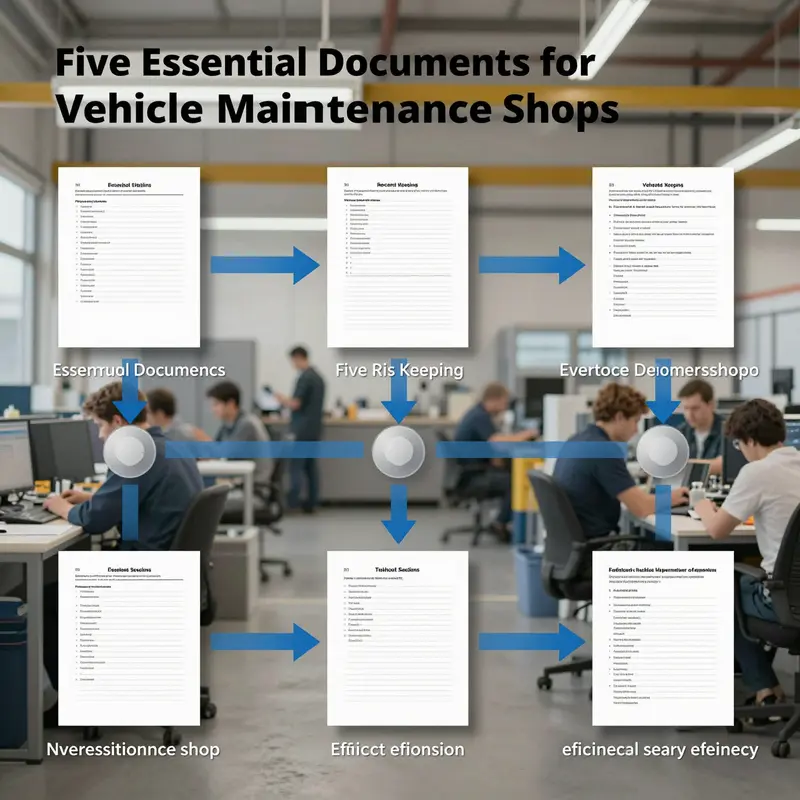
In a busy maintenance shop, clarity comes from moving data through a single, repeatable system rather than juggling many separate forms. The five-sheet framework aligns daily tasks with long term planning by tying together five distinct records: usage, fuel, maintenance and repair, expenses, and the vehicle maintenance schedule. When designed well, these sheets form a closed loop where each sheet informs the next and nothing falls through the cracks.
The first sheet, the vehicle usage log, captures who drove what, when, for what purpose, and with what equipment. It creates a baseline that all other sheets reference. By linking usage to distance driven and time, the team can measure utilization, identify idle periods, and spot anomalies that deserve attention.
The second sheet, the fuel consumption record, tracks every fill with amount, price, and odometer reading. When tied to the usage log, it reveals efficiency patterns, flags surprising deviations, and supports budgeting and auditing.
The third sheet, the maintenance and repair record, becomes the shop’s memory. It records the vehicle identity, fault descriptions, work performed, parts and labor, and total cost. This history informs decisions about replacement timing, warranty coverage, and spare-parts planning, and it provides a durable audit trail for compliance.
The fourth sheet, the expense reimbursement form, handles costs technicians incur on the road or in the yard. Clear receipts, justifications, and approvals keep expenses aligned with actual activities and strengthen financial controls.
The fifth sheet, the vehicle maintenance schedule and checklist, translates manufacturer recommendations into a living calendar. It tracks planned services, completed work, and reminders, reducing missed maintenance and unplanned downtime. When these five sheets are integrated, the workflow becomes predictable: data flows from usage to fuel to maintenance, to costs, and back into schedule adjustments that improve reliability and total cost of ownership.
Implementing the framework starts with a shared data model and consistent definitions for identifiers, dates, and part numbers. It requires a user friendly design, governance reviews, and a light but capable digital backbone that can cross-link sheets and trigger reminders. Even teams using paper records can realize the benefits by digitizing critical fields and ensuring that every sheet refers to a single vehicle identity and a uniform maintenance taxonomy. The result is not more overhead but more insight, enabling better decisions about asset health, budgeting, and scheduling.
In practice, managers use dashboards that summarize activity across the five sheets, translating data into actionable trends. They identify routes with high fuel consumption, recurring maintenance needs, or cost drivers that deserve process improvements. They also build a planning horizon that aligns with budget cycles and maintenance windows, turning day to day operations into a strategic capability.
This chapter closes with a reminder: the five-sheet system is a discipline as much as a structure. It requires consistent data entry, joined thinking across roles, and a commitment to continuous improvement. When embraced, the five sheets give a fleet a transparent health profile, a predictable maintenance cadence, and the capability to plan for growth with confidence.
Final thoughts
Understanding the crucial need for five specific sheets in vehicle maintenance is an essential insight for any shop owner aiming for operational excellence. Each sheet serves its unique purpose and collectively they enhance workflow efficiency, keep detailed service records, and ensure compliance. In today’s vehicle care landscape, staying organized with the right documentation not only aids in smooth daily operations but also builds trust with clients by showing diligence in vehicle management. Prioritize your documentation process to set your maintenance shop on the path to long-term success.