
For business owners who rely on Ford Escapes for daily operations, neglecting regular maintenance can lead to serious consequences. Skipping routine service increases the risk of unexpected breakdowns, safety hazards for drivers and passengers, higher repair costs, and a steeper depreciation of the vehicle’s resale value. This article outlines the risks of avoiding maintenance, the financial impact, and practical checks to keep your fleet dependable and cost-effective.
Silent Breakdowns: The Real Costs and Safety Risks of Skipping Ford Escape Maintenance
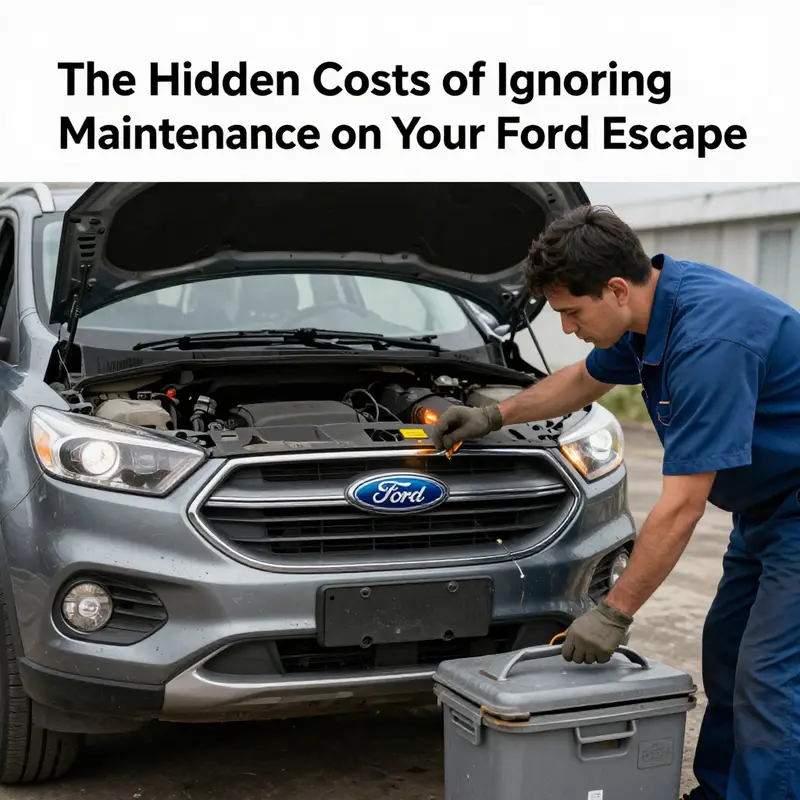
Choosing to skip regular maintenance on a Ford Escape is often framed as a simple cost cut. Yet the real price paid unfolds gradually, almost invisibly, until a cascade of problems becomes impossible to ignore. Consider the experience of a 2011 Ford Escape Hybrid that racked up nearly 600,000 miles in demanding service as a taxi and rideshare vehicle. Its endurance proved not to be a license to neglect, but a lesson in how far a well-used machine can go when cared for consistently. When maintenance slips, even a known-for-durability model can slip into breakdowns that are not just inconvenient, but dangerous. The consequences range from sudden power loss on a highway to compromised braking performance and unexpected electrical glitches that can undermine critical safety systems. In a landscape where roads demand constant attention and quick responses, any lapse in upkeep translates into growing risk for the driver, passengers, and other road users.
At the core of maintenance is a simple, repeatable discipline: regular oil changes, fluid checks, brake inspections, tire rotations, and timely addressing of warning lights. These tasks are not mere routine; they are the first line of defense against friction, heat, and wear. When oil levels fall or deteriorate, lubrication becomes inadequate, and the engine endures higher friction and temperatures. Over time, this can lead to accelerated wear, sludge formation, and ultimately overheating that saps power and reliability. The danger is not only mechanical failure but an abrupt, unpredictable shutdown that can occur in the middle of traffic. The taint of overheating can also cascade into other components linked to the engine bay, from radiator function to cooling fans, compounding the risk that a single skip cascades into multiple failures.
Brakes illustrate the same principle from a different angle. Worn brake pads, contaminated or degraded brake fluid, or a neglect of rotor condition all contribute to longer stopping distances and reduced pedal feel. In an emergency, those small declines compound into a dangerous reality: a vehicle that takes longer to stop can no longer be treated as a predictable partner on the road. ABS and ESC depend on clean, reliable hydraulic pressures and sensor inputs to modulate braking and stability during sudden maneuvers. When maintenance is neglected, these systems can slip from their intended performance envelope, offering a false sense of security at the moment they are most needed. The statistics echo this concern. The National Highway Traffic Safety Administration notes that mechanical failures contribute to roughly 10% of all traffic accidents in the United States, with brake system malfunctions among the most common culprits. The implication is not that maintenance alone prevents all harm, but that neglect elevates risk by tampering with the very mechanisms designed to protect occupants in a crisis.
Tires and suspension are equally telling in how neglect compounds danger. A tire that has not been rotated regularly will wear unevenly, reducing grip and increasing susceptibility to blowouts or unpredictable handling in wet or icy conditions. Proper inflation and alignment help maintain predictable steering and traction. A neglected suspension system can amplify rough roads into uncontrolled body motion, affecting steering control, steering feedback, and lane stability. When tires lose tread or become uneven, the driver’s ability to respond to a sudden hazard diminishes, turning minor road hazards into critical moments. All these elements—engine heat, braking performance, traction, and steering fidelity—conspire to convert a routine trip into a risk scenario that grows with miles and neglect.
Beyond the immediate safety concerns, there is the practical aspect of reliability. A vehicle that has not received timely maintenance is more prone to unplanned breakdowns. A breakdown not only strands the driver but can leave passengers vulnerable in high-traffic environments or in conditions where alternatives are limited. The anxiety of being stranded—especially in bad weather or late at night—undercuts the confidence a driver needs to navigate daily routes or long trips. In the longer arc of ownership, neglect compounds the financial dimension of the decision. While maintenance might appear as a recurring expense, skipping it yields a different kind of cost: the price of emergency repairs, lost time, and diminished resale value when the vehicle inevitably sells with a shorter remaining life. Routine maintenance is an investment in continuity and predictability, qualities that become essential when a vehicle serves as a daily workhorse.
Romancing the idea of saving money by delaying service ignores a broader financial calculus. It is common knowledge that Ford Escapes, like many mid-size utility vehicles, can incur lower-than-average maintenance costs in their early years, but those numbers assume a baseline of regular care. The allure of postponing service often dissolves in the face of bigger bills later—costs associated with replacing damaged sensors, worn transmission components, failed cooling systems, or corrected alignment and brake systems. The maintenance history of a high-mileage example such as the hybrid variant demonstrates both durability and fragility. The very engines and electrical systems that power hybrids rely on a blend of mechanical and electronic components that must be calibrated and monitored to maintain efficiency and safety. When the rhythm of oil changes, filter replacements, coolants, and brake fluids is broken, the system can drift out of balance. The eventual outcome may be an expensive set of repairs that could have been mitigated or avoided with timely care.
From a warranty perspective, the decision to skip maintenance can also undercut protection. Warranties are designed with expectations about maintenance schedules in mind. When owners fail to adhere to those schedules, coverage can be jeopardized, leaving them to shoulder the full cost of any subsequent failure. The long-term impact is not only the price tag of the repair itself but the opportunity cost of delaying fixes that would have preserved fuel efficiency, performance, and safety. A vehicle that runs efficiently and reliably while meeting its original design expectations tends to retain value better. In contrast, a neglected Escape may accumulate wear that depreciates its resale value and makes it harder to recoup investment in the long run.
Engaging with maintenance as a regular habit also supports the vehicle’s safety ecosystem. Modern vehicles depend on a web of sensors, control units, and safety features that must be kept in sync through routine checks. The anti-lock braking system, electronic stability control, and airbag systems all rely on sensors and hydraulic or electric interfaces that can drift out of spec if routine services are missed. A Car Care Council report underscores a troubling real-world pattern: nearly 80% of drivers have neglected at least one recommended maintenance task. The knock-on effect is not merely theoretical; it translates into more frequent warning lights, fewer proactive repairs, and a growing disconnect between vehicle performance and safety expectations. The last thing any driver wants is a false sense of security that disappears the moment a critical system detects an unsafe condition.
The temptation to postpone maintenance often rests on a straightforward math error: equating the immediate savings with longer-term costs. In truth, the cumulative impact of small, delayed, or skipped tasks multiplies quickly. A pragmatic approach sees maintenance not as a cost but as a risk-managed investment in reliability, safety, and the predictability of daily life. When you consider a vehicle like the Ford Escape in the context of real-world use—city commutes, family trips, or the demanding rhythms of a mobility-based career—the value of consistent upkeep becomes even clearer. It protects against the random, expensive outages that can derail plans and compromise safety. It also aligns with a broader ethos of responsible ownership: vehicles are machines built to carry people through time and weather, and we owe them a steady cadence of care in return.
To give the narrative context a practical frame, think of maintenance as a multi-layered shield. Regular oil changes are not solely about engine longevity; they preserve the efficiency of the entire propulsion chain. Fluid checks keep coolant, transmission fluid, power steering fluid, and brake fluid within parameters that protect hydraulic systems from heat and wear. Tire rotations and pressure checks ensure even wear and consistent grip, while brake inspections catch wear before it translates into dangerous delays or failures. The small, routine acts of inspection and service collectively sustain the safety net that ends up saving more in avoided repairs than they cost in service intervals.
For drivers seeking a practical way to anchor this approach, a simple reminder is helpful: maintenance saves more than just money; it saves time, safety, and peace of mind. The idea that neglect might be economical is a false equivalence, because the hidden costs of breakdowns, safety risks, and diminished resale value accumulate quietly over time. The payoff for staying current on maintenance is substantial and measurable: more reliable starts, steadier performance, and the confidence to tackle the road ahead without the fear of a sudden failure turning a routine trip into a crisis. When you review your own vehicle’s history with the Escape in mind, the plan becomes clear. It is not a list of chores but a shared stewardship of a machine designed to keep you moving. In practice, that means scheduling timely oil changes, staying on top of tire health, routinely checking brakes, and paying attention to any warning lights that appear on the dash.
For those who want to connect the dots between maintenance and practical driving benefits, there is a useful resource that explains how regular upkeep can translate into tangible savings on fuel and overall operating costs. how vehicle maintenance saves on gas expenses. This reminder is more than economic; it is a reminder that maintenance is a continuous, predictive act of care rather than a reactive fix after trouble has begun. The message is clear: invest in routine maintenance now, and you reduce the likelihood of disruptive, safety-compromising failures later. The payoff manifests as smoother operation, higher confidence in winter or summer journeys, and a vehicle that continues to serve well beyond its initial lifespan.
In the end, the decision to maintain or neglect is a choice about risk and reliability. For a Ford Escape—whether it loyally serves in daily commuting, a family’s weekend adventures, or a demanding work schedule—the scales favor care. Regular maintenance protects not only the engine and the drive components but also the people inside and around the vehicle. It preserves the intended driving experience, the ability to respond to emergencies, and the reassurance that your vehicle will perform when you need it most. The path to safety and longevity is paved with steady, consistent care, not last-minute fixes and skipped services. With a clear plan and adherence to maintenance schedules, the Escape remains a trusted partner rather than a hazard masquerading as a bargain.
External resource for further guidance on official maintenance expectations can be found here: https://www.ford.com/owners/vehicle-support/maintenance/
Financial Fallout: The Real Cost of Skipping Maintenance on Your Ford Escape
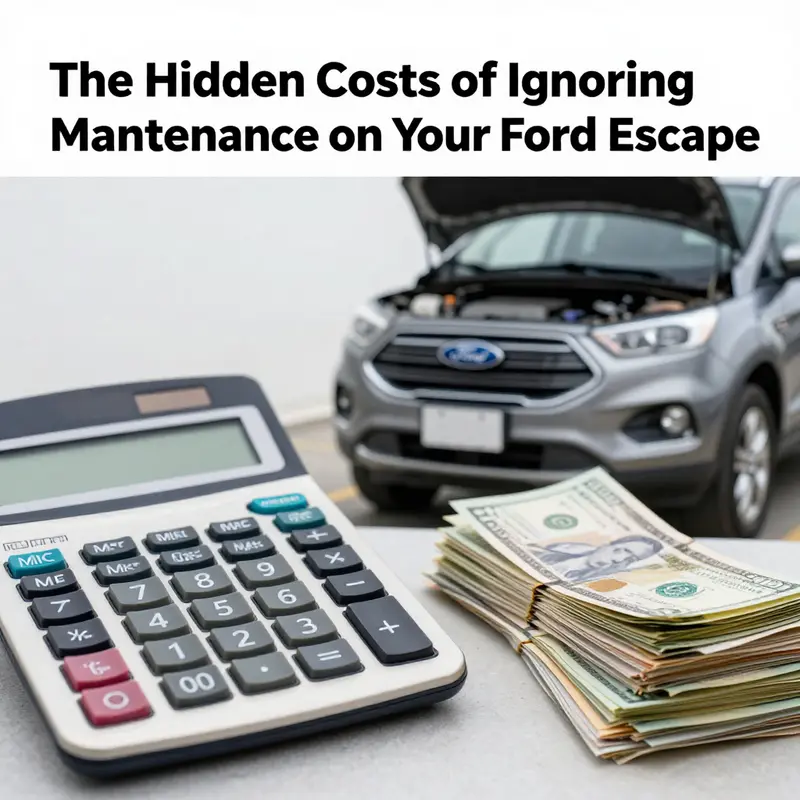
Skipping routine maintenance on a Ford Escape may feel like a way to save a buck in the short term, but the financial consequences quickly compound into a long-term liability. When a vehicle is not cared for on a predictable schedule—oil and filter changes, fluid level checks, brake inspections, tire rotations, and addressing warning lights—the small, manageable problems that could be solved with routine care evolve into larger failures that drain wallets and threaten safety. The Ford Escape is built to be practical and affordable, yet even a model renowned for sturdiness pays a heavy price when owners treat maintenance as optional rather than essential. In practical terms, neglect increases repair costs, shortens the car’s lifespan, and slashes resale value, turning ownership into a rolling financial trap rather than a predictable, affordable transportation solution.
Maintenance exists as a form of risk management. The daily engine performance you experience—steady revs, smooth shifts, reliable cooling, consistent fuel economy—relies on a web of systems that must be serviced regularly. An oil change, for instance, does more than replace lubrication; it preserves engine internals, reduces wear, and helps the engine retain compression and efficiency. Fluid checks ensure that cooling, transmission, brake, power steering, and differential systems remain within their designed operating windows. Skipping these checks may not cause a dramatic failure overnight, but it raises the odds of overheating, component wear, and cascading problems that are expensive to repair.
A practical reference point for the maintenance conversation is the simple connection between small steps and big savings. If you want a concise primer on what maintenance actually encompasses, consider the resource what-is-vehicle-maintenance. This overview underlines that maintenance isn’t about chasing every possible problem; it’s about catching wear before it becomes a fault. In the context of a Ford Escape, especially one with mileage that marks it as a workhorse rather than a showroom beauty, the principle holds even more strongly: regular care protects the investment and preserves reliability when it’s most needed. The consequence of ignoring this cadence becomes apparent in the numbers and in the daily reality of failed components and unexpected downtime.
The price tag attached to neglect is not a single line item but a cascade of potential costs. Start with the obvious failures that can occur when routine oil changes and filter replacements are skipped. Engine lubrication breaks down, leading to accelerated wear, increased friction, and reduced efficiency. The engine’s timing mechanism—or timing chain in many Ford engines—must stay in proper tension and alignment. A failure in timing components can stall the engine, trigger expensive repairs, and in worst cases, cause catastrophic engine damage. Estimates for timing-related repairs can exceed $1,000, depending on the specific engine and the extent of the damage. While the exact figure can vary by model year and parts policy, the financial impact is consistently higher than a routine oil service.
Beyond the engine, transmission health sits at the heart of the Escape’s driving experience. Transmission problems are not only inconvenient; they threaten the vehicle’s ability to move safely and reliably. Symptoms such as hard shifting, slipping, delay in engagement, or strange noises often begin as minor irritations that owners attribute to aging or harsh driving. Without timely inspection and maintenance, these symptoms can escalate to the point where a transmission replacement becomes the only viable option. The cost of a full transmission replacement can easily climb into the thousands of dollars, a figure that dwarfs the annual maintenance budget for many owners. Even when a full replacement isn’t necessary, frequent heightened repairs and replacements erode overall ownership affordability and predictability.
Fuel efficiency is another casualty of deferred maintenance. A neglected air filter, dirty fuel injectors, worn spark plugs, or misfiring cylinders can all reduce miles per gallon. A few percentage points of lost fuel economy may not seem like much month to month, but over the course of a year, the savings vanish. The cumulative effect is a higher annual fuel bill that compounds the true cost of ownership. Add in the cost of additional maintenance due to accumulated wear—brake pads that wear unevenly from misalignment, tires that wear out prematurely due to improper alignment or low tire pressures—and the financial footprint grows more than owners anticipate.
There is a more systemic frame to consider as well: certain model years of the Escape, notably around 2013–2015, have drawn attention in reliability discussions. Industry reports repeatedly link these years to recurring reliability challenges, including transmission and electrical system issues. While a well-maintained vehicle can weather many miles, these inherent reliability concerns translate into higher ongoing maintenance costs even when care is consistent. A practical takeaway is that some years require a higher baseline of attention and a larger contingency in a maintenance budget. Industry analyses have estimated an incremental maintenance burden—roughly an extra $600 per year for some models in those ranges—simply due to the baseline unreliability observed in those years. That extrapolation is not a doom-laden claim; it’s a reminder that reliability is not uniform across all model years, and maintenance costs can be a moving target depending on the car’s history and the conditions it has endured.
To frame this in a more tangible way, imagine a Ford Escape that has accumulated miles in a demanding service life—think urban taxi routes, long highway pushes, or fleet duty. In such scenarios, the maintenance schedule is not a luxury; it’s a survival strategy. A single overdue service, such as delaying brake inspections or deferring tire rotations, increases the risk of a tire blowout, brake failure, or heat-related engine stress. The short-term savings may look appealing, but those risks translate into potentially dangerous driving conditions and costly emergency fixes. The story of a high-mileage Escape, including the 2011 hybrid version noted for durability in extreme service yet eventually succumbing to wear after decades of heavy use, serves as a sober reminder: even robust vehicles designed for longevity require consistent care. Skipping maintenance is not a smart hedge against expense; it’s a calculated bet with the odds stacked against you.
Another dimension of the financial equation is the impact on warranties and resale value. Vehicle warranties are often conditioned on adherence to a maintenance schedule. When maintenance records are sparse or missing, warranties may become void for certain repairs, leaving the owner to shoulder full cost recovery for failures that would otherwise be partially or fully covered. Even when warranties aren’t voided outright, the absence of a documented maintenance history undermines buyer confidence and depresses resale value. A well-documented maintenance routine becomes a marketable asset at sale, signaling to prospective buyers that the vehicle has been cared for and can be trusted to perform. In contrast, a neglected maintenance history becomes a red flag and a negotiating point for reduced offers.
In the broader context of ownership affordability, proactive maintenance is not merely prudent; it’s a financial discipline. The perspective shifts from viewing service visits as an expense to recognizing them as an investment in predictable costs and reliable operation. The Ford Escape, when kept on a disciplined maintenance path, can deliver meaningful value over time through steady performance, lower risk of sudden failures, and stronger resale outcomes. The alternative—ignoring routine upkeep—transforms a once-affordable family vehicle into a constant source of anxiety and unplanned expenditure. The contrast is stark: routine maintenance pays for itself in reduced risk, while deferred care accumulates penalties in the form of higher repair bills, reduced reliability, and diminished ownership value.
For a deeper, model-wide examination of reliability and common failures that color these financial considerations, see the external resource that analyzes Ford Escape reliability and pervasive issues: https://www.caranddriver.com/ford/escape/reliability. This external perspective complements the maintenance-focused view by highlighting the real-world performance patterns that owners encounter when upkeep is neglected or approximated. Keeping a schedule aligned with the manufacturer’s recommendations remains the most effective path to minimizing the financial fallout described above, especially as the Escape ages and accumulates more miles. Maintenance is not a freak accident insurance policy; it is a carefully managed strategy that supports safety, reliability, and long-term ownership affordability.
The Real Lifespan Equation: How Regular Maintenance Deepens Reliability for Your Ford Escape
Maintenance is the quiet engine of a car’s longevity. When you think about the Ford Escape’s lifespan, you might picture rugged frames and durable components, but the truth is much more practical: the daily discipline of service determines how long the vehicle serves you at a high level of performance. The mileage record of a 2011 Ford Escape Hybrid used as a taxi, approaching 600,000 miles, is a striking example. It shows what is possible with steady care—yet it also reveals the limits of neglect. The taxi’s high-use life did not outrun basic maintenance demands; rather, it highlighted that the absence of routine oil changes, refills, and inspections accelerates wear in ways that tests even a robust powertrain. In other words, the long-term reliability of any Escape is as much about when you maintain as what you drive.
To understand why maintenance matters so much, consider the everyday systems that keep a vehicle running smoothly. An Escape is a compact platform with a web of interlocking parts: an engine that needs clean oil and proper cooling, a transmission that relies on fresh fluid and correct torque, brakes that depend on pad wear and brake fluid health, and a suspension that thrives on aligned wheels and balanced tires. Skipping even small services—like a routine oil change or a basic brake inspection—can let wear accumulate in places you can’t see until a warning light flickers or a part fails under load. The effect is subtle at first, then sudden, a pattern you’ll recognize only when the gaps between service visits grow too wide. For a primer on what constitutes routine upkeep, see the guide to what is vehicle maintenance.
A practical path to understanding comes from tracing the life of routine maintenance through the most critical systems. The engine, for instance, relies on clean oil to cushion moving parts, carry away heat, and seal tolerances. When oil breaks down or mineral buildup forms, friction rises, heat climbs, and lifters or bearings can suffer. The cooling system is another delicate balance. Coolant circulates to prevent overheating, a danger that, if unchecked, can warp metal components, distort gaskets, and eventually lead to head–gasket failure. A neglected radiator, a clogged thermostat, or weak hoses might not fail immediately, but they create a creeping risk that compounds with every hot city stop, every long highway run, every heavy acceleration for a passing maneuver. The Escape, like many mid-size SUVs, blends a familiar gasoline engine with hybrid elements; the hybrid system adds another layer of maintenance considerations, but the underlying rule remains the same: timely service protects the mechanical heart beneath.
Transmission life is another telling indicator of how maintenance translates into longevity. Automatic transmissions are particularly sensitive to fluid condition and transmission cooler health. Over time, fluid can degrade, lose its lubricating properties, and form varnish on the valve bodies. If this happens, shifting can become abrupt, slipping can occur, and the torque converter may operate under increased stress. In a vehicle that racks up miles in demanding service—city taxi routes, early-morning shifts, late-night pickups—the transmission endures countless cycles. Regular fluid changes, pan inspections for wear metal, and a trained eye for unusual noises during shifts are not mere maintenance tasks; they are proactive checks against a cascade of failures that can render a high-mileage Escape uneconomical or unsafe to drive.
The brakes and tires form the most immediate link between maintenance and safety. Worn brake pads or low brake fluid do not announce themselves with mystique; they scream with vibrations, pulsations, and longer stopping distances. A tire that isn’t rotated or properly inflated will wear unevenly, compromising handling and fuel economy. In a vehicle used in mixed driving conditions—dense urban traffic mixed with open highways—the tire tread and brake efficiency determine response times and traction in rain, snow, or slick surfaces. Regular inspections reveal wear patterns early, allowing you to replace components before a failure occurs at the worst possible moment. It’s not glamorous, but it is the surest way to keep the Escape’s critical handling characteristics intact year after year.
Electrical and sensor systems deserve similar respect, especially in a model that integrates advanced electronics with a traditional drivetrain. Modern light vehicles depend on a network of sensors for engine management, transmission control, anti-lock braking, stability control, and cabin comfort. The battery, alternator, and various harnesses age with use and exposure to heat, cold, and vibration. A failing alternator or a drained 12-volt battery can leave you stranded even as the engine otherwise runs well. In hybrids, the high-voltage system and related battery management electronics add a layer of complexity that rewards vigilance. Addressing warning lights promptly—not just replacing bulbs in the dashboard glow but diagnosing the root cause of an illuminated light—keeps the system integrated and prevents a minor alert from becoming a major roadside repair.
Yet maintenance is not only about avoiding trouble. It also sustains resale value and warranty coverage, two financial realities that matter long after the thrill of a new vehicle has faded. Warranties speak in complicated terms of coverage, but many warranties hinge on documented maintenance. If you delay service long enough, you run the risk of violating terms or, at the very least, undermining the confidence a future buyer has in the vehicle’s reliability. The longer you go between services, the more apparent the neglect becomes when the car is evaluated. This is not just about avoiding breakdowns; it is about preserving the vehicle’s credibility with potential buyers who will inspect maintenance logs and consider the total cost of ownership.
All of this leads to the practical arithmetic of ownership. Regular servicing, timely fluid changes, and prompt address of minor issues are the core levers that keep the Escape performing as designed. When you stay on top of these tasks, you distribute wear more evenly, avoid sharp spikes in repair costs, and sustain consistent performance, efficiency, and safety. Conversely, neglect creates a domino effect. A small cooling system leak goes unrepaired, the engine runs hotter than it should, the coolant reservoir sags, and the thermostat may not respond quickly enough. The cumulative heat stress can accelerate gasket wear and degrade seals that protect against leaks and pressure loss. A transmission that runs hot or shifts irregularly places extra stress on the driveline and can precipitate premature failure if the issue is silently ignored. The brakes, tires, and suspension rely on precise maintenance alignment; when that alignment slips—whether due to uneven tire wear from delayed rotations or neglected alignment checks—the steering and stopping confidence erode, turning ordinary driving into a persistent safety risk.
If you want a tangible sense of what happens when care pays off, look to endurance data and cost analyses that frame reliability in miles, not just years. The long-term reliability of a Ford Escape, when maintained consistently, can approach the 200,000 to 300,000-mile range under sensible usage and attentive upkeep. That’s not a guaranteed horizon, but it’s a credible target supported by steady service patterns. The opposite scenario—skipping routine maintenance—does not simply shave a few months off a car’s life. It accelerates the wear curve, increasing the odds of major repairs and a sudden drop in reliability without warning. In other words, maintenance reshapes the curve of your Escape’s life, turning potential decline into a manageable, predictable path.
For readers seeking a broader context on how these maintenance habits translate to the overall value proposition of a Ford Escape, a broader reliability overview is available in respected automotive coverage. This external resource aggregates long-term reliability expectations and maintenance cost considerations, offering a wider lens on what keeps a Ford Escape dependable as miles accumulate. It’s a useful companion to the hands-on guidance in this discussion, reinforcing the idea that the right maintenance cadence makes a material difference over years and hundreds of thousands of miles.
If you’re curious about how to translate these ideas into a concrete plan, start with a simple cadence: a fundamental service interval for engine oil and filter every 5,000 to 7,500 miles (depending on your exact engine and driving conditions), fluid top-offs at least twice a year, and brake and tire inspections at every scheduled service. Document everything; a well-kept log is more than a checklist. It becomes your vehicle’s story, showing how care has paid off in smoother operation, fewer surprises, and a consistent sense of trust behind the wheel. And, as the data suggests, that trust compounds: the more diligently you maintain the Escape, the more likely you are to reach high-mileage milestones with the vehicle still performing close to its original design intent.
As you map this out, remember that the objective is not perfection but consistency. A few minutes of attention every few thousand miles can prevent hours of costly repairs and an unwelcome breakdown. The value of that approach shows up not only in the engine oil’s clarity or the brakes’ responsiveness but in the quiet confidence of knowing your Escape is ready for the next road, the next family trip, the next shift at work. The long-term reliability you’re aiming for is a living metric, measured not just in miles but in the steadiness of your daily experience behind the wheel.
Internal resource: what is vehicle maintenance. This primer helps translate the big ideas here into a practical, repeatable routine you can apply to any vehicle, including your Escape, without turning maintenance into a mystery. For those who want a broader, data-driven perspective on long-term reliability and maintenance costs, see the external reference linked below.
External reference: https://www.caranddriver.com/ford/escape/reliability
When Skipping the Checks Becomes a Breakage List: The Real Costs of Skipping Ford Escape Maintenance
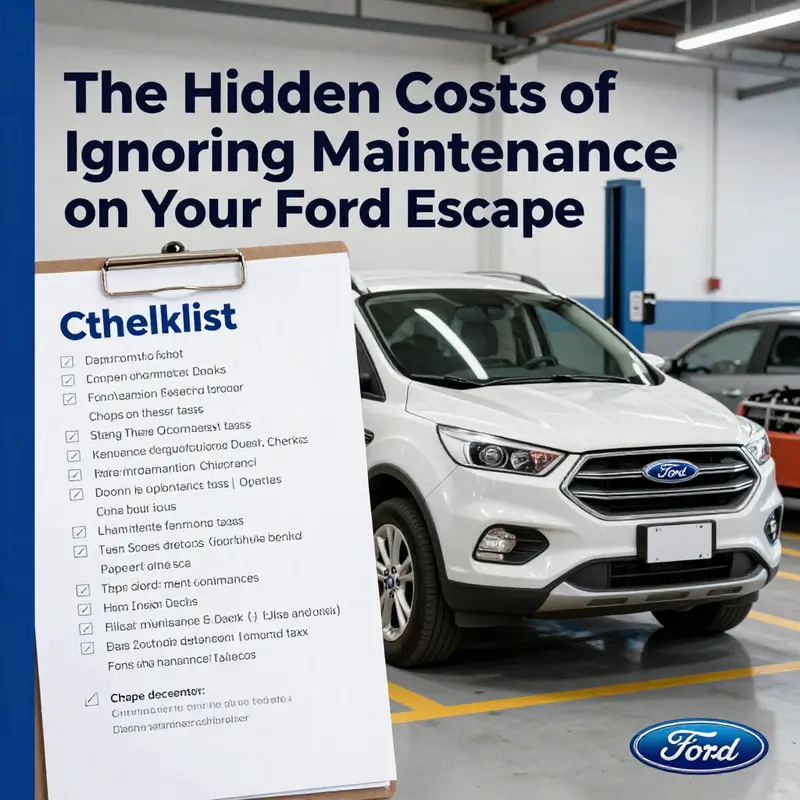
Maintenance is not a luxury for a Ford Escape; it is the baseline, the quiet agreement between a driver and a vehicle that the miles will be earned and not forced out of the engine, brakes, and electronics by neglect. Across decades of service, even a model built for practicality and durability reveals a truth: what keeps a car reliable on long hauls, rough city duty, or mixed, high-demand work is a disciplined rhythm of checks and changes. The idea that maintenance is optional dissolves as soon as the first warning light glows, the first tire edge shows wear, or the oil dipstick reveals a low level. The risk is not merely a single failed part; it is a cascade of degraded performance that compromises safety, comfort, and the peace of mind that comes with reliable transportation. When we look at maintenance through the lens of a Ford Escape—whether a practical 2.5-litre non-hybrid from the early years or the more ambitious hybrid variants—the pattern is stark: neglect amplifies wear, accelerates fatigue in the drivetrain, and turns simple servicing into costly repairs or premature retirement.
The engine’s lifeblood is oil, and the life of that lifeblood is measured in miles and hours, not in the calendar alone. Regular oil changes, along with timely oil-filter replacements, are the first line of defense against excessive engine wear. Oil lubricates, cools, and cleans; it carries away heat and debris that would otherwise scour bearing surfaces and clog valve guides. When oil is neglected, viscosity breaks down, contaminants accumulate, and the oil’s lubricating film thins. The result is increased friction, accelerated wear, and a less forgiving engine at every stop and go moment, especially during stop-start city duty that many Escapes endure daily. The commonly recommended interval for many Ford Escapes falls into a window of roughly 5,000 to 7,500 miles, but the exact spec depends on oil type and operating conditions. Modern synthetic blends can stretch this window somewhat, yet the imperative remains: if you don’t honor the interval, you invite a creeping decline in efficiency and torque delivery. And if the engine overheats because the cooling system can’t shed the extra heat, the cost and risk rise quickly. The habit of checking, rather than guessing, keeps this from becoming a problem.
Tires, too, are a frontline safety concern that often signals broader neglect. The Ford Escape’s handling and traction owe much to the tires’ condition and pressure. Regular tire inspections—looking for proper inflation, tread depth, and signs of damage such as cuts, cracks, or bulges—are simple yet powerful. Underinflated tires increase rolling resistance, lowering fuel economy and accelerating uneven wear across a circumference that can lead to sudden handling quirks in rain or snow. Rotating tires every 5,000 to 7,500 miles sustains even tread wear, preserving grip and braking performance. A monthly check of tire pressure is a quick habit with real payoffs, especially in climates with temperature swings that can cause pressure to creep down. The dynamic relationship between inflation, wear, and road feedback makes this a routine that should be almost automatic for anyone who depends on a Ford Escape as a daily driver, a taxi, or a family workhorse.
Brakes deserve a similar reverence. The braking system is the ultimate safety feature, translating pedal input into controlled deceleration. Regular inspections of pads, rotors, and the braking fluid are non-negotiable. Most manufacturers recommend checking brake components at every 10,000 miles or during oil changes, a rhythm that aligns with other critical checks because the brake system interacts with every driving scenario—from a casual lane change to a sudden stop in traffic. Any squealing, grinding, or reduced responsiveness is a signal that urgent attention is needed. A warning light glowing on the dash demands immediate inspection. If you delay, you compound wear and risk more expensive repairs, or worse, an incident that could have been prevented by timely service. In the Ford Escape, as with most modern vehicles, the brakes are a system that rewards proactive care with longer pad life and steadier, more predictable braking in all weather conditions.
Beyond the powertrain and the brakes, the cabin environment matters for comfort and health. The cabin air filter, often overlooked, protects occupants from dust, pollen, and pollutants while maintaining airflow through the HVAC system. A clogged filter reduces airflow and the cooling or heating efficiency, which can make a long drive uncomfortable and put extra strain on the climate control system. The replacement interval for many Escapes sits in a broad range—approximately 15,000 to 30,000 miles—though dustier or more polluted environments can necessitate sooner changes. The reward for timely replacement is not only cleaner air but a more responsive climate control system that can keep passengers focused on the road rather than fighting fatigue from stale air.
The electrical and starting systems, tethered to the health of the battery, also demand respect. A weak battery is a common gatekeeper for frustrating breakdowns, particularly in cold months when temperatures demand extra current for a reliable crank. Regular battery testing—at least once a year, with extra attention before winter—helps catch a decline before it leaves you stranded. Age is a crucial factor here; most batteries live between three and five years in typical driving conditions, so knowing the battery’s age and performance is essential. Signs of trouble—slow cranking, dim lights, and intermittent electrical quirks—should trigger a diagnostic early, before an inconvenient failure. This is not merely about starting the car; it is about ensuring the entire electrical ecosystem—sensors, modules, and actuators—has stable, clean power to perform critical safety functions.
Fluid levels and quality form a complementary hedge against overheating, wear, and degraded performance. Engine coolant, transmission fluid, brake fluid, and power steering fluid each play specific roles in heat management, hydraulic assist, and smooth operation. Low or degraded fluids can lead to overheating, reduced responsiveness, or drivetrain damage. The coolant, in particular, protects against overheating and helps preserve the radiator and heater cores. Transmission fluid maintains lubrication and hydraulic functions that influence shifting quality and efficiency. Power steering fluid ensures easy maneuvering, especially at low speeds or during parking maneu to fit into tight spaces. The guideline here is straightforward: consult the owner’s manual for the correct fluid specifications and recommended intervals, but also trust your senses—if you notice a taste of coolant on the dipstick or a strange smell, investigate rather than assume. Regular checks are a short path to preventing overheating, poor performance, and unexpected downtime.
For many drivers, the question is not whether to maintain but when to begin treating maintenance as a ritual rather than a reaction. Long-running reliability on a Ford Escape is built on habit: a routine that captures oil changes, tire care, brake checks, cabin air filter changes, battery health, and fluid condition as a coherent schedule rather than a patchwork of urgent fixes. The practical result of sticking to that rhythm is a vehicle that feels the same day after day, year after year. The decision to neglect, by contrast, is a quiet pivot toward disappointment—the kind that sneaks in through a dashboard warning light, a balky A/C, a squealing brake, or a sudden stall on a highway ramp. It is a decision that can undermine the return on investment that a well-kept Escape promises.
The practical, real-world thread connecting all of these checks is simple: a well-maintained vehicle is not a luxury; it is foundational to safety, reliability, and cost control over time. Consider the high-mileage scenario—the 2011 Ford Escape Hybrid that, in its hard-won service as a taxi and ride-share vehicle, accumulated exposure to continuous heavy demand. Its eventual failure after decades of operation illustrates the power of endurance when maintenance is neglected as much as it is required. That example, framed against the baseline of routine maintenance, suggests a sober takeaway: even resilient designs benefit from disciplined care. Skipping routine maintenance can turn a credible, affordable vehicle into a liability with reduced resale value, uncertain reliability, and greater exposure to unsafe conditions, especially in adverse weather or heavy traffic.
To close this circle, it helps to anchor these ideas in a broader maintenance philosophy. The work of upkeep does not live in a single checklist; it grows from a habit of awareness and planning. Maintaining a Ford Escape becomes easier when you view it as a preparation for future miles rather than a reaction to present trouble. In practice, this means logging service dates and mileages, using a reminder system, and treating each component as part of an integrated system rather than an isolated part. It also means recognizing that some conditions may require earlier attention than the manual prescribes, such as in dusty environments or for vehicles that see taxi or commercial use. For an overarching framework on how such maintenance is defined in the automotive world, see the resource on vehicle maintenance philosophy and practices, which can help drivers form a clearer, more consistent approach to caring for their vehicle: What is vehicle maintenance.
In the end, avoiding the maintenance routine promises little but risk. It compromises safety, increases the chance of breakdowns, and can erode resale value. It also distracts from the overall driving experience—the confidence that comes with a well-tuned engine, predictable braking response, steady climate control, and reliable starting. The Ford Escape is designed to be economical, practical, and accessible, but those benefits rely on a basic truth: you get out of maintenance what you put into it. Skipping the checks may save a little time in the moment, but it costs much more in the long run. The longer you drive with neglected fluids, worn tires, compromised brakes, or a failing battery, the more you’re inviting the next major repair to arrive sooner than you expect. The simplest choice, repeatedly, is to treat maintenance as a non-negotiable pillar of responsible ownership. The payoff is not merely a vehicle that runs; it is a vehicle that continues to run safely, efficiently, and predictably mile after mile.
External reference: https://www.caranddriver.com/ford/escape/reliability
The Quiet Cost of Skipping Maintenance: How Poor Upkeep Undermines Resale Value in a Popular SUV
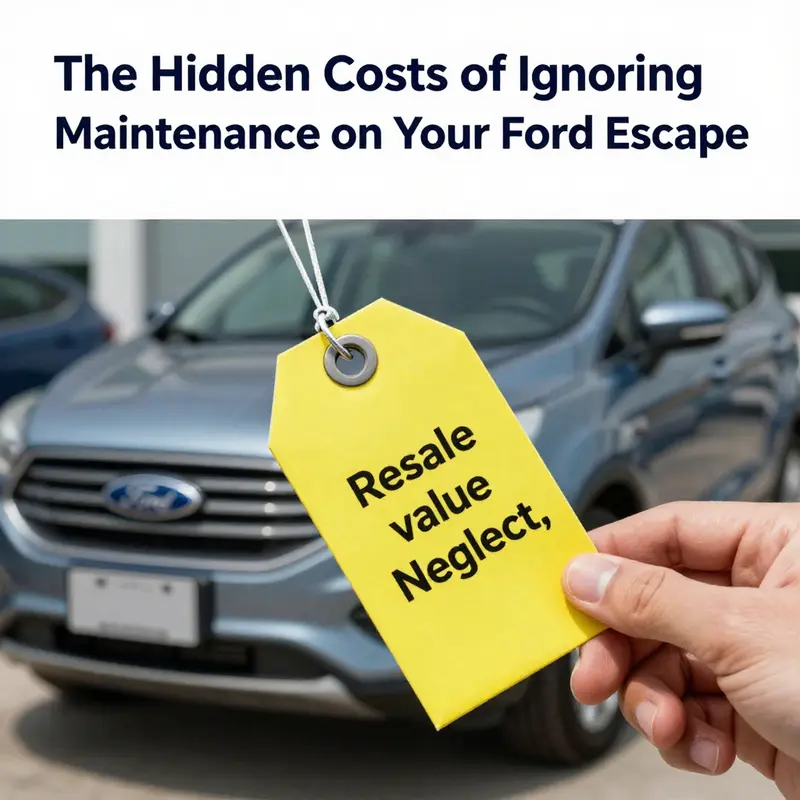
When a vehicle slips into neglect, the first signs are not always dramatic. They creep in as tiny warnings—an engine that sounds a little louder on cold starts, a brake pedal that feels a touch spongier, or a dash light that stubbornly refuses to stay dark. Across the spectrum of vehicles, these signals often announce more than just a single faulty part. They mark a pattern: maintenance was skipped, the clock kept ticking, and risk quietly accumulated. In a widely used, family-friendly SUV—one that many owners rely on for daily commuting, school runs, and weekend getaways—this pattern can translate into real, tangible costs. The most visible consequence is the obvious one: the vehicle becomes less reliable, less predictable, and more prone to breakdowns. But the less obvious consequence—yet just as damaging—is the way neglect erodes the vehicle’s value before the owner ever puts it on the market. Resale value is not only a function of current condition; it is also a report card on stewardship. Potential buyers want a history that says, “This car has been cared for.” Without that record, they suspect hidden problems, and the price they’re willing to pay reflects that doubt.\n\nThe maintenance history is, in many ways, a buyer’s best proxy for the vehicle’s future performance. Oil and filter changes, fluid checks, brake inspections, tire rotations, and timely part replacements are not mere chores; they are investments in reliability. When documented properly, these steps serve as a map of caretaking: a trail of receipts, stamps, and service entries that reassure a buyer the car was kept in good order. Conversely, a missing service log or a few conspicuous lapses in routine care act like red flags. Buyers begin to question whether minor issues were allowed to fester into major faults, whether overdue replacements masked deeper wear, or whether something as simple as tire tread depth was allowed to slip below safe levels. That perception—whether warranted or not—directly influences how much a buyer is willing to offer.\n\nThe data on resale value underscores this dynamic with striking clarity. Kelley Blue Book, a bellwether for used-vehicle pricing, notes a substantial depreciation gap for cars with incomplete maintenance histories. In practical terms, a vehicle lacking full documentation can fetch anywhere from fifteen to twenty percent less than a counterpart with a complete service record. That margin is not simply a discount on a price tag; it translates into thousands of dollars in lost equity, especially for an SUV that many families expect to use for years and pass down to new drivers or new owners. The market also behaves predictably in response to visible upkeep. CarGurus, a modern marketplace that blends data with buyer sentiment, shows that SUVs with clean, verifiable maintenance histories tend to move faster and at premium prices relative to those with questions about repairs, late services, or patchy records. In a car that is meant to be practical and dependable, the presence or absence of meticulous maintenance documentation can be the deciding factor between a confident, fair offer and a hard, lowball bid.\n\nThe risk of neglect is not limited to the mere transfer of ownership. Hidden costs tend to accumulate in the period between purchases or between major service intervals. When maintenance is postponed or ignored, problems can escalate in ways that baffle a buyer who is surveying a used SUV. Transmission issues that were not addressed early may grow into more costly concerns, with potential slippage, hard shifting, or unexpected failure. A suspension that has borne excess wear from neglected alignment, worn bushings, or failing shocks can translate into a rough ride, uneven tire wear, and the prospect of expensive replacements down the line. Brakes are another focal point; when pads and rotors are allowed to wear past their recommended limits, not only is safety compromised but the eventual repair cost often exceeds the simple price of routine maintenance. And because a used SUV often blends daily practicality with longer road trips, tires that wear unevenly due to neglected alignment or improper inflation can demand quick, costly replacements that would have been unnecessary with timely care. These issues sometimes come with a second, less obvious cost: the buyer’s confidence erodes when they anticipate frequent, surprise maintenance rather than predictable, budgeted care.\n\nThe narrative of value preservation hinges on another, equally important factor: the risk of warranty invalidation. While new-car warranties provide a cushion of protection, many extended or used warranties carry stipulations that require adherence to scheduled maintenance. Gaps in service can become the point at which coverage is weakened or voided, leaving the owner to shoulder the full cost of repairs that otherwise might have been covered. That potential dramatically changes the equation of ownership costs over time. It also adds a layer of tension to resale negotiations. A buyer may discount the price not only for immediate repairs that they foresee paying out of pocket but also for the risk that the vehicle’s problems could be more extensive than the surface issues suggested by a cursory pre-purchase inspection. The combination of higher ongoing maintenance risk, reduced warranty protection, and a lower perceived reliability makes neglect a triple hit to resale value.\n\nYet even with the strongest case for care, there is room for restraint. Regular maintenance is not a magic guarantee against decline; high-mileage vehicles inevitably face more wear and tear. The lesson is not that the vehicle will stay pristine forever, but that the rate of depreciation can be managed. The owner who keeps a thorough, dated service log—and who follows a consistent maintenance schedule—sends a clear message to buyers: this SUV has earned a trust that price alone cannot buy. The practical implication is straightforward. Buyers are more willing to pay a premium for a vehicle with verifiable care, and sellers bear a smaller margin of negotiation pressure when maintenance is clearly documented from the first day of ownership to the final sale. In other words, the difference between a healthy resale value and a discounted one often comes down to recordkeeping as much as to the mechanical state of the car on the day of sale.\n\nFor owners who are currently trying to protect the resale position of their vehicle, the path forward is practical and well-trodden. Prioritize completing all scheduled maintenance and gathering complete records before any sale. If receipts are scattered or missing, re-create the history as much as possible by contacting service centers or using owner records. Schedule a thorough pre-sale inspection to uncover issues that might otherwise deter buyers; addressing those concerns transparently before listing can reduce the likelihood of friction during negotiations. Finally, present a clean, organized package to prospective buyers: a folder with maintenance invoices, a clear chronology of service dates, tire and brake condition notes, and any documented parts replacements. This approach signals care, responsibility, and foresight—three pillars that support higher offers and shorter listing times.\n\nTo those who understand this dynamic, the take-away is not that maintenance guarantees perpetual fortune in the used-car market, but that neglect is a costly bet. Regular care preserves reliability and, crucially, preserves trust in the vehicle’s maintenance narrative. The connection between care and value is, at its core, about credibility: a well-documented history creates confidence in buyers, and confidence translates into favorable negotiating positions and better resale outcomes. In the lifecycle of any widely used SUV—whether it carries a family schedule or a road-trip itinerary—the decision to maintain becomes a decision about the integrity of the vehicle’s value over time. This is why the chapter on neglect should not be read as a cautionary tale alone, but as a practical guide to protecting equity through steady stewardship.\n\nInternal link: For a deeper look at how ongoing maintenance can influence overall ownership costs, including fuel efficiency considerations, see How Vehicle Maintenance Saves on Gas Expenses. This resource emphasizes that consistent upkeep often pays dividends beyond reliability and resale, extending to ongoing operating costs and long-term value. [https://vehicletricks.com/blog/how-vehicle-maintenance-saves-on-gas-expenses/]\n\nExternal reference: For an external perspective on reliability and long-term maintenance expectations, see Car and Driver’s reliability overview, which provides context on baseline expectations for this class of vehicle and the kind of maintenance patterns that support durable performance over time. [https://www.caranddriver.com/ford/escape/reliability]
Final thoughts
In conclusion, neglecting vehicle maintenance on your Ford Escape can lead to dire safety risks, steep financial costs, and a significantly shortened lifespan. The long-term impacts of ignoring routine checks can affect your business operation’s efficiency and profitability, leading to unexpected breakdowns and repair expenses. Business owners should prioritize regular maintenance to ensure safety, reliability, and enhanced resale value, ultimately safeguarding their investment in the vehicle. Putting in the effort now will pay dividends later, preventing more severe issues down the line.