
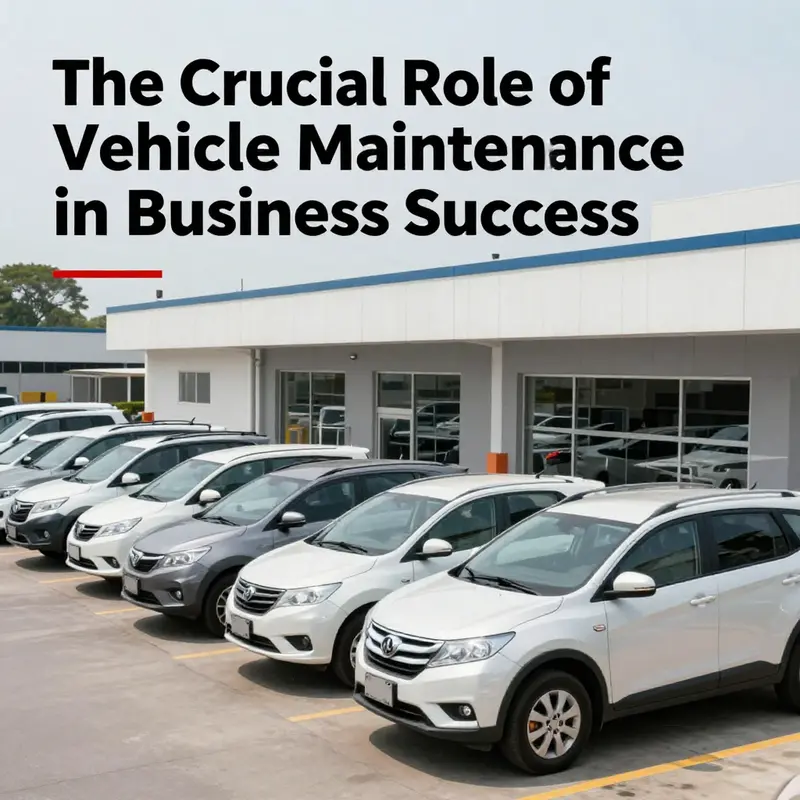
For business owners who rely on vehicles, the importance of regular maintenance cannot be overstated. Maintaining a fleet of vehicles is not merely a logistical task; it is an investment in the safety of drivers, the longevity of assets, and the overall health of business finances. This article delves into three pivotal aspects of vehicle maintenance: its critical role in ensuring safety, its impact on vehicle longevity, and how it translates into cost-efficiency and optimal performance. Through an examination of these interconnected elements, business owners can gain a clearer understanding of how proactive vehicle maintenance contributes to reducing risks and enhancing operational efficiency.
The Silent Shield: How Regular Vehicle Maintenance Safeguards You on the Road
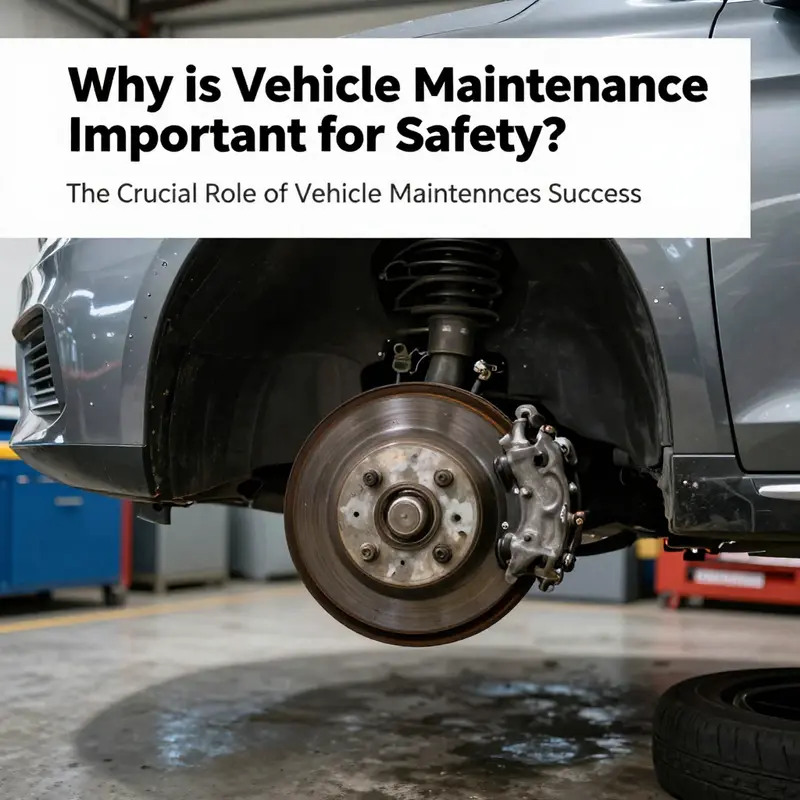
Safety on the road rests on more than good driving skills or quick reflexes. It rests on a quiet, continuous practice of maintenance that keeps a vehicle’s critical systems within their designed performance envelope. When you treat maintenance as a responsible habit rather than a reactive chore, you create a reliable foundation for every trip. The concept of a silent shield might seem abstract, but it translates into tangible benefits: shorter stopping distances, steadier handling, clearer visibility, and fewer surprises that could escalate into hazardous situations. In this sense, maintenance is not merely about preventing breakdowns; it is about preserving the predictable behavior of your car under a wide range of conditions and, by extension, safeguarding lives on the road.
Every era of driving brings its own safety tests. In wet weather, for example, the tire’s contact with the road becomes the defining factor in whether you can maintain traction or slip toward danger. Regular checks of tire pressure, tread depth, and wear patterns ensure that you do not lose grip when it matters most. Adequate tread provides the channeling needed to disperse water and maintain contact with the pavement. Underinflated tires, on the other hand, create extra heat, reduce braking responsiveness, and increase the risk of a blowout at highway speeds. These are not isolated concerns but parts of a single safety chain: if one link weakens, the others are put at risk. This is why tire maintenance sits at the core of safe driving, especially in environments that oscillate between sunlit dry days and sudden rainstorms or snow.
Braking is another central pillar of safety that depends on regular attention. Brakes must bite consistently, pedals should feel only as hard as needed to modulate stopping power, and the system must resist fade during repeated or urgent use. Worn brake pads reduce stopping efficiency and increase stopping distance, a dangerous mismatch in an emergency. Contaminated brake fluid can raise the risk of vapor lock or reduced braking performance, while deteriorated lines threaten the entire hydraulic pathway that translates pedal input into wheel force. Routine checks—measuring pad thickness, listening for unusual noises, inspecting for leaks, and confirming fluid levels—provide early warning of issues that could compromise braking during critical moments. The outcome is not merely a shorter stall in a panic situation; it is the ability to decelerate smoothly and predictably when traffic demands decisive action.
The road ahead is most forgiving when the vehicle’s steering and suspension systems respond with precision. Steering components such as tie rods and other linkages must be tight, free of play, and correctly lubricated. Worn components can create vague or delayed steering input, which complicates maneuvering during evasive actions or lane changes. Suspension parts—shock absorbers, bushings, and control arms—absorb irregularities in the road surface and maintain tire contact with the pavement. When these parts wear, a vehicle may exhibit wandering, excessive body roll in turns, or a harsh ride that masks subtle shifts in road grip. Routine inspections catch wear before it translates into unpredictable handling, allowing drivers to anticipate and compensate rather than fight for control in moments that demand calm and decisiveness.
Visibility is another essential safety domain that hinges on maintenance. Lighting systems—headlights, tail lights, brake lights, and turn signals—must perform reliably to illuminate the road and communicate intent. A burned-out headlamp can leave the driver blind to obstacles, pedestrians, or other vehicles, particularly after dusk or in poor weather. Malfunctioning brake lights can fail to convey urgent deceleration to following drivers, and dim or flickering indicators can create confusion for others sharing the roadway. Regular checks of bulbs, wiring, and fuses are not solely cosmetic; they are practical safeguards that directly affect reaction times and crash prevention.
Fluid health and engine integrity form the underpinnings of safety in more subtle but equally important ways. Engine oil, transmission fluid, coolant, and brake fluid operate within precise tolerances. When fluids become degraded or contaminated, lubrication fails, heat management falters, and components wear more quickly. Clean air and fuel systems ensure the engine runs smoothly and predictably, preserving throttle response and preventing surges that could destabilize a vehicle at the moment it is most needed. A car that runs consistently without overheating or sudden misfires is a safer car, because it behaves as the driver expects and monitors. The safety math here is straightforward: well-maintained fluids reduce the likelihood of sudden, unanticipated failures that could lead to loss of control, stall, or engine damage at inopportune times.
The overarching argument for safety through maintenance also rests on the reality of risk. Modern vehicles are equipped with sophisticated safety features, but these systems depend on the integrity of the basic mechanical and electrical foundations. Regular maintenance keeps these foundations solid. It preserves the reliability of anti-lock braking systems, stability control, and electronic assists that help a driver navigate tricky situations without overreliance on complex electronics. When maintenance lapses, even advanced safety technologies can be compromised by a simple, preventable fault—a sensor that reads incorrectly, a hydraulic line that leaks, or a tire that cannot sustain pressure. The result is not merely a marginal safety drop; it is the amplification of uncertainty on the road. In this regard, maintenance acts as a practical safeguard, ensuring both the driver and the vehicle participate in a shared, predictable safety dance rather than a jittery, uncertain routine where failure is a plausible outcome.
Statistical context reinforces this perspective. National safety data consistently link mechanical issues to a meaningful portion of crashes each year. In the United States, estimates indicate that vehicle-related mechanical problems contribute to roughly one in ten crashes. While this figure may seem small at first glance, it translates into thousands of incidents annually where proper maintenance could have reduced risk or prevented a mishap entirely. The takeaway is not fear but clarity: safety gains from maintenance accumulate through small, regular acts—checking tire pressure, replenishing fluids, replacing worn brake pads, and replacing lighting components when needed. These actions, taken in sequence, create a safer driving experience with far-reaching benefits beyond the individual vehicle or traveler.
There is a practical rhythm to safety-oriented maintenance that drivers can adopt without turning maintenance into a full-time job. The most straightforward approach is to integrate checks into the regular rhythm of ownership: monthly inspections of tires and fluid levels, quarterly or semi-annual servicing aligned with the manufacturer’s maintenance schedule, and pre-trip routines that include a quick scan of lights, tires, and leaks. This cadence does more than extend the engine’s life or improve fuel economy; it reduces the chance that minor issues evolve into dangerous failures under real-world conditions. The humility of maintenance is in its predictability: when you know what to look for and you act on it, your vehicle becomes more stable, more trustworthy, and less likely to surprise you when the stakes are high.
From a driver’s perspective, the safety payoff also lies in the confidence that comes with predictability. A well-maintained car responds to steering inputs with consistency, it stops where you expect it to stop, and it remains visible and communicative to others on the road. This is not about fear of breakdown but the peace of preparedness. The driver who follows a sensible maintenance routine experiences fewer nagging concerns about “what if this happens on the highway?” The answer is that if you maintain the basics—brakes, tires, steering, suspension, lighting, and fluids—you reduce the likelihood of that unsettling moment and reclaim time and attention for the road ahead.
To put the focus back on actionable safety, the road demands more than a single action; it requires a pattern. Before every long trip, a simple, calm inspection can avert many common hazards. Check tire pressures and tread, confirm fluid levels, ensure lights are operational, listen for unusual brake noises, and observe any changes in how the car feels to steer or brake. If something feels off, do not press forward; address it or seek a professional evaluation. The aim is not perfection but reliability, and reliability translates directly into safer outcomes in real traffic, at night, in rain, or on slick pavement.
In a broader sense, safety through maintenance is about stewardship. It is the responsibility of the vehicle owner to respect the fact that a car is a complex machine composed of many integrated parts. Each component depends on others for optimal function, and neglect in one area can cascade into problems elsewhere. This perspective transforms maintenance from a conservative expense into a practical investment in safety and continuity. It acknowledges the truth that driving is a shared venture where your choices affect not only your own life but the safety of other road users as well. When you view maintenance through this lens, you begin to see that small, consistent actions—tire checks, brake inspections, light replacements, and fluid refreshes—are the simplest, most dependable safeguards you have on the road.
In addition to the intrinsic safety benefits, maintenance also indirectly supports safer behavior by reducing the cognitive load on the driver. A car that feels and behaves as expected—accelerating smoothly, braking predictably, steering with minimal play—allows the driver to focus on navigation, weather, and traffic dynamics rather than diagnosing the car’s faults. That cognitive relief matters, especially in complex driving environments or when the driver is fatigued. The more predictable the vehicle’s performance, the less the driver must compensate for unknown issues. This reduction in cognitive strain translates into safer, more deliberate driving decisions, which in turn reduces risk for everyone on the road.
The practical implications extend beyond the highway. Even routine urban driving benefits from good maintenance. City streets expose vehicles to frequent stop-and-go cycles, potholes, and varying speeds. Maintaining the brakes, tires, and suspension helps the car handle these frequent transitions with steady, controllable behavior. A well-maintained car also tends to be more forgiving of minor mistakes, such as momentary oversteering or an imperfect lane change, because the vehicle’s responses are stable and easy to predict. In this light, maintenance becomes a quiet partner in everyday safety, not a distant obligation.
For readers seeking a concrete reminder of the safety-and-efficiency link, consider how maintenance affects fuel economy and, by extension, road safety. A vehicle that runs efficiently uses power more predictably and generates fewer vibrations and misfires that can compromise control. Clean air and fuel systems maintain optimized combustion, which supports smoother acceleration, steadier engine performance, and consistent torque delivery. While the primary motivation for efficient operation is cost savings and environmental stewardship, the safety relevance is clear: predictable performance margins reduce the chance of sudden, unexpected engine hiccups that could undermine control in demanding moments.
The conversation about safety and maintenance would be incomplete without acknowledging the broader context of public guidance and research. Authorities emphasize that ongoing, proactive care of safety-critical systems is essential to reducing crash risk. The data point that mechanical issues contribute to a meaningful share of crashes underlines the real-world impact of maintenance habits. This is not only about keeping a machine running; it is about preserving a standard of care that protects lives on the road. It also means recognizing when professional assessment is needed. Some signs—unusual noises, vibrations, pulling to one side, or illuminated diagnostic indicators—merit prompt attention rather than delay. Treating these signals as prompt cues rather than mere annoyances helps maintain safety at a higher level.
In terms of practical guidance, a balanced approach works best. Pair the manufacturer’s maintenance schedule with attentive, pre-trip checks and post-trip observations. Use the schedule as a backbone to plan routine services, but listen to the car as well. A vehicle can reveal warning signs between or beyond scheduled visits. When you combine the scheduled plan with mindful, personal inspections, you create a safety net that catches issues early and sustains the vehicle’s performance over time. This synergy is the essence of safety through maintenance: it is deliberate, ongoing, and deeply connected to everyday driving, not a distant ideal.
If you want a practical starting point for the financial and safety benefits of maintenance, explore how routine upkeep translates to real-world cost savings and reliability. A straightforward resource that illustrates this relationship is How Vehicle Maintenance Saves on Gas Expenses. This article outlines how small, regular adjustments can yield meaningful fuel savings, which also reduce trips to repair shops and the accompanying risk of roadside stress. It is a useful complement to the safety-focused mindset of this chapter, offering a tangible reminder that safety and economy often walk together on the road. How Vehicle Maintenance Saves on Gas Expenses
Ultimately, the case for safety through maintenance rests on a simple truth: a car that is cared for is a safer car. The routine acts of inspection, correction, and replacement create a fabric of reliability that supports the driver’s situational awareness and decision-making. It turns the vehicle from a potential source of danger into a dependable partner that responds predictably to every steering input, pedal pressure, and signal. The road is unpredictable enough as it is; maintenance gives you one predictable constant you can trust when you need it most. This ongoing discipline—check, verify, act—forms the quiet shield that stands between you and the unexpected, and it is available to every driver who chooses to adopt it as a core habit rather than a sporadic task.
External resource for further context and guidance on safety-related maintenance can be found at the National Highway Traffic Safety Administration. Their resources provide broad, authoritative information about how vehicle condition influences crash risk and safe driving practices. For more details and official recommendations, visit: https://www.nhtsa.gov
Longevity on the Road: How Routine Vehicle Maintenance Extends Your Car’s Life
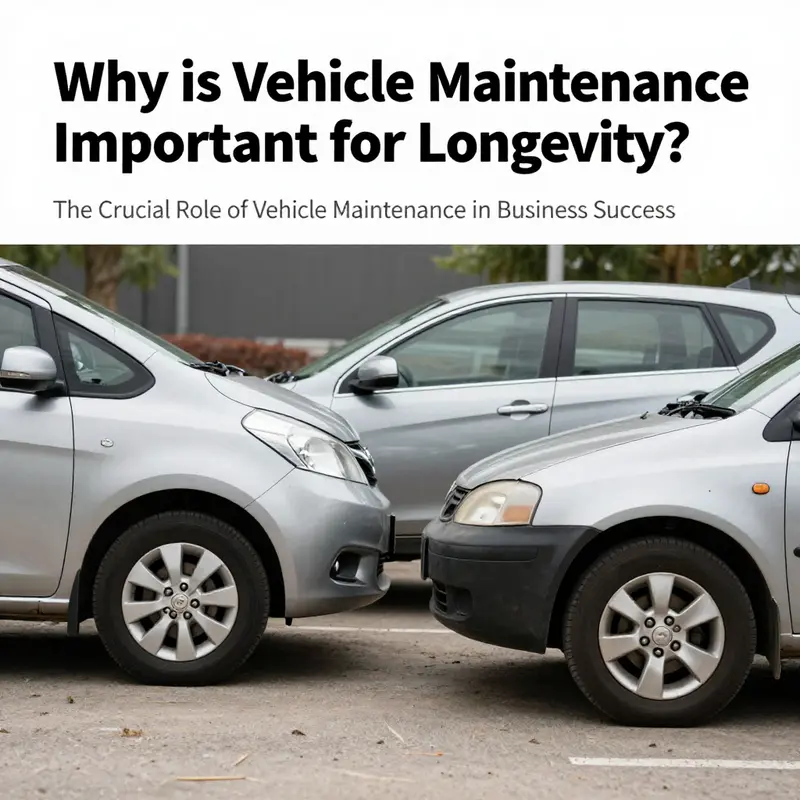
Longevity on the road rarely happens by accident. It grows from a steady habit of care that treats a vehicle as more than a metal shell with wheels. When you approach your car with a mindset of proactive preservation, you’re not just chasing a longer glide from one destination to the next. You’re cultivating reliability, safety, and comfort over years of use. The idea that maintenance is a cost you pay today to avoid trouble tomorrow is true, but the longer view shows maintenance as a deliberate investment in a vehicle’s lifecycle. Rather than reacting to every squeak or warning light, a driver who prioritizes preventative care creates a durable, dependable companion that can handle daily demands and unexpected stretches of mileage alike.
The heart of longevity begins with engine health, because the engine is the core system that translates fuel into motion while supporting dozens of auxiliary subsystems. Regular oil changes do more than keep the oil lubricated; they shield metal surfaces from friction, preventing sludge buildup and thinning out viscosity that can cascade into wear. Fresh oil carries away heat and debris that would otherwise accelerate aging. When oil is changed on schedule, the engine parts—bearings, cams, and pistons—move with less resistance. Over time, that translates into fewer hot spots, less stress, and a slower pace of degradation. This is not a glamorous improvement; it is a quiet, persistent extension of the engine’s usable life. The same logic applies to filters, which act as the gatekeepers of the engine’s environment. A clean air filter keeps particulates from entering the combustion chamber, protecting both power and efficiency. A fresh oil filter ensures that the lubricant remains free of contaminants that could accelerate wear. A clean fuel filter helps maintain steady fuel flow, supporting consistent combustion and reducing unburned fuel that might form deposits.
As longevity unfolds, the role of fluids becomes increasingly clear. Coolant prevents overheating by dissipating heat from the engine, while transmission fluid lubricates gear sets and maintains hydraulic pressure. Brake fluid must stay clean and at the proper level to preserve stopping power. Power steering fluid reduces steering effort, which becomes important not only for comfort but for maintaining control in demanding driving situations. Each fluid is a lifeline; neglecting any one of them creates a cascade where a small leak or low level interacts with heat, vibration, and pressure to accelerate wear in multiple systems. Belts and hoses, though often overlooked, are the connective tissue of this network. Cracked hoses invite leaks that can lead to overheating or loss of power steering. Worn belts can slip, reducing charging efficiency and accessory drive performance. The longevity of a vehicle depends on watching for cracks, glazing, and tension loss in these components and replacing them before failure becomes a setback.
Tires are a surprisingly central piece in the longevity puzzle. Proper tire pressure reduces rolling resistance, which not only saves fuel but lowers the engine’s workload. Adequate inflation prevents uneven tread wear, promotes even handling, and reduces the risk of blowouts in unexpected conditions. Regular alignment checks ensure that tires wear evenly and maintain optimal contact with the road. When tires wear evenly, not only do they last longer, but the vehicle maintains predictable handling and braking performance. This is a direct line to safety, a topic that reinforces the longevity argument from multiple angles. If the tires are compromised, you may face sudden grip loss, which can stress suspension, steering components, and the drivetrain as you compensate for reduced traction.
The brakes deserve a dedicated note in any longevity narrative. Brakes are safety-critical yet often neglected until a warning light glows. Worn pads, glazed rotors, and low brake fluid can erode stopping power when you need it most. Regular inspection helps catch wear early, allowing you to replace components before they overheat or warp. This isn’t about replacing parts for the sake of it; it’s about preserving the system’s integrity over time. The suspension and steering systems mirror this logic. If shocks, bushings, or tie rods begin to degrade, the vehicle’s ability to respond promptly to hazards diminishes. Reduced stability requires the driver to compensate with heightened attention, which can contribute to fatigue over long stretches of driving. A well-maintained suspension doesn’t just deliver a smoother ride; it supports consistent handling, which reduces the likelihood of unnecessary wear on tires, brakes, and steering components.
A comprehensive maintenance routine also protects the vehicle’s electrical and sensor network, which has grown in complexity over recent decades. Modern vehicles depend on sensors for everything from fuel delivery to braking assist and stability control. When fluids are low or components are worn, sensors can misread conditions, prompting suboptimal performance. Regular checks help keep these digital guardians in sync with the physical world, reducing the chance of unexpected trips to the shop for problem codes that could have been avoided with a simple inspection. In this sense, longevity is not merely about physical parts lasting longer; it is about preserving the harmony between mechanical systems and the electronic brain that coordinates them.
To make longevity a practical reality, a disciplined maintenance schedule is essential. It isn’t enough to rely on memory or infrequent oil changes. A proactive habit recognizes that minor, routine tasks add up to a major lifetime dividend. Replacing filters at appropriate intervals, checking fluid levels, inspecting belts and hoses, and scheduling regular alignments and tire rotations are all small acts that delay the onset of more serious, costly failures. Each action has a multiplier effect: it reduces the likelihood of a sudden breakdown, it keeps the vehicle operating closer to peak efficiency, and it preserves the experience of driving—a smooth, quiet, predictable ride that inspires confidence in every mile.
The resale value angle reinforces longevity as a sensible financial strategy. A vehicle with a documented maintenance history signals to potential buyers that the owner treated the car with care. This is not merely about preventing failure; it is about demonstrating reliability. A well-maintained vehicle tends to have fewer surprise repairs, a more complete service record, and a stronger case for value when it is time to sell or trade in. In today’s market, a transparent history of routine servicing can be as valuable as any single technically advanced feature. It provides a narrative of stewardship—a track record that reassures buyers they are acquiring a dependable machine rather than an unknown risk.
Critically, longevity is not a one-size-fits-all proposition. The exact maintenance cadence depends on the vehicle’s design, age, climate, and how you use it. A practical approach blends the manufacturer’s schedule with attentive, experience-based adjustments. For some drivers, extreme temperatures, heavy city traffic, or frequent towing may accelerate wear, warranting more frequent inspections. For others, gentle, moderate use paired with timely service can extend intervals without sacrificing reliability. The point is not to stretch intervals to the limit but to honor the intent behind them: to catch wear before it escalates into failure and to ensure the vehicle remains a safe, comfortable, and efficient partner on the road.
This approach to longevity also aligns with a broader view of responsible driving. It acknowledges that maintenance is not a month-to-month expense but a long-term asset that influences safety, performance, and financial health. When a driver treats maintenance as a shared responsibility between person and machine, the car’s life becomes a cooperative project. The owner contributes time and attention; the vehicle reciprocates with consistent performance. It’s a quiet partnership that sustains momentum, month after month, year after year. For readers who want a concise primer on the basics, a solid grounding in the essentials can be found in resources like What is Vehicle Maintenance. This reference is not a substitute for the manufacturer’s specific schedule, but it offers a practical framework for establishing a routine that supports longevity from the very first mile onward.
In the end, longevity is less about heroic interventions and more about everyday discipline. It’s a series of small, timely actions—checking fluid levels, listening to unfamiliar sounds, and addressing wear before it becomes a failure. It is about recognizing that a vehicle’s life is not an inexorable march toward retirement, but a journey that can be prolonged through informed attention and consistent care. The payoff is tangible: fewer unplanned visits to the shop, a safer and more enjoyable driving experience, and the knowledge that your vehicle remains a trustworthy partner over time. The path to longevity is not glamorous, but its rewards are enduring, measurable, and deeply practical for anyone who relies on their car for daily life.
External resource: https://www.consumerreports.org/cars/vehicle-maintenance-tips-a2815749630/
The Maintenance Dividend: Turning Routine Upkeep into Cost-Efficiency and Peak Vehicle Performance
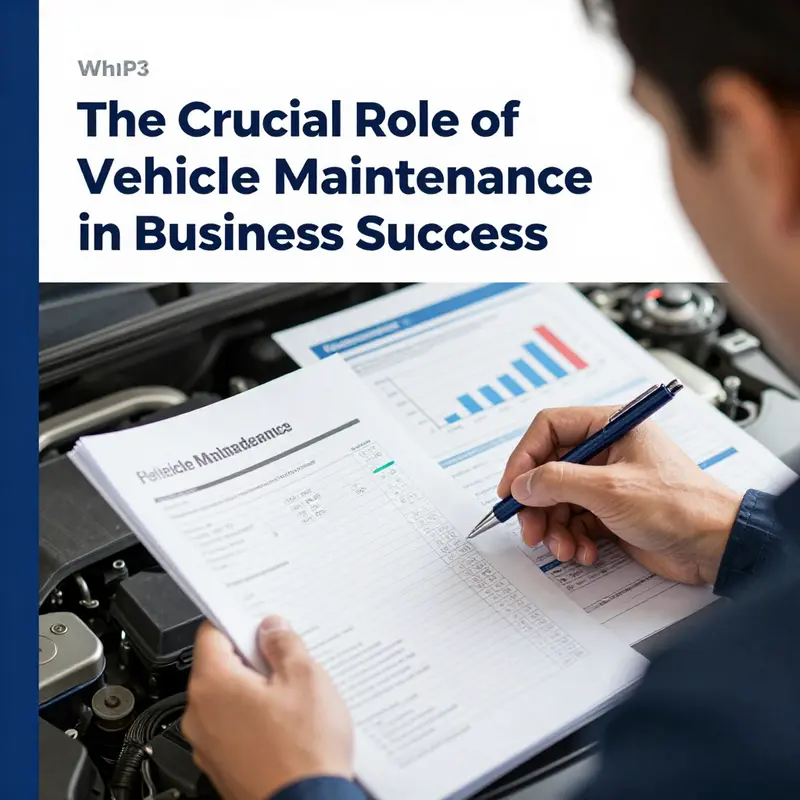
Maintenance is often framed as a habit you practice to avoid breakdowns. In truth, it is a disciplined financial decision that converts a vehicle from a potential liability into a reliable, efficient asset. When you view upkeep through this lens, the daily tasks of oil changes, filter swaps, tire pressure checks, and brake inspections take on a new, strategic meaning. They are the cash-flow decisions of a long-term ownership plan. The most important point is not that maintenance prevents emergencies, though it does. It is that maintenance protects the value of a vehicle, preserves performance, reduces the total cost of ownership, and aligns driving quality with responsible stewardship of resources. In a practical sense, maintenance acts as a proactive investment that compounds over time, yielding returns in the form of safer drives, steadier acceleration, lower fuel bills, and a higher resale price. The logic is simple, yet powerful: small, timely interventions now prevent expensive, disruptive failures later. When you adopt this mindset, maintenance stops feeling like an obligation and starts feeling like a strategic move that strengthens safety, efficiency, and financial health all at once.
A good part of the maintenance dividend comes from cost-efficiency. Routine service costs are predictable and modest compared with the price tag of major repairs caused by neglect. A worn spark plug or a clogged air filter costs only a few dollars to replace, but neglect that same component and you can invite misfires, reduced engine efficiency, and accelerated wear. Those cascading effects can escalate into problems that require more extensive work—sometimes even an engine or transmission repair. The friendly rule of thumb is that preventative care costs are the small hedge against the unpredictable expenses that come from breakdowns. In a world of rising parts prices and labor costs, the math works heavily in favor of regular servicing. With a well-documented maintenance schedule, owners can anticipate expenses and allocate funds over time, avoiding sudden financial shocks that disrupt budgets and force trade-offs in other essential areas.
Another tangible aspect of the maintenance dividend is fuel economy. A vehicle that runs cleanly and efficiently consumes less fuel, and even modest improvements add up over the life of the car. Clean air filters ensure proper airflow to the engine, while a properly tuned engine and clean fuel injectors promote efficient combustion. The result is more power per gallon and less waste. Studies have shown that vehicles with consistent maintenance records can experience fuel economy improvements in the range of about five to fifteen percent, depending on the car, its age, and how well it is cared for. Those gains translate directly into lower monthly fuel costs and more kilometers per liter—an outsized return for routine services that are often quick, inexpensive, and easy to schedule. This is not merely theoretical. The fuel economy data, compiled across a broad spectrum of vehicles, demonstrates that small, regular actions—air filter changes, spark plug replacements, oil and fluid checks—have measurable, lasting effects on efficiency. The impact compounds as the vehicle ages, helping owners extract more value from every mile traveled.
The performance angle is closely tied to this cost-benefit math. When the engine receives fresh oil, it experiences less friction and wear. Clean filters mean that the engine breathes easier, achieving smoother air-fuel mixture and more complete combustion. Brakes that are inspected and maintained respond more consistently, offering confident stopping power and a sense of vehicle control that translates into more precise, enjoyable driving. Suspension and steering components that are kept in good order help the vehicle respond more predictably to steering input and road irregularities, which not only enhances safety but also contributes to the perception of better overall performance. The objective is not neck-snapping acceleration or tunnel-vision handling; it is a balanced, reliable driving experience where power is available when needed, braking is responsive in emergencies, and steering feels precise across a range of conditions. The human benefit behind that precision is clear: a driver who feels in command is less likely to overreact, which reduces risky maneuvers and contributes to safer, steadier operation.
The maintenance dividend is also felt in the realm of value retention. A well-documented maintenance history is one of the strongest signals a prospective buyer can use to judge a used car’s reliability. From a buyer’s perspective, a history file that shows timely services—oil changes, filter replacements, fluid top-offs, tire rotations—offers practical reassurance. It suggests that the vehicle has been stewarded with care, reducing the likelihood of hidden problems. This, in turn, translates into a higher resale value and a broader pool of potential buyers. The psychological and financial effects are intertwined: the more transparent the upkeep, the more confident a buyer feels about the vehicle’s condition, and the more confident a seller can be about commanding a fair price. That confidence reduces the time a car sits on the market and may minimize the price concessions that often accompany older vehicles with opaque maintenance backgrounds.
In the day-to-day rhythm of ownership, there is also a safety dividend that cannot be overstated. Routine inspections—checking brakes, tires, lights, and the steering geometry—serve as early warning systems. A worn brake pad, a tire with low tread, or a cracked light housing may seem minor, but each is a potential failure point that could lead to an accident or a roadside breakdown. The financial cost of accidents or immobilization is often far greater than the price of preventive maintenance. Beyond dollars, there is the priceless value of safety—protecting the driver, passengers, and other road users. The consequences of neglect can be severe, and the emotional cost can linger long after the repair bills are paid. Regular maintenance, then, is a form of risk management that pays off with every mindful inspection and every tested system.
A practical way to approach maintenance as a financial strategy is through disciplined record-keeping. A clear log of services performed, parts replaced, and the dates of service creates a traceable timeline of the vehicle’s care. This log does more than satisfy curiosity; it informs budgeting, informs future service needs, and provides a ready script for conversations with trusted technicians. It also supports resale negotiations, where a meticulous service history can be a tangible asset. The habit of documenting maintenance becomes a habit of stewardship: the vehicle becomes not only a machine but also a financial instrument that preserves capital over time. The routine cadence—oil every six thousand miles or so, air filters on schedule, tires rotated, brake fluid checked—establishes a predictable pattern. It is predictable because manufacturers publish guidelines that are grounded in engineering realities; the goal is to follow those guidelines, not to chase exotic or more frequent service simply to incur more bills. The manufacturer’s schedule offers a balanced approach, aligning protection for critical components with cost-effective intervals.
An important nuance in this discussion is that maintenance should be tailored, not ritualized. Every vehicle has its own rhythm: engine type, climate, driving style, and typical load all influence maintenance needs. High-mileage or older vehicles may require more frequent checks, while newer, well-maintained vehicles may need less frequent intervention. The principle remains constant: proactive care beats reactive repairs. This means paying attention to warning signs—odd noises, unusual vibrations, slipping gears, or a drop in fuel economy—and acting promptly rather than waiting for a breakdown to reveal the underlying issue. The goal is not to chase perfection but to manage deterioration in a cost-conscious, methodical way. A thoughtful approach respects the vehicle’s design and operational realities, while still prioritizing safety, efficiency, and value.
In linking maintenance to cost-efficiency and performance, there is a useful bridge that connects theory and daily practice. A user can track fuel economy over time and correlate it with maintenance events. This kind of simple, data-driven awareness makes the benefits tangible. When a driver sees consistent, measurable improvement in miles per gallon after a scheduled maintenance cycle, it reinforces the value proposition of upkeep. Likewise, when records show a lower rate of unscheduled repairs, the owner witnesses the real-world payoff of diligence: fewer trips to the shop, less downtime, and less stress about an unexpected repair bill. The cumulative effect is a more transparent and controllable ownership experience, where the relationship between maintenance and wealth becomes evident through numbers rather than abstract promises.
To underscore the practical value of these insights, consider the broader context of energy and emissions. A well-maintained vehicle not only saves money but also reduces emissions and environmental impact. Clean air filters and properly tuned engines minimize unnecessary fuel waste and optimize combustion, which translates to lower tailpipe emissions. This is an important dimension of the maintenance dividend that resonates with broader public goals and consumer expectations around responsible driving. The environmental benefits are a reminder that maintenance is not an isolated personal decision; it is part of a network of choices that affect public health and community well-being. When maintenance becomes a shared value, it strengthens the moral and practical case for diligent care across ownership experiences.
For readers seeking a structured way to connect maintenance with tangible cost savings, a simple framework can help. Start with the manufacturer’s maintenance schedule as the baseline. Use it to build a personal budget for services, factoring in the costs of routine items like filters and fluids against the price of potential, more serious repairs that could arise from neglect. Track fuel economy as a performance metric, noting any improvements after scheduled interventions. Keep a written log of all services, including dates, mileage, and what was performed. When it is time to sell, assemble that history into a concise record that demonstrates care and attention to the vehicle’s ongoing health. This approach does not require advanced accounting skills or a large upfront investment; it requires consistency and discipline, and it pays off through steadier performance, lower operating costs, and a stronger financial position when the vehicle is next on the market.
As a final note, this discussion integrates with broader research and guidance on fuel efficiency and maintenance. For further details on how maintenance practices influence fuel economy and vehicle longevity, you can consult the U.S. Department of Energy’s Fuel Economy Guide, which provides comprehensive data and context for drivers seeking to understand the economic impact of upkeep. In addition, a practical, experience-based resource from the same ecosystem of care emphasizes how routine maintenance directly contributes to gas savings over time. If you’re curious about real-world maintenance practices and their effects on fuel costs, you may explore related discussions and case studies in the automotive literacy space. For those who want a targeted takeaway, there is a concise, evidence-based exploration of maintenance’s impact available through dedicated guidance and community conversations. And for readers who want a quick, accessible path to learning how upkeep translates into lower fuel expenses, you can follow discussions that highlight the concrete relationships between service intervals, efficiency gains, and overall ownership costs.
For readers who want a concrete, field-tested example of the maintenance dividend in action, consider the following practical takeaway: the route to meaningful cost-efficiency begins with small, reliable habits. Check tire pressure monthly and adjust as needed. Replace an air filter at the recommended interval. Change the engine oil on schedule. Inspect brakes and tires during every major service, looking for wear beyond the norm. These actions do not require grand plans or radical overhauls; they are steady, repeatable steps that accumulate into a substantial financial and performance payoff over the years. The payoff is not just a number on a receipt; it is a vehicle that starts more reliably, handles with confidence, and travels farther on the same amount of fuel. It is a cycle of care that translates into a calmer driver, fewer visits to the shop, and a more predictable budgeting experience.
In sum, maintenance is not a mere maintenance of parts; it is maintenance of value. It preserves the safety and performance you rely on every day while cushioning the financial shocks that often accompany vehicle ownership. The dividend appears in smaller bills and bigger peace of mind—through better fuel economy, more reliable operation, stronger resale value, and a safer, more satisfying driving experience. It is a coherent, actionable philosophy that aligns the practical realities of car ownership with the long arc of financial stewardship. The next step is to translate this philosophy into a simple, personal plan: consult the owner’s manual for the official schedule, establish a predictable maintenance rhythm, keep a transparent service log, and recognize that every proactive service is an investment—not a cost, but a cog in the machine that keeps your life moving smoothly and efficiently. If you want a concise prompt to start this journey, try framing maintenance as the daily allocation of capital toward safety, reliability, and efficiency. When viewed through that lens, the maintenance routine becomes a disciplined advantage rather than a chore, and the vehicle you depend on becomes, in effect, a steadily growing asset in your personal economy.
External resource: https://www.fueleconomy.gov/feg/
Final thoughts
In conclusion, vehicle maintenance emerges as a cornerstone of successful business operations, especially for those reliant on transportation. By prioritizing safety, fostering longevity, and enhancing cost-efficiency and performance, business owners not only ensure smooth daily operations but also safeguard their investments. Regular maintenance is, therefore, an indispensable practice that culminates in financial prudence and operational integrity. As you consider your vehicle maintenance strategy, remember: investing in upkeep today paves the way for a more secure and profitable tomorrow.