

For Jeep Compass owners who rely on their vehicle for business, the appearance of the Check Engine light can raise concern. This warning indicates issues that may affect performance or emissions and warrants timely attention. Understanding what the light signals, common underlying problems, and how to respond can help maintain efficiency and longevity. This guide explains the signal, common triggers, diagnostic approaches, and steps to take when the light comes on to keep your Jeep Compass reliable in business operations.
Reading the Check Engine Light on a Jeep Compass: Decoding Emissions Clues and Keeping Your Drive Safe
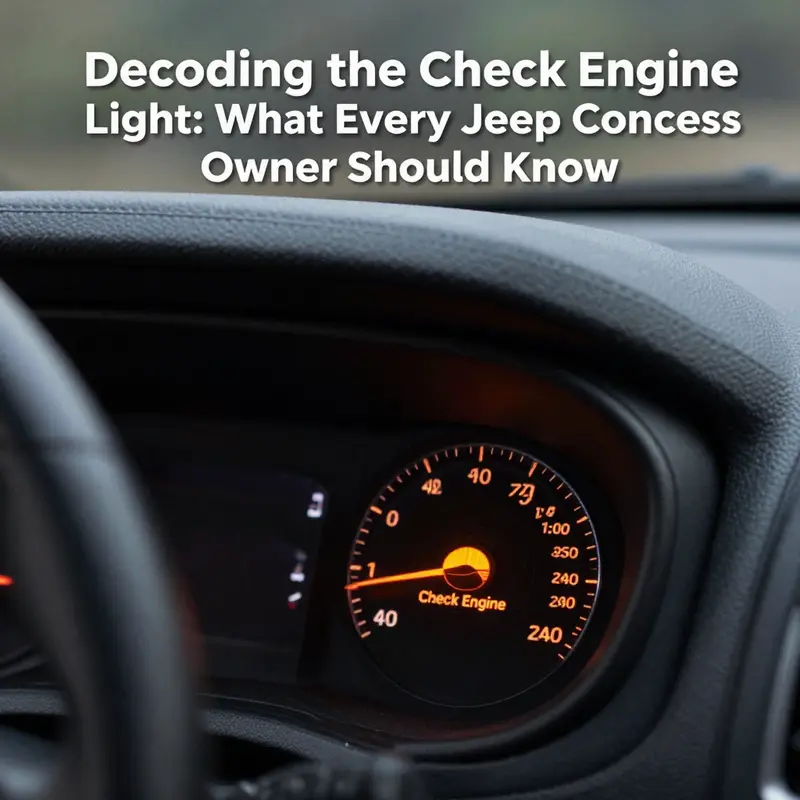
When the Check Engine light glows on a Jeep Compass, it isn’t a personal judgment about your driving. It is the vehicle’s onboard diagnostic system signaling that something in the engine, exhaust, or emission-control system is operating outside of its defined parameters. Modern Jeeps rely on sensors and actuators that monitor fuel delivery, air intake, ignition timing, catalytic efficiency, and exhaust flow. When data from these components diverges from expected values, the computer stores a diagnostic trouble code and illuminates the warning lamp. The purpose isn’t alarmist theater; it is a prompt to inspect and correct a condition that could range from a minor nuisance to a significant risk to the engine’s health and the vehicle’s emissions.
What triggers the light is not a single fault but a broad signal that a sensor has detected an out-of-spec condition. In the Compass, common culprits tend to fall into a few familiar categories: the oxygen sensor signaling incorrect air-fuel balance, worn spark plugs that misfire, a loose or missing gas cap that can upset the evaporative emission system, a catalytic converter that isn’t reducing pollutants as efficiently as it should, or problems within the fuel injection system that alter how and when fuel is delivered. Each category has its own family of codes that a technician can read. The light’s job is to tell you that a code exists and warrants diagnosis, not to tell you exactly which part is failing.
A useful way to approach the light is to notice how it behaves. A steady Check Engine light is typically a sign of a non-immediate fault that should be checked soon. It is a signal that something is off, but not necessarily something dangerous to drive with for a short period. A flashing light, on the other hand, means the system has detected a condition that could harm the catalytic converter if it isn’t addressed promptly. Misfires or fuel delivery problems that keep the engine from burning fuel cleanly can cause this more urgent warning. If you ever see a flashing light while you are driving, the prudent course is to pull over safely as soon as you can and arrange for inspection.
Diagnosing the issue requires access to the vehicle’s stored trouble codes. An OBD-II scanner reads the codes that live in the Compass’s computer memory. These codes—beginning with a letter and followed by numbers, such as P0302 or P0420—point to a system area rather than a single part. They guide a mechanic to the probable cause while sparing the owner from random part replacements. A trained technician will verify code validity, review live sensor data, and perform tests that confirm whether the fault lies with sensors, wiring, or the mechanical side of the engine and exhaust systems. In many cases, a simple fix like reseating a connector, replacing a worn spark plug, or correcting a loose gas cap can remedy the issue and clear the light after a drive cycle. In more involved situations, multiple tests and replacement parts may be necessary to restore proper operation and emissions compliance.
For Jeep Compass owners, there is an added layer of consideration. The Compass relies on integrated engine management and emissions systems that are calibrated to meet standards. Even seemingly minor deviations can ripple through the system, affecting fuel economy, performance, and compliance with emission regulations. When the light activates, it is an invitation to treat the vehicle with particular care. Ignoring it is tempting if the engine seems to run smoothly, but the risk is that a small fault becomes a bigger one. A consistent effort to address the issue promptly helps protect the engine’s longevity and preserves the efficiency gains that keep operating costs down over time. Early diagnosis is especially valuable, and official manufacturer guidance can help you navigate the process.
As you navigate the next steps, consider how you will interpret the warning in the context of your driving. If your daily routine involves short trips with frequent stops, a misfire or a lean fuel condition could be masked by the engine not reaching full operating temperature. In those cases, a persistent Check Engine light may warrant a quick inspection before the next long journey. If you notice symptoms such as rough acceleration, hesitation, reduced power, or a sudden drop in fuel economy, treat the warning as more urgent. A misfire, for example, degrades performance and can heat the catalytic converter unevenly, leading to expensive repairs if left unchecked.
When you are ready to act, begin with a practical, low-risk check that can often catch obvious, inexpensive culprits. Start with the simple steps: inspect the gas cap to ensure it is tight, check for obvious vacuum leaks or cracked hoses, and ensure the air filter is clean. If no obvious physical issue is found and the light remains on, read the codes with an OBD-II scanner. If you don’t own a scanner, many repair shops and auto parts retailers offer this diagnostic service. The meaning of each code is precise, but you still need a trained eye to interpret it in the context of your Compass’s overall condition and history.
The nuance is that not every code demands the same immediate response. Some codes signal a fault that does not yet compromise safety or drivability, while others point to a condition that could, if neglected, accelerate wear or fuel consumption. Plan a service visit within a reasonable time frame, especially if warranty, emissions status, or local inspection requirements depend on the absence of abnormal emissions or engine performance. Keeping a log of when the light comes on, whether it remains steady or fluctuates, and any accompanying symptoms can be very helpful to a technician.
To put this in human terms, think of the Check Engine light as a weather forecast for your vehicle’s inner workings. A steady glow might hint at a small, persistent issue you can monitor; a flashing alert is a storm warning—a sign that you should pause, assess, and seek help before the engine endures more trouble. The underlying message is the same: engine and emission controls are interdependent systems that require timely attention when their signals deviate from spec. Treating the warning as routine maintenance keeps you in the driver’s seat of a healthier, more reliable vehicle.
Reading the Glow: Unraveling the Check Engine Light Triggers in the Jeep Compass
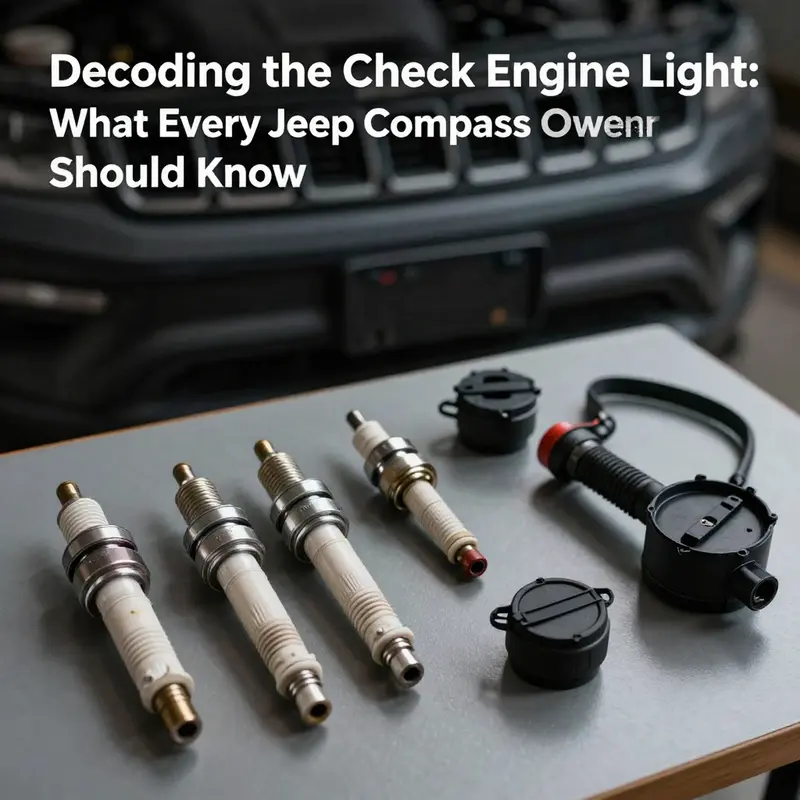
When the Check Engine Light (CEL) glows on the dash of a Jeep Compass, it is a signal that the vehicle’s onboard diagnostic system has detected a fault somewhere in the engine management or the emissions control system. The light is not a single warning about one specific part; it is a beacon that a sequence of sensors and computer logic has identified a condition that could affect performance, efficiency, or emissions. The momentary intent is simple: alert the driver to a condition worth investigating before it becomes a bigger problem. What follows is a practical, driver‑oriented view of what might be happening under that amber or red glow, how to approach diagnosis, and why ignoring the message can be a costly mistake for both fuel economy and the engine’s health.
The light itself can behave in two familiar ways. A steady CEL usually points to a non‑critical issue that should be checked soon but is not an immediate threat to the engine’s survival. A flashing CEL, on the other hand, is a more urgent alarm. It commonly indicates a misfire or multiple misfires in rapid succession, a fault that can rapidly overheat the exhaust system and damage the catalytic converter if driven hard or for an extended period. In this mode, the prudent advice is to slow down, reduce engine load, and arrange service as soon as safely possible. These driving behavior cues matter because they help protect the catalytic converter and keep fuel economy from nosediving as a consequence of unaddressed faults.
To translate the glow into actionable steps, one needs access to the vehicle’s fault codes. The Jeep Compass uses an OBD‑II system that stores codes when a fault is detected. Reading these codes with a professional scan tool reveals not just a general problem area—such as ignition, fuel, or emissions—but also a specific numerical code like P0171 or P0440. Those codes point the technician toward the probable culprit, such as a sensor, a valve, or a subsystem. The codes alone don’t always tell the entire story, but they serve as a precise starting point. It’s worth noting that some codes come with freeze frame data—a snapshot of engine and sensor readings at the moment the fault was recorded. Interpreting those readings helps mechanics understand whether a fault is intermittent or persistent and whether it coincides with particular operating conditions like cold starts, high idle, or heavy throttle.
Within the range of common triggers, several issues repeatedly surface in the Compass. One of the most frequent culprits is a loose, damaged, or missing gas cap. The gas cap is part of the evaporative emissions system, designed to seal fuel vapors and maintain proper pressure in the fuel system. If the cap isn’t tight or if the seal is compromised, EVAP fault codes can set the CEL. In many cases the light will come on gradually and may settle after a short drive once the system rechecks itself and the cap is verified as secure. A simple correction—twisting the cap until it clicks and ensuring the seal is clean—can resolve the issue, sparing you an unnecessary trip to the shop.
Next in frequency are issues tied to the oxygen sensors. The Compass relies on upstream and downstream O2 sensors to monitor the air‑fuel mixture and the efficiency of combustion. A failing O2 sensor can cause rich or lean conditions, which degrade fuel economy, dull performance, and raise emissions. The diagnostic trouble codes associated with O2 sensor faults often point to slow response, circuit faults, or sensor heating problems. Replacing a faulty sensor is typically necessary because a degraded reading can mislead the engine control unit, leading to persistent inefficiency and possibly harming the catalytic converter over time.
Catalytic converter faults represent a more serious class of problems. When the catalytic converter becomes clogged, overheated, or otherwise compromised, the engine can lose power, lose fuel efficiency, and emit more pollutants. These faults usually produce code patterns that indicate a mismatch between the exhaust chemistry and the sensors. Restoring proper function often requires professional evaluation and replacement of the converter, a repair that underscores why an early CEL diagnosis is valuable. A damaged catalytic converter not only harms performance but can also trigger an expensive repair bill if ignored for too long.
Ignition system weaknesses, including spark plugs and ignition coils, frequently surface as misfires. Misfires create rough idle, hesitation during acceleration, and a general sense of unreliability in the vehicle’s response. Since misfires can let unburned fuel reach the exhaust, they threaten the catalytic converter’s integrity. A routine misfire code (or codes) usually leads a technician to inspect the spark plugs for wear, verify the coil packs, and confirm that the ignition circuitry is delivering reliable, consistent sparks.
The mass airflow sensor (MAF) is another common entrant in CEL narratives. The MAF sensor measures the amount of air entering the engine, and its data helps the engine computer balance the fuel‑air mixture. A dirty, contaminated, or malfunctioning MAF can produce a rough idle, decreased power, and poor fuel economy. Cleaning or replacing a faulty MAF often resolves symptoms when the rest of the drivetrain remains sound.
Fuel injectors, if they leak or clog, can disrupt the precise fuel delivery the engine requires. A malfunctioning injector can cause misfires and lean or rich conditions, which the ECU will record as fault codes. Vacuum leaks are another frequent, sometimes elusive, source of trouble. Cracked hoses, loose clamps, or gaskets in the intake tract can introduce unmetered air, skewing the air‑fuel ratio and triggering a warning. These issues can be intermittent, making the CEL appear and disappear as the engine shifts between different operating states.
Less common, but still important to recognize, are transmission faults that can appear under the umbrella of engine management warnings. Some Compass models have engine‑related indicators tied to transmission performance, and certain faults can affect how the engine operates with the transmission. While not as frequent as the other triggers, these scenarios remind drivers that the CEL can reflect a system that affects overall drivability rather than a single component.
In all cases, the diagnostic path begins with a professional scan. A technician connects a diagnostic tool to extract the stored codes and examines live data to understand sensor readings, fuel trims, and misfire activity. The codes act like a map rather than a verdict; they guide technicians toward the right area to inspect, test, and repair. For a driver, this means recognizing what the codes suggest and what they do not—especially when the light is steady and the vehicle still runs reasonably well versus when the light is flashing and performance is clearly compromised.
Understanding the codes also clarifies the next steps. For example, P0171 indicates a lean condition, which could be caused by a vacuum leak, a faulty MAF, or an intake leak. P0300 signals random or multiple misfires and often requires ignition, fuel, or compression checks. P0440 points to EVAP system issues, which can involve the gas cap, purge valves, or leaks. Each code has a narrative, but it’s the combination of live data and physical inspection that reveals the root cause. A driver should be cautious about continuing to drive aggressively with a flashing CEL, as misfires can scar the catalytic converter, while a steady CEL may allow for a measured approach to diagnosis and repair.
To maintain clarity in this process, it helps to keep in mind a few practical guidelines. If the CEL is steady and navigation to a service center can be arranged without risk to safety or the vehicle’s reliability, it is reasonable to schedule diagnostics within a few days. If the CEL is flashing, reduce speed and engine load, pull over safely, and arrange for immediate assistance. In either scenario, having a trusted, qualified technician perform the diagnostic work is essential, because OBD‑II codes require interpretation within the context of the Compass’s powertrain and emission control architecture. The specifics of the Compass’s design—its sensors, wiring harnesses, and control strategies—are documented in official service literature that only trained professionals should navigate.
As a driver, you can also take a few proactive steps between diagnosis and repair. Start with a thorough check of the obvious: ensure the gas cap is present and snug, inspect hoses for cracks or loose connections, and listen for audible vacuum leaks around the intake and intake plenum. If fuel economy has noticeably declined or if there is a noticeable drop in power, note when the issue occurs—whether it’s during cold starts, after a long highway drive, or during rapid acceleration. These behavioral clues, paired with the diagnostic codes, help technicians reproduce and confirm the fault. In many cases, replacing worn ignition components or a failing O2 sensor can restore performance and prevent further damage to the exhaust system. Cleanliness matters too; a dirty MAF sensor is a common culprit in fuel‑trim disturbances, so it may be worth a conservative cleaning followed by re‑testing if the symptoms point in that direction.
For readers seeking a concise reference that frames these indicators in the broader context of Jeep dashboards, a helpful resource emphasizes how to interpret the various indicators you may see in conjunction with the CEL. Jeep dashboard symbols explained essential guide for drivers.
When the time comes to act, remember that the objective is not simply to turn off a warning light but to preserve the health and reliability of the vehicle. The Jeep Compass is designed to monitor a complex orchestra of sensors, actuators, and software. When one instrument goes off key, the ensemble can still operate, but not at peak performance or efficiency. Addressing the root cause early safeguards fuel economy, reduces emissions, and helps maintain the vehicle’s resale value. In practice, this means scheduling a diagnostic with a qualified technician, sharing the observed symptoms and the time frame in which the CEL appeared, and trusting the expert to interpret the codes and translate them into precise repairs.
For drivers who wish to consult official guidance beyond the workshop environment, the Jeep owner’s manuals provide comprehensive procedural references and safety considerations. They offer a foundation for understanding maintenance intervals, typical fault scenarios, and the recommended sequence of steps when the CEL lights up. Access to these manuals is available through official channels, which helps ensure that the information you rely on aligns with the vehicle’s design specifications and software versions. External resource: Official Jeep Owner’s Manuals.
Decoding the Check Engine Light on a Jeep Compass: A Practical Path from Warning to Repair
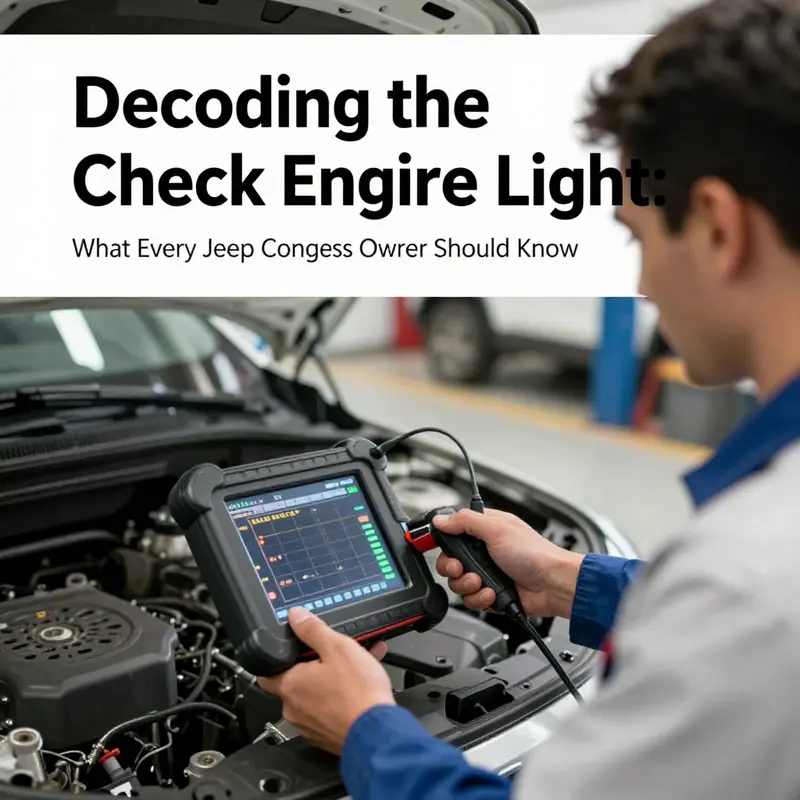
When the dashboard light known as the Check Engine light flickers on a Jeep Compass, it is not merely a blinking ornament. It is the vehicle’s built‑in diagnostic signal. The onboard diagnostic system, or OBD, has detected a malfunction somewhere in the engine, emissions system, or related electronics. The light’s appearance is the first clue in a conversation the car wants to have with its owner and a technician. The conversation can be quick and benign, or it can unfold into a more urgent maintenance matter, depending on what the computer has found and how the light behaves. In a Compass, as in most modern cars, the light is more than a reminder to “visit the shop later.” It is a data point that points toward a specific fault code stored in the engine control unit, a code that a mechanic reads with a specialized scanner to identify the likely culprit and the appropriate repair path.
The light itself often comes in two common forms: steady and flashing. A steady amber or yellow light typically signals a fault that should be addressed soon, but isn’t an immediate danger. It suggests that the vehicle can be driven to a service center for diagnosis, though prolonged operation without inspection may worsen the issue or degrade fuel economy and performance. A flashing light, on the other hand, is a warning of a more serious condition—often an engine misfire or a fault that could harm the catalytic converter if ignored. In these cases, safety and the vehicle’s protection come first. The prudent move is to slow down, find a safe place to stop, and arrange for immediate diagnostic service. The Compass, like other modern vehicles, relies on sensors and circuits to constantly monitor exhaust chemistry, fuel delivery, ignition timing, and air flow. When any one of those systems drifts beyond the designed parameters, the OBD system flags the erring component and lights the warning.
Understanding what the light can signify begins with the basics of the most common triggers. A loose or damaged gas cap is a deceptively simple fault with real consequences. If the cap isn’t tightened properly, evaporative emissions can escape, triggering the diagnostic system and the light. It is a quick check that owners can perform themselves before seeking professional help. Then there are sensors that play a central role in controlling emissions and efficiency. The oxygen sensor, positioned in the exhaust stream, monitors oxygen levels and helps the engine adjust the air–fuel mixture. A faulty O2 sensor can reduce fuel efficiency and raise emissions, and in many cases it triggers a warning light. The mass air flow sensor, or MAF sensor, measures incoming air and informs the engine computer how much fuel to inject. When the MAF is dirty or failing, the engine can run lean or rich, leading to performance problems, stalling, or rough acceleration.
Ignition system wear also makes the list. Worn spark plugs, deteriorating ignition coils, or degraded plug wires can cause misfires. A misfire disrupts combustion, creates rough running, and raises exhaust temperatures, all of which can illuminate the Check Engine light. The exhaust gas recirculation valve, or EGR valve, is another common source of trouble. Its job is to recirculate a portion of exhaust back into the intake to reduce nitrogen oxide emissions. If the EGR valve becomes clogged or sticks, the engine can run poorly and the light may come on. There can also be faults in the fuel system itself, such as low fuel pressure, clogged injectors, or contaminated fuel. A failing catalytic converter is a more serious concern because it can overheat and cause damage down the line, and it is closely tied to emissions testing as well as engine protection.
Finally, vacuum leaks deserve mention. A leak in the intake system allows extra air to slip in where it shouldn’t, upsetting the air–fuel ratio and confusing the computer. The result is a cascade of diagnostic codes and an illuminated light. Taken together, these possibilities show why the light does not point to a single simple fix. It marks an area of the vehicle that needs attention, and the exact problem must be confirmed with a proper diagnostic test.
For many Compass owners, the next question is how to proceed once the light appears. The recommended approach starts with a careful assessment of the light’s behavior and a few practical checks that can be done without special tools. If the light is steady, a logical first step is to verify the gas cap. Tighten it until it-clicks and observe whether the light stays on after a short drive. If the light remains steady, a visit to a service center for a diagnostic scan is prudent. A mechanic will connect an OBD‑II scanner to the vehicle’s data port to retrieve trouble codes. These codes, such as P0171 for a lean condition or P0300 for a random misfire, don’t tell the exact part that failed, but they narrow the field to the likely systems and components. With the codes in hand, the technician can perform targeted tests to confirm whether the issue lies with the oxygen sensor, the MAF sensor, the ignition coils, or another subsystem.
A flashing Check Engine light demands immediate attention. It often signals an active misfire that can overheat the catalytic converter or cause more damage if the vehicle is driven aggressively or for long distances. If you experience stumbling, rough idle, or a noticeable loss of power while the light is flashing, the best course is to reduce speed, avoid high engine loads, and seek roadside assistance or tow service to a qualified repair facility. Ignoring a flashing light can turn a relatively simple and affordable repair into a costly repair bill because some misfires stress the catalytic converter and the exhaust aftertreatment system.
The diagnostic journey hinges on reading and interpreting codes, but it’s more than a simple code look-up. Codes are stored by the vehicle’s computer when a fault is detected, and they are often accompanied by freeze-frame data that captures engine conditions at the time of the fault. A skilled technician will not only pull the code but also review engine RPM, load, temperature, and sensor readings at the moment of failure. This context helps distinguish, for example, a lean condition caused by a vacuum leak from one caused by a faulty oxygen sensor. It also helps separate a transient issue, such as a temporary fuel supply fluctuation, from a persistent fault in the fuel system. The process emphasizes the value of professional diagnosis because the right repair depends on correctly identifying the root cause—not just the symptom suggested by a single code.
The Compass owner’s manual and dealership service guidance provide the framework for this process. When the light first appears, performing basic checks can prevent unnecessary trips to the shop. Tightening a gas cap may resolve the issue in minutes. Cleaning a dirty MAF sensor or replacing a worn spark plug can restore performance and fuel economy without major downtime. Yet some situations demand deeper investigation. Oxygen sensors and catalytic converters have finite lifespans, and misfires can be caused by worn ignition components or dirty fuel injectors that require service. The vehicle’s computer may flag a fault that, in isolation, would seem minor, but when read alongside live data and other sensor readings, reveals a more significant problem. In these cases, a professional diagnostic is not just helpful—it is essential to prevent triggering further damage and to ensure emissions compliance.
An important dimension of this process is prevention. Regular maintenance helps reduce the likelihood of Check Engine light triggers. Consistent spark plug replacement at recommended intervals, keeping the air filter clean, and using quality fuel can all help. Vacuum hoses and gaskets should be inspected for cracks or leaks, especially on models with longer service intervals or higher mileage. Cleaning or replacing sensors when they show signs of wear, rather than waiting for a fault code to appear, can preempt several common failures. The goal isn’t to chase every warning light, but to interpret it correctly and act in a timely, cost-effective manner. In the Compass, as in many modern vehicles, the light is your ally—a tool that helps protect performance, fuel efficiency, and emissions, while guiding you toward the repairs that keep your vehicle reliable on the road.
To connect the dots for readers of this chapter, the Check Engine light on a Jeep Compass signals that the car’s emissions and engine control systems have detected a fault. It does not always scream danger, but it does demand attention. The light’s tone—steady or flashing—helps determine whether you can complete a short drive to a service center or you should stop where you are and arrange immediate assistance. The codes you’ll see when a mechanic hooks up the scanner point to the area of concern, but the precise diagnosis requires professional testing and experienced interpretation of live data. In practical terms, this means that a simple tightening of a gas cap may fix the problem, while a persistent misfire could require ignition components, fuel delivery repairs, or a failing sensor to be replaced. The key is to approach the situation with a plan: confirm the simple, noninvasive causes first, then pursue a professional diagnostic if the light persists.
For Jeep Compass owners, there is a reliable roadmap for understanding and addressing the Check Engine light. A quick check of the gas cap, followed by a scheduled diagnostic if the light remains, is a sensible starting point. If the light is flashing, prioritize safety and mechanical assessment without delay. Remember that the light is part of a comprehensive system designed to protect your engine and your environment by controlling emissions. Treat it as a signal with potential consequences, not a nuisance to ignore. The journey from warning to repair is not about chasing a single fix but about reading the warning, confirming the exact fault, and applying the correct solution with precision and care.
Internal link for further reading on dashboard indicators can offer a broader context for what different lights and symbols mean, including those that appear alongside the Check Engine light. See the resource at the Jeep dashboard symbols guide for a concise overview of what these indicators can signify when they illuminate and how to interpret them in parallel with engine warnings. jeep-dashboard-symbols-explained-essential-guide-for-drivers.
For readers seeking formal guidance and official maintenance recommendations, consult the Jeep Owner’s Manual, which provides model-specific information, service intervals, and troubleshooting steps tailored to the Compass. External resource: https://www.jeep.com/owners/manuals/
Unveiling the Warning: The Real Consequences of Ignoring the Check Engine Light on a Jeep Compass

When the Check Engine Light (CEL) flicks to life on a Jeep Compass, it tells you something deeper is at work than a simple dashboard nuisance. The vehicle’s onboard diagnostic system has detected a fault in the engine management or emission controls. This system constantly monitors sensors, fuel delivery, ignition timing, exhaust aftertreatment, and related pathways. A steady light usually signals a non-imminent fault, something you should address soon. A flashing CEL, however, is a siren of urgency. It points to conditions like an engine misfire that can overheat the catalytic converter if ignored. In that moment, best practice is to slow down, find a safe place to stop if you’re driving, and arrange for a diagnostic check as soon as possible. The message isn’t a guarantee of expensive repairs; it’s a warning that the situation could deteriorate quickly if left untreated.
Behind the scene, the OBD-II system stores trouble codes when it detects a malfunction. These codes, often paired with freeze-frame data about engine speed, load, and sensor readings, are what a technician reads to pinpoint the root cause. The codes themselves are clues, not final verdicts; they guide the mechanic toward a component or system that needs scrutiny. For readers seeking a model-specific troubleshooting path, there are practical resources that translate these codes into actionable steps, including targeted checks for common Jeep Compass concerns.
The kinds of faults that typically trigger the CEL are varied but familiar. A loose gas cap is a deceptively simple culprit that can cause a small vacuum leak and a minor drop in fuel economy. More consequential issues can involve the oxygen sensor, which helps regulate the air-fuel ratio. A faulty sensor can cause the engine to burn more fuel than necessary, creating both performance symptoms and higher emissions. Worn spark plugs or ignition coils may cause misfires, which not only degrade power and smoothness but also risk unburned fuel entering the exhaust and harming the catalytic converter over time. The catalytic converter itself is a critical, and expensive, component; prolonged misfires or a rich fuel mixture can push it toward overheating or damage, leading to costly replacement.
In practice, owners should approach a CEL as a two-step problem: validate whether the fault is temporary or persistent, and then obtain a diagnostic scan to read the codes. A lingering CEL after a quick self-check—such as ensuring the gas cap is snug and the fuel system is delivering proper pressure—often means the fault lies deeper in the engine, sensors, or exhaust system. If you’re driving and the light begins to flash, the rule of thumb is simple and non-negotiable: stop driving if the situation feels unstable. A misfire, for instance, can cause the engine to stumble, the exhaust to hiss, and the catalytic converter to overheat under prolonged stress. Continuing to drive under those conditions can lead to irreversible damage and expensive repairs.
Once you’ve reached a safe place, you can begin the process of diagnosis. A technician will typically connect an OBD-II scanner to retrieve the stored codes and view live data from sensors to understand the engine’s current behavior. It’s not enough to rely on a single code; the technician will examine related data, such as catalyst temperature, fuel trim readings, and misfire counts. The aim is to identify whether the fault is a simple, recoverable quirk—like a loose gas cap—or a fault that would benefit from replacing a worn component, such as a spark plug or a failing oxygen sensor. In many cases, addressing a minor fault promptly prevents escalation and preserves fuel economy and performance.
For readers who want a clearer sense of where these codes tend to lead in the Compass family, it helps to consider typical fault groups. A loose or damaged gas cap is a surprisingly common trigger; it can create a vacuum leak that the ECU reads as an issue with the fuel system. If the light remains steady after a cap check, the next steps usually involve inspecting the oxygen sensor and the catalytic converter—critical components that govern combustion efficiency and emission control. Misfires, often caused by worn spark plugs or coil packs, are another frequent cause; they disrupt the air–fuel mixture, degrade performance, and risk damage to exhaust catalysts if left unresolved. Vacuum leaks, damaged hoses, or issues with the intake manifold can also set off the CEL by altering airflow, fuel delivery, or both. A careful, systematic approach helps separate quick fixes from longer-term repairs.
An important part of the conversation around this warning is the economic and regulatory dimension. Small fixes—such as replacing a faulty gas cap or a sensor that’s on its way out—can be inexpensive and restore optimal operation quickly. More complex repairs, like replacing a catalytic converter, can run into the hundreds or even the low thousands depending on the extent of damage and regional labor costs. The goal of diagnostic work is to avoid crossing from “repairable at reasonable cost” to “unforeseen, larger expense.” In parallel, the engine’s emission control flow is a regulatory matter. A persistent CEL can cause a vehicle to fail an emissions inspection, varying by jurisdiction, and that consequence can be inconvenient or costly if you rely on regular test cycles. Understanding these potential consequences makes the CEL less of a vague warning and more of a practical prompt to protect the vehicle’s longevity and your finances.
To the point of safety, the CEL is a protective feature rather than a mere warning light. Driving with certain faults can be risky, especially if a misfire or fuel-system fault is involved. In the short term, a steady CEL may not impair safety to the point of immobilization, but it often translates to diminished performance, higher fuel consumption, and increased emissions. Over time, the poor efficiency and torque irregularities can contribute to further wear on catalytic components and exhaust hardware. The longer you wait, the more you risk compounding the problem with cascading effects that complicate repair and raise cost. That is why a prompt diagnostic scan is valued—not as a scolding, but as a proactive step toward reliability and peace of mind.
In the spirit of practical guidance, some readers may want a more model-focused path. For those who are curious about related troubleshooting insights for similar Jeep models, there is a resource that explores how the same warning behaves in a closely related vehicle variant. It presents a pragmatic, code-driven approach to identify and resolve common CEL triggers in a way that keeps you moving and avoids unnecessary work. This resource can be a helpful companion when talking to a technician, especially if you’re trying to understand the logic behind a particular code without diving into deep repair manuals. Jeep Renegade Service Engine Light Troubleshooting Tips Fixes.
As a final reminder to readers, treating the CEL as a signal rather than a summons to ignore the problem is essential. The light won’t always indicate immediate disaster, but it does signify that something in the engine’s harmony is off. Taking timely steps—verifying simple causes, obtaining a diagnostic readout, and following through with professional repair—helps maintain fuel economy, performance, and long-term reliability. And while the Compass shares many systems with other members of its family, the caution remains consistent: let the fault be diagnosed rather than letting the problem fester. The consequences of ignoring the warning can extend beyond performance to finances and emissions compliance, a combination that is rarely worth gambling on. For readers who want a quick, model-relevant orientation, the linked resource provides a concise framework for initiating the diagnostic conversation. Beyond that, the most reliable course is to trust the diagnostic process and engage a qualified technician who can translate codes into a precise, safe, and efficient repair plan.
External reference for further context and study on the topic can be found here: What Happens If You Ignore Check Engine Light on Jeep Compass.
Reading the Check Engine Light in a Jeep Compass: A Driver’s Guide to Safe Driving and Smarter Diagnostics

When the Check Engine light flickers on the dash of a Jeep Compass, it’s easy to feel a surge of worry or, conversely, a shrug of resignation. Yet the message from the vehicle’s onboard diagnostic system is rarely a single, dramatic failure. More often, it is a notification that something in the engine or exhaust system is not performing to spec. The light signals that the computer has detected a fault, and it has stored a code that points toward the likely area in need of attention. That code could indicate something as simple as a loose gas cap or as complex as a failing sensor or catalytic converter. The spectrum of possibilities is wide, but the right response is disciplined and timely. Treating the warning with appropriate seriousness helps protect fuel efficiency, performance, and, most importantly, the longevity of the engine. If you implement a careful, step‑by‑step approach, you can often determine whether you can continue driving for a short distance or if you should stop and seek professional help immediately.
A practical way to think about the Check Engine light is to distinguish between a steady signal and a flashing one. A steady light usually signals a non‑urgent fault. It is a prompt to schedule a diagnostic check soon, but it doesn’t demand immediate action to avoid damage. A flashing light, on the other hand, is a different matter. It often points to a misfire condition or another fault that could harm the catalytic converter if driven under load for an extended period. In such cases, the safest move is to pull over to a safe location, turn off the engine, and arrange for a tow or roadside service to inspect the vehicle. The goal in either scenario is to prevent further damage and to restore reliability once the underlying issue is identified.
Before rushing to a diagnostic shop, there are a few quick checks that can help you zero in on the most likely culprits. One of the most common and easily overlooked causes is a gas cap that isn’t tightened properly. A loose or faulty cap can allow the fuel system to vent, triggering a fault code related to emissions control. If you notice that the gas cap wasn’t tightened after refueling, secure it firmly and then drive a short distance to see if the light clears. If the light remains on after tightening, the issue moves from the realm of the obvious to the more technical, and a diagnostic reading becomes necessary. Keeping a calm, structured approach prevents triggering panic or making impulse decisions that could compound the problem.
To truly identify the fault behind the Check Engine light, you’ll need access to the vehicle’s stored trouble codes. These codes live in the onboard computer (the OBD‑II system) and describe which system or sensor has detected an anomaly. A diagnostic tool, or scanner, is used to retrieve these codes. The codes themselves are pointers, not diagnoses in isolation. They guide a technician to the probable component or subsystem that has triggered the warning. Reading the codes is a bridge between the initial alert and the precise repair work, and for many drivers it is the moment when the problem becomes actionable rather than merely a mystery.
When you connect a scanner and retrieve the codes, you’ll often see a mix of letters and numbers, such as a P0 or P2 series, with a four‑digit identifier. While some codes indicate a straightforward fault—like a sensor reading that’s out of range—others can require deeper diagnosis to determine whether a sensor is truly failing, if there is a wiring issue, or if a combination of problems is at play. A trained technician will interpret the codes within the broader context of engine behavior, fuel trim data, and ignition performance. In a Jeep Compass, several faults tend to show up with notable frequency: a mass airflow sensor issue, a misfiring ignition event indicated by a misfire code, a crankshaft position sensor fault, or issues within the exhaust gas recirculation system. Recognizing these patterns can help you have an informed, productive conversation with a service professional.
The purpose of a diagnostic reading isn’t to replace professional service but to empower you to make smart decisions about when and where to seek help. If the light is steady, you might be able to continue your drive to work or a nearby shop, but you should plan to have the vehicle checked soon. If the light is flashing, do not press on. The risk of causing damage—particularly to the catalytic converter or to engine components under stress—outweighs any progress you might make pushing through the problem. In either case, ignoring the warning is a step in the wrong direction. Prolonged drive cycles with unresolved faults can lead to reduced fuel economy, degraded performance, and, in the worst scenarios, more expensive repairs down the line.
The practical path forward after the initial assessment typically follows a few well‑established stages. First, verify that there isn’t a simple, easily correctable cause. The gas cap remains one of the most frequent sources of an emissions fault. Tighten the cap until you hear a click and then take a short test drive to observe whether the warning clears. If it does not, the next step is to read the trouble codes with an OBD‑II reader. A basic reader is accessible at many auto parts retailers or online, and you don’t have to be a seasoned mechanic to use it. The codes will point you to a broad area of concern—from the air intake and fuel delivery system to the exhaust and ignition systems. At this stage, the driver is no longer guessing; the car has supplied navigational data that guides the conversation with a technician.
The Compass, like many modern vehicles, relies on a network of sensors and actuators that work together to deliver reliable performance while controlling emissions. A failure in any one element can trigger the Check Engine light. A mass airflow sensor that isn’t reading air accurately can cause the engine to run too lean or too rich, affecting both power and efficiency. A crankshaft position sensor that falters can create timing irregularities that lead to misfires and increased emissions. An exhausted or clogged exhaust gas recirculation (EGR) system can upset the combustion process and raise emissions, eventually causing the warning to illuminate. Understanding that these issues are not isolated faults but parts of an integrated system helps drivers appreciate why an accurate diagnosis is essential rather than simply opting for a quick fix.
If you’re curious about how such warnings are presented on the dashboard, you can explore a concise guide to dashboard symbols that explains what different lights mean and how aggressively to respond. For convenience, you can read about the dashboard symbols explained and pick up practical tips for real‑world driving. This resource can help you read the signs on the panel more effectively and decide when a warning requires immediate action or a scheduled appointment. The link below provides this quick reference, which can be a helpful companion to the more technical steps described here.
Beyond these steps, there are important cautions and considerations. Some issues that trigger the Check Engine light may not present with obvious symptoms in everyday driving. You might notice subtle changes such as a slight decline in fuel economy, a rough idle, or a reduction in engine smoothness under load. Others will manifest as more apparent performance problems, such as hesitation, misfires, or stalls. Because the light indicates emission controls or engine management is not operating at optimal levels, continuing to drive without diagnosis can exacerbate issues over time. The cost of preventive diagnostics is often far less than the cost of repairing or replacing catalytic converters or heavily stressed engine components later on.
In practice, a Jeep Compass owner benefits from an approach that blends basic maintenance with informed diagnostics. Regular maintenance—such as ensuring air filters are clean, spark plugs are in good condition, and the fuel system is free of leaks—reduces the likelihood that minor faults escalate into more serious problems. If the vehicle has covered high miles, or if it has a history of emissions or sensor issues, scheduling periodic diagnostics becomes even more important. A professional technician will connect the vehicle to a diagnostic tool, retrieve the codes, and interpret them in the context of recent driving behavior, environmental conditions, and the vehicle’s service history. They will test the sensors, inspect wiring, and determine whether a component is indeed failing or if the fault stems from a wiring harness or connector that has become corroded or loose.
The goal of this diagnostic journey is not merely to erase a warning light. It is to understand the health of the engine and emissions systems and to restore proper function with repairs that are appropriate and necessary. In many cases, addressing a simple fault—such as securing a gas cap, replacing a faulty sensor, or cleaning a sensor that’s contaminated by oil or dirt—can return performance and efficiency to normal levels with a relatively modest repair bill. In other circumstances, the issue may be more involved and require replacement of a sensor, a faulty oxygen sensor, or a problem within the exhaust system. In all scenarios, the information gathered from the codes, combined with the vehicle’s behavior and service history, enables a technician to craft a precise, effective repair plan.
For readers who want to anchor this guidance in an authoritative source, manufacturer resources can provide model‑specific insights and recommended service intervals. Official guidance from the vehicle maker will reinforce the steps outlined here and offer steps tailored to the Compass model year and trim. This context helps drivers understand why certain warnings appear, what they mean in the broader scope of engine management, and how to navigate the repair process with confidence. For official guidance from the manufacturer, see Jeep Support.
In sum, the Check Engine light on a Jeep Compass is a diagnostic beacon rather than a verdict. It signals that the vehicle’s robust monitoring systems have detected a deviation from expected performance. Treat it as a call to investigate, not a cause for panic. Start with a calm assessment, address simple causes like a loose gas cap, and use diagnostic codes to guide a professional inspection. With a disciplined approach, you can preserve fuel efficiency, safeguard performance, and extend the life of your engine while making informed choices about repairs. The road to reliable driving with your Compass is a path paved by timely diagnostics, clear understanding, and proactive maintenance.
External resource: https://www.jeep.com/support/
Final thoughts
In conclusion, the Check Engine light on your Jeep Compass is not merely a nuisance; it serves as a crucial signal that prompts proactive vehicle care, particularly for those who depend on their vehicle for business. By understanding the implications of the light, identifying common issues that may arise, and following proper procedures for diagnosis and response, you can mitigate risks and enhance your vehicle’s performance. Ignoring this indicator can lead to costly repairs and diminished efficiency. Therefore, stay vigilant and responsive to the Check Engine signal; it’s essential for your vehicle’s longevity and your business’s operational efficiency.