

In the evolving landscape of automotive technology, business owners are continuously exploring methods to enhance vehicle efficiency and reduce operational costs. Start-stop technology has emerged as a vital innovation, significantly optimizing fuel consumption, particularly in urban settings. However, the success of this system heavily relies on the health of the vehicle’s battery. Understanding the interplay between start-stop functionality, battery charging status, and overall vehicle efficiency is paramount for business owners aiming to maximize their fleets’ performance. This article delves into the nuances of start-stop technology and the associated battery dynamics, covering its operational benefits, its implications for efficiency, and strategies for managing ‘not ready’ conditions that affect functionality.
null
null
Charging the Quiet Engine: Battery Health, Charging Status, and Start-Stop Efficiency in Modern Cars

Every modern car that uses a start-stop system is built around a simple promise: fewer minutes idling means less fuel burned and lower emissions. The engine can nap at a red light or in a slow crawl without inconveniencing the driver, and the vehicle remains ready to surge forward the moment the light changes. Yet behind that smooth interruption of idling lies a delicate balance governed by an even more delicate partner: the battery and its charging system. The state of charge, the health of the battery, and the quality of the alternator or DC-DC converter together determine whether the start-stop feature will spring into action or retreat into a safe, not-ready state designed to protect reliability.
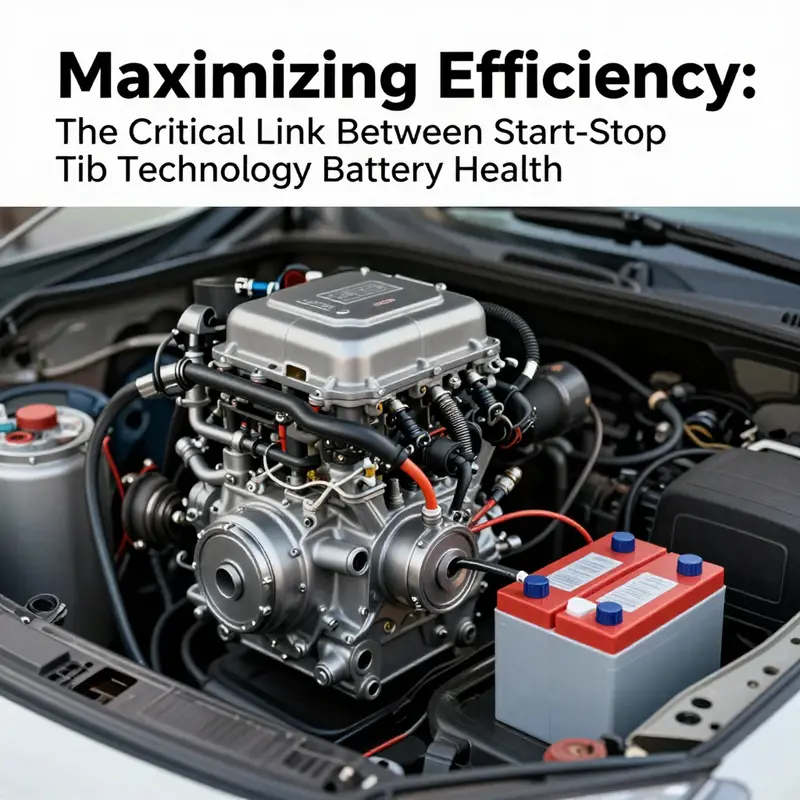
Because the start-stop system depends on a quick restart, a healthy battery is essential. If the battery cannot supply the surge of current needed to re-ignite the engine and power the electronics during restart, the system will defer, switching off the feature to ensure the vehicle can start reliably at the next demand. This protection is especially noticeable in three common situations: short trips that do not give the alternator enough time to replenish the battery, heavy use of climate control and electrical accessories that draw power, and extreme ambient temperatures that stress the battery’s performance. When the battery approaches a low state of charge, the system may declare the not-ready condition, and the engine will stay running to preserve reliability.
Maintaining battery health is not only about preventing a restart hiccup. It also matters for long-term reliability and efficiency. A condition known as sulfation can gradually sap capacity in lead-acid types that still sit in the car’s electrical system as a support battery. When a battery spends too much time undercharged, lead sulfate crystals form on the plates, reducing the effective surface area that accepts and releases energy. The result is slower recharge, diminished cold-crank capability, and more frequent trigger events where the start-stop cannot engage. The cumulative effect is a system that appears to be working in theory but fails to deliver the expected fuel savings in real-world driving. This is why the literature on powertrain technology stresses cadence: how often the engine restarts per mile driven, and how much energy is recovered during each stop, depend on keeping the battery at a healthy charge.
In hybrids and plug-in hybrids, where regenerative braking plays a larger role, maintaining an optimum state of charge is even more important. The energy recovered when the car decelerates can be substantial, but it can only be captured if the battery has headroom to store it. If the battery is already near full, or if the state of charge is allowed to drift too low, the system reduces or even disables regen to protect the battery chemistry. In practice this means the driver’s experience is subtly altered: the car may glide more efficiently when the battery is in the sweet spot, and less so when the charge level forces the system to sacrifice some recuperation in favor of reliability and longevity.
From a design perspective, modern powertrain management uses a range of safeguards to keep the battery from being overworked. A sophisticated engine control unit monitors voltage, current, temperature, and overall state of charge. It commands the start-stop controller to seize control of the engine at appropriate moments, but only within the limits set by the battery’s current health. When the data indicates the battery is trending downward, the system may extend idling or adjust the electrical load to preserve the core function of starting the car. This balancing act means that the not-ready state can be the most important signal the vehicle uses to protect itself, signaling that the battery needs attention before the savings in fuel come at the cost of reliability.
Turning to electric propulsion and the broader realm of energy management, preconditioning emerges as a crucial tactic for charging efficiency. In battery-electric vehicles, preconditioning warms or cools the battery while the car is still plugged in, so the battery reaches an optimal temperature before it begins to draw power for charging. This practice reduces internal resistance, allowing higher charging currents and shorter charging sessions. It also lowers the energy that must be shed during cabin climate control that competes with charging, especially in winter. When drivers neglect preconditioning, the vehicle may enforce slower net charging speeds as thermal management diverts energy to maintain safe battery temperature. In readings across many vehicles, the difference can translate into meaningful gains in efficiency and faster time to a full charge—an effect that ties neatly back to the start-stop equation: the vehicle’s overall energy budget is not only what happens on the road but also how the battery behaves while the car is waiting for its next journey.
These insights are consistent with the core message from FuelEconomy.gov, which emphasizes that start-stop systems rely on a healthy, charged battery to reduce idle fuel consumption. When the battery’s state of charge is compromised, the system may be suppressed, and the car will operate with the engine running longer than ideal. That outcome may seem counterintuitive at first: one would expect more battery use to always equate to more efficiency. In truth, efficiency is a property of balance. The engine’s fuel economy gains come from consistent access to a reliable restart, a robust charge recovery, and a battery that does not drain the vehicle’s electrical architecture during stop-and-go traffic. The not-ready condition is the boundary where efficiency and reliability intersect, where the vehicle chooses safety and reliability over theoretical savings.
In practice, drivers who aim to maximize efficiency in daily commuting should think of the battery as a drinking cup that needs regular, measured topping up. Short trips that begin and end at temperatures far from the battery’s comfort zone can keep that cup half-full or worse. Each successive stop may drain the stored energy just enough to push the system into not-ready territory, and the next restart may rely more on crank power than on a spark that comes from a ready battery. The more accessories are used while the engine is off, the more the battery must compensate, and the sooner it risks drifting toward a state where restart becomes uncertain. This is where charging discipline enters the picture as a practical efficiency lever, not a luxury.
Drivers who live in colder regions or who routinely use high-power heating and climate systems should pay particular attention to battery conditioning. Cold temperatures can reduce chemical activity inside the battery and raise internal resistance, making it harder to deliver the surge needed for a restart. The consequence is not merely reduced performance; it is more frequent disabling of start-stop to ensure that the car can still deliver the required power when it’s needed. Conversely, in hot climates, high heat accelerates chemical aging and can degrade battery plates more quickly, again pushing the system toward not-ready states. In these conditions, proactive comfort in charging—keeping the battery at the recommended charge level, ensuring the alternator and charging system are performing within spec, and avoiding repeated deep discharges—becomes a practical measure that supports both immediate efficiency and long-term reliability.
An additional nuance emerges when we consider maintenance and battery management over the vehicle’s lifecycle. Regular diagnostics of the 12-volt battery, including voltage checks and load testing, provide early warning signs that sulfation is developing or that charging is not meeting demands. When such warnings appear, addressing them before the battery fails to meet the start-stop’s demands preserves the car’s energy budget. The automotive literature consistently points to a lifecycle approach to energy efficiency: keep the battery healthy, monitor its charge status, and avoid aging beyond the point where its ability to supply current during restart becomes marginal. In other words, the best way to sustain the gains of start-stop is not to chase a single heroic improvement but to cultivate a steady, well-managed energy system that remains aligned with the vehicle’s operational needs.
From a consumer perspective, the linking thread across these considerations is clear. Start-stop technology promises a reduction in urban fuel consumption, but that promise only materializes if the battery and charging system cooperate. The not-ready state is not a failure of the software; it is a safety threshold designed to protect reliability in a system that is dependent on a delicate chain of power flows. When drivers experience not-ready conditions, the message is simple: respond with a check of the battery health, review driving patterns, and consider a scheduled maintenance assessment to ensure the energy budget remains balanced. Additional resources and practical guides online explore charging strategies that preserve efficiency across different driving profiles and climates. For a more detailed discussion on charging strategies tied to efficiency, see this resource:
Ultimately, the story of start-stop, battery charging, and vehicle efficiency is a story about energy stewardship. The engine does not simply turn off and on at will; it responds to the battery’s heartbeat. When the battery sings in tune with the alternator, when the SOC hovers in a healthy band, and when preconditioning and thermal management are aligned with charging, the car consumes less fuel, emits less, and offers the driver a smoother ride. The not-ready message, in many ways, is a forecast—a reminder that efficiency is not an automatic outcome but a result of disciplined energy management across the powertrain, climate systems, and charging habits. By attending to these details, drivers can ensure that start-stop remains a meaningful contributor to efficiency rather than a fickle feature that disappears when it is most needed.
Looking ahead, readers will encounter the next chapter’s focus on how different vehicle architectures—gasoline, hybrid, and fully electric—prioritize energy flows under varied operating conditions. The thread that ties them together is never far away: the battery’s charge status and health set the tempo for efficiency at the curb and on the highway, shaping not just how far a car goes, but how efficiently it travels. For a broader context on battery management and charging in modern electric propulsion, see this general reference: a detailed EV battery management review.
Idle Interrupted: The Start-Stop Advantage, Battery Readiness, and the Path to Efficient Driving
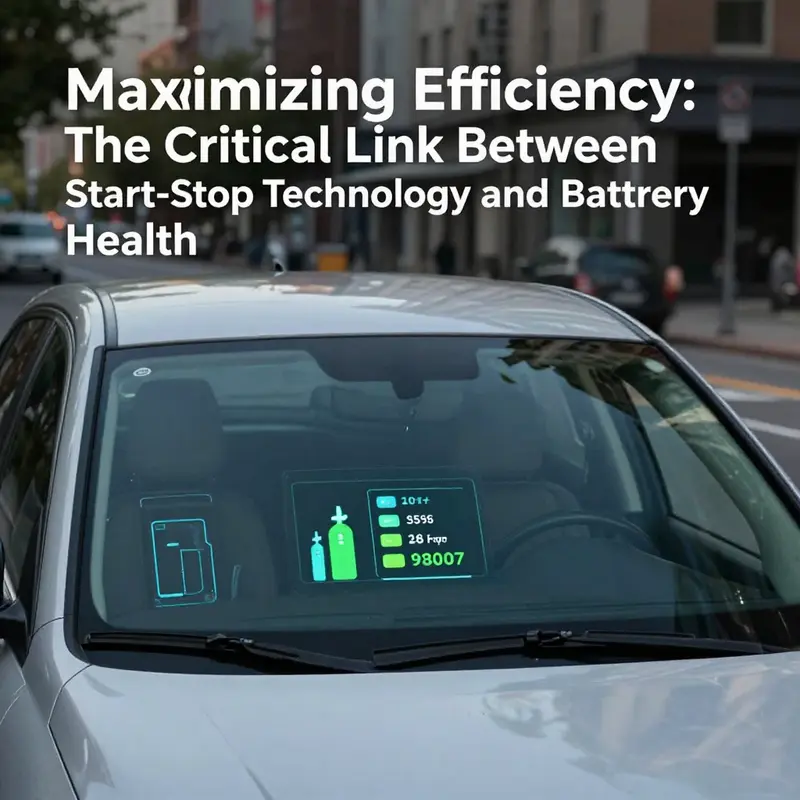
Every city street becomes a laboratory for efficiency when a vehicle can pause the engine without pausing your journey. Start-stop systems, sometimes called stop-start or STT technologies, are designed to curb idling—the fuel burned while a car sits in place waiting for the next green light, the next turn, or the next bumper-to-bumper moment. The idea is simple in principle: cut the engine during those moments when movement isn’t happening, and restart it the moment a driver signals readiness to roll. In practice, the effect is more nuanced, shaped by how the system works with the battery, the starter, the engine, and the human factors of driving. What makes these systems genuinely impactful is how closely their performance tracks the conditions of urban driving, the health of the vehicle’s electrical system, and the intelligence with which the system anticipates stops rather than merely reacts to them.
The core mechanism is straightforward, but its success depends on harmony among several subsystems. When the car is at a standstill—at a red light, in a queue, or in stop-and-go traffic—the engine can shut down automatically. The restart is designed to be quick and smooth: as soon as the brake is released (in many automatic transmissions) or the driver engages the accelerator, the engine comes back to life with minimal perceptible delay. This orchestration is less about dramatic changes in how engines burn fuel and more about eliminating wasteful idle energy. The result is a measurable improvement in city fuel economy and, by extension, reduced emissions. FuelEconomy.gov, one of the most widely cited sources for real-world efficiency data, notes that idle reduction is the heart of the benefit. It also stresses that the system’s availability hinges on a properly charged and healthy battery because the energy needed to restart the engine and to power onboard electronics must be readily available. If the battery is weak or the charging system falters, the vehicle may disable the start-stop feature to avoid late-night drama in the morning—an outcome the automotive industry calls not-ready or off-line readiness. In other words, the car preserves reliability first, then hunts efficiency second, and the boundary between the two is defined by electrical health.
From a driver’s perspective, the experience remains largely invisible most of the time. The engine shuts off quietly at a stop, a subtle reminder that the vehicle is performing a conservation act rather than a dramatic propulsion. When it’s time to move again, the restart feels instantaneous or nearly so, with the rest of the car responding as if nothing had changed. The ride is not only about reducing fuel use; it is also about reducing the noise and vibration associated with idling, particularly in dense urban traffic. Technologists have spent years refining the idle cut-off logic to minimize abruptness at restart and to avoid wear on the start mechanism or the engine mounts. Modern systems use a blend of inputs—engine temperature, battery state of charge, vehicle speed, brake status, steering angle, and even weather considerations—to decide when to shut off and when to wake the engine. The result is a nuanced balance: maximize opportunities to cut idle without compromising reliability or comfort.
The reported gains in fuel economy for start-stop systems come from rigorous testing on standardized cycles and from observations in real-world driving. In controlled tests, the gains are sizeable. For instance, research compiled by SAE International in 2023 indicates a notable improvement in standardized test cycles: a roughly 7.27% enhancement under the FTP (Federal Test Procedure) cycle and as high as 26.4% under the NYCC (New York City Cycle), which simulates dense urban driving with frequent stops. Those figures reveal the opportunity when the system operates in the demanding conditions many drivers experience every day. Yet the same body of work emphasizes an important caveat: real-world city driving often yields more modest savings, typically ranging from about 5% to 15% in many everyday circumstances. In periods of heavy congestion or when start-stop cannot engage due to battery constraints, the observed savings can exceed these bounds only in exceptional circumstances. Historical data from early implementations, such as Volkswagen’s BlueMotion concept in the past decade, shows how a combination of idle reduction and strategic engine restarts can meaningfully trim fuel use; reports indicate savings in the hundreds of hours of idle time per year and a large number of engine restarts per hour when the traffic pattern is highly stop-and-go. Those numbers, while specific to certain programs, illuminate the magnitude of the effect when the system is allowed to operate close to its theoretical potential.
The environmental argument for start-stop systems aligns with the broader push toward cleaner urban air and lower greenhouse gas emissions. In tests such as the New European Driving Cycle (NEDC), the reduction in idle time is associated with lower CO2 emissions, roughly on the order of several grams per kilometer. The appeal here is twofold: air quality benefits and the quieter operation that accompanies reduced engine idling. Automakers have pursued those outcomes as part of a broader strategy to meet tightening emissions standards around the world. The economics of the technology also tend to favor widespread adoption, because start-stop systems can be implemented with relatively modest modifications to existing internal combustion engines, as opposed to the more radical shifts required for hybridization or full electrification. The key features typically include an enhanced starter motor—whether a dedicated integrated starter-generator or a high-torque device—a battery capable of enduring frequent charge-discharge cycles (often AGM or similar chemistry), and a sophisticated engine control strategy that processes inputs and anticipates stops. The combination is designed to deliver energy savings without imposing visible burdens on the driver or the vehicle’s performance envelope.
Beyond simple hardware, the sophistication of the system increasingly matters. Predictive logic, leveraging data such as navigation routing, traffic patterns, and even historical driving tendencies, allows the vehicle to anticipate the next stop and adjust the engine shut-off timing accordingly. This predictive approach helps minimize nuisance effects such as engine vibration during restart and ensures a smoother experience—potentially as low as 0.5 m/s² in perceived disruption, according to some estimates. The objective is seamlessness: the car should feel almost normal to the driver while quietly trimming fuel usage in the chorus of daily commuting. The upshot is that start-stop is no longer a blunt, mechanical function; it has become a refined control strategy embedded in the vehicle’s broader energy management architecture.
The battery’s readiness is the hinge on which all of this turns. The state of charge, the health of the charging system, and the battery’s ability to withstand frequent cycling all determine whether the start-stop system can engage. If the battery is not sufficiently charged, the system may be inhibited to protect the ability to restart reliably or to power essential electronics during the restart period. This protective stance is not a concession but a design safeguard, ensuring that the efficiency gains do not come at the expense of reliability. In practical terms, when a driver experiences the “not ready” indicator or otherwise notices that the start-stop function has been disabled, the underlying reason is typically battery health or charging-system concerns. This is precisely the category of trade-off many drivers encounter in urban driving: the car recognizes that the battery’s capacity to handle frequent, rapid draw-downs and recharges is temporarily compromised, and it prioritizes consistent engine starting over immediate idle reduction. As the system ages or if the alternator, serpentine belt, or other charging components degrade, the likelihood of witnessing a not-ready state grows. The result is a dynamic balance between the ideal efficiency scenario and a conservative, reliability-first approach.
In the broader context of the vehicle’s energy management, the start-stop feature sits alongside other efficiency technologies that are increasingly common on mainstream vehicles. Some automakers have integrated start-stop with a second-layer strategy, such as an intelligent energy recovery function that captures energy during restart or deceleration for later use. Others pair it with more efficient starter motors or higher torque-capacity systems to reduce restart time and vibration. The integration of predictive algorithms, as mentioned earlier, is part of a broader trend toward smarter, more adaptive powertrains, where the vehicle’s own data becomes a guide to when to conserve and when to consume. This is not merely a matter of saving a few gallons of fuel per year; it is about extending engine life by reducing prolonged idling, lowering brake wear by smoothing stop-and-go behavior, and contributing to a more efficient urban mobility paradigm.
The practical implications for drivers emerge in a few tangible ways. First, the presence of a healthy battery and charging system creates a favorable baseline for efficiency. Regular maintenance that keeps the battery in good condition—proper electrolyte balance, clean terminals, secure connections—helps ensure the system can operate as designed. Second, climate control can influence the effectiveness of start-stop. When the cabin is quickly brought to a desired temperature through rapid cooling or heating, the system still manages to shut the engine during idle, but the energy cost of climate assistance can affect restart timing and the perceived smoothness of the transition. In colder conditions, the engine might require a longer warm-up period after restart, which can affect the overall energy balance and user perception of efficiency. Third, driver behavior remains a factor. While the system does the heavy lifting of reducing idle fuel consumption, aggressive driving or very short trips can limit the opportunities for idle reduction to accumulate meaningful savings. In that context, start-stop is most effective when it is part of a broader pattern of urban driving, with many short segments separated by deliberate movement.
To illustrate how this technology intersects with daily life beyond the lab, consider the convenience angle some drivers value. Start-stop is often paired with a more user-centric feature set, including options to customize shutdown behavior, a robust battery, and even donor features like remote start for cold mornings. For readers curious about the convenience side of such technology without losing sight of the efficiency gains, a related exploration of remote-start capabilities can be insightful. See remote-start-effortless-convenience-at-your-fingertips to understand how remote-start fits into the broader spectrum of vehicle technologies that people use to shape their driving experience, while remaining aware that start-stop and remote start are distinct energy-management paths with different implications for efficiency and battery load.
Ultimately, start-stop systems represent a practical, scalable approach to boosting efficiency in the near term. They leverage existing internal combustion engines, minimize idle fuel burn where it matters most—in city driving—and contribute to emissions reduction in ways that align with regulatory trajectories and consumer expectations. The technology is not a stand-alone solution; it is a component of a larger, evolving energy strategy that includes enhancements to battery technology, smarter powertrains, and, eventually, broader electrification. In that sense, the rise of start-stop is both a response to urban energy challenges and a bridge to a future where intelligent energy management remains central to vehicle performance.
The literature and testing to date support the view that start-stop has a meaningful, if context-dependent, impact on efficiency. The numbers vary with testing methodology, driving conditions, and the battery’s condition, but the pattern is clear: in urban cycles, the opportunity to reduce fuel burn is substantial, and in more representative real-world scenarios, a meaningful portion of the urban fuel savings can be realized. The driver’s experience—quiet, smooth, and less fuel-hungry at red lights—aligns with the engineering objective: maximize efficiency without compromising reliability. The interplay between battery readiness and idle suppression is a critical piece of this puzzle, and it is this interplay that explains the occasional not-ready state. As automotive technology continues to mature, the path toward cleaner, more efficient urban mobility will likely hinge on even smarter energy management, more durable energy storage, and better integration with the driving environment. The start-stop system is a well-established building block on that path—one that invites further innovation while delivering tangible benefits to drivers every day.
For readers who want a deeper technical dive into the performance metrics and methodological foundations behind these findings, the SAE International Technical Paper from 2023 offers a rigorous treatment of the subject. It details test cycles, measurement methodologies, and nuanced conclusions about where and how start-stop delivers the most value, along with caveats tied to battery state of charge and system readiness. This level of detail helps engineers and policy makers alike understand the practical limits and potential of stop-start technology as part of a broader strategy for efficient driving. See the full technical discussion in SAE International Technical Paper 2023-01-0234, available at the source: https://www.sae.org/publications/technical-papers/content/2023-01-0234.
Not Ready, Ready Again: Reclaiming Start-Stop Efficiency Through Battery Health and System Readiness

The promise of modern start-stop systems is simple and seductive: when a vehicle sits at a light or idles in traffic, the engine quietly shuts off to save fuel and reduce emissions. When the driver releases the brake or depresses the accelerator, the engine springs back to life with minimal delay. This cycle, repeated hundreds of times in a typical city drive, can yield meaningful gains in overall fuel economy and, by extension, lower emissions. Yet that very promise rests on a fragile prerequisite—the system must be ready. The term “Not Ready” in a vehicle’s start-stop framework signals a roadblock to this efficiency chorus. It is not merely an annoyance that disables a feature; it is a concrete indicator that at least one critical readiness criterion is not met. In the most practical terms, a not-ready condition is the car’s way of saying: the battery, sensors, software, or a related subsystem cannot guarantee a reliable restart and a safe, efficient idle-off state. When Not Ready is in effect, the car reverts to conventional idle, and the opportunity to shave liters from urban fuel use vanishes. Understanding why that state occurs—and how to restore readiness—brings into focus the interplay between electrical health, sensor reliability, vehicle software, and the environmental rationale for start-stop technology itself. The core principle remains unchanged: the more consistently the vehicle can shut off the engine at appropriate times and restart it smoothly when needed, the more efficient it becomes in stop-and-go driving. Fuel-economy resources emphasize precisely this logic, noting that start-stop can reduce idle fuel burn in urban settings and that the system’s effectiveness hinges on a healthy battery and charging system. When the battery is weak or charging cannot keep up, the system will not engage—often by design—to protect reliability and avoid a stalled restart in traffic. The Not Ready state, then, is a protective boundary, a guardrail that keeps performance robust even as it limits potential gains in efficiency. The question becomes not only how to diagnose a Not Ready condition, but how to prevent it from occurring in the first place and how to restore readiness when it does occur. The journey from Not Ready back to Ready is a practical, stepwise process that blends battery care, sensor integrity, software health, and thoughtful driving behavior, all anchored by an understanding of the lifecycle of the 12-volt electrical system that underpins the start-stop logic.
One of the clearest messages from authoritative guidance is that the battery is the heart of the start-stop system’s ability to save fuel in urban cycles. A battery that is weak, aged, or otherwise compromised cannot reliably handle the repeated high-current restart demands the system calls for during a busy commute. In such cases, the system wisely disables the feature to protect the engine’s ability to start reliably at the next red light or in a congested stop-and-go sequence. The correlation between battery health and start-stop readiness is not simply anecdotal; it is a documented design constraint. A battery operating below an optimal state of charge and health can fail to supply the necessary current quickly enough to restart the engine without delay, prompting the control unit to declare Not Ready to avoid a stumble in normal operation. The environmental context matters as well. Extreme temperatures—both hot and cold—place additional strain on the battery and on the voltage stability of the electrical system. In winter, for instance, the battery’s capacity is reduced, and the starter motor may demand more current to achieve a reliable restart. In summer, high loads from air conditioning fans and other accessories can compete for available power, subtly increasing the bar for readiness. The system, designed to protect reliability and longevity, may therefore opt to stay Not Ready more readily in harsh conditions, even if the battery is not technically at the end of its life. The net effect is that the Not Ready status is both a diagnostic flag and a protective measure—an operational boundary that prioritizes dependability over aggressive fuel savings when conditions are not ideal.
To translate this understanding into a practical diagnostic narrative, one can imagine a layered checklist that a technician or a careful owner might walk through when Not Ready appears. The topmost item on that list is the battery itself. A battery that cannot hold a full charge or cannot deliver a strong burst current when restarting the engine creates a cascade of readiness failures. A precise battery health assessment—often a combination of voltage, cold-crank current (CCA) capability, and a controlled load test—can reveal a deeper issue: sulfation, weakened plates, or an electrolyte level that is misaligned with performance expectations. If the battery is determined to be the bottleneck, replacement or a refurbishment plan may be warranted. But even a strong battery does not guarantee readiness. The next layer of the diagnostic ladder involves sensors and switches that relay critical conditions to the powertrain control module. Idle speed sensors, crankshaft position sensors, neutral safety switches, and clutch/brake interlocks all play a part in the algorithm that decides when it is safe to shut off the engine and when it is safe to restart. If any of these inputs are out of spec, the control logic may halt the start-stop process to prevent an unsafe restart or an erratic idle. The Not Ready signal can therefore indicate a sensor fault even when the battery test passes with flying colors. In the same vein, software governs the orchestration of the start-stop sequence. Vehicle manufacturers periodically release software updates to refine the heuristics by which readiness is evaluated, to smooth restart timing, and to accommodate new battery chemistries or sensor calibration techniques. A stale or miscalibrated software state can, paradoxically, cause Not Ready even when hardware appears healthy. The takeaway is that Not Ready is rarely caused by a single faulty piece; it is usually the result of a confluence of electrical health, sensor integrity, and software state that must be aligned for the system to function as intended.
How, then, does one proceed to restore Ready status when Not Ready is detected? A practical, methodical approach begins with the backbone: the battery. Ensuring the battery is fully charged, in good health, and capable of delivering high current is the first and often the most consequential step. This is not merely about cranking power; it is about maintaining a robust electrical environment where the start-stop controller can reliably detect a suitable voltage level and current supply as the engine restarts. If the battery tests show weakness, replacement is a straightforward resolution. However, even with a healthy battery, the presence of a soft fault in a sensor or a minor software anomaly can undermine readiness. The next logical step is a thorough sensor inspection. Idle speed sensors and crankshaft position sensors must read accuracy and consistency; irregular readings can cause the system to hesitate or refuse to engage the start-stop function. Neutral safety switches and pedal interlocks are mechanical excuses that sometimes masquerade as electrical problems. A physical inspection—clean contacts, proper alignment, no corrosion—can easily restore reliable signals that the control unit relies on. If a fault is detected, the necessary repair may involve replacing a sensor or, less frequently, reseating connectors and updating wiring harnesses that have suffered wear or heat exposure over time. In modern vehicles, these are not purely mechanical concerns; they often have software components as well. When sensors are replaced or connections repaired, software resets and calibration steps are typically required. A common practice is to complete a defined driving cycle or a short test drive to let the control unit re-evaluate its readiness criteria in the updated hardware context. This re-calibration helps the system re-learn acceptable idle speed, restart timing, and the tolerance bands around voltage and current thresholds. The goal is for the car to once again meet all the defined conditions that the system uses to declare Ready. It is a subtle process, but it is at the heart of restoring efficiency. If all hardware and software layers pass, the Not Ready flag should disappear, and the start-stop system can re-enter service. Technicians may reinforce this with a software update from the manufacturer, which can address known issues that previously sparked Not Ready under particular drive cycles or environmental conditions. The collective wisdom from diagnostic communities is clear: a Not Ready condition is rarely a one-and-done fix; it is a signal to reassess the electrical health, sensor integrity, and software state together.
From a driver’s perspective, there are also practical habits that support longer-term readiness. First, a routine battery maintenance schedule matters. Regular checks of voltage and terminal cleanliness, a clean battery hold-down, and avoidance of parasitic draws through accessories can help preserve health. Second, driving style can influence readiness, particularly during cold starts or when a trip includes many short legs. In light traffic, a consistent driving pattern that allows the engine to reach its optimal operating temperature can reduce the frequency with which the system must rely on a restart, thereby easing the load on the battery and the alternator. Third, proactive attention to environmental conditions makes sense. In extreme weather, using energy-efficient climate control settings or pre-conditioning the cabin while the vehicle is still plugged in can reduce the battery’s burden during the critical restart moments. In this sense, readiness is not merely a binary state but a dynamic balance among electrical capacity, sensor reliability, software tuning, and operator behavior. When one of these elements falters, Not Ready becomes a practical reality; when all align, Ready returns and the fuel-saving promise of start-stop can be realized again.
The diagnostic dialogue surrounding Not Ready underscores another important theme: documentation and trained diagnostics. Onboard diagnostics will often log specific error codes related to battery health, sensor faults, or interlock issues. The codes point technicians toward the likely culprit and help prioritize the steps in the restoration process. The diagnostic ecology includes professional guidance from service bulletins and training resources that describe model-specific thresholds and servicing procedures. While the layman can perform many checks, the nuanced combinations of signals that constitute a Not Ready condition frequently require professional-grade diagnostic tools and expertise. This is not about secret knowledge and opaque procedures; it is about a structured approach to a highly dynamic electrical system that keeps an increasingly efficient, electronically controlled vehicle operating in a safe, fuel-saving mode. In the end, the Not Ready state is a reminder that efficiency depends on reliability across multiple fronts. The start-stop system embodies a philosophy of energy stewardship, but it can only fulfill that promise when the electrical core remains steadfast, the sensing fabric remains intact, and the software orchestration remains calibrated to a changing environment. A thoughtful blend of preventive maintenance, mindful driving, and timely diagnostics can keep the system in Ready mode for the majority of urban trips, ensuring that the efficiency gains are not merely theoretical but practical and sustained across the vehicle’s life.
For readers seeking a more applied, consumer-focused angle on the electrical and charging aspects that influence start-stop readiness, practical resources on battery charging troubleshooting can be a helpful companion. For a focused guide that addresses common auxiliary switch and charging scenarios, you can explore a practical troubleshooting resource here: aux-switches-temporarily-unavailable-battery-charging-troubleshooting-tips. This kind of material helps demystify how a battery’s behavior interacts with the vehicle’s electrical load, particularly when additional devices or climate control systems push the power budget during a restart sequence. Such insights reinforce the broader narrative: the health of the battery and the state of readiness of the start-stop system are deeply interconnected with how a vehicle handles the electrical load of daily living, from headlights and infotainment to heated seats and defrosters.
Across the broader landscape of automotive efficiency, the message remains consistent. Start-stop technology is a legitimate and effective tool for reducing fuel use in urban driving, but its gains are only as reliable as the system’s readiness. The Not Ready condition is not a defeat; it is a diagnostic signal that prompts targeted maintenance, sensor checks, software validation, and, when needed, battery refurbishment. By addressing the root causes and following a disciplined approach to restoration, drivers and technicians can reclaim the efficiency returns that start-stop promises. This approach aligns with the broader narrative about how advanced powertrain technologies contribute to lower fleet-wide fuel consumption and carbon emissions, especially in metropolitan contexts where stop-and-go cycles are the norm. The interplay between battery health, sensor reliability, and software accuracy is not merely a technical curiosity; it is the practical backbone of a more efficient, lower-emission automotive future. As the technology evolves, the boundaries of Not Ready will shift, but the fundamental principle will persist: readiness is the gatekeeper of efficiency, and maintaining that readiness is a clear, achievable duty for anyone who wants to maximize the environmental and economic benefits of modern propulsion.
In closing, the Not Ready condition should be viewed not as a hindrance but as a signal to engage a structured maintenance and diagnostic routine. Regular battery health checks, sensor inspections, and software updates can dramatically reduce the frequency of Not Ready events and extend the periods during which start-stop operates smoothly. When Not Ready does occur, a methodical, patient restoration process—focusing on battery health, sensor integrity, software calibration, and appropriate driving cycles—will typically restore Ready status and re-enable the fuel-saving potential that modern stop-start systems offer. The overarching goal is a seamless, reliable reminder that efficiency is not just a design promise but a daily practice, embedded in how we maintain our vehicles and how we drive them in the environments where start-stop technology can make a meaningful difference. For readers who want to deepen their understanding of the larger efficiency framework, the FuelEconomy.gov Powertrain Technology overview is a valuable reference point that confirms the core logic: stop-idle, start again, save fuel, and keep the system ready whenever conditions permit.
External reference for further reading: https://www.ase.com
Final thoughts
Understanding the mechanics and implications of start-stop technology is pivotal for business owners aiming to optimize vehicle efficiency. By recognizing how battery charging impacts system capabilities, businesses can not only reduce fuel consumption but also extend the lifespan of their fleet’s vehicles. Regular maintenance checks and proactive management of the battery systems can prevent ‘not ready’ conditions and ensure that start-stop functions are active and effective. This commitment to optimization ultimately translates into significant cost savings and a more sustainable operational approach.