
Understanding vehicle maintenance databases is crucial for business owners in the automotive sector. These databases not only enhance communication between consumers and service providers but also streamline operations and improve service outcomes. Key resources like Mitchell 1’s ProDemand software offer comprehensive repair information systems that are essential for technicians and service centers. Repair time databases provide standardized labor hours and rate calculations which significantly impact pricing strategies. Additionally, third-party platforms enrich transparency in vehicle maintenance, allowing consumers to make informed choices when purchasing used cars. This article examines the integral role of technology and economics in the realm of vehicle maintenance databases, presenting insights on how these innovations can influence business practices.
A Unified Window into Vehicle Care: Mitchell 1’s ProDemand and the Modern Maintenance Database Ecosystem
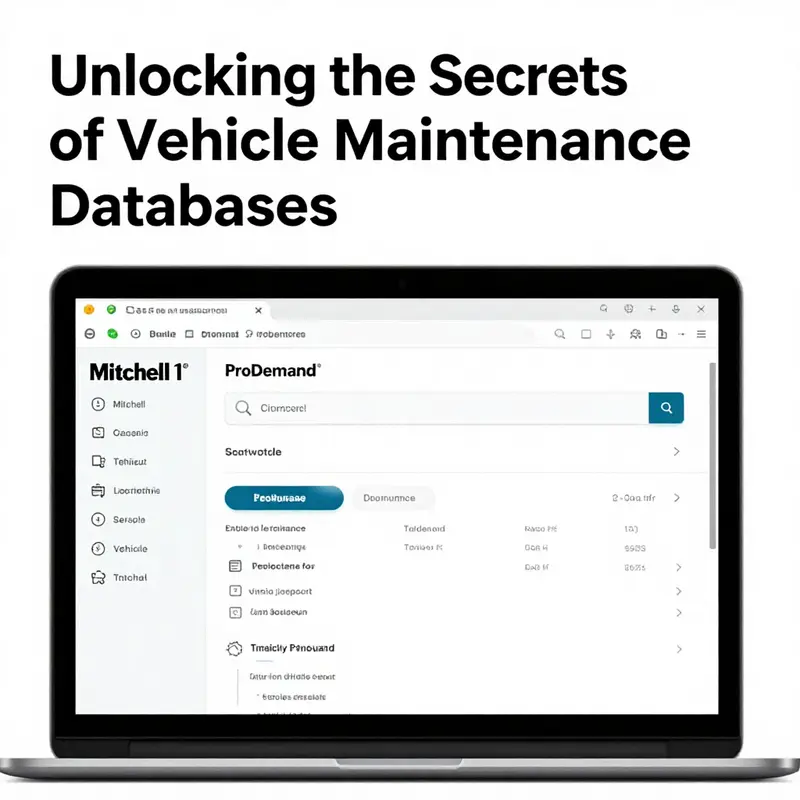
In the intricate world of vehicle maintenance, knowledge is the engine that keeps repair bays efficient, transparent, and trustworthy. The thread that ties together technicians, insurers, and buyers is a evolving ecosystem of maintenance databases. Among these, Mitchell 1’s ProDemand stands out as a comprehensive hub that not only anchors the day-to-day work of diagnostics and repairs but also helps illuminate the broader shifts in how information is accessed, verified, and applied. To understand ProDemand is to glimpse how a modern maintenance database operates as a living interface between factory guidance, real-world variability, and the expectations of a market that increasingly prizes accuracy and speed over guesswork. The chapter that follows treats ProDemand not as a single tool but as a gateway into a larger system where data quality, advanced search, and integrated workflows redefine what it means to maintain a vehicle in the twenty-first century.
At its core, ProDemand offers real-time, factory-direct data about a broad spectrum of vehicles. This means technicians are operating with the same procedures, the same wiring diagrams, and the same safety protocols that engineers embedded in the vehicles during production. The breadth of coverage is especially meaningful for modern electric and hybrid platforms, which have proliferated across major brands in recent years. By August 2024, ProDemand displayed extensive support for electric and hybrid models across manufacturers such as Tesla, Ford, Toyota, Honda, Kia, Hyundai, and the Volkswagen Group, which includes Audi and Porsche. This level of coverage matters because electrical architectures, safety systems, and battery-management procedures evolve quickly. When a technician can pull up a single, unified source for service procedures, diagnostic steps, and maintenance intervals, the risk of cross-referencing obsolete or incomplete sources diminishes considerably.
One of ProDemand’s defining features is its integrated 1Search Plus intelligent search engine. In practice, this means a user sees a card-based dashboard that surfaces the most relevant procedures, diagrams, and notes with a few keystrokes. Rather than wading through pages of generic repair content, technicians receive a concise, prioritized set of results tailored to the vehicle at hand. The design purpose is straightforward: reduce the cognitive load during a repair while preserving access to the exact information needed for the make, model, and year being serviced. Coupled with 1Search Plus, the platform’s Advanced Interactive Wiring Diagrams offer real-time line tracing that highlights circuits and pathways as the user navigates them. This can dramatically shorten the time spent diagnosing electrical faults, where a misread diagram can lead to unnecessary disassembly or incorrect part replacements.
Beyond wiring diagrams, ProDemand’s ADAS Quick Links consolidate critical data about advanced driver-assistance systems into a single, accessible location. As driver-assistance technologies become standard even on mass-market vehicles, the calibration, sensor alignment, and post-repair verification requirements associated with ADAS can be complex. Having a centralized hub for these calibration steps helps technicians plan work more accurately, ensuring vehicles regain their intended performance and safety characteristics after maintenance or replacement of related components. This integration speaks to a broader trend in vehicle maintenance: troubleshooting and repair are increasingly system-level challenges, not just isolated component fixes. ProDemand embodies this shift by presenting a holistic interface where mechanical, electrical, and software considerations coexist in a unified workflow.
Yet ProDemand does not function in isolation. It sits within a larger constellation of databases that underpin modern repair activities. Repair-time databases, for example, contribute standardized labor hours, disassembly logic, and component relationships that guide cost estimation and time management. Firms developing these time databases incorporate dynamic parameter correction to reflect real-world repair variability—factors such as corrosion, awkward disassembly, or unusual part fits can all influence the actual labor hours required. When a technician references both ProDemand’s procedures and a reputable labor-time database, they gain a more reliable basis for planning tasks like bodywork, painting, or powertrain work. This dual-reference approach helps align shop estimates with actual job complexity, improving profitability while reducing the chances of post-repair disputes with customers or insurers. The synergy between comprehensive repair data and labor-time standards is a practical manifestation of how modern maintenance databases translate knowledge into reliable, consistent workflows.
From the consumer perspective, the emergence of detailed, accessible maintenance histories for used vehicles depends on similar data networks. Third-party platforms that compile VIN-derived histories—often aggregating information from service shops, insurance claims, and authorized centers—embody the consumer-facing side of the same ecosystem. When a vehicle’s past service entries, replacements, and incidents are verifiable through transparent records, trust in the used-car market rises. This transparency is not merely about provenance; it directly informs decision-making. Buyers can assess the likelihood of future maintenance needs, estimate projected costs, and evaluate the reliability of a given model or configuration. For context, consider how such data layers interplay with the high-precision maintenance data described in ProDemand: both serve to reduce uncertainty, albeit from different vantage points in the supply chain.
The practical implications of a robust maintenance database extend into daily diagnostics and repair planning. A typical workflow might begin with a technician querying the vehicle’s service procedures for a suspected fault—perhaps an electrical issue affecting several subsystems. The 1Search Plus results guide the technician to the most relevant factory procedures, while the interactive wiring diagram confirms circuit routes and potential fault points. If the fault has ADAS implications, the Quick Links provide the necessary calibration guidance and sensor alignment checks to complete the job correctly. The result is not merely a fix but a validated repair path that aligns with engineering intentions and regulatory expectations. In this way, ProDemand helps ensure that the repair not only restores function but also preserves safety and compliance across the vehicle’s lifecycle.
A broader view reveals how this centralized access to precise, model-specific information reshapes the skill set of modern technicians. The emphasis shifts from rote memorization of generic fault lists to the ability to navigate a mature, machine-readable knowledge base where data is organized around actual vehicle architectures. This requires a nuanced understanding of how to interpret service information, interpret wiring diagrams, and apply calibration and alignment procedures to ADAS-equipped platforms. Training, too, evolves in step with these tools. Technicians learn how to triangulate information from multiple sources within a single interface, cross-check data across procedures and diagrams, and communicate clearly with customers about the complexity and duration of advanced repairs. The net effect is a service ecosystem that is more predictable for customers and more efficient for shops, which translates into shorter road to repair times and better maintenance outcomes.
In surveying the landscape of maintenance databases, it becomes evident that ProDemand occupies a pivotal position not merely because of its coverage but because of the way it weaves together advanced search, real-time factory data, and system-wide repair guidance. This combination helps reduce the risk of using outdated or incomplete third-party sources, a risk that can lead to inconsistent repairs or misdiagnoses. It also supports a more transparent diagnostic process, where technicians can document the rationale for a repair with references to specific procedures, diagrams, and calibration steps. For educators and industry analysts, ProDemand serves as a practical case study of how a single platform can harmonize disparate data streams into a coherent repair pathway. The approach demonstrates how data standardization, when coupled with intuitive interfaces, translates into measurable improvements in repair quality and customer satisfaction.
To readers seeking a concise primer on the broader question, “What is vehicle maintenance?”—and how data supports it—consider this: vehicle maintenance is the ongoing alignment of technical knowledge, diagnostic reasoning, and procedural accuracy with the unique needs of each vehicle. From routine service intervals to the most complex ADAS calibrations, a well-structured maintenance database acts as a compass, guiding technicians through a landscape where every model may present its own quirks and every repair carries a blend of mechanical and software considerations. In this sense, ProDemand is more than a repository; it is a workflow partner that helps translate the vehicle’s design intent into a reliable, verifiable service path. The result is a maintenance practice that is more predictable for shop operations, more trustworthy for customers, and more transparent for the marketplace as a whole.
For readers who wish to explore the practical implications in a broader sense, a quick step into the literature on vehicle maintenance can fortify this understanding. What is vehicle maintenance? offers foundational context about maintenance goals, scheduling, and the kinds of information that databases strive to organize for everyday use. As the field continues to evolve, the role of robust, factory-aligned databases will only grow in importance for quality, safety, and cost control in automotive repair.
External resources for deeper exploration of platform specifics and growth trajectories of these databases include industry-facing materials available through major providers of maintenance information. For those seeking detailed, official specifications and capabilities, Mitchell On Demand provides extensive documentation and product information that illuminate how a centralized platform can support diverse repair scenarios across brands and vehicle architectures. https://www.mitchellondemand.com/
Reading the Clockwork of Car Care: The Critical Role of Repair Time Databases in Vehicle Maintenance
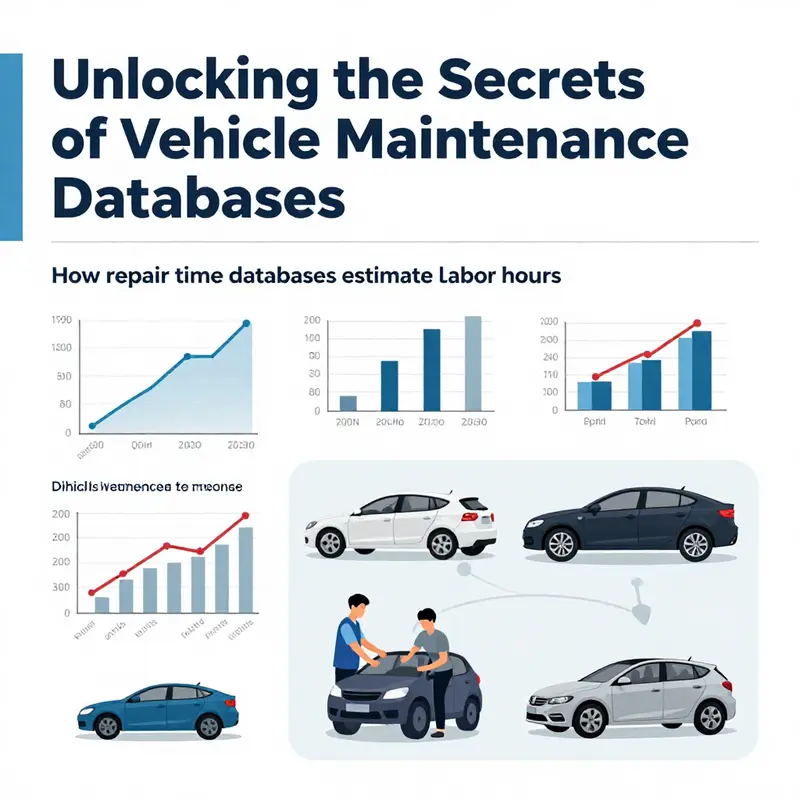
A vehicle’s upkeep rests on a quiet infrastructure of data that keeps the whole system honest about time, cost, and outcome. Repair time databases are not glamorous banners, but they are the backbone of modern maintenance. Rather than relying on memory or guesswork, shops rely on standardized benchmarks that translate labor into measurable values. These benchmarks are not static; they evolve with new technologies, tooling, and regional labor practices. When they work well, they turn a complex, hands-on craft into a transparent conversation among technicians, customers, and managers about what a service should cost and how long it should take. The result is more predictable maintenance and fewer surprises for everyone involved.
At their core, repair time databases document the time required to complete a range of tasks, from the simplest routine service to the most intricate electrical work that powers today’s driver-assistance systems. They include not just the raw minutes or hours for a repair, but the disassembly logic that explains why that time is needed. They map the relationships between components, so a technician understands which parts must be removed first, which steps can be parallelized, and where hidden steps might lurk in a stubborn job. This level of detail matters because the actual time a job takes depends on many variables: the vehicle’s model year, the extent of wear, corrosion, the presence of high-precision fasteners, and the configuration of electronics that require careful calibration. The best databases capture these nuances and provide reasoned corrections that reflect real-world variability, rather than offering a single, blunt figure.
Technicians use these data in two crucial ways: to quote and to execute. A precise labor estimate builds trust with customers and reduces the friction of unexpectedly high bills. It anchors the conversation around what is needed and why, so customers can make informed decisions about preventive maintenance versus reactive service. Scheduling managers rely on aggregate times to allocate bays, technicians, and tools. In a shop floor with multiple tasks, knowing the expected duration of each repair helps turn chaos into a coherent sequence of work. This is not just about speed; it is about preventing bottlenecks, reducing idle time, and ensuring that resources—specialty tools, diagnostic equipment, and qualified technicians—are aligned with demand. In fleet operations, where dozens of vehicles flow through a workshop monthly, these benchmarks translate into predictable maintenance windows, steady throughput, and better use of capital equipment.
Repair time data is not a static catalog but a living system that grows through practice. When a technician records a repair in the field, that data contributes to a broader, continually refined benchmark. Regional labor rates, the availability of specialized tools, and even safety requirements shape the numbers. One region may show longer times for a brake-job sequence because technicians adhere to stricter safety checks, while another region achieves the same outcomes with shorter cycles thanks to standardized tools and well-practiced procedures. The result is a mosaic of benchmarks that reflect local realities yet stay anchored to universal repair logic. This balance—local relevance with global consistency—is the essence of a robust repair time database.
The practical benefits ripple across the entire maintenance ecosystem. For consumers shopping for a used vehicle, repair-time benchmarks help distinguish reality from rumor. Maintenance history becomes a predictive map of future costs and reliability rather than a dusty ledger of past services. A vehicle with well-documented maintenance routines supported by standardized time data is easier to evaluate, and buyers gain a clearer sense of ongoing ownership costs. The effect is not merely about a single quote for a service; it shapes the buyer’s understanding of what is reasonable to expect over time. For those who want a contextual primer on maintenance concepts, the conversation can broaden to simple explanations of routine tasks, why certain services recur at set intervals, and how labor time factors into overall ownership costs. Readers can explore a concise overview at what-is-vehicle-maintenance.
In the workshop, the influence of these databases extends to planning and communication as much as to pricing. A repair time benchmark informs the sequencing of tasks, the allocation of skilled labor, and the scheduling of parts deliveries. If a service requires a multi-step process—draining and refilling fluids, wiring harness disconnections, or recalibrating sensors after component replacement—the database helps map the entire workflow and forecast the total duration. This level of foresight reduces the risk of mid-job delays, which can cascade into customer dissatisfaction and missed appointment windows. When a task overruns, managers can adjust by reassigning technicians, shuffling ancillary tasks, or communicating revised estimates to customers in a timely fashion. In this way, time data becomes a lever for better service delivery, not a blunt instrument for price justification.
Another layer emerges when repair time data blends with real-time feedback. Predictive models, and approaches described in industry discussions as data-informed maintenance systems, merge current field conditions with historical performance. Real-time data about part availability, tool readiness, and the actual pace of work can adjust estimates on the fly. The benefits are tangible: improved accuracy in projections, the ability to communicate dynamic timelines to customers, and more responsive scheduling that minimizes downtime. This not only improves customer satisfaction but also enhances the workshop’s capacity planning. Fleets can be dispatched with confidence, knowing that maintenance windows reflect the latest field experience rather than stale averages. The integration of real-time input makes the system more resilient to fluctuations in supply chains, technician staffing, and the complexity of modern vehicles.
The reach of these systems extends beyond the shop floor. Insurers, OEM service networks, and repair networks rely on standardized labor times to model risk, price coverage, and plan support services. A consistent, auditable framework for labor time helps ensure that cost estimates are fair and transparent, reducing disputes and enabling smoother claims processes when accidents or wear lead to repairs. Suppliers benefit as well, using reliable time benchmarks to forecast parts stocking, delivery schedules, and workflow optimization. The ecosystem thus converges on a common language in which time, effort, and outcome align across stakeholders.
Of course, effective data governance is essential. Time entries must be grounded in authenticated repair records with clear task definitions and explicit conditions. Regional variations in wage scales, tooling availability, and regulatory requirements shape the numbers. When times are recorded in one locale, they should be interpreted in light of local practice while still remaining compatible with global repair logic. A robust database also includes a process for validating new data, auditing outliers, and updating benchmarks as technology and best practices evolve. In short, the utility of repair time data depends not only on the depth of the catalog but on the rigor of its maintenance.
For consumers who encounter these benchmarks mainly through quotes and histories, the effect is transformative. The numbers behind a maintenance estimate become a window into the craft: why certain steps are necessary, how long they should take, and what variables could alter the outcome. When buyers have access to transparent time data for routine services, they can engage more confidently with sellers and mechanics, ask sharper questions, and compare across service providers. The focus shifts from “how much” to “how well and how predictably,” supported by a shared, data-driven understanding of maintenance work. If you want to explore a broader context of maintenance concepts before diving deeper, the linked resource above provides a concise primer.
Throughout this exploration, one recurring idea stands out: repair time databases are not about trapping technicians in hours and invoices. They are about translating skilled, hands-on practice into repeatable, auditable processes that elevate service quality. They enable a shop to plan with clarity, price with legitimacy, and communicate with customers in terms that are easy to grasp. They support proactive maintenance by signaling when service is due and when parameters suggest a different course of action. They create a bridge between the mechanical art of repair and the managerial science of operations, orchestration, and customer experience.
As you progress through this chapter and into the chapters that follow, keep in mind that the question Is there a database for vehicle maintenance? points toward a larger reality: there is no single repository that captures every nuance of every vehicle in every market. Instead, there is a coordinated ecosystem of records, benchmarks, and workflows. Each component reinforces the others, producing a composite picture of vehicle health that is more reliable than any individual source could be. The future of maintenance lies in this integrated approach—where diagnostic data, maintenance histories, labor-time benchmarks, and predictive scheduling converge to deliver faster service, fairer costs, and greater trust.
External resource for further reading: https://www.tecalliance.com/en/asia/products/tec-rmi
From VIN to Verified History: How Third-Party Platforms Put Maintenance Records in Consumers’ Hands
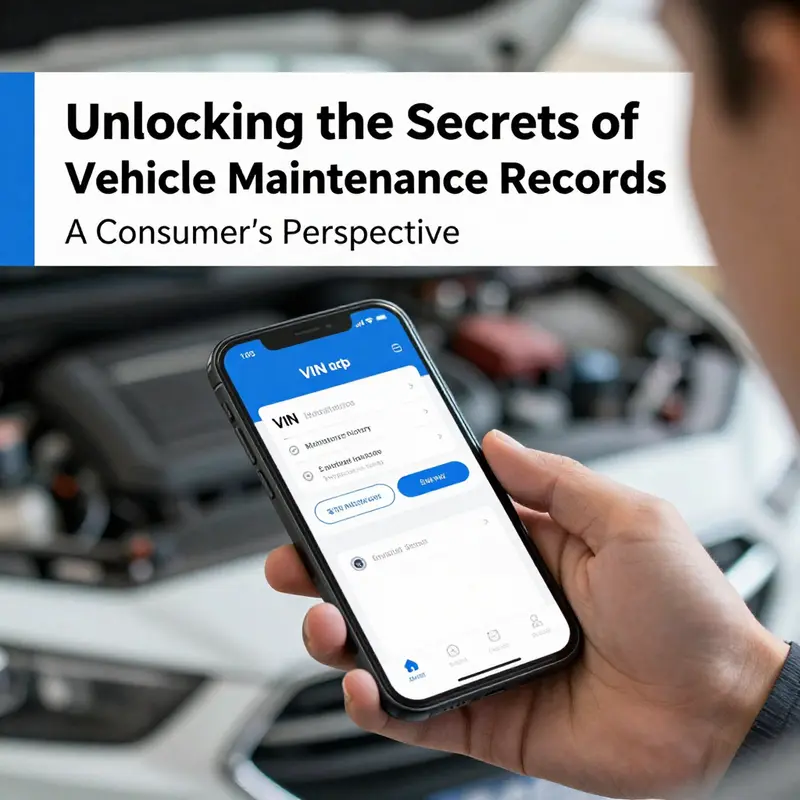
When a consumer considers a used car, the history behind that vehicle becomes as important as its current condition. A transparent maintenance record can reveal patterns of care, potential neglect, and the true cost of ownership ahead. Third-party platforms have emerged as pivotal tools in building this transparency. They operate by consolidating records from multiple sources—franchise dealerships, independent repair shops, insurance claims, and sometimes even auction houses—into a single accessible timeline tied to a vehicle’s VIN. With a quick VIN entry, a buyer can pull service dates, mileage at service, parts replaced, and sometimes notes from technicians. In many cases, the data extends to major repairs and accident history, creating a fuller portrait than a single seller or service shop might provide. The power of this approach lies in aggregation, standardization, and rapid accessibility, turning what used to be a diffuse set of receipts into a coherent, searchable history that informs decisions.
From there, the consumer learns that data is drawn from a wide network of sources, but it isn’t perfect. VIN-based checks rely on shops and insurers sharing records, and gaps can appear where service happened outside the normal channels. The timeline may omit maintenance performed abroad, at independent garages, or services that never generate a formal claim. The result is a robust base, but one that benefits from cross-checking with the seller, the maintenance receipts the buyer can obtain, and, when possible, direct confirmation from the service facilities listed in the history. Even with limitations, these platforms offer something previously unavailable to the ordinary buyer: visibility across time and across places, anchored to the same vehicle identifier.
For consumers, the advantages are tangible. Accessibility is the simplest: platforms operate around the clock, from any location with an internet connection. Data aggregation across a broad shop network means a more complete picture than a single shop might provide. The digital nature of the data enables features beyond a simple list of visits. Users can attach scans of repair invoices, store multiple vehicles, set reminders for upcoming maintenance, and export history to share with a dealer, insurer, or mechanic. This not only supports routine diagnostics but also improves the fairness of used-car pricing, because buyers no longer rely on the seller’s memory or a partial paper trail. A well-maintained record helps owners track wear patterns, plan preventive work, and budget for upcoming maintenance.
Within the aftermarket ecosystem, third-party platforms push toward greater accountability. Service providers are incentivized to document work thoroughly, not only to satisfy a customer but to ensure data can be shared and trusted in a public context. The effect is more informed choices, better service quality, and potentially lower risk of fraud. Buyers can detect unusual patterns, such as a cluster of short-notice services that might signal an underlying issue, or gaps in what would be expected for a vehicle at a given mileage. Mechanics and technicians benefit too, because a consistent data stream speeds diagnostics. When history is clear and accessible, it reduces repeated questions and accelerates the repair process, allowing technicians to focus more on diagnosing the issue rather than chasing paperwork.
Of course, the system raises considerations about data quality and privacy. Not all data is created equal. Some records arrive late or come with inconsistent formats, and terminology may vary across shops. The result is a dataset that must be interpreted with care, especially when a single entry seems to contradict mileage or service intervals. Consumers should corroborate information by requesting official invoices, VIN-based checks from multiple sources, and, where possible, confirmations from the service facilities listed in the history. Privacy is another dimension. The data curated by third-party platforms often involves sensitive information about when and where service was performed, who did the work, and what was repaired. Users should understand how data is stored, whether it can be shared with others, and what rights they have to correct or delete information that is inaccurate or outdated.
Looking ahead, the role of these platforms in the consumer toolkit grows as the automotive landscape moves toward electrification and connected services. The core value remains: visibility into maintenance history. Yet new data types will become common. Battery health checks, software update logs, ADAS calibration events, and even remote diagnostics could be added to an integrated history file. The result will be more comprehensive, enabling better decisions about maintenance timing, part replacement, and resale value. The integration will require ongoing collaboration among data providers, vehicle manufacturers, service networks, and regulators to set standards for data formats, update frequencies, and user consent.
For readers seeking a practical entry into this space, think of maintenance history as something you curate as well as review. A simple step is to explore a VIN-based history for any used car you intend to buy, then compare that history with the seller’s records and the service invoices you obtain. If you are a vehicle owner, this is a habit worth developing: periodically check your vehicle’s history on trusted platforms, attach new receipts to a digital archive, and keep the data current. You will notice the difference between a narrative built from scattered receipts and a living ledger that grows with your car. For newcomers, a concise primer on vehicle maintenance can ground your understanding, and a practical example of how a history record can be organized is helpful. See What is vehicle maintenance.
Ultimately, third-party platforms are not a single definitive archive but a bridge between raw mechanical data and human understanding. They democratize access to information that used to be spread across many channels and make it possible for buyers, owners, and technicians to speak a common language about vehicle health. They do not replace manufacturer or insurer records but complement them, offering a user-friendly gateway to a more transparent used-car market. Used thoughtfully and with diligence, these platforms empower people to make smarter decisions, avoid surprises, and plan maintenance with greater confidence. For reference, visit autosist.com.
Smart Databases, Smarter Maintenance: Advances in Vehicle Care Information Systems
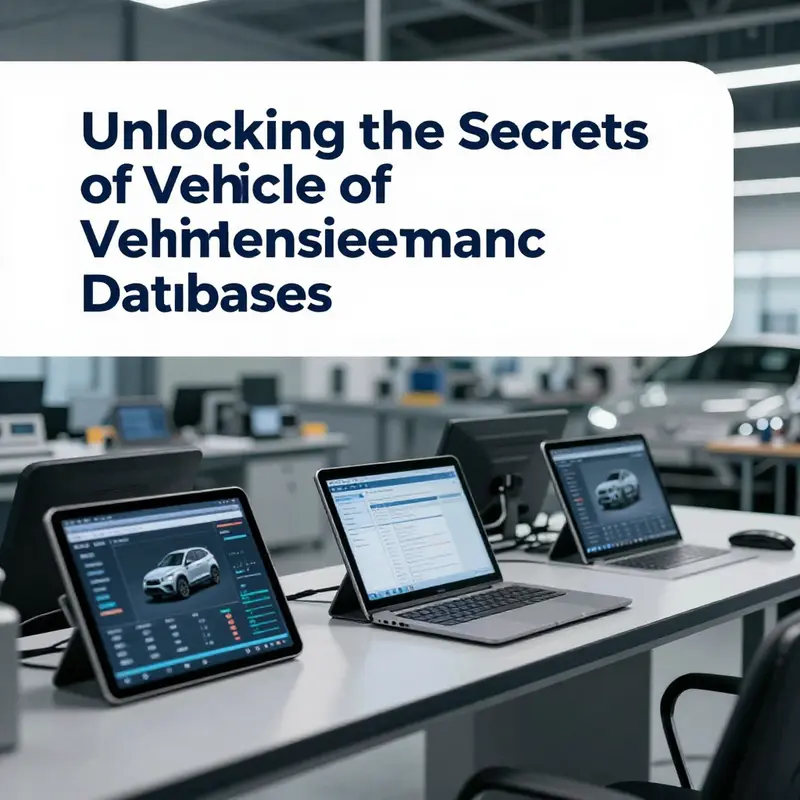
A growing ecosystem of digital records has quietly become the backbone of modern vehicle care. Maintenance databases, repair information systems, labor-time corpora, and vehicle-history portals no longer sit in isolation; they interlock to create a living map of a car’s past, present, and likely needs. This map is not merely a ledger of past services. When designed well, it becomes a predictive tool that guides decisions across the lifecycle of a vehicle, from routine servicing to major overhauls. The shift from static catalogs to dynamic, AI-augmented platforms changes who can interpret data and what counts as timely, reliable maintenance.
At the core of this transformation is the idea that maintenance is a process, not a single task. A modern database architecture for vehicles aggregates multiple streams of data: factory-maintained repair manuals and diagnostic pathways, standardized labor-time definitions, sensor streams from the vehicle in operation, and historical service records captured by authorized repair facilities and insurers. Technicians no longer rely on paper checklists or guesswork; they access a unified interface where diagnostic steps are linked to disassembly logic, component relationships, and real-time operating conditions. In theory, a well-integrated system can suggest the most efficient sequence of repairs, estimate labor hours with respect to the vehicle’s current configuration, and flag components that show early signs of wear. In practice, this requires careful standardization and ongoing data quality control to ensure that inputs from diverse sources—OEMs, independent shops, and insurers—can be interpreted consistently across brands and models.
The promise of AI-driven predictive analytics further accelerates this evolution. When sensors in a vehicle generate streams of data—temperatures, pressures, voltages, and vibration signatures—AI models can fuse that in-the-meld with historical service patterns to forecast failures before they occur. The approach rests on a simple premise: machines reveal early warning signals in complex interactions that human pattern recognition might miss. By estimating a vehicle’s remaining useful life for critical components, predictive maintenance helps scheduling shift from reactive repairs to proactive interventions. The result is not just fewer breakdowns, but more stable maintenance costs over the vehicle’s life and higher uptime for fleets and individual owners alike.
A practical challenge lies in translating these sophisticated models into actionable insights at the point of repair. Predictive signals must be translated into maintenance triggers that technicians can execute in the shop, calibrated to the vehicle’s actual usage and operating environment. This is where the integration of repair-time databases and disassembly logic becomes essential. Labor-hour databases, which codify standard disassembly steps, component relationships, and repair sequences, interact with AI-driven forecasts to provide realistic cost and time estimates. They also allow for dynamic corrections: real-world repair conditions—such as corroded fasteners, hidden fasteners, or complex wiring harnesses—can adjust predicted hours and recommended actions. The interplay between predictive models and practical labor data ensures that predictions remain grounded in craft knowledge while still leveraging statistical insight.
For readers seeking a baseline understanding of what maintenance entails, foundational knowledge remains crucial. A straightforward resource that outlines the core concepts—what vehicle maintenance is, why it matters, and how it typically reveals itself in service histories—serves as a useful primer. This kind of information complements the database perspective by clarifying the practitioner’s goals: keep the vehicle safe, reliable, and efficient over time. See What is vehicle maintenance for a concise primer anchored in everyday driving realities.
The consumer-facing side of this database ecosystem has broadened as well. VIN-based histories, sourced from a mix of repair shops, insurance claims, and authorized centers, empower buyers and owners with transparency during maintenance decisions and when evaluating used cars. In the used-vehicle market, these histories help establish trust by revealing service dates, mileage milestones, parts replacements, and accident-repair records. While the data provenance is diverse, the thrust is consistent: a transparent, traceable service narrative reduces information asymmetry between sellers and buyers, enabling more informed choices.
Yet the system’s benefits are not limited to individual owners. Insurers, fleet operators, and automotive businesses rely on these databases to calibrate risk, optimize service contracts, and manage maintenance programs at scale. For insurers, a complete maintenance history supports more accurate risk assessment, helps detect fraud, and informs claims resolution. For fleets, predictive maintenance translates into higher uptime, better asset utilization, and smoother logistics planning. For repair shops and manufacturers, standardized data exchange reinforces the continuity of care across different touchpoints in the vehicle’s life, from initial diagnosis to final inspection. In this sense, the database ecosystem functions as a shared language that aligns diverse stakeholders around a single, data-informed objective: dependable, cost-efficient vehicle operation.
The architecture that makes all this possible is not merely a repository of records. It is a framework for interoperability. Data interoperability requires common data models, consistent terminologies for parts and procedures, and governance that preserves data quality across sources. Without this harmonization, the same fault could be described differently in two databases, leading to inconsistent recommendations or mismatched labor estimates. The push toward standardization has parallels in related domains, such as the standardization of repair procedures, wiring diagrams, and diagnostic codes. When these elements align, a technician can navigate from a fault code to the precise factory-recommended repair steps with confidence, even if the vehicle brand or repair channel differs. In effect, the database becomes a bridge across brands, models, and repair ecosystems.
The potential of real-time data elevates the importance of secure, privacy-conscious design. Telematics, cloud-based storage, and cross-system data exchange enable near-term analytics and long-term trend analysis, but they also raise questions about who owns the data, how it is used, and how sensitive information is protected. The most robust solutions segment data by access level, employ role-based permissions, and implement auditable workflows that trace who accessed what data and when. They also ensure that personal information aligns with applicable regulations, and they provide clear lines of responsibility when a data-driven maintenance decision intersects with a liability event. These governance practices are as critical as the algorithms that power the insights, because they determine whether the benefits of data-driven maintenance can be realized without compromising trust.
From a learning perspective, the trajectory of technology in vehicle maintenance databases resembles a continual refining of a map. Early platforms centralized repair documents and manual service records; modern systems weave in sensor streams, AI predictions, and standardized labor data. The next frontier involves deeper integration with repair workflows, enabling technicians to see predictive alerts embedded directly in diagnostic software, with auto-generated work orders that reflect both predictive estimates and site-appropriate disassembly logic. This vision of an intelligent maintenance cockpit promises to align the planning horizon with the vehicle’s operational reality, so the day-to-day decisions of a mechanic, a fleet manager, or a maintenance planner are grounded in a shared, dynamically updated understanding of risk and cost.
For readers who want to connect the database discussion with practical, day-to-day maintenance questions, remember that knowledge about the maintenance process itself remains foundational. A well-structured maintenance program begins with clear definitions of what needs to be done and when. It then layers in data from repair histories, sensor analytics, and labor-time standards to determine the optimal sequence, timing, and scope of work. In other words, the databases provide the scaffolding, while the analysts and technicians supply the interpretation and execution. This collaborative dynamic, between machine-driven insights and human craftsmanship, underpins the reliability and efficiency that modern vehicle care aspires to deliver.
In closing the loop between theory and practice, consider how the evolving database ecosystem reshapes expectations for vehicle ownership. Owners gain visibility into the health trajectory of their vehicles and can plan ahead for maintenance costs more accurately. Technicians benefit from a richer toolkit that combines diagnostic reasoning with data-informed guidance. Insurers and fleets gain predictive capabilities that translate into lower downtime and better risk management. All these gains emerge from the same core development: the transformation of scattered records into an integrated, intelligent, and trustworthy map of vehicle care.
External resource for further reading on AI-driven maintenance and predictive analytics informs the conceptual backbone of these developments. AI-driven Maintenance Review. https://www.sciencedirect.com/science/article/pii/S235214652500038X
Internal link for foundational maintenance concepts. For a concise primer that complements this discussion, read What is vehicle maintenance. https://vehicletricks.com/blog/what-is-vehicle-maintenance/
null
null
Final thoughts
Vehicle maintenance databases represent a pivotal resource for modern automotive businesses, offering a range of features that optimize service quality and operational effectiveness. From comprehensive software like Mitchell 1’s ProDemand, which enhances repair efficiencies, to the consumer-facing tools that democratize access to maintenance records, these databases are integral to the automotive sector. As technology continues to advance, the potential for these systems to improve service delivery and consumer trust will only grow. Business owners who leverage these resources not only gain a competitive edge but also contribute to a more transparent and efficient vehicle maintenance industry.