
For business owners in the transportation industry, maintaining operational efficiency and safety is paramount. Ensuring that vehicles are well-maintained involves regular checks of mechanical systems, yet there’s another critical aspect often overlooked: cargo compliance. Understanding the distinct differences between vehicle maintenance and cargo violations can safeguard your business from legal troubles and enhance safety practices across operations. This article delves into the nuances of cargo violations, their implications for vehicle maintenance strategies, and the legal ramifications they may bring.
Between the Load and the Wheel: Distinguishing Cargo Violations from Vehicle Maintenance in Safe Haulage
When people talk about the safety of transport, the conversation often collapses two distinct realms into one: what is done to the vehicle itself and what is done to the goods being carried. The phrase cargo violation sits squarely in the regulatory and compliance camp, while vehicle maintenance lives in the realm of the mechanical and the roadworthy. Yet these two domains are not isolated silos. They intersect in practice, influence each other, and together determine whether a journey ends safely or with consequences that ripple through supply chains, crews, and communities. Understanding where cargo rules start and where maintenance ends matters not only for compliance officers or fleet managers, but for drivers who carry freight, logisticians who plan routes, and policymakers who seek safer, more reliable transport networks. The distinction is real and useful, but it is also a bridge that, when built well, improves safety and efficiency across the board.
At its core, cargo violations concern how cargo is loaded, secured, declared, and documented. They are regulatory infractions that emphasize the goods themselves and the way they are treated from the moment they leave a loading dock to the moment they reach their destination. Overloading a vehicle beyond its legal weight limit, failing to secure hazardous materials correctly, or misdeclaring the contents of a shipment are emblematic examples. These actions raise the risk not just to the vehicle’s occupants and nearby road users, but to the environment and to the integrity of the freight itself. The penalties associated with cargo violations can be severe: financial penalties, suspension of operating privileges, delays, and, in the worst cases, environmental harm or public safety incidents. The emphasis in cargo regulations is on ensuring that the goods are handled in a way that minimizes shifting, leaking, or misrepresentation, and that the drivers and carriers observe hours-of-service rules, proper labeling, and appropriate handling protocols for the materials involved.
Vehicle maintenance, by contrast, is the proactive discipline dedicated to keeping the vehicle itself in a condition that ensures safe operation. It is a discipline of systems and components: brakes that can stop reliably, tires with adequate tread and proper inflation, lights that illuminate correctly, engines and transmissions that respond consistently, steering and suspension that keep handling predictable, and safety systems that function as designed. Maintenance is not about what is being transported; it is about the means of transport. Yet this distinction should not be interpreted as a wall between safety for people and safety for cargo. The vehicle’s condition can influence cargo safety in meaningful ways even though a cargo violation is not a maintenance issue per se. For example, a vehicle operating with worn brakes or bald tires may be slower to halt, increasing the risk that a secured load could shift or a sudden stop could transfer impact to unsecured goods. A malfunctioning lighting system or a failing suspension can compromise the stability of a load, particularly in adverse weather or on uneven terrain. In such circumstances, maintenance indirectly supports cargo safety by preserving the vehicle’s ability to respond to dynamic driving conditions and to the rigors of transport operations.
A practical way to see the separation is to imagine two parallel tracks that run side by side through the same operation. On the cargo track, the thread is compliance: is the cargo loaded according to weight limits, are the securing points used correctly, is the shipment properly declared, and are the hazardous materials handled according to the rules that govern their transport? On the maintenance track, the thread is capability: are the brakes in good repair, are tires in good condition, is the lighting system functioning, are the steering and suspension components within service limits? If either track falters, risk grows. A cargo violation can halt a shipment, trigger investigations, and impose penalties; a maintenance failure can stall a vehicle, endanger the crew, or compromise the cargo during transit. In the most stressful situations, these tracks converge: a breakdown that occurs on the road can lead to a cargo delay, which then triggers a cascade of compliance checks and potential penalties for late delivery. The two are not interchangeable, but they are interdependent in the lived reality of transportation.
The literature and guidance around these topics repeatedly reinforce this separation. Cargo violations are framed as regulatory infractions tied to how goods are handled, secured, and documented. They reflect policy aims: to prevent load shifts that could cause a roll-over, to minimize environmental risk from misdeclared hazardous materials, and to ensure that shipments comply with weight limits and logistical requirements. The consequences are administrative and regulatory, with safety as the ultimate lens through which penalties and enforcement actions are viewed. Vehicle maintenance, in contrast, is framed as a preventive or corrective discipline aimed at ensuring roadworthiness. It encompasses inspection regimes, lubrication, part replacements, and systems checks designed to preserve reliability and performance. The aim is to prevent mechanical failures that would render a vehicle unsafe or unreliable, thereby reducing the probability of incidents that could escalate into cargo-related hazards. When viewed together, maintenance protects the physical means of transport, while cargo rules govern the administrative and procedural means by which freight is moved.
This separation, however, should not be mistaken for a lack of interaction. In real-world operations, the condition of the vehicle can influence the way cargo is loaded, secured, and transported, and the nature of the cargo can shape maintenance priorities. A vehicle with limited braking capacity may require more conservative driving practices, more frequent inspections of securing mechanisms for loads that are prone to shifting under variable braking forces, or adjustments in the way securing equipment is chosen and deployed. Likewise, the type of cargo and its handling requirements can drive maintenance planning: heavy or hazardous loads may impose stricter performance criteria for suspension, tires, and braking; fragile goods may necessitate smoother ride characteristics and, therefore, more attention to vibration and alignment. In short, while cargo violations and vehicle maintenance belong to different regulatory and functional domains, they exist in a shared ecosystem where the safety of people and the protection of goods depend on coordinated attention to both.
A critical implication of this understanding is the need for clear responsibility boundaries and strong communication across roles. Drivers must comply with cargo regulations as they are responsible for the safe loading, securing, and declaration of the freight. They must ensure that the shipment is described accurately, that the securing methods are appropriate for the load’s characteristics, and that the documentation reflects the true nature of the cargo. They also play a vital role in recognizing how the vehicle responds to load conditions: noting unusual vibrations, changes in steering feel, or abnormal braking responses that could signal a problem with the way the cargo is settled or restrained. Maintenance personnel, meanwhile, bear responsibility for the health of the vehicle’s systems so that it remains capable of transporting loads safely. Their role includes preventive inspections, timely repairs, and maintenance planning that aligns with the demands of the cargo being carried. This division of labor is not a bureaucratic flourish; it is a practical framework for safety where each side informs the other in meaningful, measurable ways.
There is another layer to this conversation: the way information is documented and audited. Cargo compliance requires meticulous record-keeping—loading manifests, securing equipment confirmations, hazardous materials declarations, and hours-of-service logs. These records are the language of safety regulation, a ledger that demonstrates that the operator has followed the rules designed to minimize risk. Vehicle maintenance records tell a different story, one of condition and capability. They show that the vehicle was inspected, serviced, and found to be roadworthy at critical points in time. When these record books align—clear cargo documentation paired with demonstrably sound vehicle condition—the risk profile of a haul is meaningfully reduced. When they do not align, the gaps in either maintenance or cargo compliance can be exploited by risk and, in some cases, by enforcement actions. The absence of alignment is a cue for a deeper operational review, not a quick fix on one side of the equation.
This leads to a practical stance that is often echoed in field guidance: maintenance and cargo compliance should be integrated into daily routines rather than treated as separate checklists. The integration begins with a shared awareness that safety is a property of the entire system, not a single component or rule. A pre-trip assessment should go beyond the vehicle’s mechanical readiness; it should also consider whether the load is appropriate for the route, whether securing methods are adequate for the cargo’s characteristics, and whether documentation accurately reflects what is being transported. During transit, drivers and maintenance staff should engage in ongoing communication. If a defect arises that could affect load security—say a tire that shows unusual wear or a mounting issue with securing devices—that information must be communicated promptly and addressed through a corrective action that respects both maintenance and cargo requirements. After arrival, a debrief can help close the loop by identifying how the cargo’s handling and the vehicle’s condition interacted during the trip, and what adjustments should be made for the next leg. This continuous feedback loop is what turns a compliance and maintenance dichotomy into a unified, safety-centered practice.
The research materials used to anchor this chapter consistently describe cargo violations as issues of regulation and safety policy, rather than as direct maintenance signals. They emphasize examples like overloading, improper securing, and misdeclared contents as core cargo concerns. They also remind readers that the risks associated with these violations extend beyond the vehicle to the environment and to public health. At the same time, the same materials underscore that maintenance is a proactive discipline focused on preserving the performance and reliability of the vehicle’s mechanical and safety systems. The concrete takeaway is not that maintenance and cargo compliance are interchangeable, but that they are complementary. Maintenance keeps the vehicle dependable; cargo compliance keeps the operation within the bounds of the law and the expectations of safety authorities. Both are essential, and neither should be treated as optional or merely ancillary to the other.
To bring the discussion back to the everyday realities of transport operators, it helps to consider how these principles play out in a typical fleet scenario. A dispatcher assigns a load with specific weight limits and securement requirements. The driver receives the load, secures it using appropriate equipment, and files the required declarations. Before departure, a quick but thorough pre-trip inspection covers both the mechanical readiness of the vehicle and the adequacy of the cargo’s securing plan. Along the route, the driver must remain vigilant for conditions that might affect load stability, such as long grades, sharp curves, or weather events, and must communicate any concerns that could necessitate adjustments in the securing arrangement or even a recalculation of weight distribution. On the maintenance side, technicians monitor wear patterns, schedule service intervals, and ensure that critical components are operating within specification. They may also annotate known load-related stresses on certain components, especially if a particular cargo pattern can be expected to impose unusual or heavier burdens on the braking system, tires, or suspension. The synergy here is evident: the driver relies on a vehicle that can perform under load while adhering to cargo rules, and the maintenance team relies on accurate loading and securing information to anticipate wear and plan preventive actions that keep the vehicle safe for the exact jobs it is asked to perform.
In this way, the question of whether cargo violation is included in vehicle maintenance can be reframed. It is not a question of whether one category should absorb the other, but rather how to ensure that both domains are recognized as essential parts of a single safety system. The distinction remains academically and regulatorily important, but the operational reality demands a collaborative approach. When a fleet treats cargo compliance as part of its safety program—integrating it with maintenance planning, inspection routines, and training—it reduces the likelihood of penalties while enhancing overall safety performance. Conversely, when maintenance logs and cargo records are treated as separate silos, the organization risks blind spots: a mechanical fault that could have been mitigated by proactive maintenance may be coupled with a cargo handling error that goes unaddressed, producing a compound risk that is harder to manage and more costly to remediate.
For readers seeking a concise framing that knits these threads together, consider the notion that maintenance safeguards the vehicle’s ability to perform its job safely, while cargo compliance safeguards the integrity and legality of the job itself. This framing helps shift the emphasis from a debate about which domain is more important to a recognition that both are indispensable. It also invites a practical mindset: invest in robust maintenance programs and equally robust cargo compliance processes, and design workflows that ensure the two domains inform each other. In this approach, the road ahead becomes clearer. When maintenance cues and cargo rules align in routine practice, fleets can reduce risk, improve reliability, and deliver freight more predictably. When they diverge, the organization has an early warning system for unsafe or noncompliant conditions that could escalate into incidents or penalties. Either way, the objective remains the same: to move goods safely, legally, and efficiently from origin to destination, with the vehicle as a reliable conduit and the cargo as a properly treated commodity.
For readers who want a concise definitional anchor as they navigate these topics, a helpful resource on maintenance definitions offers a clear baseline. See What is Vehicle Maintenance for a focused, practical description of maintenance activities and their purpose. What is vehicle maintenance
As this chapter moves toward its close, the takeaway is not to conflate cargo violations with maintenance issues, but to acknowledge that they share a common space in the safety ecosystem. The strongest safety gains come from recognizing this shared space and designing operations that treat cargo handling and vehicle care as mutually reinforcing parts of the same mission. From the planning room to the loading dock, from the road to the inspection bay, safety is the product of integrated practices. When fleets cultivate that integration, they are not merely complying with rulebooks; they are shaping a culture in which the load and the wheel are worthy partners in a safer, more reliable transport system.
External reference for deeper regulatory context on cargo safety guidelines can be found here: https://www.imo.org/en/About/Pages/Cargo-Safety.aspx
Red Flags on the Load Line: How Cargo Violations Shape Vehicle Maintenance Strategy
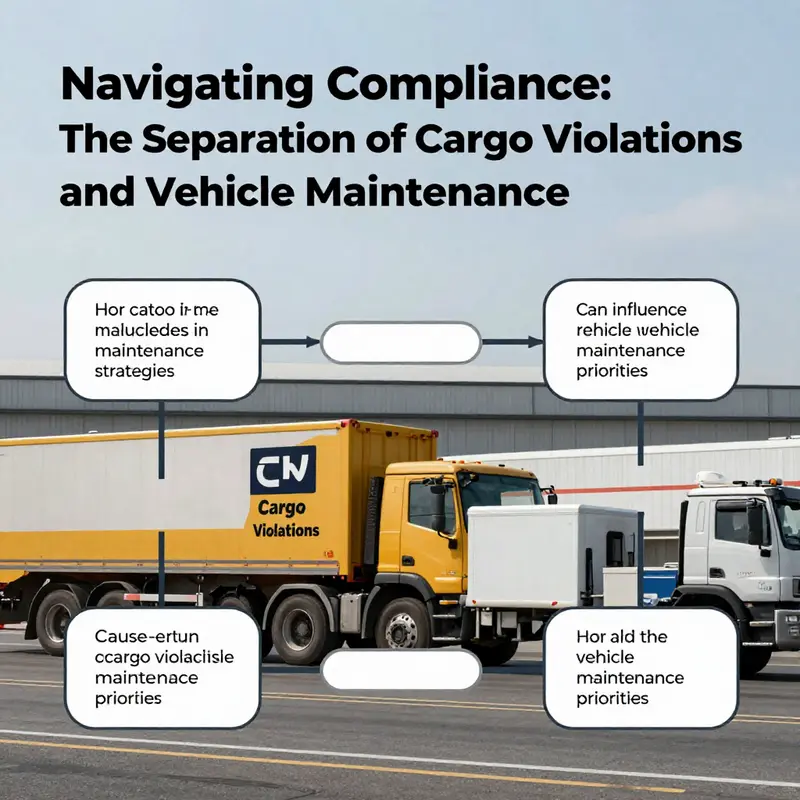
When people ask whether cargo violations belong in the realm of vehicle maintenance, the instinctive answer is to separate the two: cargo compliance sits in the regulatory and operational world of loading, securing, and documentation, while maintenance lives in the mechanical and safety upkeep of the vehicle itself. Yet the best way to understand the truth is to see how these domains interact in the daily realities of trucking, shipping, and fleet management. Cargo violations do not directly mandate a service interval or prescribe a brake adjustment, but they function as signals that illuminate weaknesses across an entire operating system. They point, often with sharp clarity, to whether a carrier’s loading practices, routing decisions, driver training, and maintenance routines are synchronized to keep vehicles safe, compliant, and reliable under the stress of real-world transport. In short, cargo violations are not maintenance tasks, but they can be warning lights that prompt a holistic re-evaluation of maintenance strategy as part of a broader effort to improve safety and compliance.
To begin with, the distinction matters because maintenance is fundamentally about the physical state and performance of the vehicle itself. It is a proactive discipline that seeks to prevent failures by inspecting, servicing, and repairing mechanical and safety systems—brakes, tires, lights, engine, suspension, steering, cooling, and more. When these components are out of spec, a vehicle’s ability to carry heavy or awkwardly distributed loads safely is compromised. Cargo violations, on the other hand, relate to how the freight is loaded, secured, weighed, documented, and managed within regulatory frameworks. A truck may be mechanically sound and fully compliant with all maintenance schedules, yet if cargo is overlimit or improperly secured, the vehicle is at risk on the road. The FMCSA and similar agencies acknowledge this separation in practice: cargo compliance falls under safety and regulatory enforcement, while vehicle maintenance falls under mechanical safety and performance oversight. This separation does not imply that the two are independent; it is precisely where they intersect that maintenance strategy can be strengthened by paying attention to cargo practices.
The indirect pathways through which cargo violations influence maintenance become clear when we look at the physical consequences of poor cargo handling. Overloading a vehicle, for example, places unusual and uneven demands on suspension components, tires, and braking systems. A heavy payload can compress springs beyond their designed limits, accelerate tire wear, and increase brake temperature during stops and descents. The wear patterns may mimic or mask what technicians would otherwise diagnose as a maintenance issue tied to a component’s age or defect. In such cases, maintenance decisions—whether to replace tires sooner, adjust brake shoes, or schedule a more frequent inspection of the suspension—are influenced by the reality that the vehicle is routinely pushed to the edge by cargo practices. The chain of causation becomes clearer still when a single ongoing cargo violation is observed alongside a fleet’s maintenance history: recurring overloading or insecure cargo signals a systemic problem in loading procedures, route planning, or driver training, and those same systemic problems can translate into accelerated wear or unexpected stress on critical safety systems.
This ripple effect matters not only for wear and tear but also for reliability. When cargo is not properly secured, the risk of load shift during cornering, braking, or evasive maneuvers increases. Load shift can cause a vehicle to behave unpredictably, which in turn places uneven, dynamic loads on the axle assemblies, tires, and braking system. Tires may wear in irregular patterns; brakes may experience heat cycling that reduces effectiveness; and suspensions can endure micro-movements that degrade the alignment and geometry of the drivetrain. In those moments, maintenance becomes less about responding to a single worn component and more about building a maintenance regime that anticipates the abnormal stresses that come with improper loading. The result is a more proactive, integrated maintenance approach—one that correlates the level of cargo risk with maintenance scheduling and inspection priorities.
The regulatory lens clarifies how this integration unfolds in practice. Enforcement agencies routinely conduct roadside inspections that evaluate both cargo compliance and vehicle maintenance in a concurrent sweep. A high rate of cargo violations can trigger heightened scrutiny, bringing maintenance deficiencies into sharper focus. If inspectors observe repeated violations around load securement, weight distribution, or documentation, they are likely to examine the vehicle’s maintenance records with particular interest in components most affected by heavy or uneven loads: tires, brakes, suspension, steering, and the frame. This does not imply a punitive automatic consequence for a cargo violation, but it does mean that a history of violations can lead to more thorough inspections and potentially higher penalties if maintenance gaps are found. The practical implication for fleet operators is stark: cargo noncompliance increases the probability that underlying maintenance gaps will be exposed during inspections, which in turn compels management to adopt more rigorous maintenance strategies that also address loading practices. A company that experiences recurring cargo violations will often respond by integrating load planning, driver training, and maintenance scheduling into a single, risk-based program designed to reduce overall violation rates and, importantly, improve safety across the board.
This integrated view aligns with the broader understanding of vehicle maintenance as a system-wide discipline. It is not enough to service the vehicle in isolation; the maintenance plan must reflect how the vehicle is used—the loads it carries, how it is loaded, and how that load translates into stresses during operation. When cargo violations surface, they reveal the operational levers that must be tightened to protect vehicle integrity. Some carriers respond by adopting load planning software and driver training aimed at securing and distributing cargo more effectively. These measures, when paired with enhanced maintenance schedules, create a feedback loop: better load planning reduces the physical demands on the vehicle, maintenance schedules become more predictive rather than reactive, and the risk of both cargo violations and mechanical failures decreases. The ripple effect is not merely about preventing part failures; it is about preserving the integrity of the entire transportation chain—from the moment cargo is planned and loaded to the moment it reaches its destination and is unloadable without incident.
One consequence of viewing cargo violations through the lens of maintenance strategy is the reframing of performance metrics. Traditionally, a maintenance department might track time-to-failure, mean time between failures, repair turnaround, and maintenance costs. A cargo-centric lens adds new layers: the rate of cargo violations, the frequency of load-securement incidents, and the severity of overloading events. When these cargo metrics correlate with maintenance indicators—such as accelerated tire wear or abnormal brake wear—managers gain a more accurate map of risk. This is not about blaming drivers or loading crews; it is about understanding how operational decisions influence mechanical health. A robust maintenance strategy recognizes cargo violations as leading indicators that trigger preemptive checks rather than punitive responses. The goal is to move from a culture of firefighting to a culture of prevention, where cargo risks inform maintenance priorities in real time.
From a practical standpoint, aligning maintenance with cargo realities involves several interconnected steps. First, maintenance planning should incorporate load profiles as a factor in scheduling. If a vehicle routinely carries near-maximum gross vehicle weight, maintenance intervals for tires, brakes, and suspension should be adjusted upward to accommodate the increased wear and thermal stress. Second, cargo-related training should be integrated with preventive maintenance programs. Drivers who receive instruction on proper loading, securing techniques, and weight distribution will be more likely to handle cargo in a way that minimizes dynamic stresses on the vehicle. This, in turn, reduces the likelihood that maintenance teams will encounter unusual wear patterns that challenge conventional maintenance intervals. Third, the fleet management ecosystem needs better data fusion. Telematics, weigh-in-motion systems, and load securement checklists should feed into maintenance dashboards so that inspectors and technicians can see, in near real-time, the relationship between cargo conditions and mechanical health. When a cargo violation occurs, the system should flag potential maintenance implications and prompt a targeted inspection or a temporary adjustment in service plans to mitigate risk.
The narrative above is not a vocational warning against cargo violations, nor is it a justification for lax maintenance. It is a call for integration—an acknowledgment that cargo compliance cannot be treated as a separate silo from maintenance. The vehicle’s health is inseparable from how it is loaded and how that load is managed through the supply chain. The result is a more resilient maintenance strategy that anticipates the real stressors a vehicle faces during active service and a more compliant operation that reduces the likelihood of cargo-related penalties. A fleet that treats cargo practices as a core input to maintenance planning is one that respects the lifecycle of the vehicle, the safety of its occupants and other road users, and the integrity of the cargo being carried.
To connect this with a practical sense of what maintenance looks like in the face of cargo risk, consider the following synthesis. Maintenance is not a ritual of replacing parts on a fixed schedule; it is a disciplined process of monitoring, diagnosing, and adapting to how the vehicle is used. Cargo violations reveal how the vehicle is used in ways that may push it toward its limits. When the two domains inform each other, maintenance becomes more targeted and more capable of preventing failures that could arise under heavy, unstable, or irregular loads. In such a framework, a high cargo violation rate is not merely a compliance problem; it is a diagnostic signal that the maintenance program needs re-tuning. It may prompt the adoption of more frequent wheel alignments, suspension diagnostics, brake monitoring under thermal load, and tire pressure management that accounts for the actual load distribution in real-world practice. The end result is a transportation system that remains safe and efficient even when cargo challenges are part of the equation.
A core takeaway, then, is that cargo violations and vehicle maintenance are not mutually exclusive concerns but rather two faces of the same safety and reliability challenge. When they are treated as interdependent, maintenance strategies gain depth and foresight. This approach echoes the logic found in broader safety and compliance literature, which emphasizes that systemic risks emerge at the intersections of people, processes, and physical assets. If one dimension—cargo handling—is neglected, the other—vehicle health—will inevitably show strain. Conversely, when cargo handling informs maintenance decisions, technicians can anticipate wear patterns caused by load dynamics, drivers can receive better training that reduces risky loading practices, and managers can design more effective inspection regimes that prevent small problems from becoming serious failures.
In the end, the question of whether cargo violations belong in maintenance categories dissolves into a larger, more constructive inquiry: how can a fleet align its operational, regulatory, and mechanical practices to achieve safer, more reliable transport? By viewing cargo violations as red flags that illuminate maintenance gaps, organizations can build a more integrated and proactive approach. This is not about conflating duties or diluting accountability. It is about recognizing that the safety and reliability of commercial transport depend on a tightly coupled system where loading practices, driver behavior, and mechanical health all reinforce each other. When that coupling is strong, a vehicle that carries even demanding loads remains stable, safe, and compliant throughout its journey. And when cargo practices improve, maintenance becomes lighter in the sense of being better targeted, more predictive, and more effective in preserving the vehicle’s health for the long haul.
For readers who want to explore the maintenance side in a concise frame, it is worth noting that the broader definition of vehicle maintenance emphasizes the routine inspection, servicing, and repair of a vehicle’s mechanical and safety systems to keep it roadworthy. This understanding is foundational to seeing why cargo practices can influence maintenance strategies without being direct maintenance tasks themselves. It also helps explain why the most resilient fleets treat cargo compliance as a risk driver that shapes maintenance planning rather than as a separate regulatory burden. As you navigate future chapters, you will encounter more concrete examples of how data from cargo operations feeds into maintenance schedules, enabling a more dynamic and preventive approach to vehicle safety on the road.
To situate this discussion within the literature and regulatory context, consider the FMCSA resources on vehicle maintenance, which articulate the importance of keeping mechanical systems in good order while recognizing cargo safety as a complementary area of focus. The FMCSA materials remind readers that safety is multi-faceted and that a fleet’s duty extends beyond any single category of risk. Understanding the interdependence of cargo practices and maintenance opens the door to more effective safety management and better overall performance. For readers seeking a concise bridge to foundational maintenance concepts, a quick reference can be found in the overview of what vehicle maintenance encompasses and why it matters for safety and efficiency. What is Vehicle Maintenance
In sum, cargo violations should not be misread as direct maintenance requirements. They are, instead, powerful indicators of how a carrier’s operational practices shape the load on the vehicle and the stresses placed on its critical systems. Recognizing this connection reorients maintenance from a static schedule toward a living, data-informed discipline that responds to how cargo is actually transported. The most effective maintenance strategies will not treat cargo violations as a standalone problem but will integrate load planning, driver training, and maintenance scheduling into a cohesive risk-management framework. When cargo risk is managed holistically, maintenance becomes a more precise, more proactive, and more protective instrument of safety and reliability on the road.
External resource: For regulatory context and formal guidance on vehicle maintenance, see the Federal Motor Carrier Safety Administration’s vehicle maintenance resources at https://www.fmcsa.dot.gov/regulations/compliance/vehicle-maintenance.
Between Paperwork and the Wrench: Cargo Violations, Vehicle Maintenance, and the Safety Frontier
Cargo violations sit at the intersection where regulation, safety, and daily operations meet the pressure of keeping freight moving. They are not maintenance tasks in the technical sense. They concern how goods are loaded, documented, weighed, and declared, and they are enforced by public authorities and reinforced by private agreements. Yet the way a fleet is maintained—its brakes, tires, tanks, ventilation, and structural integrity—can dramatically influence the risk profile of any cargo operation. The question, therefore, is not whether cargo violations belong in the realm of vehicle maintenance, but how closely the two domains bind safety outcomes in real-world transport. To ground this discussion, consider the logic of a specific case and then broaden it to the everyday practices of fleet management. The case of J Company, reported in 2024 in official transport and regulatory channels, provides a stark reminder that misdeclarations about hazardous cargo are not abstract violations; they are a direct threat to lives and property at sea. The punitive response—an administrative penalty of 60,000 yuan for concealment—expresses the seriousness with which regulators treat attempts to obscure the true nature of dangerous goods. The same episode also exposes a parallel track of private liability: a logistics company sought 100,000 yuan in liquidated damages under a contractual clause. The court’s decision to uphold the liquidated damages while rejecting the argument of “no punishment twice for the same offence” makes clear a fundamental point. There can be both public penalties for regulatory breaches and private remedies for contract-based risk allocation, and both track safety, accountability, and the economic consequences that flow when truthfulness about cargo designations and conditions fails. The human and organizational stakes behind these numbers are simple enough to grasp: misdeclared cargo increases the likelihood of improper handling and unexpected behavior of the load, which in turn can expose the vessel, the crew, and the surrounding environment to catastrophic failure. This is not merely a compliance issue; it is a risk-management issue that depends on how well the vehicle and its operators are prepared to manage the cargo they carry. The official document from the government portal detailing J Company’s enforcement action and the legal reasoning behind the liquidated damages clause underscores a larger principle: cargo integrity and truthful reporting are not ancillary concerns; they are central to the safety regime that governs all modes of transport, including maritime and inland freight routes. See https://www.gov.cn/zhengce/content/2024-05/18/content6975434.htm for the formal account of these actions. Yet the same document also demonstrates how enforcement combines with contract-based risk allocation to create a multifaceted deterrence system intended to prevent both overt deception and the careless labeling that can hide genuine hazards. This dual-edged approach—public enforcement paired with private remedy—helps create a safety architecture that spans the trip from dock to destination. It is in this architecture that vehicle maintenance shifts from being purely mechanical into being a vital contributor to cargo integrity and regulatory compliance. The maintenance of a freight vehicle, particularly when hazardous materials are involved, extends beyond keeping the engine running smoothly. For maintenance teams, the focus expands to ensure that the physical systems that interact with cargo are sound and reliable: tanks and containment systems must be intact; ventilation and atmosphere control systems must operate within specified limits; structural components must resist the stresses of dynamic loads; and any potential failure points in the vehicle’s design must be mitigated through routine inspection, testing, and timely repair. When these maintenance activities are performed with cargo in mind, the results are more than better roadworthiness; they are safer handling of the goods, more accurate reporting of cargo status, and fewer deviations from declared conditions. The core challenge, of course, is that cargo violations are not, in themselves, maintenance issues. A misdeclared load is a regulatory or contractual problem, and a misdeclared load can exist even if the vehicle is mechanically perfect. Nevertheless, the two domains converge in practice because both rely on high-quality information, disciplined operational practices, and rigorous risk assessment. If a vehicle with properly maintained brakes and tires is used to transport hazardous materials without correct labeling or with concealed contents, the probability of a dangerous event changes in ways that maintenance alone cannot correct. Conversely, a poorly maintained vehicle can transform a benign or properly declared cargo into a hazardous situation. A small leak, a failed valve, or a breached tank can convert a routine shipment into a disaster, magnifying the consequences of any misdeclaration or improper securement. The mathematical logic is straightforward: risk is a function of likelihood and consequence. If either factor spikes—through regulatory noncompliance or through mechanical failure—the risk rises. The maintenance regime that governs the vehicle itself can reduce probability by eliminating mechanical failure, but it cannot remove the necessity for truthful cargo documentation and secure loading. The integration of these ideas is not a mere abstraction; it is the daily practice of safety managers who oversee fleets carrying sensitive or hazardous goods. It begins with acknowledging a fundamental distinction: cargo compliance is a regulatory and contractual discipline, while vehicle maintenance is a technical discipline focused on the physical health of the vehicle. The overlap occurs where the two meet in the domain of safety outcomes. For operators, this means recognizing that a robust maintenance program indirectly supports truthful reporting and secure cargo handling. A well-maintained vehicle reduces unplanned events that could complicate cargo handling or masking conditions. It reduces the likelihood that a smile of confidence on a carrier’s face—an assurance that the vehicle is sound—will be misplaced when cargo risk is actually present. Maintenance thus serves as a form of systemic risk reduction that complements the compliance framework designed to deter misdeclaration and improper cargo handling. In practical terms, this integrated safety posture translates into several core capabilities. First, robust inspection routines that explicitly connect vehicle health with cargo types. A tanker carrying volatile liquids, for example, should have a maintenance protocol that prioritizes the integrity of containment systems, pressure relief valves, and venting pathways. A containerized load demands attention to the sealing systems, door hardware, and the structural integrity of the chassis to withstand shifting or rough handling. Second, documentation processes that weave together maintenance logs and cargo declarations. Maintenance records should not be treated as proof of mechanical soundness alone; they should reflect a history of conditions that could influence cargo safety. If a recent repair involved a valve or a vent that relates to cargo compatibility, that repair should be documented in a way that informs cargo declaration and handling procedures. Third, training that binds technical maintenance staff, drivers, dispatchers, and compliance officers into a shared safety culture. When staff understand how a maintenance decision can affect cargo integrity, they are more likely to spot potential misalignments between what is declared for the cargo and what the vehicle can safely carry. The anisotropic nature of risk—varying with cargo type, route, weather, and vehicle configuration—requires a flexible, evidence-based approach. For instance, the decision to transport a hazardous material on a particular route during a given season should hinge not only on regulatory allowances but also on the current state of vehicle components that affect containment, ventilation, and emergency response. In the same breath, the process of declaring cargo must be backed by data and verification from the maintenance team. If a vehicle’s tank is due for inspection, or if a vent system requires a calibration, the act of declaring hazardous contents should reflect those real-world readiness constraints. The relationship is reciprocal: cargo declarations rely on the vehicle’s physical feasibility, and maintenance must account for what cargo is being transported and under what conditions. This reciprocity is partly why the public and private enforcement described in the J Company case matters so much to a chapter about maintenance. The penalties and remedial damages are not simply punitive; they are signals that the system expects a faithful, end-to-end approach to safety. When a cargo misdeclaration is detected, authorities may impose sanctions to deter deceptive practices, while shippers and carriers may rely on liquidated damages clauses to recover costs associated with risk and disruption created by the misdeclaration. Courts have recognized that these two modes of accountability can coexist, offering a layered deterrence that seeks to preserve life and property while ensuring contractual fairness in the market. The maintenance dimension enters this framework as the primary line of defense against the cascade of failures that can begin with a single false label or a single neglected check. A driver who notices a discrepancy between cargo documentation and actual contents may not be able to rely on the vehicle’s mechanical condition alone to avert danger. Yet, if the vehicle is well-maintained, if the containment and ventilation systems are robust, and if the structural integrity of the load-bearing components is unquestioned, the margin for error narrows. The risk calculus thus favors careful, proactive maintenance as part of a larger safety culture. In practice, managers should treat maintenance not merely as a cost center or a compliance checkbox, but as a strategic element of cargo safety. This means investing in training that makes maintenance teams aware of how cargo risk can interact with mechanical risk, integrating cargo declarations into maintenance planning, and creating cross-functional processes that ensure the truthfulness of declarations is supported by the physical health of the vehicle. When a shipment involves hazardous materials, maintenance engineers should be part of the decision-making process about route selection, scheduling, and load preparation. They should be consulted on whether a particular vehicle configuration can handle the expected loading conditions and whether the cargo’s hazard profile necessitates additional stabilization or containment measures. Conversely, compliance personnel should understand the mechanical realities that maintenance teams monitor daily. They should recognize how a record of recent maintenance actions can affect cargo handling, labeling, and documentation. This mutual understanding is what makes a safety regime resilient. It is also what helps dispel a false dichotomy that cargo violations belong exclusively to regulatory offices and maintenance tasks only to engineering bays. They belong to the same safety ecosystem, and the integrity of both is necessary to prevent the kind of catastrophic outcomes that misdeclared cargo can precipitate when combined with weak maintenance. The question of whether cargo violation is included in vehicle maintenance does not admit a simple yes or no. Instead, the answer lies in the recognition that both domains are essential to safety, and that their integration is the practical condition for responsible transport. A fleet that treats maintenance as a separate silo from compliance is at risk of creating blind spots: a vehicle that looks and runs well on a road test but carries the wrong label for hazardous goods, or a shipper who provides flawless paperwork while the vehicle’s containment systems are overdue for service, is still exposed to danger. The pathway to avoid such blind spots is to cultivate an operating model that treats safety as a shared responsibility. Management systems should be designed so that a maintenance decision can trigger a cargo readiness check, and a cargo risk assessment can prompt a maintenance action. This requires not only formal processes but also a culture of transparency and accountability across departments. It also requires a disciplined approach to record-keeping. Documentation that ties maintenance history to cargo declarations, inspection results to load stability assessments, and repair work to the validation of the vehicle’s suitability for specific cargo types helps ensure that safety decisions are evidence-based rather than reactive. In the end, the broader message is pragmatic. Cargo violations are not a typo in a shipping manifest. They reflect a strategic failure to align operational practice with regulatory expectations and safety obligations. Vehicle maintenance, while not the same thing, can either amplify or attenuate the consequences of cargo noncompliance. When both domains are managed coherently, fleets reduce the probability of accidents, the severity of outcomes, and the cost of disruptions that ripple through supply chains. Those who oversee transport operations—fleet managers, maintenance supervisors, compliance officers, and even frontline drivers—should therefore adopt a shared mental model: safety is woven from the threads of accurate cargo documentation and strong mechanical health. To anchor this in a practical step, operators can begin with one simple action: recognize the cargo type as a determinant of maintenance priorities. For instance, a shipment of hazardous materials should automatically elevate the maintenance checks for containment systems and venting pathways, and it should trigger a corroborating cross-check with the cargo declaration. The reverse is true as well: a maintenance schedule that reveals a potential failure in a system connected to cargo handling—such as a compromised ventilation system—should prompt a verification of the declared contents and their classification, to ensure that all regulatory requirements remain aligned with the vehicle’s current capabilities. This reciprocal verification builds a resilient safety net, one that acknowledges that cargo integrity and mechanical health are not competing priorities but complementary assurances of safe, lawful transport. For readers seeking a primer on vehicle maintenance and its role in safety, a concise overview can be found here: What is vehicle maintenance?. By integrating maintenance discipline with cargo compliance, organizations can create a more coherent and protective approach to risk—an approach that recognizes that the failure of one domain can quickly cascade into the other, whereas the health of both promotes safer journeys. In this sense, the chapter’s core question resolves into a nuanced answer: cargo violations are not embedded in vehicle maintenance as a technical task, but in practice they intertwine with maintenance as part of a comprehensive safety strategy. The maintenance team’s vigilance reduces the likelihood that a cargo misdeclaration or a mislabeling incident will collide with a vehicle’s mechanical shortcomings. Simultaneously, robust cargo documentation reduces the moral hazard of assuming that a well-maintained vehicle can override regulatory requirements. Together, they form a safety regime that respects both the letter of the law and the lived realities of moving goods. As this chapter closes, the path forward emerges clearly: design safety programs that foreground cargo integrity as a driver of maintenance priorities and treat maintenance records as living evidence that cargo declarations reflect current realities on the ground. The road to safer transport lies in the disciplined alignment of two essential domains, not in the isolation of their respective schemas. External Resource: https://www.gov.cn/zhengce/content/2024-05/18/content6975434.htm
Final thoughts
Recognizing the boundaries between vehicle maintenance and cargo violations is crucial for business owners who want to ensure the safety and legality of their operations. Maintaining your vehicle’s mechanical integrity is essential, but so is ensuring your cargo complies with all regulatory requirements. By distinguishing between these two areas, you can not only enhance your operational efficiency but also protect yourself from potential fines or accidents. A proactive approach to both vehicle care and cargo compliance will foster a safer transportation environment for all.