
In the modern automotive landscape, the synergy between high-quality fuels and regular vehicle maintenance has never been more critical, especially for business owners. Efficient engines not only enhance performance but also significantly cut operating costs. This article explores how proper maintenance practices can amplify the benefits of premium fuels, ensuring that vehicles run at their best. Each chapter will delve into the importance of maintenance in fuel efficiency, strategies for optimizing performance, and the long-term advantages of keeping vehicles in prime condition with high-quality fuels.
Maintenance as the Gatekeeper: Realizing the Full Efficiency of Premium Fuels
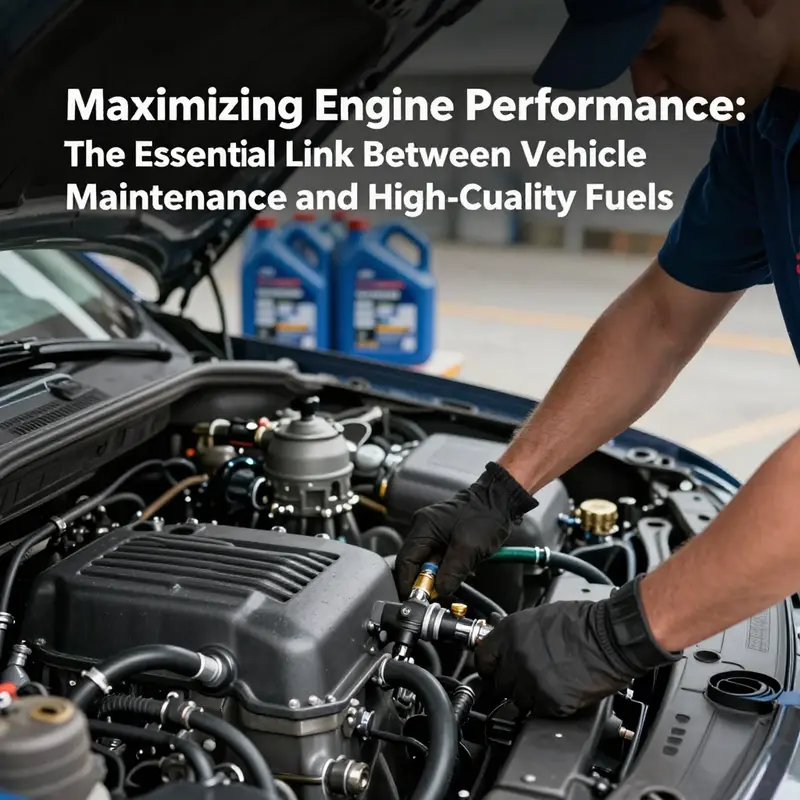
The promise of high-quality fuels—whether treated as premium blends or carefully refined formulations—rests on more than the fuel itself. It rests on the condition of the engine that consumes it. When maintenance steps are integrated into the fueling plan, premium fuels reveal their true potential. The relationship is reciprocal: the better the engine is maintained, the more completely a high-quality fuel can burn, and the more noticeable the benefits become in fuel economy, emissions, and long-term reliability. This chapter traces how routine care, attention to details, and proactive management of wear and deposits create a seamless pathway for premium fuels to do what they are designed to do at the point of combustion, and how neglect in maintenance can blunt or even erase those gains. The arc is not about chasing micro-optimizations in isolation; it is about building a coherent maintenance mindset that aligns every system with the chemistry inside the cylinder.
At the heart of the synergy is the engine’s lubrication and its ability to move smoothly through its cycles. Regular oil changes using the correct viscosity are not a mere ritual; they are the foundation of an engine that can respond to premium fuels with minimal internal resistance. When oil remains fresh and properly viscous, it reduces friction among moving parts, allowing the engine to reach and sustain optimal temperatures more efficiently. This matters because a well-lubricated, properly warmed engine experiences less parasitic loss. Premium fuels tend to burn cleaner and more completely under ideal circumstances, but those circumstances only occur when the mechanical environment is conducive to efficient transfer of energy. Clean oil, a well-lubricated bearing surface, and a stable thermal envelope all help ensure the fuel’s energy content is translated into useful work rather than wasted as heat, knocking, or excessive blow-by. In practice, this means that a vehicle with timely oil changes and the correct grade is more likely to exhibit the fuel’s designed combustion characteristics rather than fighting against turbulent or inconsistent oil-film behavior.
Another pillar of the maintenance-fueled efficiency equation is the intake air path. A clean, properly filtered air supply is essential for an accurate and stable fuel-air mixture. High-quality fuels can offer superior combustion chemistry, but their advantage is diminished if the engine is starved for air or the air delivered carries contaminants that alter the combustion process. A clean air filter ensures that the engine receives the right quantity of clean air, enabling the premium fuel to participate in more complete oxidation. This is not a cosmetic improvement; it translates to steadier ignition timing, more uniform combustion, and reduced tendency for leaning or rich conditions that waste fuel. In other words, premium fuel can work its magic only when the engine’s air system is not introducing distortions that force the system to compensate with richer or leaner mixtures.
Tires, although not part of the fuel itself, influence how efficiently that fuel translates into motion. Properly inflated tires reduce rolling resistance, which is the constant, invisible load the engine must overcome as the vehicle moves. A car with under-inflated tires consumes more energy to cover the same distance, eroding the nominal fuel savings that premium fuels can provide. Maintenance, therefore, serves as a bridge between the chemical properties of the fuel and the vehicle’s dynamic efficiency. It is easy to assume that fuel quality alone drives savings, but the reality is that the tire-to-piston energy transfer, guided by tire pressure, alignment, and overall vehicle weight, plays an equally decisive role in determining how far premium fuels can take you on each gallon.
Ignition and combustion are the heart of efficiency, and here maintenance has a direct hand in ensuring the fuel’s energy is released as intended. Functional spark plugs support a consistent, timely spark, enabling reliable ignition of the air-fuel mixture. Worn or fouled plugs can cause misfires or delayed combustion, turning what should be a clean burn into a less efficient process where fuel is burned unevenly or late in the cycle. Premium fuels are engineered to burn more completely, but their advantages are most evident when the ignition system is in good shape. The same principle applies to oxygen sensors and the broader exhaust and emissions control system. A clean, responsive sensor network helps the engine management system regulate air intake and fuel delivery with precision. When sensors collect accurate data, the engine can adjust fuel trims to maintain optimal combustion. Any sensor degradation or contamination can force conservative strategies that sideline the full brightness of premium fuel’s chemistry.
Deposits are the quiet saboteurs of premium fuel performance. Deposits on fuel injectors, intake valves, and combustion chambers alter spray patterns, atomization, and the intimate mix of fuel and air. They change the very geometry of how a premium fuel atomizes and ignites. Maintenance acts as a preventive shield here. Regular preventative maintenance—whether through scheduled service or through preventative use of fuel additives designed to keep systems clean—helps keep injector passages clear and intake surfaces smooth. In diesel engines, this is particularly acute: deposit buildup on injectors can erode fuel delivery precision, narrowing the margins within which premium fuels can realize their potential. When injectors are clean and the combustion chamber surfaces are free of deposits, premium fuels can perform as engineered: more homogeneous mixing, more complete combustion, and lower variability in engine cycling under different loads and temperatures.
The practical implications of these relationships show up most clearly in everyday driving. A well-maintained engine with premium fuel does not merely start up with less hesitation and smoke; it maintains steady fuel economy across a broader range of operating conditions. Under cold-start conditions, where engines typically rely on richer mixtures and longer warm-up periods, maintenance helps the engine reach its efficient operating window faster. Premium fuels begin to exhibit their advantages when combustion is stable, temperatures are well managed, and the fuel system remains clean enough to preserve precise spray patterns and ignition timing. In such states, the engine can convert more of the fuel’s chemical energy into useful work, which manifests as improved miles-per-gallon figures, stronger throttle response, and smoother operation across city and highway driving.
These outcomes are not merely theoretical. They align with observations across vehicle fleets and individual vehicles that maintain a structured maintenance schedule alongside high-quality fuels. A forward-looking maintenance approach—one that emphasizes timely oil changes with the correct viscosity, air- and fuel-system cleanliness, and the health of ignition components—acts as a protective envelope around premium fuel benefits. It helps prevent premature wear and deposit formation that would otherwise erode performance over time, especially under demanding conditions such as frequent cold starts, short trips, or heavy loads. When maintenance is proactive rather than reactive, the vehicle remains closer to its original design envelope, allowing premium fuels to deliver their promised performance with less compromise.
The takeaway is not that maintenance creates value from thin air, but that it unlocks the value that premium fuels promise. Without upkeep, even the best fuel can be forced to endure inefficiencies. A dirty injectors, a clogged oxygen sensor, or degraded ignition components can erode the advantages premium fuels offer and even introduce new forms of resistance that the fuel’s chemistry cannot overcome alone. The maintenance agenda is a form of architectural discipline for the engine: it keeps the channels clear, the timing precise, and the combustion chamber surfaces smooth enough for the fuel to behave as intended. In this sense, maintenance is not a supplementary cost but a strategic investment that preserves and augments the return premium fuels provide over the life of the vehicle.
From a longer-horizon perspective, the synergy between high-quality fuels and consistent maintenance translates into measurable benefits: steadier fuel economy, lower emissions, and longer engine life. The story extends beyond the current fill-up or the next service interval. It is about building reliability and predictability into a vehicle’s operation so that premium fuels—crafted to minimize deposits and optimize combustion—can do their job without obstruction. When a vehicle moves from a state of sporadic maintenance to a disciplined maintenance rhythm, the quality of the fuel is no longer an isolated variable; it becomes part of a holistic system that includes lubrication, air management, ignition reliability, and drivetrain efficiency. The result is a more resilient, more efficient machine that performs closer to the manufacturer’s intended specification across a broader set of conditions.
For readers seeking practical perspectives on the link between maintenance and fuel economy, consider a deeper dive into how maintenance practices translate into gas savings. A concise discussion of this relationship is available in this article, which explores how routine upkeep contributes to lower fuel costs over time: how vehicle maintenance saves on gas expenses. While it is not a substitution for personalized maintenance planning, it reinforces a simple truth: premium fuels can only express their chemistry when the engine environment supports efficient combustion, and that environment is built through deliberate, forward-looking maintenance.
The broader literature on this topic emphasizes a shared premise: a premium fuel’s performance is maximized when maintenance strategies are aligned with the fuel’s designed properties. A forward-looking formula—one that considers the fuel’s quality alongside proactive maintenance steps—captures the essence of this synergy. The idea is not to chase marginal gains in isolation but to compose a coherent approach where each maintenance decision reinforces the next. When oil is changed on time with the right viscosity, when air is clean and properly filtered, when ignition components remain reliable, and when fuel delivery systems stay free of deposits, the engine evolves toward an operating regime in which high-quality fuels can realize lower emissions, better combustion efficiency, and a longer service life. This is the practical axis along which maintenance and fuel quality intersect, and it is the axis that matters most for drivers who want meaningful, real-world performance from premium fuels over the life of their vehicle.
In sum, the interaction between maintenance and high-quality fuels is not a marginal detail but a fundamental design reality. Premium fuels are formulated to minimize deposits, promote clean combustion, and deliver superior energy density. Those benefits are earned, not guaranteed, through meticulous maintenance. Regular oil changes with the appropriate viscosity; clean air and fuel filtration; properly inflated tires; and ignition systems kept in good working order all create an environment in which premium fuels can achieve their intended outcomes. When any element in this chain weakens, the fuel’s advantages become less distinct and, in some cases, vanish entirely into the background of mechanical inefficiency. Conversely, a maintenance routine that respects the fuel’s chemistry elevates performance, reduces the need for fuel, and extends engine life, delivering a practical return on investment that goes beyond a single tank of premium fuel.
To close, the case for maintenance as the gatekeeper of premium fuel efficiency is both intuitive and evidence-based. It recognizes that fuel quality matters and that engines are not passive recipients of that quality. They are active participants whose condition determines how efficiently the fuel is transformed into motion. The more diligently that condition is managed, the closer the owner gets to the fuel’s theoretical potential. The journey from purchase to propulsion becomes smoother, cleaner, and more economical when maintenance and fuel quality move in lockstep, reinforcing each other at every turn. For readers who want to explore the broader implications of this relationship, the cited forward-looking study offers a comprehensive perspective on how premium fuel can complement a construction and vehicle maintenance equation, underscoring the value of integrating fuel choice with proactive care over time. As the evidence suggests, the payoff is not just decreased emissions or a few extra miles per gallon; it is a more dependable, cost-effective, and durable engine that serves the vehicle’s long-term performance goals.
External resource for further reading: https://www.machineryequipment.com/2025/05/31/a-forward-looking-formula-how-a-premium-fuel-can-add-to-construction-s-vehicle-maintenance-equation/
Premium Fuel, Pristine Performance: The Maintenance Playbook for High-Quality Fuels
When people think about premium fuels, they often imagine cleaner burns, stronger performance, and longer-lasting engines. Yet those benefits are not guaranteed by fuel quality alone. They emerge most reliably at the sharp intersection of premium fuels and a disciplined maintenance routine. In practice, high-quality fuels reduce the burden of deposits and impurities, but only a well-kept engine can translate those advantages into consistent power, better miles per gallon, and lower emissions over time. A vehicle is a complex, dynamic machine, and each system—from the fuel path to the lubrication circuit to the torque at the wheels—interacts with the fuel that powers it. The maintenance plan is the conductor of this interaction, ensuring that the fuel’s refined chemistry can do its job without interference from preventable wear, contamination, or bottlenecks in the system. In this sense, premium fuel acts as a high-performance foundation, while maintenance acts as the architecture that keeps the house sturdy and efficient, room to room, year after year.
The logic behind this partnership is straightforward, yet its consequences are meaningful. High-quality fuels are designed to minimize impurities and to promote a cleaner, more complete combustion. They can help sustain clean fuel injectors, reduce varnish formation on intake valves, and support steadier, more uniform spray patterns within modern direct-injection systems. When an engine runs on a fuel that is closer to the ideal blend for combustion, the potential for complete burning increases. Power responds with fewer hesitations, throttle response feels steadier, and the engine operates with a steadier cadence across a wide range of speeds and loads. However, this theoretical advantage can be eroded quickly if maintenance gaps exist. A neglected engine, a clogged filter, or a worn seal can introduce restrictions and inefficiencies that keep the fuel from performing its designed role. Deposits that would have formed slowly under a clean regime can accumulate more rapidly when maintenance lapses occur, turning the premium fuel’s benefits into a marginal gain rather than a meaningful improvement.
The first dimension of maintenance to consider is lubrication. Regular oil changes with the correct viscosity are not merely routine; they are a protective shield for the engine’s most vital surfaces. The viscosity grade specified by the manufacturer is chosen to balance lubrication film strength with rapid flow during cold starts and hot operation. Using oil that is too thin may not provide enough film strength at high loads; oil that is too thick can hamper rapid lubrication during startup and increase parasitic drag, both of which can degrade efficiency. Premium fuels help the engine burn more cleanly, but without clean, well-lubricated moving parts, those benefits are muted. An optimal maintenance plan keeps the oil fresh, the viscosity appropriate for climate and driving conditions, and the oil filter in good condition so contaminants do not circulate into tight tolerances where they can abrade cylinders, pistons, and bearings.
Beyond the oil, air and fuel filtration form a critical pairing with premium fuels. A clean air path ensures that the air entering the combustion chamber is free of abrasive particles that could hamper combustion efficiency or alter the air–fuel ratio. A blocked or restricted air filter forces the engine to work harder, increasing fuel consumption as it tries to draw more air to maintain the same output. Conversely, a clean fuel path—without a clogged fuel filter or a degraded fuel line—lets the premium fuel atomize precisely as intended. In modern engines, fuel injectors and intake valves are sensitive to the quality of fuel they receive, and deposits can alter spray patterns, changing how atomization occurs and how completely the fuel burns. Regular replacement of air and fuel filters—along with mindful inspection of hoses, seals, and clamps—keeps the engine’s heart beating in step with the fuel’s refined chemistry. The maintenance routine thus becomes a passport to preserving the fuel’s designed performance, rather than a barrier to it.
A recurring theme in high-quality-fuel guidance is the importance of a clean fuel system. The fuel system is the conduit through which premium gasoline or diesel must travel to reach the combustion chamber. In vehicles with advanced fuel-injection systems, the stakes are higher because injector cleanliness directly influences spray quality and atomization. Deposits can form on injector tips, in the intake ports, or on the back of valves, subtly changing flow characteristics and introducing rich or lean pockets that alter combustion efficiency. This is where preventive care becomes a practical necessity: scheduled maintenance that includes fuel-system care helps ensure that the premium fuel’s properties can be realized. The general guidance points toward a proactive rhythm—fuel filters replaced on the manufacturer’s interval or when a diagnostic indicates restriction, fuel-tank cleaning or sediment removal on a recommended cadence, and periodic injector or fuel-system cleanups designed to maintain optimum spray patterns. Taken together, these steps help maintain the symmetry between fuel quality and engine response that premium fuels are meant to enable.
Fuel-system maintenance is not merely about keeping the tank clean; it is about protecting a delicate balance inside the engine that premium fuels are designed to support. Deposits that do form in a neglected system are often the result of miscellaneous contaminants, moisture, or even biofilm that can accumulate in fuel lines if the vehicle spends long periods in storage or experiences irregular fueling habits. Under these conditions, the fuel’s high octane rating or its low sulfur content may be less able to counteract the inefficiencies introduced by a contaminated path. Routine fuel-system care—replacing the fuel filter in the typical 15,000 to 30,000-mile window, cleansing the tank every few years, and using a quality system cleaner as recommended by specialists—acts as a guaranteed minimum standard, ensuring the fuel’s properties reach the combustion chamber in the form the engine was designed to use. In combination, these measures minimize the chance that deposits will lower atomization quality or alter the air–fuel mix, which can otherwise manifest as hesitations, rough idling, or inconsistent power delivery.
This holistic approach to maintenance also entails a broader, vehicle-wide attention to efficiency that complements, rather than competes with, the fuel’s performance. Tire condition and alignment influence rolling resistance, a factor that becomes more consequential as engines operate at different power rails depending on driving demand. Proper tire pressure reduces friction with the road, which means the engine does not have to work as hard to maintain speed or accelerate. In a car that is otherwise in good mechanical condition, the reduced drag means the premium fuel’s energy is channeled into productive work rather than wasted overcoming avoidable resistance. The same can be said for transmission and drivetrain integrity. Smooth-shifting, properly lubricated transmissions transfer power cleanly to the wheels, enabling the engine to sustain efficient operation with premium fuel rather than fighting against mechanical drag resulting from wear. Each maintenance discipline—air and fuel filtration, oil maintenance, tire upkeep, and drivetrain care—interlocks with the premium-fuel promise, amplifying the potential for lower emissions and better miles per gallon across the vehicle’s lifecycle.
A forward-looking maintenance mindset also recognizes that the value of premium fuels is greater under certain operating conditions. Start-up in cold weather, for instance, places more demand on the lubrication system and the fuel-delivery pathway. In cold starts, oil is not yet at optimal viscosity, and fuel injectors require reliable spray patterns despite higher viscosity fuel and potential condensation in the intake system. Regular maintenance mitigates these early risks by ensuring the oil remains within its effective temperature range and by keeping the fuel system clean enough to deliver precise atomization even as cold conditions stress the chemistry. Similarly, heavy-duty operation or demanding driving patterns—such as climbing hills, towing, or long-duration high-load cruising—place greater stress on the entire system. A well-maintained engine responds consistently under these conditions, maintaining efficient combustion thanks to the premium fuel’s designed properties and the strategically optimized maintenance regime that supports it.
The practical outcome of this Integrated approach is not merely theoretical fuel economy. It translates into shorter-term performance stability and longer-term reliability. Vehicles that receive consistent maintenance tend to show fewer abnormal fuel-consumption quirks, such as sudden drops in miles per gallon or noticeable power sag under load. They also tend to exhibit lower emissions and cleaner exhaust signatures over time, a signal that the combustion process remains efficient and the catalytic system remains healthy. The consistency and predictability of performance have tangible financial implications as well. Fewer unplanned maintenance events, fewer breakdowns, and reduced downtime mean less disruption on the road and lower total ownership costs. The premium-fuel approach, backed by a disciplined maintenance program, thus supports a cycle of reliability and efficiency rather than a one-off boost that fades after a few thousand miles.
In discussing these relationships, it is important to acknowledge the role of routine inspections and diagnostic awareness. An educated driver keeps an eye on indicators such as throttle response, idle quality, and fuel-cut and relay performance. Modern engines often provide a wealth of data through onboard diagnostics, and even modest attention to symptom changes can guide timely maintenance actions. If a vehicle begins to exhibit rough idle, hesitation, or misfire symptoms, a maintenance-first approach stays ahead of the problem by verifying fuel-path cleanliness, checking filters, and confirming that the oil still meets the manufacturer’s specifications. In this context, premium fuel becomes a partner rather than a cure-all for mechanical wear. It enhances the conditions under which the engine operates, but it cannot compensate for fundamental maintenance lapses that allow deposits, friction, and fuel-flow restrictions to take root.
An important element of credible maintenance practice is its gradual, repeatable nature. Rather than pursuing a single, aggressive service event, drivers gain more consistent long-term benefits from a steady rhythm of scheduled maintenance. This philosophy aligns with the idea that high-quality fuels are designed to work best when the engine operates in a clean, regulated environment. The advantage is not just higher fuel economy in a single tank or a rare surge in performance during a spirited drive; it is a reliable, predictable pattern of efficiency that accumulates over tens of thousands of miles. The maintenance rhythm also supports the integrity of ancillary systems—battery health, ignition components, and cooling systems—that influence fuel efficiency and performance in subtle but meaningful ways. A battery that holds a strong charge, for instance, reduces alternator load and electrical parasitics at idle, while a well-tuned cooling system maintains optimal engine temperature, both of which matter when fuel quality is optimized for clean combustion. In the end, the collaboration between premium fuel and sound maintenance is a long-term strategy for reducing total cost of ownership while preserving the vehicle’s performance envelope.
To connect these ideas to everyday decisions, consider the practical steps that form the maintenance playbook. Start with the basics: adhere to the vehicle’s recommended oil-change interval and viscosity grade, and replace the oil and oil filter on schedule. Then verify that air and fuel filters are in good condition, replacing them when they show signs of restriction or contamination. Check tire pressures monthly and adjust to the manufacturer’s specifications to minimize rolling resistance. Inspect drive belts, hoses, and the cooling system to prevent inefficiencies that could elevate engine load and negate some of the premium-fuel advantages. For fuel-system care, follow the guideline of renewing the fuel filter within the manufacturer’s recommended mileage window, and consider a professional fuel-system cleaning at intervals that reflect observation of fuel economy trends or diagnostic results. The goal is not to chase a one-tank victory but to uphold a steady state where premium fuel can perform as intended across varied driving demands.
In addition to the practical steps, there is a mindset that supports durable performance. Car owners who view maintenance as an investment in ongoing efficiency are more likely to adopt preventative habits that pay off over the long term. This perspective turns maintenance from a chore into a strategic choice—one that makes premium fuel work harder for longer. By embracing preventive maintenance, drivers minimize the risk of unexpected deposits and clogged pathways that would otherwise erode the efficiency premium of quality fuels. This approach also aligns with responsible stewardship of the vehicle, recognizing that the road to efficiency is built through consistent care, not sporadic intervention. The result is a lifecycle performance advantage: a vehicle that remains smooth, quiet, and reliably efficient year after year, with premium fuel delivering its best possible return on investment over time.
The argument for integrating high-quality fuels with maintenance does not deny the realities of cost, availability, or necessity. It rather reframes premium fuel as part of a broader system that rewards disciplined upkeep. When teams of engineers and drivers design and operate vehicles to meet manufacturer specifications, they expect the fuel and the engine to work in concert. Maintenance sustains that concert, ensuring that the harmony between fuel and engine is not broken by avoidable wear or contaminant-induced inefficiencies. In that sense, the maintenance playbook is the practical, repeatable path to realizing the long-term benefits of premium fuels without inviting unnecessary risk. It is the difference between a quick, temporary improvement and a durable, cumulative performance advantage that stands up to the test of time and the demands of real-world driving.
As a closing note, the broader takeaway is clear: high-quality fuels provide a meaningful improvement in combustion quality and deposit resistance, but their full potential is unlocked only by a comprehensive, proactive maintenance strategy. This synergy yields not just better efficiency on a single trip, but a sustained profile of reliability, reduced emissions, and lower total cost of ownership across the vehicle’s life. By nurturing the engine with clean air, clean fuel, clean lubrication, and clean pathways, drivers can ensure that premium fuels do what they are designed to do—delivering consistent performance and responsible efficiency—over years of use rather than mere miles. This is the essence of a maintenance-first approach to high-quality fuels, a practical framework that translates premium chemistry into real-world value for everyday driving.
For readers seeking a concrete starting point to translate these ideas into daily practice, a practical overview of the maintenance mindset is available here: How Vehicle Maintenance Saves on Gas Expenses. The guidance emphasizes that the long-term benefits of premium fuels depend on steady, preventive care rather than sporadic, corrective measures. While premium fuels contribute to cleaner combustion and a stronger efficiency baseline, the maintenance foundation determines whether those advantages endure across the vehicle’s lifecycle. The combined effect—premium fuel plus disciplined upkeep—offers a clear, actionable path to improved efficiency, lower emissions, and extended engine life. To further explore the broader context of premium gasoline and its claims, the external resource provides a thorough examination of why premium fuels can be beneficial and under which circumstances they matter most for engine health and performance: https://www.caranddriver.com/features/a40988775/premium-gasoline-truth/.
null
null
Final thoughts
The relationship between vehicle maintenance and the use of high-quality fuels is paramount for ensuring optimal engine performance and efficiency. By investing in regular maintenance and utilizing premium fuels, business owners can not only achieve improved fuel economy but also extend the lifespan of their vehicles. This proactive approach ultimately leads to lower operational costs and less downtime, reinforcing the crucial role of maintenance in maximizing the benefits of high-quality fuels. Embrace these best practices to secure the future efficiency and reliability of your fleet.