
For business owners, maintaining a low mileage vehicle isn’t just about preserving aesthetics; it’s about ensuring reliability and longevity. Low mileage vehicles, typically operating under 10,000 km a year, require a different approach to maintenance, focusing on time rather than distance. In this guide, we will explore critical aspects of upkeep that are often overlooked, ranging from oil management to fluid care. Each chapter will delve into strategies to maintain optimal performance while preventing hidden damages, ultimately ensuring your vehicle is always ready for business needs.
Time, Not Miles: Mastering Oil Care for Low-Mileage Cars
When people think of a low-mileage car, they imagine it needs less attention. In truth, the opposite is often true for engine oil. A vehicle that sits most of the year still ages its oil. Condensation builds up, additives oxidize, and contaminants accumulate even without extensive miles on the odometer. The engine doesn’t know whether the oil has traveled a thousand kilometers or zero; it only knows time, and time demands a deliberate maintenance rhythm. For owners who drive far less than the average car, the clock becomes the more reliable predictor of oil health. Time-based maintenance is not a optional belt-and-suspenders approach; it’s the core strategy that preserves the lifeblood of the engine between those rare, satisfying drives. In this chapter we pull together the research-backed guidance on how to keep oil performing at its best when mileage runs well below typical maintenance thresholds.
The central idea is simple, and surprisingly powerful: oil degrades with time, not just with distance. Even if your motor barely turns over, the oil is constantly battling oxidation, moisture ingress, and acid formation from the combustion process. SAE International’s engineering standards emphasize this reality, showing that the protective qualities of many oils degrade as soon as time starts ticking, and accelerated aging can occur even when engine heat cycles are infrequent. Recent findings highlight that after a year, even unused oil loses a substantial portion of its lubricating properties. That means your lowest-mileage vehicle may need the most attentive oil regimen—predicated on calendar time rather than quarterly mileage checks.
To translate this into a practical schedule, it helps to understand how the recommended change intervals differ by oil type. Full synthetic oil, prized for its stability and resistance to breakdown, still should be changed at least every 12 months in low-mileage use. The logical guardrail here is that longer intervals can invite sludge formation and diminished protection, especially if moisture has accumulated or fuel-derived compounds have contaminated the oil. Semi-synthetic oil, which blends base stocks with additives, shows more pronounced degradation as time passes, suggesting a change window of roughly 8 to 9 months in low-usage conditions. Mineral oil, the simplest formulation, degrades the fastest with time and generally requires a change every 6 months to maintain adequate lubricity and film strength. These time-based thresholds hold even when the vehicle’s odometer hasn’t rolled far at all. The guiding rule remains straightforward: change the oil when time or mileage reaches the threshold first, whichever comes sooner. This “first to arrive” rule is particularly important for owners who factor in both storage time and occasional high-mileage trips.
In this context, changing the oil is never a standalone act. The oil filter is a critical companion to the oil itself. A clogged or partially blocked filter can trap sludge, metal particles, and aging additives, reducing the effectiveness of a fresh batch of oil. For a low-mileage car, where changes may be spaced out, the filter can become a bottleneck to proper oil performance. Therefore, the recommended practice is to replace the oil filter every time you change the oil. It’s a small step with outsized payoff: clean filtration helps the new oil do its job without being prematurely polluted by old debris.
Beyond the mechanics of the change, there is a more sobering reality to consider. Studies from the AutoCare Institute point to real-world consequences when time-based oil maintenance is neglected in low-mileage vehicles. A notable portion of engines brought in for major repairs had not seen oil changes within the prescribed time windows. The resulting sludge buildup and the accompanying wear can trigger costly repairs well beyond routine maintenance. The takeaway is not to fear maintenance intervals but to respect them as a protective measure that prevents hidden damage from time’s quiet, relentless work on the oil. This perspective reframes oil care from a tick-box task to a strategic shield against long-term engine erosion, even for cars that clock only a few kilometers each year.
To make time-based oil management practical, a few best practices help translate theory into daily life. First, consider how you store oil and related supplies. If you keep spare oil on hand, store it in a cool, dark place away from direct sunlight and temperature extremes. Exposure to heat can accelerate oxidation once the bottle is opened, so a sealed, stable environment is ideal. Some enthusiasts go further by using airtight storage containers to minimize air contact with the oil. While this is a premium precaution, it underscores the central principle: control the environment to slow time-driven degradation.
Second, implement an annual or semi-annual check of oil condition, independent of mileage. Oil test strips, available through various suppliers, offer a simple way to gauge oxidation levels before a scheduled change. A quick pull of a sample to assess color change or filtration demand can provide a sanity check. If you have the option to measure total base number (TBN) or other oxidation markers with a home kit or a service center, that data can guide whether an oil change is truly due, especially in borderline cases where the calendar has slipped yet miles remain minimal.
A practical maintenance mindset also involves documenting and scheduling. The clock starts not when you park the car but when the engine last had a proper oil change. Set reminders for the first of the month after the 12-month mark for full synthetic, the 9-month mark for semi-synthetic, and the 6-month mark for mineral oil. If you find yourself in a scenario where the vehicle sits unused for an extended period, that calendar becomes even more critical. In several cases, drivers discovered that their low-mileage vehicles were far from evergreen when it came to oil health, simply because the calendar had quietly advanced without a corresponding drive cycle. A reminder system helps prevent that drift.
To tie these cautions to everyday life, imagine a typical schedule for a driver who keeps a modern car often parked in a garage, used for occasional weekend trips, and rarely driven during the workweek. The car’s performance, longevity, and reliability hinge on using time as a proxy for wear and aging in the engine. In such a scenario, a 12-month oil change for full synthetic ensures that even a dormant engine receives fresh protection. The same logic applies to the filtration system; replacing the oil filter at every oil change protects the fresh oil from absorbing residues that could otherwise accelerate wear during a cold start. If you are meticulous about storing oil, you can push detection of deterioration further but never beyond a year for full synthetic in a low-mileage setting. This is where the science behind the numbers meets practical reality: time is your most important parameter when miles have fallen to a trickle.
All of this concerns not just the engine but the broader maintenance ecosystem around an idle or infrequently used vehicle. The oil is the heart, but the pump that circulates it, the seals that retain it, and the surrounding fluids all respond to time as well. While the discussion here centers on oil, the same principle applies to other essential fluids: brake fluid, coolant, and transmission fluid all age with time, and their optimal replacement windows reflect a balance between the engine’s use and calendar time. A holistic approach means treating the car as a living system that ages with time even if it spends long stretches in repose. The goal is not to chase a perfect mileage figure but to protect components through disciplined time-based interventions that align with the vehicle’s actual aging profile.
For readers who want to see the broader context of how maintenance fits into the overall lifecycle of a vehicle, a nearby resource can offer a complementary perspective on what maintenance is and how it should be approached. What is Vehicle Maintenance provides a framework for understanding how routine care translates into durable performance and dependable operation. What is Vehicle Maintenance offers a readable overview that complements these oil-specific guidelines and helps bridge to the other maintenance topics covered in this guide.
The science is clear, and the practice is straightforward: treat time as your primary constraint when managing oil and related fluids in low-mileage cars. Do not wait for mileage to accumulate; respect the calendar. When you combine mindful storage, preemptive testing, and a disciplined replacement schedule for oil and filters, you give your engine a fighting chance against time’s slow erosion. The payoff is quiet confidence on every drive, even after months of inactivity, with oil that remains a reliable barrier between metal surfaces and the friction that would otherwise wear them down. This approach also reduces the risk of unexpected breakdowns during that rare but cherished opportunity to hit the road, and it supports long-term engine health far beyond the next maintenance visit.
In summary, the low-mileage reality demands a time-centered oil regimen. Full synthetic oil deserves a 12-month ceiling, semi-synthetic an 8–9 month window, and mineral oil approximately every 6 months. Always replace the oil filter with the oil, and consider a light conditioning check—via a test strip or simple observation—before each change. The evidence is not merely theoretical; it is reinforced by contemporary industry studies that connect neglect of time-based oil changes with tangible repair costs and engine damage. Align your calendar with these intervals, keep the oil and filter pristine, and treat your engine with the kind of respect that keeps it performing reliably when you finally get to turn the key after a long wait. The result is more than maintenance; it is preservation of an asset that, at the end of the day, moves you through life with minimal friction and maximal peace of mind.
External reference for engineering standards and oil degradation timelines: SAE International. See the standards content ASME-J10302024 for detailed engineering guidance on oil degradation and time-based maintenance practices. https://www.sae.org/standards/content/ASME-J10302024
Idle Power, Ready Starts: Battery Care for Low-Mileage Vehicle Maintenance
A low-mileage car sits more often than it travels, and that seeming paradox—little distance, more time—puts its electrical system through a quiet, steady test. The battery is at the heart of that test. Modern vehicles keep numerous systems alive even when you are not driving: alarms, clocks, telematics, memory for radio stations, seat positions, and a growing suite of microprocessors in the ECM and other controllers. All of that draws current, known as parasitic drain. In a car that clocks only a few thousand kilometers a year, the alternator does not have frequent opportunities to recharge the battery through regular driving. The result can be a battery that ages prematurely, sulfates more quickly, and becomes unreliable exactly when you need to start the car. That is why battery care in a low-mileage vehicle is less about distance and more about time and discipline. A well-cared-for battery is not just about cranking power; it protects electronics, prevents no-start situations, and reduces total ownership costs that creep up when a car sits unused for months.
The lifecycle of a modern battery is sensitive to the rhythms of use and rest. If you drive infrequently, you may notice the car’s electronics flicker or the engine turn over slowly at start-up. That is often a sign of a weakened battery or a slow internal chemical reaction caused by repeated shallow discharges. The solution is not to drive more to compensate for time, but to manage the battery proactively with a simple, repeatable routine. The idea is straightforward: treat the battery as a component that ages with time, not just with miles. When you accept this premise, you begin to see maintenance steps that align with a low-mileage reality rather than conventional distance-based schedules. The difference can extend battery life by years and reduce the risk of being stranded during cold starts or in remote locations.
The practical steps begin with regular, deliberate starts. Experts emphasize that starting the engine does more than wake the wheels; it gives the alternator a chance to recharge the battery fully after it has been drained by overnight parasitic loads or short trips that never replenish the charge. For a low-mileage vehicle, the recommended cadence is to start the car at least every one to two weeks. If you can, let the engine idle for 15 to 20 minutes, and ideally as long as 30 minutes, if circumstances permit. This duration is not about burning fuel or extending idle time; it is about letting the alternator generate a healthy charging current while the engine runs in a balanced condition, the cooling system stabilizes, and the battery chemistry recovers from small, partial discharges. In many climates, a longer idle period ensures the battery reaches an effective charging voltage and temperature that optimize chemical reactions inside the cells. When you can’t perform a long idle, a short start that lasts 20 minutes is still better than leaving the battery entirely dormant for weeks. The aim is to keep the battery within its optimal voltage window, extending both cycle life and reserve capacity.
For periods of extended storage—when you know the car will be parked for more than a month—the strategy shifts from routine starts to preventing parasitic drain. Disconnecting the negative battery terminal is a time-honored measure to cut off power to the most persistent loads. Before you do this, check your vehicle’s manual; some systems may reset settings such as radio presets, clock, or seat memory. If you prefer not to disconnect physically, a smart battery maintainer or trickle charger becomes a practical alternative. A device that monitors voltage and applies a small, steady charge as needed can keep the battery at a healthy level without overcharging. The difference is subtle but meaningful: this approach avoids the risk of deep discharge that can compromise the battery’s plates and cause sulfation, a chemical condition that reduces capacity and increases the likelihood of a no-start scenario when you eventually turn the key.
Battery maintainers hold particular value for owners who travel for work, take long trips sporadically, or simply forget to start the car. A quality intelligent charger does more than provide constant current; it senses battery state and switches to maintenance mode when the voltage is high enough to risk overcharging. This is important because overcharging, even slightly, can generate excessive heat and degrade electrolyte balance over time. The result is a battery that dries out and loses capacity, even if the vehicle has markedly low mileage. The goal is consistency: keep the voltage within a safe band, avoid deep discharge, and prevent the chemical processes inside the cells from aging too quickly. The cost savings can be substantial when you consider that battery replacement can run into the hundreds or even over a thousand dollars, depending on the vehicle and battery type.
A key part of this discussion is choosing the right type of battery for a low-mileage, modern vehicle. If your car features advanced electronics—stop-start systems, digital displays, multiple screens, or heavy voltage demands—an upgraded battery type may deliver meaningful durability in the face of irregular use. AGM (Absorbent Glass Mat) and EFB (Enhanced Flooded Battery) designs are engineered to handle deeper discharge cycles and higher electrical demands with less sulfation and better cold-cranking performance. These batteries often offer a longer service life in scenarios where the vehicle sits idle for weeks or months but must still deliver reliable starting power when needed. The take-away is simple: the right chemistry can extend the time between replacements, which matters greatly for low-mileage ownership.
Neglecting battery care is not merely inconvenient; it is costly. A dead battery is inconvenient, of course, but the downstream cost can include labor, towing, or the risk of damage to onboard electronics if the battery voltage collapses during a critical moment. In some cases, repeated shallow discharges can stress the battery to a point where it fails prematurely, with potential ripple effects on the vehicle’s electrical network. For owners who cannot commit to regular driving, the long-term savings from proactive battery management are tangible. The incremental cost of a maintenance plan—a smart charger, a parasitic drain check, or a decision to install an AGM/EFB option—pales in comparison to a surprise no-start or the expense of jump-starts, replacements, or potential alternator stress caused by repeated deep discharges.
To integrate battery care into the broader maintenance mindset for low-mileage vehicles, consider the synergy with other time-based maintenance tasks. The battery does not exist in isolation; its health influences starting reliability, the performance of the climate control system, and even the accuracy of the vehicle’s clocks and memory. A disciplined approach to battery care flows naturally from the same approach that governs oil, coolant, and brake-fluid maintenance: respect the element of time. Track voltage trends with a simple tester or a multimeter, and pay attention to symptoms such as slow cranking, dimming lights, or electronic glitches. When you observe any of these signs, consider whether a recharge cycle, a maintainer, or a battery replacement is the prudent response. The trade-off is clear: a small daily or weekly investment in battery care yields a more reliable car, less downtime, and greater peace of mind during periods of inactivity.
If you want a broader context for why this battery-centric approach matters, it helps to view maintenance as a spectrum rather than a checklist. The aim is not to chase every new kit or service that appears on the market but to build a reliable baseline that suits a low-mileage schedule. That baseline starts with understanding how time, not just mileage, affects your vehicle. In practice, this means embracing a few steady routines: scheduled engine starts, strategic storage practices, and intelligent charging solutions. It also means recognizing when to upgrade components to match how you use the car. For example, if you routinely use a vehicle for essential errands but leave it parked for weeks, an AGM or EFB battery paired with a smart charger can deliver a larger margin of safety and longer service life than a standard flooded battery managed by regular driving alone.
The narrative tucked into these recommendations emphasizes practicality and resilience. You do not need to become a full-time battery technician to keep a low-mileage car in dependable shape. You need to cultivate a habit of managing time as a material factor in your maintenance plan. A simple calendar reminder to start the engine every couple of weeks, a note to disconnect the battery during lengthy storage, and a decision to invest in a battery maintainer if you cannot ensure regular driving can translate into years of reliable service. Even if your running miles remain modest, the power stored in the battery is the spark that keeps the entire vehicle ecosystem alive. The more attentively you steward that spark, the better your chances of avoiding the frustration and cost that accompany a dead battery.
For readers seeking a deeper dive into battery care beyond the specifics of low-mileage patterns, a broader maintenance resource can offer useful perspective. For a broader view of what vehicle maintenance entails, see What is vehicle maintenance. This reference can help place battery care within the wider framework of keeping a vehicle in safe, ready-to-drive condition, ensuring you connect the dots between electrical health and mechanical reliability. The overarching message remains consistent: time-based maintenance is essential when miles are few, and battery health is a keystone habit in that approach.
In closing, the practice of battery care for low-mileage vehicles centers on predictable routines and smart technology. Regular engine starts, even when the car is idle, ensure the alternator recharges the battery and sustains the health of the entire electrical system. For extended storage, isolating the battery with a disconnect or maintaining it with a smart charger protects against parasitic drain and sulfation. When possible, upgrading to an AGM or EFB battery aligns with the higher electrical demands of modern vehicles and offers greater resilience to longer periods between drives. By combining these steps with a thoughtful approach to maintenance timing, you create a robust, time-aware strategy that keeps your low-mileage vehicle ready to roll when the moment arrives. The payoff is straightforward: fewer no-start moments, longer battery life, and lower overall maintenance costs, even as the miles accumulate slowly.
External resource: Car and Driver’s Battery Maintenance Guide for Low-Mileage Vehicles provides a practical, expert-backed reference to the themes discussed here and offers detailed reasoning behind time-based maintenance choices for batteries in idle or lightly used cars. https://www.caranddriver.com/technology/a49872461/battery-maintenance-low-mileage-vehicles/
Tire Management for Low-Mileage Vehicle Maintenance: Keeping Rubber Ready Between Brief Drives
Tires are more than a contact patch with the road; for a low-mileage vehicle they are a critical guardrail against hidden wear and aging. When a car sits for long periods, the tires don’t just wear down from miles driven. Rubber hardens, cords relax, and the subtle chemistry of the tire compounds shifts with temperature and time. In a car that travels only a few thousand kilometers a year, these time-based changes can become the quiet threat that surprises you when you finally take the engine for a long spin or embark on an extended trip. This chapter treats tire management as a central, ongoing practice, not a one-time check during an annual service. The aim is simple: preserve grip, prevent damage, and keep spare capacity intact should you need to make a rapid, confident journey after months of lull. The path forward blends engineered choices—specialized low-mileage tires where appropriate—with vigilant maintenance habits that honor the time the tire has spent idle as much as the miles it has not yet covered.
Specialized low-mileage tires speak directly to the needs of vehicles with sparse annual use. These tires are designed with compounds and tread patterns that minimize rolling resistance and maximize longevity without sacrificing the grip necessary for wet and dry conditions. For drivers of hybrids and electric vehicles, the benefits go beyond fuel efficiency. The targeted tread life in stop-and-go urban driving helps mitigate the downside of infrequent use: tread degradation from standing idle and the micro-damages that accumulate when a tire sits under a load for long stretches. The choice to adopt such tires, however, is not just about extending tread life. It’s about maintaining predictable handling and maintaining the tire’s integrity when you do decide to drive longer distances after weeks or months of limited use. The goal is to keep the tire’s contact with the road honest and reliable, so there is no surprise when you press the accelerator and the car responds with quiet confidence rather than an unsettling thud or a wobble.
The most common and silent adversary in low-mileage tire health is under-inflation. It is the leading cause of tire failure in vehicles that aren’t driven every day, precisely because its effects accumulate while a car sits idle. When tires run low on pressure, they overheat during even modest speeds. Heat softens the already stressed rubber and can cause cracking, tread separation, or a blowout under load. Over time, a tire that starts under-inflated is more prone to uneven wear patterns. The risk isn’t just safety; it also translates into reduced efficiency and range for electric vehicles, which rely on every watt of energy, every foot of rolling resistance, and every bit of grip to sustain performance.
Direct Tire Pressure Monitoring Systems (TPMS) have changed the way drivers approach tire pressure. In modern vehicles, TPMS provides real-time feedback on each tire’s pressure, and many systems require you to drive a short distance to refresh or reveal accurate readings after adjustments. If the TPMS indicator blinks for an extended period at startup, the system typically signals a fault that requires service. Even when the car is idle, the TPMS acts as a constant reminder that pressure is not a fixed value, but a dynamic condition that can drift with ambient temperature changes, humidity, and time itself. For owners in climates with big temperature swings, the role of TPMS becomes even more crucial. It helps you catch slow leaks—perhaps from a small puncture that would become catastrophic if left unchecked—and ensures you don’t unknowingly operate on tires that are dangerously under-inflated.
Beyond simply watching the pressure gauge, tire health in a low-mileage car hinges on a disciplined maintenance rhythm. Checking tire pressure monthly is a good baseline; in practice, it’s common to see people neglect this until a warning light appears or a vibration emerges. For a vehicle that sits for weeks at a time, monthly checks become even more important. A tire with a few psi of loss may not immediately throw a dashboard alert, but it adds heat during application of power and converts a minor problem into a major risk. The habit of checking pressure should extend to spare tires as well. A spare that has aged differently or lost air pressure just sitting in the trunk becomes a potential hazard you don’t want to discover on a roadside emergency.
Rotation is another pillar of tire longevity for low-mileage vehicles. Even if the car isn’t covering hundreds of kilometers each month, tires wear in predictable patterns. Front tires may wear differently from rear tires due to steering, braking, and weight distribution. Rotating tires helps equalize tread wear and preserves grip across all four corners. It also gives the tires a chance to “read” the road from different angles, reducing the risk of a sudden, uneven bite when entering a turn after a long period of rest. For ultra-low mileage cars, periodic rotation every 6 to 12 months — aligned with time-based maintenance rather than miles driven — forms a logical cadence. In practice, building this rotation into a calendar-based schedule helps ensure it happens regardless of how far the car travels in a year.
Tread depth remains a key indicator of tire health, but for low-mileage drivers, tread depth can be deceptively robust even as the tire ages. Rubber compounds slowly oxidize and lose elasticity, reducing grip even if the tread looks fine. For that reason, it is prudent to treat a tire’s age as a long-term maintenance parameter. The rule of thumb that often appears in maintenance literature is simple: replace tires after five to six years from the date of manufacture, even if the tread appears adequate. The date code on the tire’s sidewall reveals the tire’s age, and this information should be reviewed at least annually during your tire inspection routine. This aging factor complements tread depth checks, offering a fuller picture of when the tire should be retired.
Another important practice for low-mileage tires is proper storage during periods of non-use. If you anticipate months between drives, there are practical steps to reduce both deformation and aging. When tires sit, they tend to develop flat spots where they contact the ground. These spots may not be obvious when the vehicle is stationary, but they can cause vibration, steering pull, or uneven wear once you start moving again. A practical approach is to periodically reposition the vehicle or to elevate tires off the ground during long storage using jack stands or blocks. Elevation reduces the load on the tire’s contact patch, slowing the formation of flat spots and preserving wheel alignment. In addition, keeping the car in a dry, shaded environment helps prevent the rubber from cracking due to sun exposure and temperature cycling. A breathable car cover protects the exterior finish and the tires from moisture buildup, which can accelerate deterioration if the vehicle is stored for weeks or months.
A broader strategy to support tire health on low-mileage vehicles involves mindful driving when trips are planned. While it might be tempting to let long drives accumulate into a few big adventures, short, frequent drives are not necessarily the enemy if they are balanced with tire care. Short trips can contribute to faster moisture buildup in lubricants, but they also help keep the tire’s surface flexible and ready for use. The trick is to pair each drive with a quick tire check before and after, ensuring that any sudden pressure loss or subtle wear patterns are caught early. For drivers who use their car mainly in urban environments, the focus should shift from chasing mileage to maintaining tire memory—the tire’s ability to respond predictably to steering input, braking, and cornering after periods of inactivity.
The maintenance routine for low-mileage tires also benefits from a practical approach to tire aging indicators beyond the date code. Inspect the sidewalls for cracks, bulges, or signs of weathering. Listen for unusual thumps or vibrations that may indicate internal damage. While these signs can arise from many factors, they are more likely in cars with long idle times, where tires may have developed microcracks or internal separation during heat cycles. When in doubt, a professional inspection remains the safest option. A technician can perform a thorough check of the tire’s internal structure, confirm proper inflation, and identify any hidden issues that a simple visual inspection could miss.
The interplay between tire maintenance and overall vehicle efficiency is notable. Under-inflated tires contribute to higher rolling resistance, which in turn reduces fuel economy and, for electric vehicles, reduces range. Properly inflated, well-maintained tires improve energy efficiency, extend range, and provide steadier handling. This is not about chasing every last kilometer; it’s about making sure the car remains predictable and safe, especially when a long trip breaks the rhythm of daily driving. In practice, this means building tire-awareness into the same routine you use to schedule oil changes and brake fluid refreshers. It is not that tires are a separate domain; tire health is a core component of the vehicle’s reliability and safety envelope, particularly when miles accumulate slowly but time passes relentlessly.
One practical way to embed tire care into your routine is to approach maintenance as a cohesive system with clear reminders. Set calendar alerts for tire pressure checks, rotation, and date-code evaluations. Use a log to record the tire’s current pressure, the temperature, and any observations after a drive. Over time, a pattern emerges: a tire that consistently loses a few psi in winter cold, or a tire that shows uneven wear, signals a need for action before the issue escalates. This approach keeps tire care from becoming a reactive afterthought. It turns tire health into a disciplined habit that aligns with the broader time-based maintenance strategy essential for low-mileage vehicles.
For readers seeking a deeper understanding of the maintenance framework, the related literature on tire management emphasizes the value of grounding decisions in both time and use. The emphasis on time-based maintenance complements the practical insights above. When maintenance is anchored in the clock as well as the odometer, the vehicle remains safer and more reliable—even if the miles on the odometer creep up slowly. The tire must be kept within its design envelope so that it can perform in worst-case scenarios, not merely during routine driving. The goal is a tire that remains responsive, predictable, and safe, regardless of how many kilometers are driven each year.
To bridge the gap between theory and practice, consider a simple, repeatable tire care routine that fits a low-mileage lifestyle. Start each season with a tire inspection, checking tread depth, sidewall integrity, and the presence of any foreign objects. Then verify the pressure in all four tires and the spare, adjusting to the recommended level. If your TPMS indicates a low-pressure condition, address it promptly rather than postponing. If you plan a longer trip, recheck pressure and tread the day before departure. When the car sits idle for more than a month, at least one of these checks should occur during or just after the storage period. Finally, schedule a mid-year rotation to promote even wear and extend overall tire life. These steps reinforce the idea that tire health is a proactive, ongoing part of maintaining a low-mileage vehicle rather than a reactive response to a sudden problem.
The literature also highlights a broader, practical point: not every maintenance item on a low-mileage car deserves equal attention. Some services are marketed to owners of vehicles with high annual mileage, but they offer little benefit to cars that see modest use. This is a reminder to keep the focus on essential tire-related tasks, which form the backbone of safe operation. Acknowledging that tires wear and age should not induce anxiety; it should empower you to act early, avoid avoidable hazards, and preserve the vehicle’s reliability across seasons. In this sense, tire management becomes a quiet but essential chapter in the life of a low-mileage vehicle—one that ensures a safe, steady, and efficient ride whenever you decide to venture beyond the driveway.
For readers who want to connect these ideas to broader maintenance principles, a quick reference point can be found in foundational discussions of vehicle maintenance. A concise overview covers how maintenance decisions arise from understanding both time and usage, and why aging components matter even in low-mileage scenarios. For a broader context, it’s helpful to revisit the concept of maintenance as a system rather than a checklist. The aim is to maintain a vehicle that remains ready to drive, rather than one whose readiness depends on the exact number of miles traveled in a given year. This perspective aligns tire care with the overall philosophy of time-based maintenance, ensuring a holistic approach that protects safety, efficiency, and peace of mind.
To reinforce the practical link between tire health and the broader scope of vehicle maintenance, consider the following one-step reminder: if you haven’t checked your tires in a while, schedule a check before your next planned drive. If you rely on your vehicle for essential trips, a small, consistent investment in tire care today can prevent a larger disruption tomorrow. In the context of low-mileage maintenance, this simple habit matters more than any single service performed in isolation. It keeps the vehicle safer, more efficient, and more dependable, while recognizing that tires endure aging even when miles are few and far between.
Internal resource and further reading provide a useful companion to this approach. For a succinct primer on the broader maintenance framework that underpins tire care, you can explore the concept of vehicle maintenance in general. This resource emphasizes how time-based considerations shape essential service intervals and the rationale behind focusing on core items like tires, fluids, and battery health. Reading this material helps situate tire management within the larger maintenance strategy every low-mileage vehicle owner should adopt. What is vehicle maintenance offers a concise lens on why maintenance decisions should account for time as well as distance, and it reinforces the practical steps outlined here.
In sum, tire management for low-mileage vehicles is not a luxury; it is a practical necessity. Specialized low-mileage tires, vigilant pressure monitoring, and regular rotation form the core of a safe and efficient plan. Recognize that tires age with time just as fluids do, and treat aging as a maintenance parameter worthy of attention. Embrace a calendar-driven routine, protect tires during storage, and use TPMS data as a reliable guide to keep pressures within safe bounds. When you combine these habits with awareness of tread aging and proper storage, you keep your low-mileage vehicle ready for safe driving—whether you’re commuting daily or planning a few longer journeys a year.
External reference: For a deeper dive into tire monitoring technology and its impact on safety, see external guidance from industry leaders on tire pressure monitoring systems and maintenance practices: Tesla TPMS guidance.
Fluid Vigilance: Time-Based Fluid Care for Keeping a Low-Mileage Vehicle Quietly Reliable
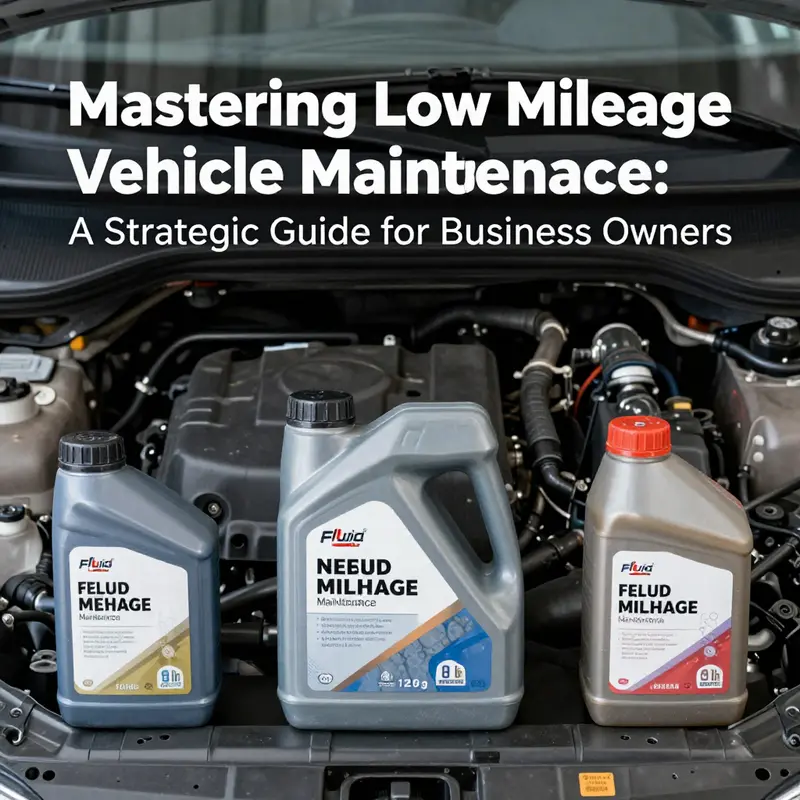
A low mileage vehicle lives in a peculiar cycle. It travels less, but it still endures heat, humidity, and the slow toll of time. Fluids do not know how many miles you put on the car; they age by heat cycles, moisture exposure, and chemical stability. When a car sits for weeks or months, these processes continue. If you treat time as the influential factor rather than miles, you unlock a maintenance approach that keeps the engine, transmission, brakes, and cooling system ready for action whenever you decide to drive. This chapter centers on fluid care as the backbone of that approach, showing how to design a calendar driven maintenance rhythm that preserves performance and protects against hidden trouble hiding in plain sight.
Engine oil stands at the heart of this philosophy. Oil lubricates, cools, and seals, but it also ages. Oxidation alters its chemistry, turning it sludgy and less capable of forming the protective film that keeps metal surfaces from rubbing themselves to bare. In a vehicle that does not rack up annual mileage, the clock is always ticking. The time you invest in changing oil becomes more important than the miles you accumulate. The recommended cadence depends on the type of oil you use. For mineral oil, the safe rule is to replace every six months regardless of thousands of kilometers. Semi synthetic oil can stretch to twelve months if the engine experiences minimal stress and the vehicle spends most of its life in moderate climates. Full synthetic oil can last longer still, potentially up to twelve to eighteen months, but it should not be extended beyond that window. The guiding principle remains clear: even if you drive little, you should not let time erode the oil’s protective properties. And when you change the oil, do not forget to replace the oil filter at the same time. The filter catches contaminants and particulates that the oil has already collected, so matching the filter change with the oil change is a simple, highly effective step.
Beyond the engine, cooling matters. The coolant that circulates through the radiator and engine block acts as a shield against corrosion and overheating. Coolant loses its protective capabilities as it ages, often quietly, until small leaks or reduced corrosion resistance appears. For most vehicles, a practical rule is to replace coolant every two to three years, independent of the mileage clock. This interval accounts for the gradual breakdown of corrosion inhibitors and silicates that help fight rust and scale. When coolant is overdue, the cooling system becomes more vulnerable to leaks and pitting, and that vulnerability can manifest as overheating under a hot day or a steep incline, exactly when you least want it. Keeping coolant fresh also protects the water pump, hoses, and heater core, which can otherwise suffer from poor heat transfer and hard starts in cold weather.
Brake fluid deserves equal attention in a time oriented plan. It absorbs moisture from the air, a property known as hygroscopic behavior. Over time, moisture lowers the fluid’s boiling point. In a worst case scenario, heavy braking can cause brake fade or even brake failure if the fluid boils and forms vapor pockets in the lines. Because moisture ingress is gradual and is not tied to miles, most experts advocate flushing and replacing brake fluid every two years. This two year interval helps maintain a stable and safe braking system by ensuring the fluid maintains its corrosion resistance and boiling point, reducing the risk of corrosion within the calipers and master cylinder. If you want extra assurance, you can test the fluid’s water content and aim for a reading below three percent to keep the system robust for everyday driving as well as planned escapes from crowded parking lots.
The transmission fluid and power steering fluid also require attentiveness that is sensitive to calendar time. Automatic transmissions rely on a precise balance of fluid conditions for lubrication, hydraulic pressure, and cooling. Even in a car that accumulates few miles, heat cycles during storage or warm summers can degrade the fluid’s performance. For automatics, follow the manufacturer’s replacement schedule, which typically falls in a broad window from about six to eight years, with the caveat that time and conditions can accelerate aging. Manual transmissions and some power steering systems also rely on specific fluid properties that age over time; checking levels and observing symptoms such as rough shifting or stiff steering should occur in tandem with a time-based plan. The common thread is clear: what matters most is the fluid’s ability to perform when you actually need it, not the number of miles you have driven.
A practical time-based plan for fluids begins with a simple calendar that echoes the car’s exposure to heat and moisture. This plan is not about chasing miles; it is about protecting critical systems during periods of inactivity and after peak use. Start with engine oil and filter changes on a fixed cadence. If you run mineral oil, schedule every six months; semi synthetic oil every twelve months; and full synthetic within a twelve to eighteen month window while avoiding overextension. Then align coolant replacement to a two to three year cycle, brake fluid to a two year cycle, and transmission and power steering fluids to the manufacturer’s guidance expressed in years rather than miles. The essence of this approach is consistency: a recurring reminder to assess and refresh these fluids before their protective properties wane.
This time-based discipline harmonizes with a broader maintenance mindset, which you can discover in the wider conversation about vehicle care. The idea is to treat maintenance as a set of predictable checks that reinforce reliability, regardless of how many kilometers you have on the odometer. If you find yourself seeking a concise framework for what maintenance means, you can explore the broader definition at what is vehicle maintenance, which provides a clear overview of the essential elements that keep a vehicle performing well through time and use. The reliability you gain from that framework comes from letting calendar reminders do the heavy lifting, rather than waiting for a service interval that is tied to miles. When you couple this with the fluid schedule described here, you create a robust baseline that reduces the risk of hidden wear that does not announce itself until a critical moment.
In addition to the engine and drivetrain fluids, a careful eye should be kept on the systems that influence cabin comfort and condensation control. The air conditioning system benefits from periodic operation, even during dormant periods. Run the AC or defrost mode for a short interval every few weeks. This keeps the compressor lubricated and prevents the internal lines from drying out and developing odors. It also helps manage moisture within the evaporator housing, which can become a breeding ground for mold if left unused for extended times. At the same time, remember to replace the cabin air filter on an annual basis. Clean air behind the dashboard supports not only comfort but also the long-term health of the HVAC components.
In practice, a calendar based approach may look like this: set oil change reminders on the chosen frequency for your oil type, then place a separate reminder for coolant every two to three years, a brake fluid reminder every two years, and periodic checks for transmission and power steering fluids according to the service manual. When the season changes or when you prepare for a longer period of storage, double check those schedules and adjust for climate and storage conditions. If you keep a log, you will notice how heat exposure, humidity, and even parking posture during storage influence fluid condition. The car may have only a few miles on the clock, but its fluids still bear the weight of time. Fluids thus deserve a proactive rhythm that preserves reliability, performance, and safety across the cycles of use and rest.
To anchor this conversation in practical terms, think of maintenance as a continuum rather than a sequence of isolated tasks. A small adjustment now can prevent a larger repair later. For example, changing the oil and filter at a specified interval helps avoid sludge formation, which can complicate hot starts or idle operation after a long idle spell. Fresh coolant not only guards against overheating but also reduces the risk of corrosion that can compromise the radiator, water pump, and head gaskets. Fresh brake fluid helps keep hydraulic lines free of moisture that could lead to corrosion and reduced braking efficiency during a sudden stop. Regular checks of transmission and power steering fluids, though sometimes overlooked in low-mileage scenarios, protect the durability of the hydraulic systems that rely on those fluids. All of these pieces fit together in a cohesive, time based plan that respects the realities of low-mileage ownership while ensuring readiness when you finally turn the key and drive away.
The communication between time and maintenance is bilateral. While time drives the need for maintenance, you can actively influence the outcome by choosing high quality fluids with good longevity and stability. Modern synthetic oils and high quality coolants contain additives designed to maintain stability in heat cycles and resist moisture intrusion. By prioritizing these products, you extend the window during which the fluids perform as intended, even if the engine sits for extended periods. This is a meaningful distinction when you own a low mileage vehicle, because the goal is not to chase mileage but to maintain the same level of protection and performance you would expect from a more frequently driven car. A thoughtful choice of fluids reduces the risk of sludge buildup, corrosion, and the degradation of seals and gaskets that can occur as fluids age.
In the end, the core message remains simple and actionable. Treat time as a primary maintenance driver. Build a calendar around fluid care with explicit intervals for engine oil, coolant, brake fluid, and transmission and power steering fluids. Embrace a habit of checking fluid levels and appearance, listening for changes in the way the engine runs, and inspecting for any sign of leaks or pressure loss. Do not overlook the small indicators that the car is aging in place even if it is not racking up miles. Pair this time based routine with basic storage practices that minimize moisture exposure and heat buildup during long idle periods. Park in a dry, shaded area if possible, keep the car clean to minimize corrosive deposits, and consider a breathable cover to protect the finish without trapping moisture beneath it. The result is a vehicle that remains quiet, reliable, and ready when you need it, even if the odometer shows only a handful of kilometers each year.
For readers seeking a consolidated view of maintenance as a whole, the concept of fluid care sits alongside other essentials described in reputable guidance. A broader resource on low mileage vehicle care emphasizes keeping fluids fresh and regularly tested, as well as avoiding unnecessary luxury services that do not address underlying issues observable through time based checks. By combining a careful fluid schedule with practical storage and gentle use, you create a robust approach that sustains performance without overinvestment in mileage oriented conventions. If you want to refresh the larger framework behind these recommendations, you can explore the broader idea of vehicle maintenance at What Is Vehicle Maintenance, which offers a concise overview of the core tasks that keep a car dependable through time and distance. What is Vehicle Maintenance.
Finally, while the focus here is fluid care, it is worth acknowledging the broader resource that guides low mileage vehicle care beyond fluids. The American Automobile Association provides a comprehensive set of guidelines for low mileage vehicle care, recognizing that time based maintenance often protects sensitive components during periods of inactivity and reduces the risk of hidden damage when you resume driving. The guidelines emphasize fluid renewal alongside checks for seals, belts, and the overall health of cooling and fuel systems. For those seeking a trusted external authority on this topic, the AAA Vehicle Maintenance Guidelines offer a detailed reference point that complements the practical advice presented here. External resource: https://www.aaa.com/automotive/advice/vehicle-maintenance/low-mileage-vehicle-care
Final thoughts
In conclusion, maintaining a low mileage vehicle requires a proactive approach that focuses on time-based maintenance rather than purely mileage. From oil changes to battery management, each maintenance aspect plays a crucial role in ensuring longevity and reliability. As business owners, implementing these practices will not only preserve the value and performance of your vehicles but also enhance operational readiness. By prioritizing essential vehicle care, you can avoid costly repairs and ensure your vehicle is always prepared to meet your business demands.