
Commercial motor vehicle (CMV) safety is paramount for business owners within the transportation sector. Unsafe driving behaviors and inadequate vehicle maintenance contribute significantly to accidents and regulatory non-compliance. This article provides a detailed guide for business owners on enhancing safety and compliance by addressing unsafe driving behaviors, ensuring proper vehicle maintenance, and utilizing key resources from the Federal Motor Carrier Safety Administration (FMCSA). Each section offers actionable insights into developing a culture of safety, promoting mechanical reliability, and leveraging tools designed to minimize risks and enhance operational efficiency.
Chapter 1: Turning Data Into Safer Roads—FMCSA‑Inspired Strategies for Safer Driving and Rigorous Vehicle Maintenance
Safety in commercial motor transport is not a single policy or a lone device; it is a living system that joins human behavior with mechanical reliability. In the FMCSA framework, safety emerges when data-driven insight, disciplined training, and rigorous maintenance converge to shape daily decisions on the road. This chapter moves through the core idea that unsafe driving and preventable vehicle failures are best addressed not by isolated fixes but by a proactive safety management approach. It rests on two intertwined pillars: shaping driver behavior through continuous learning, accountability, and fatigue management; and safeguarding the fleet through disciplined maintenance, vigilant inspection, and real-time health monitoring. The journey begins with how regulators view unsafe driving and how carriers can translate those expectations into practical, enduring improvements. The FMCSA’s Compliance, Safety, Accountability program is more than a scoring tool; it is a map of risk across seven safety categories, with Unsafe Driving, Fatigued Driving, and Hours-of-Service standing out as areas where interventions yield the largest safety dividends. The map points carriers toward where to look first: where a driver’s choices, not just a vehicle’s conditions, create risk. It also points to a broader truth—that safety is a culture, not a checklist. When leadership fosters openness, near-miss reporting, and visible coaching, the whole organization begins to view safety as a system capability rather than a compliance burden. The practical implication for carriers is clear: invest in people and processes that change behavior in real time, while organizing maintenance as a predictable, data-informed discipline rather than a reactive activity. This is the essence of a safety management system that aligns with FMCSA standards and supports sustainable, measurable improvements on the road.
The first element in this integrated approach is a rigorous, ongoing driver training and monitoring program. Defensive driving is not a one-off class but a continuous practice that evolves with the truck’s performance and the driver’s experiences. Regular, mandatory sessions can focus on fatigue management, hazard recognition, and decisive, safe reactions to unpredictable situations. The training must be reinforced by objective data from technologies designed to identify high-risk patterns. Electronic logging devices and in-cab video systems, when used with a clear policy and transparent coaching, transform raw data into actionable coaching moments. The goal is not punitive scrutiny but targeted development. When a driver shows a tendency toward harsh braking, speeding, or brief, distracted glances at a phone screen, the immediate response should be coaching paired with a practical improvement plan. The early, specific feedback helps drivers recalibrate their judgment under pressure and reduces the likelihood of a critical incident.
A critical piece of policy in this area is a stringent anti-distracted driving stance. The FMCSA framework places the onus on carriers to create and enforce policies that minimize the temptations and practical means of distraction. Prohibiting the use of mobile devices while operating a CMV, and restricting other non-essential electronic devices, creates a baseline safety standard. But policy is hollow without enforcement, and enforcement is hollow without fair, consistent accountability. When drivers are aware that distractions are monitored and that coaching follows incidents or near-misses, the behavioral message becomes clear: safety matters more than a momentary productivity gain. The next layer in the behavioral change is fatigue management, grounded in strict Hours-of-Service compliance. Adhering to Part 395, drivers must balance work, rest, and duty cycles in a way that preserves alertness. Scheduling practices should recognize circadian rhythms, especially on long-haul routes, and corporate leaders should build rest opportunities into routes where feasible. Fatigue is a stealth risk; it erodes reaction time, dulls hazard recognition, and increases the odds of misjudgments in traffic, weather, and load handling. A culture that values sleep and predictable schedules over relentless acceleration toward miles driven will show measurable safety dividends over time.
The behavioral dimension of safety is inseparable from the data that reveal it. The CSA program’s BASICS—Behavior Analysis and Safety Improvement Categories—provides a framework for identifying patterns that precede incidents. When a driver’s BASICS scores reveal repeated speeding, following too closely, or unsafe driving, the response should be timely and precise: a combination of coaching, enhanced monitoring, and, where necessary, careful coaching that distinguishes capability gaps from situational stressors. The findings should drive a prioritized intervention plan, not a punitive roll call. Importantly, a positive safety culture supports this approach. Organizations that encourage reporting of near-misses without fear of retaliation, and that recognize safe decisions, create a learning environment where every safety infraction becomes a data point for improvement rather than a cause for embarrassment. In that setting, drivers see that the organization is serious about safety as a shared mission, not a compliance hurdle. This cultural alignment is as essential as the policy framework because culture determines whether feedback is received, acted upon, and sustained.
The practical implementation of these principles relies on a blend of human-centered coaching and technology-enabled oversight. Telematics and real-time analytics do not replace the human element; they inform it. Telematics systems illuminate when and where risky events occur—occasions of speeding, harsh braking, or rapid lane changes—while video data can provide the context that numbers alone cannot. The real opportunity lies in the speed of response. When a company detects a concerning pattern, it can initiate targeted coaching, set measurable improvement goals, and monitor progress over a defined period. This cycle—detect, coach, re-assess—creates a dynamic feedback loop that strengthens driver behavior while preserving the driver’s autonomy and dignity. The aim is not to criminalize error but to build resilience: a driver who understands the impact of small decisions on safety, efficiency, and compliance becomes a more consistent performer.
Integrating the two pillars—driver behavior and maintenance—requires a few hard, practical steps. First, a preventive maintenance program that is systematic, predictable, and aligned with manufacturer recommendations and FMCSA requirements. This program should govern routine inspections of brakes, tires, steering, lights, suspension, and engine components. The objective is to reduce the incidence of breakdowns that force risky driving decisions or create hazardous road conditions. The second step is a disciplined discipline around pre-trip and post-trip inspections, the DVIRs that FMCSA requires. Every trip begins with a thorough check and ends with a documented report of any defects, followed by timely repairs. These DVIRs are not mere paperwork; they are the fleet’s front-line defense against unsafe operations and unplanned downtime. The third step is to leverage telematics not just for monitoring but for proactive health management. Real-time data on tire pressure, brake wear, and engine diagnostics allows maintenance teams to intervene before a fault becomes a failure. Early warnings translate into reduced roadside breakdowns, fewer dangerous on-road situations, and lower enforcement risk. The fourth step is to invest in the people who maintain and repair these vehicles. Mechanics and maintenance staff must be trained in FMCSA-compliant repair procedures, and their documentation must be meticulous. A robust training program for maintenance personnel ensures that repairs are performed to standard, records are accurate, and audits reveal a true picture of compliance rather than a partial story. Finally, regular internal audits—at least quarterly—create a system of accountability. Audits assess maintenance logs, DVIRs, and repair histories, and compare them to FMCSA requirements. They identify systemic issues before they escalate, allowing leadership to adjust processes, allocate resources, and reinforce the safety culture.
The synergy between safer driving and better maintenance is not theoretical. It translates into practical outcomes: fewer crashes, less downtime, longer asset life, and lower total cost of ownership. When drivers operate within well-maintained vehicles that are consistently inspected and promptly repaired, risk exposure declines across the board. The financial logic is straightforward. Fatigue, distraction, and poor vehicle condition are all levers that, when correctly managed, reduce not just the likelihood of an accident but the severity of outcomes if an incident occurs. For carriers, the payoff comes in safer operations, more predictable delivery schedules, and a stronger safety reputation that can influence regulatory scrutiny in a favorable direction. For drivers, a safety-first workplace translates into professional development, cleaner performance records, and a sense of pride in contributing to a mission that protects lives and livelihoods. The challenge lies in sustaining momentum. A single training session or a single DVIR cycle cannot carry the entire burden. The organization must embed these practices into the daily rhythm of operations—into routes, dispatch decisions, maintenance calendars, and performance reviews. When the safety system is visible in how routes are planned, how rest breaks are scheduled, and how maintenance is prioritized, the behavior and the vehicle both reflect that commitment.
To underscore the practical dimensions of this approach, consider the role of data in shaping interventions. CSA data and BASICS scores enable managers to identify patterns that justify intensified coaching for individual drivers or targeted maintenance actions for particular vehicle categories. If analyses reveal a cluster of incidents related to tires or braking in a specific subset of vehicles, leadership can direct focused maintenance resources and adjust inspection priorities. If, instead, the data indicate that certain drivers repeatedly exhibit speed-related events, training modules or counseling tailored to those individuals can be developed and tracked for effectiveness. This is not about micromanaging behavior but about translating insight into support that helps drivers make better decisions under pressure. The ultimate objective is a safety ecosystem in which every stakeholder understands their role: drivers applying learned skills in real time, maintenance teams delivering dependable vehicles, dispatchers scheduling with fatigue and weather in mind, and leadership aligning incentives with safety outcomes.
The chapter’s narrative also acknowledges the broader ecosystem in which FMCSA policies operate. The official resources, including the CSA program and the vehicle maintenance regulations, provide a framework and a constant reference point for best practices. Carriers can use these resources to design safety management systems that are auditable, scalable, and adaptable to changing conditions on the road. They can foster a culture of continuous improvement that remains anchored in compliance yet moves beyond compliance toward sustained excellence in safety and reliability. The practical takeaway is that improvement is iterative and systemic. It requires disciplined attention to people, processes, and technology, integrated into a single operating model that respects regulatory requirements while delivering real-world safety gains.
In discussing these concepts, it is useful to acknowledge a broader knowledge base that supports the safety mission without becoming prescriptive or static. The FMCSA emphasizes education, measurement, and accountability as core pillars of safety. At the same time, it recognizes the power of technology to extend the capabilities of human operators. When drivers, technicians, dispatchers, and managers work within a shared data-informed framework, they create an environment where safe driving and reliable maintenance are seen as mutually reinforcing outcomes. This integrated approach helps to ensure that the fleet not only meets regulatory obligations but also earns the trust of the public, customers, and the drivers who keep the wheels turning every day. The end state is a safety culture that persists across shifts, seasons, and miles driven; a culture that treats safety as a core value, not a negotiated exception.
For readers seeking to translate these ideas into practical implementation, a simple guiding question can serve as a compass: If it is not documented, cannot be audited, and cannot be acted upon, can it truly be said to be part of the safety program? The answer, in the FMCSA framework, is no. Documentation and accountability are the glue that binds training, monitoring, maintenance, and culture into a cohesive system. And because safety is most effective when it is proactive, the best path forward combines real-time insight with disciplined response. The challenge is to design a system that anticipates issues, rather than reactively fixing them after incidents occur. In practice, this means building a safety architecture that blends predictive maintenance with proactive coaching, where near-misses become learning opportunities rather than sources of blame. It means prioritizing investments in data infrastructure that give supervisors and drivers a clear view of risk in real time, while ensuring that everyone understands how their actions affect outcomes, and how those outcomes feed back into the system to drive further improvement.
This chapter, grounded in the FMCSA framework, offers a path forward that is ambitious yet practical. It invites carriers to see driver behavior and vehicle maintenance as two halves of a single safety coin—each requires intent, resources, and leadership, but the payoff is a safer road environment, fewer breakdowns, and stronger compliance. The real test is translating these concepts into daily routines: the way routes are planned, how hours are scheduled, how DVIRs are filled out, how maintenance work is logged, and how coaching conversations are conducted. When these routines are executed consistently, safety stops being something you measure; it becomes something you experience in every mile traveled and every vehicle that leaves the yard. In this sense, FMCSA compliance becomes a doorway to continuous improvement rather than a gatekeeping constraint, inviting the entire organization to participate in a shared mission: keeping people safe, trucks on the road, and communities protected.
For readers who want to deepen their understanding of the mechanics behind these ideas, the broader FMCSA resources offer accessible, authoritative guidance. By engaging with the CSA program and the vehicle maintenance regulations, carriers can clarity‑check their own safety systems against a standardized benchmark, while also identifying opportunities to tailor best practices to their unique fleets and operations. The combination of policy clarity, data-driven insight, and a culture of safety creates a durable foundation for safer driving and more dependable maintenance. In this integrated approach, every driver, every technician, and every manager plays a role in advancing the shared objective: safer highways and a transportation system built to withstand the demands of modern logistics without compromising human lives or the integrity of the asset base. As operations scale and the complexity of routes increases, this unified safety model remains the compass by which decisions are judged, actions are validated, and progress is measured.
To explore further how maintenance and safety are linked in practical terms, consider the maintenance-focused perspective on cost and reliability. Regular, well-documented maintenance reduces the probability and severity of on-road failures, which in turn reduces emergency repairs, roadside traffic disruption, and the risk of accidents caused by mechanical faults. The relationship between upkeep and safety is not linear but synergistic: each proactive maintenance action reinforces safer driving conditions, and safer driving reduces the wear and stress on vehicle systems, creating a virtuous cycle of reliability and safety. This is the essence of FMCSA-aligned practice: a proactive, continuous improvement loop that treats safety as a system capability rather than a series of isolated interventions. By embracing this approach, carriers position themselves to meet and exceed regulatory expectations while pursuing the broader goal of a safer, more efficient, and more resilient transportation ecosystem.
Internal links and further reading can guide readers toward specific, actionable steps. For instance, a deeper dive into how preventive maintenance translates into fuel efficiency and reduced downtime can be explored through an article focused on vehicle maintenance savings. This resource discusses the practical link between routine upkeep and operational performance, including the ways in which tire maintenance, engine health, and brake wear influence efficiency and reliability. It provides concrete examples and a framework for implementing maintenance practices that deliver measurable financial and safety benefits. how vehicle maintenance saves on gas expenses. While this chapter emphasizes safety, the economic logic behind maintenance reinforces the case for investing in proactive care as a core strategic priority.
As readers prepare to translate these concepts into their own organizations, they should also keep in mind the authoritative external reference that anchors FMCSA safety practice. The CSA program, along with the Vehicle Maintenance Regulations, provides the official standards and guidance that help shape internal policies, training curricula, and auditing practices. Readers can consult the FMCSA’s CSA program for a broader understanding of how safety performance is measured, interpreted, and used to drive improvements across fleets of all sizes. External resource: https://www.fmcsa.dot.gov/safety/compliance-safety-accountability
Safeguarding the Fleet: Proactive Vehicle Maintenance as the Core of FMCSA Compliance
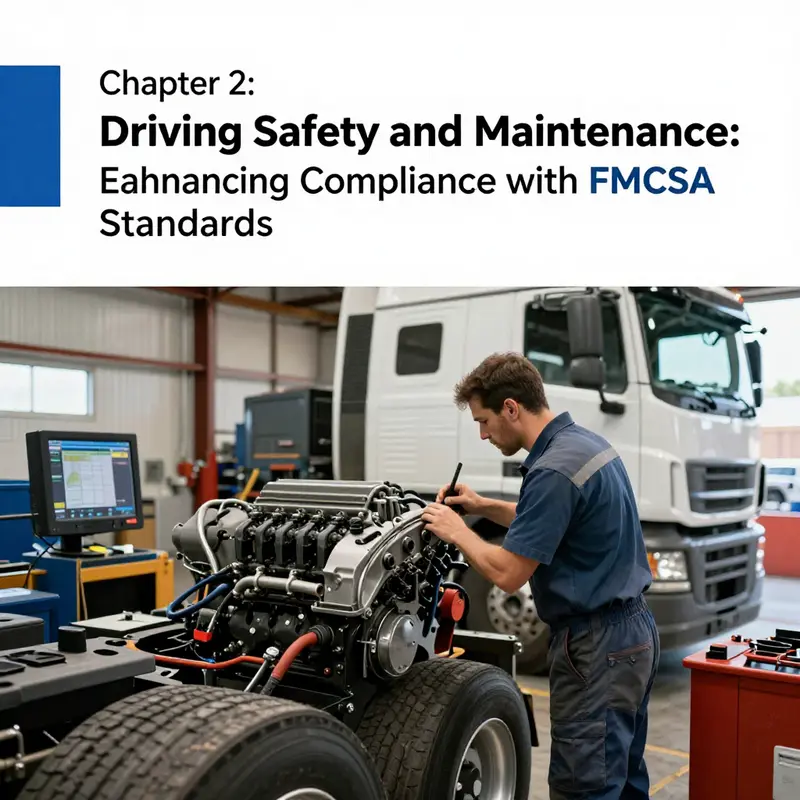
Vehicle maintenance under FMCSA regulations is more than a checklist; it is the backbone of safe operation and regulatory integrity. In the week-to-week rhythm of a trucking operation, maintenance often seems like a set of tedious tasks that must be endured to keep wheels turning. Yet for the driver who carries the load and the company that bears the liability, maintenance is a living system. It knits together safety, reliability, and legality into a single, enforceable discipline. The Federal Motor Carrier Safety Administration’s emphasis on maintenance—most clearly encoded in the Vehicle Maintenance BASIC and anchored in 49 CFR Part 396—demands a comprehensive, proactive program. This program is not merely about repairing defects before they become more expensive problems. It is about preventing failures that could endanger lives, about reducing unplanned downtime, and about showing regulators and customers that safety is woven into the operational fabric rather than applied as an afterthought.
To understand why maintenance functions as a safety engine, consider the basic logic of CMV operation. A vehicle is a complex system of mechanical, electrical, and hydraulic subsystems, each with its own failure modes. Brakes fade under heat, tires lose pressure, steering links wear, and lights burn out. A single unresolved defect can cascade into a catastrophic event when combined with fatigue, poor scheduling, or poor road conditions. FMCSA recognizes this interdependence and requires carriers to implement a preventive maintenance program that is detailed, auditable, and aligned with manufacturer recommendations and regulatory standards. The goal is not to chase the last mile of efficiency but to preserve it by ensuring the vehicle can perform when called upon and the driver can do so without adding undue risk to themselves or others on the road.
A robust maintenance culture starts with governance. Senior leadership must articulate maintenance as a safety obligation and allocate resources accordingly. That means formal maintenance procedures, clear responsibilities, and documented expectations for repair timelines. It means a written program that defines inspection intervals, service procedures, parts replacement criteria, and documentation standards. The FMCSA’s requirement that maintenance records be kept for a specified period—typically at least one year—translates into a governance mechanism that allows regulators to audit and drivers to rely on the integrity of the system. The intent of these records is twofold: to demonstrate that the fleet meets safe operating standards and to enable continuous improvement. When a defect is found, the rule is unequivocal: it must be repaired before the vehicle is operated again. This seemingly straightforward directive is what separates compliant fleets from those at risk of penalties, downtime, or, worse, accidents.
Central to this maintenance discipline is the pre-trip and post-trip inspection, the Driver Vehicle Inspection Report (DVIR) requirement. This isn’t a ritual; it is a crucial control point. A driver’s careful examination of brakes, tires, lights, steering, suspension, and windshield wipers creates a live feedback loop that informs both the driver and the maintenance team. The DVIR acts as the paper trail that bridges the on-road reality with the shop floor. When defect discovery happens, the DVIR is the first line of defense for preventing a vehicle from returning to service with hidden faults. The emphasis is on honesty and thoroughness. Drivers must be trained to recognize not just the obvious failures but the subtle signs—a tire that is marginal in tread wear, a brake rotor that shows heat checking, or a headlight that flickers under certain vibrations. The pre-trip inspection should not become a perfunctory checklist; it should be an informed diagnostic practice that reflects real-world operating conditions.
The maintenance program itself should be comprehensive and dynamic. A preventive maintenance schedule is not a static calendar but a living document that integrates manufacturer recommendations, FMCSA standards, and real-time vehicle health data. The standard approach begins with a baseline: annual or semiannual inspections aligned with the manufacturer’s service intervals, followed by periodic checks that reflect the fleet’s duty cycles. Heavier use, longer routes, or extreme climates may necessitate more frequent servicing. The program should specify inspection items by subsystem—brakes and braking systems, tires and wheels, steering and suspension, lighting and electrical, cooling and fluid systems, drive train, and safety equipment. Each category requires defined procedures for inspection, testing, and replacement when criteria are met. The requirement to maintain records of all inspections and services makes the maintenance program auditable and traceable. It also supports performance analysis, enabling a carrier to identify recurring failure modes and target improvements.
Technology emerges as a natural ally in this maintenance ecosystem. Telematics and remote diagnostics turn a reactive maintenance approach into a proactive one. Real-time data streams from tires, brakes, engine sensors, and other critical subsystems enable early warning of wear patterns, leaks, or abnormal temperatures. With this data, maintenance teams can move from calendar-based servicing to condition-based maintenance. The result is more efficient use of shop time, fewer unnecessary road calls, and a higher probability that a vehicle returns from each trip in a safe, compliant state. The use of automated alerts does not replace human judgment; it augments it by highlighting anomalies that may escape routine checks. When combined with DVIR insights, telematics creates a powerful feedback loop: the driver notes a defect, the system flags related performance indicators, and the maintenance team schedules an intervention before risk escalates.
Of course, technologies and procedures would be less effective without skilled people. Training for maintenance personnel must align with FMCSA expectations and industry best practices. Mechanics and technicians should be proficient in the inspection, repair, and testing procedures that ensure compliance with 49 CFR §396.11–396.17. This requires ongoing education on updated regulatory interpretations, engineering service bulletins, and safety practices. Documented training records verify competency and provide a basis for continuous improvement. A key part of this training is teaching the interdependencies between inspection findings and repair actions. A worn brake drum may not only reduce stopping power but could indicate a tire out-of-service condition or an imbalanced wheel assembly. A properly trained technician understands the diagnostic pathway that links discrete symptoms to root causes and effective remedies. That insight keeps the vehicle in safe operating condition and protects the driver from misdiagnosis and the company from regulatory exposure.
Documentation is the connective tissue of the maintenance system. Without thorough, accurate, and timely records, the most effective program loses its enforceable bite. A well-kept maintenance log captures inspections, defects, inspections dates, repair actions, parts used, and the technicians involved. For FMCSA compliance, the records must be complete and readily available for inspection. This is not merely a bureaucratic requirement; it is a living map of how the fleet maintains reliability and safety. When auditors review DVIRs and maintenance logs, they look for consistency, traceability, and evidence of timely action. They seek patterns that reveal systemic issues—like recurring wheel-end problems or repeated brake anomalies—that point to a broader process gap. In such cases, the organization must respond with root-cause analysis and corrective actions. The consequence is not only regulatory compliance but a stronger, more resilient operation that can absorb the shocks of heavy demand without compromising safety.
An integrated approach also includes a clear policy on parts management and repair timelines. Regulation does not require perfect parts availability, but it does require that a defect be repaired or the vehicle removed from service until it is safe to operate. This means establishing procurement strategies that prioritize critical safety components and establishing service-level agreements with maintenance providers that align with the fleet’s risk profile. It also implies a disciplined approach to repair decisions. A nondramatic example is choosing a critical brake system component with an appropriate fit-for-duty criterion rather than a temporary, makeshift fix. The emphasis is on durable, long-term safety rather than short-term convenience. In practice, this requires the maintenance program to define acceptable repair methods and post-repair testing procedures to verify that the fix has restored the vehicle to its required performance level.
In parallel with these internal mechanics of compliance and safety, there is the human dimension—the role of trust, communication, and accountability. A positive safety culture under FMCSA guidance is not an abstract ideal. It manifests in transparent reporting of near-misses and safety concerns without fear of retaliation, in timely escalation of issues, and in recognition of safe practices. Maintenance teams operate most effectively when drivers and mechanics share a common language about vehicle condition and risk. This shared understanding helps ensure that a DVIR results in action rather than becoming another filing requirement. The culture becomes self-reinforcing: drivers are more likely to report subtle faults when they trust the organization to respond promptly, and maintenance teams are more motivated to close the loop quickly when leadership demonstrates a commitment to safety over schedule pressure.
To connect the maintenance discipline to the broader objective of reducing unsafe driving, consider the feedback chain that starts with a well-kept vehicle. A vehicle that functions within specification reduces the cognitive load on the driver. It minimizes the chance of sudden failures that force abrupt maneuvers, and it supports consistent vehicle handling characteristics that drivers rely on for safe operation. A reliable braking system, properly inflated tires with even wear, and stable steering all contribute to a more predictable driving experience. When drivers experience fewer on-road surprises, the temptation to push limits—such as speeding to make a tight delivery window or neglecting rest breaks due to unknown vehicle performance—is reduced. In this way, the maintenance program indirectly shapes driving behavior by removing some of the situational stressors that tend to push drivers toward risky choices. Conversely, a culture that prioritizes maintenance sends a clear message: safety, not expediency, is the operating principle.
Understanding the regulatory horizon is essential to casting maintenance as a strategic capability rather than a compliance drag. The FMCSA’s vehicle maintenance regulations tie directly into the broader framework of CSA and BASIC performance. When a fleet demonstrates consistent, quality maintenance, it builds a safer profile and lowers the probability of out-of-service orders that can disrupt operations and erode customer trust. In the long run this approach reduces penalties, insurance costs, and reputational risk while enhancing what many fleets value most: reliability, predictability, and the capacity to meet service commitments under pressure.
For readers seeking a practical starting point, a useful reference is a concise primer on maintenance fundamentals, which distills the core concepts of vehicle maintenance into accessible terms. What is vehicle maintenance provides a straightforward overview that can anchor the more detailed program described here. The aim is not to replace FMCSA guidance but to translate it into a coherent, implementable discipline that fits diverse fleet sizes and operating contexts. It is equally important to recognize that maintenance alone does not guarantee safety. It is the integration of maintenance with driver training, policy enforcement, and data-driven oversight that yields durable improvements in unsafe driving patterns and vehicle reliability.
As maintenance practices become more rigorous, the organization can begin to quantify improvements and refine processes. Internal audits, conducted quarterly or at a cadence that fits the fleet’s risk profile, help verify that DVIRs are completed accurately, repairs are recorded properly, and the preventive maintenance schedule is being followed. Audits reveal gaps between policy and practice, enabling targeted corrective actions. The results are not punitive by default; they are diagnostic, guiding adjustments to schedules, training modules, and inspection checklists. A robust audit program reduces the chance that small inconsistencies snowball into regulatory exposure or operational disruption. It also signals to drivers that the organization takes safety seriously and that every member of the team has a role in maintaining safe, compliant operations.
In sum, the FMCSA maintenance mandate is a design constraint that, when properly interpreted and implemented, becomes a strategic capability. It aligns people, processes, and technology in a way that reduces risk, enhances reliability, and supports sustainable operations. The cycle of inspection, repair, documentation, and review creates a safety feedback loop that improves both vehicle condition and driving behavior over time. The outcome is a fleet that not only complies with the letter of the regulation but embodies the spirit of safety in every mile traveled. As with any complex system, success rests on clarity of purpose, disciplined execution, and ongoing learning. When leaders treat maintenance as a core value rather than a burdensome obligation, the results accumulate in safer roads, better-performing vehicles, and a healthier bottom line that reflects true safety leadership on the highway.
External resource for further regulatory detail: https://www.fmcsa.dot.gov/regulations/vehicle-maintenance
Chapter 3: Mapping FMCSA Tools to Safer Roads—Driving Behavior and Vehicle Maintenance in Sync
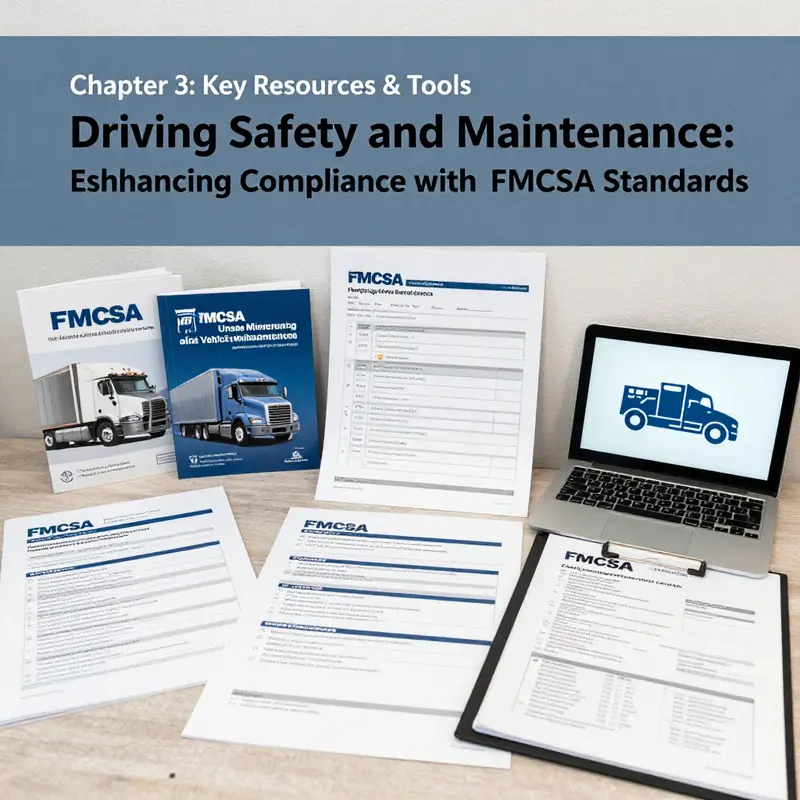
Every fleet operation sits on a balance between human performance and mechanical reliability. When FMCSA talks about safety, it points to a system that recognizes unsafe driving and poor maintenance as signals of underlying processes, culture, and data flows. This chapter ties together core FMCSA resources and the practical pathways they enable for a proactive, integrated safety program. It is not merely a checklist of compliance steps; it is a narrative about turning regulatory tools into daily habits that reduce risk, extend asset life, and create safer roads for everyone. For example, the Safety Measurement System (SMS) translates roadside inspections, crash data, and compliance signals into a readable map. The CSA program captures seven behavioral and vehicle-based categories, with Unsafe Driving, Vehicle Maintenance, and Hours-of-Service Compliance forming the backbone of the safety profile for a carrier. The SMS feeds management decisions, coaching priorities, and investment in technology. Carriers with rising risk scores tend to receive warning letters, investigations, or enforcement actions. But the system’s value lies in its anticipatory capacity: scores illuminate patterns that can be corrected before a crash occurs. This is safety as continuous improvement, not a terminal compliance checkpoint.
To leverage FMCSA tools, translate data into targeted action. For driving behavior, the CSA framework highlights detector lines such as speeding, following too closely, or unsafe driving, and a high BASICS score prompts tailored interventions. Effective interventions combine training with coaching, appropriate feedback, and embedding behavior change into daily routines. Regular, mandatory training in defensive driving, fatigue management, and hazard recognition anchors culture in knowledge and practice. Monitoring systems—ELDs and onboard video—provide real-time feedback that drives coaching conversations rather than punitive actions. When a driver shows a pattern of harsh braking or distracted operation, the feedback loop should be swift: acknowledge strength, address risk, provide resources for improvement.
Fatigue management and Hours-of-Service (HOS) compliance anchor safe driving. FMCSA Part 395 sets daily and weekly driving limits, rest breaks, and restart requirements. By aligning schedules with verified rest opportunities, a fleet reduces cognitive and physical load and improves decision quality. When schedules respect rest and dispatching uses data to prevent excessive daily hours, the organization reduces fatigue-driven errors.
Vehicle maintenance and the VM BASIC underscore the parallel imperative: keep equipment in a condition that supports safe operation. A preventive maintenance program, grounded in manufacturer recommendations and FMCSA standards, creates a reliable baseline. It shifts maintenance from reactive to proactive, covering brakes, tires, steering, lights, suspension, and engine components. Documentation matters: complete logs of inspections, tests, and repairs provide audit trails that satisfy FMCSA expectations and reassure drivers that systems are checked.
DVIR (driver vehicle inspection reports) form the heartbeat of daily maintenance discipline. Pre-trip inspections identify defects before the road, post-trip inspections document findings and scheduling for repair before the next trip. The requirement to repair or place defective units out of service before return is not a hurdle; it is risk mitigation that prevents latent problems from becoming crashes.
Modern fleets rely on telematics and remote diagnostics to illuminate vehicle health in near real-time. Tire pressure sensors, brake wear indicators, engine fault codes, and drivetrain data create a continuous feed that can predict failures before they occur. Early warnings enable proactive maintenance, reduce downtime, and improve safety outcomes. Telematics also corroborate inspection and repair activity, aligning operational reality with regulatory expectations.
To capitalize on maintenance data, equip technicians with FMCSA-aligned practices and thorough documentation. Regular internal audits help verify logs, DVIRs, and repair records meet expectations and reveal systemic issues before they escalate. Audits create a learning loop that links maintenance quality with safety outcomes and points to opportunities to adjust calendars or checklists.
Educational materials for drivers balance practical knowledge with habit formation. Defensive driving, fatigue management, and proper inspection protocols become part of a driver’s skillset rather than abstract requirements. The most effective training integrates daily routing, inspection, and maintenance planning into safety outcomes, so drivers see how actions contribute to safer miles and compliance becomes natural.
Finally, the FMCSA Data and Analytics Platform enables authorized users to access real-time safety data and trends. It supports evidence-based decisions, benchmarking, and evaluation of safety initiatives, while providing inspectors and enforcement with standardized data and transparent records. A safety program that uses data to identify gaps can allocate coaching, engineering controls, and maintenance initiatives where they will have the greatest impact.
An actionable implementation path starts with governance that assigns responsibility for CSA score monitoring, HOS compliance, DVIR completion, and maintenance scheduling. Build a monthly cadence to review SMS data, DVIR trends, maintenance backlogs, and training participation. Translate insights into concrete actions: refresher trainings flagged by BASICS, route adjustments to reduce fatigue exposure, and a maintenance calendar aligned to usage. Integrate telematics into the maintenance workflow so that indicators like brake wear or engine fault codes automatically generate work orders. This creates a closed loop: data triggers action, action changes behavior, and improved behavior lifts CSA scores and reliability.
FMCSA tools empower drivers and improve safety outcomes when drivers have reliable inspection routines, clear expectations, and timely feedback. DVIRs become practical routines that save time and reduce risk. Telematics provide trend data for targeted coaching. The combined effect is a driver population that understands the connection between daily actions and safety metrics. This is stewardship—of people, vehicles, and the roads they share.
On the maintenance side, preventive maintenance is a living protocol that adapts to operating realities. Manufacturer recommendations must be balanced with usage patterns, load types, climate, and road conditions. Regular audits against 49 CFR Part 396 ensure inspections, records, and repairs maintain integrity. The Vehicle Maintenance Inspection Guide helps inspectors and fleet personnel maintain consistent expectations during roadside checks. Together with training materials, drivers gain a practical framework for safe operation and reporting. When drivers and mechanics share a common language, maintenance becomes systematic rather than ad hoc.
To learn more, consider official FMCSA resources, including CSA data, HOS guidance, DVIR procedures, maintenance standards, telematics, training materials, and analytics—supporting a unified safety program. External resources include the FMCSA safety portal for safety and compliance accountability and maintenance guidelines. This toolbox enables fleets to anticipate issues, respond quickly when necessary, and continuously improve outcomes for drivers, vehicles, and communities on the road.
Final thoughts
Maintaining safety and compliance under FMCSA standards requires a holistic approach from business owners. By focusing on driver behaviors and vehicle maintenance alongside utilizing FMCSA resources, companies can foster a culture of safety that extends beyond regulatory requirements. Improving unsafe driving practices and ensuring thorough vehicle upkeep not only helps reduce accident rates but also enhances the overall efficiency of operations, ultimately leading to increased profitability and company reputation. The commitment to a proactive safety management system is an investment in your business’s future.