
For business owners with fleets or vehicles used in operations, road safety is not just a personal concern but a business imperative. Unsafe driving and poor vehicle maintenance can lead to accidents, increased costs, and reputational damage. This article delves into actionable strategies that can transform unsafe driving habits and enhance vehicle maintenance practices. Each chapter focuses on critical aspects, from combating distractions to engaging in regular vehicle inspections, thereby fostering a culture of safety within your business. By adopting these recommendations, business owners can ensure safer driving environments for their teams and extend the longevity of their vehicles.
Safer Streets, Safer Rides: Building a Habit of Mindful Driving and Pristine Vehicle Care
Every mile traveled is a page in a larger story about responsibility, skill, and the steady discipline of good habits. The chapter you are about to read treats driving not as a momentary action but as a sustained practice that blends mental readiness, disciplined behavior, and ongoing vehicle care. When done well, safe driving becomes less about luck and more about a dependable routine that protects you and everyone on the road. The core idea is simple: consistent decisions, made with attention, paired with proactive maintenance, yield safer journeys and fewer surprises along the way. The research behind this approach is clear. Fatigue and distraction are powerful enemies of safe driving, while deliberate maintenance reduces the chance of breakdowns and the risk of unexpected failures that could derail a trip or more serious outcomes. The aim here is to weave these threads into a single, cohesive habit that stays with a driver long after the car is parked.
Mindful readiness forms the foundation. Fatigue is a silent partner that steals reaction time and dulls judgment long before a person feels exhausted. The guidance is practical and actionable: ensure you are rested before you begin, and take breaks every two to three hours on long trips. A rested driver has a sharper eye, quicker hands, and better judgment, which translates into smoother deceleration, more precise lane positioning, and safer decision-making at complex intersections. This readiness also means saying no to driving after drinking or using impaired substances. The consequences of intoxicated driving extend far beyond legal penalties; they curb situational awareness and blunt reflexes that are essential when a sudden hazard appears. The message is not about moralizing but about recognizing how fragile human performance can be behind the wheel.
Distraction is the single most preventable risk. The evidence is stark: looking away from the road for even a moment can turn a few seconds into a dangerous blind patch. A practical strategy is to place the phone out of reach before starting the engine, or to pull over safely if you must use it. It is not just about avoiding calls or messages; it is about calibrating attention to the driving task. A driver’s eyes should be scanning the road ahead, not skimming the next notification. This disciplined approach also reduces impulsive behaviors that escalate into risk, such as multitasking at the worst moments.
Beyond staying physically alert, posture and gait contribute to safer operation. Wearing appropriate footwear matters. Footwear that slips or binds can make pedal control uncertain, especially in urgent moments. Closed-toe, flat shoes with good grip are a simple, low-cost safeguard. The broader point is that small, everyday choices inside the cockpit—how you sit, how you reach the pedals, and how you position yourself for visibility—shape your ability to act decisively when danger looms.
A well-structured set of driving rules acts as a personal safety brake against impulsive actions. Consistently using turn signals at least three seconds before initiating a lane change or turn communicates intent clearly to other drivers and reduces the likelihood of side-impact crashes. Speed management matters just as much as signaling. Maintaining a safe speed and a reasonable following distance creates a buffer zone that buys time to react, slow, or stop when the unexpected happens. The classic two-second rule suffices in good conditions, but harsh weather or slick surfaces demand a longer cushion—four to five seconds—to accommodate reduced traction and longer stopping distances. Think of this buffer as insurance for moments when a driver must brake hard or react to a pedestrian’s sudden appearance.
The practice of defensive driving expands this protective mindset beyond individual decisions. A simple, effective routine is the Right Foot on Brake habit, keeping the right foot near the brake so you can respond quickly if hazards appear. Equally vital is the habit of Eyes Move, Hands Stay Still—pre-scan mirrors and blind spots before any lane change or turn, then execute smoothly. This approach reduces surprise for other road users and limits the chain reaction of abrupt, reactive maneuvers. Pre-emptive braking—slowing down in anticipation of potential congestion or cross-traffic—even when the light is green, further lowers risk by smoothing the flow of traffic rather than forcing sudden decelerations.
Respect for traffic rules anchors all these practices. Obey speed limits and adjust to conditions, because studies show that even modest increases in speed multiply risk. Yielding appropriately at intersections, stopping where required, and avoiding overtaking on curves or hills are non-negotiable habits that protect everyone on the road. And when visibility is compromised, use lights and signals correctly. Headlights in low visibility, daytime running lights when appropriate, and hazard lights in obstructed or emergency situations help other drivers predict behavior earlier, reducing the likelihood of collisions.
The discipline of pre-drive preparation creates a safety net that extends beyond the highway. Before every trip, perform a quick vehicle check: tires for pressure and tread depth, brakes for responsiveness, headlights and signals for proper operation, and wipers with sufficient washer fluid. This routine can reveal issues before they become hazards. The maintenance side of safety is equally important, and it begins with foundational tasks such as regular oil and filter changes and tire maintenance. Clean oil lubrication protects the engine from wear and heat buildup, while tire pressure affects handling, fuel economy, and the risk of blowouts. Weekly tire checks—pressure when cold and tread depth—are a simple habit with outsized returns in safety and efficiency.
A car is only as reliable as its fluids and components, so attention to transmission and brake fluids becomes a quiet but critical duty. Using OEM-approved fluids ensures compatibility with seals and friction materials, preserving stopping power and smooth gear changes. A vehicle that stays in good shape is less prone to unexpected failures that can trap a driver in dangerous situations. Scheduling regular professional servicing at least once a year ensures that suspension components, steering linkage, exhaust, and electrical systems are evaluated by trained eyes. Waiting for a dashboard warning light is not a preventive strategy; it is the equivalent of ignoring a growing crack in a dam.
The habit of addressing minor issues promptly cannot be overstated. Unusual noises, vibrations, smells, or lights are signals that deserve attention. Treating these as small alarms rather than afterthought annoyances preserves safety and reduces costly repairs. This mindset, integrated with routine maintenance tasks, builds a culture of responsibility that extends to the entire driving ecosystem.
The narrative of safety culminates in a practical, daily ritual that cements good behavior. Create a pre-drive checklist that includes: seat belt secured, phone stored away, mirrors adjusted, lights functioning, and a quick glance at tires and fluid levels. This practice, repeated consistently, mirrors the reliability of brushing teeth each morning. It replaces luck with habit, turning safety into a predictable, repeatable sequence rather than a series of one-off decisions.
The maintenance thread in this tapestry is not a separate endeavor but a core element of safe driving. Regular oil and filter changes, done according to manufacturer recommendations, keep engines clean and cool, reducing sludge that can impair performance. Checking tire pressure and condition weekly helps conserve fuel, improve handling, and prevent blowouts on the road. Pre-trip inspections guard against mechanical failures during travel, which can create dangerous situations that drivers are ill-equipped to handle. Avoiding long idling and minimizing emissions are not only environmental considerations; they reflect a respect for engine health that translates into reliability in the moment you need it most. Interior care—keeping surfaces clean, applying protective wax, and parking in shade—protects components that affect safety, from instrument panels to visibility.
A practical way to tie maintenance to driving safety is to view vehicle care as a series of small, deliberate acts that accumulate over time. Use the concept of a maintenance budget as part of your overall driving plan. The discipline of regular servicing, fluid checks, and addressing issues promptly reduces the likelihood of breakdowns that leave a driver stranded in unsafe locations. And the benefits extend beyond safety: well-maintained vehicles are more reliable, more efficient, and less prone to sudden, costly repairs. To connect the maintenance thread to driving behavior, consider a simple linkage: every time you perform a pre-drive check or a scheduled service, reflect on how this care translates into calmer, more predictable driving. The road rewards patience and preparation.
A final, practical implication of this integrated approach is to view road safety as a collective enterprise. Your personal habits influence the safety culture of everyone around you. When you signal early, maintain a safe distance, obey speed limits, and keep lights on in poor visibility, you contribute to a rhythm that others can anticipate and respond to more effectively. The car, properly cared for, becomes a partner—more responsive, more predictable, and less prone to mechanical surprise. The result is a smoother, safer travel experience for you and for strangers who share the road.
Eyes Forward, Hands Ready: Reclaiming Safe Driving by Eliminating Distractions
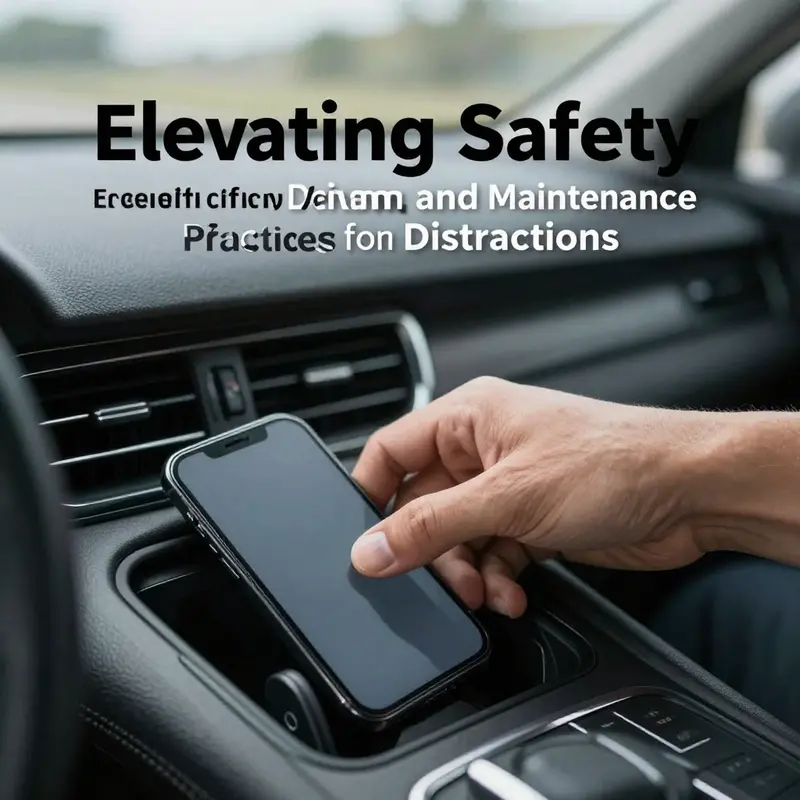
Distractions are the hidden accelerants of unsafe driving. In an era when notifications ping like sirens and the car’s systems tempt us with new features, staying focused on the road is not just preferable—it is essential for safety and for the broader goal of keeping our vehicles reliable. The science is blunt: looking away from the road for even a moment can create a deadly blind patch. Research shows that glancing at a phone for just one second can leave a vehicle effectively blind for as much as 50 meters. In that brief span, a pedestrian can step into the path, another car can shift lanes, or a hazard can materialize from the shadows. The simplest defense is the most demanding discipline: keep the device out of reach before you start the engine. If you must use it, pull over first. This is not merely a truism but a practical rule that preserves reaction time, situational awareness, and the chance to respond with intention rather than impulse. The challenge is more than a habit to break; it is a shift in how we think about driving as a task that requires continuous, undistracted attention.
Distracted driving is not just about one source of disruption. It spans visual distractions—things we see and chase with our eyes; manual distractions—hands that leave the wheel to manipulate objects; and cognitive distractions—the mind that drifts away from the task of driving. Even hands-free devices do not erase the risk. Cognitive load remains a powerful factor; a voice message or navigation cue can still compete for attention, leaving us slower to notice a braking car, a rolling stop sign, or a child darting onto the street. This is why a purely technological fix is never enough. The most effective strategy blends discipline with practical routines that reduce the need to divert our focus in the first place.
One of the most reliable anchors of safer driving is preparation before you even pull away. The habit of pre-drive setup reduces the need to reach for controls while moving. Adjust your seat so you can comfortably reach the pedals and see traffic clearly, set the mirrors to minimize blind spots, and tune climate controls and the radio in advance. If you rely on a GPS, program the route before you begin rolling and review it briefly in the driveway or parking lot. The goal is to minimize the cognitive switch from “driving” to “managing settings.” When adjustments interrupt your flow on the move, they can threaten reaction time and attention during critical moments. A calm, controlled start reduces the temptation to glance at a screen while the vehicle is in motion.
Organization inside the cabin matters just as much as the cockpit inside a fighter jet. Loose items—phones, wallets, snacks, and bags—tend to become projectiles or triggers for glances when the need to retrieve or manage them arises. Secure these items in a fixed storage compartment or trunk before you depart. The more smoothly your space is arranged, the less your mind must wander around clutter and the more you can devote to scanning the road and reading the traffic as it unfolds. Eating or drinking while driving is another common distraction that requires hands off the wheel and eyes off the road for longer than is safe. The same logic applies to smoking or adjusting cords and accessories. Each moment away from the road becomes a moment when danger can appear unannounced.
Passenger interactions present a subtler but equally real hazard. Conversations can be emotionally charged, changing the tone of the drive and pulling attention away from what matters—your speed, position, and the flow of surrounding traffic. It is not about suppressing human connection but about calibrating it. Keep exchanges calm, brief, and focused on safety. If a discussion becomes heated, the best move is to pause it or choose a safe moment to resume, ideally when the vehicle is stationary. This practice protects not only the driver but every other user on the road who shares the space with you. In the same vein, visual clutter in the cabin—dangling decorations, loose cords, or objects that swing into the line of sight—should be reined in. Eliminating these small distractions is often a precursor to clearer perception and quicker decisions at critical moments.
A practical way to think about distraction is to treat the driving task as a single, continuous activity that deserves uninterrupted attention. The mission is not to chase speed or perform stunts but to cultivate consistency, awareness, and self-control. Defensive driving lives in the quiet between events: the buffer you maintain to absorb a sudden deceleration, a pedestrian stepping into the street, or a door that opens a fraction too late. When you practice this level of attentiveness, you reduce the risk not only of collisions but of wear and tear caused by abrupt, avoidable maneuvers that stress the vehicle’s systems.
That connection between attention and maintenance is not incidental. A disciplined approach to focus makes it easier to perform essential upkeep as part of a routine rather than as a reactive afterthought. For instance, when you remove clutter and secure loose items, you also create a mental space that helps you notice unusual vehicle behavior—sudden changes in steering feel, unusual noises, or vibration patterns that signal issues with tires, brakes, or suspension. This attentiveness supports timely maintenance. If a warning light comes on, if a pedal feels spongy, or if a wheel seems to pull to one side, you’re more likely to notice it and address it before it progresses into a serious fault. In this way, focused driving and proactive maintenance reinforce each other, producing a safer journey and protecting the vehicle you rely on every day.
The path to safer driving through distraction management also links to broader efficiency and cost considerations. When you minimize distractions, you reduce the likelihood of abrupt stops and rapid accelerations, which in turn can lessen fuel consumption and wear on the drivetrain. Maintenance and safety benefits overlap here as well: a well-planned pre-drive routine makes it easier to spot fuel leaks, tire wear, or a low fluid level during routine checks, because your attention is not scattered across screens and tasks unrelated to vehicle condition. It is a practical convergence of safety, efficiency, and longevity. As you cultivate focus, you also become more capable of recognizing when a vehicle needs attention, whether it’s a minor fluid top-up or a more substantial service interval. The discipline of mindful driving thus becomes a gateway to a safer, more reliable, and more economical ownership experience.
To ground these concepts in actionable practice, consider the following integrated approach. First, establish a hard rule: no handheld device while the engine is running. Even if you claim “hands-free” is safe, cognitive distraction persists; the brain still processes conversations and notifications, dividing attention. Second, do a quick but thorough pre-drive check that factors in both safety and maintenance. Confirm that the seat and mirrors are set, the belt is fastened, lights are working, and there is no loose item that could become a projective hazard in an abrupt stop. Third, create a minimal, organized cabin. A fixed place for your phone, a tidy console, and secure storage for items reduce the temptation to reach for distractions while driving. Fourth, consider passenger dynamics. If a trip involves intense or emotional dialogue, schedule a moment to pause the conversation or move to a safer, less demanding time—preferably when the vehicle is stationary. Fifth, plan routes and adjust settings before you start moving. If a detour is likely, program the route in advance and review it before you pull away. These steps create a smoother, more predictable driving experience and leave less room for cognitive drift.
The discipline of distraction management also invites a broader reflection on how attention shapes safety culture. When you demonstrate consistent focus, you model a behavior that others on the road can follow. It is a quiet form of leadership, a reminder that responsible driving is not about heroic feats but about steady, deliberate choices. In practical terms, that translates to reduced risk of incidents even in busy urban environments, fewer sudden braking events that could cascade into multi-vehicle crashes, and a more predictable driving pattern that benefits everyone who shares the road. The cumulative effect of many drivers embracing this approach is a safer traffic environment and a more reliable vehicle ecosystem for the long term.
For readers who want a deeper exploration of how maintenance and safety intersect, consider the broader view that regular upkeep supports safer driving by reducing the likelihood of failure that could be triggered by distraction-induced mistakes. Studies and guidance emphasize that maintenance is not a separate task but part of a holistic safety mindset. You can find practical insights on how careful, regular maintenance supports efficiency and safety in more detail in a related discussion: How Vehicle Maintenance Saves on Gas Expenses. This perspective reinforces a key point: keeping your vehicle in good condition reduces the cognitive load associated with potential mechanical concerns and leaves you more mental bandwidth to focus on the road.
In weaving together distraction management with proactive maintenance, the overarching message emerges clearly: the safest driving comes from a disciplined, integrated routine. It is about preparing properly, keeping the cabin orderly, supervising interactions in the car, and approaching fatigue and routine tasks with intention rather than impulse. By adopting a pre-drive mindset and sticking to it, you not only improve safety but also contribute to a culture of responsibility that benefits all road users. The small, daily decisions—where you place your phone, how you organize your space, and how you handle in-car conversations—accumulate into a durable safety margin that protects you, your passengers, and the broader driving community.
External resource: NHTSA Distracted Driving. https://www.nhtsa.gov/risky-driving/distracted-driving
Maintenance as a Mission: A Systematic Path to Safer Driving and Reliable Vehicles
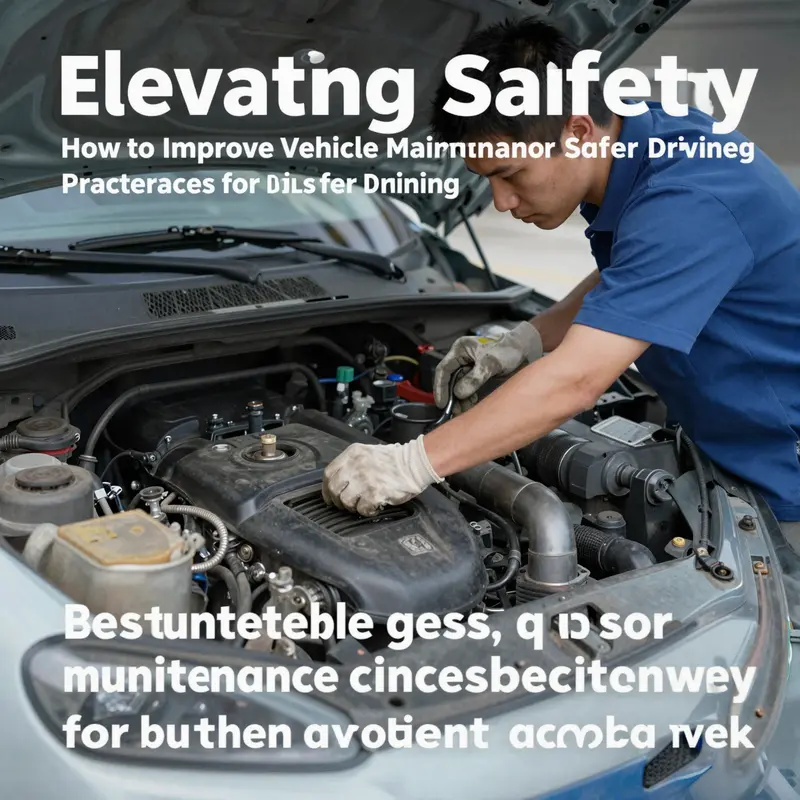
Maintenance is not a chore to endure between road trips; it is the foundation that makes every driving decision safer and every mile more predictable. When a driver combines careful habits behind the wheel with a disciplined maintenance routine, the car stops being a potential problem and becomes a trusted partner in safety. This chapter weaves together the physical realities of your vehicle with the behavioral commitments that reduce risk on the road. It treats maintenance not as an afterthought but as an integrated practice that supports the best defensive driving instincts. A practical mantra guides the approach: check regularly, fix promptly, and drive mindfully. The result is a vehicle that responds as expected, every time, and a driver who is better prepared to react to the unexpected without compounding risk through neglect. For a concise primer on what maintenance encompasses, consider the principle summarized in What is vehicle maintenance?, which lays out the core areas every owner should know and monitor. What is vehicle maintenance?
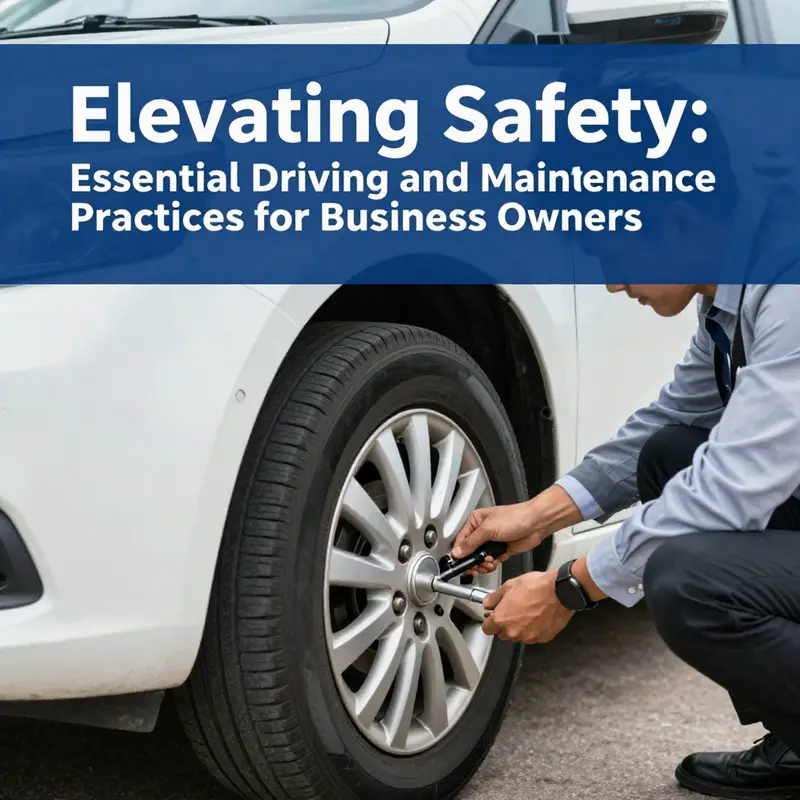
Tires are the foundation of safety, and they deserve the first attention in any maintenance mindset. They are the sole contact point between the machine and the road, so their condition directly shapes stability, braking, and steering confidence. Start with tire pressure: check it at least once a month, ideally when the tires are cold, and compare it with the manufacturer’s recommended level found on the door jamb or in the owner’s manual. Underinflation increases rolling resistance, elevates fuel use, and heightens the risk of blowouts; overinflation reduces grip and can accelerate wear in the center of the tread. Regularly inspect tread depth, bearing in mind that most jurisdictions require at least a minimum depth to maintain safe performance, especially on wet roads. When tread wears to the limit, replace the tires promptly to preserve effective water dispersion and grip. Tire rotation, typically every 8,000–10,000 km, helps equalize wear so that no single axle bears disproportionate load or heat. While you’re inspecting, look for bulges, cracks, or embedded objects that could signal internal damage. Bulges can indicate weakened belts, cracks can herald fatigue, and nails or stones lodged in the tread can puncture at an inopportune moment. A tire check also reinforces a broader habit: treat tires as living components that respond to care and knowledge, not as expendables to be replaced only when they fail.
Beyond tires, the brake system is arguably the vehicle’s most important safety feature. Brakes should be healthy enough to respond instantly when a hazard appears, and the signals of trouble are often warning lights, changes in pedal feel, or unusual noises. Brake fluid is a critical element here. It absorbs moisture over time, which lowers its boiling point and can lead to brake fade during heavy use. That is why many experts recommend replacing brake fluid on a routine, interval-based schedule, typically every couple of years, or as specified by the manufacturer. Alongside the fluid, pads and rotors require ongoing attention. Pad thickness should remain above the minimum threshold set by the manufacturer; when wear reaches that limit, replacement becomes essential for reliable stopping power. If a vehicle shudders, pulls to one side under braking, or emits squealing or grinding sounds, those are red flags that deserve immediate attention. For vehicles equipped with advanced braking aids such as ABS and ESP, regular diagnostic checks ensure these systems maintain their protective function. The aim is not to micromanage every stop but to keep the braking system consistently ready to perform, especially in emergencies where every fraction of a second matters.
Engine health and fluid management provide the next major pillar of reliability. The engine depends on clean oil and an appropriate filtration system to minimize friction, keep the engine cool, and extend its life. Following the manufacturer’s oil-change schedule is essential because wrong intervals increase sludge buildup and wear. The choice of oil viscosity matters too; using the grade specified in the manual helps the engine reach its optimal performance under normal operating conditions. In addition to oil, coolant quality and level are part of the engine’s defense against overheating. Contaminated or degraded coolant loses its protective properties and can lead to overheating and costly damage if not managed. Air and fuel filtration also contribute to sustained performance and fuel efficiency; clean air helps the engine breathe easier, and clean fuel delivery prevents unnecessary deposits that degrade performance. Regular checks of coolant, oil, and filters create a cascade of benefits: steadier temperature control, reduced engine wear, and better long-term reliability. These checks are most effective when complemented by a quick pre-ride mental scan of the engine bay during routine maintenance, reinforcing the habit of looking for signs of leaks or unusual odors that could signal developing issues.
Electrical and lighting systems deserve equal attention because visibility and communication are core safety needs. All lights—headlights, tail lights, brake lights, turn signals, and hazards—should be tested monthly. A failed light not only limits your visibility but also reduces the ability of other drivers to gauge your actions, increasing the probability of a rear-end incident. If a bulb fails, replace it promptly to restore full signaling capability. Headlight alignment is another small but consequential adjustment; misaligned beams can blind oncoming drivers or fail to illuminate the road adequately, especially on winding or hilly terrain. The vehicle’s electrical architecture governs more than lights; a healthy battery and clean terminals support reliable starting and stable operation of onboard diagnostics and safety systems. Regular voltage checks and corrosion control help prevent surprises on cold mornings or during long trips, when the demand on the electrical system is greatest.
Suspension and steering contribute to control and comfort, and their health echoes through the driver’s capacity to respond to hazards. Components such as shock absorbers and control arm bushings should be inspected regularly for leaks, cracks, or abnormal wear. A misbehaving suspension can mask or exaggerate road irregularities, reducing steering precision and increasing fatigue for the driver. Steering linkage should feel precise and predictable, with no unusual play or stiffness. Power steering fluid, if applicable, should be checked for level and leaks, since loss of steering assist can dramatically alter control. Alongside mechanical components, basic safety equipment remains a practical safety net: a spare tire, jack, wrench, fire extinguisher, first-aid kit, and reflective vest are prudent inclusions in most vehicles. Carrying these items reflects not just preparation but a culture of responsibility and readiness that translates into calmer, more confident driving in uncertain conditions.
Maintenance is not only about parts and fluids; it is about driver behavior and a proactive mindset. A disciplined approach to maintenance mirrors the defensive driving principles that reduce risk on the road. Before every trip, a quick pre-drive inspection that covers tire pressure, fluid levels, lights, windscreen wipers, and visibility creates a mental check that anchors safe decisions. Using onboard diagnostics to monitor warning lights keeps you ahead of hidden issues that might compromise safety later. In parallel, the driver must regulate driving style to minimize wear: smooth acceleration and braking, cautious lane changes, and adherence to safe following distances reduce stress on brakes, tires, and suspension. A driver who blends maintenance with mindful driving is reaping a double benefit: fewer breakdowns and a more predictable vehicle response when contingencies arise.
This integrated approach to maintenance elevates ordinary automobile care into a purposeful safety discipline. The idea is to transform maintenance from a reactive duty into a forward-looking practice that reinforces safe driving instincts. Regularly reviewing tire condition, brake health, engine and fluid status, electrical reliability, and suspension integrity creates a reliable baseline that enhances the driver’s capacity to respond to the unknown. It also makes it easier to identify and address minor issues before they become major problems, a principle echoed by safety experts who emphasize early detection as a cornerstone of road safety. The habit of daily or weekly checks—whether a quick visual scan or a more detailed self-inspection—acts like a personal safety net, catching potential trouble while it is still manageable and affordable to fix.
In embracing maintenance as a core driving value, drivers contribute to a safer driving ecosystem that benefits everyone on the road. The approach is bottom-up, rooted in practical checks and timely repairs, yet it scales up to influence bigger decisions, such as planning for seasonal maintenance, budgeting for parts, and choosing responsible service providers. The message is clear: a well-maintained vehicle responds consistently, and consistent response is the bedrock of safe driving. By committing to a structured maintenance routine and a vigilant driving style, you reduce the likelihood of hazardous surprises and increase the probability of arriving at your destination unharmed. The transformation is gradual, but it is measurable, and it is sustainable for long journeys and everyday commutes alike. For those seeking a consolidated reference on maintenance principles, remember that a reliable car does not happen by luck; it happens through deliberate, informed action, repeated over time. And the more you treat maintenance as an ongoing practice rather than an episodic task, the more your driving becomes an act of safety, competence, and quiet confidence. External authorities corroborate this approach, underscoring the value of routine, scheduled care as part of responsible vehicle ownership: for authoritative guidelines, see the UK Government Vehicle Maintenance Checklist: https://www.gov.uk/government/publications/vehicle-maintenance-checklist.
null
null
null
null
Final thoughts
By implementing sound strategies to improve unsafe driving habits and prioritizing vehicle maintenance, business owners can not only ensure the safety of their employees but also promote a culture of responsibility. These practices are essential for cultivating safer driving environments and reducing risks associated with vehicle use. Ultimately, the commitment to safe driving behaviors and vigilant maintenance translates into enhanced efficiency, lower costs, and a positive business reputation. Make safety an integral part of your operations—your business and your team will benefit.