
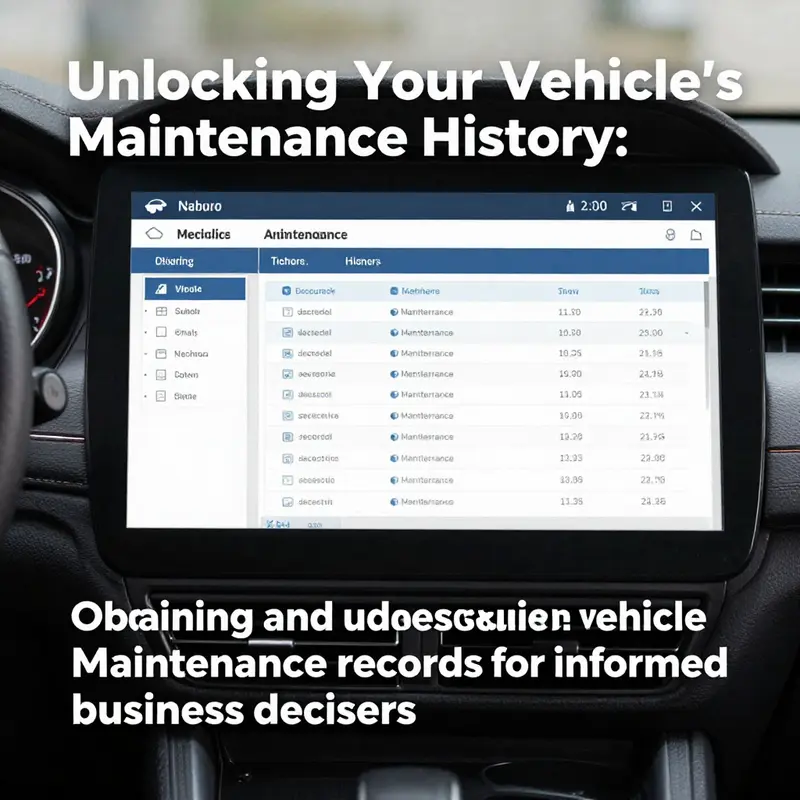
Understanding a vehicle’s maintenance history is vital for business owners who rely on reliable transportation for operations. A comprehensive maintenance log can offer insights into a vehicle’s reliability, safety, and overall value. This article delves into three effective methods for uncovering a vehicle’s maintenance history—leveraging third-party data platforms, contacting official 4S dealerships, and retrieving records from insurance companies. Each chapter provides actionable steps, empowering you to make informed vehicle decisions critical to your business’s success.
Beyond the Dealer Ledger: Uncovering a Vehicle’s Maintenance History with Third-Party Data Platforms
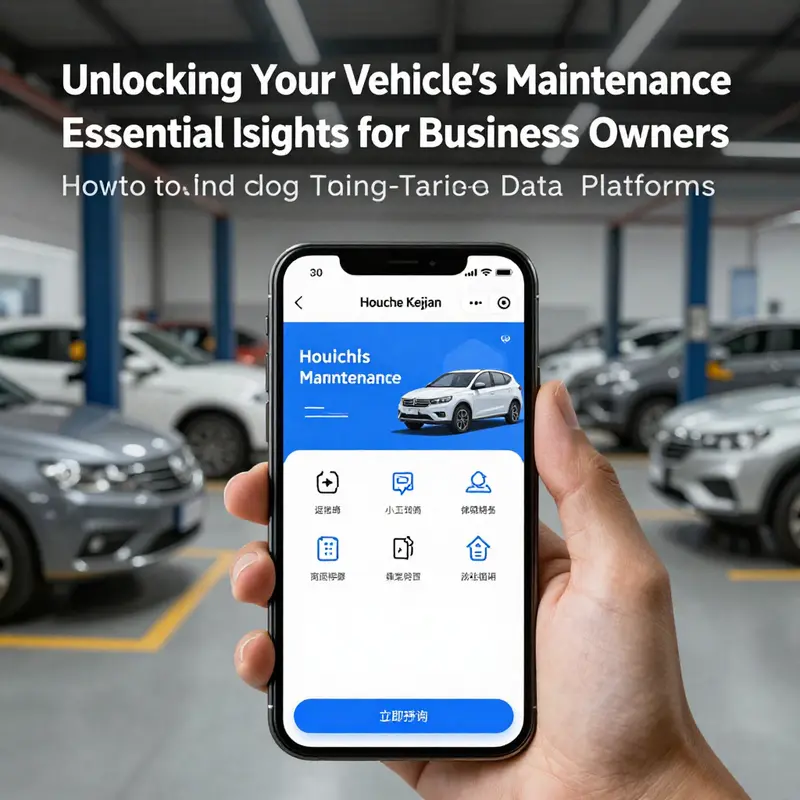
When you assess a used vehicle, its maintenance history often tells a story that the odometer cannot. Distilled through the years of service, it reveals how faithfully a car was cared for, where it spent time between visits, and whether any major repairs lurk behind the numbers. In recent years, third-party data platforms have emerged as the fastest, broadest, and most practical way to assemble that story. They act as aggregators, pulling maintenance and repair records from thousands of authorized dealerships and independent shops. This makes them a powerful first step in forming a complete view of a car’s past, a view that is usually more comprehensive than what you could obtain by querying a single dealer or booking a few in-person visits. Among these platforms, one is repeatedly cited for its breadth and ease of use, especially for drivers who rely on mobile access and quick insights. The value of this approach lies not in a single document, but in a stitched tapestry of service events that, when read together, helps you judge the car’s reliability, anticipate future needs, and negotiate with confidence at the point of purchase or sale. It is a shift from trusting memory or scattered receipts to trusting data that represents multiple points of care across the vehicle’s life.
The practical entry point for most buyers and sellers is a third-party platform that specializes in pulling data from a wide network of service providers. In today’s landscape, these platforms have become the most convenient and comprehensive starting point. They are designed to be fast, user-friendly, and highly scalable, handling the tedious work of collecting records from a multitude of sources so you do not have to visit every shop or call every dealer. The core appeal is simple: one query, one report, a consolidated view. The reports you receive typically cover routine maintenance as well as more involved repairs, and they often document the exact nature of the work performed, the parts replaced, the mileage at the time of service, and the time window when the service occurred. These details are essential because they translate a string of dates into a narrative of wear, repair, and preventive care that affects a car’s long-term value and reliability.
To embark on this path, you start with a reputable platform that has established relationships with a broad ecosystem of service providers. The choice matters because not all aggregators are created equal. A reliable platform aggregates data from a wide array of service points, including mainstream authorized repair networks, independent mechanics, and sometimes collision centers. That breadth is what makes the third-party approach so powerful: the more points of data, the lower the risk of blind spots in the vehicle’s history. The decision to use a particular platform can hinge on several practical factors: the prevalence of partner shops in your region, the level of detail in the reports, and the ease with which the platform can be accessed on devices you use daily. The right platform acts as a translator, converting disparate maintenance records into a consistent, readable timeline that you can interpret without needing a degree in auto repair.
A commonly recommended option is to access the platform through a familiar messenger or social app that you already use for other services. This convenience is more than cosmetic; it reduces friction and increases the odds that you will consult the vehicle’s history before making a purchase decision. The typical workflow is straightforward. You open the app, navigate to the platform’s official account or mini-program, and select a function labeled something like Vehicle Maintenance and Repair Record Inquiry. You then provide the vehicle’s identifying information, usually by entering the VIN, a 17-character alphanumeric code that travels with the car for life. In many cases you can upload a photo of the vehicle registration certificate, and the system will extract the VIN automatically. If you prefer, you can type the VIN manually. The most important thing is accuracy: a single character error can lead to a completely different vehicle history. Once the VIN is captured, the platform processes the request and returns a comprehensive report. The level of detail can be surprising: dates of service, mileage at each visit, descriptions of each service type, a list of parts replaced along with part numbers, and, in some cases, records of accident repairs and even linked insurance events.
The strength of this approach is not merely convenience. It rests on the aggregation across multiple service points. Because the data come from thousands of service providers, the resulting history tends to reveal patterns that a single dealer log might miss. A car that has been well maintained across a network of shops will show a regular cadence of service visits and a careful record of routine maintenance. Conversely, if the graph reveals extended gaps, or a sudden cluster of repairs without clear routine maintenance, that can raise red flags about the car’s care history. The report can also capture the more nuanced elements of a vehicle’s care, such as the specific parts that were replaced, the mileage at the time of replacement, and the nature of the repairs performed. This level of granularity turns a general maintenance history into a diagnostic tool you can rely on when negotiating a price, planning a service, or deciding whether to purchase a vehicle at all.
In practical terms, you should view the third-party platform as a powerful screening device and a starting point for deeper verification. The path from data to decision is best walked with both breadth and skepticism. Start with the broad, aggregated view the platform offers. Read the entries with an eye for consistency: do the maintenance intervals align with the vehicle’s mileage and age? Are there gaps that seem suspicious, or clusters of major repairs that might suggest a history of heavy use or past accidents? The platform’s report is often the first to reveal such patterns, but it should not be the final word. Major findings—especially those concerning significant repairs or accident histories—deserve cross-checking with primary sources.
Cross-checking is where official channels supplement the story that third-party data weaves. If the vehicle has a strong brand loyalty or has spent a substantial part of its life within a single brand’s network, an authoritative source is the dealership network that serviced the car. A certified, brand-specific 4S dealership, using its internal Dealer Management System DMS, can retrieve the complete, brand-specific maintenance and repair history. This information is typically the most authoritative and includes granular details such as exact repair dates, precise labor descriptions, and the specific part numbers used in each service. However, the caveat here is scope: the data may only cover services performed within that brand’s network. If the vehicle was serviced at independent shops or at other brands’ dealerships, those entries may be absent from the dealer’s record. For a buyer, that means the official 4S data should be used to verify critical items—especially those connected to major repairs or a history of accidents—but it should be balanced against the broader picture provided by the third-party platform.
Insurance records add another crucial dimension. They do not supply a full maintenance log, but they are indispensable for confirming impact events and subsequent repairs. If the car has sustained significant damage, an insurance claim log can reveal dates, the nature of the damage, the repair locations, and the claim amounts. This information can help you understand whether the vehicle was repaired to a high standard and whether any unresolved issues linger after a collision. Accessing these records typically involves contacting the insurance company, providing your policy number and the vehicle’s VIN, and sometimes presenting identification. While not a substitute for maintenance receipts, insurance histories help fill gaps, particularly around major accidents that might influence long-term cost of ownership.
Beyond these sources, there exist government or public-sector tools designed to track basic vehicle information. In some markets, an official traffic management app or vehicle registry can confirm aspects such as annual inspection status and dates. These tools are useful as supplementary checks but are not designed to replace maintenance history. They provide a snapshot of compliance and safety checkpoints rather than a detailed ledger of service events. Similarly, visits to individual repair shops—whether independent or non-brand facilities—remain essential for retrieving specific records that may not have been uploaded to any third-party aggregator. The reality is that no single source will capture every service event, every repair, or every part change. The strongest approach blends multiple sources, cross-checking against each other to uncover a coherent and credible history.
As you integrate information from these different channels, a few practical habits help maximize reliability. First, always verify the VIN before querying any database. A single incorrect character can lead to a mismatch that not only wastes time but also yields a false narrative about the car’s past. Many platforms support VIN auto-extraction from registration documents, which reduces the risk of manual entry errors, but you should still double-check the extracted VIN against the windshield label and registration documents. Second, approach the reports with a diagnostic eye rather than a verdict. The goal is to assemble a credible history, not to declare the car forbidden to drive based on a single anomaly. Look for consistency in service intervals. A vehicle that shows regular maintenance at reasonable intervals is generally less risky than one with erratic service patterns. Third, pay attention to the level of detail. Fine-grained entries—dates, exact parts, labor descriptions, and mileages—are more actionable than generic notes about routine service. If the platform provides accident records and insurance linkage, review those carefully, since a past collision can carry long-term implications for reliability and resale value.
With these principles in mind, you can leverage the best of both worlds: the breadth and speed of third-party data platforms and the depth and authority of official sources. The process becomes not a search for a single document but a careful synthesis of several credible strands. The typical workflow is straightforward. Begin with a third-party platform to obtain a broad, consolidated history. Read the report for patterns, noting any gaps or unusual clusters. If something critical appears—such as a major repair or a potential accident—follow up with the brand’s authorized dealership to retrieve the brand-specific record and verify the details with the technician notes and part numbers. If the history includes incidents that might affect value or reliability, corroborate these with the insurance history. Finally, cross-check any regulatory or statutory information, such as annual inspections, to ensure there are no overlooked red flags. This layered approach yields a robust, defendable view of the vehicle’s maintenance history and helps you make a more informed decision about ownership.
For readers who want a concrete starting point, consider the following practical prompt embedded in everyday decision making. When you encounter a prospective car, run a maintenance history check through a reputable third-party platform first. This quick step provides a panoramic view of maintenance activity across multiple providers. As you skim the report, keep an eye on three indicators: the regularity of routine maintenance, any unusual clustering of major repairs, and any missing entries for pivotal service milestones such as timing belt or water pump replacements, depending on the vehicle’s age and model. If the third-party report looks solid, request the dealership records for confirmation, especially for any major repair dates or the use of genuine parts with proper part numbers. If the vehicle has a history of incidents, obtain the insurance claim history and consider requesting a vehicle history report from the seller that collates these sources for you. If the data point is uncertain or inconsistent, ask the seller for explanations and, if possible, arrange a direct review of service receipts matching the VIN in question. This combination of checks can significantly reduce the likelihood of buying a car with hidden maintenance issues or undisclosed accident history.
As you navigate this landscape, you might encounter a few phrases that signal how far the recordkeeping has traveled. A fully integrated, multi-source maintenance history will typically show service dates that align with the car’s age and mileage, a clear log of routine services such as oil changes, filter replacements, and brake inspections, and precise mileage markers at the time of each service. More concerning are gaps in the record without a plausible explanation, abrupt changes in the vehicle’s maintenance cadence, or a cluster of high-cost repairs without a traceable routine care pattern. Such signals warrant deeper digging through primary sources and, if needed, a professional inspection. The goal is not to condemn a vehicle on a single caution flag but to weigh the overall story the data tells against your risk tolerance and intended use. In that sense, third-party data platforms are not a substitute for your own due diligence; they are a high-quality map that guides you toward the most informative, verifiable routes to the truth about a car’s maintenance history.
If you are curious about deeper context on maintenance basics while you evaluate history reports, you might start with a resource that defines what maintenance encompasses and why it matters for long-term costs and reliability. For readers who want to situate data-derived conclusions within a broader framework, see What is vehicle maintenance? This reference can help you interpret the specifics in maintenance records—what a given service entry typically covers, how to distinguish preventive care from corrective work, and why certain parts replacements matter for future reliability. The linked resource can be accessed here: What is vehicle maintenance?.
In sum, third-party data platforms have become indispensable for building a credible maintenance history when buying or selling a vehicle. They offer breadth, speed, and a level of detail that can illuminate the car’s true care pattern across different service points. The strongest approach blends this broad view with targeted checks from official sources for critical items. Insurers’ claims histories add another layer of verification, particularly for accidents, while state or municipal tools can confirm regulatory milestones like inspections. The resulting mosaic helps you assess not only the current condition but also the likely trajectory of maintenance costs and reliability. Remember that no single source will be perfectly complete. The best practice is to cross-check, corroborate, and synthesize, treating the maintenance history as a narrative grounded in data rather than a static ledger. When you do this well, your decision about a vehicle’s value and future performance becomes markedly more informed, confident, and defensible.
For further exploration of the practical steps and tools mentioned here, you can explore the official platform site to understand how the data aggregation works and what to expect from a typical report. External resource: https://www.houchekejian.com
Tracing a Car’s History Straight from the Source: Mastering Vehicle Maintenance Records Through Official 4S Dealerships

When you buy a used car, or even when you’re just verifying a vehicle’s condition, the most trustworthy thread you can pull is the record of maintenance and service that the vehicle has actually received. Official 4S dealerships, as part of a brand’s authorized network, hold the most authoritative, detailed, and specific records for services performed within that brand’s ecosystem. They are not a magic wand that will reveal every repair ever done on a vehicle, but they are the closest thing to a primary source for the car’s routine care, scheduled maintenance, and major repairs performed in a manufacturer’s own network. Understanding how to access these records, what you can reasonably expect to obtain, and how to navigate the privacy and logistics around data sharing can save you from buying a car with unseen issues or from misreading a vehicle’s service history. It is an exercise in source verification as much as it is in due diligence, and done thoughtfully, it provides a clear map of what the car has been through and what it still needs.
To begin with, you must frame the inquiry with the realization that the maintenance history you obtain from official channels is anchored in the brand’s stewardship. The 4S network keeps a Dealer Management System that records every visit, every service order, and every part that is swapped out within its service bays. The value of this approach lies not only in the explicit records of oil changes or brake pad replacements, but also in the granular details that accompany those records—dates, exact part numbers, labor times, and sometimes even the technician’s initials. This is the kind of data that can help a prospective buyer or a current owner see patterns: a car that has consistently received timely preventive maintenance, or one that has had repeated entries for a specific component that may be nearing the end of its life. It is, in short, a structured narrative of the vehicle’s care.
The first essential step is to identify the right dealership and initiate contact through proper channels. If the vehicle was originally purchased from a particular brand’s 4S center or has been serviced there for years, that dealership becomes your primary source. If the vehicle was not serviced there in the past, you still may be able to obtain records by reaching out to the dealership network to request history, but you should expect to encounter more friction, and the depth of documentation may vary. When you call or visit, approach the staff prepared with clear information. Have the vehicle’s VIN ready, and if possible, bring the vehicle registration and ownership documents as proof of legitimate interest. This is not about challenging privacy but about ensuring that sensitive information is released only to the rightful owner or an authorized representative.
The VIN is the linchpin of the search. A 17-character identifier acts as the formal key to pull up a vehicle’s service life in the DMS. Even in an era of digital records, human touch remains important. When you present the VIN, be sure to spell it out clearly and, if you’re submitting it in writing, print the characters legibly. Small errors, such as misreading a letter for a digit, can derail a query, returning incomplete or incorrect results. As you engage with the dealership staff, emphasize that you are seeking a comprehensive service history—no redactions, if possible, and no cherry‑picked entries. You want a complete ledger of visits, with dates, services performed, parts used, and the labor specifics. Some dealerships will provide these details in a formal service history report, while others may deliver the data in a structured printout or a digital file. Either way, the goal is a coherent sequence that traces the car’s care from its earliest maintenance to its most recent service within the network.
One practical consideration is privacy and ownership. In most jurisdictions, data about a vehicle’s maintenance history is considered sensitive information. Dealerships typically require proof of ownership and a valid ID before releasing records. This is not an obstacle to obtaining information; it is a necessary safeguard intended to ensure that the information is shared with the rightful party. If you are purchasing the vehicle through a representative, you may need to provide documentation showing your authority to request the records on behalf of the owner. The dealership staff can walk you through the exact requirements, and they may provide a form that you must complete to formalize the request. In some cases, you may be asked for a signed authorization from the owner, especially if you are not the registered keeper. Anticipating these requirements in advance can speed up the process and avoid repeated trips to the showroom.
As you prepare to receive the records, you should expect a level of detail that surpasses what you’ll get from a random repair shop or a generic maintenance log. A reputable 4S dealership will typically document not just the service performed but also the parts installed, including part numbers and sometimes the brand or supplier. They may include the exact service codes used by the department, a brief description of the task, mileage at the time of service, and the labor charge or billable hours. This level of granularity is invaluable when assessing the car’s reliability and remaining life of critical components. For a buyer, it’s a window into maintenance discipline: was the car brought in on schedule for regular oil changes, cabin filters, and tire rotations, or did it tend to slip into the shop only for larger, unexpected repairs? A well-maintained vehicle may show a steady rhythm of routine care, with occasional larger expenditures that indicate proactive repairs rather than reactive fixes.
In many cases, the dealership may also offer access to a formal owner portal or a downloadable service history report. Some manufacturers encourage owners to register with a dedicated online platform that aggregates service data across the brand’s network. If the vehicle has a long history within the brand’s ecosystem, you may be able to bind the VIN to a manufacturer account and view the historical log of maintenance and repairs through that portal. In practice, you might encounter a split where routine maintenance shows up in the 4S report, while major repairs or out-of-network services appear only in the dealership’s internal records. The official channel remains the most authoritative for the brand’s own work, and it is often the most trustworthy source when you’re evaluating a used car’s condition.
A practical note on scope: the 4S channel tends to emphasize services performed within the brand’s authorized network. That means scheduled maintenance like oil changes, filter replacements, brake fluid changes, and any factory-recommended inspections that were completed at an authorized center will appear in full detail. If the vehicle was serviced at independent garages or at another brand’s dealership, those entries may be missing or incomplete. This limitation is not a flaw in the system; it reflects how data is captured and shared across networks. When you evaluate the vehicle, you should treat the 4S history as the brand’s fidelity on its own care, and supplement it with other sources to complete the picture. A comprehensive view often arises when you cross-reference the 4S records with third-party maintenance aggregators and, where available, insurer claim histories.
The steps to obtain the records through the dealership can be summarized in a straightforward sequence, but the experience is rarely a check-the-box process. Start with a direct inquiry: call the service desk or the sales department, ask for the maintenance history for the VIN, and explain your purpose—whether you’re buying or simply auditing the car you own. Be ready to present proof of ownership and your identification. If the dealership confirms that a complete report exists, request a copy in your preferred format—digital PDF files are convenient for archiving, while printed reports can be useful for in-person reviews. You may be given an opportunity to sign a release or consent form, particularly if the data is sensitive or if you are requesting records from a vehicle that is not currently under your ownership. If the dealership cannot provide a full history, ask whether they can at least share the most recent maintenance entries and any major repairs performed in their network. Sometimes, a partial history is better than none, especially when you are assessing a car’s current condition and potential future needs.
It is important to manage expectations about the exact content of the report. While the 4S database is thorough, it does not guarantee perfect continuity across the entire lifespan of the vehicle. The brand’s service history represents the maintenance conducted in its own network, which is highly valuable but not all-encompassing. If the owner or previous owners used independent workshops or non-brand shops for routine maintenance, those entries will not appear in the brand’s official ledger. The result is not a misrepresentation but a gap in the record. The remedy is to rely on a layered approach: obtain the 4S-maintained portion first, then supplement with other sources to fill in the gaps. This is where third-party data platforms and, when possible, insurer claim histories can provide a broader context for the car’s life. The goal is to converge on a most reliable, least ambiguous history, not to trap the vehicle in a single ledger.
For readers who want to connect the official channel with a broader understanding of what maintenance should cover, a useful baseline concept is summarized in general maintenance guidance. A carrier of long-term reliability tends to show that the vehicle has received timely preventive care as per the manufacturer’s schedule. Regular oil and filter changes, air filter replacements, coolant checks, brake service, and tire maintenance are not just routine tasks; they are evidence of a disciplined maintenance regime. When you see a consistent cadence in the history—oil changes at appropriate intervals, tire rotations aligned with mileage milestones, and periodic inspections that match the service intervals recommended by the manufacturer—you gain confidence in the car’s ongoing reliability. Conversely, a pattern of delayed services, skipped items, or large, conspicuously long gaps between visits can be a red flag that merits closer scrutiny, especially if the car has high mileage or a history of expensive components. The 4S history, then, becomes a narrative of care that you can interpret to gauge wear, potential pending failures, and overall mechanical temperament. If you want to anchor this interpretation in a framework you can apply to any vehicle, consider consulting a clear, well-structured overview of vehicle maintenance concepts such as What is Vehicle Maintenance, which helps set expectations about what should be documented in a complete history and how to interpret gaps or inconsistencies. What is Vehicle Maintenance
Beyond the initial retrieval, there are practical strategies to ensure you get the most meaningful, verifiable information. First, insist on a full chronological log. A good report should begin with the earliest maintenance entry available in the 4S system and proceed forward in time, each entry showing the date, mileage, service task, parts replaced, and any notes from the technician. If the report includes a summary rather than a line-by-line ledger, request the detailed version. The narrative value of a line-item history is immense. It allows you to see, for example, whether brake fluid was changed on schedule or whether a coolant hose replacement occurred in the same service as a timing belt job, which might indicate a more significant maintenance window for the vehicle.
Second, ask for exact part numbers and brands where possible. This level of specificity matters when you want to understand the expected replacement intervals for critical components or when you plan to source remanufactured or aftermarket parts in the future. Part numbers help you cross-check with the manufacturer’s parts catalog and avoid misinterpretations that could arise from generic descriptions like “brake service.” In some reports, the technician’s notes may include the workshop code or the job card number, both of which can guide you back to the original records if any discrepancy arises. When you have this level of detail, it becomes easier to validate the history against other sources or your own maintenance schedule.
Third, compare the reported mileage with the odometer reading and with the VIN’s service history timestamps. Inconsistent mileage entries or odd gaps can be a signal that the record set is incomplete or that certain services were logged in error. This kind of inconsistency does not necessarily invalidate the history but flags it for closer examination. If a discrepancy arises, address it with the dealership by requesting a corrected entry or an explanation. An honest dealer will work with you to reconcile mismatches, and in some cases, they may re-run the query in their DMS to verify the data integrity.
Fourth, consider the reliability of the source in the broader context of the vehicle’s ownership. If the 4S history aligns with a single owner’s documented usage pattern, you gain confidence. If, however, the vehicle shows abrupt shifts in service types or an unusual concentration of high-cost repairs within a short time frame, you might want to pull additional records from other sources. The goal is to assemble a mosaic rather than a single frame. For this reason, many buyers cross-check the brand 4S history with other channels. Third-party data platforms, insurer histories, and the official manufacturer portals where applicable can fill in the blanks and confirm that the maintenance narrative is coherent across different custodians of the car’s life. This cross-checking is not a cheap workaround but a due-diligence practice that reduces the chances of overlooking critical issues.
If you encounter resistance or delays, remember that the 4S network does not function as a public archive for any car in perpetuity. There are legitimate privacy and policy boundaries around who can access the data and under what conditions. A respectful but persistent approach often pays off. If you cannot obtain the records in full, request a conference with the service manager or the dealership’s data protection officer, and ask for a timeline for the release. In some cases, a formal written request, accompanied by proof of ownership and a statement of purpose (for example, a purchase), can expedite the process. In others, the data may be available only for the current owner, in which case you may need to involve the seller or go through a formal title transfer process. Throughout, maintain a clear record of whom you spoke with, dates of contact, and what was promised. This audit trail itself can be useful should you need to escalate the matter.
The value of official channels becomes even clearer when you compare it to the broader ecosystem of vehicle history exploration. Third-party platforms offer a convenient, aggregated snapshot from multiple service points, which can be a powerful complement. This is especially true when you want a broader view that includes independent shops and non-brand maintenance history. However, the official 4S channel remains the most authoritative for a brand’s own interventions, and for any repair that involved genuine brand-spec parts or factory recalls and inspections. For a buyer, this dual approach—prioritizing the 4S history and supplementing with third-party data—often yields the most reliable assessment of a vehicle’s condition and its future maintenance needs. The aim is not to rely on a single source but to triangulate the car’s story from multiple credible perspectives.
In closing, accessing maintenance history through official 4S dealerships offers a precise, trusted view into a vehicle’s documented care within a brand’s own network. It is a powerful starting point for evaluating a used car, confirming the authenticity of the reported condition, and planning for future maintenance. While not every service will appear in the 4S ledger, the entries it does contain are typically the most reliable indicators of how diligently the vehicle has been cared for over time. By combining this source with additional records from third-party aggregators and, when appropriate, insurer claim histories, you construct a robust, evidence-based picture of the car’s life. The process requires preparation, persistence, and a clear sense of what you are seeking—dates, tasks, parts, and the technician’s identity, backed by the VIN that unlocks the entire narrative. With those elements in hand, the journey from inquiry to a solid, verifiable maintenance history becomes not only feasible but also a strategic step in making a wise vehicle purchase or ownership decision. And as you navigate this path, keep in mind that the 4S history is most trustworthy when interpreted as part of a broader, corroborated history rather than a standalone document. For readers who want to anchor their understanding of maintenance concepts while navigating these records, a practical baseline is provided by resources such as What is Vehicle Maintenance, which helps set expectations about what should appear in a complete history and how to interpret recurring patterns. What is Vehicle Maintenance
External resource for further context: Houche Kejian (a third-party data platform that aggregates dealer-maintained histories). https://www.houchekjian.com
null

null
Final thoughts
Acquiring a thorough maintenance history of your vehicles is crucial for making informed business decisions. By utilizing third-party platforms like ‘Houche Kejian,’ consulting official 4S dealerships, and reviewing insurance company records, you can piece together a complete picture of a vehicle’s condition and reliability. This knowledge not only ensures safer operation but also enhances the overall value of your investment. As you navigate these options, remember that comprehensive data leads to smarter choices, ultimately enhancing your business’s operational efficiency.