

Understanding the maintenance service history of vehicles is crucial for business owners, particularly those relying on a fleet or vehicles for operations. Knowing the service history helps reduce unforeseen repair costs and enhances safety, contributing to smoother operations. This article explores effective methods for tracking vehicle maintenance, starting with third-party data platforms, progressing to authorized dealerships, and finally emphasizing the importance of cross-referencing information for a comprehensive view.
Reading a Vehicle’s History: How Aggregated Data Platforms Reveal Maintenance and Service Truths
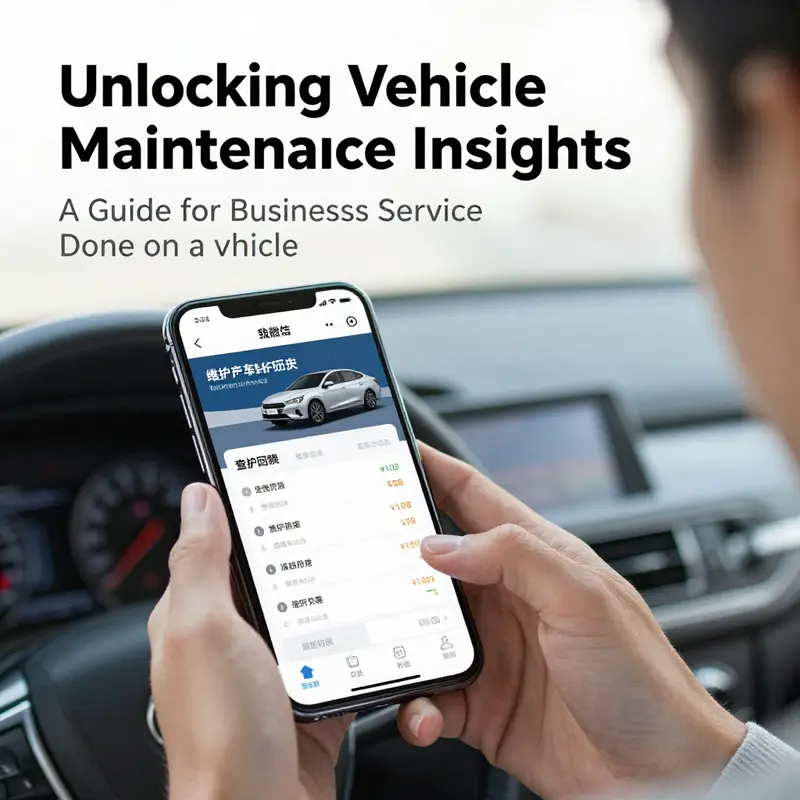
When you step into the world of used cars, the most valuable asset you bring with you is not the vehicle’s looks or its gadgetry, but the history it carries. A car’s maintenance record is a ledger of care and wear, a map that can reveal both reliability and risk. Yet the maintenance ledger is often scattered, locked away in separate service bays, dealer archives, and repair shop files. This fragmentation creates a data silo problem that can leave a buyer guessing about past services, replaced parts, and even the true mileage at key points in a car’s life. The shift toward aggregated, third-party data platforms has made it possible to pierce that veil with a single, online snapshot, turning a mystery into a coherent story that can inform a buying decision, a maintenance plan, or a resale strategy.
The most compelling advantage of these platforms is their breadth. Rather than pulling records from a single location, they pull from multiple 4S dealerships, independent repair shops, and sometimes insurance histories. The result is a more complete picture that captures maintenance, repairs, and even events that might affect the vehicle’s value or legal status. For someone evaluating a used car, this is not a luxury; it is a practical safeguard against buying a vehicle with hidden costs or undisclosed defects. The value lies not only in confirming routine maintenance, such as oil changes or filter replacements, but in the granular detail: the exact parts that were replaced, the mileage at each service, and the labor notes that can illuminate how well prior owners cared for the car.
A standout example of this approach is a platform that operates through a familiar channel for many drivers: a widely used, trusted utility within a popular messaging ecosystem. In essence, users can access a centralized maintenance history by initiating a simple query. The process hinges on a straightforward input—the vehicle’s VIN, a 17-character code that encodes the car’s origin, model year, and identity. Some platforms also allow a photo upload of the vehicle registration or driver’s license, a convenience that lowers friction for users who may not have the VIN at hand. The user experience is designed to be intuitive and fast: after submitting the VIN or a document image, the system cross-references databases across service providers and returns a structured, readable report in minutes. This immediacy is critical for buyers who are racing against time in a crowded market, and it is equally valuable for sellers who want to present a transparent maintenance history to potential buyers.
What does a well-rounded report actually include? At its core, there is a chronology of maintenance events: oil changes, filter replacements, brake services, tire rotations, battery replacements, and recalls or service campaigns that might have been performed. The report often drills down to the parts used and the labor performed, sometimes listing part numbers and service codes that would ordinarily be found on dealer invoices. But the value extends beyond routine maintenance. The platform typically aggregates repair history and may log accidents and insurance claims, if such data exist within its network. It may also reveal the vehicle’s current status, such as whether it is pledged, seized, or under lien, and can flag odometer issues or plate-to-chassis inconsistencies that could signal tampering. In short, the report acts as a comprehensive vehicle passport, highlighting not just what has been touched by service technicians, but what those actions imply about the car’s overall reliability and risk profile.
The practical benefits for buyers are substantial. First, there is the empirical advantage of breaking data silos. If a car was serviced across multiple shops or at different 4S centers, a single, aggregated report helps you avoid the blind spots that come with a dealership-only or shop-specific history. Second, the platform’s online format is fast and accessible. In many cases, all you need is the VIN and a few minutes to receive a complete history. Third, the depth of information supports more informed negotiations. When a seller can point to a documented maintenance cadence—regular oil changes at prescribed intervals, timely brake work, and evidence of major repairs—the buyer gains confidence. Conversely, if the report reveals gaps, inconsistent mileage readings, or repairs that don’t align with the vehicle’s service manual, it flags potential red flags that deserve careful scrutiny before purchase.
Interpreting a maintenance history also involves reading between the lines. A consistent pattern of routine maintenance, aligned with the manufacturer’s scheduled intervals, generally indicates responsible ownership. However, the absence of maintenance in the record does not automatically spell trouble, as some services may have occurred outside the platform’s network. The key is to consider the evidence in context. For instance, a vehicle that shows regular oil changes but a late, sudden brake overhaul might indicate a late but necessary safety upgrade. A vehicle with many entries for major repairs to the transmission or fuel system warrants a deeper dive into overall condition and possible cascading wear. When the report lists accidents or insurance claims, it becomes important to verify whether repairs were executed to restore original performance or to address pre-existing damage. Even the slightest anomaly can hint at future concerns, such as corrosion-prone areas, misaligned chassis, or compromised structural integrity.
Owners and buyers alike also benefit from understanding the status verifications that come with these reports. A vehicle’s stated mileage on the report should align with the odometer readings seen in the car, the registration documents, and the maintenance invoices. Discrepancies can indicate simple entry errors, or they may reveal attempts to disguise excessive wear. The ability to verify a plate-to-chassis match helps ensure that the vehicle being evaluated is indeed the one described in the documents. Certain reports go even further, flagging whether the car has been pledged or seized, which can be crucial for understanding the lien position and the feasibility of a clean transfer of ownership. These checks are less about maintenance history and more about risk assessment, yet they shape the overall value proposition of the vehicle.
From a buyer’s perspective, there is also an opportunity to cross-check maintenance history with the vehicle’s manual and the original repair invoices when available. The platform provides a convenient reference point for what was done and when, but it should not be treated as the sole source of truth. The most authoritative data can come from the original brand’s 4S dealership where the car was serviced, if you can access those records. A 4S unit can access its internal Dealer Management System (DMS) to retrieve full maintenance logs, including exact parts used, labor costs, and technician notes. This direct line to manufacturer-approved records is especially valuable for confirming major components and warranty-related work. However, it is important to note that such vendor-specific data can be incomplete when services were performed outside the official network, or in jurisdictions where access to these records is restricted. As a result, a layered approach—aggregated platform data, direct dealership records, and insurance claims history—yields the most robust understanding of a vehicle’s maintenance saga.
The story of Houchekjian, the platform most often cited in this context, illustrates the practical workflow that makes all of this achievable. To use the service, a user begins by opening a familiar app environment and searching for the mini-program or official account that hosts the tool. The next step is to navigate to the dedicated function for vehicle maintenance and service record queries. With the VIN entered—or a clear photo of the vehicle’s registration—the system performs a rapid cross-check across its partner networks and aggregates the data into a readable, structured report. In minutes, a reader has access to a detailed maintenance ledger, a list of parts and labor, and auxiliary information such as accident history and vehicle status indicators. The speed and convenience of this approach are especially appealing to people who need a quick assessment before deciding whether to pursue a deeper investigation, such as a test drive or a more formal inspection.
From a practical standpoint, this approach is particularly valuable when evaluating used cars. The buyer gains a more reliable basis for estimating future maintenance costs and for assessing the risk of imminent repair needs. In markets where vehicle provenance is especially important, the aggregated record reduces the likelihood of surprises after purchase. Yet, there are caveats. The platform’s coverage is powerful, but not all-encompassing. It relies on partnerships with service providers and access to records; while it includes data from many 4S dealerships and independent shops, there are still shops that operate outside its network. For vehicles that spent substantial time with small, local garages or in regions with limited data-sharing infrastructure, the record may be incomplete. The implication is straightforward: a strong due diligence routine should combine the platform’s history with a direct inquiry to the vehicle’s original brand 4S dealership where possible, and with a careful review of the vehicle’s maintenance manual and any available repair invoices.
Cross-referencing is not merely a procedural step; it is a critical part of building trust in a pre-purchase assessment. The VIN-based checks help ensure that the history you see corresponds to the actual car in front of you. Yet VINs can be misread or misrecorded, and a report is only as trustworthy as the data feeding it. Maintaining vigilance against tampered records requires a careful eye. For instance, a report that aligns perfectly with the vehicle’s stated mileage but shows an unexpected surge in major components around a single year may be accurate, but it warrants closer inspection—perhaps a large service that coincided with a model-year transition or a midlife overhaul. In contrast, inconsistent or missing entries can signal either a gap in data collection or intentional omissions. Either way, the prudent course is to verify key entries through the most authoritative sources available, especially the original invoices and the dealer’s internal notes.
One practical payoff of embracing these platforms is the peace of mind they deliver in negotiations. When a seller presents a comprehensive maintenance history, a buyer can use the data as leverage to negotiate price, request specific upcoming services, or seek a discount to cover anticipated maintenance costs. The document becomes a tangible record of responsibility that can distinguish a well-kept example from a vehicle with hidden wear or undisclosed incidents. The reporting framework also supports owners who may be considering selling their car in the near future. By curating maintenance data in a structured, shareable format, owners can demonstrate the car’s upkeep to prospective buyers, reducing friction and enabling a smoother transfer of ownership.
The discussion above naturally leads to two practical steps for anyone seeking to obtain a trustworthy maintenance history. First, make use of the aggregated data platform as an initial screening tool. This is where you confirm the general maintenance cadence, catch major repair trends, and check for any red flags such as odometer discrepancies or the presence of liens. Second, pursue direct verification paths for deeper assurance. Contact the vehicle’s original brand 4S dealership where available and request the DMS records, ensuring you provide VIN and valid identification. At the same time, consult with the insurer for any accident or major repair data that could influence overall risk. In scenarios where access to local authorities is possible, vehicle history queries through traffic management departments can add an extra layer of verification, though access tends to be limited to the vehicle owner.
To help readers connect these ideas with broader knowledge, consider the concept of vehicle maintenance itself as a spectrum. It includes routine tasks, preventive care, and timely repairs that, taken together, determine a car’s reliability and longevity. Understanding what constitutes legitimate maintenance helps avoid misinterpretation of a history report. If you want a concise explanation of maintenance in its broad sense, you can explore a resource that defines maintenance in context and offers a framework for recognizing routine care and necessary repairs. This can complement the hands-on task of reading a history report and guide you in distinguishing essential services from optional upgrades. What is vehicle maintenance provides a useful reference point for the terminology and expectations that should accompany any review of a car’s service record.
As you integrate these methods into your buying or selling routine, you will begin to notice how the story told by the maintenance history aligns with the car’s current condition. In most cases, a well-documented history correlates with predictable wear patterns, timely maintenance, and fewer unwelcome surprises. In others, it may reveal a vehicle that has been cared for only intermittently, or one that has undergone significant, unreported repairs that could influence performance and safety. The key is to approach the history as a living narrative rather than a fixed snapshot. It evolves as new services are performed, new incidents occur, and new owners enter the picture. Keeping an eye on the continuity of the story—consistency in mileage readings, alignment with service intervals, and corroboration with invoices—enables you to read the car’s past with greater confidence and to project how it will fare in the near future.
In sum, using third-party data platforms to uncover maintenance and service history offers a powerful, pragmatic path to transparency. It helps you piece together a car’s past from multiple sources, mitigates the risk of hidden wear, and informs smarter buying and selling decisions. It does not replace direct verification with the original service providers or a meticulous, in-person inspection, but it does provide a critical first lens—the one that helps you decide where to look more closely and what to verify first. When you combine aggregated histories with dealer records, insurer data, and owner-reported documentation, you construct a robust, holistic understanding of a vehicle’s maintenance journey. That understanding is not merely informative; it is a practical instrument for valuation, negotiation, and long-term ownership strategy.
External resource for broader context on this topic can be found at the following link: https://www.houchekjian.com
Tracing a Vehicle’s Service Footprint: A Trusted Guide to Authorized Dealerships for Maintenance Details

When you set out to verify what maintenance has been done on a vehicle, the goal is not merely a list of past services. It is a reliable, defensible narrative about the car’s care history. A clear, complete service record helps you assess remaining life, anticipate upcoming needs, and protect any warranties that may still apply. The most dependable way to obtain this level of detail is to reach out to authorized dealerships. These are the places where the vehicle was originally sold and frequently maintained; they are staffed with technicians trained for the specific make and model, and they have access to genuine parts and the manufacturer’s diagnostic tools. In practical terms, this means you gain a window into the exact services performed, the parts that were used, the labor that was charged, and the technician notes that describe what was examined and why a given action was taken. This is the kind of precision that third party snapshots rarely achieve, especially when the car has a mixed service history across multiple shops and regions. For a buyer or a new owner, this level of detail makes it far easier to judge whether the car has been properly cared for and whether the maintenance schedule has been followed as intended by the maker.
To begin, you should identify the closest or most relevant authorized outlet for the vehicle in question. The manufacturer typically operates a network of 4S dealerships or authorized service centers that are bound by the same standards and connected to the same data systems. Before you call or visit, assemble a small packet of information that streamlines the request. You will want the vehicle identification number, or VIN, which is a 17 digit code that uniquely identifies the car. If you do not have the VIN handy, a scan or a clear photo of the vehicle registration document or the windshield display can suffice in some cases, but the VIN remains the fastest, most reliable reference. You should also have your own identification ready to verify ownership. These steps protect both you and the vehicle from unauthorized access to sensitive maintenance data.
Once you contact the authorized dealership, you are tapping into a resource that runs deeper than memory or personal notes. The dealership DMS, or dealer management system, stores every service entry associated with that vehicle at that location. It includes the kinds of services performed, the exact parts that were installed, the labor times, and often the technician notes that explain why a particular service was necessary. This means you can verify that an oil change occurred at a specific mileage, confirm when a replacement filter was installed, and see if there were any recalls or software updates tied to the vehicle. The records from a single authorized outlet are highly reliable for services performed there, and when viewed in aggregate across a network, they can reveal a much fuller maintenance footprint. If the car was serviced at multiple authorized outlets, a complete history is still accessible, as each outlet can contribute its data to a comprehensive picture. This is where the manufacturer backed data network—combined with the dealerships own internal reporting—becomes a powerful asset for anyone evaluating a vehicle’s history.
It is important to recognize that while authorized dealerships offer the most complete and trustworthy data, not all maintenance may be captured in their systems. Independent repair shops or non affiliated service centers may perform work that does not automatically appear in the dealership records. For that reason, you should view the dealership records as a crucial anchor in the maintenance narrative, but not necessarily the sole source of truth. A thorough verification approach blends dealership data with other sources to fill gaps and cross check details. A widely used third party data platform that aggregates information from multiple shops and dealers can be a helpful supplement by providing an online report that covers maintenance and repair events across a broad network. This is especially valuable when the vehicle has a history that spans different regions or when you want to compare what the car has experienced across more than one service venue. In all cases, you should verify the information against the vehicle maintenance manual and any original repair invoices if they are available. A disciplined cross reference is your best defense against ambiguous or incomplete data and helps ensure that what you learn is coherent with the maker s maintenance philosophy and scheduled service intervals.
A practical next step is to consult the manufacturers official service pages. These pages typically offer a dealer locator tool that helps you find the nearest authorized service center. Using this tool, you can quickly identify a dealership that can access the proper records, confirm current service packages, and discuss available maintenance options that align with the vehicles warranty and recommended service intervals. You may also discover online portals offered by the dealership that let you schedule maintenance, track service history, and set up reminders for upcoming services. These portals can be a convenient way to stay on top of routine maintenance and to ensure that any needed services are not overlooked as the vehicle ages. By keeping a schedule and adhering to the maker s recommended intervals, you reduce the risk of coverage gaps that could otherwise cause warranty issues or unexpected failures on the road.
When you are dealing with records from authorized outlets, appointment setting becomes part of the process. After you provide the VIN and identification, the dealership staff can not only pull past records but also outline which services are applicable going forward based on the manufacturer s recommended maintenance plan. For example, the team can review the maintenance manual and tell you when a component such as a brake fluid service, a transmission flush, or a cabin air filter replacement should occur next, given the car s mileage and usage pattern. This forward looking guidance is a value add that goes beyond retelling past events. It helps you plan preventive care and budget for the next round of maintenance. If the dealership offers an online portal, you can log in to view a personalized maintenance roadmap and receive reminders as the due dates approach. This integration of historical data with proactive planning is one of the most practical benefits of engaging with an authorized dealership throughout the life of the vehicle.
As you weave together information from multiple sources, remember that the reliability of the data can depend on who is providing it. Authorized dealerships, because of their training, process discipline, and access to OEM tools, are less likely to misinterpret data or mislabel maintenance actions. They also tend to maintain notes in a structured way that links service actions to specific vehicle conditions or warning indicators. When you compare these notes with the broader maintenance manual, you will often find a consistent narrative that tracks with the vehicle s design expectations. If a discrepancy arises—say a service entry appears at odds with the vehicle s odometer reading or a part number that does not match the expected catalogue—treat it as a red flag. In such cases, ask the dealer to reverify the entry, request supporting invoices or parts labels, and, if needed, seek a second opinion from another authorized outlet. This is a prudent approach that helps ensure the maintenance history you rely on is accurate and complete.
To reinforce the broader context, think of the authorized dealership network as the backbone of credible maintenance data. Across many brands, these outlets are the most likely to share detailed records that include the identity of the parts used, the labor time charged, and the intent behind each intervention. This level of granularity is what sets a robust history apart from a more superficial ledger of events. It also aligns with the expectations set by the original maintenance schedule, which is authored by the maker and tested in real world conditions. Keeping that alignment intact is essential if you ever plan to sell the car, trade it in, or certify its condition for warranty purposes. In other words, the more you can consolidate around authorized dealer data, the clearer and more defensible your vehicle history becomes.
As you navigate this process, you may encounter guidance that emphasizes a multi source approach. A widely used third party data platform can fill gaps by aggregating data from multiple sources, including dealers and independent shops. The value of such platforms lies in the breadth of coverage, the speed with which you can obtain a consolidated report, and the ability to cross reference entries across shops that might have worked on the same car. Yet even with this convenience, it remains essential to verify the report against the official records held by the dealership. If the dealer can confirm the details from their DMS and the parts used are OEM or approved equivalents, you gain a strong upper hand in assessing the vehicle s maintenance quality.
For readers who want a concrete starting point, begin with the dealer locator on the vehicle s maker site. It will direct you to the nearest authorized service network and provide contact options for requesting maintenance records. If there is an option to download or authorize the transfer of records, consider enabling it so you can keep a personal copy of the maintenance history. You can also log into the manufacturer s portal or the dealership s online service hub to view the service history as it has been recorded by the technicians. In some cases, you may be able to download invoices or parts lists that accompany each service entry. Having digital copies accessible to you can simplify future sales negotiations or inspections.
To tie this back to the broader topic of how to learn what maintenance has been performed, think of authorized dealerships as the most trustworthy primary source for detailed maintenance details. They provide a direct link to the vehicle s care history, including the exact actions taken, the parts installed, and the context behind each decision. A responsible approach blends these authoritative records with corroborating information from other sources, including third party platforms that aggregate multiple records and the maintenance manuals that set the baseline expectations for service intervals. This composite method gives you a well grounded picture of the vehicles maintenance footprint and supports confident decision making whether you are buying, selling, or simply safeguarding the car s reliability for years to come.
If you want to explore broader background on maintenance concepts while you gather records, you might read a general guide on vehicle maintenance. That resource explains the underlying principles behind routine servicing and why adherence to scheduled care matters for long term performance. It is a useful companion as you review the detailed dealership records. To keep your research anchored, remember that the path to a complete history often winds through the authorized dealership channel first. It is where the most precise, policy aligned, and audit friendly information resides. When combined with careful cross checks against invoices and the vehicle s manual, you will have a robust, trustworthy maintenance narrative and a clear view of what the vehicle has experienced over its life.
Internal link for broader context: To ground your understanding of maintenance basics, consult the overview on What is Vehicle Maintenance.
External reference for practical dealer access: a dealer locator on the manufacturer s official site can guide you to authorized centers and their service options. See the resource at https://www.toyota.com/dealer-locator
Seeing Through the Care Ledger: Cross-Referencing Vehicle Histories for True Maintenance Insight
When you set out to evaluate a used vehicle, the maintenance history isn’t just a boring ledger of past services. It is the living record of how the car has been cared for, what it has endured, and how its future reliability may unfold. But maintenance history is rarely a single, perfectly kept book. More often, it is a mosaic formed from multiple sources that may not speak to one another in a single language. Cross-referencing these sources becomes less about collecting receipts and more about compiling a dependable narrative. A well-constructed narrative helps you gauge not only whether routine services were performed, but also whether there were significant repairs, whether the vehicle’s mileage aligns with its service cadence, and whether any red flags — like suspicious gaps in records or inconsistent repair notes — might indicate problems that require closer scrutiny. This approach rests on a simple premise: the more independent, corroborating sources you can unite, the closer you come to a trustworthy picture of a vehicle’s true maintenance condition. Central to this approach is the idea of breaking down data silos. Historically, maintenance information has lived in isolated pockets — a single dealership’s logs, an independent shop’s invoicing system, an insurer’s claims history, and, in some cases, the owner’s own records. Each pocket tells part of the story, but none alone gives you the full truth. A modern, layered assessment seeks to stitch these pockets together so that the whole is more informative than the sum of its parts. In practice, reliable cross-referencing begins with a strong foundation: a unique vehicle identifier. For most cars, that identifier is the VIN, a 17-character code that uniquely marks a vehicle’s identity and its configuration. The VIN is the passport by which you can unlock the history stored across several channels. The intuitive path is to begin with a broad, third-party history platform. These platforms are designed to aggregate data from multiple sources, including both official dealership networks and independent repair shops. They function as a bridge across data silos, delivering a consolidated report rather than a patchwork of documents from different venues. A well-chosen third-party history service uses the VIN to pull together maintenance timestamps, parts replaced, odometer readings at service, and the nature of each visit — whether it was a routine oil change, a major service, or a repair necessitated by a fault code. The value of such a report lies not in the pristine perfection of every line but in the coherence of the overall trajectory. If the report shows a consistent pattern of scheduled maintenance at reasonable intervals, that adds credibility to the vehicle’s care history. If, however, there are unexplained gaps, or if the reported mileage at service dates deviates markedly from the vehicle’s odometer growth, you have a signal to dig deeper. It is here that the cross-reference process becomes essential. A single source can be persuasive but never definitive. The most authoritative cross-checks often begin with the source closest to the car’s life cycle: the brand’s official service network. If a vehicle has been serviced primarily within a brand’s authorized network, the dealership’s internal records, sometimes housed in a Dealer Management System, can offer a granular view of the maintenance history. These records typically specify exact parts used, labor time, technician notes, and even the precise workshop codes that identify the service action. They can also confirm whether a particular service item was completed as scheduled or whether it was deferred. Access to these records is most reliable when a prospective buyer can present appropriate identification and the vehicle’s VIN to the original brand’s 4S shop. While this approach is often the gold standard for accuracy on brand-specific data, it does have a natural limitation: it is most comprehensive for work performed at authorized dealerships and may not capture repairs at independent shops or non-network service centers. That is why the cross-reference framework should not rest on a single pillar. Insurance records provide another critical axis of verification. Insurance claims histories illuminate the maintenance side when repairs were driven by accidents or other incidents. In many markets, insurers keep logs that detail the dates of claims, the nature and severity of the incidents, and the subsequent repairs that followed. These records help you identify whether a reported service aligns with a major or minor incident, and they can reveal discrepancies between a claimed repair and what the vehicle has actually received. Suppose a maintenance entry notes a minor“top-end inspection and oil change,” but the insurer’s record shows a substantial structural repair following a collision. In such a case, that discrepancy warrants closer investigation. A careful reader will also consider the possibility of repairs being performed outside of the insured network, or after-market repairs that were not claimed through insurance. In either scenario, insurance data creates a reality check, ensuring that the maintenance narrative does not omit a major event that would substantially affect the vehicle’s condition and value. Beyond third-party history platforms and insurer data, there is an indispensable, hands-on verification step: an independent professional inspection. A vehicle can look clean on paper yet conceal fundamental issues under the hood. A trained mechanic can corroborate the digital record with an in-person assessment, listening for engine and transmission whispers of wear, feeling for anomalies in the drivetrain, and inspecting the chassis and body for signs of past repairs that have not been properly documented. This final step is not a mere formality; it is a crucial safeguard against a misleading service history. A professional inspection can confirm whether a claimed service, such as an oil change or a timing belt replacement, has been performed with the correct specification parts and torque values, and whether the reported mileage aligns with the car’s actual wear. If the inspection finds signs of non-authorized work or unusual wear that does not match the service dates, you have a clear indication that more targeted checks are necessary before you decide to purchase. In short, cross-referencing vehicle history for comprehensive maintenance insights is a multi-layered exercise. It begins with a broad, aggregating source that consolidates data across the dealer and repair network. It is then reinforced by brand-authoritative records when available, and finally tested against insurance records and a clinical inspection. Taken together, these layers create a robust, evidence-based narrative that helps you understand not only what maintenance has happened, but also what has not, and how the car has actually aged. The process also demands a critical eye for data integrity. When you pull records from different sources, you will inevitably encounter cross-currents: a maintenance entry that lists a service date that does not match the vehicle’s odometer reading; a parts list that suggests the use of a specific component while another source references a different part number; or a repair note that seems incongruent with the reported cause of failure. In such moments, it is essential to slow down and triangulate. You should ask for the original repair invoices if they are available, as those documents often reveal subtle details like service intervals, part numbers, and the exact labor codes used for the work. The maintenance manual for the vehicle serves as a vital referee, providing the manufacturer’s recommended service intervals and critical checks. When you compare reported maintenance against the manual, you can determine whether a service aligns with intended maintenance schedules. If a report indicates a service that is inconsistent with the vehicle’s recommended maintenance timeline, that discrepancy could be a sign of either owner neglect or a misdocumented service event. The manual can also help you interpret entries that seem ambiguous. For example, a note about “oil filter replacement” may be routine, but a concurrent entry mentioning a “labour-intensive oil system flush” could reveal a more substantial service that should be weighed against the vehicle’s age and mileage. To make this cross-reference practical, you do not need to be a data scientist or a forensic analyst. A methodical approach works: collect the VIN, request the broad history report, and then reach out to the original brand’s service channel for a more granular copy of the dealership’s logs. The VIN is your key. With it, you can pull together a baseline view of the vehicle’s maintenance events, and then you can layer in the authoritative details from the dealership, the claims from insurers, and, finally, the impressions from a trusted mechanic. In some markets, you might also access a regional vehicle history query provided by local transport authorities. Access to such data is often owner-restricted, yet it can complement other sources by confirming ownership timelines and registration events that correspond with reported service dates. As you build the cross-reference, you will likely find that not all sources cover every event. A well-rounded history may show a string of regular oil changes at independent shops, with some major services performed at a single brand network, and perhaps a few repairs captured in insurance claims that point to a crash or incident. The absence of a particular event in one channel is not necessarily alarming if other sources corroborate the underlying maintenance cadence. However, a dark hole in the maintenance story is a warning sign. If you cannot account for a long stretch of travel without documented maintenance, or if the odometer and maintenance intervals diverge in a meaningful way, you should pursue a more thorough inspection or request additional records from the seller. This is where negotiation and transparency come into play. When you present a plan to the seller and show that you are cross-referencing across sources, you establish a pragmatic expectation for careful disclosure. If the seller resists providing access to the original invoices or to the dealership records, that resistance itself becomes data to weigh. It is not a guarantee of anything, but it is a signal that you should probe more deeply or walk away if the price and condition do not reflect the risk. For readers seeking a practical way to begin, remember that the core of the process is not merely collecting documents but validating them through a triangulated approach. You want to ensure that each major maintenance milestone — oil changes, filter replacements, brake service, belt or chain replacements, fluid flushes, and major repairs — is anchored in verifiable data. The more anchors you have, the more confidently you can interpret the long arc of a vehicle’s life. If you encounter conflicting information, you can reuse the mechanic’s eye as a tiebreaker. A professional inspection can verify whether a critical repair item, such as a timing belt or chain replacement, has been performed with the correct parts and at the appropriate service intervals. It may also reveal hidden wear patterns that documentation misses, such as engine sludge, abnormal piston-ring wear, or transmission fluid degradation, which would require more attention than the records alone would suggest. In the end, the goal of cross-referencing is not simply to confirm every line item. It is to build a trustworthy, holistic view of how well the vehicle has been maintained and how likely it is to deliver reliable performance going forward. This approach respects the realities of modern vehicle maintenance, where data lives in several places and every source has its limitations. By integrating multiple perspectives — the broad history platform, the brand’s official records, the insurer’s claims, and the independent expert’s assessment — you gain a durable map of maintenance reality. For readers who want a quick entry into the topic, consider reading a concise primer on the general idea of vehicle maintenance to ground the discussion in clear terminology. It provides a useful baseline for understanding what exactly maintenance encompasses and why the timing and quality of services matter for a vehicle’s health. What is vehicle maintenance? As you advance in your own evaluation, you will see that the most valuable insight comes not from a single source but from how well you weave together corroborating threads into a coherent story. And when you arrive at a clear, evidence-backed assessment, you gain not only confidence in your purchase decision but also a richer understanding of what it will take to maintain the vehicle responsibly in the years ahead. In this sense, cross-referencing vehicle history is less about chasing perfect records and more about building a robust, credible narrative that can guide your choices. It is a disciplined practice that respects the complexity of a vehicle’s life and, critically, protects you from the temptation to rely on a single, potentially incomplete document. For readers who want to widen their perspective beyond digital reports, remember that the most authoritative verification often comes from the source where the car spent the most time and the most money: the original brand’s service network. A direct inquiry to the dealership using the VIN and valid identification can retrieve the most granular data — exact parts used, labor costs, technician notes, and any notes that might accompany a service campaign or recall. It is worth noting that this method tends to illuminate only dealer-maintained history. If previous owners used independent shops, those events may be present in third-party reports but absent from dealership logs. This is precisely why a well-rounded approach is essential. The vehicle’s status, including whether it is pledged or seized, or if the odometer appears to have anomalies, can sometimes surface in the broader history reports or in the insurer’s data. Paying attention to these contextual clues helps you avoid a trap in which a clean maintenance narrative masks a more troubling reality. In sum, the journey of discovering maintenance service history is a journey of cross-examination guided by a VIN. It is an exercise that rewards patience, diligence, and skepticism in equal measure. If you stay focused on corroboration rather than conclusion, you will gain a reliable compass for evaluating used cars and for negotiating from a position of knowledge rather than assumption. To further support your understanding and to situate this practice within a broader framework of vehicle maintenance literacy, you can explore foundational concepts about maintenance as a discipline and how it shapes vehicle longevity and performance. This helps transform a complex data puzzle into a practical, decision-support tool rather than a fog of records. And when the process culminates in a well-supported assessment, you will have not only a clearer sense of past care but a more confident forecast of the car’s reliability and value. External resource: https://www.huxin.com/2026/02/03/123456.html
Final thoughts
In conclusion, leveraging various methods for tracking maintenance service histories is essential for business owners looking to streamline their operations. Utilizing third-party platforms can provide immediate insights, while authorized dealerships offer detailed official records. Cross-referencing these records enhances understanding, ensuring informed decisions about vehicle maintenance are made. By systematically applying these strategies, businesses can save costs, enhance safety, and maintain a reliable vehicle fleet over time.