
As business owners increasingly consider incorporating electric vehicles (EVs) into their fleets, understanding the maintenance costs associated with these innovative vehicles becomes essential. With their unique design and operating principles, EVs offer a range of financial benefits over traditional gasoline-powered cars, chiefly owing to lower maintenance expenses. This guide delves into the key factors influencing maintenance cost reductions for EVs, comparing them with gasoline vehicles, examining service frequency and routine maintenance, analyzing specific model costs, and discussing long-term savings alongside warranty considerations. Each chapter unpacks these aspects, ultimately illustrating how integrating EVs can enhance operational efficiency and budget management for businesses.
The Maintenance Advantage: How Electric Vehicle Upkeep Stays Cheaper—and How to Keep It That Way
Electric vehicles arrive on the scene with a reputation for lower upkeep, and the data largely supports that impression. The beauty of their maintenance story is not merely about fewer visits to the shop, but about the way their core systems age more slowly under normal use. The absence of an internal combustion engine eliminates a long list of routine services that define maintenance costs for gasoline cars. There is no oil to change, no spark plugs to replace, no exhaust system to corrode, and no complex transmission to service. What remains is a more streamlined routine, centered on the parts that wear with time and use, plus the battery and its cooling system. In practical terms, most EV owners would describe the typical service as quick and straightforward: a software check for the battery and electronics, a visual inspection of brakes, a cabin air filter replacement, and a coolant check. A standard full-service appointment can often be completed in under an hour, a contrast to the longer, more frequent maintenance windows that ICE-powered vehicles sometimes demand. The frequency of service also shifts in favor of EVs. Where petrol cars often require annual maintenance or intervals tied to a driving distance, many EV makers recommend a yearly check or a service every 10,000 to 20,000 kilometers. The difference is not merely theoretical; it translates into lower annual costs for routine maintenance across a vehicle’s life. When numbers are translated into real-world figures, the savings become tangible. A minor annual service for an EV typically runs around a few hundred yuan—roughly 300 to 500 yuan, or about 40 to 70 USD. This service usually covers a battery system diagnostic, coolant inspection, and an air filter replacement, all tasks that are relatively inexpensive and quick to perform. A major service, which can occur every two to four years, tends to be higher but remains modest by ICE standards, generally in the range of 500 to 1,200 yuan (about 70 to 170 USD). In many markets, these costs are influenced by the exact model and the designated service interval, but the general trend remains clear: EVs incur far lower routine spend than petrol cars, thanks to fewer fluid changes, fewer moving parts, and simpler mechanical work. The economic impact of these savings is substantial when viewed over the life of the vehicle. Some widely cited figures illustrate the gap. For a typical mid-segment EV, the first 60,000 kilometers of maintenance can total only a few thousand yuan, with annual averages often in the low hundreds of yuan. For example, first-ownership maintenance costs reported for a prominent city EV model reduce to roughly 3,800 yuan over 60,000 kilometers, which works out to about 630 yuan per year. Another compact EV has even lower annual maintenance costs, hovering around 319 yuan per year in the same distance frame. These numbers are instructive, showing that the bulk of savings come from not dealing with engine oil, exhaust systems, or transmission fluid changes. The battery, despite its prominence in the spend column, is not typically a frequent cost driver in day-to-day maintenance. In many cases, the battery is protected by long warranties that cover substantial portions of the system for several years or tens of thousands of kilometers. Typical battery warranties run for around eight years or 100,000 to 160,000 kilometers, depending on the manufacturer. A robust warranty shifts the financial risk away from the owner for the most expensive potential repair, encouraging a focus on preventive care and early diagnosis rather than costly, reactive repairs. The device at the heart of the EV’s maintenance calculus—the battery—also affects total cost of ownership in a broader sense. Batteries are designed to last many years, and the newer chemistries and management systems extend life while reducing the probability of unexpected, high-cost failures. That durability is not just a function of chemistry; it is shaped by charging practices, thermal management, and usage patterns. In practice, the battery system is monitored with diagnostic software that flags anomalies before they escalate. This digital-first maintenance model means service becomes a periodic check rather than a constant worry about component wear. The braking system deserves particular attention as a contributor to EV maintenance economics. Regenerative braking reduces wear on brake pads, often extending their service life compared with conventional vehicles. Even as wear items such as brake pads and tires require replacement, the intervals tend to be longer, and the costs per replacement are often lower in relative terms than the frequent oil and filter changes that characterize ICE upkeep. Tires themselves become a focus, of course, since grip, load, and wheel alignment influence handling and safety. EVs tend to carry heavy batteries, so tread life can be impacted by different torque delivery and weight distribution. A thoughtful maintenance plan, guided by the vehicle’s software and a technician’s assessment, ensures worn tires, misalignment, or imbalanced wheels are caught early before they invite broader, more expensive issues. The external environment further shapes maintenance cost outcomes. Energy prices and policy incentives can tilt the total cost of ownership (TCO) in a favorable direction. Lower electricity rates reduce the ongoing cost of charging, which, coupled with subsidies or tax credits for EV ownership and charging infrastructure, improves the affordability equation. When evaluating maintenance alone, though, the electricity expense is a separate line item from service costs. Yet the chain of savings can be additive: fewer shop visits, lower fluid and wear-item costs, longer intervals between expensive repairs, and ongoing battery warranties collectively push EV maintenance into a more affordable territory than traditional gasoline-powered cars over the long run. For readers curious about the real-world tradeoffs, the research landscape confirms a broad pattern: maintenance expenses for electric vehicles cluster at the lower end of the spectrum, often well below those for ICE vehicles. It is important to acknowledge that the battery itself is a large, upfront spender and, in some cases, the area where costs can surface if the pack requires replacement outside warranty. However, even these potential outlays are buffered by longer warranty terms and ongoing improvements in pack durability. As with any technological purchase, contingency planning matters. Some drivers may face costs tied to specific wear items—windshield wipers, cabin filters, or coolant replacements—that vary with climate and driving conditions. The wisdom is to view preventive care as a strategic investment. Regular inspections every 5,000 kilometers or three months—common in many EV maintenance schedules—mean minor issues can be identified before they become costly repairs. A proactive approach, paired with use of manufacturer- approved parts and service centers, preserves warranty protection and keeps maintenance costs predictable. In the broader scheme, the question of total cost of ownership emerges as central. Maintenance is only one component. Insurance, depreciation, charging habits, and energy prices all blend to shape the TCO. The literature and practical data agree on this: while upfront purchase price and battery replacement remain important considerations, ongoing maintenance costs for EVs are substantially lower on an annual basis than those for conventional cars. The savings come not only from reduced service visits but also from the way EVs leverage regenerative braking to lighten the brake system’s workload and from the absence of oil and transmission-related servicing. For readers who want a concise synthesis of the broader topic, a synthesis of recent research on TCO provides a rigorous framework to compare EVs with ICE vehicles across regions and policy environments. It sheds light on how electricity costs, incentives, and maintenance interplay to shape long-term ownership. Reflecting on practical implications, an owner who prioritizes preventive maintenance, chooses a model with durable battery components and a strong warranty, and adheres to a recommended service schedule will likely see maintenance costs that are a fraction of what a petrol car would demand over the same period. The goal is not merely a low maintenance bill but a dependable, predictable maintenance experience that complements the fuel savings and the environmental benefits associated with electric driving. For readers seeking a deeper dive into the broader financial picture, the synthesis of research findings on total cost of ownership offers valuable context and a structured lens for evaluating regional differences and policy-driven incentives. External researchers have emphasized how energy prices and incentive schemes can move the needle on TCO, and those factors should be weighed alongside maintenance when calculating long-run affordability. As a practical takeaway, when considering an EV, focus on three criteria to keep maintenance costs favorable: battery durability and warranty terms, a design that minimizes fluid-based upkeep, and a maintenance plan oriented toward preventive checks rather than reactive repairs. With these in place, the maintenance dimension of owning an electric vehicle reinforces the broader value proposition—lower ongoing costs that accumulate to meaningful savings over the vehicle’s life. For readers who want a quick pointer to a deeper analysis, see the synthesis of research findings on Total Cost of Ownership of Electric Vehicles (2025) for a rigorous cross-section of regional and policy variations. Do electric vehicles require less maintenance? In exploring these themes, it becomes clear that the maintenance story of electric vehicles is not merely about fewer visits or smaller line-item numbers. It’s about a strategic approach to care that aligns with the technology’s strengths and the realities of everyday driving. The chapter that follows will connect these maintenance realities to total cost of ownership, integrating the maintenance costs discussed here with insurance, depreciation, and charging economics to present a complete picture of EV affordability over time.
Electric Armor: Understanding Maintenance Costs in Electric Vehicles and How They Stand Up to Gasoline Cars
Maintenance costs for electric vehicles (EVs) sit at a lower altitude than those for gasoline-powered cars, a difference driven by design choices that simplify what needs attention over the life of a car. Electric drivetrains have far fewer moving parts than internal combustion engines, which translates into fewer parts to service, fewer fluids to replace, and fewer recurring maintenance tasks. The core reason is straightforward: there is no oil to change, no spark plugs to replace, no transmission fluid to refresh, and no exhaust system to repair as a routine matter. This simplicity doesn’t just reduce costs; it also reduces the kind of unexpected repairs that can surprise owners and push a maintenance bill higher than expected. Across a range of analyses, the pattern holds: EVs require less frequent, shorter, and less expensive service visits than their gasoline counterparts, especially once the vehicle is out of its warranty window and routine safety checks are accounted for.
What does a typical EV service look like, then? The core maintenance events are modest in number and duration. Most service visits focus on the battery’s health through diagnostic software, checks of coolant levels, inspections of brake pads, and the replacement of cabin air filters. A quick inspection of electrical connections and software updates is often included. Because the propulsion system remains essentially sealed and is designed for longevity, many checks are non-invasive and can be completed in under 30 minutes. This is a big shift from the more labor-intensive maintenance routine that gasoline cars require, which frequently involves fluid changes, belt replacements, and more frequent inspection of a broader array of mechanical systems. The time savings alone can be meaningful for a driver who schedules annual or semi-annual service around busy life or work commitments.
Frequency is a central lever in the EV maintenance equation. Electric vehicles tend to be serviced less often than petrol cars, with many manufacturers recommending service intervals that cluster around once a year or every 10,000 to 20,000 kilometers. That cadence contrasts with the common 6,000 to 10,000 kilometer interval seen in many gasoline vehicles, where a broader suite of engine-related tasks tends to accumulate more quickly. The consequence is not merely a lower recurring cost per visit, but also reduced total cost of ownership over time as the number of paid service events declines. When combined with the fact that the electric drivetrain requires fewer replacement fluids and consumables, the savings compound over the years of a vehicle’s life.
Turning to numbers helps illuminate the picture. Minor service—an annual health check that might include a battery system diagnostic, a coolant check, and a cabin air filter replacement—often lands in the modest hundreds of currency units in many markets. For example, typical minor-service costs can hover around three hundred to five hundred yuan (roughly $40 to $70 USD) per year. Major services, which may occur every two to four years and could involve replacing coolant, brake fluid, and other fluids, generally sit in a broader range, about five hundred to twelve hundred yuan (roughly $70 to $170 USD). Each vehicle, of course, carries its own quirks and the specifics of the service plan can shift with model, climate, and usage, but the pattern remains consistent: EVs require fewer, simpler, and cheaper routine interventions than gasoline cars.
When we widen the lens to real-world maintenance costs, the contrast becomes even more pronounced. A 2025 analysis highlighted that routine EV servicing often centers on battery health monitoring, coolant equilibrium, and mechanical wear items such as brake pads or tires, with the bulk of annual maintenance costs staying in the single-digit hundreds and the occasional major service pushing the total higher in a given year. A separate data point from mid-2025 pointed to average annual maintenance expenses for pure electric passenger cars ranging roughly from three thousand five hundred to four thousand seven hundred dollars, depending on the model and the range of checks and replacements a given year requires. Even in scenarios where major components like coolant, brake fluid, or steering fluid require attention on a two-year cycle, the relative share of EV maintenance remains smaller than a gasoline car’s ongoing fluid replacements and more complex repairs.
A practical takeaway from these numbers is the way warranties shape the out-of-pocket experience. Many EVs come with extended coverage for three-electric systems—the battery, motor, and power electronics—that often runs for six years or up to two hundred thousand kilometers. This means that, for a substantial portion of a typical ownership period, the most expensive potential repairs are shielded from the owner’s wallet. That warranty cushion helps reconcile the apparent variance in annual costs across different markets and driving styles. It also means that, for many owners, the fear of catastrophic drivetrain failure that used to haunt traditional cars is less salient with EVs. Insurance costs, of course, can be a separate line item that some drivers see crept upward by a modest amount, but even when premiums are higher, the savings from fuel and reduced maintenance often more than compensate.
The comparison with gasoline-powered cars remains compelling. Gasoline vehicles tend to accumulate higher maintenance expenses through oil changes, air and fuel filter replacements, transmission service, exhaust system maintenance, and more frequent brake servicing due to the higher duty cycles of conventional engines and the additional heat and vibration of a mechanical drivetrain. In many markets, the annual maintenance outlay for a petrol car can exceed four thousand to five thousand yuan, driven by the recurring costs of fluids and parts that require periodic replacement and the higher probability of component wear across the powertrain. The overall maintenance burden for gasoline vehicles tends to be higher not only in the dollars spent but in the more frequent disruption to daily routines caused by service visits and the more complex service procedures involved.
Beyond the pure maintenance bill, the long-term picture for EV ownership often reveals a broader economic advantage. The reduced maintenance frequency, the smaller number of consumable parts, and the integrated design ethos that emphasizes durability converge to produce a lower total cost of ownership when paired with the savings on fuel. In many owner reports, the combination of lower maintenance, lower energy costs, and the durability of the drivetrain translates into a noticeably lower annual expenditure on upkeep. It’s not merely about the sticker price of a vehicle or the monthly payment; it’s about the ongoing, predictable expenses that accumulate year after year. When these factors are considered together, the maintenance story for EVs often aligns with a narrative of steadier, more predictable costs over the long term.
Even as maintenance costs stay lower for EVs, the broader financial picture includes elements that can tilt comparisons in either direction. EVs may carry higher insurance premiums in some markets—an added annual cost that, while modest in isolation, can shift the total cost of ownership. Yet across the lifecycle of ownership, the fuel savings and the maintenance savings tend to dominate, producing an overall economic edge for electric vehicles in many driving scenarios. For readers seeking a deeper, data-driven perspective, an external analysis supports the conclusion that the maintenance gap is substantial when compared with gasoline vehicles, though the exact dollars can vary by region, model, and how the car is used day to day. For those evaluating a future purchase, it may be useful to think about maintenance as a lever that improves with efficiency over time, especially as battery technology, thermal management, and service tooling continue to mature.
Curiously, the rigidity of service intervals and the predictability of EV maintenance can also calm the nerves of cost-conscious buyers. Routine inspections—often scheduled annually or at longer intervals—allow owners to plan ahead financially. The reduced risk of surprise repairs means fewer unexpected expenses and less variability from year to year. When a driver considers the total package of ownership costs—purchase price, fuel savings, maintenance, insurance, and resale value—the net advantage of EVs becomes clearer. The narrative isn’t only about the absence of oil changes; it’s about the way an electric propulsion system steers maintenance toward a lean, predictable, and controlled expense profile.
If readers want a concise takeaway, it’s that maintenance costs for EVs are not just lower on average; they’re more predictable and generally easier to manage within a yearly budget. The typical minor service remains a relatively modest expenditure, while major service intervals occur infrequently and carry a smaller dollar impact than the equivalent maintenance on gasoline vehicles. The weight of evidence, drawn from multiple market analyses, points to a durable advantage for EVs in the maintenance arena, even when accounting for slightly higher insurance in some cases and the costs of home charging. For those who are price-sensitive and prioritize predictable budgeting, the maintenance story of electric vehicles should be a meaningful part of the decision calculus.
For readers who want to explore how maintenance needs compare in more depth, there is a helpful overview that frames this in the context of overall maintenance behavior: Do Electric Vehicles Require Less Maintenance?. This piece complements the figures above by emphasizing the practical, day-to-day implications of maintenance decisions. And for a broader, analyst-backed synthesis of EV versus gasoline maintenance costs, see the 2025 analysis from Consumer Reports, which compiles multiple data sources to present a comprehensive view of the cost landscape: https://www.consumerreports.org/electric-vehicles/maintenance-costs-vs-gas-cars-a92345678/.
null
null
The Hidden Ledger: Real-World Maintenance Costs Across Electric Vehicle Case Studies
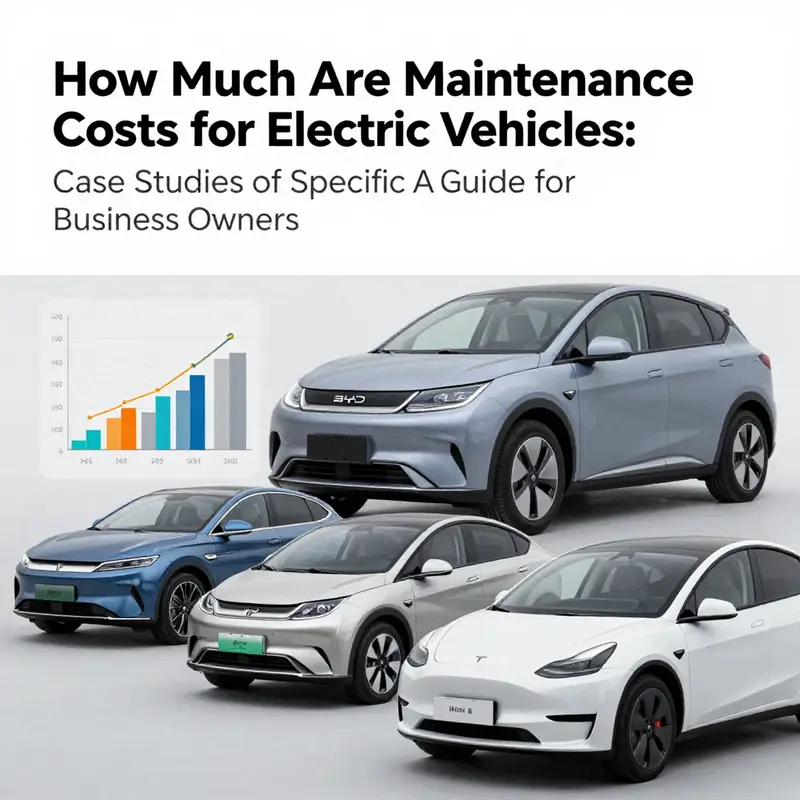
Maintenance costs for electric vehicles are widely recognized as a key advantage in the ownership equation, but the full story gains clarity only when numbers from real-world service pages are examined side by side. Across the three-electric trio—the battery, motor, and power electronics—the mechanical heart of an EV is simpler than that of a gasoline-powered car. No engine oil, no spark plugs, no transmission fluid to top up, and fewer moving parts overall mean fewer opportunities for costly failures. Yet the proof lies in practice, not theory. By looking at concrete case studies that chart maintenance over the first 60,000 kilometers and beyond, we can map how these design choices translate into annual bills and how they stack up against conventional vehicles over the long horizon of ownership.
In a recent set of maintenance results, a large electric sedan from a major manufacturer illustrates the most straightforward takeaway: total maintenance costs for the first 60,000 kilometers come in at 3,800 yuan. That figure is telling not just for its magnitude, but for what it implies about the cadence of service. The model requires service only once per year, a cadence that mirrors the growing consensus in the EV space: annual or a modest annual-to-distance ratio, rather than the monthly or quarterly checks common with petrol cars. When averaged over the mileages that drivers typically accumulate in a year, the annual cost sits well below the equivalent expenditure for a comparable gasoline vehicle on routine maintenance alone. The math is compelling because it is clean: one annual check, a focus on the battery’s health via diagnostic software, a look at coolant levels, and a quick inspection of wear items. The simplicity is not accidental. By avoiding oil changes, filter replacements, and complex fluid maintenance, EVs keep the wrench count per year low, and with it a predictable maintenance budget that can be forecast with surprising accuracy.
A second model illustrates how this saving scales with size and use. A compact electric hatch shows a total maintenance bill of about 957 yuan over the same first 60,000 kilometers. On an annual basis, that works out to roughly 319 yuan for drivers who log about 20,000 kilometers each year. The lower cost here reflects a smaller footprint and fewer system volumes to monitor, yet it aligns with the same pattern: early maintenance is light, routine checks are quick, and major component work remains rarer and less expensive than the equivalent tasks on petrol-powered cars. The narrative continues with another widely used city-oriented electric SUV. This vehicle registers an annual maintenance expense of around 245 yuan, underscoring how, across the spectrum—from large sedans to compact city cars—the maintenance burden remains consistently modest once the vehicle is out of its warranty-insulated infancy. Taken together, these three data points sketch a durable trend: the three-electric drivetrain combination, paired with modern battery management and robust warranties, translates into predictable, relatively small maintenance outlays over the typical model lifecycle.
This pattern is reinforced by real-world servicing experiences that rarely stray from the low-cost, time-efficient profile. A recent service event for an unnamed EV offers a microcosm of the broader data: the inspection took less than half an hour, the checklist was straightforward, and the total bill was about 300 yuan. The service items—checking the battery casing, testing cell conditions via diagnostic software, verifying coolant levels, and replacing the air conditioning filter—mirror the standard EV maintenance menu: battery health checks, coolant inspections, filter changes, and wear-item assessments such as brake pads and tires. The brevity of the visit, together with a modest price tag, reinforces the view that EV maintenance is not only less frequent but also less expensive in routine scenarios. It is a practical reminder that the three-electric system—the battery, motor, and power electronics—while critical to performance and longevity, is managed with a maintenance mindset that emphasizes software diagnostics, fluid level checks, and filter upkeep rather than routine mechanical overhauls.
Of course, a complete picture needs to acknowledge the costs that do arise in EV maintenance as the vehicle ages. Major maintenance items typically fall in a broader range of 500 to 900 yuan, depending on model and service scope. This is still modest when contrasted with the recurring, higher-cost maintenance that gasoline cars accumulate, which often includes oil changes, filter replacements, and more complex fluid services for the engine and transmission. Even when the interval stretches to two to four years for more involved work—such as replacing brake fluid or components within the cooling system—the outlay remains comparatively restrained. A useful way to frame the contrast is to consider the sum of ownership: EVs require fewer, simpler services, and the services that do occur tend to be routine rather than deeply mechanical repairs.
Even within the EV family, the maintenance story holds across different price tiers and branding philosophies. A higher-end, premium-brand sedan demonstrates that the maintenance burden can still be lightweight: small services occur on a cyclic basis, with a cap-like approach to major services, and, crucially, the total expenditure over a multi-year period remains well within the realm of modest maintenance budgets. This is the practical upshot of a drivetrain that eschews many traditional components and relies instead on robust engineering, long-life batteries, and diagnostics that can identify issues long before they become expensive repairs. In this sense, the economics of EV maintenance are not just about what you replace, but how often you replace it and how efficiently you can manage the health of the battery and associated electronics through software and regular checks.
The central takeaway from these case studies is not that EVs are maintenance-free—no vehicle is entirely free of upkeep—but that the scale and scope of maintenance tasks are fundamentally different. The comparable gasoline vehicle, even when well maintained, faces more frequent, more diverse service needs. Oil changes every few thousand miles, spark plug replacements, timing belt checks, and transmission fluid changes can accumulate into sizable annual bills. EVs, by contrast, lean toward a maintenance routine that prioritizes the battery’s condition, the integrity of cooling systems, filter replacements, and the wear items that matter most for daily operation—brake pads, tires, and occasional fluid top-offs. The cumulative effect is a substantially lower annual maintenance cost that, when folded into total cost of ownership, shifts the economics of EV ownership in a meaningful way.
For readers seeking a concise synthesis beyond numeric tallies, a helpful perspective exists in the broader literature: Do Electric Vehicles Require Less Maintenance? This discussion points to the likelihood that the maintenance envelope for EVs is slimmer in both frequency and scope, with cost savings accruing in predictable, repeatable ways that can be planned for alongside electricity costs and insurance. Do Electric Vehicles Require Less Maintenance?
As readers translate these numbers into decisions, it is worth noting that official and industry data echo these patterns. A recent compilation from the manufacturer’s data center highlights maintenance cost comparisons that align with the case studies described above, illustrating the consistent advantage EVs enjoy in routine servicing when compared with internal combustion engine vehicles. For those who want to see the underlying data and methodological notes, the source also provides context on warranty coverage and kilometre-based scoping that helps explain why the first major maintenance events are less impactful on a typical owner’s budget.
In the broader context of ownership cost, the maintenance advantage complements other factors that influence the total cost of owning an EV. Battery health and longevity, the accelerating efficiency of charging infrastructure, and the relatively simple drive train all contribute to a financial profile that tends to be favorable over the long run. Warranty coverage—often spanning six years or 150,000–200,000 kilometers for the three-electric system—further reduces out-of-pocket repair costs during the period when most drivers will experience the highest mileage and most frequent charging cycles. Taken together, these elements explain why the headline maintenance cost for EVs is not simply a matter of a few low-dollar service visits; it is a component of a broader, more predictable cost structure that can make EV ownership financially appealing even when the purchase price is carefully weighed.
External reference: For additional context and official data points, see the maintenance cost comparison published by the automaker. https://www.byd.com.cn/zh-CN/news/2025/09/15/maintenance-cost-comparison
EV Maintenance Costs Unveiled: Long-Term Savings, Warranties, and What It Really Costs to Keep an Electric Vehicle Running
When people ask how much it costs to maintain an electric vehicle, the conversation often centers on sticker prices or charging speeds. Yet the financial story unfolds most clearly in maintenance, where the gap between EVs and internal combustion engine (ICE) cars is widest in favor of the electric option. The heart of this difference lies in design. EVs replace the familiar engine, transmission, exhaust system, and a host of fluids with a simpler propulsion stack. Fewer moving parts means fewer potential failure points and far less routine upkeep. Without engine oil to change, spark plugs to replace, or complex exhaust work, the regular services that punish gas cars with frequent visits and rising bills simply don’t scale the same way for electric drivetrains. This fundamental simplification translates into tangible savings over the life of the vehicle, even before we weigh the benefits of electricity versus fuel and the predictable repair costs that can accompany any car ownership.
The routine maintenance of an EV has a distinctly lean profile. In practical terms, a typical service appointment focuses on a handful of checks: assessing battery health with diagnostic software, verifying coolant levels for the battery and power electronics, inspecting brake pads for wear, and replacing the cabin air filter. In many cases, these checks can be completed in under 30 minutes. The hour-long turnarounds many drivers expect from maintenance shops are often unnecessary for EVs, which contributes to lower labor costs and shorter downtime. The cost side mirrors this streamlined approach. A minor annual service commonly runs around 300 to 500 yuan, roughly 40 to 70 USD, depending on the local market and the vehicle’s simple service needs. A more comprehensive major service, conducted every couple of years or so, typically lands in the 500 to 1,200 yuan range (about 70 to 170 USD). These figures reflect the reduced fluid changes and fewer subsystems to service compared with gas-powered cars, where routine maintenance often includes oil changes, transmission services, and more frequent brake fluid replacements.
The economics of EV maintenance becomes even clearer when you examine long-term usage data and model-agnostic cost patterns. For many owners, the total maintenance outlay for the first substantial mileage bracket—about 60,000 kilometers—stays well below the cost of keeping a gasoline car in service. A representative mid-range EV might tally around 3,800 yuan for those first 60,000 kilometers, which averages to roughly 633 yuan per year. Another commonly cited data point shows a total of about 957 yuan over the same distance, translating to around 319 yuan per year when amortized. Some lighter-duty or more affordable models can run even lower yearly maintenance costs, with annual figures hovering in the low hundreds of yuan. These numbers illustrate a compelling pattern: as the vehicle ages, the incremental maintenance costs do not scale up as quickly as they do for ICE vehicles, whose upkeep often grows with engine wear, transmission issues, and exhaust system concerns.
If we widen the lens beyond the yearly checkups to the occasional larger services that some EVs require, the picture remains favorable. When a major service is needed—such as fluid replacements for braking systems or cooling circuits, or more extensive inspections every two to four years—the expense is typically modest, often in the range of 500 to 900 yuan. Even in this category, the relative cost is modest compared with the potential price tag of engine-related repairs on a gas car after years of use. The overall maintenance cadence for EVs—an annual or multi-year cycle that emphasizes battery health, cooling systems, and air filtration—encourages predictability in budgeting. For many owners, it is not unusual to see a single visit per year or even every 12 to 20 thousand kilometers, a schedule that harmonizes with the battery’s health checks and the wear on braking components.
A key supporting factor in the long-term economics of EV upkeep is the warranty framework around critical components. Battery packs, electric motors, and power electronics are typically backed by long warranties, which can substantially reduce the risk of out-of-pocket repairs during normal operation. Common warranty spans range from about six years or 150,000 to 200,000 kilometers, though some manufacturers have expanded coverage to eight years or around 160,000 kilometers for the most essential traction components. This safety net reshapes the expected maintenance cost trajectory. When a potential repair would otherwise be a sizable, unpredictable expense, the warranty acts as a shield, enabling owners to plan around a known maintenance schedule rather than facing sudden, substantial bills.
The combination of lower mechanical complexity and robust warranties translates into a broader financial calculus for EV ownership. Add to this the dynamic of energy costs—electricity versus gasoline—and the total cost of ownership tilts further in favor of EVs in many regions. Even if electricity prices fluctuate, the cost per mile of power for EVs remains different from, and often lower than, the fuel cost for ICE vehicles. Insurance costs may also vary, with some regions offering favorable premiums for EVs due to their lower risk of certain mechanical failures and the growing availability of specialized, efficient repair networks. All told, many drivers report that their overall annual upkeep, when including electricity and insurance, is substantially lower than the combined annual fuel and maintenance outlays for petrol-powered cars.
Beyond the numbers, the simplified service routine creates practical benefits that matter in daily life. Fewer visits to repair shops mean less downtime and less time spent in waiting rooms or service lounges. For households that rely on their car every day, that flexibility matters. It also reduces the administrative overhead of vehicle maintenance: fewer reminders, fewer service appointments, and a more predictable maintenance budget throughout the vehicle’s life. This predictability is especially valuable for buyers who plan for the long term, aiming to minimize surprises while balancing other financial commitments. It is easy to see how an automotive landscape built on simpler, more modular systems could incur less maintenance friction over time, even as new technologies emerge and warranties evolve.
To anchor these observations in tangible terms, consider the practical takeaways for prospective buyers. A minor yearly service remains a small but important baseline—the kind of routine that keeps the battery system and cooling circuits in good health and ensures cabin air quality. A major service, while less frequent, still represents a necessary maintenance step, but its cost is comparatively modest against the backdrop of gasoline car maintenance where multiple yearly checks and fluid replacements can accumulate quickly. When these maintenance patterns are combined with battery and drivetrain warranties, the economic appeal of EV ownership becomes clearer. The predictability of costs, the reduced downtime, and the long-standing protection offered by warranty coverage all contribute to a compelling total cost of ownership narrative.
For readers who want to dive deeper into the maintenance discourse and corroborate the lower-maintenance premise, a recent, in-depth explainer curates the experience of EV upkeep with real-world numbers and perspectives. It highlights how maintenance tasks center on the battery system, the vehicle’s cooling circuit, and routine filtration, and it emphasizes the relatively short service times. The article also notes how some EVs deliver especially favorable annual maintenance figures, while others show modestly higher, yet still economical, servicing costs as the underlying technology matures. This evidence base reinforces the core message: while maintenance is not entirely cost-free, the recurring costs for EVs are generally far lower and far less variable than those associated with ICE vehicles. The broader takeaway is that the economics of EV maintenance are not just about avoiding oil changes; they are about a simpler, more predictable, and increasingly durable set of maintenance requirements that align with long-term ownership goals.
As a final observation, it helps to keep one nuanced point in mind. While the overarching trend favors lower maintenance costs for EVs, the exact figures hinge on model, usage, and climate. Heavier usage, extreme temperatures, and more demanding driving styles can nudge maintenance needs upward, especially for cooling and battery thermal management systems. Nevertheless, the relative gap versus ICE vehicles remains substantial for most drivers. A combination of lower maintenance frequency, reduced service complexity, and strong warranty protection makes EV maintenance not just cheaper but also easier to manage over the life span of the vehicle. In this sense, maintenance costs are a meaningful, tangible part of the broader value proposition that electric vehicles offer to households seeking durable, economical, and low-friction transportation. The ongoing evolution of battery technology and service networks is likely to widen this gap even further in the years ahead.
For readers seeking a practical next step, explore the linked resource that discusses maintenance nuances for electric vehicles and how those patterns translate into daily budgeting and long-term planning. do electric vehicles require less maintenance
External resource: https://www.bloomberg.com/news/articles/2025-09-26/electric-vehicle-maintenance-costs-are-low-and-warranties-cover-key-components
Final thoughts
In conclusion, the maintenance costs associated with electric vehicles present a compelling case for business owners considering their fleet options. The remarkable reduction in maintenance tasks, paired with the need for fewer services, translates into significant savings over time. As highlighted in the chapters, the unique structure of EVs minimizes the complexities and frequency of maintenance, ensuring that businesses can allocate resources more effectively. Furthermore, the warranty protections on crucial systems diminish potential out-of-pocket repair expenses, making EVs a financially wise choice in the long run. Transitioning to electric vehicles not only aligns with sustainability goals but also enhances financial efficiency—an imperative for any forward-thinking business owner.