

Understanding the financial and operational implications of vehicle maintenance plans is crucial for business owners managing fleets or company vehicles. These plans promise convenience and protection against unanticipated repairs, yet their value depends on various factors, including driving habits, vehicle condition, and overall cost management. In this guide, we will explore the cost-effectiveness of these plans, essential considerations for their applicability to your business, and their potential impact on long-term ownership costs. Each chapter aims to equip you with insights necessary to make an informed decision about whether these maintenance plans are a strategically sound investment for your business.
Balancing Budget and Peace of Mind: Is a Vehicle Maintenance Plan Worth the Cost?

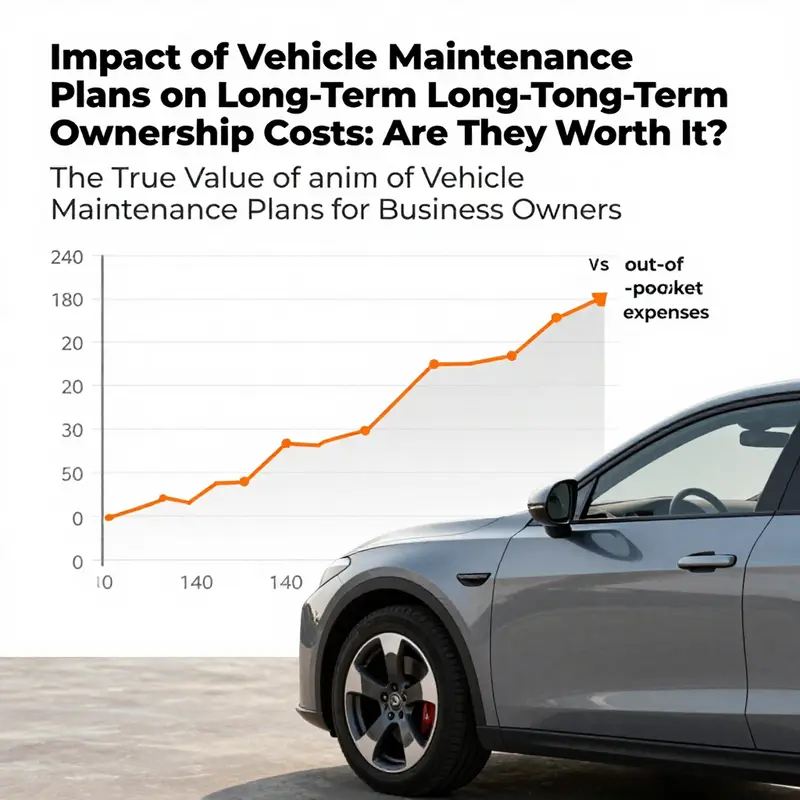
A maintenance plan is rarely just a list of services; it is a form of financial and operational planning for your vehicle. When you buy one, you are buying certainty about future expenses, a shield against surprise breakdowns, and an implicit bet on how you drive and how well you care for your car. The question and the choice hinge on more than sticker price. They hinge on your driving habits, the age and condition of your vehicle, and your willingness to manage risk in a way that matches your personal budgeting style. For some drivers, the plan is a prudent hedge against escalating repair bills and spiraling maintenance costs. For others, it is a redundancy that inflates the annual cost of ownership without delivering equivalent value. The landscape is nuanced, and the answer depends on a careful, individualized cost-benefit analysis rather than broad generalizations. To understand the value, it helps to start with a clear picture of what these plans typically cover, how they are structured, and where their promise can collide with practical realities. Maintenance plans, often marketed as maintenance packages or preventive care plans, generally promise to cover routine services like oil changes, tire rotations, brake inspections, and fluid replacements. In practice, the exact mix of covered services, the frequency of service, the participating repair facilities, and the caps on reimbursements vary widely. That variance matters: a plan that covers all the services you would perform anyway but limits you to a single authorized shop may be less valuable to someone who wants flexibility, or to a driver who travels and needs access to a broad network of service centers. A core paradox sits at the heart of the decision: the benefits of a maintenance plan often come not only from the direct coverage of services but from the peace of mind that predictable monthly or annual costs can provide. If you face a monthly bill for oil changes, tire rotations, and inspections anyway, a plan that bundles these services can offer predictable budgeting. If, however, you routinely service your vehicle at intervals that align with the manufacturer’s schedule and you keep the car in good mechanical condition, you might end up paying for services you would have performed without the plan while still bearing the plan’s upfront cost and any deductibles. The balance between these two outcomes is shaped by your driving style and the car you drive. A useful starting lens is to examine driving habits and vehicle condition. If you drive a newer vehicle with relatively low mileage and you adhere to a disciplined maintenance routine, the incremental value of a maintenance plan can be modest. In such cases, the plan may cost more than the actual price of the services over time. On the other hand, for drivers who neglect routine maintenance or own older vehicles that accumulate wear more quickly, a maintenance plan can be a valuable tool for budgeting around expected repairs and for reducing the risk of larger, more disruptive failures. This is not just common sense; it is reflected in broader data and analyses. A 2023 report by J.D. Power found that consumers who enrolled in comprehensive maintenance plans reported an average of about 18% lower out-of-pocket repair costs over three years compared to those who did not engage with any maintenance plan. The savings were particularly notable for vehicles aged five to eight years, a life-stage when wear and tear begin to show more consistently and when the cost of major components can escalate. Still, the real-world impact of a plan depends on the details of the plan itself—the specific services covered, any cap on annual reimbursements, and the list of eligible service providers. There is a caveat here that deserves emphasis: coverage is not synonymous with inclusivity. Plans often exclude critical repairs, such as engine or transmission failures, or they may require use of specific authorized service centers. Such exclusions can dramatically alter the value proposition. The practical implications become even more important when you apply the plan to a real budget. If the plan costs more than you would spend on legitimate maintenance over the same period, you are paying a premium for the peace of mind that may or may not materialize into tangible savings. In other words, a plan can be a good fit for a risk-averse household that prefers stable monthly expenses, or for someone who suspects they will run into repair costs they cannot anticipate. But for the meticulous car owner who negotiates every service interval and who already minimizes unnecessary repairs, the plan may be an unnecessary expense rather than a savings vehicle. The anatomy of the plan itself matters as much as the price tag. It is crucial to read the fine print because the devil is often in the details. A plan may cap annual benefit reimbursements, limit eligible service centers to a handful of authorized shops, or exclude parts and services that you might actually need. Some plans require that services be performed at specific networks or require preapproval for certain procedures. In addition to the structural caveats, the practical reality many drivers encounter is the underutilization of benefits. A 2024 analysis by Consumer Reports revealed that nearly 40% of maintenance plan users never fully utilized their benefits. The reasons ranged from restrictive eligibility rules to hidden fees that erode the perceived value. When benefits lie dormant, the plan becomes a recurring cost with limited return, and the perceived value evaporates. The conflict between planned coverage and actual usage makes the analysis of value highly case-specific. For a driver on a lease, the equation shifts again. Leases frequently come with mileage limits, and at the end of the term, wear-and-tear charges can be a significant expense. Consumer Reports has highlighted that maintenance plans can be especially beneficial for lessees who are approaching or exceeding mileage credits. In those cases, the plan can help cushion against costly wear-related repairs or fees at lease-end. The logic is straightforward: high mileage accelerates wear; a maintenance plan that covers routine services and certain wear-related components can translate into more predictable and manageable end-of-lease costs. Yet even here, the picture is not universally rosy. If a lease already includes a robust maintenance package or the vehicle is under manufacturer warranty with comprehensive coverage, a separate maintenance plan could duplicate benefits and inflate total costs. The value then becomes a question of marginal utility rather than total coverage. Across these scenarios, one clear takeaway emerges: value is not a universal constant. It is a function of your specific vehicle, your driving pattern, and your tolerance for risk and complexity. Another practical factor to consider is the flexibility and convenience of the maintenance plan. A key advantage often cited is the simplification of budgeting. When you know your out-of-pocket expense for preventive services for the year, you can allocate funds with more confidence, smoothing the inevitable peaks when unexpected repairs arise. The psychological benefit—the sense of control over maintenance costs—should not be underestimated. For many drivers, this predictability translates into actual behavior: they become more likely to perform routine maintenance on schedule, which can stave off bigger problems down the road. The counterpoint, however, is the potential rigidity. Some plans tie you to a particular service network or to specific service times, which can complicate logistics for busy families, travelers, or workers with erratic schedules. There is a related point about maintenance plans and the broader ecosystem of car ownership. If you want to maximize value, you must consider how it interacts with your overall maintenance strategy. Plans that emphasize preventative care align well with the philosophy of staying ahead of problems, but they can underperform if you subscribe to a philosophy of high-touch, on-your-own-terms maintenance where you pick and choose services based on your observations and actual need rather than a prepackaged schedule. That approach has its own merits, particularly for owners who are keenly aware of their vehicle’s condition and who have established relationships with trusted independent shops that offer transparent pricing and flexible service options. A broader question also looms: does the plan truly reduce total cost of ownership, or does it primarily shift the timing of expenses? Some analyses suggest that the savings come from avoiding large one-off repair bills, but if the plan does not cover components that would have failed anyway or if it imposes strict service location constraints, the net effect can be modest at best. For readers who want a practical framework, consider a personal cost-benefit exercise that goes beyond the sticker price of the plan. Start with historical maintenance expenditures for your vehicle over the last three to five years, including oil changes, inspections, tire services, brake work, and any nonroutine repairs you had to incur. Then forecast likely future costs based on current mileage, age, and the vehicle’s known wear patterns. Compare this forecast to the annual and total cost of the plan, factoring in deductibles, caps, and any exclusions. If the plan covers services you would pay for anyway, the marginal cost is simply the convenience premium. If it covers services you would not otherwise perform, its value increases. In addition, measure the plan against the alternative of self-insurance: setting aside a monthly amount to cover routine maintenance and the possibility of larger repairs. The advantage of self-insurance is flexibility and the potential to earn interest on the reserved funds; the risk is that an unexpected major repair can still stretch the budget. The decision is ultimately about tolerance for risk and preference for consistency. The case for a maintenance plan becomes especially compelling when the vehicle is approaching a point where wear escalates and the likelihood of future repairs increases. For example, a driver who has accumulated significant miles on a leased vehicle may appreciate the headroom a plan provides against end-of-lease wear charges. The plan can absorb many of the routine costs that would otherwise become part of the wear-and-tear assessment. Even in such scenarios, the plan should not be accepted blindly. The fine print matters, and the specific coverage should align with your anticipated service needs. It is also essential to assess the plan’s flexibility. If you anticipate a relocation or a long trip, will you have access to the same service network? If the plan requires you to service only at certain dealerships, that may complicate scheduling and add friction to the process. In this sense, the decision is a negotiation: you are weighing cost, convenience, and control. The value proposition gains clarity when you connect it to your broader ownership goals. If the aim is to minimize anxiety about future expenses and you prefer predictable budgeting, a maintenance plan can be a sensible tool, particularly for vehicles in the mid-life stage where wear-related risk becomes more pronounced. If the aim is to maximize flexibility, minimize hassle, and keep overall costs as low as possible, a more selective approach to maintenance—carried out at a trusted local shop with a clear understanding of what is needed—may be preferable. It is not unusual for readers to come away from this analysis with the realization that the maintenance plan is not a slam-dunk win or a guaranteed loss. The value is more about alignment with your personal financial philosophy and the realities of your vehicle. No single metric captures the full nuance, but a disciplined, data-informed approach does. To ground the discussion in practical terms, consider the impact on your budgeting and daily life. If you are the kind of driver who is regularly late to service appointments or who tends to defer maintenance until a warning light glows, a maintenance plan’s regular service cadence can create a discipline that prevents larger problems. Conversely, if you stay within the manufacturer-recommended intervals, rarely push a car hard, and have a deep, trusted network of service providers who offer transparent pricing, there is a stronger case to pass on the plan. In the end, the core message is that maintenance plans are not universally worth it, but they are not universally worthless either. Their value is contingent on a precise fit between the plan’s terms and your driving reality. A well-chosen plan can translate into meaningful savings, easier budgeting, and a sense of control over potential future repairs. A poorly chosen plan can feel like a tax on cautious optimism, a premium paid for peace of mind that never fully materializes. The process to reach a conclusion should be thorough but pragmatic: review the plan’s terms, compare it to actual maintenance costs, assess the vehicle’s age and condition, and consider your lifestyle and travel patterns. If possible, talk to your service providers about plan usage patterns and what drives the most common costs. After that, make a decision that reads true to your approach to ownership rather than the market’s general narrative. For readers who want to explore a practical example, consider how a driver in a mid-life vehicle with moderate mileage might weigh the plan against out-of-pocket costs over a typical three-year horizon. The plan cost, if modest relative to potential savings on routine services and the avoidance of unexpected breakdowns, could represent a sensible hedge. If the driver, however, is a careful maintainer with a newer vehicle still under warranty, the premium attached to the plan may exceed the incremental value. The story is not about right or wrong; it is about fit and discipline. A final reminder: always read the fine print and scrutinize the plan’s exclusions, network restrictions, service frequency, and reimbursement mechanics. A plan that looks attractive on the surface can evaporate into a burden when corner cases arise. And if you are unsure, you can model two paths side by side on a single page—one with the maintenance plan and one without—and let the numbers tell you where the true advantage lies. If you want to see a concrete discussion of how preventative care and cost management intersect in real-world cost accounting, you can explore a concise analysis here: how vehicle maintenance saves on gas expenses. Ultimately, the choice is about your relationship with risk, your willingness to manage complexity, and your dedication to maintaining the health and longevity of the car you depend on every day. In the end, the right answer for one driver may be a confident no, while for another it may be a confident yes, and for still others it may be a careful yes-with-conditions. The key is to make the decision in a structured, informed way that mirrors how you approach other financial commitments—treat maintenance as a component of total cost of ownership, not as an isolated expense, and let the numbers, as well as your peace of mind, guide you. External reference: https://www.consumerreports.org/cars/are-maintenance-plans-worth-it-a297768/
Weighing the Price of Peace of Mind: A Nuanced Exploration of Vehicle Maintenance Plans
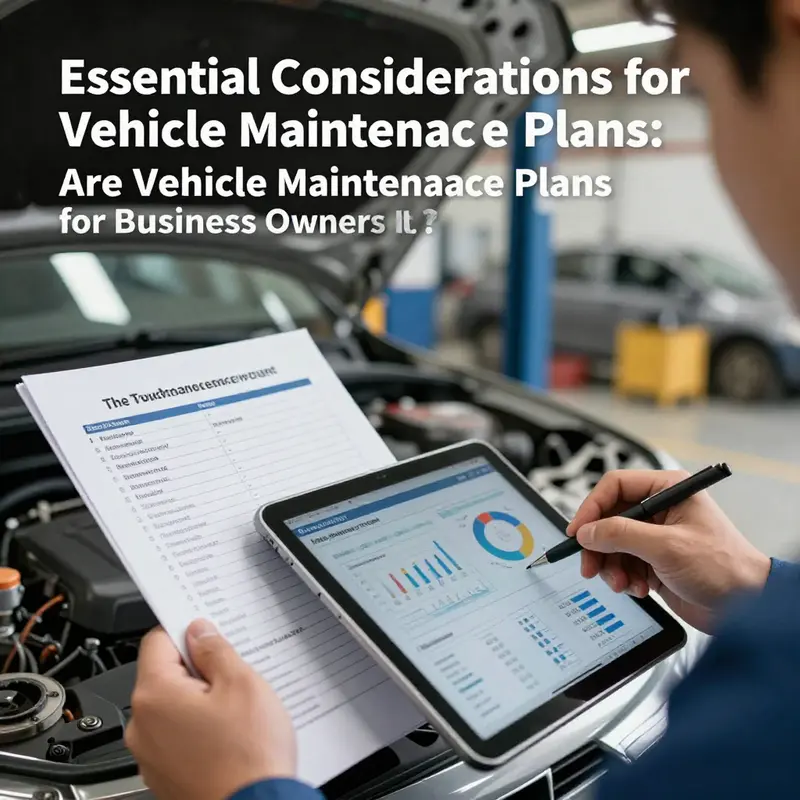
A maintenance plan is rarely a simple yes-or-no decision. It sits at the intersection of cost, risk, and habit, demanding more than a quick calculation of monthly premiums. When you ask whether a vehicle maintenance plan is worth it, you’re really asking whether your own pattern of driving, the age and condition of your car, and your willingness to manage future repairs align with a prepaid pathway that promises convenience and predictability. This chapter seeks to move beyond slogans and sales pitches, offering a grounded, realistic way to think about prepaid maintenance as a financial and emotional investment. It becomes clear that the value of a plan is highly personal and often depends on how you drive, how long you intend to keep the car, and how much you prize the peace of mind that comes with predictable costs and fewer surprise repairs. As with any financial decision tied to a vehicle, the answer is not universal; it is contextual, nuanced, and ultimately practical when measured against your actual spending, expectations, and lifestyle.
A core lens through which to evaluate maintenance plans is cost versus savings. The prepaid model promises to cover routine services such as oil changes, brake inspections, tire rotations, fluid checks, and sometimes more significant repairs. But the real math hinges on whether the plan’s total price will be less than or equal to what you would have spent without it, given your own maintenance history. If your car requires oil changes and rotations every 5,000 to 7,500 miles, and those services cost roughly a combined $100 to $200 per visit, then annual maintenance can run anywhere from $600 to $1,200. A prepaid plan priced at $1,500 or more could still make sense if it reliably encompasses the services you would have paid for anyway, and if it offers additional savings or the avoidance of high-deductible expenses for major repairs. But if the plan covers items you rarely need, or if the network of approved service centers is restrictive, the value can evaporate quickly. In the end, the prudent move is to compare the plan’s cost against your own historical maintenance spending, not against the plan’s touted potential savings in a vacuum. This is where many consumers falter: they overlook simple arithmetic in favor of the allure of prepaid simplicity, only to discover that the math doesn’t work for them.
Driving habits loom large in this calculation. For drivers who accumulate miles at a brisk pace—well over the typical 12,000–15,000 miles per year, and sometimes exceeding 30,000 miles—the likelihood of routine maintenance occurring within a prepaid schedule increases. The plan’s value compounds not just because you keep driving, but because wear-and-tear is more likely to accumulate at an accelerated rate. In these cases, maintenance plans can be a prudent shield against the volatility of repair costs and the unpredictability of when major issues will appear. The same logic applies more pointedly to lessees who regularly approach or exceed mileage caps. Lease agreements can carry heavy penalties for excess wear or for surpassing mileage limits, and a maintenance package that covers wear-related repairs and scheduled maintenance can buffer against those end-of-lease fees. Consumer Reports and similar sources have highlighted this dynamic, underscoring how prepaid maintenance can offer tangible protection for people whose driving patterns stress a vehicle’s wear profile or whose financial outlays are tightly budgeted around lease terms. The peace of mind that comes with predictable maintenance bills can be especially appealing when the alternative is the specter of surprise repair costs that could derail a budget or lead to a cash-flow squeeze.
But the calculation tilts in another direction for those who drive modestly, own newer cars still under a robust manufacturer warranty, or maintain meticulous service records and strict adherence to the recommended service intervals. In such cases, a maintenance plan can feel redundant or even overpriced. The value diminishes when the routine services required by a prepaid plan duplicate the maintenance you would perform anyway under the car’s recommended schedule. If you already schedule oil changes and inspections at intervals that align with the car’s guidance, and if you’re proactive about tires, brakes, and fluids, the incremental value of paying upfront for a plan may be small or non-existent. In these scenarios, the plan is less a shield against costs and more a convenience product—a way to simplify administration or to convert unknown future costs into known, fixed payments. The risk, of course, is paying for that convenience without enjoying the full range of benefits the plan promises, or discovering that several covered services are exclusions or limited to specific service centers. Reading the fine print is essential here; it can reveal restrictions—such as required use of particular service networks or the exclusion of certain components—that erode value and complicate the decision.
The nature of coverage matters as much as the cost. A sound maintenance plan is not a generic bundle; it is a contract with specific inclusions and exclusions, and those terms shape whether the plan truly addresses your needs. Some plans bundle routine maintenance with certain major repairs, or they provide coverage for wear-related repairs that would otherwise be a significant out-of-pocket expense if the wear becomes acute. Others pare coverage down, offering only basic services while imposing high deductibles for anything beyond the routine. The flexibility of the plan—whether it permits you to choose any qualified shop or binds you to a limited list—also affects value. A plan that locks you into a single dealer network may be convenient for administrative purposes, but it can reduce your options if your car later moves across regions or if you find a preferred independent shop that offers better pricing or faster service. The practical effect is that a prepaid plan with generous coverage but rigid terms can be less valuable than a flexible plan with a smaller upfront cost but broader service access. In evaluating a plan, it’s essential to map out the services you would actually use, ask about service center requirements, and check whether major repairs are fully covered, partially covered, or excluded after a cap is reached. If the plan leaves you facing big deductibles at the moment you need it most, its value shrinks even if the annual premium seems appealing in isolation.
Another layer of complexity is the distinction between routine maintenance and unexpected repairs. Maintenance plans often focus on the predictable, scheduled aspects of car care—oil changes, fluid top-offs, tire maintenance, and inspections. These are services you can reasonably anticipate on a calendar-based schedule and mileage-based trigger. They are the bread-and-butter of many maintenance plans and the primary justification for buying them. Yet major mechanical failures—transmission issues, engine problems, or hybrid electric drivetrain repairs—represent a different category of risk: one that is less predictable and potentially far more costly. Some prepaid plans purport to cover major repairs or contribute partial coverage toward them, while others explicitly exclude major mechanical failures or allow coverage only within a network of specific repair partners. The difference between these approaches is profound. If a plan promises major-repair coverage but with steep caps or limited components, you could find the plan’s protections insufficient relative to the risk you face, especially if your car is older or has already accumulated significant wear. Conversely, if a plan offers strong coverage for both routine maintenance and major repairs, with broad network access and transparent terms, the value proposition strengthens markedly.
The choice is further complicated by the realities of ownership models and market dynamics. If you own a car outright and anticipate keeping it for many years, the plan may need to prove its long-term value across multiple ownership cycles. If you lease, the calculus shifts toward end-of-lease considerations; wear-and-tear coverage and mileage-based penalties become a more immediate concern, and a plan that mitigates those risks can deliver meaningful savings. For newer used vehicles or certified pre-owned programs, the presence or absence of a manufacturer warranty also matters. A car still under the original warranty typically reduces the incremental value of an additional maintenance plan, because many covered services are already included or discounted through the warranty’s terms. In contrast, a vehicle with a history of repairs or a model with known maintenance quirks can make a prepaid plan more attractive, particularly if those quirks translate into regular service needs that would otherwise accrue out-of-pocket costs.
As a consumer, your decision should rest on a thoughtful evaluation rather than a reflex reaction to a glossy brochure. Start with a clear audit of your past maintenance expenses. Do the math across the last three to five years, adjusting for miles driven and any major repairs. If your historical spending is consistently well below the plan’s annual cost, the plan is unlikely to deliver a favorable return unless there are compelling extras—such as guaranteed long-term price stability, emergency roadside assistance, or premium access to faster service—that you value. If your maintenance budget is already volatile or if you drive far more than average, the plan’s predictability can be a major advantage. You might decide that predictable monthly or annual costs help you manage finances with greater ease, even if the strict numbers show a marginal edge. The intangible benefit—less anxiety about the bill when a service is due or a warning light appears—has real value for many people, especially those who prefer to budget with certainty rather than wonder what each service will cost.
A practical way to approach the decision is to adopt a minimal but disciplined framework. First, determine your driving pattern: miles per year, typical service intervals, and the likelihood you would require services outside the standard schedule. Second, itemize the plan’s coverage in plain terms: what is included, what is excluded, what services require the use of a specific network, and what deductibles exist for major repairs. Third, compare the plan price to your expected maintenance spend over the same horizon, adjusting for inflation and potential rate increases. Fourth, consider the flexibility you need. If you might relocate or travel and want access to a broad network of shops, a plan with fewer restrictions is preferable. Fifth, assess risk tolerance and financial goals. Do you value guaranteed cost savings regardless of usage, or do you prefer paying out of pocket when you truly need a service to maximize flexibility and control? These steps help you translate abstract promises into concrete expectations and reduce the likelihood of buyer’s remorse.
It is also worth acknowledging that maintenance plans are not the only tool for managing repair costs. Proactive maintenance, routine checks, and disciplined driving habits can dramatically reduce the frequency and severity of problems, sometimes more so than any prepaid arrangement. A conscientious driver who adheres to recommended service intervals, uses quality fluids and parts, and promptly addresses issues discovered during inspections may find that the out-of-pocket costs align closely with the service schedule, making the prepaid option seem less compelling. Conversely, someone who tends to push maintenance to the edge of the recommended intervals or who drives a vehicle with a known reliability caveat may discover that a prepaid plan shields them from the sting of last-minute repairs and the associated budget shock. In this sense, the value of a maintenance plan is less about a universal metric and more about how it aligns with your discipline, your risk tolerance, and your financial architecture.
The discussion above does not occur in a vacuum. It sits within broader conversations about car ownership, risk management, and the evolving landscape of vehicle technology. Electric vehicles, for instance, bring a different maintenance profile, because there are fewer moving parts and no regular oil changes. Yet they introduce other cost considerations—battery health, electric motor cooling, and software updates—that may or may not be covered by a prepaid plan. For some drivers, the reduced maintenance burden of electrified powertrains increases the appeal of a plan that protects against unusual or expensive battery-related repairs, while for others, the lower frequency of routine services makes a prepaid maintenance plan seem excessive. This nuance underscores the need to tailor decisions to the specific vehicle type and its expected maintenance trajectory, rather than applying a one-size-fits-all approach.
In sum, the worth of a vehicle maintenance plan rests on a careful calibration of cost, coverage, and personal circumstance. If your driving habits involve high mileage, leased vehicle ownership, or a vehicle with known maintenance vulnerabilities, a prepaid plan can deliver meaningful value through cost smoothing, risk mitigation, and budget predictability. If you drive modestly, own a newer car under warranty, or maintain a rigorous service routine with an eye toward long-term reliability, the plan may be redundant or overpriced. The decisive step is to perform a grounded comparison: project your maintenance costs for the plan’s horizon, weigh them against the plan price, and read the fine print about exclusions and service center requirements. Only then can you determine whether prepaid maintenance is a prudent addition to your financial strategy or a misalignment of needs and costs.
For readers seeking a starting point in understanding what counts as maintenance and why these decisions matter, a reliable, straightforward resource is available through the broader underpinnings of vehicle care. What is vehicle maintenance provides foundational clarity on routine needs versus discretionary upgrades, helping you separate essential services from optional add-ons in a way that informs any decision about prepaid plans. The takeaway is simple: the decision should be driven by real-world usage and thoughtful budgeting, not by the marketing promise of prepaid convenience. If you feel drawn to the security of fixed costs, weigh that appeal against the likelihood of using every offered service and the network flexibility you require. If not, your dollars may be better spent maintaining control over when and where you pay for service, with the occasional surprise budget-friendly repair turning into a learning moment rather than a costly misstep.
External resource for further context and age-old questions about prepaid maintenance: https://www.consumerreports.org/cars/should-you-get-prepaid-car-maintenance-a-2026-guide/.
null
null
Final thoughts
In conclusion, the decision on whether vehicle maintenance plans are worth it for your business ultimately hinges on specific circumstances such as vehicle age, mileage, and your maintenance priorities. Evaluating the cost-effectiveness, weighing essential considerations, and analyzing the long-term financial implications will guide you toward a well-informed conclusion. Balancing upfront costs with potential savings can help you decide if such a plan aligns with your operational strategy and financial goals.