

As businesses seek to optimize operations and reduce costs, the shift towards electric vehicles (EVs) is becoming increasingly relevant. Electric vehicles promise numerous maintenance advantages over traditional gasoline-powered vehicles, boasting fewer moving parts and often lower long-term upkeep expenses. In this exploration, we will examine the maintenance benefits of EVs, delve into the technological advancements that facilitate these efficiencies, and compare the overall costs of maintaining electric vehicles versus gasoline vehicles. Together, these discussions will equip business owners with the insights needed to make informed decisions about integrating electric vehicles into their fleets.
Graceful Longevity: How Electric Vehicles Redefine Maintenance and What It Means for Everyday Driving
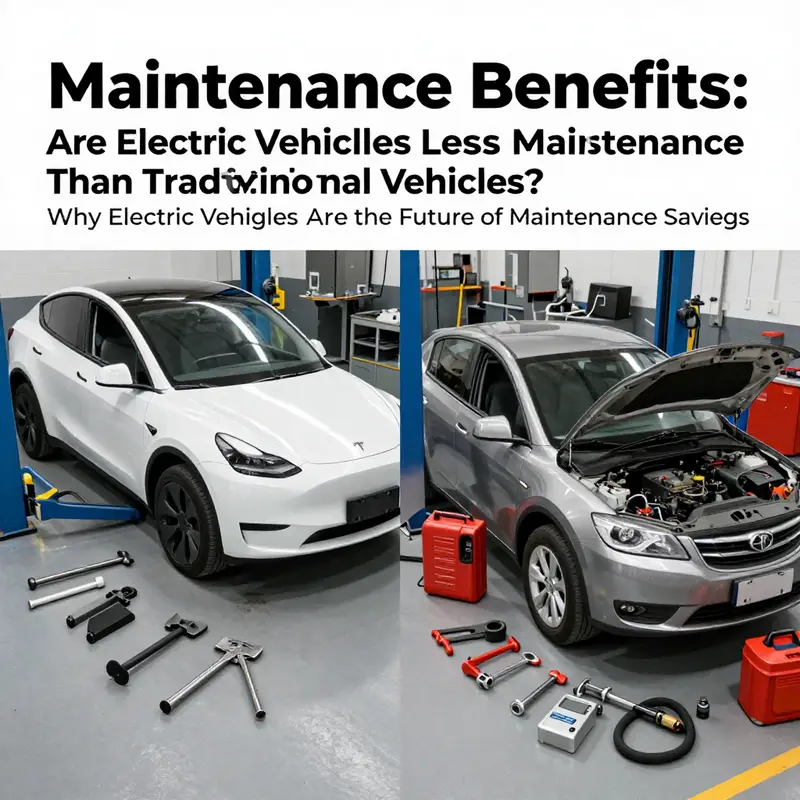
The question of maintenance often sits at the crossroads of cost, reliability, and daily practicality. When people ask whether electric vehicles (EVs) are less maintenance-intensive than traditional internal combustion engine (ICE) cars, they are really asking how long a car will stay on the road, how often it will require service, and how predictable those service events will be. The evolving answer is not a single formula but a convergence of design choices, operating realities, and the way people use their vehicles. What emerges in both studies and real-world owner data is a narrative built on fewer moving parts, a reduction in routine fluid-dependent tasks, and a reimagined system for braking and propulsion that shifts maintenance from a calendar of changes to a more data-driven, longer-interval rhythm. This chapter pieces together the core of that narrative, showing how the simplified mechanical architecture of EVs translates into tangible maintenance advantages, while also acknowledging where complexity can creep in under the long arc of ownership.
A striking and widely cited claim centers on the sheer mechanical simplicity of EVs. In many ICE vehicles, thousands of components work in concert: pistons, gears, belts, lubricants, exhaust systems, cooling circuits, spark plugs, and a transmission that can itself demand attention. The EV, by contrast, trades many of these elements for a motor, a battery pack, and a comparatively leaner drivetrain. When you count moving parts, the divergence is substantial. Estimates often place EVs at roughly a fifth to a quarter of the moving parts of an ICE vehicle. That reduction matters because it translates directly into fewer points where wear and tear can accumulate. A vehicle’s life is, in essence, a long sequence of parts approaching their wear limits. Fewer parts mean fewer opportunities for those limits to be reached, which in turn reduces the frequency of unexpected breakdowns and the need for expensive repairs.
The most familiar outcome of this leaner design is the absence of oil changes. Oil serves as the lifeblood of ICE engines, lubricating the moving parts that convert fuel into motion. Over time, the oil degrades, filters clog, and the engine’s internal tolerances must be maintained. EVs do not burn oil; their electric motors operate without the same oil film, so routine oil changes simply do not exist in the maintenance playbook. This single factor alone reshapes the cost and cadence of upkeep. The savings accrue not only from the oil itself but from the ancillary maintenance that commonly accompanies oil systems—oil filters, drain plugs, gaskets, and the potential for oil leaks that can trigger additional inspections and repairs. In the broader context of vehicle maintenance, eliminating regular oil changes reduces both the annual expenditure and the time spent in service bays, freeing owners to devote their attention to other priorities.
A related and perhaps overlooked advantage arises from the battery-electric drivetrain’s overall mechanical simplicity. The traction system in an EV lacks a traditional multi-speed transmission with its associated clutch assemblies and fluid maintenance. In many EVs, the drivetrain is a relatively compact module with fewer torque-transmitting components and a design that emphasizes long-life operation. This translates to fewer service actions aimed at maintaining the transmission. For the consumer, that means fewer visits to a shop for transmission fluid changes, timing belt replacements, or other frequent drivetrain interventions that have historically burdened ICE ownership. The consequence is not merely fewer repairs but a different kind of reliability, grounded in components engineered for extensive service life rather than rapid cycling of wear-prone parts.
Another area where the maintenance equation tilts in favor of EVs is the braking system. Regenerative braking, a fundamental feature in many EVs, converts kinetic energy back into stored electrical energy during deceleration. This process reduces the mechanical wear on conventional friction brakes by taking a portion of the job away from the brake pads and rotors. Drivers experience strong deceleration through a combination of motor resistance and actual brake application, yet the pads typically wear more slowly than in ICE vehicles. The acceleration of wear during normal use is attenuated as the vehicle recovers energy with every stop. The brake fluid system remains essential, but the frequency of pad and rotor replacements declines, sometimes dramatically, depending on driving style and environment. In practical terms, brake service visits become less frequent, and when they do occur, they are often less costly because the calipers, rotors, and pads have endured less ordinary wear.
It would be remiss to discuss maintenance without addressing the exhaust system that exists only in ICE vehicles. EVs do not contend with mufflers, catalytic converters, or exhaust leaks. This absence eliminates a broad category of failure points and recurring repairs that can nickel-and-dime a maintenance budget over the vehicle’s life. The lack of an exhaust system also reduces the risk of corrosion-related failures in typical climates. While EVs carry other complexities—high-voltage systems, battery cooling, and advanced thermal management—the day-to-day maintenance burden associated with exhaust components simply does not apply, which streamlines the routine service required by most owners.
Yet the reduction in maintenance tasks does not assume a maintenance-free future. Battery systems, thermal management, and high-voltage components do introduce their own sets of considerations. Batteries are designed for durability and are typically covered by long warranties—often eight to ten years, or even more in many markets. The enduring question for many drivers is not whether the battery will fail but how replacement costs and warranty terms will shape the total lifetime cost of ownership. Proper battery management, thermal control, and software updates can extend the usable life of the pack and preserve performance over many years. In this sense, the maintenance conversation shifts from the volume of routine tasks to the quality and visibility of the few critical interventions that do occur. Even when major components require service, the structured warranties and service networks around EVs tend to provide clarity and predictable coverage, which is a meaningful difference from the more opaque variances that can accompany ICE component failures.
The literature around maintenance costs reinforces these qualitative observations. A 2023 study by the American Automobile Association (AAA) found that EV owners typically spend about 50 percent less on maintenance and repairs over the vehicle’s lifetime compared with ICE vehicle owners. That figure captures not only the frequency of service events but also the cost per event, which tends to be lower when the most expensive repairs—engine-related, transmission-related, exhaust-system-related—are not in the equation. The result is a lifecycle perspective: EV ownership, on average, presents a lower maintenance burden over the long run, even when accounting for the potentially higher upfront purchase price and the complexity of some EV systems.
The reasons for these savings extend beyond the mechanical to the systemic, as it were. EVs operate on a more straightforward mechanical philosophy: fewer levers and moving parts, reduced need for liquids beyond coolant and minimal lubrication, and a drivetrain that emphasizes longevity. This combination yields dividends in customer experiences and service-center economics. Owners report fewer unexpected trips to the shop, more predictable maintenance schedules, and, perhaps most compellingly, a smoother integration of regular maintenance into their life rhythms, where the schedule centers on intervals rather than on surprise failures.
Still, the conversation would be incomplete without acknowledging that not all maintenance items disappear. Tires wear with the vehicle’s weight and the frequency of use, and tire replacement costs can be substantial. Tire rotation remains important to ensure even wear, particularly as the vehicle’s weight distributes differently across axles due to the battery pack’s mass. Cabin air filters, wiper blades, and fluids for cooling circuits continue to require attention, albeit on different cadences than in ICE cars. The presence of high-voltage systems means that some maintenance tasks demand specialized training and equipment. While this can elevate the professional cost for certain services, it does not erase the fundamental narrative: the opportunities for routine maintenance are fewer, and their execution can be more efficient because of the underlying simplicity of the propulsion architecture.
The cost dynamics of maintenance also interact with ownership patterns and vehicle usage. EV owners tend to engage with maintenance differently; the absence of routine oil changes meaningfully frees up time and a portion of the annual maintenance budget. The larger upfront investment, while a consideration, is often balanced by the long-range maintenance savings and the potential for government incentives, which, while not directly reducing maintenance costs, can affect the overall ownership economics. Importantly, the maintenance advantage is most pronounced for drivers who put a lot of miles on the car and who rely on the vehicle for daily transportation. In that sense, the maintenance narrative around EVs evolves as a function of both mechanical design and real-world usage, rather than a one-size-fits-all theoretical claim.
There is a subtlety worth emphasizing for readers who want a practical sense of what maintenance looks like day to day. In the absence of regular oil changes, some owner routines shift toward battery health monitoring, software updates, and periodic checks of the cooling system. While these tasks may appear exotic, they often translate to fewer trips for routine service. The upshot is a cycle that tends to be more predictable and, for many, less disruptive to routine life. The repeatable nature of EV maintenance—predictable intervals tied to ranges of miles or time, rather than ad hoc repairs prompted by a cascade of wear—offers a form of budgeting and planning that ICE ownership does not always provide. For some households, the predictable maintenance cadence can be as valuable as the monetary savings, turning vehicle care into a simple, reliable aspect of daily planning.
The question of maintenance efficiency inevitably leads to the broader topic of cost comparison across the lifecycle. The AAA study provides a clear benchmark, but the interpretation of that benchmark benefits from considering what is included in maintenance and repairs. EVs accumulate fewer parts that require replacement, yet when a replacement is necessary, the repair or battery-related intervention may be specialized and, at times, expensive. This is where warranties and service networks matter. A generous warranty on the battery and drivetrain provides a cushion that allows owners to enjoy the maintenance savings without constantly monitoring the risk of catastrophic failures. When a vehicle lifecycle is viewed through the lens of probability and risk-adjusted costs, EVs emerge as a compelling choice for drivers who value long-term predictability and lower routine maintenance burdens.
The chapter’s core message—less maintenance, lower routine costs, and a refreshed approach to servicing—stays consistent across regions and driving profiles, but it is not devoid of nuance. The nature of the maintenance savings depends on driving patterns, climate, and the local availability of qualified service professionals. In regions with robust EV service ecosystems, the maintenance story is straightforward and reassuring. In areas where EV expertise is less common, owners may find that some services require longer wait times or higher specialized labor, potentially offsetting some of the perceived savings. Still, even in those contexts, the fundamental structural advantages—fewer moving parts, elimination of oil changes, and reduced brake wear—tend to persist as the main drivers of maintenance efficiency.
In thinking about future implications, one can envision maintenance becoming even more efficient as battery technology matures and software-driven diagnostics improve. As sensors, telematics, and remote software updates optimize performance, the need for in-person visits could shrink further. The potential to diagnose issues remotely and perform tune-ups or calibrations over the air can transform maintenance from a reactive practice to a proactive, preventative discipline. In that sense, EV maintenance is not simply a recap of current advantages but a forward-looking evolution that aligns with broader shifts toward electrification, digital diagnostics, and integrated vehicle health management. The narrative of maintenance, therefore, is not a static catalog of service items but a dynamic, ongoing conversation about reliability, predictability, and the efficiency of care behind the wheel.
To make this narrative concrete, consider the practical implications for a typical household evaluating new-car ownership. The maintenance advantage translates into budget planning where the expected annual outlay for routine service is lower for an EV than for an ICE vehicle. The robustness of the data—spanning owner experiences, warranty terms, and insurer analyses—supports a view that EVs offer a more predictable maintenance path. This predictability matters as much as the dollar savings because it shapes how households allocate discretionary income and how they experience vehicle reliability in daily life. The payoff is not merely a lower sum on a receipt but a steadier relationship with a vehicle that remains dependable over the long run.
The broader article’s question—are electric vehicles less maintenance than traditional vehicles?—is answered affirmatively by the convergence of mechanical design advantages, maintenance cadence shifts, and compelling lifetime cost data. Yet the answer is nuanced. EVs do require attention in areas that ICE vehicles do not, and the real-world maintenance story is mediated by driver behavior, local service ecosystems, and the pace of technology adoption. The strongest evidence, however, points in the same direction: EVs offer fewer routine maintenance tasks, reduced wear on core systems, and a maintenance cost trajectory that, for most ownership horizons, is lower than that of ICE vehicles. The combination of fewer components, elimination of oil and exhaust-related maintenance, and reduced brake wear creates a compelling case for the maintenance benefits of electric propulsion as part of the broader shift toward sustainable, lower-cost mobility.
For readers seeking a concise synthesis of these insights and a sense of how to apply them when planning a purchase or budgeting for maintenance, the key takeaway is this: the real value of EV maintenance lies not only in the dollar figure but in the reliability framework and the alignment with everyday life. Fewer things to service means fewer surprises and more predictable maintenance journeys. That stability—paired with credible lifetime cost advantages—helps explain why many drivers, once they experience the EV service rhythm, view maintenance as a smaller, more manageable part of car ownership. When the maintenance landscape becomes simpler, it also becomes friendlier to the routine of daily life, letting owners spend less time in service lanes and more time on the road enjoying the benefits of electric propulsion.
As you reflect on the maintenance implications for your own needs, you can explore further through the broader literature and commentary that align with this chapter’s narrative. Do Electric Vehicles Require Less Maintenance? is a helpful entry point that summarizes the evidence and the practical implications. Do Electric Vehicles Require Less Maintenance? This piece reinforces the pattern described here and invites readers to consider how the maintenance rhythm might fit their own usage profile. In sum, the maintenance story of EVs is not simply about skipping oil changes. It is about rethinking how a vehicle ages, how service intervals are scheduled, and how the economics of care shape the experience of ownership over time. The chapter you have read situates these ideas within a larger movement toward efficient, resilient mobility where fewer moving parts, smarter energy use, and streamlined service come together to redefine what it means to own a car in the electric era.
External reference: AAA Electric Vehicle Maintenance Report provides a detailed, methodology-grounded view of maintenance costs and service patterns in EVs, which underpins the trends discussed above. The report is available for deeper review at https://www.aaa.com/autorepair/articles/electric-vehicle-maintenance
Light on Moving Parts, Heavy on Savings: The Maintenance Advantage of Electric Vehicles
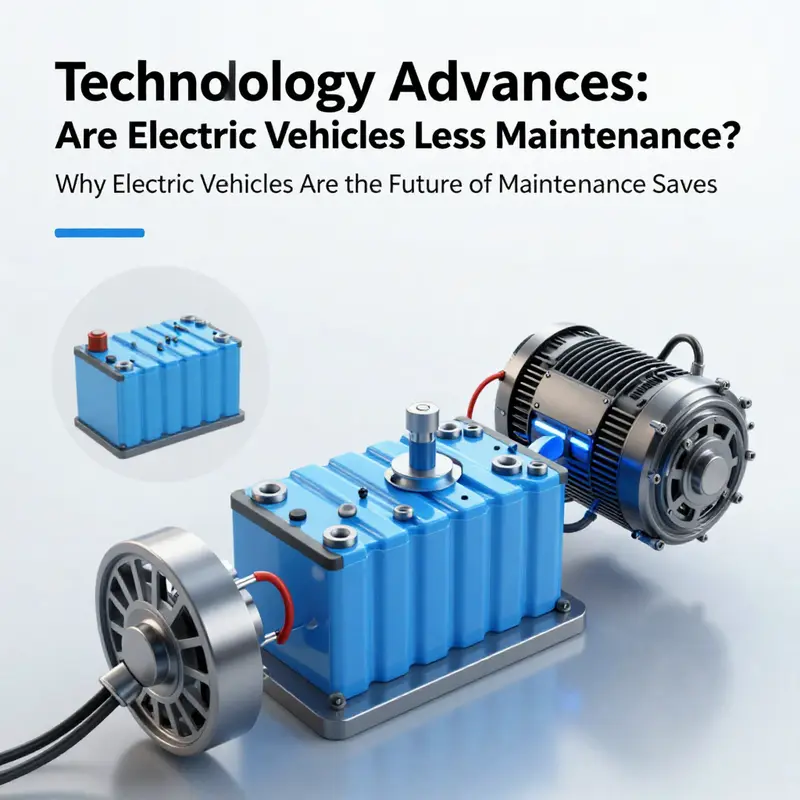
The conversation around electric vehicles (EVs) increasingly centers on maintenance as a practical measure of value. Across private garages and fleet operations, owners report a familiar pattern: EVs require less routine attention than their gasoline-powered counterparts. The core reason is not merely the absence of an engine but the fundamental redesign of the propulsion system and its ecosystem. An ICE vehicle envelops the driver with a tangle of components that wear, degrade, or require periodic service. Pistons, valves, timing belts, camshafts, oil pumps, exhaust systems, coolant pumps, and complex multi-gear transmissions all carry the potential for failure or scheduled replacement. In contrast, an electric motor, with its markedly simpler architecture, operates with far fewer moving parts. The motor itself is a compact unit with few wear-prone interfaces, and the drive unit is tethered to a straightforward transmission system, often with just one gear or a simplified reduction train. This structural simplicity translates directly into lower likelihood of mechanical failures and a reduced set of maintenance tasks. Where ICE vehicles demand regular oil changes, transmission fluid changes, spark plug replacements, and periodic exhaust system checks, EVs largely skip those routines. The result is a maintenance profile that feels almost foreign to drivers accustomed to the ongoing ritual of fluids, belts, and filters that define the traditional service schedule. In practical terms, owners report fewer service visits and lower long-term costs, especially when viewed against the backdrop of higher upfront electric vehicle prices and the long miles many drivers accumulate before they trade in a vehicle. The broader implication is clear: the technology itself reshapes what it means to keep a car running smoothly, shifting the focus from routine, scheduled interventions to a leaner, more predictable set of maintenance needs.
A broad consensus among researchers and practitioners supports this view, and one of the strongest voices in the field is an automotive systems engineer who has studied EV reliability and lifecycle costs. Her work underscores a simple yet powerful point: by removing layers of mechanical complexity, EVs reduce the probability of common failure points. The logic follows that with fewer parts, there are fewer opportunities for wear to translate into costly repairs or unexpected breakdowns. This is not to say EVs are maintenance-free; rather, they offer a different maintenance economy—one that prioritizes certain tasks while largely bypassing others that dominate the cost and time budgets of ICE ownership. For readers seeking a practical synthesis, a focused discussion on the maintenance implications of EV ownership can be found in a blog that examines whether electric vehicles truly require less maintenance. It presents grounded arguments drawn from owner data and workshop experience, helping to translate theory into everyday expectations. Do Electric Vehicles Require Less Maintenance?
Inside the EV maintenance envelope, the powertrain stands out as the most conspicuously streamlined part of the vehicle. Electric drivetrains substitute the multi-cylinder, crankshaft-driven architecture of an internal combustion engine with a compact, high-torque electric motor coupled to a simplified gear arrangement. In practice, that translates to dramatically fewer parts that can seize, wear, or fail under normal driving conditions. The well-trodden maintenance tasks that are routine for ICE vehicles — oil changes every few thousand miles, transmission fluid flushes, belt inspections, and a spectrum of sensors and actuators that interact with the engine — disappear or become rare. The engine room has been replaced by a controller and a motor, both engineered for durability and longevity. The industry expectation is that the primary maintenance rhythm shifts away from the engine and toward components that are functionally critical yet produce less frequent service demands, such as tires, brakes, cooling system checks, and battery health management.
Regenerative braking, a hallmark of EV technology, is more than a clever energy saver; it is a practical brake life extender. When you lift off the accelerator, the motor acts as a generator, converting kinetic energy into stored electrical energy. This process reduces the energy demand placed on the traditional friction brakes during deceleration. The consequence is not subtle: brake pads, rotors, and associated hydraulic systems wear more slowly, often extending their service life well beyond what is typical in gasoline-powered cars. The numbers, while varying by vehicle design and driving style, frequently show brake components lasting far longer than conventional expectations. In many scenarios, owners report a decade of life on brake linings under normal driving conditions, with some vehicles approaching or exceeding the 100,000-mile mark before a major brake service is required. That is a tangible, real-world payoff that translates into lower maintenance costs, less downtime, and a more predictable ownership experience. In a life-cycle sense, regenerative braking reshapes expectations about when, and how often, the most common and costly wear items in a car will need attention.
Another structural difference—the absence of exhaust systems, cooling fans, and drive belts that tend to degrade in ICE platforms—further reduces maintenance burdens. The exhaust system, a frequent source of rust, leaks, and costly exhaust-related repairs, simply does not exist in BEVs. Fewer belts mean fewer belt-driven accessories to inspect and replace. Cooling considerations, too, are different. Whereas an ICE vehicle relies on a radiator, fans, and a suite of cooling circuits to manage an engine that generates a lot of waste heat, an EV’s thermal management system is purpose-built for the battery and the motor, often with closed-loop or targeted cooling strategies. These systems can require maintenance and coolant replacement, but the intervals and failure modes differ markedly from conventional cooling systems. The net effect is a quieter, steadier maintenance profile that many owners find easier to manage, especially when they align maintenance visits more with wear items like tires and wipers rather than fluid changes and belt replacements.
A practical, frequent question concerns warranty protection for the most critical EV subsystems. Batteries and electric drivetrains typically carry long-term warranties that reflect their expected durability. These assurances, often spanning eight to ten years or more, provide a level of financial protection that can further reduce the perceived maintenance burden. The warranty framework acknowledges that while the infrastructure and chemistry behind batteries are advancing, they remain a sophisticated technology with their own unique risk factors. Yet, because the core drive components of EVs are engineered for longevity under a spectrum of operating conditions, the expected maintenance events that drive costs in ICE vehicles—such as major engine or transmission failures—are less common in the EV domain. This alignment between durability and warranty coverage creates a compelling narrative for lower long-term maintenance costs, a point that resonates with families weighing total cost of ownership and fleets aiming to optimize uptime.
From the perspective of lifecycle costs, the convergence of fewer consumables and simpler mechanical design is often the decisive factor. The intuitive logic is that fewer replacement parts and simpler service requirements yield lower recurring expenses. This appears in owner data, which show that EVs incur fewer service visits and lower expenditure on routine maintenance across many vehicle lifetimes. A researcher focused on automotive systems and maintenance trends notes that the shift from frequent oil and fluid changes to more infrequent checks on cooling systems and software updates marks a fundamental change in the care model. While the initial purchase price of EVs remains a consideration for many buyers, the ongoing maintenance savings offer a counterbalance that can tilt the economics in favor of electric propulsion over the long haul. The narrative aligns with government and independent studies that emphasize reduced maintenance costs as a meaningful component of the total cost of ownership for EVs, particularly as battery reliability and charging infrastructure continue to improve.
Despite the positive maintenance story, nuance matters. EVs are not maintenance-free, and their advantage is not uniform across all scenarios. Tire wear remains a constant, as EVs tend to be heavier than their ICE counterparts due to battery weight and, in some cases, driveline layout. The heavier mass increases tire and suspension wear in certain driving contexts, which means tire rotation, replacement, and alignment services continue to contribute to maintenance costs. Some models incorporate battery cooling systems and complex thermal management, which require periodic checks and occasional coolant service. While these tasks are less frequent and often less costly than the analogous ICE maintenance, they represent ongoing care that owners must plan for. The charging ecosystem itself introduces a different kind of maintenance footprint. While charging hardware might require less mechanical upkeep, the availability and reliability of charging infrastructure influence vehicle usage patterns, which in turn affect wear and tear and the urgency of certain preventive checks. The upshot is that the maintenance economy of EVs is not simply a matter of fewer parts; it is a reweighted balance of services that emphasize wear-resistant components and systems designed for long life, with some new potential touchpoints for service that require specialized knowledge.
The broader point extends beyond the mechanics of individual vehicles. As battery technology advances and charging networks expand, the maintenance advantages of EVs are likely to grow more pronounced. Modern battery packs are designed with durability in mind, and manufacturers often emphasize thermal management and module-level diagnostics that enable proactive maintenance rather than reactive, catastrophe-driven service. A more mature ecosystem also means better remote diagnostics, software updates delivered over the air, and predictive maintenance models that alert owners to relatively minor issues before they become disruptive. In this sense, the maintenance story for EVs is not only about how many parts are spared but also about how information, telemetry, and service networks enable smarter, less disruptive upkeep. The research trajectory suggests that the maintenance gap between EVs and ICE vehicles will widen as technology matures, driving stronger overall value for those who adopt electric propulsion.
For readers who want a deeper dive into the technical specifics of maintenance and performance, the U.S. Department of Energy provides a detailed overview of EV maintenance that covers the practical implications of these design choices, including recommended service intervals, battery care, and the role of regenerative braking in longevity. This resource anchors the discussion in an authoritative viewpoint and complements the experiential picture painted by owner data and industry analyses. As a practical note for readers exploring the value proposition of EVs, consider exploring the linked resource and the broader body of DOE guidance on electric drive systems and maintenance expectations. In the meantime, the maintenance narrative remains clear: a simpler powertrain, coupled with advanced energy recovery and durable subsystems, translates into less frequent, lower-cost routine care for many typical ownership scenarios.
The evolution of maintenance costs also intersects with how drivers interact with their vehicles. EV owners may schedule fewer oil-related services and more tire and brake work, which aligns well with typical driving patterns centered on wear items rather than routine fluid replacements. The day-to-day reality is that an EV can be serviced much like a modern smartphone: less frequent major interventions, more frequent software and systems checks, and a focus on the hardware layers that actually wear over time. In many respects, the maintenance experience becomes more predictable, which is a meaningful benefit for households trying to budget for the life of a vehicle. However, the value proposition remains contingent on several factors, including driving style, climate, climate control usage, and the local availability of skilled technicians who understand EV systems. As with any significant purchase, consumers should calibrate expectations to their own circumstances and consider how maintenance schedules align with their daily routines.
To readers who are curious about practical maintenance planning, it can be helpful to approach EV upkeep as a rebalanced calendar. Expect to invest in tires, brake components, wipers, cabin filters, and periodic battery thermal management checks. Plan for regular software updates that optimize efficiency, safety, and performance. Embrace the idea that some tasks are now performed through predictive diagnostics rather than reactionary fixes. This shift does not negate the value of preventive care; it reframes it in a way that can reduce the overall strain on the vehicle’s systems and the owner’s budget over time. The real-world implication is that maintenance routines can be simplified without compromising reliability, and that the overall ownership experience becomes more predictable and affordable for many drivers. The narrative is not merely theoretical: it is reflected in owner reports and the growing consensus in automotive research circles that EVs offer a compelling maintenance story relative to ICE counterparts.
For those who want a concise take or a practical guide, the literature emphasizes a few core habits that preserve EV reliability. Regular tire maintenance to manage rolling resistance and balance wear, timely brake inspections to catch unusual noises or rotor wear, and attention to battery cooling system components when the vehicle signals a check or a warning are prudent habits. Keeping the cabin air filters clean, ensuring the thermal management system remains free of leaks or blockages, and maintaining consistent charging practices that align with the battery’s chemistry all contribute to longevity. While none of these steps is as frequent or as expensive as routine oil changes or transmission services, they form the new baseline of EV upkeep. In this sense, maintenance for EVs represents a shift in both the focus and cadence of care, rather than a wholesale elimination of service needs. The broader takeaway is that the maintenance advantage emerges from design philosophy and system integration, rather than from a single, universal fix. It is the cumulative effect of fewer moving parts, smarter energy management, and a maintenance ecosystem that incentivizes durability and early detection of issues.
This integrated view helps illuminate why EVs are often described as less maintenance-intensive over the vehicle’s lifetime. It is not simply a claim about cost per mile but a reflection of how the mechanical burden shifts toward enduring components and what that means for owners. Acknowledging the reality that maintenance still exists, and that some components command attention, is crucial for a balanced understanding. The EV maintenance advantage is real for many drivers, particularly those who accumulate miles with speed and efficiency in mind, but it remains essential to approach ownership with a practical plan for preventive care and timely service when warranted. The overall arc, supported by owner data, research from automotive engineers, and official maintenance guidance, points toward a future where EVs remain attractive not only for their environmental benefits and performance but also for their lower, more predictable maintenance footprint.
For readers seeking an accessible entry point to the practical aspects of maintenance, consider the following connection to a detailed explainer. Do Electric Vehicles Require Less Maintenance? This resource distills how the powertrain simplicity, regenerative braking, and absence of certain components contribute to lower routine service needs in real-world driving. It offers concrete, experience-based insights that complement the broader analysis presented here. This chapter thus sits within a network of research and practical guidance that collectively argues for a maintenance advantage of electric propulsion. As the technology continues to mature, and as engineers refine battery and thermal management solutions, the maintenance narrative will likely stay favorable to EVs, reinforcing their role in a growing, sustainability-focused transportation landscape.
In closing, the maintenance advantage of EVs is best understood as a convergence of design, function, and lifecycle economics. The simpler, more robust powertrain, the energy-regenerating brakes, and the absence of several wear-prone ICE subsystems collectively reduce the frequency and cost of routine maintenance. This is not a promise of zero upkeep but a clear argument that EV ownership can deliver a more predictable maintenance experience and meaningful long-term savings for many drivers. The ongoing evolution of battery chemistry, thermal management, and diagnostics will further sharpen this advantage, even as EVs face new maintenance touchpoints related to charging hardware, software, and tires. The broader takeaway is that technology advances in electric propulsion have a direct and tangible impact on how people maintain their cars, enabling less maintenance overall while preserving reliability, safety, and satisfaction on the road. For readers who want to explore this topic further in a practical context, you can follow up with the referenced maintenance explainer linked above and consult DOE guidance for a technical overview of how EV maintenance is approached in policy and practice. The conversation continues as charging infrastructure expands, batteries endure longer, and predictive maintenance technologies improve reliability across the fleet.
External resource: U.S. Department of Energy EV Maintenance guidance provides a thorough technical overview of recommended service intervals, battery care, and the role of software updates in maintenance planning. See https://www.energy.gov/electricvehicles/ev-maintenance for more details.
Fewer Parts, Fewer Bills: The Maintenance Advantage of Electric Vehicles Over Gasoline Cars
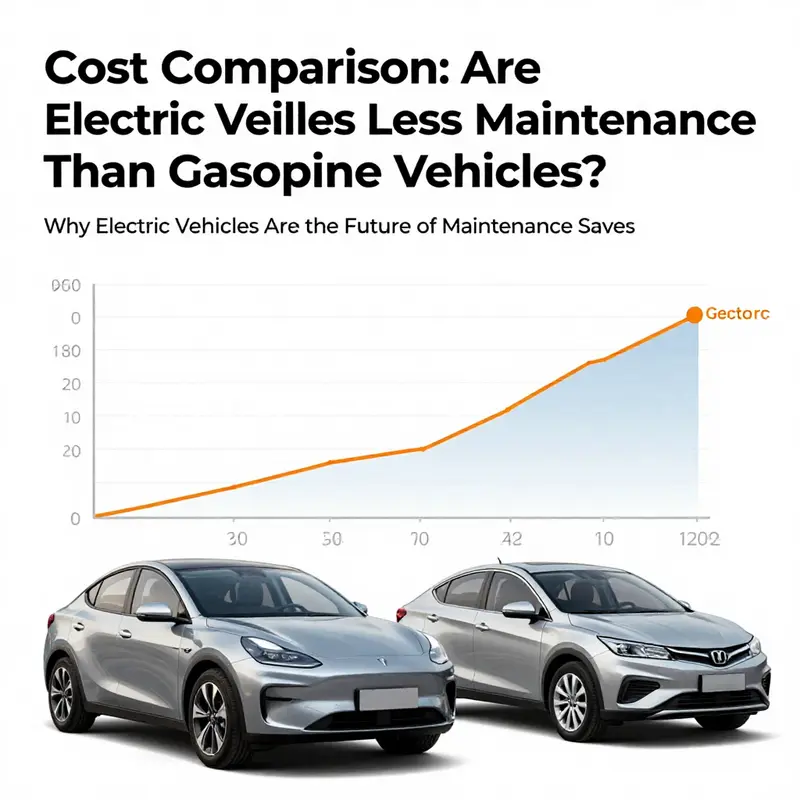
The question of whether electric vehicles are less maintenance-intensive than their gasoline rivals touches a core shift in how we think about owning a car. Across multiple studies and real-world owner data, the answer leans clearly toward yes: EVs typically require less ongoing maintenance over a vehicle’s lifetime. The logic is simple in principle and reinforced by data. Electric drivetrains remove many of the wear-prone components that dominate maintenance schedules on internal combustion engines. Fewer moving parts, less fluid leakage, and a braking system that recovers energy rather than simply wears down brake pads all combine to lower what it costs to keep an EV mechanically healthy over years on the road. The narrative runs through the details of what breaks and what doesn’t, and it becomes a story of design choice translating into cost and reliability for everyday drivers. In this sense, the maintenance gap between EVs and gasoline cars is not an abstract argument about technology; it is a tangible difference in the day-to-day experience of owning a vehicle, a difference supported by empirical data and by the long arc of warranty coverage and component durability that accompanies modern EVs.
A core driver of lower maintenance costs is the absence of an internal combustion engine entirely. EVs do not require oil changes, spark plug replacements, timing belt or chain services, or the frequent transmission servicing that bedevils many gas-powered vehicles. The engine compartment in a traditional car hosts a lattice of consumables and wear items, each with its own service interval and potential failure mode. In contrast, an electric motor is a much simpler machine with far fewer moving parts that wear through use. There is no oil sump to monitor, no oil to change, no fuel system to corrode, and no exhaust system to develop leaks. This fundamental difference reshapes the maintenance landscape from a checklist of dozens of items to a shorter set of routine checks focused on the battery system, cooling circuits, and electrical connections. The effect is not merely theoretical; it materializes in fewer trips to the shop for routine maintenance, and in a lower likelihood that routine service turns into a costly repair bill.
From an engineering standpoint, the regenerative braking system is a quiet catalyst for lower maintenance needs. EVs capture energy during deceleration and use that energy to replenish the battery, which reduces reliance on friction braking. The consequence is less wear on brake pads and rotors, which means longer intervals between replacements and smaller maintenance costs over the vehicle’s life. It is common for EV owners to report brake components lasting many years beyond what they would expect in a conventional car. The brakes still require attention, of course, especially since driving conditions and driving style matter; but the rate of wear is noticeably slower, and that translates into tangible savings in maintenance budgets. This aspect, combined with the absence of an exhaust system and other high-wailure components, paints a picture of an efficiency-based, durability-driven maintenance profile for EVs that is fundamentally different from that of gasoline-powered cars.
The design philosophy behind EVs also contributes to the maintenance narrative in a meaningful way. Fewer components that routinely wear out reduce not only direct maintenance costs but also the probability of incidental service events caused by a cascading failure of multiple parts. Without an exhaust system, fuel lines, or a complex engine management system to monitor and adjust, there are simply fewer opportunities for failure to cascade into multiple repair needs. The battery, of course, represents the most substantial subsystem with potential long-term implications. Modern BEVs are engineered with robust thermal management and advanced battery management systems to optimize longevity. While a battery pack is an expensive item if it fails outside of warranty, manufacturers typically address this risk with long warranties—often eight years or 100,000 miles or more. This warranty framework shifts the financial risk away from routine maintenance and toward coverage for longer-term durability, further smoothing the ownership cost curve for many buyers.
The empirical evidence supporting lower maintenance costs for EVs has grown more robust in recent years. A 2024 Consumer Reports study, drawing on a broad swath of owner data, found that over a ten-year horizon the average maintenance cost for an EV was around $9,500, compared with roughly $18,000 for a comparable gasoline vehicle. That is almost a $9,000 difference in maintenance alone, a gulf that can materially offset the oft-discussed higher upfront price of EVs. This finding aligns with the Department of Energy’s Alternative Fuels Data Center, which emphasizes that EVs tend to require less maintenance due to fewer parts that wear out and need service. The scope of these analyses extends beyond a single dataset and points to a durable trend across different vehicle segments and ownership experiences.
A broader, more recent analysis from the International Council on Clean Transportation in 2026 reinforces the lifetime maintenance advantage. The ICCT concluded that EVs achieve substantial savings over the vehicle’s lifespan, with an estimated reduction in maintenance costs around 50 percent when compared with internal combustion engine vehicles. Taken together, these studies form a consistent narrative: the mechanical simplicity of EVs, combined with the energy-recapture dynamics of regenerative braking and the long service lives of essential components like the battery under warranty, yields a maintenance profile that is not only lower in the near term but continues to accumulate savings across the vehicle’s life.
The economic logic here is reinforced by the structure of maintenance schedules. Gasoline vehicles demand regular oil changes, periodic transmission servicing, coolant-top-off checks, and exhaust system maintenance—each with its own cost and labor component. EVs have a different rhythm: checks for battery health, coolant levels for the battery and motor cooling systems, conditioner fluids for thermal management circuits, and routine inspections of electrical connections. While some of these checks involve specialized expertise or equipment, the frequency tends to be lower, and the nature of the repairs tends to be more straightforward to diagnose and fix when issues do arise. The combined effect is a maintenance profile that accumulates at a slower rate over time, translating to real-world savings for owners who keep their vehicles for extended periods.
That said, a nuanced reading matters. The maintenance advantage is clear for most EV buyers, but it does not erase risk entirely. Replacing a high-voltage battery outside of warranty can be extraordinarily expensive, and the cost structure of EV ownership still includes the electricity price, potential charging infrastructure investments, and the need to monitor battery health as the vehicle ages. Manufacturers have responded by offering generous warranties on battery packs, often eight years or more, which broadens the consumer’s protection against the most significant long-term repair bill. In this way, the warranty framework converts a potential cost spike into a more predictable, predictable expense that is manageable within typical ownership budgets. Buyers who approach this with a clear understanding of residual value, expected mileage, and the probability of battery replacement within or after the warranty period can make informed decisions about total cost of ownership, not just sticker price.
There is also the behavioral dimension to consider. EV maintenance is not only about the absence of certain items; it is also about how owners interact with their vehicle. Routine checks, scheduled software updates, and diagnostic scans remain essential, but these activities are often less invasive and less labor-intensive than the work required to keep a gas-powered car running at peak efficiency. Moreover, the up-front reliability of many EV components—such as robust electric motors and streamlined powertrains—means fewer surprises along the way. Real-world owner experiences substantiate the expectation that EVs, on average, will require fewer unplanned service visits. The data and expert analysis converge on a straightforward implication: the maintenance burden over time is lower for EVs, and the cumulative savings can be substantial even when accounting for higher initial payments and the ongoing costs of charging.
There is no denying that the EV maintenance story is part of a broader narrative about lifecycle costs. When people weigh the total cost of ownership, maintenance is one piece of a larger equation that includes purchase price, fuel or electricity costs, depreciation, insurance, and taxes or incentives. The maintenance savings add a meaningful tailwind to the financial case for EVs, particularly for drivers who accumulate miles quickly or who hold onto a vehicle for a long span. Even though the upfront price premium can be a hurdle, the long-term economic advantage in maintenance—and in fuel savings—often translates into a compelling case for choosing electric propulsion as the more economical option over the life of the vehicle. In this context, the maintenance story does not stand in isolation but rather supports a broader argument about lifecycle cost efficiency and sustainability.
To illustrate the practical implications, consider the maintenance schedule frame that an average owner might experience. On the gasoline side, annual or semi-annual visits for oil changes, filter replacements, and periodic inspections are common, with occasional major services at prescribed intervals. In contrast, an EV owner’s maintenance cadence is likely to involve annual checks for battery health, software updates, tires, alignment, and possibly coolant refreshes for thermal systems. Because the drivetrain is simpler, the number of routine items needing periodic service is smaller, and the probability of a costly, multi-component failure is reduced. The net effect is a more predictable maintenance expense pattern, which helps households budget with greater confidence. In addition, the reduced brake wear often translates to less money spent on brake services over the vehicle’s life, even when the car is used in urban environments with frequent stop-and-go driving. The maintenance advantage is thus not merely theoretical; it translates into tangible, recurring savings for a broad population of drivers.
If one wants to explore the idea further, there is a concise analysis available that specifically discusses whether electric vehicles require less maintenance in general. The analysis synthesizes research and owner data in a way that makes the maintenance advantage accessible to a broad audience. For readers who want a focused examination that complements the broader narrative here, this resource provides a useful entry point to the maintenance discussion. Do electric vehicles require less maintenance?
In closing this chapter’s arc without slipping into a conclusion, the preponderance of evidence indicates that EVs are demonstrably less expensive to maintain than gasoline-powered vehicles over their entire lifecycle. The combination of mechanical simplicity, the durability of key systems, regenerative braking, and long battery warranties all contribute to a maintenance profile that yields meaningful savings over time. The upfront price gap between EVs and gasoline cars remains a consideration for many buyers, but the maintenance advantage helps tilt the balance in favor of electric propulsion for those who plan to own their vehicle for a substantial period. With ongoing improvements in battery technology and continued refinement of EV service ecosystems, the maintenance story is likely to become even more favorable in the years ahead. For policymakers and consumers alike, the maintenance trajectory supports the broader case for electric mobility as not only a cleaner option but also a financially prudent one in the long run.
External resource: DOE AFDC overview of electric vehicles
Final thoughts
The analysis of electric vehicles reveals a compelling case for their integration into business fleets. With significantly reduced maintenance needs, advanced technologies that simplify upkeep, and cost savings realized over the long term, electric vehicles present a practical and financially sound choice for modern businesses. As the automotive landscape evolves, embracing electric vehicles will not only enhance operational efficiency but also contribute to a more sustainable future. Business owners can benefit from understanding these advantages, paving the way for informed investment decisions that align with both fiscal and environmental goals.