
For business owners, choosing the right vehicle is pivotal not only for operations but also in managing costs effectively. Maintenance can eat into profits, making it essential to select vehicles that require minimal upkeep. This article explores the most low-maintenance options currently available, catering to different preferences from electric to traditional internal combustion vehicles. We’ll delve into the merits of Tesla’s electric vehicles, the reliability of Toyota and Lexus models, the trusted Honda lineup, and the dependable Subaru and Mazda alternatives. Each chapter contributes to a comprehensive understanding of low maintenance vehicles that align with the needs of business owners.
The Quiet Edge: How Electric Vehicles Reign as the Least-Maintenance Cars
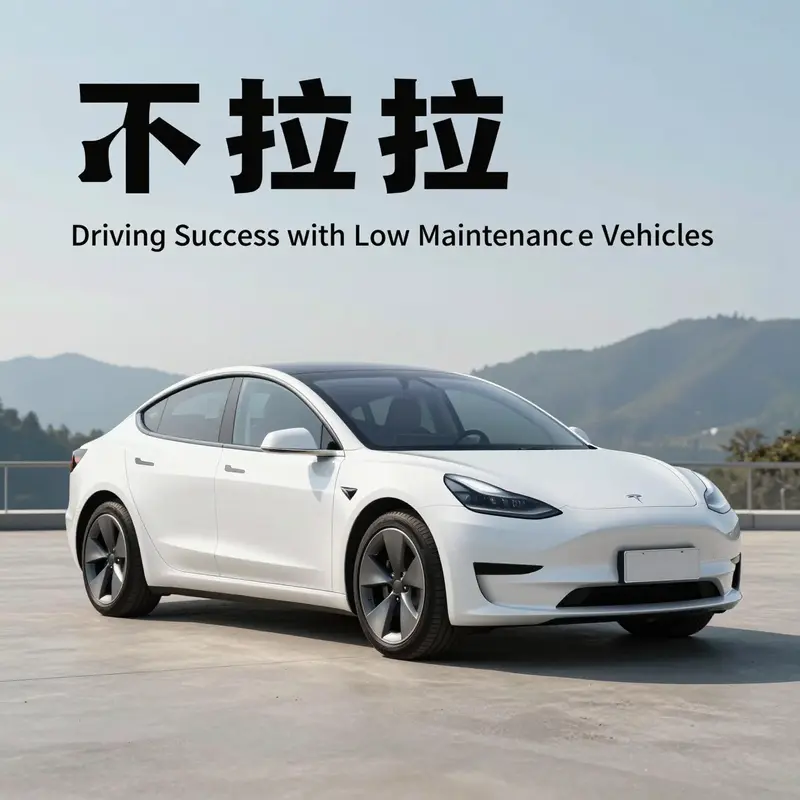
A maintenance gap is opening in the car market, and it isn’t framed by dramatic breakthroughs or flashy new features. It’s a quiet shift driven by the way electric drivetrains simplify engineering and reduce the number of moving parts that can wear out. In the most recent, comprehensive ownership analyses, electric vehicles sit at the front of the line for low maintenance. Over a decade of ownership, the leading electric models tend to accumulate maintenance costs well below their internal combustion counterparts. This isn’t just about avoiding oil changes; it’s about a cascade of incremental savings that come from a streamlined drivetrain, simplified cooling systems, and a software-driven approach to upkeep. Although the exact figure can vary by model, the overarching pattern is clear: electric drivetrains dramatically shrink the maintenance burden, and the economies compound over time.
The practical implications are easy to sense in everyday ownership. EVs have no engines to oil, no multi-gear transmissions to service, no exhaust systems to corrode, and no complex fuel or emissions subsystems to monitor. The mechanics of routine service shift from deep mechanical overhauls to wear items and software health. What remains essential—tires, brakes, cabin filtration, and a few battery-system diagnostics—becomes more predictable and generally less expensive because the underlying hardware is simpler. The brake system, in particular, benefits from regenerative braking, which reduces brake pad wear versus traditional friction braking. This translates into fewer pad replacements and lower brake maintenance costs over time.
The maintenance calendar for these vehicles reflects the pared-down reality. Cabin air filtration is still important and is typically recommended on an annual basis. Tire rotations occur on a regular cycle, often around every ten thousand kilometers or when tread differences exceed a modest threshold. Brake-fluid checks are advised periodically, with intervals that emphasize preventive care rather than reactive repairs. Wheel balancing and alignment may be required if steering feels off or if tire wear appears irregular. In some climates or with heavy use, the cooling system’s radiator might need a local cleaning or attention, but such tasks are usually straightforward and infrequent. In short, the maintenance script for the leading electric models focuses on wear items and software health rather than the heavy mechanical upkeep that defines internal combustion engines.
One practical advantage that readers often notice is the owner-facing technology that tracks service needs. Modern electric-vehicle platforms typically offer a clear maintenance summary on the touchscreen or through a companion app. This interface shows the last performed service, flags overdue tasks, and outlines upcoming items with plain-language explanations. The transparency reduces the guesswork around service visits and helps owners plan ahead, which is especially valuable for first-time EV buyers who are navigating a new maintenance rhythm.
From the standpoint of maintenance cost, the structural advantage of electric drivetrains is reinforced by fewer potential failure points. Fewer moving parts mean fewer opportunities for components to wear, leak, or degrade. Fewer oil and fuel–related systems mean less routine maintenance that demands specialized fluids or frequent replacements. In practice, this translates to a lower, more predictable annual maintenance cadence and, over the long haul, a lower cumulative cost of ownership.
But a chapter that aims to explain maintenance realities cannot overlook the broader landscape. The lowest-maintenance category also includes certain traditional powertrains, notably hybrids and select, well-engineered peers within mainstream brands. In these cases, the combination of proven reliability, a simple and durable drivetrain, and an extensive service network translates into very reasonable maintenance costs. A standout in this space is a compact SUV with a reputation for affordable upkeep. In five years, its maintenance cost is notably low, reflecting durable components, straightforward servicing, and broad parts availability. Hybrid offerings in general have contributed to a durable long-term maintenance story, thanks to their robust gasoline engines that operate under lighter loads and the electric assist that reduces wear on critical drive components.
Another pillar in the low-maintenance category comes from widely adopted, well-regarded mainstream models—cars that emphasize reliability, straightforward mechanical design, and a robust service ecosystem. These vehicles tend to be known for longevity, modest parts costs, and a large network of independent mechanics, which help keep repairs predictable and affordable. The result is a compelling package for owners who want dependable operation with minimal surprise costs year after year. The key takeaway is that while electric drivetrains lead the charge in minimizing maintenance, the landscape for low-maintenance ownership remains diverse. The common thread across the most economical choices is reliability, simplicity, and an ecosystem built to support long-term care rather than frequent, costly interventions.
For readers who want a quick line of sight into the numbers, a decade-long view often surfaces. In this period, the leading electric models show maintenance costs around the four-thousand-dollar mark, a figure that captures routine wear, diagnostics, and software updates. In parallel, carefully selected non-EV models with strong reliability records can come in substantially lower over the same horizon, particularly in segments where the design is simple, parts are plentiful, and the service network is mature. The message is clear: if minimizing maintenance cost is a priority, the choice between electric and non-electric powertrains depends on how the buyer weighs the balance between upfront price, charging needs, driving preferences, and long-run service expectations.
For readers who want to explore the maintenance question from a slightly different angle, a deeper dive into the question of whether electric vehicles truly require less maintenance is worthwhile. Do Electric Vehicles Require Less Maintenance. This line of inquiry underscores the idea that the maintenance advantage is not solely about avoiding oil changes; it’s about the entire drivetrain design and how it interacts with everyday driving realities. The answer is nuanced: the electric approach simplifies many systems, yet it also introduces new considerations—battery health, software updates, and the reliability of high-voltage electrical components. In practice, the overall maintenance footprint tends to be smaller, but it is not entirely without its own set of attention points. From a planning perspective, prospective buyers who want to quantify the impact can look to long-term data showing cost patterns across ownership cycles and model families.
In sum, the maintenance landscape is shifting toward simpler, more predictable ownership for many of the best-in-class options. The leading electric models demonstrate the strongest case for lower maintenance costs over time, driven by a compact, robust drivetrain and reduced needs for routine mechanical service. Yet the story remains nuanced: reliable, well-engineered internal combustion and hybrid options continue to offer compelling maintenance economics, especially when backed by broad dealership coverage and a history of durable parts. For any potential buyer, the key is to align the choice with how one drives, where they live, and how they intend to service the vehicle over the long arc of ownership. External factors such as climate, driving style, and charging infrastructure will influence the maintenance equation just as strongly as the powertrain choice.
External resource: https://www.tesla.com/support/vehicle-maintenance
Steady, Simple, and Ready: How Toyota and Lexus ICE Engineering Delivers Low Maintenance
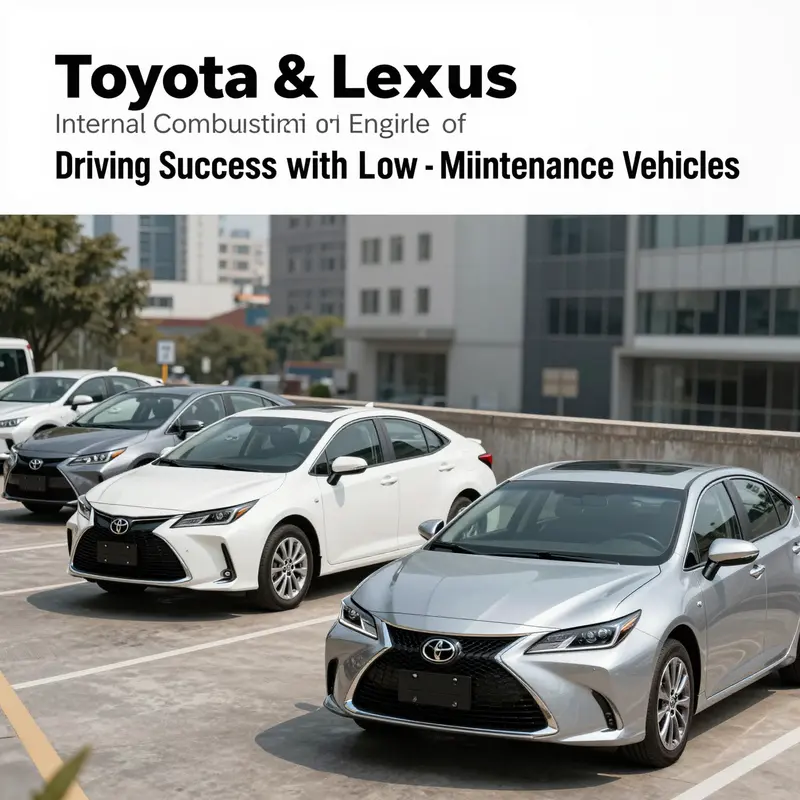
Across a crowded showroom, the quiet math of maintenance often points toward the familiar, the durable, and the understated. In the ongoing conversation about what vehicles take the least upkeep, the reliable ICE offerings from major mainstream brands stand out for their predictability and long-term cost efficiency. This chapter unfolds not as a parade of flashy headlines but as a detailed look at why conservative engine design and integrated powertrain decisions can translate into years of smoother ownership. It also sits in a larger conversation about the relative maintenance burden of different propulsion systems, acknowledging that electrified drivetrains in general carve out a unique maintenance profile while ICE designs from established manufacturers set a high bar for lasting reliability. The narrative here is not a cherry-picked list but a grounded examination of engineering philosophy, service ecosystems, and lifecycle economics that together shape a vehicle’s practical upkeep over time.
Central to this maintenance strength is a disciplined design philosophy. Toyota and its luxury division have long favored engines and drivetrains that emphasize robustness, simplicity where it matters, and a margin for wear that is well understood by technicians across the globe. When engineers sketch a powertrain, the aim is not to create the most complex machine but to craft an architecture that remains functional and economical as the years pass and mileage climbs. In that sense, conservative engineering becomes a form of ongoing reliability. Engines with straightforward valvetrain layouts, durable block materials, and well-proven cooling systems tend to require fewer unusual repairs and fewer surprises after the initial break-in period. The result is a reputation for durability that is trained into the service network as well as into the owner’s expectations. The story is not about dramatic breakthroughs but about meticulous, steady progress—design choices that yield fewer service bulletins, fewer unexpected failures, and a more predictable cost curve across 100,000 miles and beyond.
A second pillar is the brand’s distinctive approach to hybrid systems. While the core technology of a traditional internal combustion engine remains, hybrids introduce a smart layering of electric motors and regenerative dynamics that serve to cushion the engine under stress. The electric motors assist during acceleration, smooth out torque delivery, and allow the gasoline engine to run in regimes where it operates more efficiently and with less wear. That intelligent power-management choreography reduces the hours the engine must labor, lowers avoided wear on friction surfaces, and can significantly extend the interval between major service events. It is not merely the presence of an electric assist, but the way the system integrates with the ICE to manage load, heat, and lubrication in a way that keeps the engine happier longer. This synergy—an elegant pairing of two energy systems—feeds into a broader perception of long-term dependability. Over the life of a vehicle, the hybrid approach can deliver a more forgiving maintenance profile than a similar ICE configuration operating in harsher duty cycles, even as it brings its own specialized service needs.
Practical maintenance reality mirrors this engineering philosophy. Routine care for these vehicles tends to be straightforward and predictable. The engine bay remains free of some of the more exotic, high-load components that characterize other powertrains, and essential service tasks—oil changes, filter replacements, and cooling system checks—remain within the cadence of routine schedules. In the hybrid context, technicians focus on battery system diagnostics, inverter health, and the hybrid control software that governs how power flows between electric assists and gasoline propulsion. The net effect is a maintenance plan that is easier to anticipate and easier to budget for. In many owner- and independent-mechanic communities around the world, the familiar, widely supported parts and straightforward service procedures keep the cost of ownership lower, especially for those who log substantial miles each year and rely on dependable, low-drama performance.
The ecosystem that supports low maintenance is as important as the powertrain itself. A broad dealer network, well-documented service manuals, and a pervasive supply chain for parts all contribute to a smoother ownership experience. When a repair is necessary, the path is familiar and well-trodden, which often translates into shorter shop visits and lower hourly labor costs. In this context, the lifecycle cost becomes a reflection not just of the mechanical design but of the entire support system that surrounds the vehicle. As owners age their vehicles, they come to expect that routine care will be straightforward and that major repairs, if they arise, will be manageable within a reliable service framework. This is where a brand’s long-term reputation for reliability translates into practical benefits: fewer costly, high-variance repairs and a greater likelihood that normal maintenance cycles align with the vehicle’s natural wear trajectory.
From a numbers perspective, the maintenance story for a leading entry in its class underscores these qualitative themes. In a representative five-year window, maintenance costs for a well-regarded ICE option in this category can remain impressively low—often under two thousand dollars. This figure captures the sweet spot where durability, efficient service practices, and affordable parts converge. It is important to note that the exact amount varies with driving style, climate, and maintenance habits, but the overarching pattern holds: the design choices and service network that support these vehicles consistently produce lower lifecycle maintenance costs relative to many peers. For drivers who plan to keep a car for a decade or more, these characteristics matter a great deal when weighing total ownership expenses against sticker price and other upfront costs.
For readers who still weigh the maintenance considerations against the allure of electric propulsion, there is a meaningful dialogue to be had. Electric powertrains minimize many traditional maintenance items found in ICE vehicles—oil changes, frequent transmission servicing, exhaust system concerns, and certain cooling-system complexities disappear or are significantly reduced. Yet hybrids embody a different balance, delivering the best of both worlds: the reliability of a proven ICE paired with the efficiency and regenerative benefits of electric assistance. The net effect is a nuanced landscape where maintenance advantages depend on propulsion choice, driving patterns, and the strength of the service ecosystem behind the brand. It is not a one-size-fits-all conclusion, but a spectrum in which the ICE champions from established manufacturers offer compelling value for owners who prize predictability, simplicity, and long-term cost control.
As readers continue to explore the landscape of low-maintenance vehicles, a thoughtful question emerges: what aspects of maintenance do you value most? If you prize straightforward upkeep, broad dealer access, and a track record of endurance over hundreds of thousands of miles, the case for durable ICE engineering remains strong. If you lean toward minimizing routine maintenance beyond the basics, and you are drawn to the efficiency and modernization of electrified drivetrains, the broader EV segment presents its own compelling advantages. In either path, the narrative is less about a single model and more about the engineering choices that allow a vehicle to remain under its owner’s control rather than retreat behind flashing dashboards of unexpected problems. In-depth maintenance data, long-term ownership reports, and independent reliability analyses continually reinforce this perspective, underscoring the enduring value of conservative engine design, integrated hybrid management, and a robust service infrastructure.
Readers curious about the broader maintenance question—especially regarding whether electric vehicles truly require less maintenance—will find a clear, nuanced argument in discussions that compare total cost of ownership across propulsion types. For a concise look at how electric propulsion changes maintenance profiles, consider a detailed discussion here: Do Electric Vehicles Require Less Maintenance. This perspective helps frame the ICE advantage without ignoring the evolving realities of EV reliability and service needs.
In sum, the low-maintenance appeal of Toyota and Lexus ICE offerings rests on three intertwined strengths: a conservative, durable engine design that ages gracefully; a sophisticated, well-integrated hybrid approach that reduces wear and keeps engines happier longer; and a service ecosystem that makes routine care predictable and affordable. When owners plan for the long haul, these factors coalesce into a maintenance story that remains compelling in a landscape that increasingly blends traditional and electric powertrains. For those who prioritize long-term ownership economics and steady, reliable performance, these brands’ ICE technologies continue to set a high standard for low maintenance in the real world. External context and broader industry data further illuminate these patterns, inviting readers to explore how different propulsion strategies balance maintenance demands over the vehicle’s lifetime. For a deeper look into the brand’s engineering approach, see https://www.toyota.com/.
Reliability by Design: Traditional Cars and Simple Electric Concepts That Minimize Maintenance
Maintenance is often the quiet gatekeeper of ownership cost. When buyers weigh options, they commonly ask not only what a car costs upfront but what it costs to keep on the road year after year. Across the latest data sets, a clear pattern emerges: vehicles with simpler powertrains, robust engineering, and ready service networks tend to require less ongoing attention. This is especially true for traditional designs, where the core of the car remains a reliable, well-understood system, and for newer, purpose-built ideas that strip maintenance to its essentials. The story here is not about chasing the newest gadget but about understanding what design choices translate into fewer trips to a shop and more confidence behind the wheel. In a landscape dominated by rising parts prices and tighter service windows, the payoff for choosing a model with proven reliability can be substantial over a decade of ownership.
In the category of electric propulsion, the argument for low maintenance is strongest. Electric vehicles replace the combustion engine, transmission, exhaust, and many ancillary cooling and lubrication systems with a much smaller, simpler package. Fewer moving parts mean fewer opportunities for failure. The most compelling data to date shows that, over a full decade, ownership costs for a leading electric model are markedly lower than their internal combustion counterparts. In practical terms, this translates to routine maintenance that centers on tires, brake wear (relevant even with regenerative braking), battery system diagnostics, and periodic software updates. There is no oil change, no spark plug replacement, and no traditional transmission fluid service. The mathematical takeaway is straightforward: once a vehicle is designed to minimize moving parts and maximize software control, the maintenance profile shifts from a ticking time bomb of surprises to a predictable, scheduled rhythm.
Yet the landscape is not one-note. For drivers who prefer traditional drivetrains, reliability is often found in mainstream engineering that emphasizes longevity, parts availability, and a broad network of service options. In several data-backed evaluations, a top-ranked compact SUV in its class records maintenance costs that hover around the two-thousand-dollar mark over five years. That figure, while modest, becomes more meaningful when set against the lifetime cost of ownership and the certainty of service options. In the same vein, hybrids—bridging internal combustion engines with electric assist—offer durable batteries and lower wear on the gasoline engine, which translates into fewer visits to the repair shop and more predictable maintenance spend. The case for these blends rests on the same pillars: engineering discipline, simple, robust components, and a service ecosystem that spans dealerships and independent shops. When maintenance planning is framed as a long-term budget, these traits translate into tangible savings that often outpace the initial savings from a lower sticker price.
Beyond the macro trends, it is useful to map what this means for everyday ownership. Routine checks in the all-electric family tend to favor tire rotation, brake pad inspection due to regenerative braking, battery diagnostics, and software updates. The absence of an oil life to track and a transmission that rarely, if ever, needs servicing changes the maintenance cadence in meaningful ways. In the realm of traditional powertrains, the bulk of the schedule is shaped by the engine itself and by wear items that are well understood and widely stocked. For drivers who drive long miles on the highway or who operate in regions with challenging weather, the difference in maintenance workload can be substantial. What matters most, then, is not only the mechanical design but also the support structure available to the owner: accessible service bays, transparent pricing, and predictable parts availability. Proximity to qualified technicians and the flexibility to use independent shops without prohibitive costs play a central role in maintaining low long-term expenses.
To illustrate these dynamics in practical terms, consider the contrast between a leading electric model and a best-in-class traditional option in its segment. The electric example demonstrates a maintenance profile that is dominated by software and battery health checks, with a minimal footprint for routine service. The traditional option, while still capable of delivering outstanding reliability, carries the weight of mechanical wear items that historically define maintenance costs: oil outfits, filter replacements, belt services, and occasional thermostat or cooling system care. The contrast is not about one being universally superior to the other; it is about alignment with a driver’s priorities and their tolerance for scheduled maintenance windows. For someone who values predictable, low-touch ownership, the electric route is compelling. For another who prioritizes a familiar service ecosystem and straightforward aftermarket parts, the traditional, reliable route remains extraordinarily viable.
An additional strand in this discussion is the emergence of compact, urban-focused models designed to minimize maintenance through design choices. In the realm of ultra-simple, city-oriented designs, some models emphasize a powertrain that does not require routine engine oil changes or exhaust maintenance. Instead, the design relies on readily available charging options, often from a standard household outlet, and a drivetrain architecture that limits wear items to essentials. This direction illustrates a practical extension of the maintenance-minimization philosophy: when a vehicle eschews complex subsystems in favor of simplicity and user-friendly charging, ownership costs move further toward predictability and affordability. It is a reminder that maintenance considerations are not solely about technology choices but also about the broader system around the vehicle—the charging infrastructure, the ease of service, and the lifetime sustainment of the hardware.
For readers curious about the broader maintenance question that vaccines the entire discussion, there is a concise synthesis worth noting. Do electric vehicles require less maintenance? The answer, in plain terms, is often yes, though with caveats about battery life, charging habits, and the cost of eventual battery replacements if needed. The essential insight is that the upfront engineering advantages of electric propulsion translate into fewer routine tasks and a streamlined maintenance rhythm. This is complemented by traditional options that, through relentless reliability and expansive service networks, deliver durability and modest maintenance costs over time. Together, these strands form a nuanced picture: the least maintenance-intensive choice depends on how one balances mechanical simplicity, service accessibility, and the long arc of ownership costs.
Beyond the numbers and the general reduction in maintenance tasks, the conversation invites a broader consideration of ongoing ownership costs, including insurance premiums, depreciation, and the potential for favorable warranty coverage. In many markets, the reliability narrative is reinforced by a strong aftermarket ecosystem and a high degree of predictability in repair costs. The most economical paths are often those where maintenance windows fit neatly around routine driving schedules, where parts are readily available, and where software updates keep systems current without disruptive downtime. The practical takeaway for anyone weighing reliability and maintenance is to assess not just the year-one price tag but the entire lifecycle costs, the ease of service, and the long-term risk profile. This approach aligns with a broader consumer philosophy: invest in a design that minimizes surprises, and you reduce the friction that makes ownership costly and inconvenient.
As the chapter closes on this segment of the maintenance conversation, the thread to carry forward is clear. For those who want to quantify the difference between electric and traditional paths, the example numbers offer a scaffold for decision-making. The narrative is not about declaring a single winner but about recognizing that low-maintenance ownership comes in multiple forms—from the clean, minimalism of electric propulsion to the time-honored reliability of widely supported internal combustion designs. And there is room for innovation within the traditional framework as well, as new models emphasize reliability, simpler components, and more transparent service economics. To explore a focused, user-friendly comparison of the maintenance implications of electric vehicles, see this overview: Do electric vehicles require less maintenance?. For readers who want to situate these ideas within a broader practical context, the next chapters will connect maintenance economics to real-world ownership scenarios, highlighting cost-of-ownership calculations, service logistics, and the impact of driving patterns on long-term reliability.
External resource: For a broader industry perspective on how maintenance costs differ across propulsion types and ownership cycles, see the consumer-focused reliability analyses and longitudinal studies that aggregate maintenance data across vehicle segments. https://www.consumerreports.org
null
null
null
null
Final thoughts
Selecting the right vehicle is crucial for minimizing maintenance costs while maximizing operational efficiency. Tesla stands out with its electric vehicle powertrain, offering the least maintenance, while Toyota and Lexus excel in combining reliability with lower upkeep needs for internal combustion engines. Honda provides traditional vehicles known for longevity, whereas Subaru and Mazda are appealing for those seeking dependable alternatives. With the insights shared in this article, business owners can make informed choices to support their operational needs and maintain profitability.