
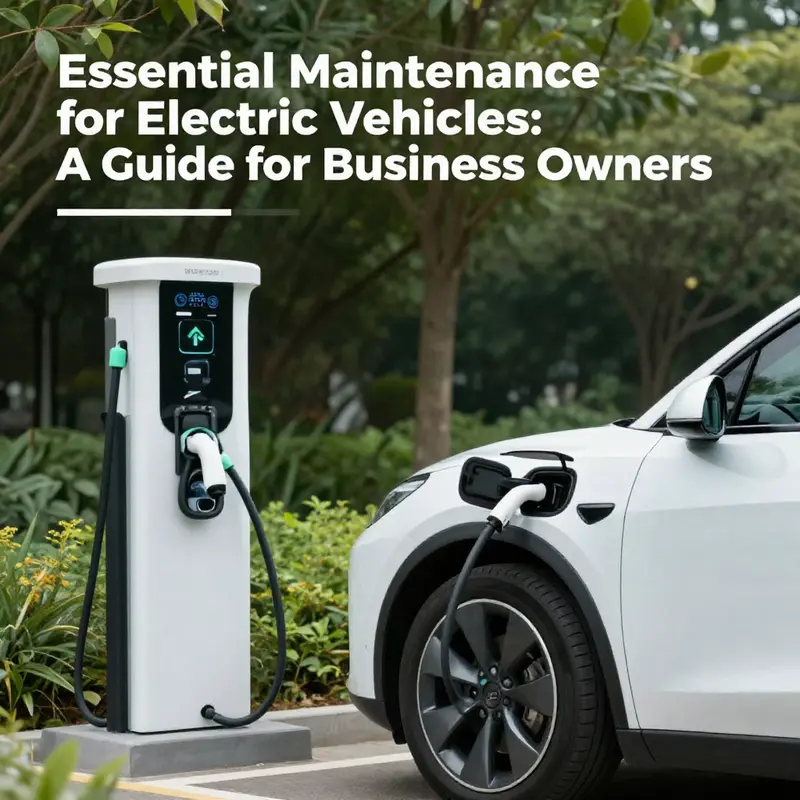
Electric vehicles (EVs) are becoming increasingly popular, especially among business owners looking to reduce their carbon footprint and operational costs. While EVs generally require less maintenance than traditional internal combustion engine (ICE) vehicles, regular upkeep remains vital for ensuring longevity and performance. This guide will explore essential maintenance tasks specific to EVs, such as tire care, brake inspections, battery health monitoring, software updates, and additional component upkeep. Each chapter will equip you with the knowledge needed to maintain your EV fleet efficiently, allowing you to focus on your business operations while ensuring sustainability.
null
null
Braking with Purpose: How Regenerative Braking Rewrites EV Maintenance
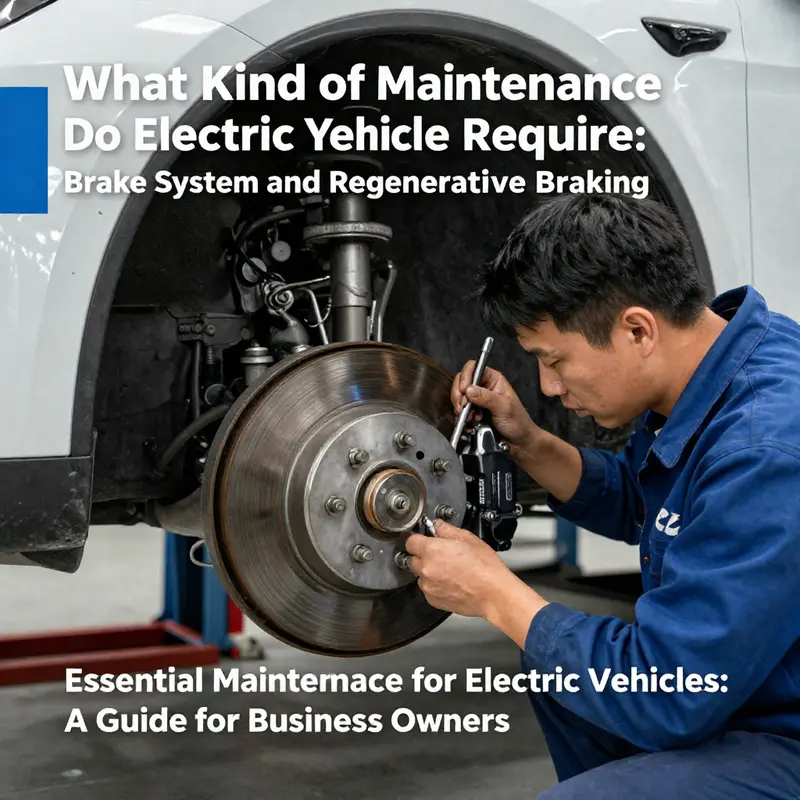
Electric vehicles arrive with a different relationship to wear and tear than their gasoline-powered counterparts, and the brake system is a prime example. In most EVs, the braking experience blends two technologies: regenerative braking, which uses the electric motor as a generator to convert kinetic energy back into stored electrical energy, and conventional friction braking, which relies on pads, rotors, and hydraulics to achieve a halt. The result is a system that often preserves the life of friction components while still demanding attentive maintenance. This chapter follows that logic in a continuous, practical narrative: how the two braking modes work in concert, what this means for routine service, and how to keep the brakes performing at their best across miles and weather without fragmenting the topic into isolated checklists.
First, the core advantage of regenerative braking should be understood in plain terms. When you decelerate, the system captures part of the vehicle’s kinetic energy and returns it to the battery rather than converting all of it into heat. That energy recycling reduces the rate at which traditional friction brakes wear down. In many EVs, brake pads and rotors last two to three times longer than in internal combustion engine vehicles. That reduction in wear translates into less frequent pad and rotor replacements and, in turn, fewer visits for brake service for everyday drivers. Yet this benefit does not liberate maintenance schedules from the brake system altogether. If anything, it shifts the focus toward smarter, more targeted inspections that reflect how regenerative and friction braking share duties.
The friction brakes still play a critical role. Regenerative braking has limits: in certain conditions—rapid, emergency decelerations, very low speeds, or when the battery is near full—the system may switch to or rely more heavily on conventional brakes. This is when the wear pattern of pads and rotors becomes more situation-specific rather than uniform. In heavy city traffic with frequent stops, the friction brakes are called into play more often, and their condition becomes a more telling signal of brake health. A rough or spongy pedal, unusual noises, or a vibration during braking can indicate worn pads, glazing on rotors, or caliper issues that the regenerative system alone cannot address.
That reality makes periodic inspections essential, not optional. The inspection routine in most EVs combines a visual check with performance tests that evaluate pedal feel and brake response. A technician will assess pad thickness and rotor surface condition, looking for scoring, hot spots, or uneven wear that might point to caliper binding or a misalignment in the braking system. Even when wear appears minimal, the calipers and brake lines should be checked for corrosion, leaks, or looseness, because these are moving parts that can degrade with time just like anything else in a vehicle’s braking architecture. Cleaning and lubrication for the caliper slides and contact points may be recommended at intervals to ensure smooth engagement and prevent sticking, which can worsen wear in one corner of the system while leaving the rest underutilized.
Fluid health remains a constant undercurrent in brake maintenance, even with EVs. Brake fluid is hygroscopic, meaning it absorbs moisture from the air. This moisture content lowers the fluid’s boiling point and can compromise braking performance under heavy use or high heat. Regularly checking brake fluid level is a basic habit for EV owners, but more importantly, the fluid’s condition should be periodically tested or replaced according to the manufacturer’s schedule. In some scenarios, a bleeding procedure may be necessary when moisture content rises or if a braking system shows signs of air intrusion, especially after a component replacement. In short, even with less frequent pad or rotor work, the brake fluid’s health remains a readiness gate for reliable braking.
A hallmark of EV maintenance is the way software interacts with hardware. The regenerative braking system often relies on advanced software to determine energy recovery targets and to coordinate deceleration with friction braking. OTA (over-the-air) updates can refine braking calibration, affecting when and how the system switches modes or how aggressively it harvests energy. This software dimension matters because poor calibration can either reduce energy recovery efficiency or, conversely, cause the friction brakes to engage more than necessary, increasing wear. For this reason, keeping the vehicle’s software current isn’t just about new features; it’s a practical step to ensure the brakes work in harmony with the drivetrain’s energy management strategy. In many vehicles, a service technician will also run diagnostic checks on the regenerative braking system to verify energy recovery efficiency and the proper balance with friction braking. Such checks help detect miscoordination that could dull braking performance or lead to uneven wear patterns over time.
From a maintenance planning perspective, this integrated brake reality suggests a few concrete guidelines. First, treat brake inspection as a holistic system check rather than a routine pad replacement timer alone. If the vehicle exhibits a change in braking feel or a noticeable deceleration irregularity, a brake system diagnostic should be among the first checks, even if there are plenty of miles left on the pads. Second, respond promptly to any abnormal vibrations, squeals, or heat discoloration on rotors. While regenerative braking reduces wear, heat buildup can occur where friction brakes repeatedly engage, especially during long downhill runs or in hot weather. Third, pay attention to the braking system’s balance. EV owners may notice that regenerative braking slows the vehicle more aggressively at the start of deceleration, while friction brakes take over for the later portion. If the transition feels abrupt or uneven, it can indicate a calibration need or a mechanical concern that warrants attention from a qualified technician.
For those who like to think in concrete numbers, consider this practical picture: the life of brake pads in an EV commonly extends well beyond ICE norms, and rotor life often follows suit. Yet the precise health of your brakes still hinges on driving style, climate, and how often you navigate steep descents or frequent stop-and-go traffic. A city commuter who uses regenerative braking heavily but rarely travels long distances may enjoy notably longer brake life than a highway traveler who endures repeated heavy deceleration. The key is to couple a modest, predictable maintenance cadence with an honest read of how you drive. In that sense, the brake system becomes a reflection of your daily pattern as much as a mechanical asset.
Maintenance conversations about wheels and brakes seldom start and end with the pads. The interplay of tire condition, vehicle weight, and braking strategy matters too. While we focus on the brake system here, observers of EV maintenance know that tires can influence braking efficiency and energy recovery. Underinflated tires increase rolling resistance, decrease range, and alter braking dynamics by changing contact patch behavior. Proper tire inflation and tread health support predictable braking and predictable energy recovery, forming a small but meaningful piece of the broader maintenance picture. In this sense, brake maintenance does not exist in a vacuum; it sits within a web of related checks—tire condition, suspension health, and even software updates—that collectively keep an EV safe and efficient.
The practical implication for owners is straightforward: expect a two-tier rhythm. A regular, manufacturer-guided brake system inspection should occur at routine service intervals, with attention directed at pads, rotors, calipers, lines, and fluid health. A second rhythm emerges from how you drive. If you frequently descend hills, endure heavy urban congestion, or experience extreme temperatures, you should anticipate occasional adjustments to the service schedule. These adjustments could involve more frequent diagnostics of the regenerative braking system, particularly if your vehicle’s response to deceleration begins to feel inconsistent with the battery’s state of charge or if you notice unexpected pedal travel. In many cases, this dynamic is best handled by a dealer or an authorized service center where technicians are trained to interpret the nuanced signals of regenerative braking alongside friction components.
To tie these threads into a broader understanding of EV maintenance, consider the question many readers ask: do electric vehicles require less maintenance? The short answer is yes, in the sense that the drivetrain is simpler and experiences less routine wear. But the brake system illustrates why a careful maintenance approach remains essential. The regenerative system’s energy recovery is a performance feature, not a guarantee of freedom from service. The friction brakes still require attention, and the entire braking ecosystem benefits from clean, well-lubricated moving parts, trustworthy fluid, and up-to-date software governance. In other words, EV maintenance becomes a study in smart triage: protect the high-mile intelligence of the battery and motor, but neither neglect the brakes nor assume that regenerative braking absolves you of standard checks. Regular, informed service is how you maintain reliability and safety on the road.
If you’d like a broader perspective on the maintenance landscape for electric vehicles and how the maintenance burden compares to traditional vehicles, you can read a concise overview here: Do electric vehicles require less maintenance?. This resource frames the trade-offs in a practical context and reinforces that, while some tasks fade in importance, others—like brake system health and software coordination—remain central. The balance among regenerative performance, friction braking, and mechanical wear remains a defining feature of EV ownership and a meaningful topic for anyone who wants to keep their braking system responsive and long-lasting.
For a broader look at regenerative braking and its energy implications beyond maintenance discussions, see external resource: https://afdc.energy.gov/vehicles/electric_basics.html
Battery Health at the Core: Mastering Monitoring, Charging Habits, and Longevity in Electric Vehicles
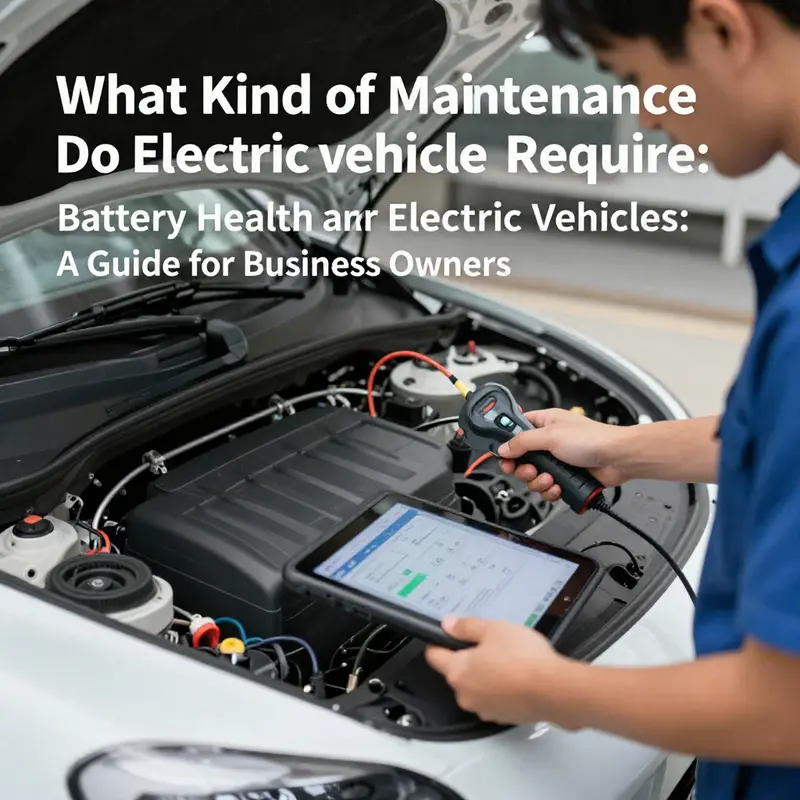
The maintenance of an electric vehicle centers on one truth: the health of the battery pack largely determines performance, safety, and the long arc of the vehicle life. Even though EVs have fewer moving parts than an internal combustion engine, the battery is the heart and the brain of the system. It powers the drive, governs efficiency that translates into range, and shapes the care you will need to give your car years after you first plug in. With that in mind, battery health is not just one more maintenance item. It is the anchor around which all routine care orbits. If you treat the pack with respect, the rest of the vehicle follows suit, delivering reliable performance, preserving value, and easing the burden of future service bills. If you ignore it, the consequences ripple outward: reduced range, slower charging, and a steeper curve toward expensive replacements. The good news is that maintaining battery health is a practical, behavior driven discipline as much as it is a scheduled service. It blends watchfulness, smart charging habits, and a little everyday stewardship that takes a few minutes here and there but pays off over time.
At the core of this approach lies regular monitoring of the battery’s state of charge (SOC). Unlike a simple fuel gauge, the SOC in an EV reflects a complex balance of chemistry, temperature, and current draw. The goal is not to obsess over the exact percentage every moment but to avoid letting the pack linger at extreme ends for prolonged periods. Keeping the battery away from chronic high states of charge and persistent deep discharges reduces stress on cells and mitigates capacity fade over many years. In practical terms, this means charging to a comfortable upper level during daily use and planning longer trips with the charging curve in mind. Many drivers find the midrange sweet spot, roughly between 20 and 80 percent, to be the most forgiving for daily life. The car’s own learning software and the battery management system (BMS) help manage this balance, nudging charging behavior toward longevity while still delivering the range you need for your routines. This is not about rigid rules but about an intuitive rhythm: knowledge of how the battery behaves in your climate, with your driving style, and under your typical loads turns into a sustainable pattern that preserves capacity over time.
Temperature is another silent architect of battery health. Batteries hate extremes. In cold weather, chemical reactions slow, and capacity can appear reduced; in very hot climates, the same chemistry can accelerate degradation if the thermal management system is overwhelmed or taxed. Modern EVs deploy sophisticated thermal management systems to keep the pack within an optimal window, but driver behavior still matters. Preconditioning warms the interior and the battery before departure while the car is still plugged in. This process uses grid power to prepare the pack at the right temperature, reducing demand on the battery during the first minutes of driving when it is most vulnerable to performance dips. Parking in shaded spaces, using seasonal climate settings, and scheduling charging to occur during cooler parts of the day or when electricity is cheaper can all contribute to gentler temperature cycles.
The Battery Management System, or BMS, deserves a central place in any maintenance narrative. This on-board guardian automates many of the careful choices a battery needs throughout its life. It balances cell voltages, tracks temperatures, monitors current flow, and makes charging decisions that protect the cells while maintaining peak performance. What you experience as a driver—smoothed acceleration, consistent range, reliable charging—often reflects the BMS doing its job effectively. The BMS may also alert you to conditions that warrant professional attention, such as unusual temperature spikes, abnormal charging behavior, or signs of uneven cell aging. These are early warnings that can guide you to a dealership or service visit before the issue escalates. Importantly, the BMS works best when the vehicle’s firmware stays current. Software updates often include refinements to how the system manages charging efficiency, cell balancing, and thermal control, reinforcing the idea that maintenance is a blend of hardware care and software hygiene.
Charging habits sit at the practical frontier where routine use meets long-term health. Level 2 charging at home is typically gentler on the pack than frequent fast charging, especially on a daily basis. Fast charging remains a valuable tool for long trips or unforeseen needs, but regular use of DC fast charging can contribute more aggressive thermal cycling and higher average voltages that nudge degradation along. A thoughtful charging routine recognizes the difference between convenience and necessity. Scheduling charging can help the battery avoid heat stress during peak daytime hours, particularly in hot regions, and it allows the vehicle to complete a charge during cooler periods when the thermal load is lower. In many vehicles the charging routine can be set to align with grid or home energy patterns, turning a daily chore into a series of micro-decisions that cumulatively reduce wear. The essence is modest, regular charging, keeping the SOC within a safe corridor and avoiding the temptation to chase peak levels of charge that the battery is not designed to endure.
The human-friendly corollaries of this routine extend into everyday diagnostics. Periodic checks via the vehicle’s onboard diagnostics or a connected mobile app provide a narrative of how the battery is aging and how it is performing under current conditions. If the apparent range seems to shrink without a commensurate change in driving patterns, that could signal normal aging or a developing issue with the pack’s ability to hold charge. The advantage of diagnostics is not just the detection of fault but the early recognition of trends. A small drift in charging times, a slight mismatch in cell balance, or a modest increase in temperature during charging can be early whispers of a larger concern, one that a service visit can address before it becomes a major repair. Regular checks become a way to translate the language of chemistry into everyday decisions, and those decisions—temperatures kept in a favorable tolerance, charging curves navigated with care—extend the life of the battery and the vehicle.
It is worth acknowledging the broader maintenance ecosystem around the battery. While driving dynamics, tire health, and brake efficiency are essential, they form a supportive chorus rather than the main refrain. EVs still require routine inspections of the cooling systems that serve the motor and electronics, coolant levels, and the integrity of the charging port, as well as cabin air filtration to maintain interior comfort and health. Yet the most consequential activity remains battery health stewardship. A repository of caveats exists in the warranty and service guidelines that accompany most modern EVs. The battery warranty, often designed with mileage bands and usage patterns, makes it important to understand what constitutes normal operation and what patterns might affect coverage. In practice, this means following the manufacturer’s recommended intervals for software updates, taking note of any unusual charging behavior reported by the BMS, and using authorized service channels when early signs arise. The purpose of these guardrails is not to create bureaucracy but to preserve the pack’s long-term durability and to protect the investment a driver makes in a vehicle built around this single, defining component.
The regard for battery health also threads into the language of practical, everyday maintenance. For instance, even though EVs do not require oil changes, transmission fluid servicing, or spark plug replacements in the traditional sense, they still benefit from attention to cooling fluids and the integrity of high voltage systems. Debris in the charging port, for example, can hamper charging efficiency, a small but meaningful reminder that the interface between the car and the power source deserves periodic cleaning with a soft brush or gentle air. Regular wiper blade replacements and cabin air filter changes, while not battery centric, contribute to a safer and more comfortable ownership experience, ensuring that the car remains dependable in all conditions. The overarching takeaway is clear: you manage battery health most effectively not by chasing heroic maintenance feats but by cultivating a consistent, informed, and attentive routine that acknowledges the battery as the system’s living core.
The cadence of daily driving comes next. Regenerative braking, often enhanced by vehicle software, contributes to energy efficiency by recapturing some of the energy that would otherwise be lost during deceleration. A driver who understands this synergy can smooth out braking patterns in a way that reduces mechanical wear on ancillary components while gently aiding the battery’s energy balance. It is not a panacea, but it is a meaningful piece of the maintenance mosaic, illustrating how modern EV design aligns propulsion and energy recovery with long-term reliability.
In considering the full arc of an EV life, one can see that battery health is not merely a technical concern but a philosophy of care. Proactive monitoring, prudent charging, temperature aware operation, and consistent software maintenance create a virtuous circle that keeps the vehicle performing toward the horizon rather than shrinking from it. For readers who wonder whether electric vehicles require less maintenance overall, it is the nature of the maintenance that is different in kind, with a sharper focus on the battery that yields the answer. The question shifts from how often you need service to how thoughtfully you manage charging, temperature, and diagnostics. The benefit is a quieter maintenance life with fewer major repairs and a steadier sense of reliability, even as the car ages and the chemistry within the pack evolves. In this sense, battery health is less a single task and more a continuous practice, a conversation you have daily with the vehicle through charging schedules, temperature settings, firmware updates, and honest attention to the data that the car freely shares.
For further guidance on battery care, consider government energy resources that distill the science into actionable steps for drivers, including practical charging strategies, temperature management, and long-term preservation of capacity. If you are curious about how these concepts translate into real world routines, official guidance can help readers calibrate expectations without oversimplifying the technology. The key takeaway is to treat battery health as a living parameter that you actively manage rather than a passive check. Your car’s BMS, charging system, and daily habits form a triad that, when aligned, yield a reliable, efficient, and satisfying EV experience for years to come.
Firmware on Wheels: Software Updates and the Lifespan of Electric Vehicles
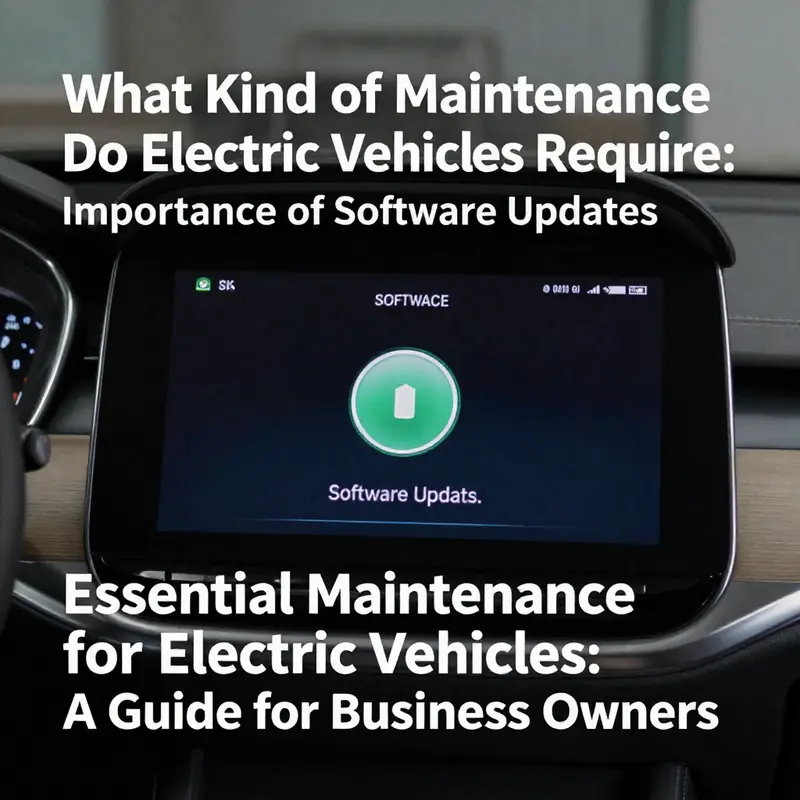
Electric vehicles pivot maintenance away from routine mechanical chores toward managing a living software ecosystem. OTA updates extend beyond bug fixes to sharpen energy management, safety, and reliability. The battery management system benefits from recalibrated thermal curves and charging strategies, often quieting range anxiety as software unlocks subtle gains in efficiency. Brakes, cooling, and electrical systems are influenced by software-tuned regen profiles and thermal strategies, while tires and cabin systems are supported by intelligent reminders and predictive maintenance. Regular physical inspections—tires, brakes, coolant, and cabin filtration—remain important, but their outcomes are enhanced when software keeps the vehicle’s energy use and health monitoring current. Warranty terms in many modern EVs may hinge on up‑to‑date software, reinforcing OTA updates as preventive care rather than optional extras. Owners who stay connected and enable automatic updates often notice smoother charging, more accurate range estimates, and a more resilient feeling car over time. In short, software maintenance is not an optional add‑on; it is a core component of long‑term EV reliability and value.
What Kind of Maintenance Do Electric Vehicles Require: Caring for the Battery, Software, and Thermal Systems
Electric vehicles are not maintenance-free. They tend to require less frequent attention than internal combustion models, thanks to simpler mechanics and fewer moving parts. Yet they carry a different maintenance load, centered on the battery, the electronics that control it, and the systems that keep everything within safe temperatures. This chapter explores the core upkeep that supports reliable performance, safety, and longevity, weaving together practical habits with an understanding of how these systems work in harmony over the life of the car. For readers who want a concise takeaway, remember this: you don’t have to service an EV as often as an ICE vehicle, but when you do service it, you should address the right components with the right cadence.
At the heart of every electric vehicle is the battery system. It is the single most important asset, the source of range, power, and resilience in cold or heat. Modern lithium-ion packs are designed to endure for many years, but their longevity is not automatic. Temperature, charging patterns, and depth of discharge all influence how well a battery ages. A common and sensible approach is to avoid extreme charging extremes most days. Keeping the daily charge within a practical window—often not hitting 100% or dropping to zero unless needed for a long trip—can help minimize cell stress. The vehicle’s onboard diagnostics and companion apps provide a window into battery health, showing metrics like state of health, residual capacity, and cell balance. When a vehicle suggests a health check or a software update related to battery performance, heeding it promptly pays off in the long run.
The battery’s health is not isolated from how you charge and park the car. Scheduled charging, often tied to off-peak electricity rates, allows the vehicle to time its charging to avoid peak heat exposure during the day. This is particularly valuable in hot climates, where heat can accelerate aging. Even more important is climate pre-conditioning. If you can start charging while the vehicle is plugged in and precondition the cabin before a drive, you reduce sudden heat exposure to the battery while you’re on the road. The goal is to minimize thermal cycling and maintain a stable thermal envelope around the pack. Over time, this discipline can stretch the battery’s usable life and preserve capacity for longer.
Eyeballing battery health is not enough; regular checks, done in concert with the vehicle’s software, give a fuller picture. The dashboard may present a simple gauge, yet behind the scenes there are more nuanced indicators—cell balancing, voltage differences, and impedance trends—that tell a story about aging cells. When a manufacturer issues a software update aimed at optimizing battery performance or safety, installing it promptly is prudent. This is not optional glamour; it is a practical step that keeps the vehicle operating with the latest safeguards and efficiency improvements. For readers curious about deeper battery care, there is a broad consensus that thoughtful charging habits, shielding the pack from heat when possible, and staying current with OTA updates collectively contribute to longer battery life. The science is evolving, and staying informed through reliable guidance helps owners adapt as new strategies emerge.
Regenerative braking is another hallmark of EVs that shapes maintenance needs. Because braking energy is redirected to the battery during deceleration, traditional friction brakes experience less wear. That translates to longer-lived pads and rotors, lower brake dust, and a more forgiving maintenance rhythm. Still, the brakes require attention. Brake fluid can degrade over time, particularly when the system has seen a lot of use or sits in a humid climate. Many automakers recommend a brake fluid refresh every couple of years, even if the pads look fine. Some vehicles also feature brake wear sensors that alert the driver to components needing service. Paying attention to those alerts is wise, because a well-functioning braking system is non-negotiable for safety. Regular brake inspections during routine service visits ensure there is no hidden corrosion, fluid leakage, or sensor fault that could compromise stopping performance. When combined with regenerative braking, the overall braking system becomes a hybrid maintenance topic: you monitor fluid condition, inspect sensors, and trust the car’s diagnostic messages to prompt service when appropriate.
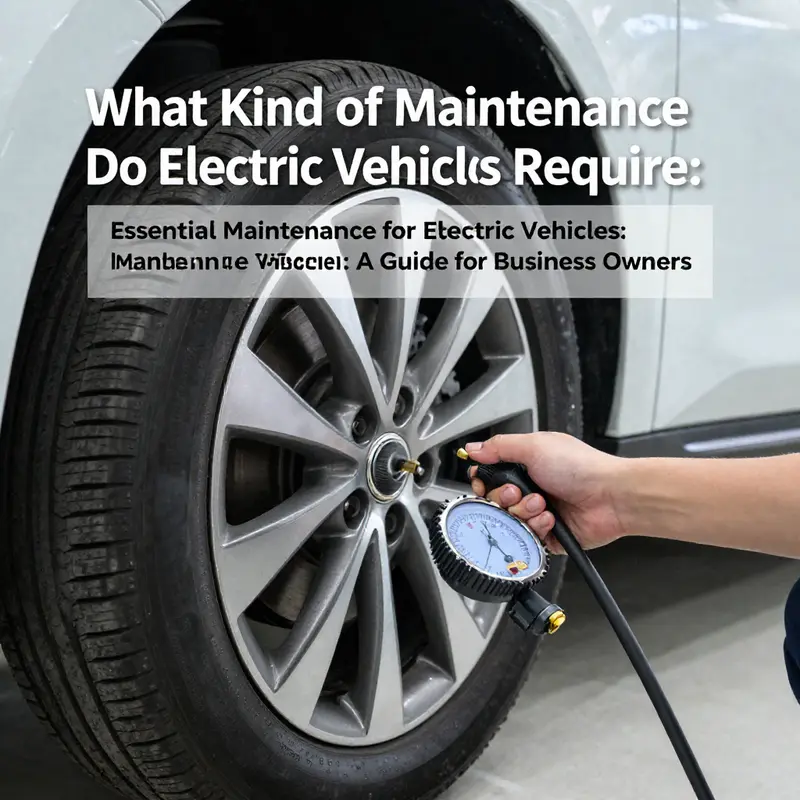
Tire maintenance deserves special attention in EV ownership. The heavy battery pack adds weight, and the instant torque of electric motors can stress tires in ways ICE vehicles do not. The result is a tire profile that can wear more quickly under certain driving styles. Regular tire pressure checks become even more important, as tires lose pressure under heavy loads and over time. Proper inflation improves range, handling, and ride quality, while underinflation can steal energy and increase wear. Rotation intervals may be shorter for EVs, typically in the range of every 5,000 to 7,500 miles, depending on driving conditions. When selecting tires, many EV owners opt for models designed to balance energy efficiency and quiet operation, helping to tame road noise and further cut energy use. If you drive aggressively or frequently haul heavy loads, you may notice more pronounced wear; a proactive rotation and alignment check can prevent uneven tread loss that diminishes grip and range. The idea is simple: tires are the only connection between the car and the road, and EVs place a premium on keeping that connection efficient and predictable.
The software ecosystem of an EV is a living, evolving component. Unlike traditional vehicles, EVs depend on software for performance, safety features, and new capabilities delivered via updates. Keeping the car connected to a reliable network—Wi-Fi at home or a cellular connection when on the move—ensures that firmware and feature updates arrive promptly. These updates can improve efficiency, refine energy management, or patch security vulnerabilities, which matters in a vehicle that relies on connected systems for battery management, charging, and driver-assist features. When a diagnostic alert appears, whether it flags a sensor anomaly, a motor control issue, or a software fault, it’s wise to address it rather than defer. The cost of delaying a software fix can be incremental, but the cumulative effect over time could hamper performance or safety. In this context, software maintenance is not a luxury; it is part of practical upkeep that sustains the EV’s reliability and longevity. The digital environment inside an EV is complex, integrating your vehicle’s powertrain, battery management, thermal controls, and driver-assistance systems. A proactive attitude toward updates reduces the risk of software-induced faults and ensures you receive the latest protections and efficiencies.
Another essential area is cooling and thermal management. EVs rely on liquid cooling to regulate the temperature of the battery, motor, and power electronics. This system plays a crucial role in safe fast charging and sustained high-speed performance. Periodic checks of coolant levels and the overall health of the cooling circuit help prevent overheating and preserve efficiency. The coolant replacement interval often spans several years, but it varies with model and climate. In colder environments, the heating system becomes particularly important because it draws power from the battery to heat the cabin. Efficient cabin heating, achieved through optimized thermal management and pre-conditioning, reduces the load on the battery and helps maintain range in cold weather. A well-maintained thermal system keeps the battery within its optimal temperature window, safeguarding both performance and longevity. In practice, this means many owners schedule a thermal system check during routine service intervals and pay attention to any unusual temperature readings or warning lights in the instrument panel.
Pedal-to-wheel maintenance in an EV also extends to the more familiar components: cabin air filtration, wiper blades, and fluids for the chassis and cooling circuits. Cabin air filters should be replaced according to the manufacturer’s schedule, typically every 15,000 to 30,000 miles, to preserve interior air quality and preserve HVAC efficiency. Windshield wipers, though simple, deserve occasional attention and timely replacement—often every six to twelve months, depending on usage and climate. Windshield washer fluid should be kept topped up, ensuring visibility in all weather. Charging ports deserve a gentle touch as well. Debris and moisture can accumulate in the port and connector housing, potentially affecting charging efficiency or causing connection issues. A careful cleaning with a soft brush or gentle compressed air, performed at regular intervals, helps maintain charging reliability and avoids frustrating charging sessions in cold or rainy weather.
All these elements—battery care, regenerative braking, tires, software, thermal management, and routine cabin and exterior upkeep—form a cohesive maintenance philosophy. An EV owner who approaches upkeep as an integrated system tends to experience fewer surprises and more consistent performance. It is not about clocking endless miles between services; it is about recognizing the unique demands of electric propulsion and preparing for them with thoughtful habits. For readers who want a compact reminder of this integrated approach, the guidance from broader EV maintenance literature emphasizes three pillars: operate within sensible charging regimes, monitor and respond to software and diagnostic notices, and maintain the physical basics that keep the car safe and comfortable to drive. To further explore the claim that EVs require less maintenance overall while demanding careful attention to specific areas, you can review resources that discuss this topic in depth. Do Electric Vehicles Require Less Maintenance offers a concise framing of why many owners see fewer oil-change-like rituals, while still needing regular checks on battery health, cooling, and software.
In practice, maintenance schedules will vary by model and region, so consulting the owner’s manual remains essential. The manual translates general guidance into model-specific intervals, fluid types, and service procedures. Keeping a log of service visits, battery health readings, charging habits, and any warning codes helps you establish a personal maintenance rhythm that aligns with how you drive and where you park. While EVs reduce certain routine tasks, they also shift the balance toward monitoring digital systems and thermal health, which is a constructive change when approached with consistent habits. The core message is clear: the fewer surprises you encounter along the way, the more your EV sustains its efficiency and performance over time. A well-maintained EV not only preserves value and reliability but also reinforces a broader, more sustainable understanding of everyday mobility.
External resource: https://www.consumerreports.org/electric-vehicles/ev-maintenance-tips-a294568/
Final thoughts
Maintaining electric vehicles requires a tailored approach that focuses on specific components vital for their performance and longevity. From tire health and brake inspections to monitoring battery status and performing software updates, each aspect plays a crucial role in maximizing the efficiency and safety of your fleet. By prioritizing these maintenance tasks, business owners can not only extend the lifespan of their electric vehicles but also continue to support sustainable practices in their operations. Ensuring proper upkeep of your EV fleet translates into long-term savings and a commitment to environmental responsibility.