
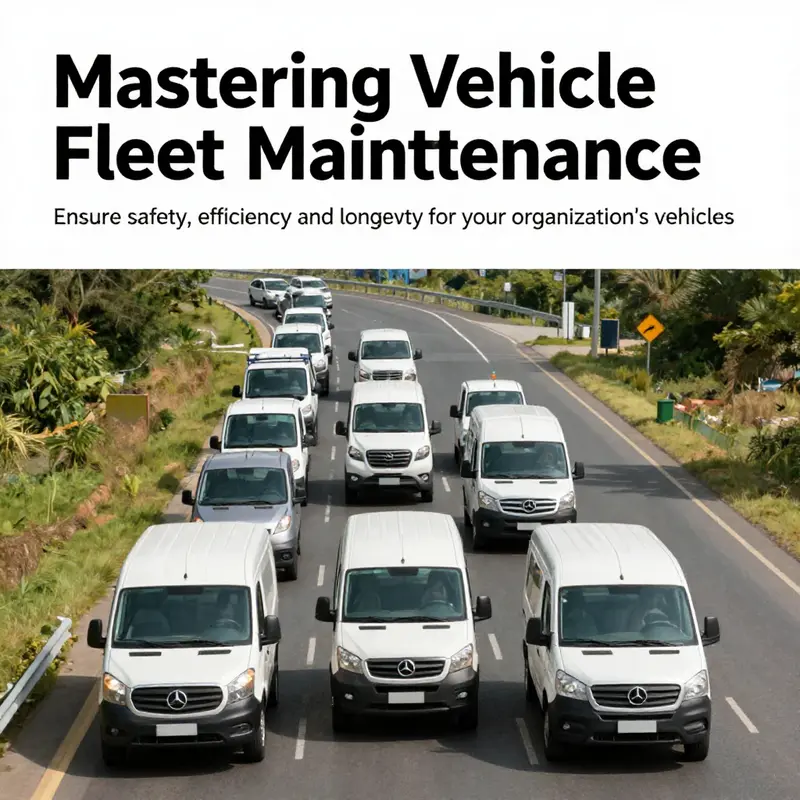
Managing a fleet of vehicles presents unique challenges and responsibilities. Effective vehicle fleet maintenance is critical for business owners to ensure their vehicles remain safe and efficient while minimizing costs. Proper maintenance not only keeps vehicles operational but also enhances their longevity, reduces unexpected breakdowns, and supports compliance with safety regulations. This article unfolds in three comprehensive chapters. The first chapter delves into the importance of vehicle fleet maintenance, clarifying its impact on operational efficiency. The second chapter outlines key components essential for any successful fleet maintenance strategy. Finally, the third chapter explores the latest technological innovations transforming how businesses manage their fleets, streamlining processes and improving overall service quality.
Reliability in Motion: How Systematic Vehicle Fleet Maintenance Keeps Fleets Safe, Efficient, and Ready

Fleet maintenance is more than a series of tasks performed on a schedule. It is the discipline by which an organization translates the inevitable wear and tear of vehicles into predictable, controllable outcomes. In practice, it means turning maintenance from a reactive afterthought into a strategic, data-driven function that preserves safety, extends asset life, and protects the bottom line. When a fleet is maintained with rigor, every mile traveled becomes a testament to reliability rather than a potential risk. This is especially true for organizations that depend on timely deliveries, on-time routes, and a workforce that relies on dependable transportation to do its jobs. At its core, vehicle fleet maintenance is the ongoing management of a portfolio of machines that must perform under varying loads, weather, and road conditions. The goal is not merely to fix what breaks but to anticipate what will fail and to act before it does. In that sense, maintenance becomes a form of operational insurance, safeguarding people, customers, and capital alike. The broader value reconnects with the industry’s emphasis on uptime, safety, and efficiency: when fleets run well, operations run smoothly, customers stay satisfied, and the organization can plan with confidence rather than react to chaos on the road.
A well-structured maintenance program rests on two complementary pillars: preventive and predictive approaches. Preventive maintenance is the scheduled, routine care that keeps components in good condition and reduces the likelihood of sudden failures. It encompasses tasks like regular oil changes, tire rotations, brake inspections, and fluid replacements. Predictive maintenance, by contrast, uses data to forecast when a component will degrade to the point of failure. This involves monitoring engine diagnostics, fuel system health, tire tread wear, brake pad thickness, and other performance indicators in real time. Together, these strategies form a layered shield against downtime. They acknowledge that some wear is inevitable, but they seek to minimize its disruptive consequences by identifying issues before they escalate into costly, mission-critical breakdowns. The practical implication is simple: fewer roadside emergencies, fewer unscheduled shop visits, and more predictable service levels. When a fleet operates under this dual approach, maintenance becomes a daily rhythm rather than a mounting backlog—a rhythm that aligns with a company’s service promises and its safety commitments.
The importance of routine care extends beyond the vehicle itself. Regular maintenance also protects drivers, cargo, and the communities in which fleets travel. A preventive brake inspection, for instance, directly supports safer stopping distances in dense urban corridors and congested industrial zones. Tire maintenance not only improves rolling resistance and fuel economy but also reduces the risk of blowouts in high-traffic environments. Oil changes and fluid replacements safeguard critical engine components from wear, heat, and contamination, preserving reliability during long hauls and peak service periods. In this sense, maintenance operates as a comprehensive risk management strategy that touches every facet of operations—from route planning to driver scheduling, from energy use to emissions performance. The broader corporate benefits are tangible: reduced accident potential, improved driver confidence, better job satisfaction, and a stronger safety culture that resonates through every layer of the organization.
To translate these benefits into measurable outcomes, modern fleets rely on technology to illuminate what was once invisible. Computerized maintenance management systems (CMMS), telematics, and diagnostic tools provide a bridge between the shop floor and the executive suite. CMMS centralizes maintenance histories, work orders, part inventories, and service intervals, allowing managers to see a vehicle’s entire lifecycle at a glance. Telematics supply live data about engine health, fuel usage, idle time, and driver behavior, while onboard diagnostics flag potential problems based on real-time sensor inputs. This technological ecosystem enables data-driven decision-making: maintenance can be scheduled when it will cause the least disruption, parts can be stocked based on actual usage patterns, and workshops can prepare in advance for anticipated service needs. The result is a fleet that behaves with a higher degree of predictability, where downtime is minimized and the fleet’s capacity is optimized for the work ahead. In turn, organizations can align maintenance with broader aims such as energy efficiency, compliance, and sustainability goals, turning maintenance into a driver of continuous improvement rather than a cost center.
Regulatory compliance is a thread that runs through every maintenance decision. Government standards, particularly those governed by transportation and safety authorities, impose requirements for inspections, documentation, and reporting. Regular inspections and thorough maintenance records are not merely bureaucratic hurdles; they are protective measures that help prevent accidents and protect the company from penalties and legal exposure. A compliant program reassures customers, lenders, insurance providers, and regulators that the organization treats safety as a non-negotiable priority. It also creates a reliable framework for audit trails, warranty claims, and vehicle resales, where complete service histories can influence asset value. The DOT’s expectations around preventative maintenance and safety diagnostics, for example, are not abstract guidelines but concrete governance that shapes how fleets operate day to day. In this light, maintenance becomes a compliance discipline as much as a mechanical one, reinforcing trust with stakeholders and stabilizing operational risk across the fleet. The synergy between safety, compliance, and performance is where maintenance reveals its true strategic value.
Beyond compliance and risk management, fleet maintenance is increasingly a performance optimization exercise. The modern fleet manager uses a dashboard of metrics to gauge health and forecast needs. Key indicators include uptime and downtime rates, mean time between failures (MTBF), maintenance cost per mile, parts availability, and the cadence of routine services. Each metric contributes to a narrative about how well a fleet converts capital into productive service. When uptime increases, the same number of assets can cover more work without expanding the fleet, which improves utilization and reduces capital expenditures. When fuel efficiency improves through proper tire inflation, engine tuning, and preventive care, operating costs shrink and the environmental footprint tightens. The payoffs extend into driver productivity as well. A vehicle that starts reliably, maintains comfortable cabin conditions, and performs consistently across shifts reduces driver frustration, supports on-time deliveries, and sustains morale. The cumulative effect is a more resilient organization that can withstand demand volatility, competitive pressure, and evolving regulatory landscapes while maintaining high service levels.
Implementing an effective maintenance regime also hinges on a disciplined inventory and workflow design. Keeping essential parts on hand reduces idle time when a repair is needed, but this must be balanced against the costs of carrying stock. A well-sequenced maintenance plan minimizes shop bottlenecks by aligning service tasks with technician skills and available time slots. In many fleets, maintenance intervals are anchored to mileage or time-based triggers, yet the most sophisticated programs blend these triggers with condition-based signals. For example, a tire management policy might combine tread depth measurements with temperature and load data, while brake systems are monitored for pad wear and rotor condition alongside brake fluid quality. The result is a nuanced, hybrid approach that respects the realities of vehicle usage while exploiting technology to anticipate needs. The net effect is a maintenance program that is not only thorough but also agile—capable of adjusting to changing routes, seasonal demand, and evolving asset mix without losing its core discipline.
The broader narrative of maintenance also embraces sustainability and responsible stewardship. Well-maintained vehicles typically exhibit reduced fuel consumption due to optimized propulsion efficiency, smoother transmissions, and better aerodynamics from properly inflated tires and aligned wheels. Emissions profiles improve correspondingly, aligning fleets with public expectations and regulatory incentives for lower environmental impact. In a marketplace that increasingly rewards sustainability and operational efficiency, the maintenance function becomes a key enabler of corporate responsibility. The approach extends to the lifecycle of the fleet itself: careful maintenance stretches the usable life of assets, allowing for more measured capital planning and a smoother transition between fleets of varying configurations. This lifecycle perspective helps organizations avoid as-needed replacements that can destabilize budgets and erode reliability. Instead, maintenance supports a predictable, forward-looking asset strategy that aligns with long-term goals and capital discipline.
To translate these concepts into action requires leadership that treats maintenance as a core capability rather than a peripheral activity. Leaders must champion a culture of preventive care, invest in the right tools, and empower teams to use data to inform decisions. The result is a workforce that understands the value of service histories, the importance of timely inspections, and the role of technology in guiding maintenance. It is a culture that prioritizes safety, reliability, and continuous improvement, and it is this culture that ultimately sustains a fleet’s ability to meet demand with confidence. When maintenance is embedded in the fabric of daily operations, it ceases to be a cost and becomes a strategic asset—one that protects lives, sustains revenue, and preserves the trust that customers place in a fleet-dependent organization. In that sense, the chapter’s core message is clear: maintenance is not a one-off task but a governance framework for reliable performance on every mile.
For readers seeking a concise overview of the core concepts behind vehicle fleet maintenance, a practical summary can be found in resources that distill the philosophy of maintaining operating assets, including discussions of preventive and predictive maintenance, safety, and cost control. Explorations of how maintenance fits into broader business strategy reveal how fleets transform from mere fleets of machines into strategic platforms for service delivery. The conversation also highlights the role of documentation and transparency in sustaining accountability, both within the maintenance team and across the wider organization. By weaving together the threads of safety, efficiency, compliance, and sustainability, the narrative of fleet maintenance becomes a story about operational excellence rather than a routine checklist. It is a story in which the vehicle is not simply a tool but a dynamic component of a living system that must be cared for, understood, and continually optimized.
As you explore the practicalities of building or refining your own fleet maintenance program, you can start with a clear articulation of your goals: uptime targets, safety benchmarks, cost-per-mile objectives, and compliance requirements. Then map the lifecycle of your assets—from new acquisitions to retirement—and align maintenance activities with that lifecycle. Establish a governance framework that assigns accountability, sets service intervals, and anchors decisions in data. Build a maintenance playbook that describes what to inspect, when to inspect, and how to respond to a range of health signals. Invest in the right combination of technology and people: CMMS for traceability and planning, telematics for real-time visibility, skilled technicians who can interpret data in the context of actual road use, and a logistics model that ensures parts and scheduling align with demand. When these elements come together, maintenance ceases to be a burden and becomes a relentless force for reliability, safety, and value creation.
For readers who want to dive deeper into the discipline, a helpful point of reference is a practical overview that frames maintenance as a strategic driver of efficiency and safety. In addition to the concepts outlined above, this resource emphasizes the preventive and safety-first mindset that underpins successful fleet programs, including the importance of documenting service histories and adhering to safety and regulatory standards. The discussion also highlights how modern fleet management technology can yield actionable insights, enabling proactive planning and continuous improvement across the organization. By embracing these ideas, fleet leaders can build programs that not only keep vehicles on the road but also create a competitive advantage built on reliability, trust, and responsible stewardship.
For more on what constitutes vehicle maintenance and why it matters, see the detailed explainer at What is vehicle maintenance. This resource complements the broader themes discussed here by offering a grounded definition and quick-path guidance to initiating or refining a maintenance program. The combination of practical guidance and strategic thinking presented in these materials helps illuminate how maintenance, at its best, becomes a dynamic enabler of organizational performance.
External resource: For a comprehensive, policy-oriented perspective on fleet maintenance best practices, including preventive maintenance, safety, and cost savings, consult the U.S. Department of Energy’s overview of Vehicle Maintenance and Repair Best Practices. https://www.energy.gov/eere/vehicles/articles/fleet-maintenance-and-repair-best-practices
The Quiet Engine of Fleet Reliability: Designing a Cohesive Maintenance Strategy for Modern Vehicle Fleets
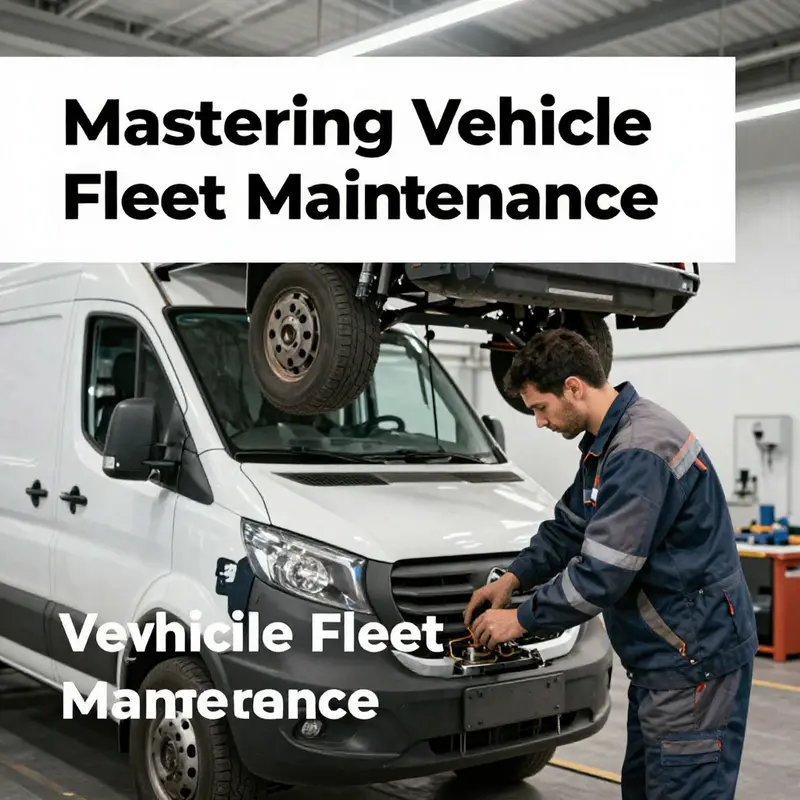
A fleet is more than a collection of vehicles; it is an integrated operating system that keeps a business moving. A disciplined maintenance program translates routine tasks into reliability, safety, and efficiency. This chapter outlines a practical framework for aligning maintenance with uptime goals, service commitments, and total cost of ownership.
Preventive maintenance scheduling is a calibrated calendar built from mileage, hours of operation, and usage patterns. It anticipates wear, respects the rhythm of driver shifts and shop capacity, and designs service windows that minimize disruption while protecting asset health.
Predictive maintenance uses sensors, telematics, and analytics to extend maintenance beyond calendar checks. Real-time data reveals how components wear, when temperatures rise, and how duty cycles affect risk. The goal is to trigger inspections and repairs before failures occur, reducing downtime and acting on actionable signals rather than guesses. This collaborative practice depends on drivers reporting anomalies, technicians translating telemetry into actions, and fleet managers coordinating schedules and parts.
Robust governance and documentation turn the fleet’s history into a strategic asset. Digital records track service history, parts replaced, inspection results, and repair outcomes. Good records support warranties, guide replacements, and bolster regulatory compliance, audits, and supplier communications.
Inventory management creates readiness without waste. A balanced mix of critical parts, consumables, and strategic stock at regional hubs reduces lead times and prevents costly downtime. Demand forecasting, reliable suppliers, and tiered stocking ensure the right parts are available where and when they are needed.
Compliance and safety are operational imperatives, not afterthoughts. Scheduling inspections, recording results, and validating standards must be embedded in the daily maintenance workflow so vehicles stay within legal and safety boundaries.
Driver engagement and software integration close the loop between perception and action. Drivers report issues via mobile apps or dashboards; the fleet software correlates maintenance with routes, fuel usage, and performance, surfacing opportunities for improvement and enabling timely interventions.
Finally, a metrics-driven learning culture guides continuous improvement. Key performance indicators such as mean time between failures, uptime percentage, and maintenance cost per mile translate complex maintenance activity into business outcomes. When MTBF improves and costs stay controlled, the program is working; when certain components underperform, the feedback prompts targeted adjustments to preventive intervals, parts stocking rules, or vehicle mix.
The sustainable maintenance model is forward-looking. Well-maintained vehicles consume fuel more efficiently, emit less, and extend asset life, aligning uptime with environmental and cost goals. As technology and data capabilities evolve, the best fleets blend engineering rigor with pragmatic operations, creating a resilient maintenance ecosystem that sustains reliable service in a changing world.
The path to maturity is not about perfection on day one but about learning and adapting. The quiet engine keeps pace with shifting demands, new technologies, and evolving regulatory landscapes, delivering dependable service and supporting the organization’s commitments to customers, partners, and employees.
Tech-Driven Horizons: How Digital Intelligence Redefines Vehicle Fleet Maintenance
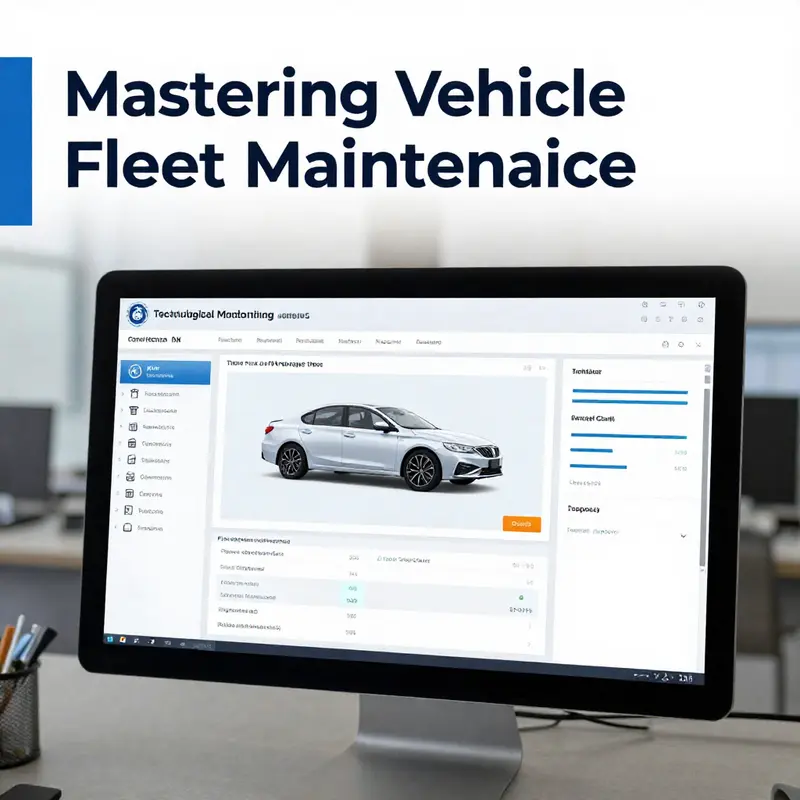
Vehicle fleet maintenance has always been about keeping machines reliable enough to move people and goods from point A to point B. Yet today’s fleets live in a different operating environment. They are not just groups of individual vehicles but connected ecosystems where data streams, sensors, and software orchestrate every service event, every repair, and every fuel-saving decision. The shift from a reactive cadence, where maintenance happens after something wears out, to a proactive, data-anchored discipline is altering the very DNA of fleet management. What begins as a maintenance program evolves into a performance discipline that touches safety, efficiency, compliance, and the sustainability profile of an organization. In this chapter we trace how technological innovations—telemetry, intelligent routing, big data analytics, digital twins, and cloud-based platforms—bind together to form a resilient, transparent, and increasingly autonomous maintenance paradigm. The aim is not to replace human judgment but to sharpen it, extending vehicle life, reducing downtime, and transforming maintenance from a cost center into a strategic driver of reliability and value.
Telematics devices have become the lifeblood of modern fleet maintenance. They convert a mosaic of on-vehicle signals into a continuous, watchful presence. Engine load, oil temperature, tire pressure, brake wear, AdBlue levels where applicable, and even vibration patterns feed into a central intelligence. The advantage is not merely in knowing when a fault occurs but in recognizing precursors that precede failures. A small anomaly in fuel injector timing, a gradual uptick in tire tread wear, or a pattern of brake temperatures spiking during a series of steep hill runs—all these observations can be flagged long before a dashboard light glows. For managers, that translates into scheduling maintenance in a window that minimizes disruption. A truck can pull into a yard during a planned lull in delivery demand, a bus can receive a brake service during an off-peak period, and a service bay can be prepared with the exact parts that will be needed. The outcome is a flatter maintenance curve: fewer surprises, fewer roadside calls, and a more predictable uptime profile. The real payoff emerges when telematics become predictive rather than purely diagnostic. When data are layered with historical trends and usage patterns, the system can forecast the moment a component will degrade to a defined threshold. Maintenance planning then becomes a precise, time-bound discipline rather than a gut-driven guess.
Intelligent routing systems extend the value of real-time data beyond the maintenance shop to the broader operational envelope. Maintenance planning is not isolated from daily routing; it is integrated with it. These digital tools consider a constellation of variables—vehicle health indicators, current traffic, weather conditions, upcoming service windows, and even the proximity of parts supply. The result is a dynamic maintenance schedule that travels with the fleet. In practice, this could mean aligning oil changes with a vehicle’s current route so that downtime is absorbed where it would be least disruptive, or orchestrating a mid-route stop when a diagnostic alert suggests a service that won’t affect service commitments. The efficiency gains accrue not only from reduced downtime but from better parts availability and more consistent technician workloads. When routes, workloads, and maintenance windows are synchronized, the fleet’s overall productivity improves. The driver benefits too: fewer unplanned stops, clearer expectations, and a safer operating environment born from timely servicing.
Big data analytics amplifies these capabilities by stitching together disparate data streams into actionable intelligence. A fleet generates mountains of information: vehicle telematics, maintenance history, parts inventories, supplier pricing, operator behavior, and environmental conditions. Analytics platforms transform this data into dashboards that reveal performance tendencies, cost drivers, and reliability patterns. Key performance indicators become more than abstract numbers; they evolve into early warning signals for maintenance planners. For example, analytics may reveal that certain vehicle types exhibit higher brake wear in a subset of routes or that a particular tire configuration correlates with elevated rolling resistance and fuel usage. Those insights empower management to reallocate resources, adjust service intervals, or revalidate supplier contracts. They also bring a level of transparency to stakeholders who demand evidence of efficiency and safety gains. The modern maintenance strategy thus rests on evidence rather than anecdote, enabling continuous improvement that scales as the fleet grows.
At the frontier of this data-led approach lies the concept of digital twins: richly detailed virtual replicas of physical vehicles that enable simulation, testing, and forecasting without risking real-world experiments. Digital twins ingest historical data, current usage patterns, and environmental conditions to model wear and tear at the subsystem level. They run scenario analyses to evaluate how different maintenance interventions would affect reliability, downtime, and total cost of ownership. Machine learning models within these digital twins can predict component failures with increasing precision, from engine components and sensors to subsystems like transmission or cooling. The insights support timely interventions, spare-parts planning, and procurement strategies that align with actual usage rather than fixed calendars. In environments that demand high uptime—such as urban delivery networks or critical public transit systems—the digital twin approach can be transformative. It allows teams to stress-test maintenance plans against peak demand periods, extreme weather, or unusual route mixes, ensuring the fleet remains resilient even under stress.
Cloud-based fleet management platforms knit these capabilities into a single, accessible fabric. A centralized cloud layer provides consistent visibility across diverse vehicles, geographies, and partner networks. Operations, maintenance teams, and supply chains coalesce around a shared data model, reducing duplication and miscommunication. Because cloud platforms can scale with the fleet, small fleets and large enterprises alike gain similar levels of sophistication without heavy upfront infrastructure. The centralized view makes it easier to standardize preventive maintenance programs, align with regulatory requirements, and enforce data governance across the organization. It also simplifies integration with other enterprise systems—ERP for financial controls, procurement for parts management, and HR for technician scheduling. When data flows freely and securely across these systems, maintenance decisions can be grounded in real-time operational needs and long-term strategic objectives rather than being trapped in isolated silos.
The industry implications of these technologies extend beyond traditional road transport. In sectors like maritime fleet management, digitalization opens new possibilities for energy management and emissions reduction. Blockchain-enabled data exchange can ensure secure, tamper-evident records of maintenance events, sensor readings, and port-related logistics. Smart port infrastructure and coordinated energy management can create what some call green corridors, where ships and vessels optimize routes and refueling strategies to minimize emissions. Although this chapter centers on vehicle fleets, the underlying principle—integrating connected data, predictive analytics, and intelligent planning—translates across domains. The result is a broader maturation of fleet maintenance as a strategic capability that supports safety, reliability, efficiency, and sustainability.
Implementation considerations are critical when turning this vision into practice. A common starting point is to map the current data landscape: what sensors exist, what data are collected, how data are stored, and who uses them today. The next step is to design a governance framework that defines data ownership, privacy, security, and access controls. Cybersecurity is not an afterthought; it is a core requirement because a fleet’s operational integrity depends on the integrity of its data, the reliability of its communications, and the resilience of its cloud infrastructure. Change management plays a significant role as well. The shift to predictive maintenance demands new skills, from data literacy among planners to collaboration between maintenance technicians and data scientists. Cultivating a culture that values early intervention, continuous improvement, and cross-functional collaboration is essential. ROI considerations also guide adoption. While the upfront investment in sensors, platforms, and training can be substantial, the long-term savings come from reduced downtime, lower emergency repairs, improved fuel efficiency, and longer asset life. In practice, the path to value is iterative: begin with a focused pilot that targets a measurable problem, such as reducing unscheduled maintenance of a high-usage vehicle group, then scale by repeating the success across the broader fleet.
All of these elements converge on a refined understanding of what fleet maintenance is today. It remains the disciplined care of a set of moving assets, but its scope, methods, and impact have expanded. It is no longer a discrete set of services performed on a schedule; it is a continuous, data-informed choreography of monitoring, forecasting, and action. The maintenance function now intersects with operations, finance, safety, and sustainability in ways that demand clarity of data, agility in decision-making, and coherence in strategic planning. When a fleet is managed with telematics that anticipate wear, routing that minimizes downtime, analytics that illuminate cost drivers, and digital twins that validate maintenance choices before they are implemented, maintenance ceases to be a cost center and becomes a disciplined driver of performance. The value is measured not only in fewer breakdowns, but in the predictability of service intervals, the reliability of delivery commitments, and the organization’s ability to demonstrate responsible stewardship of resources.
For practitioners seeking a grounded entry point, the question often begins with understanding the ecosystem of maintenance itself. What does vehicle fleet maintenance entail beyond the literal servicing of parts? It encompasses ongoing health monitoring, proactive scheduling, inventory alignment, regulatory compliance, and the strategic use of technology to harmonize these activities with the company’s operations. The path to mastery lies in embracing the data-informed mindset while retaining the practical, hands-on expertise that technicians and drivers bring to every day’s work. As fleets continue to evolve, the convergence of telematics, intelligent routing, analytics, digital twins, and cloud platforms will define how maintenance is planned, executed, and measured. The result is a more reliable fleet, lower operating costs, and a better alignment of maintenance decisions with the realities of modern logistics and transportation—the kind of integration that makes fleet maintenance not only clearer but more consequential in shaping organizational resilience.
To deepen understanding and connect with broader discussions on this topic, readers can explore foundational material on vehicle maintenance as a discipline, such as resources that unpack the basics of what maintenance involves and why it matters across vehicle categories. For a foundational grounding on maintenance concepts, see What is vehicle maintenance?. This reference helps bridge general maintenance principles with the advanced, technology-enabled practices described here, offering a continuum from essential care to predictive, data-driven care. The journey from traditional servicing to intelligent fleet maintenance is not abrupt; it unfolds through careful integration of sensors, software, and human insight, aligning every maintenance decision with the goal of safer, more efficient, and more sustainable operations.
External resource for deeper analysis: https://www.mdpi.com/2076-3263/14/1/59
Final thoughts
Vehicle fleet maintenance is not merely an operational task; it’s a crucial strategy that directly impacts an organization’s bottom line. By emphasizing effective maintenance practices, business owners can enhance vehicle safety, cut costs, and ensure compliance with regulations. As the landscape of fleet management evolves with technology, integrating innovative tools and strategies becomes imperative. Investing in fleet maintenance pays substantial dividends in productivity and operational excellence, ultimately supporting the long-term success of your business.