
In the automotive industry, the maintenance of vehicles relies significantly on a well-structured supply chain comprising different tiers of suppliers. For business owners in this sector, understanding the roles of Tier 1, Tier 2, and Tier 3 suppliers is essential not only for ensuring high maintenance standards but also for enhancing operational efficiency. Each tier plays a distinct role in the vehicle maintenance landscape, influencing everything from the quality of parts to the overall maintenance strategy deployed. Furthermore, diving deeper into the levels of vehicle maintenance illuminates how these suppliers interact with the service process. Each subsequent chapter will explore how these tiers contribute to vehicle maintenance, from ensuring quality through Tier 1 suppliers to understanding the foundational support from Tier 3 suppliers. Together, these insights will empower business owners to make informed decisions in their maintenance practices.
From Supply-Chain Tiers to Service Schedules: How Tier 1, Tier 2, and Tier 3 Shape Vehicle Maintenance
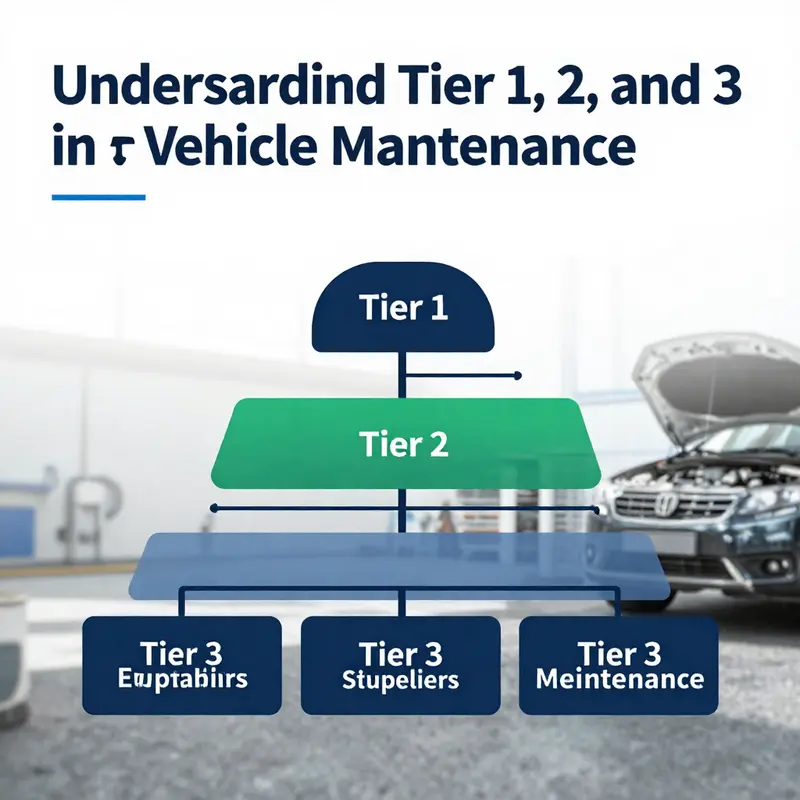
In conversations about keeping a vehicle roadworthy, it’s common to hear terms that feel technical or even distant. Tier 1, Tier 2, and Tier 3 are frequently introduced as a way to describe who makes what in the supply chain. They are not maintenance levels themselves, but they matter profoundly when you think about maintenance, reliability, and repair. This chapter moves through that idea in one coherent sweep, showing how the tier structure translates into what happens when your car goes in for service, how parts are sourced and replaced, and why some maintenance challenges feel easy to solve while others require more time and patience. The goal is to connect the dots between the way parts are designed, built, and delivered to the way we maintain and care for vehicles over time.
At the top of the chain sits Tier 1, the direct supplier to the automaker. Think of Tier 1 as the engineers who assemble complete systems or major modules that plug straight into the vehicle. These are the braking systems, the powertrain assemblies, the cockpit electronics, and the integrated drive units that power an electric vehicle. The work of Tier 1 is not just about one-off components; it’s about ensuring compatibility, reliability, and validated performance across model families. Because Tier 1 systems are vetted to the highest levels of quality, they tend to carry a reputation for durability and predictable behavior in maintenance scenarios. When a Tier 1 module is in service, technicians can rely on a consistent diagnostic framework, because the module comes with a defined interface, a known set of faults, and standardized service procedures that apply across many vehicles sharing the same architecture. In practice, that means fewer surprises during servicing and a more streamlined path from diagnosis to repair. To a car owner, that translates into greater confidence that the replacement part will fit, work as intended, and be supported by a robust service network over time.
Tier 2 sits a notch deeper in the chain. These are the specialists who supply specific components or sub-assemblies to Tier 1, rather than to the carmaker directly. The components from Tier 2 are the building blocks that enable the complex behavior of an entire system. You might encounter Tier 2 parts in areas like sensors, control chips, battery cells, or specialized software modules. Their performance is crucial because it shapes how the higher-level Tier 1 assemblies operate. When a Tier 2 component falters—perhaps a sensor that provides critical input to an advanced driver-assistance system—or when calibration is required after an software update, the impact is felt not just in a single function but across several linked systems. Maintenance technicians frequently need specialized tools, software calibration, and sometimes updated service procedures to address Tier 2 components correctly. The reliability of a vehicle’s overall performance, including its diagnostics and safety features, often hinges on the steady, predictable quality of Tier 2 parts. In turn, this steadiness influences how often a vehicle is inspected, what kinds of diagnostic tests are prioritized, and how quickly a repair can be completed when a Tier 2 part requires attention.
Tier 3 represents the raw materials and basic parts that feed the rest of the chain. These are the foundational inputs: metals, polymers, simple subcomponents, and other basic materials that Tier 2 and Tier 1 suppliers transform into the more complex modules that appear in the finished vehicle. The effect of Tier 3 on maintenance may seem indirect, but it is foundational. If Tier 3 inputs are inconsistent in quality, the downstream assemblies can experience wear, compromised seals, or subtle durability issues that emerge over time. In practice, Tier 3 quality matters when the vehicle ages and accumulates miles; small supply-chain imperfections can translate into more frequent adjustments or earlier replacements of seals, gaskets, or housings. The cumulative effect is a longer-term maintenance footprint that may not be obvious at the point of purchase but becomes visible in warranty claims, service intervals, and the predictability of component longevity.
This triad—Tier 1’s integrated systems, Tier 2’s specialized sub-assemblies, and Tier 3’s raw inputs—shapes the maintenance landscape in a way that goes beyond the mechanics of a single service visit. It explains why some maintenance tasks are straightforward and quick, while others require a deeper, more technical approach. To an observer in a workshop, the presence of high-quality Tier 1 components often means that diagnostic protocols are well established and supported by broad service documentation. A technician can rely on a known fault code set, a predictable failure mode, and validated replacement procedures that fit within standard service workflows. Conversely, when a vehicle relies on less common Tier 2 components, particularly in areas like sensor arrays or specialized software modules, service may demand calibration routines, reprogramming, or even software updates that must be executed with precise timing. In such cases, the repair may require access to factory-level tooling, updated calibration data, and direct guidance from tier-2 component manufacturers or the vehicle’s OEM.
All of this feeds back into what we understand as maintenance levels. Level 1, Level 2, and Level 3 maintenance are the scheduled service intervals that define the scope of work. Level 1 is the basic housekeeping—fluids checked and topped, air filters inspected, tires glanced at, fluids topped, and a general visual check of safety-critical systems. Level 2 takes a more thorough look, including disassembly of tires, more detailed brake inspections, suspension checks, and targeted part replacements if needed. Level 3 is the major service epoch, where more extensive components are replaced or overhauled, and the vehicle undergoes a comprehensive diagnostic sweep. When you pair this maintenance framework with the tiered supply chain, you begin to see why a vehicle’s maintenance profile can feel very different from model to model, even if the maintenance intervals themselves look similar on the surface. If the vehicle leans heavily on Tier 1 modules with integrated diagnostics, Level 1 or Level 2 service might be smoother because the system already maintains a coherent fault-tracking and health-monitoring narrative. If, instead, it depends on critical Tier 2 subsystems with calibration dependencies, Level 2 or Level 3 visits may require more specialized attention, longer schedules, and perhaps access to software updates that must be synchronized with the component manufacturer’s release cadence.
For car owners, this perspective offers a practical lens on maintenance decisions. When choosing a vehicle, understanding the balance of Tier 1 systems and Tier 2 subsystems can illuminate the likelihood of long-term maintenance complexity. A vehicle that relies on well-integrated Tier 1 modules is often easier to service in a broad network because service tooling and documentation are standardized across many vehicles. A vehicle with important Tier 2 components may benefit from a service ecosystem that prioritizes software calibration, remote updates, and a network familiar with the idiosyncrasies of those components. In daily terms, this translates into how quickly a service bay can identify a fault, how readily a technician can source a replacement part, and how predictable the cost of a repair will be over the vehicle’s life. The assurance that comes from a consistent supplier ecosystem—where Tier 1 modules are designed for compatibility and Tier 2 components are supported by clear calibration paths—helps owners plan maintenance with greater confidence. It also underscores why maintenance choices, such as sticking with manufacturer-recommended parts or ensuring software compatibility, matter for warranty coverage and long-term reliability.
If you want to delve deeper into the broader context of how modern automotive supply chains influence maintenance strategy, a practical resource on the evolving role of supply chains in vehicle performance can offer valuable perspective. For readers seeking a concise primer on vehicle maintenance itself, a dedicated article explains what maintenance encompasses and why it matters across life cycles. What is vehicle maintenance provides a foundational overview that complements the more technical exploration of supply-chain tiers in this chapter.
Viewed together, the idea of Tier 1, Tier 2, and Tier 3, and the structure of Level 1, Level 2, Level 3 maintenance, reveals a coherent picture of how modern vehicles sustain performance. The quality and interoperability of Tier 1 systems lend reliability and simpler diagnostics, while the intricacies of Tier 2 components demand attention to calibration, software, and sourcing. Tier 3 inputs remind us that durability starts with raw materials and manufacturing choices that echo in every service interval years later. Through this lens, maintenance becomes not a single routine but a composite discipline shaped by where a part comes from, how it was engineered, and how thoughtfully it is supported throughout the vehicle’s life.
In sum, maintenance is less about chasing a static set of tasks and more about engaging with a living ecosystem of parts and processes. The tiered supply chain creates a roadmap for what may be expected in service, what can be efficiently repaired, and where opportunities for longer intervals or more aggressive preventive care exist. When you approach maintenance with this understanding, you gain not only practical guidance for upkeep but also a grounded sense of the technological architecture behind every repair. The result is maintenance that is more predictable, more aligned with a vehicle’s design intent, and better positioned to deliver durable performance over time. For readers who want to connect these ideas to broader industry trends, the literature on automotive supply chains highlights the growing centrality of software-defined features and the increasing reliance on Tier 2 components for advanced functionality, a shift that continues to influence maintenance strategies and service models across the market. External perspectives on this evolution provide helpful context for interpreting why maintenance may evolve as quickly as the cars themselves. https://www.mckinsey.com/industries/automotive-and-assembly/our-insights/the-future-of-automotive-supply-chains
Tier 1 Reliability: How Tier 1 Suppliers Define Maintenance Quality Across a Vehicle’s Life
The reliability story of a modern vehicle begins well before the first service. Tier 1 suppliers design and deliver the core systems that become the car’s bones and brain. Maintenance quality is therefore less about a single service event and more about how engineering intent, calibration data, and diagnostic interfaces persist across years and miles.
Because Tier 1 components are designed to interact with the entire vehicle architecture, they set the baseline for how maintenance will be performed, diagnosed, and recalibrated in the field. An engine control module or brake controller is not a standalone piece; it is a node in a network of sensors, software routines, and mechanical interfaces that govern safety and performance. The reliability of that network hinges on the quality and compatibility of the Tier 1 parts, and by extension the service practices that support them.
Authorized workshops gain access to repair documentation and calibration procedures that reflect the original engineering intent. Using authentic Tier 1 parts and following OEM procedures preserves safety, consistency, and long-term value. The risk of non-OE substitutes grows with service complexity, especially for systems governed by software and advanced driver assistance.
Beyond parts, Tier 1s provide lifecycle support through training, repair manuals, and diagnostic tools calibrated to the vehicle architecture. This reduces variation, improves predictability, and helps maintain the vehicle’s intended dynamics across many miles. In short, Tier 1 alignment between design and service sustains reliability and customer trust over the vehicle’s life.
Tier 2’s Quiet Backbone: Sustaining Vehicle Maintenance Through Precision and Quality
Tier 2 suppliers operate behind the scenes, yet their work directly shapes how reliably a car can be serviced and kept on the road. The common idea of maintenance is often reduced to oil changes and tire rotations, but the real endurance of a vehicle comes from the quality and consistency of the parts that support those services. Tier 2 players supply the specialized components that fuel the systems a technician inspects during Level 1, Level 2, and Level 3 maintenance. They do not interact with drivers at the point of sale or perform the service themselves, but without their precision parts, the routine checks would be less reliable, and major overhauls could become frequent and unnecessary. This is why Tier 2’s role is a critical piece of the maintenance equation, and understanding it helps explain why some vehicles stay healthier longer and require fewer interruptions to their daily use.
At the heart of Tier 2 contributions are components manufactured to very tight tolerances and under rigorous quality regimes. These parts include sensors that collect crucial data feeds for engine management and driver-assistance systems, electronic control units that interpret that data and coordinate actions, and a range of precision-machined metal components and specialized materials that go into vital subsystems. These items are not generic add-ons; they are the building blocks that ensure every system can perform as designed, every time the car is started, and through countless cycles of use. Their production is guided by standardized quality systems such as IATF 16949 and ISO 9001, which codify how vendors must design, manufacture, and verify parts so that repeatability and traceability are built into the process from raw material to final inspection. The emphasis on traceability matters in maintenance because it helps technicians confirm that a replacement part coming from stock matches the OE specification and will interact safely with the rest of the vehicle’s architecture.
This is where the maintenance narrative often intersects with the supply chain. A Level 1 service, for example, might involve checking fluids and inspecting belts and hoses, but the assurance that those checks are meaningful depends on the reliability of the components that support them. If a sensor or a small actuator under a curb-toned compact car is off by a fraction of a degree or a fraction of a millimeter, the system that relies on that data can misinterpret a condition, triggering unnecessary warnings or, worse, masking a real issue. Tier 2 suppliers, therefore, do more than supply parts; they supply confidence. The sensors and ECUs they provide must perform consistently across temperature ranges, vibration, and time, so technicians can trust the data they read during Level 2 diagnostics or during a full Level 3 system refresh. When battery cells—another critical Tier 2 category—are designed for stability and cycle life, they contribute directly to the vehicle’s long-term reliability and reduce maintenance downtime caused by powertrain or energy storage issues.
The maintenance ecosystem benefits from Tier 2’s heavy investment in quality control. Many Tier 2 operations pursue vertical integration and end-to-end traceability, tracking materials from the earliest stages of production through to finished parts. This approach minimizes part-to-part variation, a frequent root cause of intermittent maintenance problems. For technicians, it translates into a predictable replacement every time a component enters service. A sensor that travels from OE manufacturing into a repair shop part retains its calibration characteristics, ensuring that a diagnostic scan returns meaningful results rather than noisy or misleading data. Likewise, when a vehicle is fitted with new control electronics during a Level 3 overhaul, the compatibility with the vehicle’s existing software and other modules hinges on the precision and consistency baked into the Tier 2 production line.
From the customer perspective, this quality discipline matters during maintenance in several ways. First, it means that genuine Tier 2 components used during repairs deliver performance that aligns with the vehicle’s original design intent. Replacing a worn part with something that adheres to the same standards reduces the likelihood of misfit, degradation, or premature wear. Second, it supports longer-term reliability. If the new parts maintain their function over many cycles, the vehicle experiences fewer follow-up issues that require another service event. Lastly, it improves repair economics. Parts engineered with strict tolerances and traceability typically minimize the risk of repeat service calls, helping owners avoid cascading maintenance expenses that can arise when inferior components fail prematurely or interact poorly with other systems.
To maintain this virtuous cycle, collaboration across tiers remains essential. Tier 1 suppliers—those that assemble complete modules or systems—depend on Tier 2 partners for the reliability of the smaller, high-precision components tucked inside complex subsystems. When a Tier 2 supplier can deliver consistently, the Tier 1 firm can design with confidence, knowing that the upstream inputs will remain stable across production batches and over the vehicle’s lifetime. This stability is vital during maintenance because it simplifies parts identification, reduces the risk of incompatible replacements, and eases the diagnostic pathway for technicians who must sift through data from various sensors and controllers. In the broader picture of the automotive ecosystem, the strength of Tier 2—through quality, traceability, and technical specialization—becomes the quiet ballast that keeps maintenance schedules practical and predictable.
A practical way to think about this is to imagine maintenance not as a single event but as a lifecycle continuum where each service interval depends on the integrity of the parts and the information those parts provide. When a Level 1 inspection happens, the field technician relies on the sensors and indicators that tell whether anything is amiss. If those sensors come from a Tier 2 supplier with robust QA, the likelihood of a false positive or a missed anomaly drops significantly. That reliability compounds when Level 2 is performed; brake components, suspension parts, and the data streams feeding the vehicle’s dynamic systems continue to operate within their designed tolerances. And when Level 3 maintenance is due—often the most demanding service event—the assurance that every replacement part will operate in harmony with the rest of the vehicle becomes even more critical. Economically and operationally, Tier 2’s contribution helps prevent the maintenance cascade, where one worn component triggers multiple other issues, extending downtime and increasing repair complexity.
Within the maintenance conversation, it is important to distinguish between the maintenance activity itself and the quality of the parts that enable it. The maintenance work remains a skilled, mechanical, and diagnostic discipline, but the success of that work rests on the reliability of the inputs—the components supplied by Tier 2 partners. When a technician replaces a sensor or upgrades a control module, they rely on OE-grade parts to ensure that the vehicle responds to commands in the same way it did before the service. This is not mere idealism; it is a practical outcome of having a tightly controlled supply chain where Tier 2 providers deliver consistent, well-documented components that are engineered to interact with the vehicle’s broader software and hardware ecosystem.
For readers seeking a deeper understanding of how maintenance fits into the larger picture of vehicle ownership, consider this: maintenance is not simply a set of tasks performed at predetermined intervals. It is a coordinated system of parts, data, and procedures that keeps the vehicle’s performance and safety intact over time. The reliability of Level 1 through Level 3 maintenance hinges on the quality of the building blocks supplied by Tier 2. A well-maintained car is as much the result of the careful selection and manufacture of these components as it is of the technician’s skill with the wrench. In that sense, Tier 2 suppliers act as a quiet backbone, enabling drivers to depend on their vehicles without being distracted by nagging, recurring issues that stem from parts that do not meet exacting standards.
To further connect these ideas with the broader topic of vehicle maintenance, it is useful to reflect on the relationship between maintenance practices and the standards that govern component manufacturing. The chain of trust—from raw material to finished part, and from part to service—rests on shared quality expectations and rigorous testing procedures. In maintenance terms, this means that when a part with confirmed traceability and compliance is installed, the service event has a higher probability of delivering the intended outcome. The alignment of Tier 2 processes with global quality standards ensures that maintenance remains predictable for owners and technicians alike, reducing downtime and extending the lifecycle of the vehicle.
For readers who want to explore the topic further in a practical context, a concise overview of vehicle maintenance concepts is available here: what is vehicle maintenance.
External resource: For those interested in the formal standards that underpin the quality systems Tier 2 suppliers adhere to, consult the IATF 16949 documentation: https://www.iatf.org/Portals/0/PDFs/IAF-IATF-16949%20-%202016.pdf
Tier 3, Total Uptime: How Third-Tier Suppliers Drive Maintenance Efficiency Across the Vehicle Lifecycle
Tier 3 suppliers often sit at the far edge of the automotive supply chain, yet their influence on maintenance efficiency travels the entire length of a vehicle’s life. The common temptation is to think maintenance is about the intervals, the level 1, level 2, level 3 services prescribed by the OEM, and the labor to perform them. But the reliability, ease of service, and even the speed with which a repair can be completed are deeply rooted in the quality and predictability of components supplied by Tier 3 companies. These are the suppliers who deliver the foundational, sometimes humble, parts that keep machines together under stress: fasteners that must hold torque across thousands of cycles, wiring harness components that survive vibrational fatigue, packaging materials that protect delicate assemblies during transport and in the workshop, and a host of small, standardized parts that engineers may take for granted but service technicians rely on every day. When Tier 3 performance is strong, maintenance tasks become faster, more predictable, and less prone to revealing hidden failure modes. When it lags, the ripple effects show up in extended downtimes, misdiagnoses, and repeat service visits—not the kind of uptime engineers and operators paid to achieve.
To understand why Tier 3 matters so much for maintenance efficiency, it helps to keep a clear line of sight from the maintenance levels practiced in a shop to the manufacturing and sourcing decisions made years earlier. Level 1 maintenance, the routine cleaning, lubrication, and inspection, can be performed quickly and effectively when the underlying parts and assemblies hold up under a vehicle’s environmental and duty-cycle demands. If a fastener loosens prematurely, a belt or hose wears unevenly, or a connector begins to migrate under vibration, technicians may spend disproportionate time chasing symptoms rather than addressing root causes. Level 2 maintenance, with its deeper inspections, tire rotations, and brake system checks, is equally sensitive to the reliability of underlying hardware. A misaligned sensor harness, a brittle clip, or a corroded terminal can complicate diagnostics and slow wheel-to-wheel service. Level 3 maintenance, the most comprehensive intervention, tests the endurance of the whole system. Here, the quality of Tier 3 components translates directly into the length of the service window: fewer component mismatches, fewer surprises during disassembly, and fewer recalls or field alerts.
This connection between Tier 3 quality and maintenance efficiency rests on three pillars: design-for-serviceability, traceable quality and consistency, and proactive collaboration across the supply chain. When Tier 3 suppliers participate early in design discussions with Tier 2 and Tier 1 partners, maintainability is built into the part from the outset. A simple example is the design of fasteners and clips for ease of access and removal. If a car’s service schedule anticipates routine pivot points in a given module, the hardware can be standardized so technicians carry a common toolkit rather than a pocketful of unique fasteners for each trim or model. In suspension components and harness routing, durable materials that resist high-cycle fatigue reduce the risk of unexpected disconnections or wear at critical joints. The goal is not just a part that lasts under normal driving but a part that remains serviceable without requiring excessive workshop drama when a client returns for maintenance or repair.
Another core element is traceability. Tier 3 components, though far from the assembled vehicle, must be traceable through the chain. If a batch of fasteners is found to fail at a higher rate, or if a batch of connectors demonstrates higher resistance to environmental factors, operators need rapid visibility into lot numbers, batch histories, and production conditions. This visibility supports maintenance efficiency by shrinking the time technicians spend on fault-finding and by reducing the likelihood of incorrect parts being installed during downtime. It also feeds predictive maintenance programs. With reliable data streams from Tier 3 components—such as wear indicators embedded in micro-fasteners or connectors that flag contact resistance—fleet managers and workshop planners can anticipate service needs before a failure occurs. Predictive maintenance becomes more accurate when the underlying hardware behaves consistently across thousands of units and across different geographic climates.
The third pillar—early and collaborative integration—frames the way Tier 3 suppliers contribute to maintenance outcomes. The modern automotive value chain recognizes that the shortest path to uptime is often through joint problem-solving in the early design and development stages. Tier 3 providers bring specialized expertise in areas like micro-mechanics, precision fasteners, miniature sensors, and packaging that protects assemblies during transport and maintenance. By working with Tier 2, who translate these components into module-level assemblies, and with Tier 1, who assemble the final system for the OEM, Tier 3 partners help ensure that serviceability is not an afterthought but a fundamental characteristic of the product. This collaborative approach reduces service complexity in the field. It minimizes the need for exotic tools, decreases the number of spare parts carried in service vehicles, and shortens the diagnostic path when a vehicle arrives for maintenance. The result is a maintenance ecosystem in which the technician can diagnose and repair with confidence, confident that the parts in hand align with the vehicle’s design intent and its long-term reliability objectives.
The practical implication for maintenance operations is simple in concept, but powerful in effect: keep the downtime low by choosing reliable materials and components at every tier of the supply chain. A Tier 3 supplier who reliably delivers fasteners with consistent thread engagement, coatings that reduce galling under high temperatures, or wiring harness segments that fit every model variant without modification reduces the time technicians spend adjusting, retensioning, or reworking failed assemblies on the shop floor. In the same breath, the packaging and shipping practices of Tier 3 suppliers influence a workshop’s throughput. When small parts arrive in protected, well-labeled packaging that protects against contamination and damage, technicians do not lose minutes sorting and verifying parts. Such efficiency matters not just to a single service event but to the cumulative maintenance costs across a vehicle’s lifespan.
This is why the PwC Automotive Supplier Survey 2021/2022 is frequently cited in discussions about maintenance efficiency. It highlights how the shift toward greater collaboration and higher expectations for quality across Tier 3, Tier 2, and Tier 1 suppliers is redefining long-term performance. The emphasis is not only on the end product’s reliability but also on how that reliability translates into maintenance outcomes: fewer unplanned repairs, shorter service windows, and more predictable maintenance budgets. When Tier 3 providers align their processes with those expectations, the entire maintenance ecosystem benefits—workshops can schedule downtime more precisely, technicians can complete tasks faster, and fleets can maintain higher uptime across routes and schedules.
The connection to the broader topic of Level 1, Level 2, and Level 3 maintenance is clear. Level 1 relies on components that stay within tolerance and on fasteners and fittings that do not require specialized tools or excessive torque-rework. Level 2 depends on components that can withstand disassembly, inspection, and reassembly without degradation of performance. Level 3 hinges on the endurance of your most critical assemblies and the predictability of their service life. When Tier 3 suppliers deliver consistently, these levels are less about reacting to breakdowns and more about sustaining a smooth, efficient maintenance cadence. The reliability embedded in Tier 3 parts translates into genuine, measurable gains in maintenance efficiency, and that translates into real-world outcomes—lower downtime, faster turnarounds, and improved asset availability for fleets and individual owners alike.
Understanding this dynamic invites a broader view of what maintenance means in a supply-chain-driven industry. It invites maintenance professionals to view the work not as a sequence of isolated repairs but as an integrated process that begins long before a vehicle reaches a workshop. It invites manufacturers to consider how a small, inexpensive component can become a lever for efficiency when designed with serviceability in mind and sourced from a partner that embraces quality and traceability as core principles. And it invites policy-makers and industry analysts to acknowledge the subtle, powerful role Tier 3 suppliers play in achieving higher uptime and lower ownership costs across the automotive ecosystem.
For readers seeking a clearer baseline on the maintenance framework discussed here, a quick reference is available through a general overview of vehicle maintenance concepts, including the difference between maintenance levels and replacement cycles. See What is Vehicle Maintenance for an accessible primer on how maintenance levels relate to a vehicle’s expected life cycle and how part quality influences each stage of service. What is Vehicle Maintenance.
As the landscape evolves, the focus on Tier 3 maintenance implications will likely intensify. The lesson remains consistent: when Tier 3 suppliers deliver with rigorous quality, consistent performance, and proactive collaboration, maintenance centers spend less time troubleshooting, fewer resources are wasted on rework, and uptime becomes a defining measure of a vehicle’s long-term value. The chain is only as strong as its weakest link, and the weakest link in maintenance is often a part that fails in a way that forces an extended service visit. Strengthen Tier 3, and the maintenance journey—from Level 1 through Level 3—becomes smoother, faster, and more predictable for everyone involved. External resources offer a broader perspective on this shift and its implications for quality and efficiency across the automotive ecosystem: https://www.pwc.com/gx/en/industries/automotive/surveys/automotive-supplier-survey-2021-2022.html
Three Levels of Care: Understanding Level 1, Level 2, and Level 3 Vehicle Maintenance in the Modern Fleet
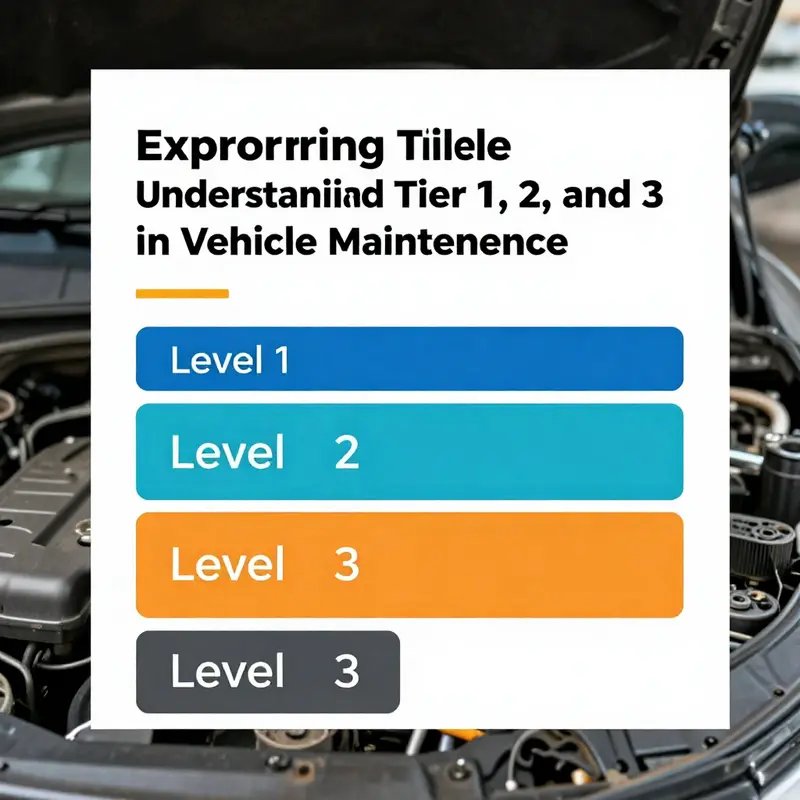
In discussions about automotive care, the word tier often surfaces first, but it belongs to a different conversation. Tier 1, Tier 2, and Tier 3 describe the supplier landscape of the industry—not the rhythm of a car’s routine service. The maintenance story, by contrast, unfolds through Level 1, Level 2, and Level 3. This chapter threads those ideas together, showing how the level system operates in today’s vehicles while acknowledging the broader supply-chain context that quietly supports every service interval. The distinction matters because it frames what you should expect from a scheduled visit, what kinds of expertise and equipment a workshop will need, and how a vehicle’s technology—gasoline, diesel, hybrid, or fully electric—shapes the depth of care it requires.
The modern standard for automotive maintenance and diagnosis continues to evolve. Recent updates under GB/T 18344-2025—the 2025 revision that became effective at the start of 2026—chart a unified approach for both traditional internal combustion powertrains and the growing family of electric propulsion systems. The document, produced by the National Technical Committee for Automotive Repair Standardization with leadership from research and transport institutions, provides a framework that reinforces safety, reliability, and efficiency across vehicle types. It codifies how maintenance work should be planned, executed, and verified, ensuring that Level 1, Level 2, and Level 3 tasks translate into real-world improvements in performance and safety. In practice, this means technicians follow a clear progression of service depth, guided by vehicle usage, mileage, and the technological complexity of the drive system. For owners and operators, it clarifies what tasks to expect at each stage and why timely service matters as technology advances.
At Level 1, the maintenance horizon is most visible every day. This basic maintenance is preventive and largely routine, centered on keeping the car clean, lubricated, and structurally sound. The questions it answers are simple but fundamental: Are fluids topped up? Are filters in good shape? Are external fasteners secure? Is the cooling system intact? Are lights, brakes, and steering reviewed for obvious wear or danger signs? In gasoline-powered passenger cars, Level 1 is typically performed at roughly 3,500 kilometers, while non-commercial electric vehicles generally follow a cadence of 5,000 to 10,000 kilometers, or about every six months. This interval reflects the idea that most minor issues begin to accumulate at this stage—tiny leaks, filter clogging, or wear on belts and hoses that, left unchecked, could become reliability problems or safety risks.
During Level 1 inspections, technicians pay particular attention to fluid levels—engine oil, coolant, brake fluid—and they examine the air and oil filters for clogging or degradation. They inspect the cooling system hoses for cracks or bulges and verify the integrity of belts and hoses that keep the engine and ancillary systems running smoothly. Braking components and steering linkages are visually assessed to catch early wear that could compromise safety. For electric vehicles, Level 1 includes a dedicated check of high-voltage systems. This is not merely a matter of routine curiosity; it requires specialized equipment to confirm insulation resistance, which should be at least 5 megaohms, ensuring electrical safety and reducing the risk of high-voltage incidents in everyday use. This emphasis on high-voltage safety at the earliest maintenance stage reflects the growing complexity of modern EVs and the need for technicians to handle electrified powertrains with appropriate care.
Level 2 expands the scope beyond routine top-offs and visual checks. It builds on Level 1 by introducing more in-depth diagnostics and adjustments that keep the vehicle operating at its best between major service events. For conventional internal combustion engines, Level 2 commonly lands around 17,500 kilometers, whereas non-commercial electric vehicles tend to range from 20,000 to 30,000 kilometers or roughly once per year. The level is characterized by a more hands-on approach: removing tires for inspection, rotating them to promote even tread wear, and validating suspension geometry. The ignition system receives closer scrutiny, with timing, fuel delivery, and, where applicable, injection components assessed for cleanliness and proper operation. In the realm of EVs, Level 2 broadens into battery pack diagnostics, thermal management checks, and motor efficiency assessments. The aim is to verify that energy storage and power delivery are operating within design parameters, that heat is managed effectively to prevent performance drop or component wear, and that the drivetrain remains aligned with the vehicle’s control systems.
A hallmark of Level 2 service is its diagnostic depth. Mechanics may perform precise adjustments to alignments and steering geometry, ensuring tires wear evenly and ride stability remains consistent. For gasoline engines, this is the point at which fuel injectors may be cleaned or replaced if performance symptoms appear, while carburetor components—where still present in some older platforms—receive closer attention. In EVs, technicians move beyond mechanical checks to verify electronic control units, battery diagnostics, and thermal behavior under various operating conditions. These checks are critical, because the performance envelope of an EV depends on a tightly managed balance between energy density, heat rejection, and motor efficiency. Level 2 is the hinge between routine maintenance and the more comprehensive, system-wide health assessment that maintains energy efficiency and safety as the vehicle ages.
Level 3 maintenance is the most thorough and sometimes the least frequent, though not obsolete. Although some regulatory frameworks have deprioritized mandatory Level 3 service for private vehicles, the practical significance of this phase remains strong for fleets, commercial operations, and high-mileage applications. Typically conducted after multiple Level 2 visits, Level 3 services may occur somewhere around 35,000 to 40,000 kilometers, depending on the vehicle and its duty cycle. This stage involves dismantling and deep cleaning of major assemblies—engine blocks, transmissions, differentials—and meticulous inspection for wear, corrosion, fatigue, or hidden damage. Components that show signs of life beyond normal wear are repaired or replaced, ensuring a long-term return to near-factory condition. The intensity of Level 3 work means it is often reserved for vehicles that demand the most reliability and uptime, including commercial fleets that cannot tolerate extended downtime or sudden failures. The process is not merely about replacing parts; it is about reestablishing the harmony of mechanical and electronic systems after years of operation under varying loads, climates, and road conditions.
Together, Levels 1 through 3 form a continuum of care that mirrors the vehicle’s evolving needs. They are crafted to address different risk profiles, environmental conditions, and usage patterns. A well-run maintenance plan leverages this continuum to prevent minor issues from escalating into major failures, while also recognizing when more invasive work is warranted to extend the vehicle’s productive life. In practice, a competent maintenance program will tailor the cadence of Level 1, Level 2, and Level 3 services to the vehicle’s propulsion type, age, and duty cycle. It might require more frequent Level 1 checks on a fleet vehicle that operates in extreme heat, or more frequent Level 2 diagnostics on an EV that undergoes high-demand daily driving. It is precisely this adaptability that keeps maintenance efficient and cost-effective, avoiding unnecessary work while ensuring safety and reliability.
A practical understanding of these levels also helps clarify something many readers find confusing: the term Tier 1, 2, and 3 in the context of vehicle maintenance is not about service depth. It is about supply chain architecture—the hierarchy of suppliers who design, produce, and deliver car components. When Level 1, 2, and 3 maintenance is planned, technicians rely on the availability of parts and the reliability of systems supplied by those tiers. The overlap matters because a hiccup in Tier 2 or Tier 3 supply can affect how Level 2 or Level 3 tasks are carried out, especially for newer technologies where specific components and diagnostics are required. Understanding both vocabularies helps car owners and operators read maintenance plans more accurately and anticipate potential delays or alternative strategies when parts access becomes a challenge.
If you are exploring the foundations of what maintenance actually encompasses, you might start with a broader definition that situates Level 1, Level 2, and Level 3 as structured stages of care rather than a one-size-fits-all schedule. For a concise overview that sets the table, see What is vehicle maintenance.
The conversation about maintenance levels is not purely academic. It has real implications for safety, cost, and environmental impact. Level 1 emphasizes preventive care that minimizes risk by addressing obvious wear and fluid status before they become hazards. Level 2 sharpens performance and efficiency by validating the core systems, ensuring drivetrain alignment, and confirming energy systems—the battery and thermal management in EVs—are operating within spec. Level 3 stands as a prudent, albeit heavier, investment in long-term reliability, making it especially valuable for fleets that demand predictable uptime and for high-mileage vehicles that accumulate stress over time. Across all levels, the guiding principle is clear: routine assessment, informed decisions, and timely action preserve the vehicle’s safety envelope and extend its useful life.
The cadence and content of Level 1, Level 2, and Level 3 maintenance will continue to evolve as vehicles become more sophisticated. Sensors, software-driven diagnostics, and advanced materials will increasingly shape what technicians inspect and how they respond. The GB/T 18344-2025 framework is designed to accommodate those developments, offering a stable reference point while allowing for innovation in diagnostic techniques and repair methods. In the end, maintenance levels are about keeping people safe on the road, preserving the asset, and ensuring that the vehicle’s technology remains trustworthy from first ignition to long after the odometer passes major milestones. The conversation about tiers and levels, though distinct, remains connected by a shared goal: maintaining the roadworthiness and efficiency of modern mobility in a world where reliability and sustainability matter more than ever.
For authoritative specifications and procedures related to vehicle maintenance levels, refer to the official document: GB/T 18344-2025 “Automotive Maintenance, Inspection, and Diagnosis Technical Specifications”. [External resource: https://std.samr.gov.cn/gb/search/gbDetailed?gbCode=GB%2FT+18344-2025]
Final thoughts
Understanding the roles of Tier 1, 2, and 3 suppliers significantly enhances the approach to vehicle maintenance for business owners. The quality and efficiency of maintenance practices depend on robust relationships within this supply chain. From Tier 1 suppliers that ensure the highest quality components to Tier 3 suppliers providing essential raw materials, each tier plays an integral part in the vehicle maintenance ecosystem. Furthermore, recognizing how maintenance levels correlate with supplier roles shines a light on the holistic approach required in maintaining vehicles effectively. By harnessing these insights, business owners can optimize their maintenance strategies, ensuring that their fleets operate efficiently and reliably.