
With the shift towards sustainable transportation, understanding the maintenance costs of electric vehicles (EVs) becomes crucial for business owners. This article explores the key factors influencing EV maintenance costs, compares them with traditional gasoline vehicles, delves into long-term financial considerations like battery replacement, and provides insights into service frequencies and costs. By the end, you’ll grasp why EV ownership is not just environmentally conscious but also economically savvy for your business.
The Quiet Advantage: Understanding Why Electric Vehicle Maintenance Costs Stay Low and What It Means for Ownership
Maintenance costs are not the loudest part of owning an electric vehicle, but they quietly shape the true price of mobility over years. When people compare EVs to traditional gasoline cars, the difference in upkeep often sways the buying decision more than the sticker price or the federal tax credit. What makes EV maintenance so much cheaper is the simplicity built into their powertrains. There is no internal combustion engine to oil, no multi-speed gearbox to service, no exhaust system to rust, and only a handful of fluids to monitor. In practical terms, this translates into fewer service tasks, lower probability of expensive repairs, and a smoother, more predictable ownership experience. The quiet efficiency of maintenance costs mirrors the quiet acceleration of the car itself, and that symmetry matters for long-term budgeting as much as the car’s initial price tag does.
From the outset, the most fundamental difference is straightforward: EVs have no engine oil changes, no spark plugs, and no ignition system to monitor. Those three elements alone account for a surprising portion of routine maintenance in traditional cars. The engine oil in an ICE vehicle isn’t just about catching up with a schedule; it also carries the risk of leaks, filter changes, and occasional repairs around a degraded oil system. In an electric vehicle, the engine bay is simplified into a compact electrical heartbeat. The absence of an internal combustion engine eliminates recurring tasks that can plague older vehicles with aging components. The drivetrain, often a single-speed setup, avoids the complexity of fluid changes and the choreography of a more intricate transmission. The result is a service cadence that is easier to predict and easier to budget for.
Another feature that quietly lowers costs is brake wear. Regenerative braking, which uses the electric motor to slow the car and recover energy, reduces the friction-based wear that typically wears brake pads and rotors in ICE cars. While you still need to check and replace wiper blades, air filters, and cabin filters, the frequency of brake-related maintenance drops noticeably. This single factor—reduced brake wear—can yield meaningful savings over the life of the vehicle, especially in urban driving where brakes see more frequent use. And even when serviced, EV maintenance tends to be less resource-intensive. There are fewer fluids to manage, and the coolant systems that do exist for battery cooling or motor operation require attention but not the cluster of routine services that plague gasoline-powered vehicles.
To translate these design advantages into real-world numbers, the published estimates place annual EV maintenance in a modest range. Across multiple sources, a typical pure electric vehicle requires about $600 to $800 per year in routine maintenance. Over three years, or roughly 60,000 kilometers, that figure commonly lands around $2,000. Consider concrete examples: the maintenance cost for a well-known electric mass-market sedan hovers around $2,500 over 60,000 kilometers, while a compact electric city car might be closer to $2,000 in the same period. And even within a single model line, per-visit costs can be quite reasonable. A standard service visit for an EV often runs between $300 and $500, covering checks like the battery cooling system, high-voltage wiring inspections, and routine replacements like air filters and windshield wipers. Some models have notably lower base service costs; for instance, a particular popular EV’s recurring service price can be a bit under $400 every 20,000 kilometers or annually, whichever comes first. These figures illustrate how, even with the occasional larger service, EV maintenance remains far more affordable than the sustained costs of a traditional engine.
But how confident can a prospective owner be about these numbers years into ownership? The battery stands out as the centerpiece of any EV’s financial picture. It is the most expensive single component, and its longevity is the major unknown in the long run. Modern lithium-ion packs are designed to endure many years of use, and manufacturers typically back them with robust warranties—commonly eight years or 100,000 miles, and in some cases with more generous terms, including unlimited mileage for the battery in some models. What this means for a buyer is a strong shield against the most serious future cost: a full battery replacement. If the battery does degrade to the point where replacement is necessary within the warranty period, the cost is largely absorbed by the manufacturer’s program. Even when degradation occurs outside the warranty window, the price of batteries has trended downward over time, and many packs still outlast the vehicle’s initial ownership period for most users.
The other side of the battery story is the warranty itself. In practice, the warranty coverage for the “three electric” components—the battery, the electric motor, and the power electronics—often dwarfs the coverage you would see for similar components in ICE vehicles. This broader, longer protection translates into an ingrained financial cushion. If a service issue arises that would be a major repair on a gasoline car, EV owners often have time to address it under warranty, rather than facing a sudden, large out-of-pocket expense. It is not merely theoretical: owners in real-world terms experience fewer of the shock repairs that can suddenly derail a maintenance budget. This protection is a core reason why the all-in cost of ownership for EVs, even when considering depreciation and financing, tends to stay favorable in long-term analyses.
Routine service frequency also nudges costs downward. Many EVs require the standard checks only once a year or every 20,000 miles, with actual service tasks limited to the essentials: health checks for the battery system and motor, inspection of high-voltage wiring, and the replacement of wear items like filters and wipers. When a service does occur, the typical ticket is in the range of a few hundred dollars rather than thousands. Major services are possible, particularly as the vehicle accrues more miles or ages, but these are infrequent and, even when they happen, remain well below the price of major engine repairs in gas-powered vehicles. The predictability of these intervals makes budgeting easier and helps avoid the surprise costs that sometimes accompany ICE ownership.
Driving behavior and environment compound or alleviate these factors. Aggressive driving with rapid acceleration and high-speed operation can strain any powertrain and battery, accelerating energy consumption and, over the long run, potentially affecting battery longevity. Extreme ambient temperatures, both hot and cold, can also influence the rate at which the battery degrades and may alter charging and cooling strategies. These conditions can indirectly influence maintenance needs, not because EVs suddenly require maintenance in a new category, but because the wear patterns shift in predictable ways. Tire wear, suspension components, and even cabin components can reflect these usage patterns, reminding owners that while EV maintenance costs are lower, they are not entirely immune to the realities of use.
The distinction between battery electric vehicles (BEVs) and plug-in hybrids (PHEVs) is another practical lens for cost expectations. BEVs, with no internal combustion engine at all, typically enjoy the lowest maintenance costs because there is no engine to service, no exhaust system, and fewer fluids to manage. PHEVs, by contrast, preserve a gasoline engine and transmission to extend range, which means they carry some engine service costs alongside the electric components. In sum, BEVs generally offer the most favorable maintenance economics, while PHEVs sit in a middle ground where some traditional engine maintenance must still be accounted for along with EV-specific checks.
All of these threads weave into a larger narrative about total cost of ownership. The maintenance costs for EVs are not merely a line item on a bill; they influence the long-term financial calculus of owning an electric vehicle. When you factor in the relative simplicity of the drivetrain, the extended warranty coverage on the battery, and the typical service cadence, the annual maintenance figure often emerges as a fraction of what a mid-size ICE sedan would require. One especially telling benchmark is a comparison that places EV maintenance costs well below the several thousand dollars per year often associated with a comparable gasoline-powered model. For the average driver, the maintenance cost of an EV over a typical ownership horizon remains substantially lower, which compounds with savings on fuel and potential incentives to make the overall ownership proposition very compelling.
If you are evaluating the numbers against your own driving pattern, consider not just the raw maintenance figures but the structure of those costs. Small services are frequent yet affordable, and large services, while rarer, are also far less costly than major engine overhauls. The battery warranty provides substantial risk protection in the early years, and many drivers will never face the expense of a battery replacement within their typical ownership period. For those who are curious about how these figures translate to real-world decisions, you can explore a concise discussion on whether electric vehicles require less maintenance do electric vehicles require less maintenance. Such explorations help ground the numbers in everyday experience and illuminate why EV maintenance economics often feel like a deliberately designed feature rather than an incidental side effect.
Ultimately, the practical takeaway is clear: EV maintenance costs are a meaningful, and often understated, part of the value proposition of electric driving. The drivetrain’s elegance translates into tangible, recurring savings. Battery longevity and warranty coverage provide a long runway of protection against major outlays, while routine service remains manageable and predictable. The result is a maintenance profile that aligns with the broader, more predictable ownership experience EVs promise. As vehicles and battery technologies continue to mature, these foundations should become even more favorable, reinforcing the case for EVs not only as a sustainable choice but as a financially prudent one as well.
External reference: https://www.energy.gov/eere/electricvehicles/electric-vehicle-basics
Beyond Fuel Costs: The True Maintenance Budget of Electric Vehicles Versus Gas Cars
When people first assess the cost of owning an electric vehicle, the familiar comparison climbs to the surface: fuel versus electricity. Yet the maintenance line is where the real, long term savings begin to show. An electric vehicle, with its simpler mechanical heart and far fewer moving parts, tends to require less routine attention than a gas powered car. The logic behind this is both practical and measurable. An internal combustion engine, with its oil pumps, hundreds of moving components, timing belts, exhaust systems, and ignition hardware, needs regular care to keep running. An electric powertrain, by contrast, substitutes a handful of essential elements for a system that largely sits still while the car moves. There is no need for oil changes, no sparks to replace, no timing belts to adjust, and no exhaust system to seal against wear. This foundational difference cascades into fewer opportunities for failure and slower wear in the components that do need attention.
From a maintenance planning standpoint, the most immediate and tangible savings come from the absence of engine oil changes and associated filters. Without an engine’s oil being circulated to lubricate thousands of parts, there is no oil sump, no oil pump routine, and no oil filter to swap. That single absence eliminates a recurring line item that is inescapable for gas-powered vehicles. Add to that the removal of spark plugs, ignition coils, fuel injectors, and the complex ignition system that accompanies them, and you quickly see how many potential failure points are removed from the lifecycle of the vehicle. The drivetrain in most EVs is simplified as well. Instead of a multi-gear transmission and a complex torque converter, many electric cars run on a single speed transmission that has fewer fluids to monitor and fewer components that might need recalibration or replacement over time. In practical terms, this translates to fewer scheduled services and less money spent on parts that wear out in an ICE vehicle.
Another factor tilting the maintenance curve in favor of EVs is the regenerative braking system. When the kinetic energy of the car is captured back into the battery during deceleration or braking, the electric motor acts as a generator. This process reduces the workload on the friction brakes, frequently resulting in longer brake pad life and slower wear on rotors. For many drivers, the result is a brake system that requires less frequent attention, fewer replacements, and lower costs over the life of the vehicle. In addition to these mechanical differences, there are simply fewer fluids to manage. EVs do need coolant for the battery and motor systems, and they require some routine checks on cooling loops. But the overall number of separate fluids you must monitor or replace is substantially smaller than the suite required by a typical ICE car, where motor oil, transmission fluid, brake fluid, coolant, power steering fluid, and sometimes fuel and exhaust system additives all demand periodic service.
All of these design choices add up to a maintenance experience that is often described as predictable and comparatively inexpensive. An authoritative range that appears across multiple analyses places the annual maintenance cost of a pure electric vehicle in a far narrower band than that of a gasoline vehicle. In many markets, the typical EV maintenance bill lands around six hundred to eight hundred dollars per year. Over a standard ownership horizon of several years, that difference compounds. A three-year snapshot—roughly sixty thousand kilometers or so—commonly totals around two thousand dollars for a conventional EV. To put that in sharper relief, consider specific models used in comparative studies: the Tesla model commonly cited in real-world maintenance analyses shows a total maintenance cost on the order of two thousand five hundred dollars over sixty thousand kilometers for a three-year period. By contrast, similarly powered gasoline equivalents can accumulate much higher maintenance charges due to more frequent engine-related service needs and more complex powertrains.
What surfaces in these numbers is a pattern you can count on irrespective of the exact car you choose. Small, routine services are inexpensive and frequent. They typically include checks of the battery cooling system, verification of high-voltage wiring integrity, inspection of air filters, and replacement of wipers and perhaps cabin filters. These small services can cost a few hundred dollars per visit, and many models set a base price for the standard service that falls within this range. For some EVs, the base service cost is surprisingly low; for example, certain popular models maintain a service schedule with a base cost under four hundred dollars every twenty thousand kilometers, or annually, whichever comes first. The implication is clear: the maintenance budget for an EV is not a one-off expenditure but a steady, manageable stream that is still lower than the equivalent for many ICE vehicles.
Then there is the question of the big, less frequent services. In gasoline cars, these big services often involve comprehensive inspections, fluid replacements, and more extensive component work, which can surprise owners with higher price tags. In EVs, the corresponding large services exist but typically involve fewer fluid changes and fewer components overall. When they do appear, they are still less expensive than the comparable major maintenance tasks for gas engines. More notably, the most expensive potential future cost—battery replacement—remains a looming concern only if one ignores the warranties and the durable, modular design that many manufacturers use. Battery warranties commonly extend eight years or more, and some reach up to ten years or a specified mileage like one hundred thousand or more. In practical terms, most drivers will never face an outright battery replacement cost within their ownership period if they are covered by warranty and if the battery continues to deliver expected capacity.
This is where the narrative often shifts from a simple cost comparison to a discussion of risk and schedule. The thinking that EVs require less maintenance is not only about the money saved on oil changes and spark plugs. It is also about the distribution of maintenance work over time and the likelihood of encountering expensive, high-variation repairs. In many ICE scenarios, a major engine repair or replacement can be a rare but financially devastating event. EVs reduce the probability of such a shock by design. Fewer moving parts, fewer opportunities for a catastrophic engine failure, and simpler cooling and lubrication systems all contribute to a maintenance curve that is flatter and more predictable. The risk is shifted toward battery longevity, a factor heavily influenced by usage patterns, climate, charging habits, and the particulars of battery chemistry. Yet even there, the presence of strong warranties and improving cell chemistry designs gives owners a credible pathway to minimize out-of-pocket costs during the typical ownership window.
What looks even more favorable when you widen the lens is a robust correlation between maintenance cost and ownership experience described in larger data analyses. A comprehensive study that examined millions of vehicle records found that EV owners spend roughly half as much on maintenance and repairs over the vehicle’s lifetime as owners of gasoline-powered cars. To translate this into practical terms, the annual maintenance cost for smaller gasoline cars often ranges from six hundred to twelve hundred currency units in some markets, whereas EV owners frequently report routine-service expenses under five hundred currency units per year. The numbers align with the real-world experiences of drivers who track these costs closely, including service visits and the occasional battery-related check that keeps the system operating at peak efficiency.
A few illustrative examples help to anchor the narrative. A Tesla Model 3 has been observed to average around three hundred eighty-two dollars per service, serving as a helpful benchmark for annual maintenance when calls for service accumulate over a year or two. Over a three-year horizon and sixty thousand kilometers, this can translate to roughly two thousand five hundred dollars in maintenance, a figure that is impressive when compared with more traditional drive trains. A gasoline-powered cousin in the same class—think of a well-known mid-size sedan—can accumulate a substantially higher maintenance bill within the same distance traveled, often exceeding a dozen thousand dollars, depending on the maintenance regime and regional costs. Those figures are not merely theoretical; they emerge from broad analyses that include not only service center data but long-term ownership costs that account for reliability, repair frequency, and the cost of parts over time.
This is not to pretend EV maintenance costs are absolutely uniform or entirely predictable across all markets. Regional differences in labor rates, parts availability, and service policy can shape the exact numbers you see in any given year. In some regions, the charge for routine maintenance can be adjusted by dealerships or service centers, and the pricing cadence may vary by model and the complexity of the vehicle’s electronics. Yet the overarching trend remains. EVs require fewer routine interventions and are less prone to expensive, large-scale engine repairs. The battery’s status remains the primary long-term cost factor, but the protective wrap of manufacturer warranty and the gradual evolution of battery technology continue to push the anticipated cost well within a comfortable margin for most owners.
This pattern also helps explain why hybrids occupy a middle ground in the maintenance conversation. Hybrids still carry internal combustion engines along with electric propulsion. They benefit from some of the same efficiency advantages that EVs bring, such as reduced brake wear and fewer oil-related services, but they still must contend with a traditional engine and exhaust components. Their maintenance costs tend to land between the pure electric and pure gasoline options, offering some savings compared with ICE vehicles, but not to the degree seen with full electric powertrains. For buyers weighing total cost of ownership, the trade-off between range, refueling patterns, and maintenance considerations becomes part of a larger, more nuanced calculation that goes beyond the sticker price.
From a decision-making perspective, the maintenance narrative for EVs emphasizes predictability, modest annual cost, and durability through routine checks. The smaller number of fluids and parts to monitor translates into a maintenance schedule that can be planned with greater ease. Owners frequently report a sense of financial confidence stemming from consistent service intervals and a lower likelihood of surprise repair bills for components that would otherwise account for a substantial portion of ownership costs in gasoline-powered vehicles. In other words, beyond the obvious savings at the pump, the maintenance budget for an EV often proves more stable and easier to manage over the long run.
For readers who want to dig deeper into the numbers and replicate the analysis for their own situation, there are valuable resources that synthesize maintenance data across vehicle segments. One line of inquiry focuses on real-world maintenance experience and aggregates it to show how EV upkeep compares with ICE upkeep across ownership horizons. A broader finding worth noting is that the battery, despite its potential to become a high-cost item in the abstract, is typically protected by substantial warranties and is designed to last for many years under normal driving conditions. The long-term financial risk is therefore more about monitoring and maintaining the battery system than about incurring sudden, catastrophic costs for an individual component.
As you consider your own driving profile, a few practical reminders help maintain the advantage EVs have in maintenance cost. Keep up with routine checks of tire condition and wheel alignment, as these are common sources of service visits that can inflate maintenance costs if neglected. Monitor the cooling system’s health, particularly in regions with extreme temperatures where thermal cycling can stress battery and motor components. And most importantly, keep an eye on the warranty terms offered with the vehicle you choose. A robust battery warranty—often eight to ten years or a certain mileage—significantly lowers the financial risk of a high-cost eventuality and ensures that the lower maintenance bill you see in the early years continues to be a meaningful portion of your total cost of ownership for a long time.
If you want to explore a concise discussion about whether EVs truly require less maintenance, you can read a detailed explainer on this topic that links to user experiences and professional analyses: Do electric vehicles require less maintenance?. This piece consolidates the idea that the maintenance discipline for EVs often looks different from traditional cars, emphasizing fewer high-cost repairs and a steadier service pace.
In the end, the maintenance cost story for electric vehicles is less about a dramatic price swing and more about a quiet, persistent advantage. The mechanical simplicity of the powertrain, coupled with regenerative braking and fewer fluids, yields a maintenance pattern that is broad in its consensus: EVs cost significantly less to maintain on an annual basis, and the three-year and longer horizons reinforce that message. Battery warranties mitigate the worry about the largest potential future expense, and the reality on the ground is that most owners will not experience a battery replacement within the ownership window dictated by typical warranties. The possibility exists, certainly, but the probability remains low for the majority of drivers, especially as manufacturers continue to improve battery chemistry and the durability of energy storage systems. This is not merely a financial footnote. It is a central piece of the argument that EV ownership, aside from ecological and efficiency benefits, also represents a sound economic decision over the life of the vehicle.
External reference: Consumer Reports maintenance costs study
null
null
The Quiet Price Tag of Power: Unwinding the Real Maintenance Cost of Electric Vehicles
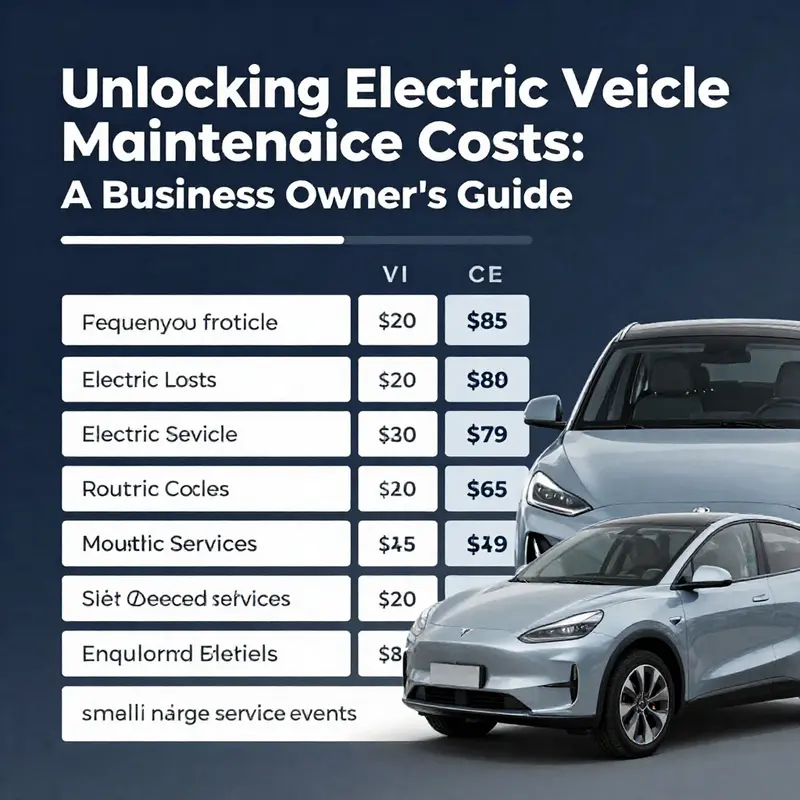
Maintenance costs are often the most overlooked part of owning a car, until they start stacking up. With electric vehicles, the math is unusually clear and favorable, because the engine’s complexity simply isn’t there. An electric powertrain is composed of far fewer moving parts than a traditional internal combustion engine, and that fundamental simplicity cascades into lower routine service prices, longer intervals between major repairs, and fewer points of failure that drain your wallet. When you step back from the abstractions of horsepower and battery range and translate maintenance into dollars and dates, the story becomes a straightforward one: EVs cost less to service over the long arc of ownership, even as you still plan for the same human realities of car care—filters, fluids, inspection, and occasional parts replacements. The generosity of the cost story comes not from a single magical component but from a system-level difference in design and operation.
The core reasons are tangible. There is no internal combustion engine to oil, cool, or replace. There is no need for spark plugs, timing belts, or a club of ignition components that age and fail under heat, vibration, and miles. The drivetrain in most electric vehicles is a simplified, often single-speed transmission system that requires minimal fluid changes and almost no adjustment beyond routine checks. The braking system benefits from regenerative braking—the motor acts as a brake during deceleration and slows the vehicle while recapturing energy. This can dramatically reduce wear on traditional friction brakes, extending pad and rotor life and trimming the frequency and cost of brake service. Fluids are still part of the equation—coolant for the battery and motor, for example—but the total number of fluids a technician has to manage is far smaller than in a gas-powered car. In practical terms, every service visit on an EV covers different, fewer items, with a shorter list of required maintenance tasks, which translates into lower per-visit costs and less frequent, expensive interventions.
That practical picture translates into numbers that surprise many shoppers. Across multiple sources that study maintenance costs with a broad lens, the annual maintenance bill for a pure electric vehicle tends to hover in the low hundreds, typically around six to eight hundred dollars per year. The three-year horizon, which corresponds to many lease cycles and common new-car ownership windows, often lands around two thousand dollars. A real-world reference point helps bring this to life: the Tesla Model 3, widely cited for its relative maintenance frugality, shows a total maintenance cost of about two and a half thousand dollars over sixty thousand kilometers, which breaks down to roughly eight hundred or so dollars per year. By contrast, similar calculations for a conventional luxury sedan or performance model can push into the ten-thousand-dollar neighborhood over the same period, once you account for oil changes, specialized services, and more frequent, intensive maintenance requirements on a gas engine and exhaust system. It’s not just about a single model; it’s about the structural difference in what needs to be serviced, and how often.
The cost experience isn’t purely a function of a single car. Routine maintenance for EVs remains modest and predictable, with typical service visits ranging from roughly three hundred to five hundred dollars. This covers standard checks such as the battery cooling system, high-voltage wiring inspections, air-filter replacements, and wiper blade changes. Some manufacturers, like the high-volume, widely cited models, set a base service cost around the low four hundreds every twenty thousand miles or annually, underscoring the predictability of EV upkeep. The frequency of small services is a core advantage: you’re not chasing a long list of engine-related items or catastrophic fuel-system repairs. Instead, you’re paying for periodic inspections, software updates, routine cooling-system checks, and the occasional component replacement that, in a traditional vehicle, would be a fraction of the cost but a much more frequent event.
To put these patterns into a broader context, a major industry study by Consumer Reports found that EV owners tend to spend about half as much on maintenance over the vehicle’s lifetime as ICE vehicle owners. The implication is not just that EVs are cheaper to service, but that the service ecosystem itself is scaled differently—fewer checkups, fewer parts known for wear, and a design that prioritizes reliability rather than reactive fixes. The study’s implications matter because long-term budgeting matters. When you compare the same three-year window for two different classes of cars, the EV often comes out far ahead in terms of predictable expenses, even if the upfront sticker price is higher or the monthly loan payment is more. The stark contrast shows up in model-level comparisons as well: a widely cited example contrasts a Tesla Model 3 against a BMW 3 Series over the same period, where the EV racks up about two and a half thousand dollars in maintenance, while the BMW can approach thirteen thousand dollars in the same timeframe. The gulf isn’t about a single rubber seal or a particular oil type; it’s the absence of an entire ecosystem of combustion-engine maintenance. The friction surfaces—the exhaust, the turbo, the timing components, the sewage of small repairs that you might experience in a gas car—just aren’t part of the EV equation.
Battery health and long-term resilience are the real edge cases that temper this otherwise sunny maintenance forecast. The fear that underpinning EV ownership is the potential need to replace the battery pack can cast a long shadow over the decision. In practice, however, manufacturers stand behind the most expensive asset with robust warranties—often eight years or one hundred thousand miles, and in some markets higher mileages or extended terms—covering the drive unit and battery pack against many common failure modes. The consequence is a risk profile that looks dramatically different from a gasoline car’s powertrain over the same horizon. Battery warranties and the overall durability of modern lithium chemistry mean that most owners will not face a battery replacement during their typical ownership period. When a battery does require attention beyond initial warranty coverage, the costs can be sizable, but those costs are increasingly insulated by warranty terms, extended coverage options, and a broad ecosystem of regional service centers designed to tackle battery-related maintenance without the extreme price spikes familiar to older vehicle technologies.
What does this mean for the daily rhythm of owning an EV? It means a maintenance calendar that favors regular, light touchpoints over heavy, infrequent, and expensive interventions. Small, routine services—like inspecting the HVAC-thermal management system, checking high-voltage connections, replacing cabin air filters, and topping up windshield washer fluid—become the bulk of the maintenance cadence. More substantial services—coolant replacements or fluid refreshes that may be necessary as the vehicle ages—are still a part of the plan, but their frequency is far less than what a gasoline-powered vehicle would require for similar payoffs. The upshot is a maintenance budget that remains tight and predictable, a factor that resonates with drivers who want a reliable, cost-controlled ownership experience without the dramatic ups and downs that sometimes accompany ICE repairs.
The practical implication for budgeting is clear. If you’re planning around maintenance costs, you should anticipate a larger portion of your budget to be allocated to routine visits and a smaller, less frequent allocation for more significant, battery-related concerns. It makes sense to set aside funds for a standard service every twenty thousand miles or so and to keep a contingency for any unexpected outlays related to battery health or electronics, even if those contingencies are less likely to be triggered than in a gas vehicle. For prospective buyers wrestling with the question of maintenance, the numbers tell a persuasive story: routine EV maintenance is inexpensive, the frequency of service is lower, and the potential for drastic, unplanned expenses is constrained by warranty protections and a simpler, more durable design.
If you’re curious about the broader discussion around maintenance, there is a helpful explainer that dives into whether EVs truly require less maintenance in practice, which may address common concerns from readers weighing the decision. Do Electric Vehicles Require Less Maintenance? This article, among others in the same vein, helps translate the industry data into a practical, everyday lens—how often you may need a service, what items you’ll see on the invoice, and how the costs compare over typical ownership horizons. The takeaway is not that EVs are maintenance-free; rather, they offer a maintenance architecture that aligns more closely with a consumer’s desire for stability and predictability.
Finally, the broader narrative about maintenance costs should be read alongside what this means for total ownership economics. The comparative advantage of EVs here supports the argument that, even after accounting for purchase price and financing, the ongoing service costs are a meaningful part of the financial calculus. The reduced service frequency, the lower per-visit expense, and the warranty-backed protection against major battery events all combine to create a compelling case for EVs as a long-term savings instrument. In this light, maintenance cost becomes not a secondary consideration but a central pillar of the total cost of ownership, one that strengthens the financial logic of choosing electric propulsion.
External resource for a deeper dive into the numbers and methodology behind these conclusions: https://www.consumerreports.org/cars/electric-vehicle-maintenance-costs/. The study-backed perspective reinforces that the maintenance narrative for EVs is grounded in real-world data and long-term ownership patterns, underscoring why many buyers experience a distinctly lighter maintenance burden compared with traditional gasoline-powered vehicles.
Final thoughts
Understanding the maintenance costs of electric vehicles unlocks significant savings and sustainability options for business owners. With low annual maintenance costs, reduced wear on components, and the absence of complex engine parts, EVs represent an efficient choice for modern businesses. Embracing this technology not only contributes to environmental efforts but also ensures financial prudence in vehicle management. As the automotive market continues to shift, staying informed on EV maintenance will position your business favorably for the future.