

In the realm of business, operational efficiency hinges on the reliability of vehicle maintenance. A vehicle maintenance contract serves as a crucial framework that defines the responsibilities and expectations between vehicle owners and repair service providers. Such contracts not only clarify what services will be performed but also establish legal protections, financial implications, and compliance requirements that are vital for maintaining a business fleet. As we delve into this article, we will unravel the structure of a vehicle maintenance contract, explore its legal implications, highlight the economic benefits it offers, and emphasize the importance of compliance in ensuring smooth operations. Each chapter will equip business owners with the knowledge needed to make informed decisions about vehicle maintenance contracts.
Reading the Structure: How a Vehicle Maintenance Contract Maps Ownership, Care, and Accountability
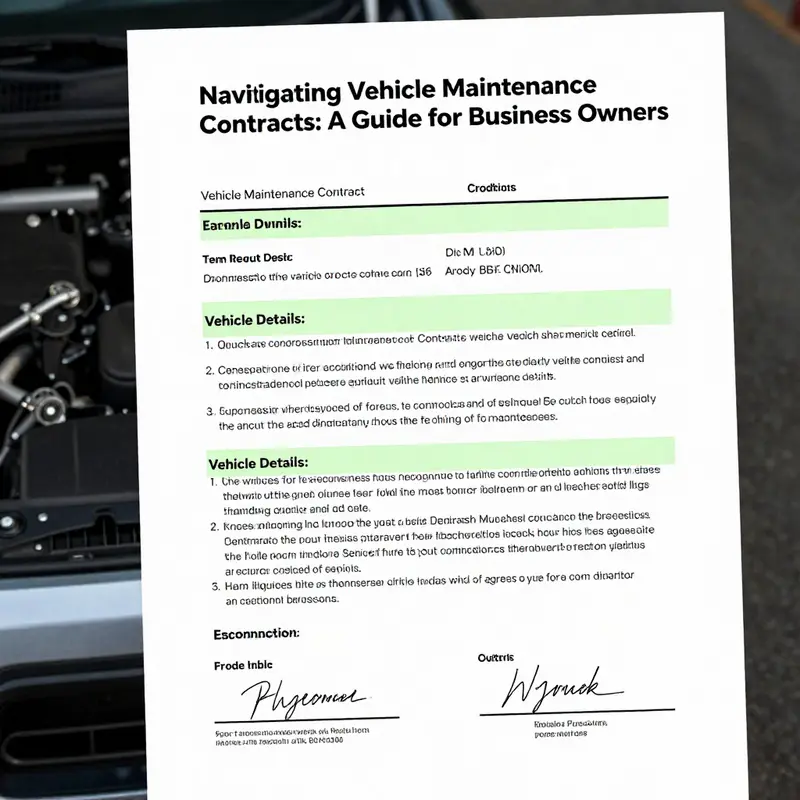
Every service encounter for a car sits inside a larger frame called a vehicle maintenance contract. It is more than a list of tasks; it is a binding framework that defines who is responsible for what, when it should happen, and how much it will cost. In practice, the contract translates the mutual trust between the vehicle owner and the repair service into a clear set of expectations. Without it, routine maintenance can drift into disputed territory with confusion about scope, timing, or quality of work. A well drafted contract protects both sides by aligning incentives toward safe driving, reliability, and accountability. At its core, the contract is not a single line item but a living map of the relationship between the person who owns the vehicle and the person who provides care for it. It clarifies what is being promised, what must be delivered, and what happens if either party falters. This is why the document begins by identifying the two primary parties clearly, including full names, addresses, and contact details. When a shop or a service center signs on to maintain a fleet or a private vehicle, and when the owner signs to authorize that care, the agreement becomes effective only through mutual recognition of those identities. The simple act of naming the parties publicly creates a durable reference point for every later decision and dispute. From there, the contract moves into vehicle information. A precise description of the vehicle, including model, year, license details, and, crucially, the Vehicle Identification Number, anchors the agreement to a single machine. Mileage at the outset is more than a number; it marks the starting point for preventive plans and a baseline for warranty calculations. The aim is to prevent mix ups, such as servicing the wrong car or confusing one vehicle in a multi-vehicle fleet. A misidentification can cascade into misplaced parts, incorrect service history, and gaps in liability coverage. Once the vehicle’s identity is secured, the contract delineates the scope of services. This is the heart of the arrangement, and it deserves careful attention. The document may cover routine maintenance like fluid checks, filter replacements, and tire rotations, or it may govern more complex tasks such as brake system overhauls or engine diagnostics. The precision here matters. The parties should specify which tasks will be performed, which parts will be replaced, and what warranties apply to both labor and materials. The clarity of scope is directly linked to the customer’s confidence and the shop’s accountability. When the service schedule and frequency come into play, the contract shifts from a one-off transaction to a plan for ongoing care. Preventive maintenance is usually scheduled at regular intervals, such as every 5,000 miles or every six months, depending on the vehicle’s design and the owner’s driving patterns. The contract may spell out reminders or automatic enrollment in certain programs, while allowing for adjustments if the vehicle is used in unusual conditions or if the manufacturer’s recommendations change. This cadence is essential because it translates a vague intent like keep the car in good condition into a repeatable sequence of actions. The next layer concerns costs and payment terms. Prices appear not as a single bumper figure but as a structure that captures fixed fees for specific services, hourly labor rates, and the cost of parts. The document should also state when payment is due. Some contracts call for payment upon completion, others require payment before service, and more complex arrangements might align payment with milestones or monthly invoicing in a fleet setting. The clarity of pricing reduces the room for surprise during or after service, which is where disputes often begin. Closely linked to price are warranties and guarantees. A well drafted contract makes explicit how long labor warranties last and what parts are covered under manufacturer warranties or shop guarantees. It might specify, for example, a labor warranty period of a year or 12,000 miles and a parts warranty tied to the component’s original supplier. These guarantees are not mere marketing language; they reassure the owner that the workmanship and materials will perform as promised and that the contractor will stand behind the work if claimed deficiencies arise within the warranty window. Yet warranties also delineate the boundaries of responsibility. If a failure results from misuse, improper installation of non_STANDARD parts, or external damage, the contract should explain how liability is assigned and what remedies remain available. Liability and indemnification provisions are the guardrails of the agreement. They spell out the limits of the service provider’s liability in the event something goes wrong and may include provisions for indemnifying the other party against claims arising from negligence. This is not a way to escape responsibility; it is a framework to manage it transparently. The contract also addresses termination. No relationship lasts forever, and the agreement must anticipate how either party can disengage. Termination clauses typically specify notice periods, any remaining obligations, and how outstanding work or costs will be settled. By outlining these rules, the contract protects both sides from abrupt discontinuations that could leave a vehicle stranded or an owner exposed to sudden charges for unfinished work. When disagreements do arise, the contract points the parties toward a clear dispute resolution pathway. It may prefer mediation or arbitration as a first step, with litigation as a final option. The governing law section identifies which jurisdiction’s rules apply to interpret the agreement and resolve conflicts. This is particularly important for fleets that operate across state or national borders, where different legal climates have different expectations about consumer protection, warranty interpretation, and the timeliness of claims. Finally, the document culminates in the formal signatures of authorized representatives and a dated record that indicates when the contract became effective. The physical act of signing and stamping, where required, gives the arrangement the public authority it needs to be enforceable. Each of these elements is not a separate chapter in a manual but a thread in a single woven fabric. Together, they transform a series of small tasks into a coherent program of vehicle care. In many markets, especially where maintenance becomes a long term program rather than a single event, the contract serves as a repository of shared memory. It records the vehicle’s history of services, the parts that were replaced, the hours spent by technicians, and the evolving understanding of how the vehicle should be kept in service. This record is a resource for both parties: it helps the owner track how much has been invested in the vehicle and it helps the provider justify the rationale for decisions, including the choice to replace a component or the decision to escalate a repair to a more involved service. It is not unusual for maintenance contracts to appear in contexts where fleet managers, dealership service programs, or long term rental arrangements are involved. In those settings, the contract operates as a governance mechanism that aligns the expectations of multiple stakeholders—drivers, fleet supervisors, and service providers—around consistent standards of care, pricing, and accountability. The transparency that a written contract creates is especially valuable when large or critical components are involved. For high cost repairs or work on essential safety systems, a formal agreement can prevent a sliding scale of ad hoc decisions and hidden changes in scope. The contract thus acts as both shield and compass: it protects the owner from surprise charges and inadequate workmanship, while guiding the shop toward a disciplined, auditable workflow. The practical benefits extend beyond dispute avoidance. When owners understand precisely what is covered and what is not, they can plan maintenance budgets with greater accuracy. When technicians rely on a clear scope, they can organize parts inventories and labor allocations more efficiently. The result is a service experience that feels fair and predictable, even when the vehicle requires complex work. It is essential to recognize that the structure of a maintenance contract does not eliminate all risk or remove the need for professional judgment. Skilled technicians still decide which diagnostics are necessary, which parts are the best fit, and how to sequence repairs for safety and performance. The contract, however, ensures that those judgments are made within a framework that both parties signed up to in advance. In some regions, the formal framework is reinforced by regulatory guidelines that standardize how maintenance contracts should be drafted and enforced. For instance, in China, standardized contracts often draw on a template that establishes the core obligations and remedies while enforcing the requirement that the document be signed and stamped by both sides to become effective. The Implementation Rules for Vehicle Maintenance Contracts emphasize the consequences of non signing, including potential denial of administrative support or dispute handling by authorities, and the risk of fines for non compliance. They also underscore the practical detail that settlements are based on actual labor hours and detailed material lists. These rules reflect a broader recognition that clear documentation protects both the consumer and the service provider by creating a defensible record of what was agreed, what was performed, and what was charged. A contract of this kind acknowledges that maintenance is not a one step event but a sequence of decisions that unfold over time. It accommodates the evolving needs of the vehicle, the owner’s budget, and the service provider’s capabilities. It is a living document that may be amended with written notice when the scope of work changes. Yet the most important feature of the contract is its ability to convert professional practice into a civilian and verifiable agreement. When a dispute arises, the document becomes a primary reference point that explains what both sides believed they had agreed to and how the work was to be performed. It reduces the ambiguity that often fuels conflict and frames negotiations within the boundaries that both parties established at the outset. For readers seeking a concise entry point into the wider world of maintenance concepts, a broader overview is available through general resources on vehicle maintenance. For an accessible primer, you can explore the concept here. what is vehicle maintenance. This link provides a straightforward context for how the maintenance contract fits into the larger discipline of keeping a vehicle safe, reliable, and economical to operate. While the specifics of a contract will vary by jurisdiction, the underlying logic remains constant: define the who, the what, the when, the how, and the cost, then support those definitions with a transparent process for change, payment, and accountability. As readers move from theory to practice, they will see that the structure of a vehicle maintenance contract is not a bureaucratic hurdle but a practical blueprint. It transforms the technical craft of car care into a formal relationship that respects the interests of those who drive and those who repair. A robust contract supports quiet confidence on the road by ensuring that when a vehicle needs care, the process that follows is orderly, disclosed, and fair. It is a contract that speaks in the language of reliability and responsibility, and that language, in turn, helps keep every journey safer and more predictable. External resource: https://www.transportation.gov
Adhesion, Accountability, and the Road: Navigating the Legal Terrain of Vehicle Maintenance Contracts
A vehicle maintenance contract is more than a service invoice. It is a legal instrument that maps the relationship between contractor and client, clarifying what the service provider will do, when, and for how much. The contract also defines what guarantees attach to repairs, what parts are permissible, and who bears the financial risk if something goes wrong. In practical terms, it translates the shop floor into a document that courts, regulators, and consumers can read and rely on when disputes arise. The result is a formal record that helps prevent misunderstandings, but it also creates a framework of expectations that can be strict, detailed, and unforgiving if misinterpreted or misapplied. Understanding this bridge between service and law is essential for anyone who contracts for vehicle care, whether a private owner, a fleet manager, or a small business operator responsible for maintenance budgets.
Many vehicle maintenance contracts operate as adhesion contracts. The provider drafts the terms and presents them as a take-it-or-leave-it proposition to the client. The client’s choice is typically to accept the entire package or walk away. This structural asymmetry gives the service provider considerable influence over how risks are allocated, what is covered, and what is excluded. In this dynamic, subtle but powerful terms can shape outcomes long after the vehicle leaves the workshop. Clauses that shrink liability, exclude certain repairs, or permit unilateral changes can tip the balance toward the provider even when a repair exposes a latent defect or a failed component unrelated to the work performed. The client must therefore approach these documents with a careful eye, recognizing that acceptance is not merely a formality, but a legal posture that can determine accountability in a dispute.
At the heart of most maintenance contracts lie the core terms that owners should scrutinize closely. Vehicle identification information anchors the agreement to a specific asset, ensuring that the right vehicle is subject to the described maintenance. The scope of maintenance or repair sets the boundaries of what the provider promises to perform, ranging from routine secondary services to comprehensive overhauls. Parts and materials are addressed in terms of supply, quality standards, and whether the client or the contractor controls procurement. The warranty or guarantee period attached to repairs creates a temporal shield for the client, but it also invites examination of what exactly is covered and for how long. Payment terms cap the financial exposure and define the procedures for invoicing, disputed charges, and the handling of overlapping service tasks. In many markets, the contract also identifies the method of charging for labor—whether by actual hours, a fixed fee, or a blended approach—and it lists the materials in a detailed bill of materials to prevent post hoc disputes about what was used and why.
Beyond these basics, the contract often includes provisions that govern the mechanics of the relationship, including how the scope of work may change. In adhesion settings, changes are typically required to be in writing, with timely notification and a structured path for approval. This framework is intended to prevent ad hoc alterations that can shift costs or expand liability after work begins. Yet such provisions can also become flashpoints if a customer believes a change was implied by the service narrative or if the provider asserts that a necessary corrective action falls outside the original description. The clarity of these change procedures matters, because disputes frequently hinge on whether a modification was properly documented, communicated, and agreed upon. A well-drafted contract states a procedure for these adjustments to protect both sides and to preserve the integrity of the maintenance record.
The specific regulatory and procedural context adds another layer of complexity. In certain jurisdictions, standardized maintenance contracts are encouraged or mandated to follow templates that reflect statutory expectations for transparency and accountability. In China, for example, standardized vehicle maintenance contracts have often been based on a formal template issued by the State Administration for Market Regulation. The GF-92-0304 template serves as a reference point for the parties, guiding the inclusion of essential items such as the formal vehicle data, the scope of work, the flow of parts and materials, the warranty framework, and the precise payment arrangements. The practical effect of adopting a state-supported template is to elevate minimum standards for clarity and to facilitate enforcement. The contract must be signed and stamped by both parties to become effective, underscoring the solemnity and formal recognition of the agreement. This ritual, while sometimes seen as bureaucratic, creates a tangible record that withstands evidentiary challenges in disputes and helps authorities diagnose non-compliance. Changes to the scope of work require written notification and a timely response, reducing the risk of unilateral drift that can leave a client exposed to unexpected costs or gaps in coverage. The settlement of charges, traditionally based on actual labor hours and a detailed material list, provides the granularity needed to justify every line item and to prevent the dispute that arises when a customer questions the accuracy of a bill. In practice, these elements make the contract not only a scheduling tool but also a meaningful framework for resolving disputes, assigning responsibility, and guiding remediation when things go wrong. They reinforce the idea that maintenance is an organized, accountable process rather than a casual exchange of services.
The enforceability of adhesion contracts sits at the intersection of consumer protection law and the realities of the marketplace. Courts generally uphold these agreements when their terms are clear and the consumer has had a reasonable opportunity to understand them. The presence of explicit terms about coverage, exclusions, obligations, and remedies often strengthens enforceability. Yet most jurisdictions reserve a measure of protection for consumers against unfair or unconscionable terms. When a clause disproportionately shifts risk onto the client or limits remedies in a sweeping or indefensible way, a court may scrutinize or invalidate it. For example, a clause that excludes all liability for defects in workmanship or materials could be challenged as unenforceable if it is deemed grossly unfair or if it contravenes mandatory consumer protections. The balance a court seeks is to honor the legitimate interests of both parties while preventing terms that erode the reasonable expectations of a consumer in a basic service relationship. The broader principle is that adhesion contracts should not be a vehicle for evading responsibility when the underlying service fails to meet professional standards.
Regulatory considerations extend beyond the letters of a contract to the way terms are presented. Transparency and clarity in contractual language are often emphasized to ensure that a reasonable consumer can grasp the core commitments and risks. This involves plain language, highlighted terms for coverage limits, explicit timelines for service intervals, and straightforward explanations of exclusions or limitations. When terms are buried in fine print or obscured by legalese, even well-intentioned providers risk challenges that the marketplace or regulators will view as problematic. The societal expectation is that contracts should facilitate informed consent and predictable outcomes, not merely protect business interests. This is particularly true when high-stakes vehicle components—such as safety systems or critical driveline elements—are involved, where misunderstandings can have serious consequences for safety and liability. For readers seeking a compact legal overview, the topic of adhesion contracts and enforceability is well captured in established resources that discuss definitions, enforcement standards, and the boundaries of consumer protection.
From the practitioner’s vantage point, the contract serves as a practical tool for risk allocation and oversight. It provides a framework for how the work will be performed, under what conditions repairs may be deemed successful or unsuccessful, and how disputes will be resolved. The inclusion of itemized labor hours and a detailed materials list turns the maintenance process into a traceable narrative. This traceability matters because it creates a reliable chronology of events—what was requested, what was delivered, and on what terms the service was completed. A well-constructed contract also reduces ambiguity around who bears responsibility for a particular failure or defect after service. When the vehicle subsequently experiences trouble, the written record can guide analysis of whether the issue stems from normal wear and tear, human error during maintenance, or a latent defect in a replaced component. In this light, the contract is not a mere formality but a functional instrument that supports accountability, quality control, and fair remedies.
For readers navigating these waters, several practical considerations emerge. First, approaching a maintenance contract with a mindset of due diligence pays dividends. Take time to review the vehicle’s identifying details and confirm alignment with the service description. Second, demand an itemized bill and a detailed parts list. This transparency helps prevent disputes about what was used and why. Third, insist on a clear warranty framework, including what is covered, for how long, and under what conditions coverage could be voided. Fourth, ensure that any scope changes are captured in writing and that the associated costs are approved before work proceeds. This reduces the risk of surprise charges and later misunderstandings. Fifth, recognize that adhesion does not render the consumer powerless. If a term appears unfair or impractical, seek clarification or negotiate a modification before signing. While the provider may resist, the balance in most jurisdictions favors terms that are transparent and reasonable when properly understood.
A broader awareness of the legal landscape also helps. Since the contract may serve as primary evidence in quality disputes, it becomes a crucial tool in determining liability, the time limits for claims, and the appropriate scope of mediation. In this sense, the document functions as a bridge between the shop floor’s technical processes and the courtroom’s evidentiary standards. It is not merely about keeping the vehicle running; it is about defining the boundaries of responsibility and the pathways for redress when those boundaries are crossed. For anyone who manages a fleet or maintains a personal vehicle, recognizing that maintenance contracts operate at this legal-administrative junction clarifies why careful drafting, thoughtful review, and precise execution matter so much.
As this chapter draws connections between everyday servicing and formal rights, it becomes clear that a chapter of vehicle maintenance is also a chapter of law. The contract’s power lies in its capacity to transform a routine service into a governed transaction with predictable consequences. It memorializes the expectations of both sides, not only for the current repair but for the relationship as a whole. To readers seeking a practical sense of how this works in the wider field of vehicle care, consider how a typical adhesion contract aligns with broader maintenance principles and with expectations for safe, reliable transportation. If you want a concise, user-friendly overview of maintenance concepts, see What is vehicle maintenance?. The link provides a broader grounding in why the terms of a contract matter to the ongoing health of a vehicle and to the confidence a driver can place in the maintenance process.
In the end, the legality of vehicle maintenance contracts rests on a balance. The provider will look to protect its interests, while the client seeks predictable service, fair remedies, and clear accountability. When both sides engage in transparent negotiation, and when the contract accurately reflects the actual service relationship, adhesion becomes not a threat but a framework for trust. The formalities—signatures, stamps, written changes, and itemized charges—are not mere bureaucratic rituals; they are practical safeguards that help ensure maintenance outcomes align with expectations. The result is a durable record that supports timely service, reduces disputes, and sustains the safety and reliability that every vehicle relies on when it answers its owner’s call to move forward. For those who want to explore the legal dimension further, a concise overview of adhesion contracts and enforceability can be found in reliable external sources, such as discussions of key definitions and enforceability standards. Understanding these principles can empower both clients and providers to approach maintenance contracts with greater confidence and clarity, ensuring that every repair contributes to a safer, more dependable ride on the road ahead.
Smart Savings: How a Vehicle Maintenance Contract Protects Your Budget and Asset Value
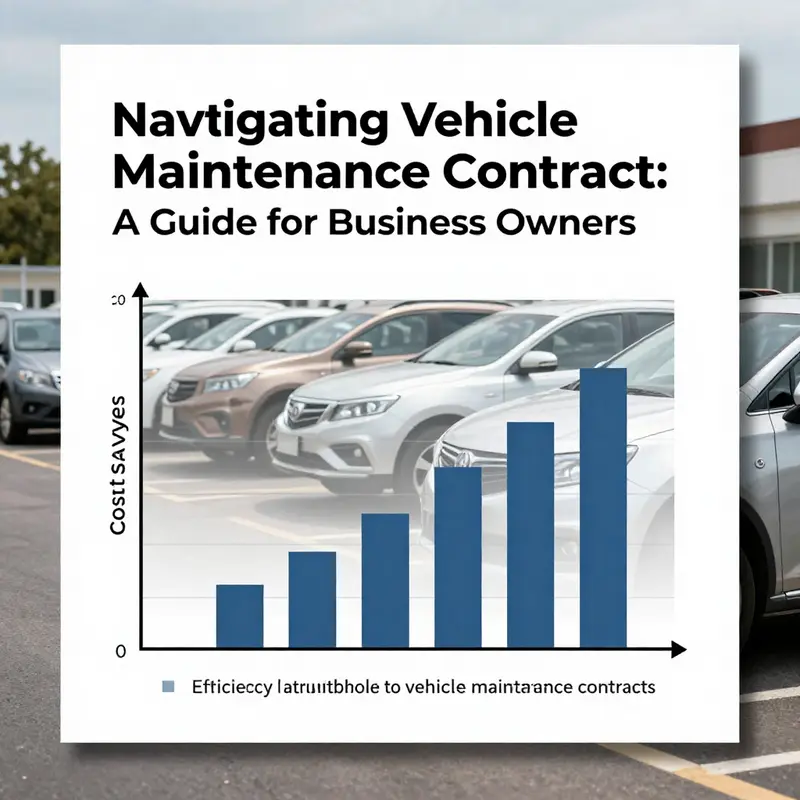
A vehicle maintenance contract is more than paperwork. It is a financial tool that reduces uncertainty and protects the value of your vehicle. When the terms are clear and enforced, the contract aligns incentives. Owners benefit from predictable costs. Repairers gain clarity about scope and liability. The result is a stronger financial posture for both private owners and businesses.
Predictable maintenance costs are the backbone of the economic case. A written agreement defines prices, labor rates, and which parts are included. That makes monthly or annual budgeting simple. Unexpected repair bills can spike costs and derail household plans. For fleets, a sudden major repair can idle vehicles and harm revenue. A contract converts unpredictable outlays into scheduled expenses. This smoothing effect improves cash flow. It also simplifies tax and accounting treatments for businesses.
Beyond budgeting, the structure of a maintenance contract encourages preventive care. Contracts often mandate regular inspections and standard services. These include oil changes, brake checks, tire rotations, and fluid replacements. Routine attention finds wear before it develops into catastrophic failure. Replacing a worn brake pad is far cheaper than repairing a warped rotor or a failed hydraulic system. Addressing a coolant leak early prevents engine overheating and costly head-gasket repairs. Over time, preventive services reduce the average cost per mile. They also extend component life, lowering the frequency of large repairs.
Contracts can also specify who supplies parts and materials, and at what quality level. This detail matters for economics. If the contractor supplies parts at a discounted rate, the client avoids retail markups. If the client supplies parts, the contract can stipulate acceptable brands and warranties. These clauses prevent disputes about part quality. They also reduce the risk of shop upselling unnecessary components. Clear rules on materials streamline settlements when unexpected work is required.
Many contracts include coverage for parts and labor on routine maintenance. That coverage translates into direct savings over time. When labor and parts are prepaid or included, the marginal cost of each visit falls. Consider frequent services, such as oil changes and brake maintenance. Paying per visit accumulates costs fast. A contract can bundle those visits at a lower effective rate. Over several years, the savings can equal the premium paid for the contract. That is especially true when routine visits are frequent or when labor rates are high.
Additional perks increase the contract’s value. Roadside assistance reduces towing expenses. Loaner vehicles or shuttle services cut downtime costs for owners who depend on their cars daily. Priority scheduling minimizes the time a vehicle spends off the road. For commercial operations, every hour out of service can cost revenue. Contracts that shorten repair cycles therefore deliver measurable economic benefits.
Fuel economy is another area where contracts pay off indirectly. Proper maintenance keeps engines and drivetrains operating efficiently. Clean air filters, correct tire pressure, and timely oil changes all improve fuel consumption. Over thousands of miles, small efficiency gains add up. For vehicle owners who track operating costs, the fuel savings can offset a portion of maintenance fees. If you want to explore that connection, see this article on how vehicle maintenance saves on gas expenses.
A documented maintenance history also preserves resale value. Prospective buyers and dealers value proof of regular, professional servicing. A complete contract-based record signals consistent care. This can reduce buyer uncertainty and justify higher asking prices. For leased vehicles, documented maintenance may prevent penalty charges at lease-end. For used-car sellers, the premium gained from a well-maintained vehicle can outstrip the cost of the contract.
For businesses with fleets, the economics scale. Centralized maintenance contracts standardize service quality across multiple vehicles. Standardization reduces administrative overhead. It simplifies parts inventory and consolidates vendor relationships. With a single contract, invoicing and accounting become predictable. Fleet managers can forecast downtime more accurately. They can also negotiate volume discounts for parts and labor. All of these improvements reduce the total cost of ownership across the fleet.
The contract also establishes a framework for dispute resolution. Clear provisions for warranties, claim periods, and responsibility allocation reduce the chance of costly litigation. When quality issues arise, the contract serves as primary evidence. That can speed mediation or arbitration. Faster resolution lowers legal fees and avoids prolonged operational disruption. For businesses, this reduces both direct costs and the indirect costs of lost productivity.
Another economic advantage is risk transfer. Contracts often define warranty periods and repair obligations. These clauses shift some repair risks from the owner to the contractor. When a repair fails within the warranty window, the contractor repairs it at no additional charge. That reduces unexpected capital outlays for owners. It also lets businesses plan reserve funds less conservatively. Knowing that certain failures fall under warranty encourages better capital allocation.
There is also a reputational element with measurable financial consequences. Repair shops that use formal contracts tend to maintain higher standards. Regulatory frameworks can amplify this effect. In some jurisdictions, standardized templates and mandatory signatures are required for major repairs. These rules promote transparency and reduce opportunistic behavior. A reputation for fair, contract-based service attracts repeat customers. Over time, that loyalty lowers customer acquisition costs and stabilizes revenue for repair providers.
Tax and accounting benefits deserve attention, too. Predictable maintenance schedules and costs make accrual-based accounting simpler. Businesses can amortize contract expenses or include them in operating budgets. For tax purposes, maintenance costs are typically deductible as operating expenses. Predictable and documented spending reduces audit risk and simplifies filings. This clarity saves administrative time and possible penalties.
Contracts also enable smarter procurement decisions. When terms and pricing are known, owners can compare offers more accurately. They can evaluate the trade-off between an inclusive contract and a pay-as-you-go approach. For items with high variance in failure cost—transmissions or hybrid batteries—an inclusive plan may prove most economical. A contract forces a disciplined analysis of expected costs versus potential losses.
Behavioral economics plays a subtle role. Having a contract promotes adherence to maintenance schedules. When services are prepaid or scheduled automatically, owners are more likely to follow recommended intervals. That behavioral nudge reduces the probability of neglect-driven failures. In short, contracts encourage actions that generate long-term savings.
Finally, contracts support long-term strategic planning. For businesses, they form part of lifecycle management. Contracts create predictable maintenance timelines. Those timelines inform replacement cycles and budgeting for capital expenditures. With reliable maintenance data, managers can model depreciation and residual values more accurately. That improves decisions about when to sell, replace, or refurbish vehicles.
A vehicle maintenance contract is thus a proactive financial strategy. It reduces unpredictable repair costs. It increases operational uptime and improves resale outcomes. It aligns incentives between owners and service providers. For fleets, the savings compound through scale and process efficiencies. For individuals, the contract brings peace of mind and clearer budgeting. The economic benefits are real and measurable when the contract is well drafted and properly executed.
For further reading on the broader economic advantages of maintenance plans, see this expert analysis from Consumer Reports: https://www.consumerreports.org/cars/vehicle-maintenance-plans-a2074591563/.
Guardrails of Reliability: The Central Role of Compliance in Vehicle Maintenance Contracts
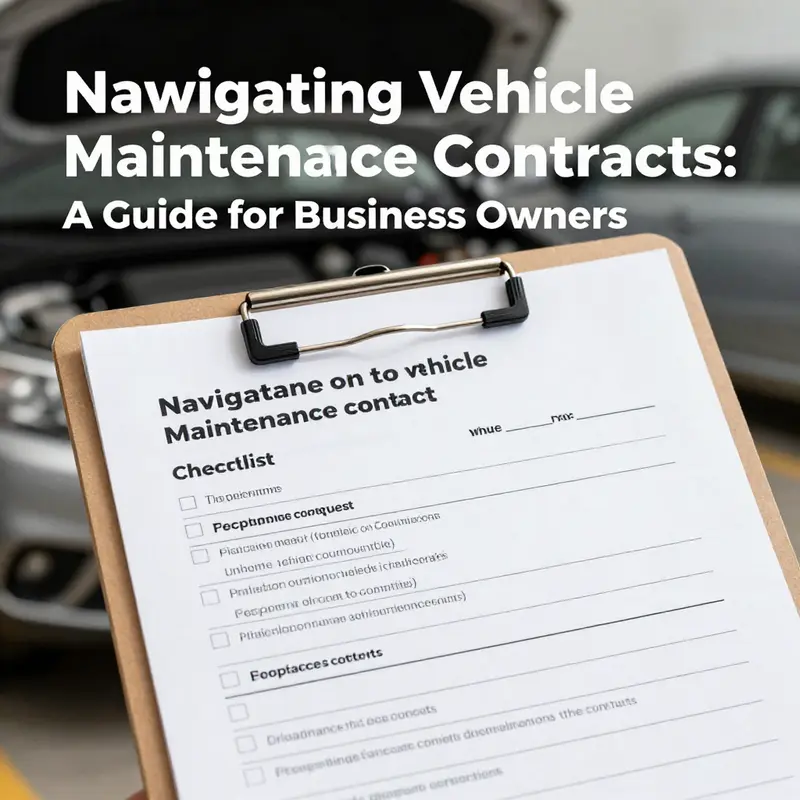
A vehicle maintenance contract is more than a ledger of charges and a list of services. It is the legal architecture that makes fleet maintenance predictable, accountable, and defensible when things go wrong. At its core, a maintenance contract defines who is responsible for what, under what standards, and how performance will be measured and verified. It translates the scattered expertise of mechanics, logistics, and management into a single, enforceable framework. When a fleet manager sits down to draft or review such an agreement, the objective is not simply to buy a service. The object is to create a line of sight between purpose and outcome: safety, reliability, and cost containment that survive the inevitable friction of day-to-day operations. In this way, compliance is not a afterthought or a bureaucratic box to tick; it is the heartbeat of the contract, guiding every decision about maintenance cadence, parts quality, and the handling of unexpected repairs.
The practical scaffolding of a vehicle maintenance contract rests on a few essential pillars. First, it must specify the vehicle identifiers and the precise nature of the required maintenance. This ranges from routine servicing—oil changes, filter replacements, tire checks—to more complex interventions such as major overhauls or critical component replacements. The distinction matters because it anchors expectations about labor intensity, timeframes, and the level of expertise needed. Second, the contract must address the allocation of materials and parts. It should spell out who supplies parts, what standards those parts must meet, and how substitutions are handled when a supplier part is unavailable. A clear rule about parts provenance protects the client from substandard components and ensures traceability if a failure arises.
In the described context, the contract also serves as a formal record of warranty arrangements for repairs. It should state the duration of any warranty, what it covers, and the procedures for making a claim. This is not merely a consumer-friendly convenience; warranties matter in corporate operations because they shift risk and set expectations for repair timelines. Closely tied to warranties are payment terms. Settlements based on actual labor hours and detailed material lists require a meticulous framework for invoicing. The contract should define the method for calculating labor, the unit rates, how overtime is treated, and how changes in the scope of work are approved and priced. Clarity here reduces the potential for disputes over what was performed versus what was billed.
The most consequential part of the contract, however, is not the list of services but the standards of compliance that govern how those services are delivered. Compliance encompasses regulatory adherence, industry best practices, and the contractual duties of both parties. It begins with the written terms that specify who is responsible for inspection, what documentation must accompany each service, and how records should be maintained and shared. It continues with the obligation to verify that maintenance is performed by qualified personnel using approved procedures and parts. This is the pivot around which liability turns when something fails. A UK-based legal and risk management perspective from 2022 captures the essence: if the contract requires the contractor to maintain vehicles to specified standards and to provide documentation, the client has a duty to verify that those obligations are fulfilled. That duty is not ceremonial; it is a practical mechanism to prevent preventable failures and to allocate responsibility when failures occur.
Compliance, in this sense, is an active discipline. It requires more than just signing the paper; it demands ongoing oversight. The most effective contracts provide for regular reviews of maintenance logs, periodic inspections, and corroborating records that demonstrate adherence to standards. The use of digital records can streamline verification, offering real-time visibility into service histories across a fleet. Yet technology alone cannot substitute for judgment. A robust compliance regime couples digital capabilities with human processes: scheduled audits, performance metrics, and clearly articulated consequences for non-performance.
From a risk perspective, the imperative to maintain oversight is not theoretical. Poor performance by a contractor in vehicle maintenance can disrupt operations, escalate safety hazards, and inflame regulatory scrutiny. It can also drive up insurance costs or trigger policy changes if coverage is questioned due to repeated failures or undocumented work. The link between third-party risk and brand reputation is well understood in supply chain risk management. When a repair partner fails to meet the contract’s standards, the resulting incidents become a drag on operations and a stain on credibility. The contract, therefore, does more than govern a transaction; it governs trust between the client and the contractor.
A well-constructed maintenance contract also recognizes the reality that contracts must adapt. Scope creep and unplanned repairs are not rare in vehicle maintenance. For this reason, the document must include a mechanism for written notification and timely responses when the scope of work changes. The emphasis is on controlled flexibility: changes must be documented, priced, and agreed by both sides before any work proceeds. This principle protects both parties from surprises and reduces friction when urgent repairs become necessary. It also protects the client from being charged for work outside the agreed terms and protects the contractor from disputes over unauthorized work.
The legal backbone varies by jurisdiction, but a particularly instructive framework exists in the Chinese regulatory environment. Here standardized maintenance contracts often rely on the GF-92-0304 template issued by the State Administration for Market Regulation. In this setting, the contract is not merely a private agreement but part of a formal administrative ecosystem. The paper, once signed and stamped by both parties, becomes effective, with its validity reinforced by the requirement that changes to the scope must be communicated in writing and answered promptly. Settlements are carefully grounded in actual labor hours and comprehensive material lists, reinforcing accountability and ensuring that charges reflect genuine work performed. The contract thus becomes a primary evidentiary tool in quality disputes, a document that can help determine liability, set time limits for claims, and guide the scope of mediation. It is a reminder that contracts in this space sit at the intersection of commercial, technical, and regulatory dimensions and must therefore be crafted with precision and foresight.
This regulatory frame does more than guide conduct; it sets the leverage points for dispute resolution. Failure to sign a contract can lead to denial of administrative support or dispute handling by authorities, and non-compliance can attract penalties and harm a repair shop’s reputation rating. The practical takeaway for managers is clear: the contract is an asset for risk management, not a formality to be postponed. It is the instrument that clarifies who bears risk when a component fails, who pays for a late delivery of parts, and who bears the burden when a misdiagnosis leads to an unnecessary repair.
Embedded in this discussion is a broader lesson about responsibility and accountability in a networked maintenance landscape. When fleets rely on third-party maintenance providers, the contract must articulate how oversight will be conducted and what constitutes satisfactory performance. The obligation to inspect and confirm, as highlighted in the referenced 2022 legal guidance, is not optional. It is a duty that helps prevent gaps in maintenance that could have safety implications on the road. The contract should, therefore, set out not only inspection rights but also the manner and frequency of inspections, the criteria used to judge compliance, and the remedies available if standards are not met. This attention to verification—logs, audits, and performance metrics—creates a feedback loop that continuously elevates maintenance quality over time.
Another important practical dimension concerns the leverage that the contract provides in the supplier relationship. A well-drafted clause can specify that all repairs must be carried out by technicians who meet defined qualifications and who use approved procedures and diagnostic tools. It can also require documentation that certifies the use of genuine parts or their approved equivalents and that these parts meet established standards. Such provisions are not about policing the contractor; they are about aligning incentives and ensuring a shared commitment to safety and reliability. When a problem arises, the contract helps determine liability by the wording of its standards and the documented proof of compliance. This alignment matters just as much for small fleet operations as it does for large corporate in-house teams.
The practical path forward for organizations seeking to fortify their compliance framework is to treat contract design as a strategic exercise. Start with a clear articulation of roles and responsibilities. Then embed compliance standards with concrete, audit-ready requirements. Include mechanisms for regular reporting, for example, required maintenance logs delivered in a standardized digital format, and a schedule for performance reviews tied to service outcomes. Add explicit consequences for non-compliance, balanced with a fair process for remedies and cure periods. Finally, recognize the value of expert input. Legal and risk management professionals can help draft enforceable clauses, specify inspection rights, and outline consequences in ways that withstand scrutiny in disputes or regulatory inquiries. The aim is to cultivate not just compliance on paper but disciplined operational discipline that translates into safer vehicles and more predictable costs.
For readers looking to connect this topic to related aspects of vehicle ownership and maintenance, consider how the maintenance obligations influence decisions around leased vehicles. In many leased-vehicle scenarios, the contract’s clarity about responsibilities—both maintenance scheduling and the handling of repairs—profoundly shapes cost control and risk exposure. See more on how maintenance responsibilities are framed in leased-vehicle contexts at the linked article about who pays for maintenance on a leased vehicle. who-pays-for-maintenance-on-a-leased-vehicle
As you move from drafting to implementation, the overarching message remains consistent: a vehicle maintenance contract binds performance to accountability. It is the legal instrument that preserves safety, promotes efficiency, and stabilizes cost in a domain where variables abound—unforeseen breakdowns, fluctuating parts availability, and evolving regulatory expectations. In that sense, compliance is the practical mechanism by which promises become outcomes. It transforms a contract from a static document into an active management tool that guides daily decisions and long-term strategy alike. The more rigorously a contract encodes these principles, the more resilient a fleet becomes against operational shocks.
Ultimately, a maintenance contract is a mutual agreement about risk, capability, and transparency. Its value lies not only in what it permits the contractor to do, but in what it forbids or requires of both sides to protect safety and performance. When properly designed and diligently enforced, compliance enables smoother collaboration, clearer accountability, and a shared commitment to keeping vehicles roadworthy. The road to dependable maintenance is paved with precise terms, verifiable records, and an insistence that every party lives up to the standards they signed up to meet. The result is not merely fewer disputes, but a more trustworthy relationship between client and contractor and, most importantly, safer journeys for every mile ahead.
External resource for broader context and governance insights: For a broader view on contractor compliance in maintenance contracts, see LexisNexis on contractor compliance and third-party risk. https://www.lexisnexis.com/uk/insight/contractor-compliance-your-business-and-managing-third-party-risk/
Final thoughts
Understanding vehicle maintenance contracts is essential for business owners who wish to protect their investments and ensure operational efficiency. A well-structured contract not only delineates responsibilities and costs but also safeguards against potential legal disputes while enhancing financial planning. Adhering to such contracts can lead to significant economic advantages and foster stronger relationships with service providers. By grasping the importance of compliance and the intricacies of these agreements, businesses can create a robust framework for vehicle management that supports long-term success.