
For business owners, the reliability of their vehicles is essential to maintaining operations and ensuring customer satisfaction. Ignoring vehicle maintenance presents a host of serious consequences that can negatively impact performance, safety, and overall vehicle longevity. This article will explore the critical areas that require attention, including engine performance, brake systems, and tire safety. Each chapter will delve into the specific repercussions of neglecting maintenance in these areas, emphasizing why prioritizing regular upkeep is not just an option but a necessity for businesses that rely on their vehicles.
When Skipping Maintenance Turns the Engine into a Time Bomb: How Neglect Erodes Power, Fuel, Safety, and Value
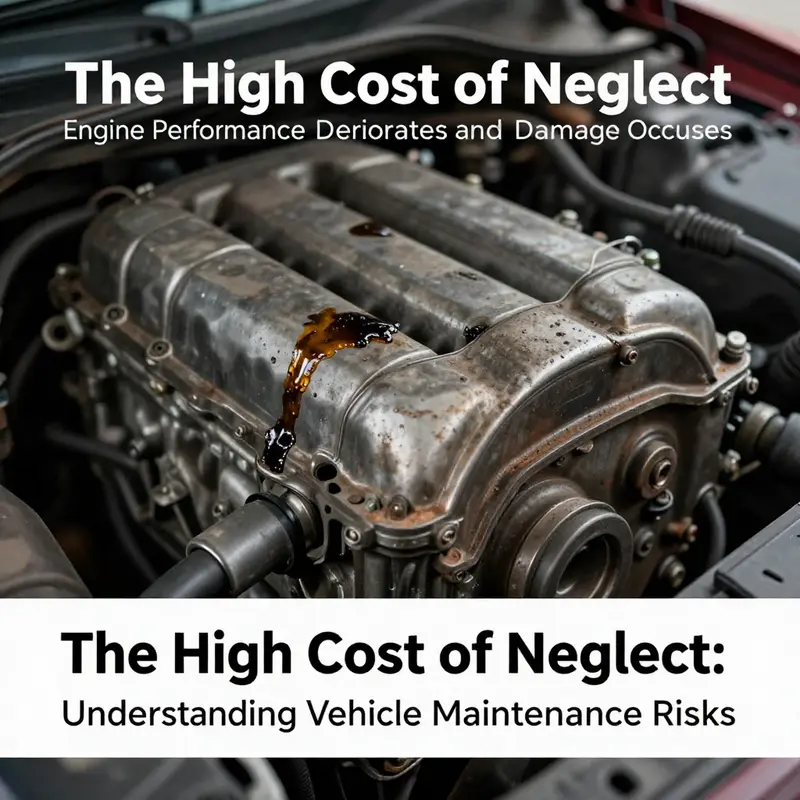
The day you notice your engine coughs or pulls slightly when you press the accelerator, you might shrug it off as a hiccup, a quirk of a tired morning. This chapter is a different kind of wake‑up call. It traces what happens when maintenance is postponed long enough for problems to stop being isolated nuisances and start acting like a cascade that drags every part of the car into the same trouble. The engine is the heart of the machine, yes, but it also sits at the center of a web of systems that rely on careful, regular care. When maintenance slips, the heart not only slows down; it heats up, clogs, and loses its ability to communicate with the rest of the car clearly. The result isn’t merely a drop in power. It’s a progressive erosion of reliability, efficiency, safety, and, ultimately, value.
At the core of engine deterioration is oil. Fresh motor oil does more than lubricate; it cleans and cools. It carries away debris, cushions high‑speed metal against metal, and helps keep temperatures within safe limits. When maintenance slides, the oil becomes contaminated with particles from wear and from the atmosphere of the engine itself. The effect is insidious. The oil can no longer perform its duties as effectively as it did when it was new. Friction between moving parts rises. Heat builds where it shouldn’t, and the engine must work harder simply to do the same job. The immediate symptoms show up as reduced power, slower response to the throttle, and less brisk acceleration. But the longer you go without changing the oil, the greater the wear and the higher the operating temperatures. The engine temperature is a careful balance; once oil loses its lubricating and cooling properties, you begin to push components toward overheating, accelerated wear, and, in the worst cases, catastrophic failures that can require major repairs or a full engine replacement. And the costs? They mount quickly. A routine oil change is a modest expense; a damaged engine, or one rebuilt after severe wear, is expensive enough to wipe out years of savings on maintenance.
The harm isn’t limited to oil alone. The air pathway into the engine is essential for delivering the right air‑fuel mixture. A clogged air filter can seem like a minor inconvenience, a simple maintenance task that could be postponed for a few more miles. But the engine relies on a precise balance. When airflow is restricted, the engine cannot burn fuel efficiently. The result is a mixture that’s too rich or too lean for the current operating condition, which translates into power loss, rough idling, and increased fuel consumption. The engine becomes a victim of its own lean or rich state, operating under extra stress as it tries to compensate for the restricted air supply. Over time, this misbalance compounds wear on pistons and cylinders and can accelerate the deposition of carbon and varnish inside the combustion chamber, further diminishing performance and efficiency.
Belts and hoses are the quiet guardians of reliability. They perform the background work that keeps timing correct, keeps the coolant circulating, and powers essential systems. When maintenance slips, belts can crack, crack, and fail without warning. A timing belt or serpentine belt failure at speed can trigger a cascade of problems, from loss of power steering to an overheating engine, and in some cases to a completely seized engine if the belt that times the camshaft snaps. Hoses can crack and leak, allowing coolant or vacuum leaks that destabilize engine performance. These failures don’t always announce themselves with a dramatic roar; often they manifest as small leaks, minor squeaks, or a gradual decline in performance. But the underlying risk is real: a broken belt or ruptured hose interrupts critical functions, and the cost of emergency repairs rises dramatically compared with routine inspection and replacement.
What begins as a small fog of decline rarely stays small. The engine’s performance is a sum of its parts, and neglect nudges each part toward its limit. Minor friction becomes more heat, which exacerbates wear on piston rings and cylinder walls. The power that once came with a crisp response feels dulled, and the car requires more fuel to cover the same distance. The fuel economy that seemed reasonable when the vehicle was new can slip noticeably as the engine fights to operate with degraded lubrication and suboptimal air intake. In a sense, neglect reframes a routine service into a financial tax—every mile driven without care adds a little more to the bill you’ll pay when the engine finally balks.
The accumulation of issues is not merely additive; it’s multiplicative. When oil quality degrades and friction climbs, the engine generates more heat. Excess heat accelerates the breakdown of seals and gaskets, promotes sludge formation, and roughens the interior surfaces that must slide against one another. A worn piston ring, once a manageable wear feature, becomes a leverage point for more severe blowby and compression loss. The air pathway remains critical; a clogged filter compels the engine to work harder to draw in air, which compounds the problem by increasing intake resistance and the stress on the fuel‑delivery system. The belts and hoses, pressed into service by the extra demand, are more likely to fail under heavier loads or higher temperatures. And every symptom, from a slight misfire to a noticeable ping or knock, is not a signal to ignore but a warning: the engine is signaling distress, and if you fail to respond, the distress grows into a crisis.
The stakes extend beyond the mechanical. An engine that runs poorly tends to consume more fuel, which means higher operating costs and more frequent stops at the pump. It’s not merely about the price of fuel in the moment; it’s about the broader cost cycle. Efficiency losses compound with time as the car accumulates more miles and more wear, and you begin to see a creeping effect on resale value. A maintenanced vehicle typically retains value better, not because a single repair frees it from concern, but because a documented history of care reduces the buyer’s perceived risk. A vehicle that has missed routine service is often viewed as a potential money pit, with hidden issues that could surprise the new owner. That perception translates into a lower resale price, and the owner who skipped maintenance effectively pays for that perception through diminished market value.
The linked threads of these mechanical and economic consequences form a single, unbroken chain: neglect today leads to trouble tomorrow, trouble that costs more in time, money, and safety, and trouble that can erode the vehicle’s life span. The entire engine ecosystem depends on timely intervention; the moment maintenance slips, the system moves toward a state of chronic deficit rather than peak performance. And the longer the neglect, the higher the risk that the problems will no longer be isolated incidents but widespread failures that strike when the car is needed most.
There is a practical thread that runs through this discussion of deterioration, a thread that emphasizes that maintenance is not a luxury but a foundational discipline of responsible vehicle ownership. Regular service isn’t just about ticking boxes on a checklist. It’s about sustaining a system designed to function as a coherent unit. Oil changes, air filter replacements, belt and hose inspections, and careful monitoring of engine temperatures are not optional rituals; they are the guardrails that keep the engine from veering into dangerous, costly territory. When you attend to these tasks, you don’t just protect the engine; you protect the entire driving experience—smooth acceleration, reliable starts, stable temperatures, and predictable fuel economy. The payoff isn’t immediate in a single journey; it accumulates gradually as the engine remains reliable across miles and seasons. And while the subject here centers on engine performance deterioration, the ripple effects touch nearly every other subsystem of the vehicle, reinforcing the idea that routine maintenance is a holistic practice, not a compartmentalized chore.
If you’re seeking a way to frame the value of maintenance in practical terms, consider the long arc of fuel costs. A car that runs efficiently uses less fuel, leaves less carbon footprint behind, and reduces stop‑and‑go trips to the shop for emergency repairs. The link between maintenance and gas expenditures is not merely theoretical; it is a tangible accounting reality. See how regular upkeep translates into lower fuel bills over the long run in discussions that explore how maintenance saves on gas expenses. how vehicle maintenance saves on gas expenses. Even when the immediate payoff isn’t dramatic, the cumulative effect over thousands of miles is meaningful. The math is straightforward: cleaner air intake, better lubrication, and well‑tensioned belts minimize stray energy losses and reduce the engine’s workload. The result is a smoother ride, steadier power delivery, and, crucially, less strain on the system that powers acceleration and cruising performance.
There is also a safety dimension to neglect. The failure of a critical engine component mid‑drive can escalate from inconvenient to dangerous. A sudden loss of power at highway speed can leave you stranded or create a hazardous situation for nearby motorists. The clock that starts ticking in the heart of the engine isn’t just a mechanical timer; it’s a countdown to potential safety risk. Regular inspection and timely replacement of parts that wear—like timing components or belts that synchronize or drive essential functions—reduce the odds of such awkward moments. The consequence isn’t only about avoiding an embarrassing stall; it’s about preserving control and reliability when it matters most, in traffic, at speed, or in challenging conditions.
In the large arc of vehicle ownership, engines do not exist in isolation. They are the most visible, tangible expression of how maintenance has shaped the car’s overall health. When owners allow neglect to accumulate, the engine’s decline is rarely a sudden collapse; it is a gradual erosion that makes every journey a test of endurance. The vehicle’s longevity—its usable life span—also follows this logic. Without proper maintenance, components wear unevenly and prematurely, and that uneven wear accelerates the decision point at which repair costs outpace the value of keeping the car on the road. In short, maintenance is a form of insurance: a smaller, predictable expense today to avoid a much larger, unpredictable one later. That is the fundamental premise behind regular service, and it is a principle with real, measurable consequences for performance, safety, and value.
This is not a manifesto against all risk or a call to obsess over every minor squeak. It is a reminder that a well‑maintained engine rewards patience and foresight with steady performance and a quieter, cooler heart. It invites readers to consider maintenance not as an interruption to their day but as a form of stewardship for a machine that carries them, their families, and their daily lives. It is about preserving the balance that keeps a car responsive when you need it and dependable when you depend on it most. And while the engine is the focus here, the same logic applies to every subsystem—brakes, cooling, electricals, and tires—each of which can become a point of failure if ignored, and each of which affects the same core outcomes: safety, reliability, efficiency, and value.
For readers who want to connect this engine‑level discussion to broader maintenance practices, the ASE framework offers a comprehensive perspective on how regular service maintains the integrity of the entire vehicle. The guidance emphasizes proactive inspection, timely part replacement, and a systematic approach to upkeep that reduces the likelihood of dramatic failures. Incorporating such guidance into a personal maintenance routine turns what could be a reactive, crisis‑driven approach into a predictable, affordable, and safe way to keep a car performing well across many miles. The takeaway is clear: neglect opens the door to a cascade of problems; disciplined maintenance keeps that door closed and the engine healthy across seasons and miles alike.
In sum, ignoring routine maintenance transforms a well‑understood mechanical system into a fragile, overworked, and increasingly inefficient machine. The engine’s performance deteriorates not because one thing fails in isolation, but because many related parts drift from their optimal state. Oil degrades, air flow narrows, belts fail, and the engine fights to maintain pace. The result is a cycle of reduced power, higher fuel consumption, and greater risk of expensive breakdowns. Yet the solution is straightforward: commit to regular maintenance, address issues early, and view service as the ongoing investment it truly is. This approach preserves not only the engine’s health but the safety, efficiency, and value that keep a vehicle truly reliable—and that trust is what most drivers want when they turn the key and press the accelerator. To readers who are ready to translate this understanding into action, the path is not complicated: a consistent maintenance schedule, attentiveness to warning signs, and a willingness to invest in preventive care.
External resource: ASE Vehicle Maintenance Tips (https://www.ase.com/vehicle-maintenance-tips)
Brakes on the Edge: Why Regular Maintenance Matters for Safe Stopping
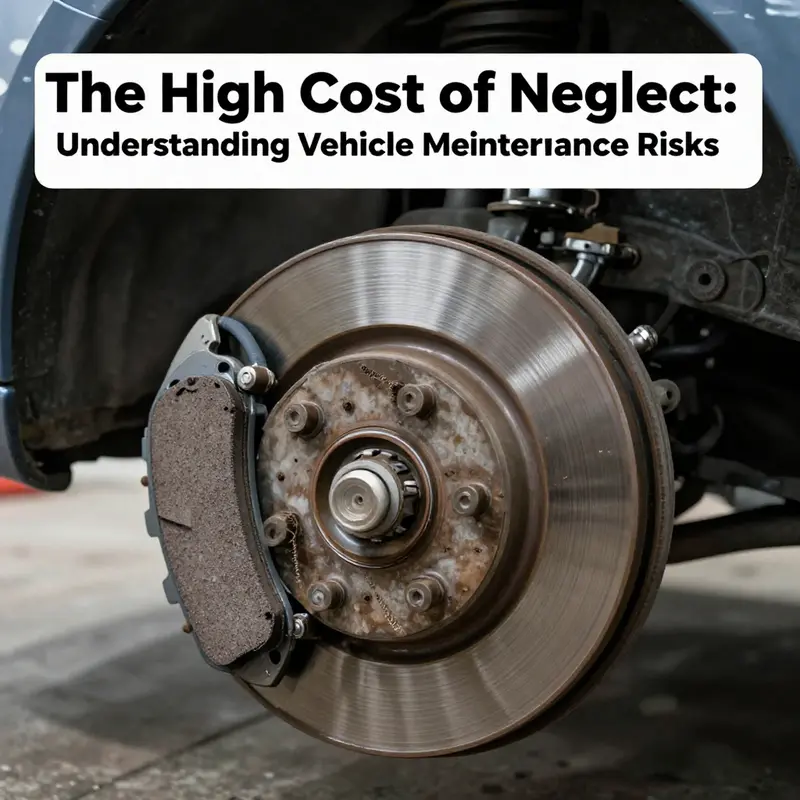
Brakes are the most direct safety interface between your vehicle and the road, and their performance wears with every mile. Skipping routine maintenance can let pad and rotor wear, fluid aging, and hidden leaks creep up until a sudden stop or a critical moment is at risk. Regular inspections, fluid changes, and timely pad and rotor service help keep stopping distances predictable, preserve steering feel, and reduce the risk of brake fade in demanding conditions. The cost and disruption of preventive maintenance are small compared with the consequences of brake failure, so make brake health a non negotiable part of your vehicle care.
Tire Hazards Mount: How Skipping Vehicle Maintenance Undermines Safety, Handling, and Your Wallet
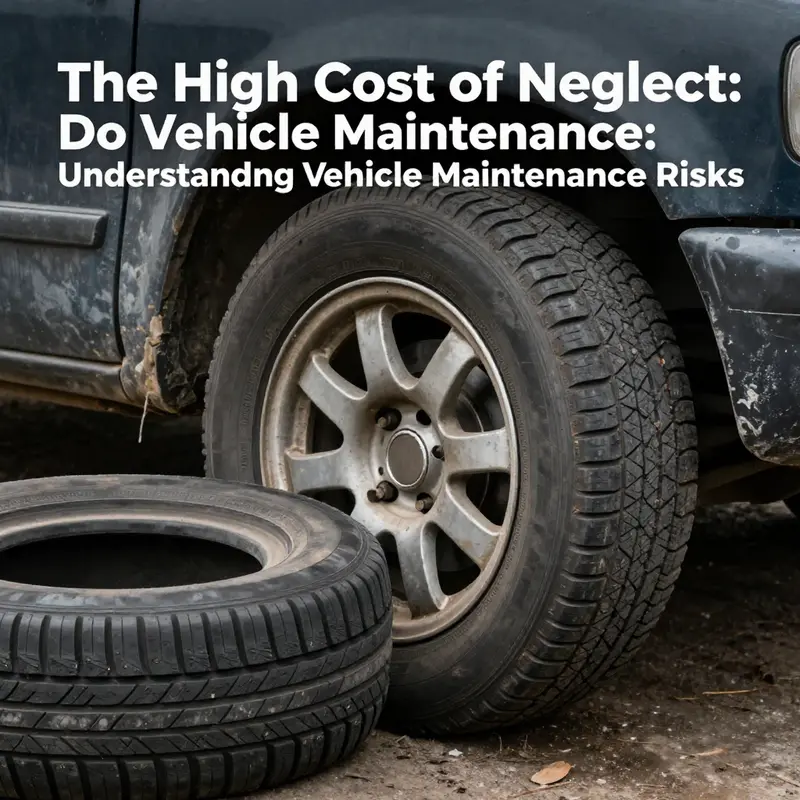
Tires are the quiet hinge between a vehicle and the road, a constant reminder that maintenance is not just about avoiding squeaks or passing an annual blot of inspections. When maintenance slips, tires absorb the consequences first and foremost. The result is a cascade of safety risks, unpredictable handling, and growing costs that can undermine every other benefit of owning a vehicle. The surface story is simple: tread wears down, air pressure drifts, damage goes unseen, and the rubber that keeps you upright becomes the weak link in a complex system designed for precision. But the deeper reality is more troubling. Tires aren’t simply a set of round features on a vehicle; they are the singular interface with traction, grip, and balance in every weather and road condition. When maintenance is neglected, that interface degrades in ways that are easy to overlook until a crisis hits or a repair bill lands. The chapter you’re about to read unfolds the practical, real world consequences of not maintaining tires, and it frames why this neglect is not merely a cosmetic concern but a fundamental safety and cost issue that touches every mile you drive.
Tread depth is the first line of defense against loss of control. Tires lose tread depth naturally, but neglect accelerates this decline. As tread wears away, the tire’s capacity to channel water away from the contact patch diminishes. Wet roads, in particular, become a stage for trouble. Hydroplaning—the moment when a film of water separates the tire from the road—can happen with only a bit less tread than you might expect. The drive from a routine work trip to a sudden, rain-driven rush hour becomes a test of your ability to regain control. The legal minimum tread depth varies by country, but the common threshold around 1.6 millimeters marks a point where performance fades rapidly. Below that line, grip in rain or on slick surfaces erodes, stopping distances lengthen, and the odds of a loss of control rise. The risk isn’t theoretical: every year thousands of crashes in which tread wear or underinflation plays a part point to tires as the critical factor in many avoidable incidents. In the United States, data from national safety authorities repeatedly show that tire-related factors are a substantial contributor to crashes, with underinflation and worn tread among the leading culprits. This is why tread depth is not a metric to monitor only during seasonal changes or when you notice the car pulling; it’s a constant risk indicator that changes with every mile driven and every weather event you encounter.
But tread depth is only part of the conversation. Tire inflation is a more immediate, daily determinant of safety and efficiency. The majority of tire issues that show up in everyday driving revolve around air pressure. Overinflated tires ride on a smaller contact patch, which can create a harsher ride and cause more rapid wear in the center of the tread. Underinflated tires, by contrast, flatten the tire’s foot on the road, increasing rolling resistance and heat buildup. Heat is a tire’s enemy; it accelerates aging and can lead to a blowout under stress, like a long highway climb or a sudden lane-change maneuver to avoid another vehicle. The National Highway Traffic Safety Administration highlights that a striking portion of tire-related incidents involve underinflated tires, underscoring how something as simple as air pressure can dramatically alter safety margins. Regular checks—ideally monthly, and before long trips or seasonal weather changes—keep pressure within the manufacturer’s recommended range. This practice isn’t just about fuel economy. It’s about maintaining the tire’s intended footprint, heat dissipation characteristics, and load-bearing performance when you need it most. The arithmetic is straightforward: tires that are correctly inflated wear more evenly, stay cooler, and resist the micro-stresses that accumulate during normal driving. This is why a tire maintenance routine that includes air pressure checks is as foundational as oil changes, battery checks, and brake inspections, even though it sits in the background most of the time.
The neglect of tire integrity also includes unseen or unexamined damage. A tire might look fine at a glance but harbor internal damage that compromises its structure. Bulges, cuts, embedded stones, or thin-walled areas can develop from road hazards, potholes, or repeated impacts that do not always cause an immediate loss of performance. These weaknesses can fail without warning, particularly at high speeds or under heavy braking. Regular visual inspections and careful tire replacement when signs of damage appear are essential. The quiet warning signs—slight vibration, a steady pull to one side, or a sound that suggests contact with a rigid object—are not to be ignored. A driver who brushes off such signals may be lulled into thinking the vehicle is simply “tired” or misaligned, but the underlying issue is often a compromised tire that may fail under the stress of motorway speeds or abrupt emergency maneuvers.
Rotation, balancing, and alignment are the maintenance actions that preserve tire life and performance. Rotating tires at manufacturer-recommended intervals ensures even wear across all four corners. This is particularly important for vehicles with front-wheel drive, where the front tires usually bear more load and experience more wear due to steering and braking forces. Balanced tires and proper alignment reduce uneven wear patterns, which otherwise lead to reduced grip, poorer handling, and noisy operation. The consequences of neglect in this area are not simply cosmetic. Uneven wear can obscure the true health of a tire, masking internal damage or structural weakness that might be developing. The effect on handling—and therefore on safety—is real and measurable. A car that tracks straight on a flat, well-executed highway run may still reveal subtle steering looseness or a tendency to drift on wet surfaces if the alignment is off. These subtle signs are precursors to more serious events in which control is compromised.
The consequences of tire neglect extend beyond the tires themselves. Braking performance is intimately linked to tire condition because braking systems rely on a secure, uniform interface with the road. Worn tread, underinflation, or damaged tires all demand more braking energy to achieve the same stopping distance. In braking emergencies, this can translate into seconds that decide between a near-mear and a collision. The quantitative reality behind this is echoed in crash data: tire-related performance deficiencies contribute to thousands of crashes each year. The most troubling scenarios involve a failure to notice tire issues until a crucial moment—when you cannot pause, brake, or steer with the same confidence you had yesterday. This is the stark reminder that tire maintenance is not a luxury but a safety essential that underpins every movement your vehicle makes.
Tire maintenance also intersects with fuel economy and the broader costs of ownership. Underinflated tires increase rolling resistance, forcing the engine to work harder to maintain speed. That extra strain translates into higher fuel consumption, more frequent refueling, and a larger carbon footprint. Over time, the cumulative effect of inefficient tires is not just a few extra dollars at the pump but a systematic erosion of efficiency that compounds with each trip. The relationship between tire health and fuel economy is one reason why some drivers who neglect tires experience a perceptible drop in efficiency that no other system can fully compensate for. The mileage you lose to avoidable drag is real, and it compounds as tires deteriorate. Regular pressure checks, tread monitoring, and timely rotation should be treated as a core part of cost management, not a chore to postpone until an inspection reveals a crisis.
This is where the narrative of maintenance intersects with everyday life. You may think neglect only affects performance in corner cases or in extreme weather. Yet the reality is that visible wear, subtle changes in handling, and more frequent vibrations can become daily annoyances long before a tire fails. The road test you perform every time you accelerate from a red light or brake for a stop sign becomes a continuous evaluation of how well your tires are serving you. A vehicle that has tires in good condition is not merely safer; it is more predictable. It responds to steering input, throttle, and braking with a consistency that allows you to anticipate how it will behave in rain, on a slick highway, or when passing through a construction zone with uneven pavement. When tires are neglected, those cues vanish. The driver is left with uncertainty, which is incompatible with safe driving, especially in complex urban environments where conditions shift rapidly and unpredictably.
The practical takeaway is simple, even if the topic feels technical: tire health is a daily, visible measure of safety that should be checked with a routine as regular as oil changes. This means knowing your tire’s tread depth, checking air pressure at least once a month and before long trips, inspecting for bulges or cuts, rotating every 5,000 to 8,000 miles (or as specified by the vehicle’s manual), ensuring the tires are balanced, and paying attention to alignment. The discipline matters because each of these steps preserves grip, stability, and heat management. It preserves the tire’s structural integrity and the wheel’s connection to the suspension system. And it preserves your peace of mind on the road. When you view tire maintenance as a set of safeguards rather than a set of requirements, you appreciate its role in your broader safety strategy and your budget.
The internal economics of tire maintenance are not glamorous, but they are persuasive. Replacing tires before the end of their useful life is costly, yet so is neglecting them until a crisis arises. Of course, a tire that has reached the end of its life must be replaced; the longer you delay, the higher the risk of a blowout or a sudden failure that may result in expensive emergency repairs, road closures, or emergency response needs. In many cases, proactive tire maintenance reduces the chance of sudden failures and keeps you on the road with fewer interruptions. The savings aren’t only monetary; they include the intangible benefit of reduced stress in daily commutes and during long trips. When you factor in the safety benefit and the confidence that comes with predictable handling, the argument for tire maintenance becomes a clear, practical decision rather than a theoretical preference.
To tie this back to the broader question at the heart of this chapter: what happens when you skip tire maintenance is not a single breakdown but a domino effect that touches performance, safety, and cost. The engine and brake systems depend on a stable, well-supported interface with the road. Tires are that interface. When the interface deteriorates, everything else becomes more fragile, more expensive to fix, and more unpredictable in critical moments. This is why tire care deserves its own place in the maintenance schedule and why it should be treated as integral to the overall health of the vehicle. It’s also a bridge to the broader theme of this article: neglect anywhere in the vehicle’s maintenance history has a way of resurfacing in ways you didn’t anticipate, at times you could not predict, and with consequences that extend beyond the cost of a tire replacement.
For readers who want to explore the broader benefits of maintaining a vehicle beyond tires, there is a connection to fuel efficiency and operating costs that is worth noting. The broader maintenance discipline supports more efficient operation, and the energy saved by keeping tires properly inflated and evenly worn translates into fewer wasted miles and lower gas expenses over time. This connection is explored in discussions about how vehicle maintenance saves on gas expenses, which provides a broader view of how simple upkeep compounds into real-world savings. how-vehicle-maintenance-saves-on-gas-expenses is an example of that broader argument, showing how maintaining tires fits into an overall approach to efficiency and cost control.
The road ahead for drivers who take tire health seriously is markedly more confident. Handling feels more stable on rain-slicked streets, in the wind, or along a highway with uneven patches. The steering responses are more predictable, and the car’s trajectory remains true even when the road flexes beneath it. These are not minor advantages; they are the cues that tell you the vehicle is performing as it was designed to perform. And they are ongoing proof that maintenance is not a one-time ritual but a continuous commitment to safety and reliability.
External reference and further reading provide an external lens on tire safety that complements the practical, day-to-day observations described above. For a comprehensive overview of tire safety guidelines, tire maintenance practices, and the legal context surrounding tread depth, readers can consult resources from recognized national safety authorities. This includes authoritative material on how tire health affects stopping performance and vehicle control under varying conditions. You can access a detailed, official resource at the following external site: https://www.nhtsa.gov/vehicle-tire-safety.
Final thoughts
Neglecting vehicle maintenance can result in dire consequences, not only for vehicle performance but also for the safety and well-being of drivers and passengers. From engine failures to brake system malfunctions and tire hazards, the cascade of issues stemming from a lack of routine upkeep can be detrimental to any business. By committing to regular vehicle maintenance, business owners not only protect their investment but also ensure reliable service and safety on the roads. In the long run, this proactive approach can save substantial costs associated with repairs and accidents, reinforcing the idea that maintenance is an integral part of business strategy.