
A well-structured vehicle maintenance program is essential for any company that relies on a fleet of vehicles to carry out its operations. It ensures that vehicles remain in optimal working condition, thereby supporting operational efficiency, enhancing safety, and ensuring compliance with national regulations. In this guide, we will explore the various aspects of a company vehicle maintenance program, including its key elements, the distinction between scheduled and condition-based maintenance, the role of qualified service providers, and the importance of thorough documentation practices. Together, these chapters will provide you with a comprehensive understanding of how to implement and manage a successful maintenance program that reduces costs and extends the lifespan of your vehicles.
How a Company Vehicle Maintenance Program Is Structured: Practical Elements That Keep Fleets Safe, Compliant, and Cost-Efficient
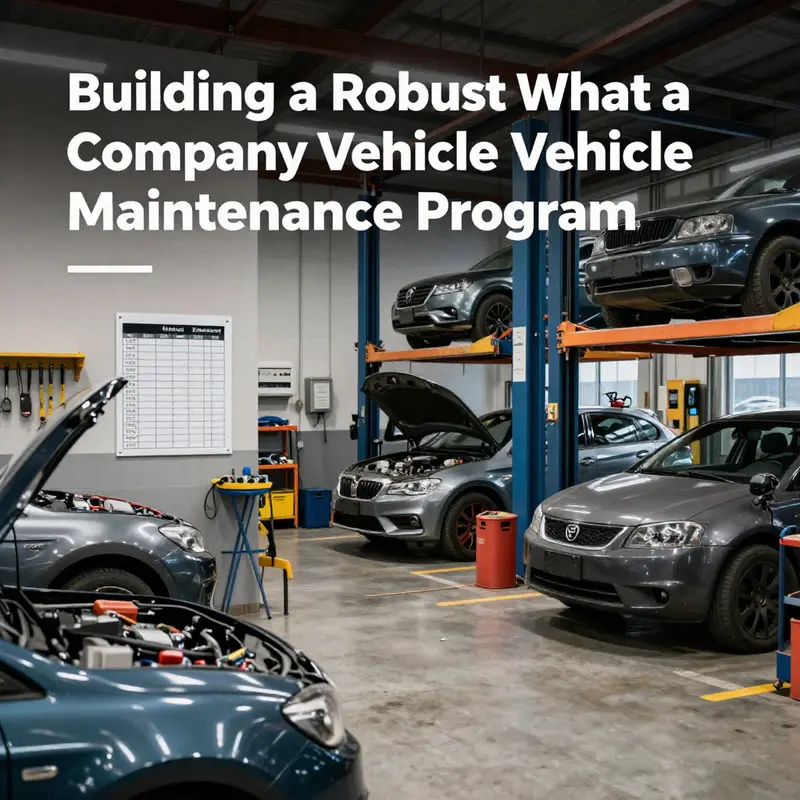
A company vehicle maintenance program combines clear structure, practical routines, and measurable controls to keep fleet assets available, safe, and efficient. At its core, the program translates responsibility into repeatable actions: who inspects what, when inspections occur, where repairs are done, how records are kept, and which standards govern every step. The result is a predictable system that reduces breakdowns, extends service life, and simplifies regulatory scrutiny.
A practical program begins with a maintenance hierarchy that matches the intensity of service to vehicle use. The lowest tier is daily maintenance. Drivers perform quick pre-trip, in-trip, and post-trip checks. These are visual and functional inspections only. Items such as lights, tire condition and pressure, fluid levels, and obvious leaks fall under this daily loop. These checks are brief, easy to train, and catch many problems before they grow. The next tiers are scheduled services at planned intervals. Level 1 is intermediate maintenance, conducted more frequently, often every few thousand kilometers or monthly depending on use. Tasks include lubrication, fastener checks, brake and steering inspections, and minor adjustments. Level 2 is comprehensive and less frequent. It covers in-depth diagnostics, system calibrations, emission checks, and major component servicing. The scheduled tiered approach ensures routine issues are resolved in a predictable window, rather than emergent repairs that disrupt operations.
Layered onto scheduled work is preventive maintenance. Preventive care targets failure modes before they occur. It uses inspection checklists, wear limits, and replacement thresholds for consumables. Preventive maintenance also includes seasonal actions, such as coolant changes before winter and HVAC checks before summer peaks. For new vehicles, break-in period protocols ensure early wear is minimized and initial defects are addressed under controlled service procedures. For specialty vehicles, manufacturer recommendations are folded into preventive plans so that unique systems receive proper attention. The combination of scheduled and preventive maintenance reduces the frequency of major repairs and stabilizes operating budgets.
Modern programs increasingly adopt condition-based maintenance. Rather than rely solely on fixed intervals, condition-based strategies use telematics, sensors, and onboard diagnostics to monitor actual vehicle health. Oil quality, battery voltage trends, fault codes, and tire wear data can flag the need for service earlier than scheduled checks. Condition-based maintenance reduces unnecessary interventions. It also prioritizes work on vehicles that need it most, bringing efficiency gains and lower downtime. Integrating telematics with scheduling tools provides automated alerts and produces a history of parameter trends. That history feeds continuous improvement and refines thresholds over time.
The program design must include where maintenance occurs and who performs it. Regulations commonly require intermediate and major repairs be done by certified repair facilities. Organizations may choose to contract certified shops or build in-house repair capabilities when volume and complexity justify it. Certified service providers meet set technical qualifications and bring inspection tools necessary for final acceptance testing. In-house shops require investment in tools, training, and quality control routines. Either approach must include clear criteria for what scope each provider handles, how work is authorized, and how warranty or supplier issues are escalated.
Documentation is the backbone of the program. A detailed vehicle technical file captures every maintenance event. Records should note date, mileage, work performed, parts replaced, diagnostic outputs, and the sign-off from an inspector. Consistent record-keeping supports regulatory compliance, warranty claims, and insurance inquiries. It also allows managers to analyze repair patterns and make data-driven decisions about fleet composition, retirement timing, and part stocking. Digital record systems, ideally integrated with fleet management software, enable automated reminders and searchable histories. The discipline of documentation turns maintenance from an ad hoc expense into a controllable business process.
Standardized procedures guide both inspections and repairs. Checklists ensure that technicians and drivers evaluate the same items the same way. Repair protocols define acceptable tolerances and testing requirements after work completion. Pre-maintenance diagnostics are mandatory in many frameworks, ensuring a problem is diagnosed, not guessed at. In-process monitoring reduces the risk of missed steps. Final inspections verify functionality and safety. Standardization reduces variability between technicians and shops, improving reliability and auditability.
Training and clear role definition are essential. Drivers are the first line of defense. Training programs teach drivers how to carry out daily checks, recognize early warning signs, and report defects promptly. Technical staff require ongoing training in diagnostic tools, evolving vehicle systems, and safety standards. Management must understand scheduling priorities and the escalation path for complex faults. A simple, reinforced reporting culture prevents small issues from becoming major failures.
Diagnostics and fleet management software are the program’s nervous system. Diagnostic tools interpret fault codes and help prioritize repairs. Telematics provides location, usage patterns, and behavior insights that affect maintenance planning. Fleet management software schedules services, tracks parts inventory, and records labor. Combined, these technologies automate routine work and free managers to focus on exception handling. They also generate performance metrics—such as mean time between failures, downtime hours, and maintenance cost per kilometer—that guide continuous improvement.
Compliance with national or industry standards must be built into the program. Standards define minimum procedures and required test methods. They also often mandate documentation, qualified personnel, and specific diagnostic steps. Compliance ensures legal operation and reduces liability exposure. It further sets expectations for audits and regulatory inspections. Integrating standard requirements into routine procedures eliminates surprises during external reviews.
Supply chain considerations matter. A good program anticipates parts needs and manages stock levels for commonly replaced items. It balances carrying costs against emergency procurement risks. Supplier relationships and warranty arrangements can speed repairs and reduce component costs. For imported or specialized vehicles, parts lead times and compatibility require special attention.
The organizational architecture of oversight completes the program. A technical management team develops the maintenance plan, schedules work, and verifies quality through inspections. This team reviews vehicle usage to adjust intervals and thresholds. It also coordinates with operations to schedule downtime with minimal impact. Performance dashboards inform leadership of trends and exceptional issues. Periodic program reviews assess whether objectives such as reduced breakdowns, extended vehicle life, or lower total cost of ownership are being met.
Risk controls and quality checks help maintain consistent standards. Random audits of completed maintenance actions verify adherence to procedures. Post-repair testing validates repairs under operational conditions. Escalation protocols exist for safety-critical failures. These controls reduce the chance of repeated defects and protect driver safety.
Finally, the program measures success in clear terms. Key metrics include vehicle uptime, repair frequency, cost per kilometer, and average time to repair. Combining these metrics with qualitative feedback from drivers and technicians gives a rounded view of program performance. Continuous improvement uses these insights to refine intervals, update procedures, and reallocate resources.
A well-structured vehicle maintenance program thus blends simple human routines with technical systems and formal controls. It aligns daily driver checks with scheduled and condition-driven servicing. It mandates qualified service providers for complex work and requires meticulous record-keeping for accountability. Training keeps the workforce capable. Diagnostics and software enable data-driven choices. Standards and audits ensure compliance. The integrated approach yields safer operations, predictable costs, and longer vehicle life. For further practical frameworks and implementation details, see the fleet maintenance guidance available from the U.S. Department of Energy: https://www.energy.gov/eere/fleet-and-vehicles/fleet-vehicle-maintenance-best-practices.
For a basic primer on the specific tasks that make up day-to-day vehicle upkeep, refer to this short guide on what vehicle maintenance entails: what is vehicle maintenance.
Scheduling Meets Sensor Insight: Building a Hybrid Company Vehicle Maintenance Program
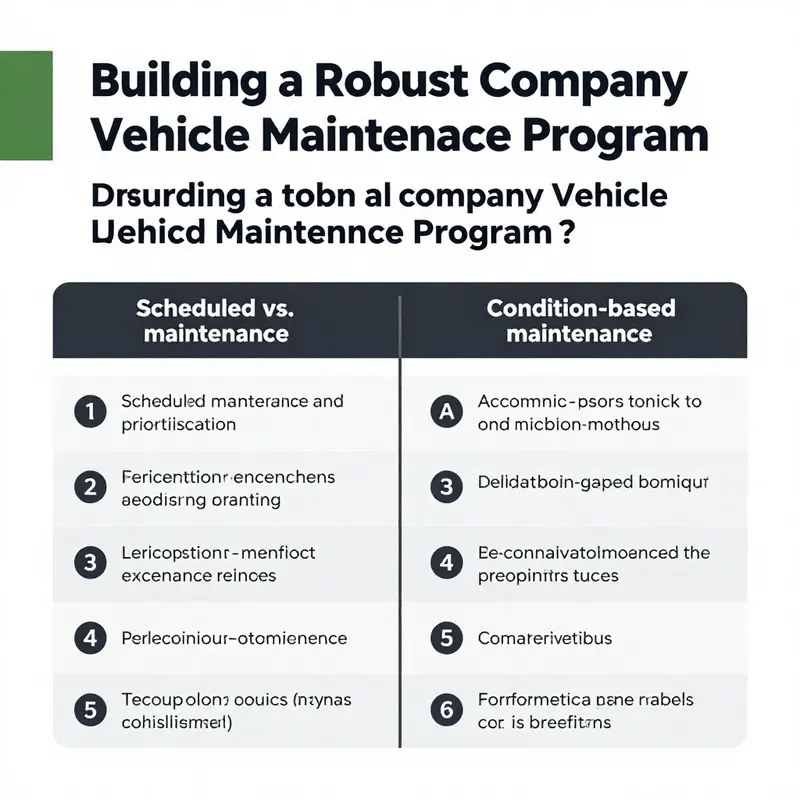
A company vehicle maintenance program is more than a calendar of services. It is a living system that blends predictable routines with real-time health signals from the fleet. In practice, the most effective programs knit together traditional scheduling with modern condition monitoring to create reliability, safety, and cost discipline. The result is not a rigid timetable nor a purely reactive approach, but a dynamic framework that responds to how vehicles actually wear and perform in daily use while still protecting against known failure points. At its core, this hybrid model rests on a clear division of labor between what can be anticipated through hours and mileage and what demands continuous visibility through sensors and diagnostics. The bridge between these modes is governed by standards and internal governance that translate data into actionable maintenance actions.
Scheduled maintenance remains essential for consistency and risk management. Drivers perform daily pre-trip checks that cover fundamental safety factors, fluid levels, tire pressures within manufacturer tolerances, and basic warning signals. These routine checks are not cosmetic chores; they are frontline risk management. At the fleet level, Level 1 maintenance follows at regular intervals that align with vehicle usage and regulatory expectations. Tasks include lubrication, fastening adjustments, and inspections of critical subsystems such as braking, steering, and suspension. Level 2 maintenance, which occurs less frequently but with deeper impact, targets engine performance, emission controls, and tire rotation or replacement. The cadence is not arbitrary: it is anchored in the vehicle’s design, validated through OEM guidance, and codified in the fleet’s maintenance plan. This structure provides a predictable baseline that supports scheduling accuracy, workshop capacity planning, and warranty traceability. When this foundation is robust, it reduces the likelihood of last-minute downtime and keeps the fleet operating on a dependable rhythm.
Condition-based maintenance adds a second layer of intelligence. Telematics, onboard diagnostics, oil quality sensors, battery voltage monitors, and tire tread depth sensors generate a stream of real-time health data. Instead of waiting for a fault to appear or for the vehicle to reach a fixed mileage milestone, managers can schedule interventions precisely when data indicate risk. For example, an oil life monitor might shorten or extend service intervals based on actual operating conditions, while a tire wear sensor can trigger a replacement only when tread reaches a specified threshold. The essence of condition-based maintenance is not constant replacement work but smart timing: interventions occur when the probability of failure or performance degradation rises to an defined level. This data-driven approach reduces unnecessary maintenance, minimizes downtime, and concentrates resources where they are most needed.
A hybrid model benefits from alignment with a formal framework, such as the national standard GB/T 18344-2016, which outlines preventive maintenance, diagnostic procedures, and verification steps. The standard emphasizes three elements that harmonize scheduled and condition-based activities. Pre-maintenance diagnostics establish a baseline health snapshot before any intervention. In-process monitoring tracks evolving conditions during service, ensuring that components are within specification and that diagnostic results are consistent with the observed wear. Post-repair final inspection provides verification of repairs and closes the loop with objective evidence. By embedding these steps, a hybrid program preserves high quality, traceability, and regulatory adherence across the fleet.
Seasonal and life-cycle considerations sharpen the value of the hybrid approach. Extreme temperatures, for instance, influence coolant performance, battery efficiency, and lubricant viscosity. Seasonal maintenance plans may require coolant changes before winter or air conditioning system checks before summer, even if the vehicle does not hit a scheduled interval. Break-in or initial-use periods for new vehicles deserve special attention, as early wear patterns can differ from those of mature assets. For specialized or imported vehicles, maintenance follows manufacturer guidelines in addition to the national standard, creating a layered compliance regime that protects safety and performance.
To make this integration work in practice, a dedicated technical management function assumes responsibility for the program. This department develops maintenance plans tailored to vehicle type, usage patterns, and operating conditions. It translates driving data, maintenance history, and workshop capabilities into an actionable schedule that balances uptime with reliability. It also coordinates with in-house repair facilities or contracted workshops that hold the necessary qualifications for Level 1 and Level 2 work. In many regulatory environments, the ability to perform Level 1 and Level 2 maintenance in accredited shops is a prerequisite for compliance, insurance, and warranty claims. The management function thus acts as the strategic operator, ensuring that the fleet’s maintenance engine runs smoothly and that service providers maintain consistent quality standards.
The documentation layer is critical. Every maintenance action is recorded in a vehicle technical file, creating a comprehensive history that includes dates, mileages, work performed, parts replaced, diagnostic results, certificates, and inspection reports. This record book is the fortress of accountability. It supports audits, certifies compliance with GB/T 18344-2016, and underpins warranty and insurance claims. When a vehicle joins a lease or a service contract, the technical file becomes the primary resource for demonstrating adherence to maintenance commitments and regulatory requirements. The value of meticulous record keeping compounds over time; it not only proves past performance but also informs predictive analytics that refine future schedules.
A truly effective program links people, process, and data. Drivers are not merely recipients of a schedule; they are active participants who provide real-world feedback about vehicle behavior, unusual sounds, or shifting performance. Technicians translate that feedback into diagnostic notes and corrective actions, while fleet managers translate the data into smarter scheduling and budget planning. The drivers’ daily observations, the technicians’ hands-on checks, and the managers’ analytical oversight converge to produce a maintenance ecosystem that is proactive rather than reactive. When the program operates as a single, coordinated system, the fleet becomes resilient to disruptions and better prepared to meet safety and regulatory standards without sacrificing operational efficiency.
The practical payoff of this integrated approach is visible in outcomes that matter to leadership and frontline teams alike. A well-executed vehicle maintenance program reduces avoidable breakdowns, extends asset life, and maintains the fleet’s safety margin. It strengthens regulatory compliance by ensuring that preventive checks, diagnostics, and post-repair verifications are consistently performed and documented. And it lowers the total cost of ownership by aligning maintenance activity with actual asset health rather than relying solely on calendar or mileage milestones. In the language of modern fleet management, this is the core value proposition of a hybrid maintenance strategy: safer roads, steadier operations, and smarter use of capital.
For readers seeking a grounded sense of how data translates into action, a practical anchor can be found in the broader literature on fleet maintenance trends. The hybrid approach aligns with the findings that condition-based strategies, supported by telematics and analytics, yield fewer unscheduled repairs and lower overall maintenance costs compared with fixed-schedule-only programs. For instance, industry analyses from recent years have highlighted that fleets leveraging real-time health signals can achieve meaningful reductions in unplanned downtime while preserving service levels for critical operations. This is not a speculative ideal; it is an observable pattern that emerges when data governance, maintenance expertise, and regulatory alignment are harmonized across the organization. As a conceptual reminder of the empirical upside, one can look to industry studies that quantify these benefits and illustrate how predictive indicators translate into timely interventions rather than reactive fixes.
The proposed approach also carries important implications for how organizations think about supplier relationships and in-house capabilities. A robust hybrid program may rely on a mix of in-house repair facilities for core Level 1 and Level 2 tasks and accredited external workshops for more specialized maintenance activities. In any case, the selection criteria should emphasize not only pricing but also the workshop’s ability to deliver consistent quality, maintain rigorous documentation, and align with the fleet’s data standards. The drive toward condition-based maintenance further elevates the importance of data integration. Telemetry feeds, diagnostic results, and service histories must be harmonized in a centralized fleet portal that supports decision making, scheduling, and compliance reporting. In turn, this centralized visibility enables better planning of spare parts inventories, technician training, and fuel and wear cost management, which are all critical levers in total cost of ownership.
The impact on safety cannot be overstated. When maintenance is timed to the true health of components such as brakes, tires, and steering, the probability of sudden failures declines. The real-time insight provided by sensors can detect anomalies that precede failure, allowing preventive action before the event occurs. In parallel, the daily vigilance of drivers and the disciplined approach of technicians cultivate a safety culture that respects the limits of wear and the realities of road use. This safety orientation, embedded in the maintenance program, pays dividends in driver confidence, smoother operations, and a clearer demonstration of regulatory diligence.
For those exploring the theory behind maintenance concepts, a concise entry point that explains the fundamentals of maintenance practices can be helpful. See what is meant by vehicle maintenance at the basic level: what is vehicle maintenance.
As the fleet landscape evolves with smarter vehicles and more sophisticated analytics, the hybrid model stands out as a practical path forward. It acknowledges that not all problems can be predicted in advance, but it also respects the value of a disciplined schedule that protects against predictable wear points. It rewards disciplined data governance, transparent documentation, and a governance mechanism that keeps drivers, technicians, and managers aligned around a shared goal: reliable performance at the lowest responsible cost. In the chapters that follow, readers will see how to translate these principles into concrete templates, dashboards, and governance rituals that can be tailored to different fleet profiles while preserving the core balance between scheduled rigor and condition-based responsiveness. For those seeking a broader empirical frame, the concept of data-driven maintenance timing gains credibility from industry analyses that report tangible reductions in unscheduled repairs and maintenance costs when condition-based strategies are effectively integrated with traditional schedules. To add a point of reference for these trends, consider the Fleet Maintenance Trends 2023 report published by the American Trucking Associations, which offers metrics and case studies that illustrate the economic impact of advanced maintenance approaches: https://www.trucking.org/industry-resources/research-reports/fleet-maintenance-trends-2023.
Qualified Service Providers: The Backbone of a Compliant, Efficient Company Vehicle Maintenance Program
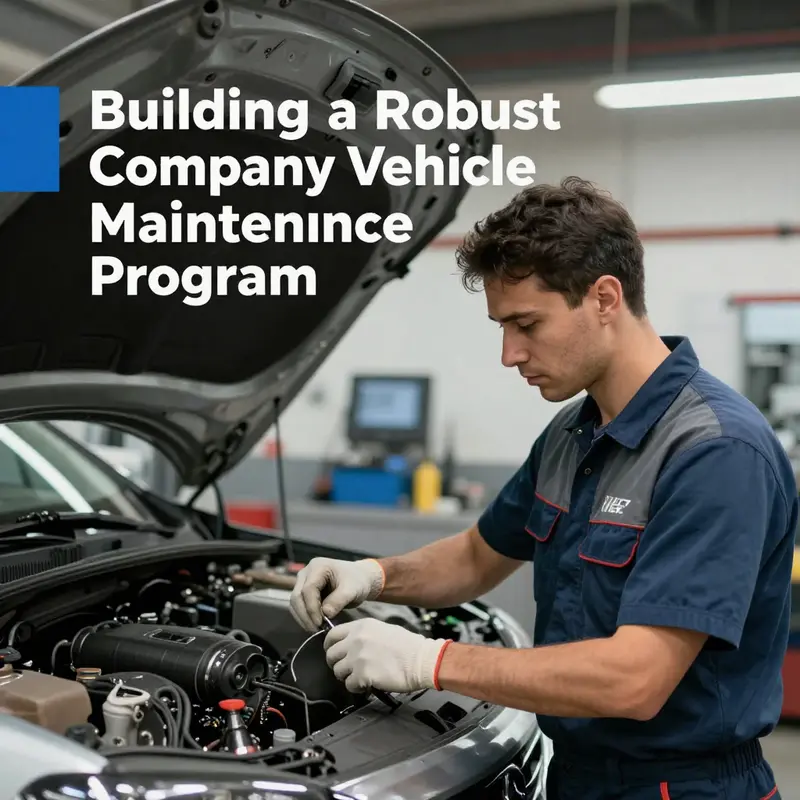
A company vehicle maintenance program depends on many moving parts. Among them, qualified service providers exert the greatest practical influence. Their role goes well beyond fixing faults. They shape how preventive schedules are designed, how diagnoses are made, and how regulatory requirements are met. In short, they turn a document of best practices into consistent, day-to-day reality.
When a fleet manager maps out maintenance categories—daily checks, Level 1 and Level 2 services—those plans must be executable. Qualified providers bring the technical skills, certified facilities, and quality controls that make execution possible. They ensure that a pre-planned Level 2 inspection truly meets the depth and scope the company expects. They also ensure that every task aligns with national standards and manufacturer guidance. This alignment matters because it reduces the risk of missed issues, warranty disputes, and regulatory noncompliance.
Technical competence is the first and most visible attribute. Certified technicians can follow standardized diagnostic workflows. They use the right tools to assess braking systems, steering geometry, suspension components, and engine performance. As vehicle systems grow more complex, this competence becomes essential. Advanced driver-assistance systems, complex emission controls, and modern powertrains require up-to-date training. Providers committed to continuous training are able to work safely on these systems and preserve their calibration and function.
Access to genuine parts and calibrated equipment is the second critical characteristic. Repair facilities with approved supply chains and verified parts reduce the likelihood of premature failures. They also help maintain vehicle safety margins. Calibrated measuring instruments and diagnostic tools support accurate repairs. These tools are necessary for pre-maintenance diagnostics, in-process monitoring, and final inspections. A maintenance program that relies on such providers receives objective, reproducible results. That in turn simplifies audit trails and warranty claims.
Documentation is where provider capability turns into organizational value. Every maintenance action contributes to the vehicle technical file. Qualified providers deliver detailed records that describe work scope, parts replaced, diagnostic findings, and post-repair verification. These records should be structured so they meet audit needs and can be ingested by fleet management software. When service providers supply consistent digital reports, fleet managers can track trends, forecast needs, and justify investment decisions with data.
Digital reporting also ties into condition-based maintenance. Providers who integrate telematics and remote diagnostics into their workflow help convert raw sensor data into actionable maintenance tasks. Rather than waiting for a fixed interval, maintenance can be scheduled when indicators show it is necessary. That reduces unnecessary downtime and prevents minor wear from becoming costly failures. Skilled providers can interpret battery voltage curves, oil quality readings, and tire-wear metrics. They use that insight to recommend prioritized interventions with clear cost-benefit rationale.
Operational efficiency extends beyond diagnostics. Qualified providers bring inventory management discipline. They keep critical spares on hand and manage replenishment cycles. This avoids the typical two-week delay caused by sourcing mismatched parts. Rapid access to parts and clear logistical coordination speed repair turnaround. Providers skilled at workflow optimization also streamline intake, repair, and final inspection. That reduces vehicle out-of-service time and lowers total cost of ownership.
A key dimension of provider selection is formal qualification. In jurisdictions where regulations specify repair facility grades, companies must use certified shops for certain maintenance levels. These certifications confirm that the provider meets infrastructure, personnel, and procedural standards. Using certified providers protects a company legally and operationally. It ensures that Level 1 and Level 2 maintenance are performed to the expected depth, and that specialized post-repair testing is available.
Safety and compliance are inseparable from provider capability. Qualified service providers support compliance with national standards and with emerging sector frameworks for safety and supply chain integrity. They implement required pre- and post-maintenance testing procedures, and they retain evidence of those checks. That capability matters when regulators or insurers require proof of preventive measures. It also matters for internal risk management programs that identify systemic weaknesses across a fleet.
As fleets electrify, the provider role expands again. Service providers that invest in electric vehicle training and infrastructure assessments become strategic partners. They advise on charger siting, charging protocol compatibility, and battery health monitoring. They also enforce safety practices for high-voltage systems. For companies transitioning part of their fleet to electric powertrains, providers who can service both ICE and electric vehicles simplify logistics. They reduce the need to maintain parallel service networks.
Transforming maintenance from a cost center into a strategic asset requires more than single-point interventions. It requires a partnership built on shared metrics and continuous improvement. Qualified providers contribute to that transformation in measurable ways. They help define service level agreements that reflect fleet usage patterns, vehicle types, and operating conditions. They support key performance indicators such as mean time to repair, first-time fix rate, and percentage of scheduled maintenance completed on time. When those metrics improve, the entire organization benefits from higher uptime and predictable budgets.
Training is another dimension of that partnership. Providers frequently offer driver and technician training programs. Drivers trained to perform daily checks spot early warning signs. Informed drivers reduce avoidable damage and improve safety. Technicians trained on manufacturer updates maintain system integrity and extend lifecycles. When training is documented and repeated, it becomes part of a culture of care across the fleet.
Qualified providers also bring risk mitigation frameworks into play. They adopt supply chain standards and security practices that limit counterfeit parts and maintain traceability. These practices support warranty processes and reduce the exposure to unreliable components. Service providers aligned with recognized frameworks provide better assurances for long-term reliability. That alignment strengthens a company’s ability to meet environmental, social, and governance objectives.
Choosing the right provider starts with fit-for-purpose criteria. Companies should evaluate provider capabilities against the specific needs of their fleet. Consider vehicle types, average mileage, duty cycles, and geographic coverage. Also consider the provider’s digital capabilities and reporting formats. A provider that can integrate reports into an existing fleet management system offers immediate value. Another important factor is responsiveness for emergency repairs. Local workshops with certified technicians may be preferable in regions with high utilization.
Contracts and governance matter. Service agreements should clarify responsibilities for quality, timelines, and parts provenance. They should include performance penalties and incentives tied to KPIs. Regular governance reviews foster transparency and continuous improvement. These reviews also create a formal feedback loop between fleet managers and providers. That loop refines maintenance plans and informs capital replacement strategies.
Finally, a well-chosen qualified service provider helps a company balance short-term costs with long-term value. While high-quality service may cost more upfront, it reduces hidden expenses. Less downtime, fewer repeat repairs, and extended vehicle life deliver measurable returns. Providers that commit to quality and adoption of best practices help fleet maintenance evolve from reactive fixes into proactive management.
For companies building or refining their maintenance program, exploring the fundamentals of vehicle care is useful background. A clear primer on the role and scope of vehicle maintenance helps align expectations with providers. See this guide on what is vehicle maintenance for foundational context: what is vehicle maintenance.
For organizations seeking frameworks to tighten supply chain integrity and security in maintenance operations, authoritative standards provide practical guidance. The principles of these frameworks help providers and fleet managers embed resilience and compliance into daily work. More details on relevant standards and guidelines are available here: https://www.bsigroup.com/en-GB/industries/automotive/standards/.
Documenting for Safety and Compliance: How Fleet Records Power an Effective Vehicle Maintenance Program
Documenting for Safety and Compliance: How Fleet Records Power an Effective Vehicle Maintenance Program
A vehicle maintenance program lives or dies by its records. Clear, consistent documentation turns routine servicing into measurable safety, compliance, and cost control. It creates a reliable audit trail for regulators, provides the data managers need to schedule preventive work, and gives technicians a precise picture of every vehicle’s history. This chapter explains what robust documentation looks like, how to structure it, and why strict record-keeping must be treated as a core operational discipline.
At its simplest, documentation captures three realities: what was done, when it was done, and who approved it. Those three facts form the spine of any maintenance file. But a compliant and useful record system goes deeper. It includes the vehicle’s identifying data, odometer readings, diagnostic findings, parts and labor details, and final inspection outcomes. When jurisdictions require adherence to national standards, records must also reflect the prescribed diagnostic checks and the signatures or certifications of qualified personnel. For example, many national standards require a formal pre-maintenance diagnostic, monitored repair process, and a documented final inspection.
Well-structured records enable several practical outcomes. First, they support preventive maintenance. Historical patterns reveal wear trends and recurring faults. A fleet manager who reviews those patterns can change service intervals or adjust procedures before a failure occurs. Second, records protect the company in legal or regulatory reviews. Maintenance logs and inspection reports are the evidence inspectors request. Third, they protect warranty and insurance interests. Precise documentation of parts and service dates makes it easier to pursue claims. Finally, records improve technician efficiency. When a technician opens a vehicle file and sees prior repairs and diagnostics, they spend less time troubleshooting.
A functional documentation system balances detail with usability. Overly terse notes lose value. Overly verbose reports become difficult to parse. A practical approach uses standardized templates for routine entries and free-text fields for unusual conditions. Standard fields should capture vehicle identity, date, mileage, work type, parts used, labor hours, diagnostic codes, and the technician’s qualification. Free text should describe the symptoms, the troubleshooting steps taken, and any follow-up actions recommended. Attach photographs for collision or unusual damage. Attach electronic diagnostic logs when possible.
Service logs are the program’s heartbeat. Each entry should clearly state the service level. Daily checks, Level 1 services, and Level 2 services must be identified. For Level 1 and Level 2 work, the log should show the certified repair shop or qualified in-house team that performed the job. Where law requires third-party qualifications, include the workshop’s qualification number and the technician’s certificate reference. Parts replacement records must name the replaced component, part number, installation date, mileage, and reason for replacement. If a part was replaced under warranty, note the warranty claim number.
Inspection reports must be systematic. Use checklists aligned with applicable standards and manufacturer guidelines. For each item on the checklist, record pass/fail and the corrective action taken. Include readings from specialized equipment when required. For example, brake performance, steering alignment, emission test results, and electronic diagnostics should be recorded numerically when possible. A final inspection statement should confirm the vehicle has been returned to service and is safe for operation, signed and dated by the inspector.
Technician certifications are more than a formality. They validate that trained personnel performed critical work. Documentation should capture the technician’s name, certification type, issuing body, certificate number, and expiration date. Keep copies of certificates on file. If the fleet uses contracted workshops, ask for competency evidence as part of the vendor onboarding process. Verify qualifications periodically, and note renewals in the vehicle file.
Modern fleets benefit from digital record-keeping. A digital maintenance management system reduces lost paperwork and improves searchability. It also enables automated reminders and condition-based triggers. For instance, telematics data can flag abnormal oil consumption, battery voltage drops, or excessive idling. When those triggers appear, the system can auto-create a work order, attach relevant telematics logs, and notify the maintenance coordinator. This linkage improves responsiveness and reduces vehicle downtime.
Integration is key. A maintenance management platform should integrate with fuel management, telematics, parts inventory, and compliance workflows. When integrated, a single service entry updates inventory levels, logs labor costs, and adjusts maintenance schedules. Integration also supports analytics. Managers can generate reports on mean time between failures, cost per kilometer, parts failure rate, and the impact of maintenance on fuel efficiency. These insights help prioritize investments and refine maintenance intervals.
Secure archival must be part of the design. Regulatory authorities often require retention of records for defined periods. Create policies for retention and secure storage. Digital records should have backups and encryption. Access controls prevent unauthorized edits. Audit logs must show who created and modified records, and when. For paper records kept for legacy reasons, adopt a scanning and indexing process that brings them into the digital archive. Retention policies should reflect regulatory minimums and business needs. For example, retain inspection and accident-related records longer than routine service logs.
Quality assurance ensures records remain trustworthy. Periodic file audits verify that entries are complete, signatures are present, and certs are current. Use a sampling method to audit a cross-section of vehicles. When audits reveal recurring issues, update templates or provide staff training. Track audit findings and corrective actions within the management system. Over time, trending audit results becomes a quality metric for the maintenance program itself.
Workflows and responsibilities must be explicit. Define who is responsible for creating entries, who verifies them, and who closes work orders. A common structure places day-to-day records in the hands of technicians and drivers, with a maintenance coordinator responsible for validation and archive. Drivers should complete pre- and post-trip checks and upload them promptly. Technicians must attach diagnostic logs and parts receipts. Coordinators ensure that all entries meet standards before marking jobs complete.
Documentation supports legal protection and operational continuity after incidents. When an incident occurs, investigators will request maintenance history. Timely, precise records speed investigations and reduce liability. Conversely, missing or inconsistent entries magnify legal exposure. Treat documentation as a preventive risk-management tool rather than an administrative burden.
Templates and standard operating procedures give documentation consistency. Develop templates for daily checks, Level 1 and Level 2 services, parts replacement, and final inspection. Keep templates aligned with national standards and manufacturer guidance. If the jurisdiction prescribes specific test items or signatures, incorporate those elements into the templates. Train staff on how to complete templates and explain why each field matters.
Condition-based entries are the future. Telematics and on-board diagnostics provide continuous condition data. Capture and store this data alongside service records. When a sensor indicates a problem, attach the raw data to the work order. This practice strengthens root-cause analysis and helps justify proactive repairs.
Finally, make documentation accessible and usable. Long-term value comes from data that informs decisions. Build simple reporting tools and dashboards that extract the right metrics. Train managers to read trends and to set actions based on data. Good documentation should reduce surprises, not create more work.
For an accessible primer on maintenance fundamentals, see the internal guide on “what is vehicle maintenance”. For authoritative guidance on compliance and documentation practices for fleets, consult the official Fleet Compliance Guide from the National Highway Traffic Safety Administration: https://www.nhtsa.gov/fleet-compliance-guide
Final thoughts
Establishing an effective vehicle maintenance program is pivotal for companies that operate fleets. By understanding the key components, the difference between scheduled and condition-based approaches, the critical role of qualified service providers, and the necessary documentation practices, business owners can ensure that their vehicles remain safe, reliable, and compliant with regulations. This proactive maintenance strategy not only enhances operational efficiency but also supports long-term cost savings and extends vehicle lifespan. The investment in a well-rounded maintenance program pays dividends in safety, compliance, and overall business productivity.