
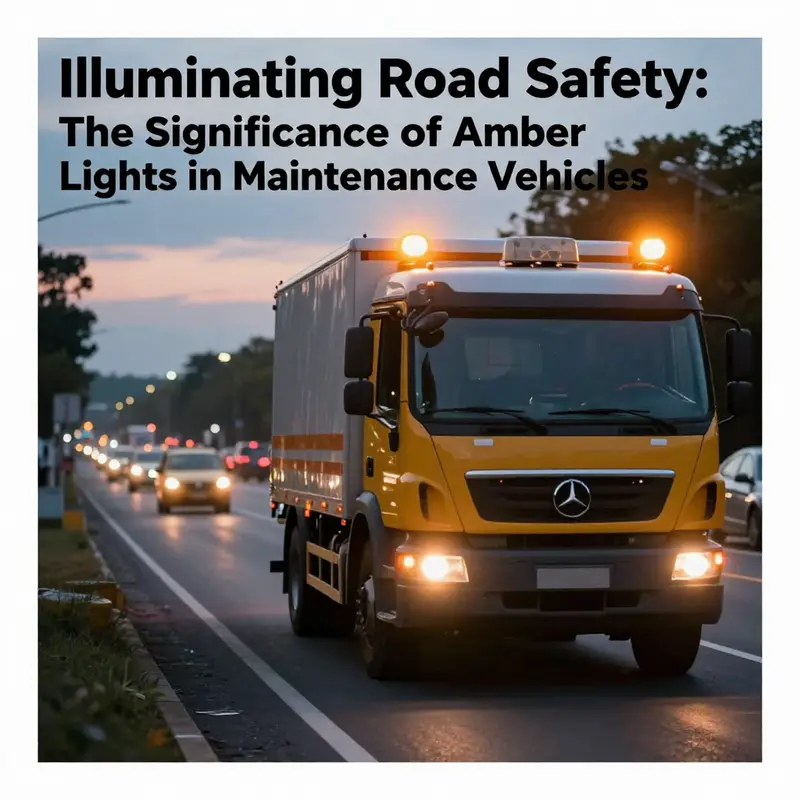
The use of amber lights on maintenance vehicles plays a crucial role in ensuring visibility and safety on our roads. For business owners, especially those operating fleets involved in road maintenance, construction, or utility services, understanding the importance of these lights is vital. This article explores how amber lights are not only a requirement but a key standard that promotes safer work environments. Each chapter will delve into the significance of these lights, the regulatory framework surrounding them, their comparison with other lighting colors, how they enhance visibility in various conditions, and the societal perceptions surrounding their use.
null
null
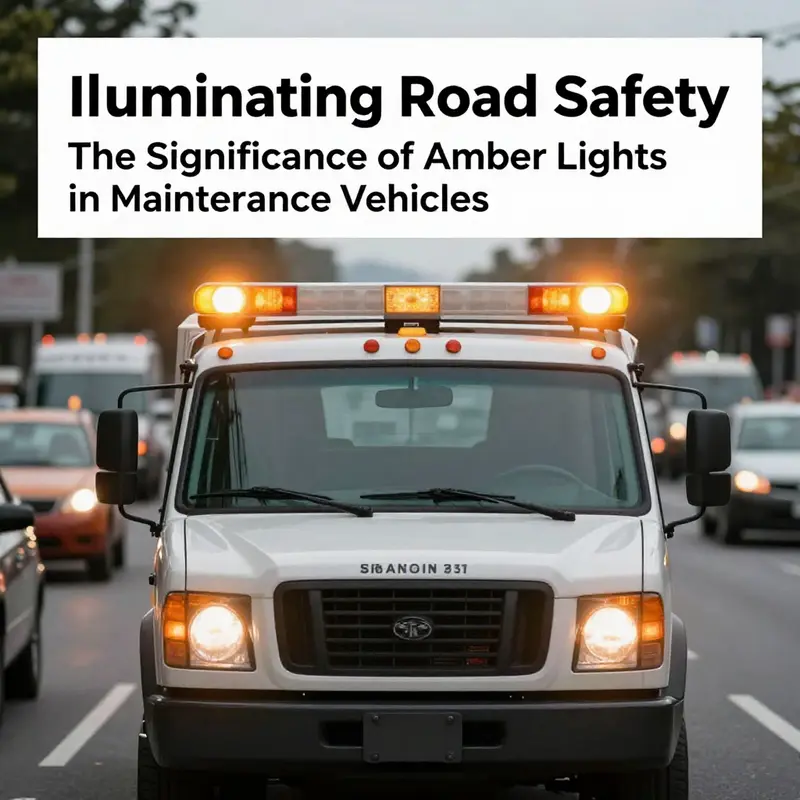
Amber Beacons on the Move: How Legislation Shapes Maintenance Vehicle Lighting for Safer Roads
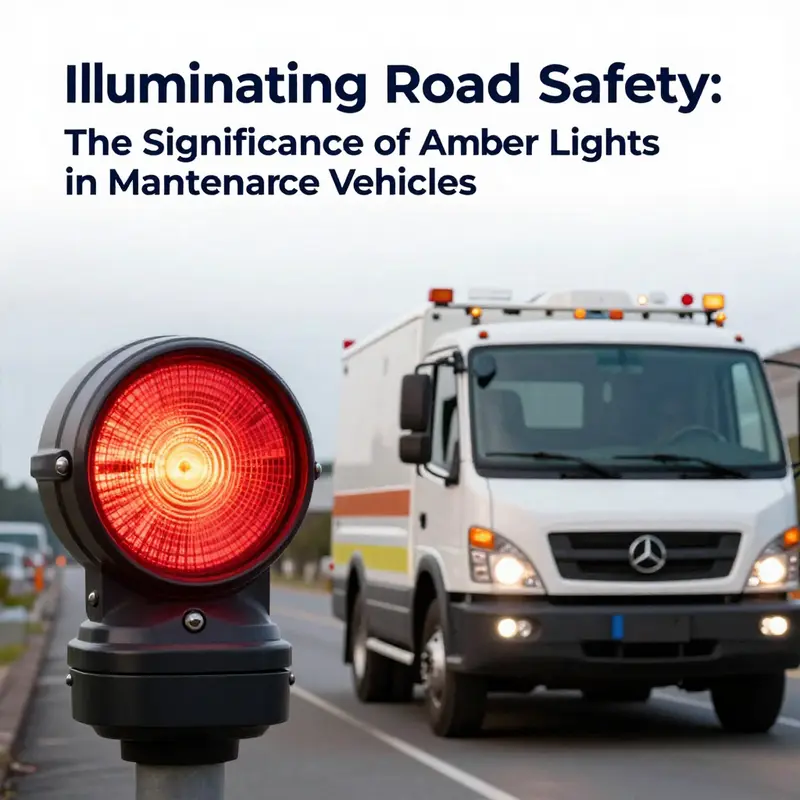
Across busy highways and quiet rural stretches alike, maintenance crews perform essential work that keeps the system running. Their presence on the road is a reminder that disruptions can arise without warning, and that safety hinges on quick, clear visual signals understood by every driver who passes by. The amber warning light has become the language of that signal. Not white, not red, not blue, but amber—a color that communicates caution without implying an immediate emergency. In many jurisdictions, this choice is codified; it is a deliberate standard designed to cut through glare, weather, and roadway clutter with a calm, legible cue. For motorists, the amber beacon signals a request to slow down, be prepared to shift lanes, and respect the space around work zones. For operators, it represents a balance between visibility and comfort, a color that can be seen from a distance and without causing eye strain after long shifts under glare-prone lamps or sun. The logic behind amber is practical and protective: a hue that stands out in adverse weather, reduces confusion with emergency lights, and travels across borders with a shared aim to safeguard crew members and road users alike.
This shared intent becomes visible when color, placement, and timing converge in a way that drivers can instantly recognize. In the United States, the national guidance comes from the Manual on Uniform Traffic Control Devices (MUTCD), where amber lights are prescribed for temporary traffic control devices, including maintenance and construction vehicles. The guidance emphasizes that the color must be amber, that the lights must be bright enough to be seen at a safe distance, and that devices should be arranged to maximize visibility and reduce rear-end collisions or encroachment into work zones. A steady amber beacon conveys steady caution, while pulsing or rotating beacons add dynamic signaling that something unusual is ahead. The MUTCD acknowledges that different conditions demand different signaling strategies, and it provides a framework within which agencies tailor on-road equipment while preserving universal recognition.
Across the Atlantic, the United Kingdom maintains its own regulatory frame under the Road Vehicles Lighting Regulations. Here the amber warning light signals work in progress, but with distinct constraints. Visibility requirements ensure drivers have ample time to react, and regulations guard against misinterpretation that could arise from amber lights used in ways that resemble emergency or blue-light signaling. The UK guidance complements broader Department for Transport recommendations for best practices when authorities manage roadworks and fleet operations. The goal is to reinforce amber as a signal of caution rather than authority or urgency. In parallel, international standards promote harmonization across borders. UNECE Regulation No. 48 sets installation and performance standards for warning lights on vehicles used in public service or maintenance work, aiming to align photometric performance with real-world visibility demands across member countries. This global thread—amber as a recognizable warning color—helps crews operate in places where vehicles cross national lines.
The practical implications of these standards extend beyond color choices. They shape how devices are deployed on a vehicle, where they are placed to maximize perception from the side and rear, and how they interact with other lighting on the same vehicle or nearby traffic controllers. Maintenance vehicles often carry a mix of beacons and lighting configurations designed to minimize glare while preserving conspicuity from multiple angles. In rain, fog, or snow, amber lights maintain legibility better than white or blue alternatives, a property emphasized in safety guidelines. The balance between conspicuity and glare is a recurring theme: too bright an amber signal at the wrong angle can startle or overwhelm drivers, while too dim a signal can fail to warn in time. Standards documents highlight the need for appropriate luminance, proper shielding, and correct mounting height to preserve the intended effect while the device remains in service.
Compliance is about process as much as hardware. Operators are advised to stay current with local transportation authorities and reference the latest editions of national and international standards. The intent is clear: uniform recognition across fleets and jurisdictions helps reduce cognitive load on drivers who encounter maintenance work across sprawling road networks. When a driver passes through a work zone in a region that follows MUTCD guidelines, the expectation is consistent: amber lights flash, slow down, and proceed with caution. The same logic applies in other regions, where amber lights are treated as non-emergency cues—distinct from red or blue emergency signaling—and thus less likely to be misinterpreted as immediate pursuit or code-blue incidents. Across borders, the UNECE framework helps ensure that even as regulatory language differs, the underlying perception—amber equals caution—remains a stable reference point for road users.
For readers seeking a broader context on how signaling practices fit into vehicle maintenance and fleet management, consider the broader topic of maintenance as a discipline aligned with safety standards, preventative care, and operational discipline. What is vehicle maintenance is a useful starting point for understanding how fleets maintain not just safety equipment but the vehicles themselves, ensuring indicators like amber warning lights perform as intended when needed most. This connection highlights that lighting standards are not isolated rules but part of a larger system of vehicle readiness and road safety.
Looking ahead, the trajectory of amber warning lights will likely keep pace with advances in LED arrays, optics, and smarter control systems that preserve visibility while reducing power consumption and maintenance demands. Yet the fundamental principle remains: amber communicates caution, not alarm, and is designed to be immediately recognizable under diverse conditions. The standards are not static; they evolve as new research and field experience refine how best to safeguard crews and motorists alike. The result is a signaling language that is simple and robust, local in its regulatory roots and universal in its purpose.
External resource: MUTCD guidelines.
The Color Code of Roadside Work: Why Amber Remains the Core of Maintenance Vehicle Lighting
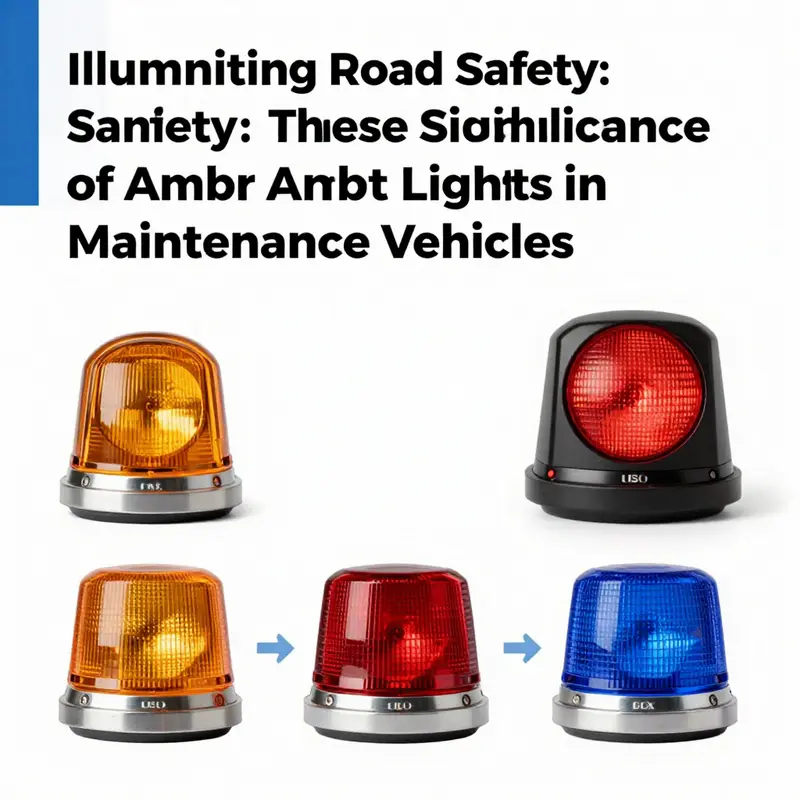
Amber has long carried the badge of caution in the world of road maintenance. When a crew rolls onto a stretch of pavement under lantern light or cloud cover, the amber beacon helps eyes lock onto the operation without forcing a driver to recalibrate their instincts. The color is not simply a preference; it is a carefully chosen signal designed to maximize detectability across weather conditions, to minimize glare, and to reduce eye strain during long shifts in variable light. In practice, amber lights serve as a universal cue that work is ongoing and that drivers should slow and proceed with care. This baseline has shaped how fleets equip their vehicles, how planners stage work zones, and how the public learns to interpret the visual language of the road. The amber standard is widely recognized not just in one region but across many jurisdictions, creating a common thread that helps maintain safety as trucks and crews move between sites, days, and weather systems.
But color does not exist in a vacuum. The physical behavior of light under different conditions helps explain why amber is so effective for maintenance work. In bright daylight, many colors can compete with sun glare, yet amber retains a high level of visibility due to its position in the spectrum and its relatively short wavelength, which is easier for the eye to detect against a variety of backgrounds. In fog, rain, or snow, amber tends to cut through moisture and mist better than white or blue light, offering a contrast that is both distinctive and reliable. Glare is a critical concern for oncoming drivers; amber light can be perceived without producing the harsh halos that sometimes accompany white, blue, or ultraviolet-rich outputs. From a human factors perspective, this translates into quicker recognition, faster response, and reduced fatigue for drivers who must navigate through and around work sites.
The regulatory framework around lighting colors reinforces these practical choices. In many regions, amber is the standard for non emergency warning lights on work zones and maintenance fleets. Standards bodies, including national safety authorities and vehicle testing organizations, emphasize the need to balance detectability with glare control. The effect is a coherent, widely understood signal: amber means caution, work in progress, and the need for drivers to adjust their speed and awareness. This standardization helps drivers know what to expect when they encounter a maintenance vehicle overhead lamps, a trailing beacon, or a front warning module, even if the road or weather changes dramatically. In the United States, guidelines and standards around vehicle lighting converge on amber as the default color for maintenance and utility operations in non emergency contexts. The idea is to create a consistent, recognizable language that travels with the vehicle wherever it operates, supporting safety for crews, motorists, and pedestrians alike.
Yet amber is not the sole color in use on maintenance fleets. Red lights are historically linked to urgent or emergency responses. While red can convey priority, its association with emergency services can lead to confusion when used on routine maintenance targets. Over the years, studies and field observations have shown that red is less effective for long duration work tasks, particularly in daylight or across hazy conditions, because it sometimes competes with the psychological cues drivers have learned to associate with urgent incidents. In practice, many maintenance vehicles eschew red as a primary warning color and reserve it for particular scenarios where a clear, time-critical message is necessary for the immediate safety of the crew. When red appears, it tends to denote a moment of heightened alert rather than a general caution for routine work, which can help prevent false alarms and ensure that drivers respond appropriately when real danger is present.
Blue presents an even more constrained role. In many jurisdictions, blue is tightly regulated and often reserved for law enforcement or specialized emergency services. The presence of blue on maintenance fleets can generate ambiguity and regulatory friction. Blue lighting tends to have high chromaticity, which can be striking in controlled environments but struggles in adverse weather. The scattering of blue light in fog or snow can produce blue veiling or washed-out contrasts, reducing the ability of other road users to gauge distance and speed accurately. As a result, blue is rarely a core component of standard maintenance light kits and is instead used selectively in multi-function lighting schemes where strict regulatory compliance allows it for a defined purpose, such as signaling a specific operational mode rather than general presence on the roadway.
These color dynamics sit atop a broader evolution in vehicle lighting technology. LED lighting has reshaped how maintenance fleets approach visibility and energy efficiency. LEDs offer rapid response, precise color control, and the ability to modulate brightness and flashing patterns without increasing heat load. The capability to blend amber warning signals with white headlights and to selectively deploy blue or red accents for particular tasks gives fleet managers a versatile toolkit. The emphasis remains on improving detection while avoiding glare or distraction. Modern lighting systems can deliver amber front signaling with crisp, uniform illumination that remains legible at distance, even in rain or dust. The efficiency and longevity of LEDs translate into lower maintenance costs for fleets that must operate around the clock in challenging environments.
A common approach in contemporary maintenance vehicles is to use combination lighting systems. These systems intentionally separate signaling from primary illumination. Amber warning lights are deployed to alert following traffic to slow down and approach with caution, while white or near-UV-free white lights handle the essential task of lighting the work area for the crew. When appropriate, blue or red accents may be used to indicate a particular function, such as a backup operation or a localized safety advisory, but only within the boundaries of applicable regulations. This layered approach avoids confusing a driver who sees a single color on a distant vehicle, providing instead a clear hierarchy of signals that map onto predictable behaviors on the road. The result is a safety ecosystem where color codes work in concert with flashing patterns, beam shapes, and timing to create a robust and legible message for motorists.
For people managing fleets and planning roadside work, the decision about which colors to deploy goes beyond aesthetics. It intersects with expectations about worker safety, traffic flow, and regulatory compliance. Photometric standards drive the design of lighting systems so that light output is measurable and comparable across models and jurisdictions. The focus is on maximizing detectability under a broad range of conditions while minimizing the probability of glare or misinterpretation. In practice, this means not only selecting amber as the default hue for warning signals but also ensuring that the intensity, spread, and modulation of the lights conform to recognized guidelines. The color choice becomes part of a larger safety doctrine that includes conspicuity, conspicuity maintenance regimes, and routine testing to ensure that lights perform as intended in real-world conditions.
Within this framework, the broader maintenance conversation extends to how operators understand and interact with these signals. The color language is a shared literacy among drivers, crew, and the traveling public. It is reinforced by training, signage, and standard operating procedures that remind everyone to expect amber warnings during road work and to adjust speed accordingly. To situate lighting choices within broader maintenance practices, see what is vehicle maintenance. This link points to a resource that explains the fundamentals of how fleets organize and implement maintenance programs, which in turn influence how lighting solutions are selected, tested, and deployed in the field. what is vehicle maintenance
As traffic environments continue to evolve with smarter infrastructure, enhanced sensor suites, and evolving safety standards, the color choices for maintenance vehicles are unlikely to become arbitrary. Amber will likely remain the anchor color, precisely because it aligns well with daylight visibility, adverse weather readability, and the psychological cues drivers already associate with caution and slow speed. Red and blue will continue to occupy more specialized roles, used judiciously within regulatory constraints and only when their unique signaling value can be clearly interpreted by other road users. The future, however, holds the possibility of even more refined signaling strategies, where color, intensity, and modulation patterns are synchronized with vehicle-to-vehicle and vehicle-to-infrastructure communications to create a more seamless and safer roadway experience. For those who want a deeper technical dive into how lighting systems are evaluated and standardized, an external resource offers a comprehensive overview of automotive lighting principles and performance considerations: https://www.sciencedirect.com/topics/engineering/automotive-lighting
Amber Beacons and Roadside Safety: Why Maintenance Vehicles Rely on Yellow Light for Visibility
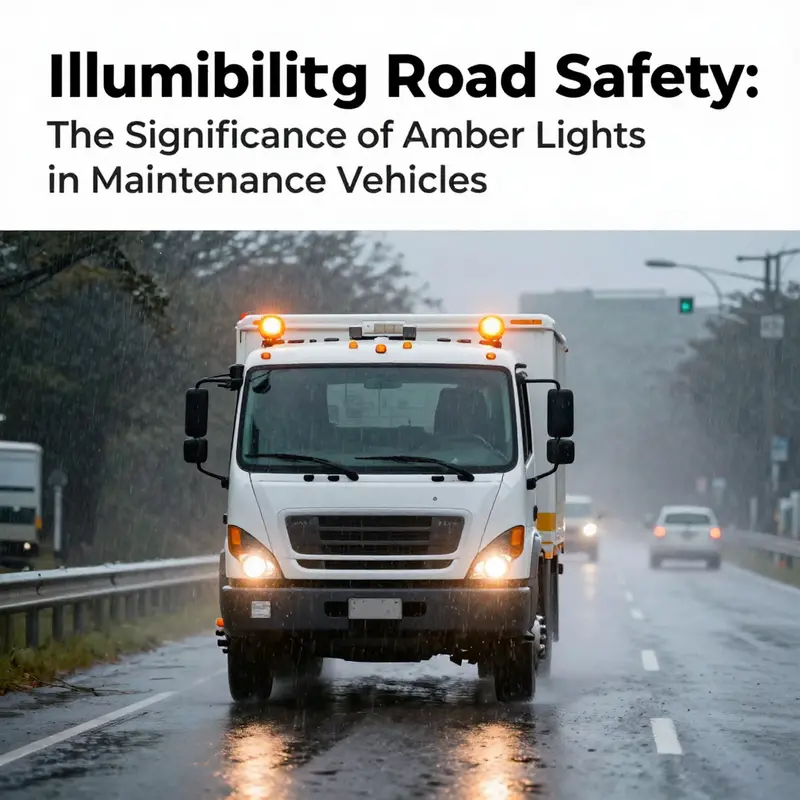
Amber beacons are a deliberate choice for maintenance vehicles because they balance visibility with clarity. The color amber is highly conspicuous to the human eye, even at a distance, and it performs well across a wide range of lighting and weather conditions. That single decision—choosing yellow-orange light instead of white or blue—reduces confusion on busy roads, helps drivers recognize a non-emergency hazard, and gives crews extra seconds to work safely.
Human vision and atmospheric physics help explain why amber works. Shorter wavelengths, like blue, scatter more in fog, rain, and snow. Amber’s longer wavelength scatters less, so it cuts through mist and precipitation more effectively. The result is a light source that remains visible without producing excessive glare. That matters on highways, where sudden glare can slow reaction times or temporarily blind approaching drivers. Amber strikes a practical compromise: it is bright enough to attract attention, yet gentle enough to preserve other drivers’ ability to see their surroundings.
Beyond color, intensity and flash pattern shape how effective a warning light is. A light must be intense enough to be seen from a safe stopping distance at highway speeds. Modern amber beacons are engineered for high luminous intensity while controlling directionality. Focused beam angles and segmented optics concentrate light toward lanes of travel and reduce wasted light that could blind drivers in other directions. Flash patterns add another layer of communication. A steady burning light signals presence. A rotating or oscillating pattern calls attention. Strobe-like bursts convey urgency. Properly selected patterns increase conspicuity without causing distraction.
Durability and reliability are also central to safety. Maintenance vehicles often operate in harsh conditions for long shifts. Lights must resist vibration, moisture, and temperature swings. Durable housings, sealed electronics, and redundant LEDs improve uptime. When a beacon fails, crews lose a vital safety tool, so maintenance schedules must include checks and quick replacements. This practice integrates with broader upkeep tasks that keep vehicles and equipment safe and roadworthy—part of the topic explored in resources like what is vehicle maintenance?.
Regulatory guidance reinforces amber’s role. Transportation authorities recommend or require amber lights for non-emergency vehicles working on or near roadways. This standardization makes behavior predictable for motorists. Drivers learn to associate amber with caution and altered traffic patterns, rather than emergency response. That distinction matters in split-second decisions: a blue or red light triggers different expectations and maneuvers than an amber beacon. With consistent signaling, drivers are more likely to slow down and follow channelization instructions.
Lighting is only one element in a layered safety strategy. Amber beacons are most effective when combined with reflective materials, proper signage, and traffic control devices. Reflective chevrons, high-visibility vests, cones, and barrier systems create multiple cues for approaching drivers. When these elements align, a motorist receives information redundantly—sighted amber light, reflective stripes, and visible signage all indicate the same hazard. This redundancy reduces reliance on a single cue in case of failure or unusual conditions.
Work-zone layout also influences how lights should be used. On long stretches of highway, beacon intensity and placement must account for speed and sight distance. On narrower urban streets, lower intensity and tighter beam control prevent unnecessary glare to adjacent properties and pedestrians. Portable light towers, vehicle-mounted beacons, and hand-held devices have roles in specific scenarios. Coordinating these devices prevents conflicting signals and maintains clarity for road users.
Human factors training is essential. Crews must understand when and how to activate different patterns and which mounting positions optimize visibility. Incorrectly angled lights can blind drivers or become invisible behind reflective materials. Regular drills and checklists reduce such errors. Supervisors should verify that lights are visible from expected approach lanes and distances during both day and night.
Technological advancements keep improving amber beacon performance. LEDs offer greater efficiency and lifespan than older filament or halogen systems. Programmable controllers allow dynamic flash patterns matching traffic conditions. Some systems adapt intensity automatically, dimming in low-contrast environments or amplifying output in bright sunlight. These features reduce energy consumption and extend service life while maintaining or improving safety performance.
Environmental conditions also shape effective use. In heavy fog, lower-mounted lights close to the roadway can be more visible than elevated beacons. Snow causes unique challenges: bright reflections from fresh snow can wash out low-contrast light, so higher intensity and carefully chosen beam angles matter. Rainy conditions demand optics that shed water to avoid streaking. Maintenance teams must understand these subtleties to select the right equipment for each environment.
Finally, public education complements technical measures. Drivers who recognize what amber lights mean will respond more predictably. Clear public messaging—about slowing, changing lanes when signaled, and respecting work-zone speed reductions—reinforces the visual signal. When drivers understand that amber means a non-emergency hazard and that caution is required, the overall system works better.
Amber beacons are a practical synthesis of optics, human perception, regulation, and operational practice. They reduce collision risk by remaining conspicuous across conditions, by communicating the right message, and by integrating into a larger safety system. For detailed performance characteristics and guidelines on applying these lights in roadwork, consult the authoritative guidance available from transportation agencies: https://www.fhwa.dot.gov/operations/roadwork/safety/lights.cfm
Amber Signals, Hidden Risks: Reframing Public Awareness of Maintenance Vehicle Lighting
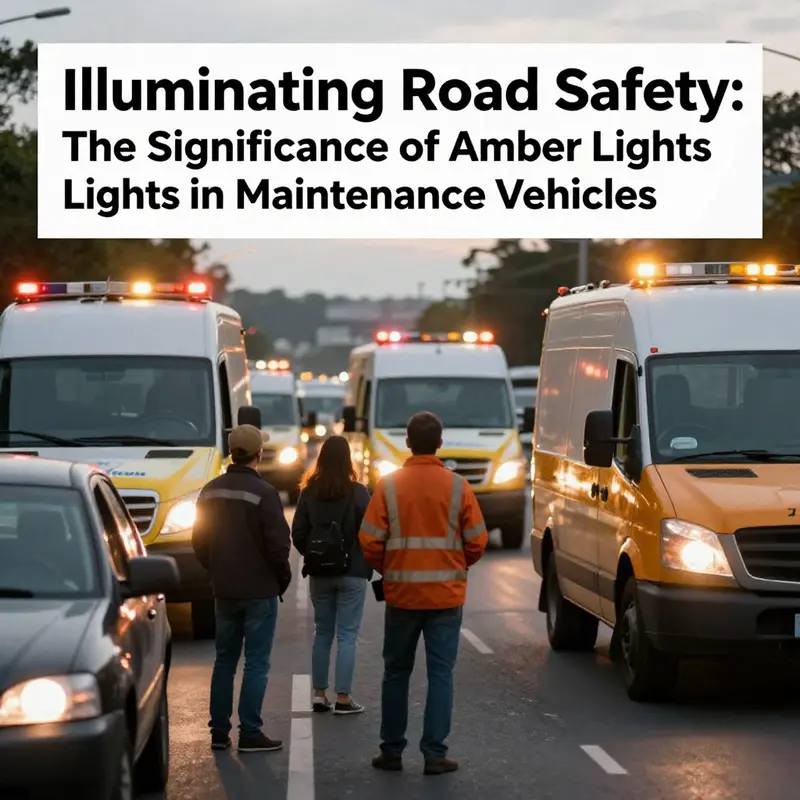
Amber lights have long been a defining feature of roadwork and maintenance zones. In many jurisdictions, they signal that a work crew or utility team is present, that traffic should slow, and that a driver should proceed with caution. This color was chosen not for spectacle but for reliability: amber holds its visibility across fog, rain, and snow, and it tends to induce less glare and eye strain for oncoming drivers than brighter white or blue-yellow alternatives. Over decades, the amber beacon has become a quiet, standardized vocabulary in the traffic environment, a shared cue that a non-emergency operation is underway and that drivers should yield to the hazard in the zone. Yet as the research on driver behavior evolves, so too does the realization that a single color, regardless of the strength of its luminance, cannot always guarantee safe passage through work zones. The central tension is not about color preference alone but about the cognitive and perceptual load placed on drivers amid dense traffic, adverse weather, and the constant flux of signaling devices along the roadside. The story of amber lights is thus a story about how signals are perceived, misperceived, and sometimes taken for granted as part of the background noise of daily driving.
The baseline logic behind amber lighting rests on standardization and recognition. In the United States and many other regions, a defined color family—often described as amber or yellow—serves as a warning cue for slow-moving or stationary maintenance crews. The idea is straightforward: the hue stands out against most road textures and weather conditions, and it communicates caution without diving into the more urgent connotations associated with white, blue, or red emergency lighting. This standardization has practical value. It helps ensure that, whether a driver is traveling through urban corridors or rural stretches, the same visual signal carries roughly the same meaning. The same logic underpins the use of flashing or rotating beacons, which are meant to attract attention without signaling an imminent, siren-wailing emergency. In this way, amber lights become a shared cultural symbol—a practical compromise that balances visibility, fatigue, and speed of response.
But the effectiveness of amber signals depends not only on luminescent strength or color purity. It also hinges on how drivers interpret the signal in real time. A pivotal thread in the literature concerns the phenomenon of habituation. Studies like the one conducted around the turn of the millennium began to reveal that many drivers, over years of commuting and routine exposure to work zones, treat amber beacons as a familiar backdrop rather than as a distinct hazard requiring heightened attention. If a signal becomes part of routine scenery, the cognitive brakes that normally slow a vehicle when a warning is encountered may fail to engage with the urgency the situation deserves. This is not a condemnation of amber lighting but a call to consider how the entire signaling ecosystem—lighting patterns, duration of illumination, support from portable signs, lane delineation, and even timing of work-zone activities—interacts with human perception.
The ethical imperative, then, is not merely to deploy amber lights more brightly but to reimagine the signaling environment so that it remains salient in a driver’s evolving attention landscape. The historical reliance on amber beacons may need to be supplemented with more dynamic cues that adapt to context. For example, enhanced lighting patterns could rotate or pulse with greater variability, making the signal less predictable in a way that sustains attentional engagement without creating confusion with emergency vehicles. The idea is to combine redundancy and clarity: use amber lighting as a constant baseline while introducing supplementary devices—dynamic message boards, clearer directional signage, and more explicit lane-closure indications—so that drivers gain a fuller, more immediate sense of risk. These ideas align with regulatory guidance that emphasizes standardization while acknowledging the need for flexibility to address contemporary traffic volumes and more complex roadworks.
Public awareness campaigns have played a crucial supplementary role in shaping how drivers respond to amber signals. Yet, as the environment around driving has grown more complex, those campaigns have sometimes struggled to keep pace. The problem is not that the messages are wrong, but that they can be perceived as routine or even ignored when the road becomes noisy with other stimuli: other vehicles, weather effects, and the sheer cognitive load of modern driving. A compelling way to address this gap is to frame amber signaling as a dynamic, situational cue rather than a static rule. When drivers understand that amber is not merely a suggestion but a risk-based signal requiring time and space to navigate around a crew, the behavior can shift from passive compliance to proactive caution. In practice, this can mean pairing amber lighting with visible, real-time indicators—such as portable variable message signs that show distance to the work zone or expected lane-change requirements—so that drivers receive both the implicit warning and the explicit instruction they need to adjust speed and position.
A further layer to consider is the regulatory and policy context. Ullman’s 2000 exploration of amber beacons raises a timeless question: are amber beacons alone sufficient to fulfill their protective purpose in a modern, high-demand traffic environment? His analysis suggested that, while amber beacons remain a foundational element of work-zone signaling, relying on them in isolation risks diminishing driver responsiveness over time. The implication for policymakers and practitioners is not to jettison amber signaling but to augment it with a coordinated package of cues that acknowledges how drivers perceive risk in real-world conditions. That means thoughtful integration of lighting patterns, signage, and traffic-management devices, designed to reinforce hazards without creating sensory overload or confusion with emergency lighting. The message to road users becomes clearer when the signal system is seen as a cohesive, layered approach rather than a single color on a single device.
This broader perspective invites a more holistic design philosophy for maintenance-vehicle signaling. Instead of counting on amber beacons alone to grab attention, engineers and safety professionals can craft signaling ecosystems that distribute information across channels and modalities. For example, a combined approach might employ a baseline of amber lights plus occasional higher-contrast cues during peak traffic periods or in conditions with reduced visibility. It could also integrate pavement markings, illuminated guidance arrows, and increased conspicuity through temporary focal lighting along the work zone edge. The goal is to reduce the likelihood that a driver’s attention is diverted elsewhere, thereby creating a safer conduit for slow-moving crews to perform their tasks without the constant fear of a collision.
For readers seeking a broader frame on how signaling and maintenance intersect with the everyday practice of driving, a practical entry point is to consider not just the signals themselves but how drivers learn to respond to them. What is vehicle maintenance offers a concise overview of why and how vehicles require careful signaling around repair and upkeep, framing maintenance as part of a larger safety culture on the road. This connection helps illuminate how consistent, predictable signaling fits into responsible vehicle operation and why drivers’ perceptions of maintenance activities influence their behavior far beyond a single warning light. What is vehicle maintenance
Taken together, the literature and practice point toward a future where amber lights remain a foundational element, but not the sole determinant of safety in work zones. The most effective approach leverages amber lighting in concert with enhanced visibility patterns, dynamic messaging, and clear, context-aware guidance for drivers. It also embraces ongoing public education that emphasizes the real-world consequences of complacency in work zones. The challenge is to keep the signal meaningful as traffic environments evolve—one that honors regulatory traditions while recognizing the cognitive realities of modern driving. In that sense, amber becomes not just a color but a prompt for a smarter, layered safety system that protects maintenance crews and drivers alike. For those who want to ground their understanding in empirical exploration, the early questions raised by Ullman remain a valuable compass: amber beacons are necessary, but not sufficient, to guarantee safety without a broader, adaptive signaling strategy.
External reference for further reading: https://www.sciencedirect.com/science/article/pii/S014717670000039X
Final thoughts
The use of amber lights on maintenance vehicles is a critical element in promoting road safety and visibility. As business owners, understanding the legal implications and safety benefits of these lights can enhance operational effectiveness and public trust. Ensuring compliance with regulations related to lighting also indicates a commitment to safety, a message that resonates well with customers and the community. By fostering awareness of the importance of amber lights, businesses can not only comply with standards but also actively contribute to a safer driving environment for all.