
Understanding the financial responsibilities associated with vehicle ownership is critical for business owners. While taxes related to vehicle acquisition are commonly discussed, vehicle maintenance costs tend not to be addressed in the same manner. This article aims to clarify the nature of vehicle maintenance in relation to taxation, specifically whether such expenses are subject to a designated vehicle maintenance tax. We will delve into three crucial areas: the tax implications of vehicle maintenance and its exemptions, the details surrounding the Vehicle Acquisition Tax (VAT) that impacts maintenance cost perceptions, and explore special cases of exemptions that may vary by jurisdiction. By examining these themes, business owners will gain insightful guidance on managing their vehicle maintenance expenses effectively.
null
null
Why There Is No ‘Vehicle Maintenance Tax’: How Vehicle Acquisition Tax Affects Purchase Costs but Not Repairs
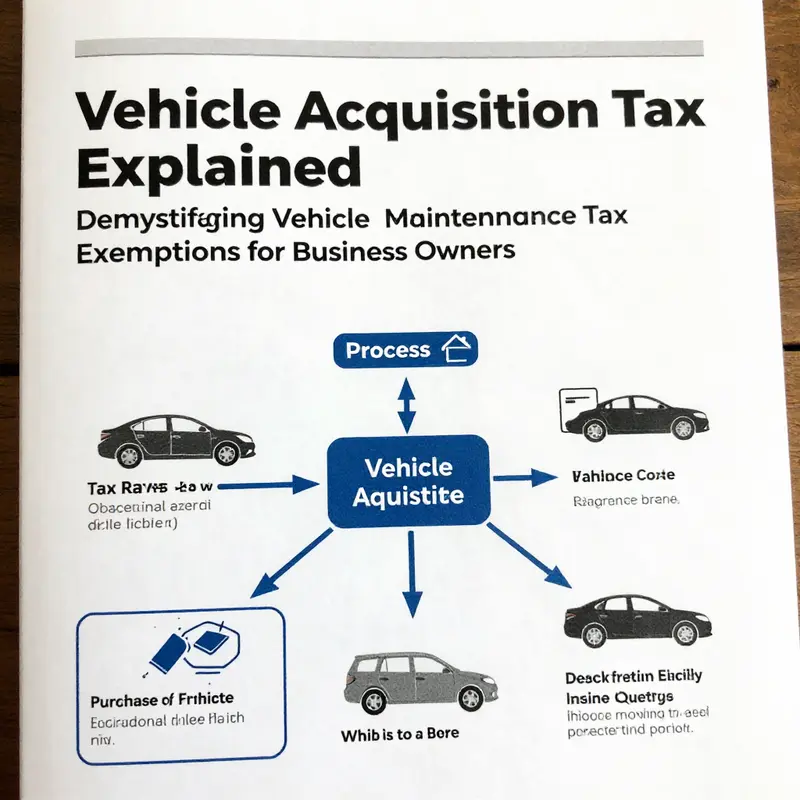
The phrase “vehicle maintenance tax” often appears in conversations among buyers and owners. It sounds plausible. Maintenance costs are real and recurring. Yet most tax systems do not impose a distinct levy labeled as a maintenance tax. Understanding the difference between the one-time Vehicle Acquisition Tax and the routine costs of upkeep is essential. It clarifies budgets. It prevents mistakes. It helps owners make better financial decisions.
Vehicle Acquisition Tax is a charge applied when a vehicle changes hands. In many jurisdictions, it is collected at the point of purchase. The tax is calculated based on the vehicle’s taxable value. It typically applies to a defined set of vehicles, such as cars, certain motorcycles, trailers, and other road vehicles. The rate is fixed in law in some places. For example, a flat 10 percent rate applies in some systems. That tax increases the upfront cost of ownership. It does not create an ongoing tax obligation tied to repairs, parts, or servicing.
Why do people confuse acquisition tax with maintenance taxes? The reasons are practical and psychological. Both acquisition and upkeep are costs associated with owning a vehicle. Both are often paid to businesses providing vehicle-related services. When governments publish exemptions and special treatment for vehicles, the language can be technical. Terms like “special-purpose vehicle” and “fixed equipment” can obscure the simple truth: acquisition taxes are about getting a vehicle. Maintenance relates to running it.
Consider the typical life cycle of vehicle expenses. A buyer pays purchase price, fees, and any acquisition tax at sale. Over the following years, the owner pays fuel, insurance, registration, and maintenance. Maintenance includes scheduled servicing, repairs, parts replacement, and diagnostics. These expenses come from private vendors or dealers. Tax authorities treat them as ordinary transactions. In most systems, these transactions are not subject to a separate maintenance tax. Instead, they are covered, if at all, by general consumption taxes like value-added tax or sales tax on the service or parts. That is a distinct concept from a targeted maintenance levy.
The legal frameworks that define acquisition tax also make this distinction clear. Laws and regulations list which vehicles are taxable at purchase. They set rates and define taxable value. They identify exemptions. For instance, vehicles designed and equipped for specific public functions can qualify for exemptions. Fire trucks, ambulances, and certain engineering vehicles often receive special treatment. Such exemptions hinge on technical standards and official catalogues maintained by relevant ministries. Those documents clarify eligibility. They do not, however, create an exemption for maintenance costs after purchase.
This separation matters for budgeting. Buyers should account for acquisition tax when calculating their initial outlay. Maintenance remains a variable, recurring expense. The two are independent. A high acquisition tax does not reduce future repair bills. Nor does paying acquisition tax create an entitlement to lower maintenance taxes. If an owner hopes a purchase tax will spare them from ongoing charges, that hope will likely be misplaced.
There are areas where tax rules intersect with maintenance in a meaningful way. Income tax systems often allow deductions for vehicle expenses when the vehicle is used for business. Those deductions can cover repairs and servicing. The rules vary by jurisdiction. They typically require detailed records. They focus on the purpose of the expense, not on whether a purchase tax was paid. For example, if a vehicle is used for work, an owner may claim a portion of fuel and repair costs against taxable income. The percentage claimed depends on business use. Methods of calculating the deduction can include logbooks or fixed-rate allowances. These are tax mechanisms that reduce taxable income. They are not exemptions from a maintenance tax because no such tax exists.
Another frequent point of confusion involves the distinction between the acquisition tax and value-added taxes on services. A repair shop may charge VAT or sales tax on parts and labor. That tax is a general consumption tax. It applies to many types of transactions, not only vehicle maintenance. When owners see tax on an invoice for repairs, they may mislabel it a maintenance tax. This mislabeling contributes to the myth. It helps to think in terms of general consumption taxes rather than a special maintenance levy.
Special-purpose vehicle exemptions deserve careful attention. Governments often exempt vehicles that serve public welfare functions. To qualify, a vehicle must meet technical specifications. These specifications are usually detailed in official catalogues. The exemption applies at acquisition. It recognizes that some vehicles deliver public services and therefore merit relief from purchase taxes. Owners of those vehicles should still expect routine taxes and fees typical for operation. Registration fees, road use charges, and consumption taxes on services may still apply. The exemption does not blanket all financial obligations tied to ownership.
For owners and buyers, a practical approach reduces surprises. First, verify whether the vehicle type faces an acquisition tax at purchase. Check the legal definition and any relevant catalogues. Second, factor that one-time tax into finance arrangements and negotiations. If you lease, understand how the lessor treats acquisition tax. Third, establish realistic maintenance budgets. Include the likelihood of repairs, parts replacement, and regular servicing. Fourth, understand whether maintenance expenses qualify for tax relief under income tax rules. If the vehicle is used for business, maintain records. A logbook and receipts can support deductions.
Leased vehicles illustrate how acquisition tax and maintenance interact in business arrangements. Leasing companies may pay acquisition tax at purchase and include it in lease pricing. The lessee then pays regular lease fees and may also handle maintenance. Depending on the lease contract, maintenance may be included or excluded. Tax deductions for maintenance costs can still be available to the lessee when they pay for repairs directly. The key point remains: acquisition tax influences the lease price. It does not absolve the lessee from routine maintenance costs or affect whether those costs are taxable in the hands of the owner or lessee.
The role of record keeping cannot be overstated. Where tax systems permit deductions for vehicle expenses, documentation supports claims. Receipts for repairs, invoices for parts, mileage logs, and business-use records form the evidence tax authorities may require. Good records clarify the line between personal and business use. They protect owners in case of audits. They also make it easier to segregate acquisition costs from ongoing operational costs when preparing tax returns or financial plans.
Differences across jurisdictions complicate simple rules. Some countries rely on registration taxes, road usage fees, or annual circulation taxes instead of or in addition to acquisition taxes. Others may exempt certain categories of vehicles from purchase tax while still imposing higher annual charges. These systems can influence ownership choices. For example, a vehicle with a high acquisition tax but low yearly fees might be preferable for some buyers. The opposite may hold true for others. Because these structures vary, owners should always consult local regulations when planning a purchase.
Electric and alternative-fuel vehicles feature prominently in modern tax policy. Some governments incentivize low-emission vehicles through acquisition tax reductions or exemptions. These incentives aim to encourage cleaner fleets. Yet even when acquisition tax relief exists, maintenance costs for electric vehicles differ rather than disappear. EVs often require less routine mechanical servicing. They have fewer moving parts. They still need brake service, tires, and electronic diagnostics. Charging infrastructure, battery health, and software updates are considerations too. Tax incentives at purchase do not equate to a maintenance tax exemption. They simply change the purchase calculus.
For fleet managers, the distinction between acquisition and maintenance taxes has operational consequences. Fleet budgeting must account for acquisition taxes across a pool of vehicles. It must also track maintenance costs per vehicle. Tax reporting for fleets often involves more complexity. Businesses may capitalize the acquisition cost and depreciate it over time for accounting and tax purposes. Maintenance remains an operating expense. Different tax treatments affect cash flow and profit calculations. Smart fleet management separates the two categories in financial systems and analyzes them independently.
Public misconceptions about maintenance taxation also stem from language in advertising and sales. Dealers and vendors sometimes refer to “tax-free maintenance packages” in marketing. Such phrases usually imply that the seller will cover service costs for a period or will include maintenance in a warranty. They do not imply exemption from any hypothetical maintenance tax. Reading contract terms is essential. Understand what is included. Ask specifically about who pays for parts and labor. Clarify whether any included services are tied to manufacturer warranties or third-party plans.
When disputes or questions arise, official sources provide the most reliable answers. Tax statutes and ministry catalogues define acquisition taxes and exemptions. Revenue agencies publish guidance on deductible expenses and record-keeping requirements. If a vehicle’s status is ambiguous, contacting the relevant ministry or agency can prevent costly errors. Professional advice from tax accountants or legal counsel is advisable when large sums or complex transactions are involved.
A final practical note concerns total cost of ownership. Taxes at purchase are only one piece of the puzzle. Insurance, fuel, depreciation, maintenance, and fees all shape the long-term cost. When evaluating options, include acquisition taxes and estimate maintenance costs realistically. Compare vehicles based on a multi-year horizon. For businesses, include tax treatments and potential deductions in the model. For private buyers, consider how acquisition tax affects loan amounts and monthly payments, then balance that against predictable maintenance costs.
To summarize without restating earlier material: a vehicle acquisition tax is a single financial event tied to purchase. Maintenance costs are recurring and usually fall under general consumption taxes when taxed at all. Deductions for maintenance may exist under income tax rules, but they relate to usage and purpose. Exemptions for acquisition tax apply to specific vehicle categories and do not extend to post-purchase servicing or repairs. Clear records, consultation of official guidance, and careful budgeting protect owners from misunderstandings.
If you want a concise primer on what routine vehicle upkeep includes, consult the resource on what vehicle maintenance covers. It outlines common maintenance tasks and helps you separate purchase costs from operational responsibilities: what is vehicle maintenance?
For guidance on claiming vehicle-related deductions in specific contexts, see the official guidance from the Australian tax authority on car expense claims. That resource explains methods of substantiation and eligibility. It is useful for owners who use vehicles for work and seek to claim related costs: https://www.ato.gov.au/individuals/income-and-expenses/car-expenses
By keeping acquisition taxes and maintenance expenses distinct, owners gain clearer expectations. They budget more accurately. They make cleaner tax filings. The result is better financial control over vehicle ownership, without relying on an imagined maintenance tax that does not exist in most tax regimes.
Taxing the Purchase, Not the Piston: Navigating the Idea of Maintenance Taxes and the True Costs of Vehicle Ownership
The question of whether vehicle maintenance is subject to a dedicated tax is one that often surfaces in conversations about ownership costs, budgeting for a new car, or planning for a fleet. People hear about taxes on buying a vehicle, they hear about ongoing fees tied to emissions, and they wonder if every wrench turned or filter replaced would trigger another tax bill. The short answer, in most jurisdictions, is that there is no separate, ongoing “vehicle maintenance tax.” Maintenance—whether it is a routine service, a repair, or part replacement—exists as part of the ordinary costs of owning a vehicle. It is not taxed under a distinct maintenance levy in the way that the purchase of a vehicle is taxed. This distinction is more than a trivia point. It shapes how drivers budget, how fleets plan, and how policymakers frame the conversation about fairness, responsibility, and the true costs of mobility.
From a broad perspective, most tax systems divide vehicle-related charges into two categories: taxes that apply at the moment of acquisition and taxes or charges that apply during ongoing ownership. When a person buys a car, there may be a specific tax assessed on the transaction. This is the stage at which governments often seek revenue for the road network and for the infrastructure that vehicles depend on. The mechanics differ by country, but the underlying logic is similar. You acquire a vehicle and, at that moment, you pay a tax determined by the vehicle’s value, its category, and perhaps its environmental footprint. In many instances, this is a one-time cost, though exemptions may apply for special-purpose or publicly oriented vehicles. Once the vehicle is registered and in use, the ongoing charges that revolve around maintenance, fuel, insurance, and routine operating expenses become part of the cost of ownership rather than subject to a separate maintenance tax.
A precise illustration helps crystallize this separation. Take the framework that has become a reference point in several discussions: a Vehicle Acquisition Tax. This tax is levied at purchase and is calculated as a percentage of the vehicle’s taxable value. The rules can be starkly straightforward: a fixed rate, a defined base, and a set list of eligible vehicle types. In some systems, the rate is set at ten percent of the taxable value, a significant but one-time consideration that may influence a buyer’s budgeting at the outset of ownership. The range of vehicles covered typically includes automobiles, trams, trailers, and motorcycles that exceed a particular engine displacement threshold. The exact thresholds differ by jurisdiction, but the core idea remains consistent: the tax is tied to acquisition, not to maintenance. Exemptions exist, but they hinge on the intended use and the technical profile of the vehicle. Special-purpose vehicles equipped with fixed equipment for defined operations—such as emergency, public service, or engineering tasks—may be exempt from this acquisition tax if they meet the criteria laid out in official catalogues issued by the competent authorities. These exemptions are not a blanket promise for all work-related vehicles; they are carefully circumscribed, reflecting policy aims such as facilitating essential services while preserving tax revenue elsewhere.
In the context of China, for instance, the Vehicle Acquisition Tax is a central element of the purchase phase. It is not charged again during maintenance. The tax’s scope includes the categories already mentioned and emphasizes a one-time cost rather than a recurring maintenance levy. The exemptions that exist for special-purpose configurations align with broader policy goals: to keep critical operations affordable and to encourage the deployment of vehicles that fulfill essential roles. This is a practical illustration of the broader principle: tax policy generally targets the moment of ownership transfer and the vehicle’s value, rather than the routine servicing that keeps a vehicle running.
But the absence of a maintenance tax does not imply a vacuum of tax rules around maintenance-related costs. Maintenance services, parts, and repairs do not escape taxation by virtue of the absence of a dedicated maintenance tax. They exist within the framework of general taxation on services and goods. In many jurisdictions, maintenance work is subject to standard value-added tax (VAT) or sales tax applicable to the type of service or goods being delivered. In other words, when a vehicle is serviced, the service provider adds the tax that would apply to a service in that jurisdiction. The result is that while you do not pay a separate “maintenance tax,” you still pay tax on maintenance through the regular tax regime that applies to services and consumables. This nuance matters for budget planning. It means that the cost of maintaining a vehicle can fluctuate with tax policy on services and the prices of parts and labor, even as there is no dedicated maintenance levy to factor in.
It is easy to conflate maintenance costs with tax burdens, particularly in regions where the public discourse emphasizes emissions, environmental responsibility, and fuel efficiency. A separate layer of complexity emerges when you consider annual or periodic taxes tied to environmental performance or weight-based road charges. A number of systems tie annual taxes to carbon dioxide emissions, encouraging lower-emission choices. In practice, this means that while the maintenance itself is not taxed, the vehicle’s ongoing ownership costs can be influenced by regulations that reward or penalize certain propulsion technologies. Lower-emission vehicles—electric cars, plug-in hybrids, or highly efficient gasoline models—often enjoy reduced annual taxes or exemptions. These reliefs are not maintenance taxes, but they do shape the overall cost of ownership and can be a decisive factor in deciding which vehicle to purchase and how to plan for upkeep. This broader tax framework affects maintenance indirectly by altering the total cost calculus that owners use when deciding how to service, replace, or upgrade components.
To illustrate how these ideas play out in policy terms, consider the ongoing conversation about exemptions and reliefs in various jurisdictions. In some parts of the world, policy makers have built incentives that reduce or exempt certain vehicles from annual taxes based on environmental or accessibility criteria. The logic is straightforward: if a vehicle is designed to be more efficient, or if it serves a public or disabled-access function, or if it is a historic or otherwise special-use vehicle, the government may ease the ongoing tax burden to encourage usage in those defined categories. This is a misperception-busting point: while the term “maintenance tax” is not the right label for these provisions, the underlying policy does create a state where the ongoing cost of ownership is affected. The distinction matters to owners who want to forecast budgets and to policymakers who must justify these reliefs to taxpayers.
In the UK, for example, the Vehicle Excise Duty, commonly known as VED, has a variety of reliefs and exemptions that illustrate how jurisdictions structure ongoing tax burdens around vehicle use and characteristics. The guidance makes clear that reliefs can apply to low-emission vehicles, to disabled drivers, or to historic vehicles, among other circumstances. These exemptions and reliefs are not maintenance taxes; they are ongoing responsibility reductions tied to the vehicle’s profile rather than to the maintenance work performed on it. The practical takeaway is that if a reader is evaluating total cost of ownership, it is essential to separate the concepts: what you pay when you acquire the vehicle, what you pay to operate it in terms of fuel and insurance, and what you pay in ongoing taxes that may be influenced by emissions, use, or eligibility for reliefs. The maintenance costs themselves—servicing, parts, and labor—do not have a dedicated maintenance tax, but they are subject to the ordinary tax regime for services and goods.
For readers who want to explore these concerns in a specific jurisdiction, authoritative sources are essential. Government portals, tax authorities, and transportation agencies provide the official rules and schedules that determine how different vehicles are taxed at purchase and what reliefs apply on an ongoing basis. While the exact numbers and thresholds vary by country, the essential framework often follows a familiar pattern: acquisition taxes are applied at the moment of purchase based on vehicle value and type; maintenance-related charges are governed by general tax rules for services and goods; and ongoing taxes tied to emissions or use may grant reliefs that influence total cost of ownership. Understanding this framework helps reduce confusion and leads to more accurate budgeting for individuals and fleets alike.
If readers want a concise anchor to understand the maintenance side in more general terms, they can turn to a practical overview of what vehicle maintenance entails. For a focused, simple explainer, see the article that defines vehicle maintenance and outlines the kinds of services that fall under routine upkeep. Such a resource can complement this chapter by clarifying what drivers typically consider as maintenance tasks, from oil changes and air filter replacements to brake inspections and tire rotations. It is worth noting that even in this broader discussion of maintenance, the tax dimension remains external to the maintenance activities themselves. The costs associated with maintenance are business costs or personal expenses that can be deductible or recoverable under the relevant tax regimes, but they are not a standalone maintenance tax in and of themselves.
To support readers who want to connect the general discussion to practical steps, consider the following approach: begin by identifying the jurisdiction’s purchase tax rules for vehicles. Determine the rate and any exemptions that could apply to special-purpose or public-service vehicles. Next, map out the ongoing charges that accompany ownership, including any energy-related or environmental taxes that might apply to the vehicle’s annual registration or continued use. Finally, distinguish these from service charges and repair costs that fall under standard taxation for services. This triad—acquisition tax, ongoing environmental or use-based charges, and maintenance service taxation—provides a clear framework for thinking about the true cost of owning and maintaining a vehicle, as opposed to chasing the idea of a maintenance-specific tax that simply does not exist in most tax systems.
For those who want to see a concrete example of how exemptions can shape ongoing costs without creating a maintenance tax, the UK guidance on Vehicle Excise Duty reliefs and exemptions offers a useful model. It shows how reliefs are structured to support consumers who meet specific criteria, such as owning a low-emission vehicle or qualifying for disabled-driver benefits. Although the UK context is particular, the broader takeaway is transferable: ongoing tax reliefs are a policy instrument, not a tax on maintenance itself. When reading about taxes in any jurisdiction, look for these two features: the point of tax (purchase versus use), and the basis of relief (emission, purpose, age, or historic status). These elements determine the real economic impact on a vehicle owner, even if the phrase “maintenance tax” never appears in the code.
Readers who want to see the official model in action can consult the UK Government guidance on Vehicle Excise Duty reliefs and exemptions. This resource provides a concise, authoritative overview of how exemptions are applied and under what conditions. While it reflects a specific regulatory environment, the document serves as a useful reference for thinking about how similar reliefs might operate in other jurisdictions and how maintenance costs are framed within a broader tax landscape. As you read, keep in mind that the tax system’s architecture is less about penalizing maintenance and more about aligning ownership costs with public policy goals.
For those who prefer a more exploratory route, a practical step is to examine how maintenance-related costs interact with taxes in your own country. Start by listing maintenance services you typically need, the parts you replace most often, and your usual service providers. Then, alongside those lines of spending, note any taxes charged on parts, labor, and services. This exercise helps illustrate that even when there is no dedicated maintenance tax, your total tax exposure is shaped by the general tax regime that applies to goods and services. It also clarifies how environmental and accessibility policies may influence ongoing costs beyond the moment you buy the vehicle. The goal is not to confuse maintenance with taxation but to understand how the broader tax framework touches every part of ownership, from the initial purchase to the annual, routine upkeep that keeps a vehicle safe and reliable on the road.
As with many financial considerations around vehicle ownership, context matters. The specifics of any given jurisdiction—engine displacement thresholds, eligible exemptions for special-purpose vehicles, or the exact rate of the acquisition tax—will shape the numbers you see on your bill. In places where the policy has evolved to reward lower emissions or to support essential public service fleets, you may notice a different set of incentives attached to the ongoing operation of those vehicles. But even in those cases, the tax line you see on an annual plate renewal or emissions-based levy is separate from the maintenance invoice you receive for a service, a repair, or a routine inspection. The maintenance you pay for is a business transaction subject to standard taxation rules for goods and services, not a dedicated maintenance tax that would creep in with every bolt turned or every oil change.
To bring this back to the central question—Is vehicle maintenance tax-exempt?—the answer remains nuanced and jurisdiction-dependent, but generally clear in practice: there is no universal maintenance tax that applies to the regular servicing of a vehicle in the same way that a purchase tax or an environmental tax might. The maintenance activities you engage in—and the parts you purchase to keep your vehicle running—are typically taxed under the standard framework for services and goods, while the vehicle’s ongoing tax burden is shaped by broader policy instruments such as emissions guidelines, vehicle class, age, and usage, not by a separate maintenance levy. The absence of a maintenance tax should not be mistaken for a lack of tax policy relevant to vehicle ownership. It simply means that the taxes that affect ongoing costs are usually connected to the vehicle’s profile and to the overall tax system rather than to the maintenance itself.
For readers who are mapping out a multi-year ownership plan or a fleet budget, this distinction can be meaningful. It helps separate predictable, purchase-related costs from the more variable, maintenance-related expenses. It also clarifies why reliefs and exemptions are often framed around the vehicle’s intended use, type of propulsion, or historical status, rather than around maintenance activities per se. When considering a purchase, you can estimate the acquisition tax with the stated rate and apply any qualifying exemptions. When planning for ongoing costs, you can anticipate VAT or sales tax on maintenance services but remain aware that there is no separate “maintenance tax” to calculate alongside the service bill. This clarity reduces confusion and helps ensure that budgeting reflects reality rather than a misapprehension about the tax landscape.
If you want to take a deeper dive into the policy landscape beyond a single jurisdiction, consult official guidance from the relevant transportation or tax authorities for your region. Jurisdictional nuances abound, and the numbers can shift as governments adjust rates or broaden exemptions in response to policy priorities. The critical takeaway is consistency: acquisition taxes are conceptually separate from maintenance costs, and ongoing tax reliefs are tools governments use to align ownership costs with broader goals, not to levy a new, universal maintenance tax. To keep your understanding grounded, remember that maintenance itself is a necessary cost of ownership driven by wear, usage, and quality of components, not a tax policy target in most systems.
For readers who want a compact reference point on maintenance, see the introductory overview linked here. It offers a concise description of what maintenance includes and why it matters for safety, reliability, and resale value. This resource complements the larger frame of tax policy by grounding the discussion in the practical realities of keeping a vehicle in good working condition. By understanding both the maintenance fundamentals and the tax architecture around vehicle ownership, you gain a more complete picture of the true costs involved and how best to plan for them across the life of a vehicle.
Internal link: For a concise overview of what maintenance entails, see What is vehicle maintenance.
External resource: For an authoritative overview of ongoing reliefs and exemptions in a related jurisdiction, see the UK Government guidance on Vehicle Excise Duty (VED) reliefs and exemptions. https://www.gov.uk/government/publications/vehicle-exise-duty-ved-reliefs-and-exemptions
Final thoughts
In conclusion, it is clear that vehicle maintenance is not subject to a dedicated tax, allowing business owners to focus their financial planning on the regular costs associated with upkeep rather than worrying about additional taxation. Understanding the Vehicle Acquisition Tax and its implications further underscores the importance of this distinction. Additionally, being aware of jurisdictional differences related to tax exemptions can provide businesses with strategic insights into managing expenses effectively. Ultimately, by demystifying these aspects of vehicle ownership and maintenance, business owners can foster more informed budgeting practices that support their operational goals.