
For business owners who rely on vehicles for operations, understanding maintenance requirements is crucial. Larger vehicles—such as trucks or buses—carry more complexity and costs, impacting operational budgets significantly. This exploration will delve into maintenance requirements and expenses associated with large vehicles, compare maintenance frequency between large and small vehicles, and analyze how vehicle size affects maintenance complexity and downtime. By the end of this discussion, business owners will have a clearer picture of what to expect with their fleet maintenance needs.
When Giants Require Care: The Hidden Depths of Maintenance on Large Work Vehicles
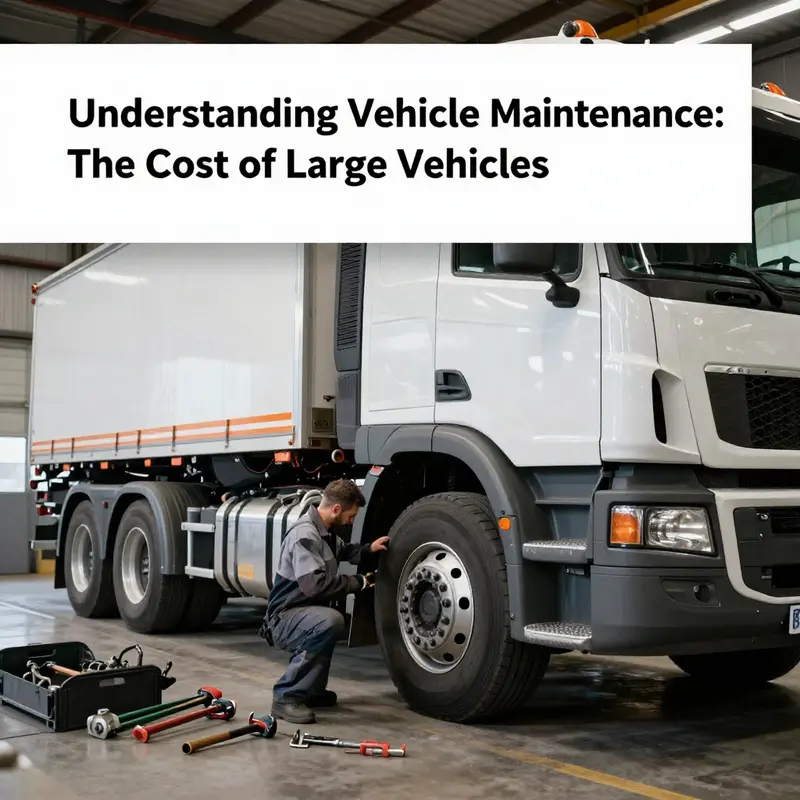
Maintenance is not merely a matter of bigger engines and longer parts lists. It is a structured discipline shaped by weight, duty cycles, and the uncompromising demands of real-world operations. For large vehicles—trucks, buses, and heavy industrial equipment—the routine, preventative, and corrective tasks form a constant loop that keeps fleets reliable, compliant, and capable of delivering across long distances and extended hours. The core question—whether maintenance is more on a large vehicle—unfolds into a broader truth: the responsibilities, challenges, and costs scale in a way that transforms maintenance from a periodic chore into a high-stakes, continuous program that touches every facet of a vehicle’s life. In this chapter, the focus is not on single repairs but on the ecosystem of upkeep that large vehicles require, and how that ecosystem differs from smaller, consumer-oriented counterparts while still aligning with the same fundamental goal: maintaining safety, efficiency, and uptime across demanding workloads.
A first, practical difference is the sheer complexity of the systems involved. Large vehicles carry not just more of the same parts, but different configurations that demand specialized training and tooling. Air brake systems, widely used on heavy goods and commercial vehicles, require meticulous inspection of compressors, reservoirs, valves, and the intricate network of hoses and fittings that govern stopping performance. The system’s safety-critical nature means a small misalignment or a pinhole in a hose can cascade into a breakdown or, worse, an accident. Tires on heavy vehicles tell a parallel story. The wear patterns on heavy trucks, for instance, reflect higher axle loads, more aggressive road impacts, and more demanding torque profiles. Maintaining proper tread depth, inflation pressure, and even wear balance across multiple axles means technicians must understand load distribution, inflation management, and how tire tech interacts with suspension geometry. This is not a quick ounce of labor; it is a carefully calibrated routine that guards traction, braking, and ride stability at speeds and weights consumer cars will never encounter.
Suspension and chassis components demonstrate a similar scale of concern. Large vehicles rely on robust suspensions to absorb continuous vibration, heavy loads, and the rigors of urban routes or highway networks with frequent stops and starts. Worn bushings, leaf springs, or air-spring assemblies may not only impair ride quality but also alter alignment and steering response. The result is a chain reaction: degraded handling can worsen tire wear, stress driveline components, and compromise braking performance. In practice, this means inspections must cover everything from the condition of springs and dampers to the integrity of mounting points, with attention paid to how the vehicle carries weight over time. The engineering logic is straightforward: better support for the load translates into more predictable dynamics, longer component life, and safer operation in challenging environments.
Engine and transmission technologies in large vehicles add further layers of sophistication. While a compact car’s engine is designed around efficiency and compact packaging, heavy-duty engines operate at higher torque, with longer service intervals that still demand rigorous monitoring of heat balance, lubrication, and fuel-air mixture. Coolant systems in heavy machines are not just about keeping the engine within a narrow temperature band; they also manage thermal loads generated by long idle periods, high-duty cycles, and, for many fleets, stop-and-go operations that bruise engine through repeated heat cycling. Transmission systems in large vehicles—often with heavy-duty automatics or manual gear trains designed for low-end torque—present their own intricacies. Fluid quality, cooler performance, clutch wear, and hydraulic actuation require dedicated diagnostics and sometimes on-vehicle training to interpret data from advanced electronic control units. All told, the mechanical heart of a large vehicle is built to endure, but it demands ongoing, careful stewardship to retain its performance envelope.
Fluid management—a category that encompasses engine oil, coolant, transmission fluid, brake fluid, and more—also assumes a larger footprint. In heavy vehicles, the volume of fluids is substantial, and the consequences of under-servicing are magnified. Dirty or degraded oil can accelerate wear across bearings, seals, and pumps, while insufficient coolant can precipitate overheating. Transmission and hydraulic fluids carry not just lubricity but thermal and chemical characteristics that influence torque delivery and system longevity. Regularly checking and replacing these fluids is not a cosmetic or incidental task; it is a principled defense against premature failure and unplanned downtime. In practice, technicians must manage the logistics of storage, service intervals aligned with duty cycles, and the potential need for quality-control testing to verify fluid condition. The scale of this work—both in terms of time and resources—helps explain why large-vehicle maintenance often sits at the crossroads of reliability engineering and operational planning.
Electrical and electronic systems, while ubiquitous in all modern vehicles, expand in scope when applied to large machines. Telematics and fault-diagnostic systems gather data from dozens of sensors that monitor everything from axle loads and brake temperature to engine exhaust and ambient conditions. In large fleets, the electronic architecture is not a mere convenience; it is the backbone that coordinates maintenance scheduling, safety systems, and regulatory compliance. The consequence is a maintenance cycle that relies as much on data interpretation as on mechanical adjustments. A single diagnostic readout may reveal wear patterns across multiple components, prompting a cascade of checks that would have been unnecessary in smaller vehicles. The digital overlay, while enabling smarter maintenance, also raises the need for trained technicians who can translate dashboards into service actions, adjust preventive timelines, and fine-tune fault-code responses to minimize downtime.
Compliance and inspections form a distinct, and often expensive, segment of the maintenance story for large vehicles. In industrial or commercial settings, operators must adhere to stringent regulatory frameworks that govern safety, emissions, and roadworthiness. These rules are not static; they evolve with technology, traffic density, and public safety expectations. Fleet managers must schedule regular inspections that capture brake efficiency, suspension integrity, lighting functionality, and visibility aids. They must document maintenance activity for audits, ensure that tire tread and inflation standards meet sector-specific guidelines, and follow procedures for special equipment like air brakes or ABS systems. All of this creates a cadence between operations, maintenance, and compliance teams that is more pronounced than in the consumer arena. The “when” and “how long” of a service encounter for large vehicles are often dictated by regulatory timers, which, in turn, shape downtime planning, repair shop capacity, and the cost calculus of keeping a fleet on the road.
The cost side of the equation, unsurprisingly, grows with scale. Parts for heavy-duty gear, specialized lubrication, and high-grade components command premium prices. Labor costs rise not just because the tasks are physically demanding, but because the expertise required is more specialized and less ubiquitous. A fleet face-to-face downtime window is a precious resource; the longer a vehicle is off the road, the more revenue is threatened, and the more attention is paid to the timing and efficiency of every maintenance action. In this environment, the economics of preventative maintenance become especially meaningful. By performing frequent, planned interventions, fleets avoid the relatively steep price tag of emergency repairs, the cascading downtime of multiple failures, and the reputational harm of late deliveries. Industry insight often points to a common consensus: preventive programs for large vehicles can yield meaningful cost reductions—on the order of substantial percentages—by mitigating unexpected breakdowns and extending the useful life of assets. This is not a marginal improvement but a strategic shift toward reliability and predictability in service delivery.
The case for preventative maintenance on large vehicles rests on several interconnected pillars. First, routine inspections—focused on brakes, tires, suspension, engine health, and fluid status—are the frontline defense against failure. A routine check that tracks tire tread depth and inflation, brake pad wear, and coolant levels serves as an early warning system for issues that could otherwise escalate into expensive repairs or dangerous situations on the road. Second, the data-driven discipline of fleet management turns maintenance into a planned expenditure rather than an unpredictable cost center. Real-time tracking, automated reminders for servicing, and comprehensive historical records enable managers to align service windows with vehicle availability and demand cycles. Third, the strategic allocation of resources—matching skilled technicians, appropriate tooling, and essential parts with the vehicle’s duty profile—reduces the likelihood of parts shortages causing extended downtime. In other words, a well-designed preventative program translates into fewer surprises and steadier operation, which, in turn, preserves customer promise and fleet reliability.
The invisible costs of maintenance—the indirect ones—also loom large in the large-vehicle context. When a vehicle sits idle, revenue stops flowing. Lost productivity multiplies quickly as a single out-of-service asset disrupts schedules and strains the capacity of other units to pick up the slack. Delivery delays ripple outward to customers, with potential penalties and damaged trust that can be costly in competitive markets. Non-compliance penalties, while sometimes overlooked in the day-to-day, can pose significant financial and operational risks, especially in industries where safety and environmental regulations are tight. This reality reinforces the argument for a robust maintenance strategy that treats upkeep not as a cost but as a risk-management investment. It aligns with broader business objectives—ensuring on-time performance, protecting driver and public safety, and preserving the long-term value of the fleet by avoiding accelerated wear and the cascading effects of avoidable failures.
Modern fleet management solutions sit at the intersection of maintenance discipline and operational efficiency. Telematics platforms provide a continuous thread of data about vehicle health, usage patterns, and service history. They enable real-time tracking of maintenance intervals and create automated alerts that prevent services from slipping into overdue status. Detailed reporting builds a transparent knowledge base that informs budgeting, capacity planning, and lifecycle management. In practice, a fleet manager can see which vehicles are approaching service windows, predict when a component might fail based on historical trends, and adjust inspection frequencies to reflect actual wear rather than most conservative assumptions. This data-driven approach does more than keep vehicles on the road; it optimizes the entire maintenance ecosystem, balancing the cost of parts and labor with the value of uptime and reliability. For practitioners seeking to deepen their approach to large-vehicle maintenance, a grounded understanding of preventative maintenance principles is essential. A practical primer on the basics can be found here: What is vehicle maintenance.
In the end, maintenance for large vehicles is less about simply replacing worn parts and more about managing a complex system of safety, performance, and regulatory stewardship. The scale amplifies the consequences of neglect, but it also amplifies the opportunities for proactive, intelligent maintenance. When a fleet is thoughtfully aligned around a preventative program, the result is not merely fewer breakdowns; it is greater predictability, steadier service levels, and a clearer path to sustainable operating costs. The dynamics work like a relay: inspections catch the small issues before they become big problems; data informs scheduling and resource allocation; and a disciplined culture of maintenance converts risk into reliability. This is how large vehicles sustain the heavy loads they carry and the trusted commitments they carry to customers, communities, and workers who rely on them every day.
External reference for deeper guidance: For a comprehensive framework on preventative maintenance for heavy-duty fleets, see A Fleet Manager’s Guide to Preventative Maintenance for HGVs. https://www.fleetmanagement.com/guides/preventative-maintenance-for-hgv
The Heavy Burden: Why Maintenance Demands More Time, Money, and Precision on Large Vehicles
When the conversation turns to maintenance, the instinctive question often sounds simple: is maintenance more on a large vehicle? The answer, in practice, is yes for most commercial and industrial contexts, though the full story depends on how we frame “maintenance” itself. Large vehicles—trucks, buses, heavy equipment, and other machines designed to haul heavy loads or operate in demanding environments—tend to require more frequent, more specialized, and more costly upkeep than their smaller counterparts. The reasons are not purely about size; they hinge on complexity, duty cycles, and the relentless grind that heavy use imposes on every subsystem. In the end, the extra maintenance burden reflects a combination of engineering scale and real-world operating conditions that magnify wear, stress, and risk over the lifespan of the asset. Viewing maintenance through that lens helps fleet managers, operators, and vehicle owners anticipate not just the recurring costs but the broader impact on safety, reliability, and total cost of ownership.
At the core of the difference is system complexity. Large vehicles pack heavier-duty engines, more robust transmissions, and braking systems designed to handle sustained heavy loads. The systems themselves are more intricate, with higher tolerances and tighter performance envelopes. For example, air braking systems—common on heavy trucks and buses—rely on precise pressure management and leak-free seals. A minor degrade in the air lines or a small drop in reservoir pressure can cascade into diminished braking performance, affecting both safety and serviceability. The same logic applies to suspension, steering, cooling, and drivetrain assemblies. Each component not only carries more mass but often operates under conditions that accelerate wear: higher temperatures, greater vibration, and longer continuous operating hours. In practical terms, this means more frequent inspections, more proactive part changes, and a greater need for skilled technicians who understand heavy-duty architectures rather than light-duty equivalents.
Operational demands amplify the maintenance burden. Large vehicles are commonly deployed in commercial or industrial settings where use is intensive—long shifts, frequent starts and stops, and constant loading and unloading cycles. This duty cycle translates into accelerated wear on tires, brakes, joints, and lubrication-dependent interfaces. Preventive maintenance schedules for large vehicles are therefore more aggressive, with service and inspection intervals typically spaced closer together than for passenger cars. The literature and industry practice often point to maintenance and inspections every 5,000 to 10,000 miles for many heavy-duty applications, depending on the exact duty cycle, operating environment, and manufacturer recommendations. By contrast, smaller passenger cars—designed for lighter use and lower stress on drivetrain components—tend to tolerate longer average distances between major service events, often in the 7,500 to 15,000-mile range for routine items. The practical takeaway is not that small vehicles need less care, but that the cadence of care shifts with the intensity of operation and the structural demands placed on the machine.
As this cadence tightens for large vehicles, so too do the consequences of drift between inspections. If a heavy-duty vehicle goes beyond its recommended service window, even a small fault can become a chain reaction: a worn brake disk increases rotor heat, which then pushes the hydraulic system into a less predictable regime; a marginal transmission seal can lead to fluid loss and overheating; a vibration in the suspension may mask a tire misalignment that then accelerates tread wear. For fleet operators, these small deltas matter because they translate into longer downtime, higher repair bills, and a broader risk profile for accidents or regulatory noncompliance. In this sense, maintenance is not merely a set of scheduled tasks; it is a carefully managed process of risk reduction, designed to keep heavy assets dependable across the most demanding operating cycles. The human element matters here too. Large-vehicle maintenance requires technicians with specialized training and access to robust diagnostic tools. The skill gap between maintaining a compact car and a heavy vehicle is not just about bigger engines—it is about the ability to interpret complex fault codes, calibrate systems under heavy loads, and anticipate failure modes that only appear under sustained, real-world strain.
The cost implications of these differences are substantial. Labor costs for heavy-vehicle maintenance run higher because the work is more specialized and time-consuming. A mechanic must often disassemble and reassemble major assemblies, perform calibration procedures, and validate performance through functional testing. Parts costs rise as well because heavy-duty components—such as reinforced axles, high-capacity transmissions, or heavy-duty braking hardware—are built to tolerate more demanding service and often carry longer lead times. Downtime is the third major cost lever: when a large vehicle is out of service for repairs, the economic impact can extend beyond the repair bill to include lost payload capacity, delayed deliveries, and penalties for missed schedules. In fleets that rely on high utilization, even small delays compound into larger throughput gaps, creating a compelling case for preventive maintenance as a cost-control strategy rather than a discretionary expense. That logic supports a proactive approach where maintenance windows are treated as essential operational infrastructure rather than as optional downtime.
This is where fleet management thinking becomes critical. Operators who manage both large and small vehicles quickly learn that a one-size-fits-all maintenance plan rarely suffices. The larger the fleet, the more important it is to tailor schedules to duty cycles, routes, climates, and payloads. Heavy vehicles that traverse hot desert routes or frigid northern winters, for example, place different stresses on cooling systems, lubricants, and tires. An idling-heavy route accentuates fuel-system and exhaust concerns; a gravel or salted-road route heightens wear on suspensions and undercarriage components. The art lies in balancing regular, preventive actions with the flexibility to respond to emerging signs of wear before they cascade into failures. This is why predictive maintenance, supported by telematics and real-time diagnostic data, is increasingly a centerpiece in modern fleet operations. If a vehicle continuously reports elevated engine temperatures on a particular route, or if vibration sensors pick up abnormal amplitudes in the drive line, maintenance teams can intervene before a fault becomes a roadside event. The ability to act on data, rather than react to overdue service, often determines whether a large vehicle remains in service with high uptime or spends extended periods offline.
From a governance perspective, adherence to industry guidelines matters just as much as in any other field. The National Highway Traffic Safety Administration, along with other regulatory bodies, emphasizes that following recommended maintenance intervals is a central safeguard against mechanical failure and performance decline. These guidelines are calibrated to reflect typical load, duty cycle, and component life, and they provide a framework for training programs, inspection checklists, and safety audits. For fleet managers, using these guidelines as a baseline helps to establish clear, auditable maintenance records that support compliance and risk management. The practical value is straightforward: consistent maintenance reduces the probability of unexpected breakdowns, lowers the chance of safety incidents, and protects the long-term value of the asset. To translate this into day-to-day practice, many operators pair a formal maintenance schedule with on-route monitoring, so that a vehicle approaching a critical wear threshold can be diverted to a service center before the next leg of its journey.
The contrast with smaller vehicles becomes most evident when we consider the consequences of neglect. Compact cars, with their lighter loads and simpler drivetrains, can tolerate longer service intervals without an immediate safety risk in many contexts. Yet this observation should not be mistaken for a lack of need. Regular checks of fluids, tires, brakes, and filters remain essential for all road-mobile assets, and even small vehicles benefit from timely service to preserve fuel efficiency and reliability. The difference lies in the margin for error. When a small car experiences a single failed sensor or a worn brake pad, the immediate safety impact can be contained within lower speeds or shorter distances. For large vehicles, the consequences of a similar fault can be much more severe, both in terms of safety and economic impact. That is why the conversation around maintenance frequency, cost, and risk tilts decisively toward more disciplined, proactive management for large vehicles.
People often ask whether maintenance requirements evolve over a vehicle’s life. They do, and the effect is magnified for heavy equipment. As engines accumulate miles and components endure repeated cross-country cycles, the likelihood of wear-related issues grows. Fluid degradation, gasket fatigue, bearing wear, and seal leaks become more probable. The implications are not only about replacing parts but about preserving performance characteristics that are central to safety, such as braking response, steering precision, and steering feedback. In practice, this means that maintenance plans must anticipate aging phenomena—bearings that lose pre-load, hoses that stiffen and crack, and cooling systems that lose their ability to shed heat as ambient temperatures shift. The result is a maintenance ecosystem that becomes more nuanced with age, requiring more frequent inspections and sometimes more significant overhauls to maintain peak performance. In any fleet, the blend of age, duty cycle, and operating environment will determine how steep that maintenance curve becomes for large vehicles.
To bring these ideas into a practical frame, consider the role of maintenance documentation and planning. A well-structured plan for large vehicles tracks preventive tasks by system, records service history, and aligns with the vehicle’s mission profile. Tires, for example, demand vigilance not only for tread depth but for wear patterns that indicate misalignment, improper inflation, or suspension anomalies. Brakes require checks for pad thickness, rotor wear, and hydraulic system integrity, with particular attention to air-brake configurations where leak tests and pressure checks are routine. Fluid systems—engine oil, transmission fluid, coolant, and hydraulic lubricants—must be maintained within specified ranges and replaced according to the service intervals tied to operating hours and loads. The complexity multiplies when you add auxiliary systems such as power take-off units, hydraulic lifts, or advanced driver-assistance technologies, all of which demand dedicated service plans and calibrated testing protocols. A cohesive maintenance plan, underpinned by data and a logic that prioritizes safety and uptime, becomes a strategic asset rather than a routine expense. For readers seeking a concise primer on maintenance concepts, a practical overview is available here: What is vehicle maintenance?.
As a closing thread weaving through the technical and economic strands, consider the broader question of how maintenance strategies evolve with performance expectations. In the era of data-driven operations, fleets increasingly rely on telemetry to flag wear indicators, anticipate part failures, and optimize service windows to avoid conflicts with peak use. This shift yields tangible benefits: steadier uptime, more predictable repair costs, and safer operation across routes and terrains. Yet it also requires investment in people, training, and technology. The heavy-vehicle maintenance framework is not merely about replacing parts on a schedule; it is about sustaining a machine’s ability to deliver reliability under heavy load, in real-world conditions, for as long as the asset remains in service. When viewed this way, the question of whether maintenance is more for large vehicles becomes a statement about risk management, operational discipline, and the deliberate trade-offs that define modern fleet performance. The answer is not just about miles or hours but about the certainty that, when a heavy vehicle leaves a yard, it has the best possible chance to perform safely and efficiently on every mile ahead. External resources and regulatory guidelines reinforce this purpose, reminding us that maintenance is a cornerstone of responsible, productive mobility. See the broader regulatory perspective here: https://www.nhtsa.gov/vehicle-safety/maintenance-and-repair
The Weight of Maintenance: How Vehicle Size Reframes Complexity and Downtime
Size matters in the world of maintenance, not only in how a vehicle performs on the road but in how long it takes to keep it on the road and how much it costs to do so. If you think maintenance is a routine ritual of oil changes and tire rotations, you might be underestimating the leverage that scale exerts on the entire upkeep cycle. The very attributes that give large vehicles their utility—powerful engines, heavy suspensions, robust braking systems, and intricate drivetrains—also magnify the demands of keeping those machines reliable. This is not merely a matter of bigger parts and deeper pockets. It is a question of how complexity scales with size, how downtime scales with that complexity, and how fleets and individual owners can navigate a landscape where the clock and the budget both tilt toward the heavy end of the spectrum.
To begin with, maintenance complexity expands in tandem with the architecture of the vehicle. Large vehicles typically house bigger engines and a wider array of subsystems, many of which operate at higher loads and under more demanding conditions than their smaller counterparts. A long-haul tractor-trailer, a heavy-duty dump truck, or a municipal bus presents a bundle of interdependent systems that all wear at a more aggressive rate due to continuous operation, higher torque, and frequent start-stop cycles. The engine itself is not just larger; it is often designed with additional features for durability, such as enhanced cooling circuits, more complex emission-control components, and powertrain configurations that include heavy-duty transmissions and sometimes all-wheel or four-wheel drive. The result is a diagnostic landscape that demands more specialized knowledge, more sophisticated tools, and more precisely calibrated procedures. In practical terms, diagnostics may require scanning multiple control modules that talk to one another across a wider network, each module carrying fault codes that can cascade into cascading maintenance needs if left unchecked. Access to the components becomes a constraint as well: larger engines live deeper within the bay, front-end assemblies take more room to reach, and heavy suspensions can require hoists, jacks, and supports that demand not just space but careful safety protocols. In short, the very design features that empower big vehicles to perform demanding tasks also complicate the work of keeping them healthy.
This complexity is compounded by the fact that larger vehicles endure heavier wear across several subsystems. Tires bear the brunt of heavier payloads, brakes absorb more energy, and axles, joints, and drivetrain components experience higher loads and faster wear rates. The suspension system, vital for carrying heavy weights and maintaining ride quality under tough conditions, becomes a focal point for inspection and maintenance. Because these components operate under strenuous conditions, even routine maintenance—oil changes, filter replacements, and lubrication—unfolds with added layers of inspection and measurement. Technicians must be vigilant not only for the obvious wear items but also for subtle signs of fatigue, such as microcracks in brake rotors, uneven tire wear patterns, or creeping play in steering linkages. The scale of these tasks translates into longer service times, more frequent part replacements, and a greater need for parts inventories that accommodate a broader range of sizes and configurations.
The downtime associated with maintenance follows the logic of complexity and wear. Larger vehicles typically incur longer downtimes for several reasons. First, specialized knowledge is often required for complex systems like air braking networks, high-capacity transmissions, or advanced propulsion and exhaust-management setups. Technicians trained to service passenger cars may not have the depth of experience or the tools necessary for heavy-duty equipment, where failures can involve multiple interacting subsystems. Second, larger vehicles demand larger components and more extensive disassembly, which takes more time. A routine inspection may involve more points of contact—multiple service points across the engine, the drivetrain, the braking system, the suspension, and the cooling system. Even when the actual repair task is not inherently longer, the overhead—safety checks, test runs, calibration, and reinitialization of control modules—accumulates quickly.
Even when we separate the repair task from the time spent waiting for parts, downtime escalates because the supply chain for large-vehicle parts is often more fragmented. A heavy-duty truck may require a custom-fabricated mount, a high-capacity fuel injector, or a special brake component that is not stocked in every local shop. Lead times for these parts can be longer, and the coordination involved in obtaining the right configuration adds to the total downtime. The logistical footprint of large-vehicle maintenance is larger; the equipment, the workspace, and the scheduling are all scaled to the job, which means fewer opportunities for quick turnarounds in a busy fleet operation. A fleet manager understands that downtime is not only the time the vehicle is out of service but also the time the maintenance staff spends planning, procuring, and coordinating the service. When a vehicle is essential to a schedule—think of a regional freight route or a public transit line—the consequences of downtime ripple through the entire operation, amplifying the cost and encouraging managers to adopt more proactive maintenance strategies.
From a practical standpoint, the distinction between large and small vehicles becomes visible in the cadence of inspections and servicing. Large vehicles operating in commercial or industrial settings often follow stringent maintenance intervals dictated by regulatory standards and operator manuals. Heavier loads and longer operating hours justify more frequent checks on critical systems: air-brake performance, lubrication schedules for heavy-duty drivetrains, engine cooling efficiency, and robust monitoring of tire alignment and wear. In contrast, many smaller vehicles pursue a simpler rhythm with oil changes and brake service forming the core. Yet even within this simpler rhythm there can be surprises: tight engine bays in compact cars can impede access for certain diagnostics or replacements, potentially elongating service times in cases where the logistics of reaching a stubborn component become a constraint. The moral is not that large vehicles are inherently unreliable, but that the maintenance ecology around them is more intricate by design, and the clock ticks differently when scale enters the picture.
The theoretical difference in complexity and downtime translates to real-world cost implications. Labor costs rise with the specialized skill set required to service heavy-duty systems, and the availability of qualified technicians becomes a critical bottleneck in some regions. Parts procurement becomes a more pronounced factor in total cost, not just because of higher price tags but because larger vehicles demand a larger, more diverse set of parts. A single downtime incident can balloon into a cascade of operational losses: missed deliveries, rescheduled routes, headcount adjustments, and, in the worst cases, penalties tied to service-level agreements for fleets. These consequences push fleet owners toward more sophisticated maintenance paradigms, including predictive maintenance that leverages data from sensors and telematics to forecast failures before they occur and to schedule downtime at the most opportune moments. The goal is not to postpone maintenance indefinitely but to align it with operational realities so that downtime is expected, planned, and minimized in a way that preserves both safety and productivity.
The broader literature and regulatory context reinforce this view. Large vehicles operate in environments with higher risks and stricter compliance demands. The maintenance philosophy for these vehicles tends to emphasize reliability, safety, and long-term durability. This is why fleets invest in more rigorous inspection regimes, standardized checklists tailored to weight class and duty cycle, and certification programs for technicians who work on heavy equipment. The result is a maintenance ecosystem that accepts longer individual service times but seeks to compress downtime through logistics, scheduling, and early problem detection. The essential takeaway is that size shifts the cost-benefit calculus of maintenance. A fleet owner may decide that the reliability and deployment capacity afforded by a large vehicle justify higher maintenance overhead, provided that the maintenance program is tightly managed and data-driven.
Within this framework, the concept of maintenance as a general practice—distinct from the peculiarities of any single vehicle class—gains clarity. If you are looking for a concise primer on maintenance in its broadest sense, the literature emphasizes that maintenance is a strategic activity aimed at preserving function, ensuring safety, and extending asset life. For readers seeking a broader definition beyond the confines of a single vehicle category, it is helpful to consider a resource that frames maintenance in its most general sense, such as the article What is vehicle maintenance. This reference offers a foundation for understanding how maintenance activities scale with system complexity and operating context, and it provides a bridge to the more specialized discussion of large-vehicle maintenance dynamics. To connect with that broader perspective, you can explore it here: https://vehicletricks.com/blog/what-is-vehicle-maintenance/.
It is also important to situate this chapter within the larger arc of research that examines the interaction between weight, volume, and maintenance dynamics. A particularly instructive finding comes from an analysis that considers how different maintenance and repair scenarios affect use time across vehicle classes. This line of inquiry highlights that heavier, larger vehicles often require longer repair windows but may benefit from optimized scheduling and modular, serviceable components that reduce downtime when failures occur. The cited study, Optimization of Car Use Time for Different Maintenance and Repair Scenarios, provides a rigorous framework for thinking about how weight and volume interact with maintenance needs in ways that influence planning, labor allocation, and spare-parts strategy. For readers who want to dive into the technical modeling and empirical results, this external resource offers a thorough examination: https://www.mdpi.com/2075-4442/15/10/869.
In practice, the decision-making process around maintenance for large vehicles is shaped by three interlocking considerations. First is the engineering reality of scale—the sheer heft of the machinery and the breadth of systems that must be kept in balance. Second is the operational reality—the duty cycle, the hours of use, and the mission profile that determine which systems wear more quickly and which inspections are indispensable. Third is the logistical reality—the availability of skilled technicians, the accessibility of parts, and the scheduling flexibility needed to minimize downtime without compromising safety. When these factors align—when a fleet combines a robust predictive maintenance program with access to trained technicians and a well-stocked parts inventory—large vehicles can achieve reliability levels that belie their maintenance heft. Conversely, gaps in any of these dimensions can magnify the costs and the downtime that come with keeping such assets on the road.
This integrated view helps explain why owners and operators often pursue a nuanced approach to maintenance for large vehicles. Rather than treating maintenance as a routine, one-size-fits-all task, they tailor their strategies to the specific duty cycle and operating environment of each asset. A vehicle assigned to urban routes with frequent stop-and-go driving will demand a different maintenance emphasis than a heavy-haul unit traversing long distances with sustained engine load. In the urban case, brake wear, electrical wear, and cooling system stress may be more pronounced, while the long-haul unit may emphasize fuel system integrity, transmission durability, and drivetrain alignment. Such tailoring requires reliable data streams, clear performance metrics, and the ability to translate insights into timely maintenance actions. When done well, the payoff is a cycle of maintenance that minimizes unplanned downtime, reduces the risk of catastrophic failures, and extends the useful life of the asset.
Ultimately, the chapter’s throughline returns to the central question: is maintenance more demanding for large vehicles? The answer, in practice, is yes on several fronts, but the verdict is not simply about size. It is about how size interacts with complexity, wear, accessibility, and the logistics of getting the right part to the right technician at the right time. The larger a vehicle’s footprint in weight and volume, the more carefully its maintenance program must be designed, executed, and tuned to the realities of operation. For readers who want a compact reminder of the foundational idea, consider the general definition of maintenance and its scaling with complexity. See the linked resource above for a broader framing, and keep in mind the empirical evidence that points to longer repair windows yet more opportunities for efficiency gains through structured maintenance planning.
Final thoughts
In summary, maintenance for large vehicles poses significant challenges due to increased complexity, frequency, and associated costs. Business owners need to recognize these factors when budgeting and planning for vehicle maintenance. Understanding these dynamics can lead to more informed decisions regarding fleet management, ultimately enhancing operational efficiency and minimizing unexpected repair expenditures.