
The importance of vehicle maintenance policies cannot be overstated in today’s fast-evolving automotive landscape. As technology advances and regulations tighten, understanding how these policies have developed becomes crucial for business owners in the automotive sector. Chapter 1 delves into the historical overview, highlighting the shift from reactive repairs to proactive maintenance strategies influenced by industry demands. Chapter 2 explores the technological innovations that have revolutionized maintenance practices, paving the way for a data-centric approach. Chapter 3 examines the regulatory and legal frameworks that establish standards and consumer protections, ensuring fair practices within the maintenance industry. Finally, Chapter 4 anticipates future trends in vehicle maintenance policy development, emphasizing the need for adaptability in an increasingly digital age. Together, these chapters will equip business owners with the essential knowledge required to navigate the complexities of vehicle maintenance policy.
From Reactive Repairs to Data-Driven Policy: Tracing the Evolution of Vehicle Maintenance Governance
The story of how vehicle maintenance policy came to be is a story of growing foresight and expanding capability. It begins with simple, practical needs: keep a moving fleet on the road, reduce downtime, and ensure that a vehicle could be relied upon day after day. Early maintenance practices were largely reactive, meaning repair happened after a part failed or a system broke down. This approach was straightforward but costly. Downtime could cascade into missed deliveries, disrupted schedules, and frustrated operators. It also concealed the true rate of wear and tear behind the veil of downtime, making it hard to quantify risk or plan for longer-term investments in equipment, training, and facilities. In the absence of standardized procedures, experiences varied widely from shop to shop, city to city, and country to country. Yet the instinct to prevent disruption persisted, and as fleets grew larger and more complex—especially in commerce, logistics, and military contexts—the limits of a repair-after-failure mindset became increasingly obvious. The need for reliability, safety, and predictable performance gradually pushed maintenance policy toward more systematic regimes. The shift began with preventive maintenance, a concept rooted in industrial efficiency that sought to catch failures before they caused breakdowns. Rather than waiting for a problem to show itself, organizations implemented scheduled inspections and servicing at defined intervals based on time or mileage. This approach had immediate, tangible benefits: higher uptime, improved safety margins, and easier planning for labor and parts. It also introduced a discipline of documenting when and how care occurred, which gradually fed into broader governance. In large organizations, the transition from ad hoc repair to scheduled service required not only technology and tools but a new mindset. Managers learned to view maintenance as an asset management activity rather than a mere expense, a shift that carried with it the language of risk reduction, lifecycle cost analysis, and performance metrics. As preventive maintenance spread across public and private sectors, it established a scaffold for more nuanced policy later in the century. The next major leap came with the advent of predictive and condition-based maintenance, driven by advances in sensing, data collection, and analysis. The idea was simple in principle: let real-time or near-real-time information about vehicle health trigger maintenance actions only when necessary. This required new kinds of data streams—engine temperatures, oil quality, tire wear, vibration patterns, battery health—and the analytics to interpret them. The payoff could be substantial. Predictive maintenance promises to reduce unnecessary servicing, optimize labor and parts inventories, and allocate resources for repairs precisely when risk thresholds are met. It also reframed maintenance from a fixed calendar to a dynamic narrative driven by a vehicle’s actual condition. The transformation did not happen overnight, but the 21st century has seen a rapid acceleration in both hardware and software that enable such data-centric upkeep. Sensor networks, embedded diagnostics, telematics, and cloud-based data platforms made it feasible to monitor hundreds or thousands of vehicles in near real time. This shift expanded the policy toolkit beyond the workshop and into the realm of information governance. A 2025 strand of research highlights how modern maintenance ecosystems are increasingly treated as integrated information flows. Rather than managing reactive, preventive, and predictive activities in isolation, fleets and policymakers seek cohesive frameworks that align maintenance decisions with broader objectives—operational efficiency, safety, environmental stewardship, and cost containment. The idea is not merely to predict failures but to prescribe actions that optimize overall performance. As a result, maintenance policy is becoming less about ticking off a schedule and more about validating condition data, orchestrating multi-source inputs, and driving decisions with evidence. A fuller, more unified view is emerging, one that combines the strengths of multiple approaches to deliver a resilient maintenance regime. Within this emerging paradigm, standards and regulations play a crucial harmonizing role. Technical standards codify best practices so that inspections, diagnostics, and repairs meet consistent quality levels regardless of where a vehicle is serviced. A landmark development in this direction is the adoption of the GB/T 18344-2025 specification, which superseded the 2016 version and took effect on January 1, 2026. This standard, steered by the National Technical Committee for Automotive Repair Standardization and supported by institutions such as the Research Institute of Highway under the Ministry of Transport, formalizes clear, science-based procedures for different maintenance levels. It lays out mandatory pre-maintenance inspections using non-invasive diagnostic tools, and it specifies the operational logic behind daily checks as well as first- and second-level maintenance tasks. The hard edge of policy arises here: maintenance is no longer a vague, discretionary activity. It is a structured process anchored in verifiable diagnostics and standardized workflows. The shift to diagnosis-driven maintenance—where repairs and servicing respond to the actual state of the vehicle rather than to a pre-set calendar—reflects a broader move toward evidence-based governance in the automotive sector. Alongside technical standards, regulatory frameworks have embedded minimum expectations for how maintenance should be conducted and who can do it. The Regulations on the Management of Motor Vehicle Repair, issued in 2021, provide the legal scaffolding that ensures proper licensing, fair competition, environmental stewardship, and consumer rights. Facilities are required to register with local transportation authorities, a step that helps authorities monitor activity, enforce compliance, and prevent abuse. The regulations explicitly prohibit monopolistic practices and forced repairs, empowering vehicle owners to select qualified providers. These protections are not cosmetic; they set the baseline for trust in the maintenance system. They also encourage investment in skills, equipment, and traceable service histories, which in turn supports higher resale values and lower total cost of ownership over a vehicle’s life. Policy development does not occur in isolation. Government agencies have taken an active role in translating policy into practice. Beijing’s Vehicle Repair Management Office is a compelling example of how policy gets disseminated and implemented on the ground. Through training sessions and live webinars, the office has sought to bridge the gap between high-level standards and shop-floor realities. A nationwide virtual seminar held in December 2025 drew participation from more than 3,700 operators and technicians, signaling both the appetite for rigorous guidance and the recognition that robust maintenance practices require continuous learning. This kind of outreach reinforces the practical dimension of standards—that is, how to apply them consistently across diverse fleets and facilities. The consequences of a policy that marries standards with enforcement and education are wide-ranging. Road safety improves as diagnostic-driven maintenance helps catch issues before they manifest as safety risks. Vehicle breakdowns decline, which translates into steadier operations and lower insurance and contingency costs for fleets. Beyond safety and reliability, a comprehensive, standards-based approach also carries economic and environmental benefits. Extending vehicle lifespan, improving fuel efficiency, and preserving resale value align with a broader movement toward sustainable mobility. The long-run effects include a more predictable maintenance budget, better parts management, and a reduced environmental footprint through fewer unnecessary repairs and lower waste. As technological capabilities continue to mature, future maintenance policies will likely become more data-centric, more predictive, and more fully integrated with the digital fabric of vehicle management. IoT-enabled diagnostics, artificial intelligence for fault prediction, and digital maintenance records are not just conveniences; they are the building blocks of proactive governance. In such a system, data streams from individual vehicles feed centralized platforms that guide decision-making at fleet level, with dashboards that reveal trends, risks, and opportunities across entire operations. The result is a governance model that treats maintenance as a strategic asset—one that can drive safety, reliability, and efficiency while reducing lifecycle costs. Yet the transition remains a work in progress. Balancing rapid technological change with consistent standards, regulatory oversight, and practical training across thousands of service providers requires patience, investment, and ongoing collaboration among policymakers, industry associations, and practitioners. The literature already points to a future in which maintenance policy is not a static decree but a living framework. It will continue to evolve as new sensing modalities, data analytics tools, and digital records become more prevalent. In this sense, the arc from reactive repairs to data-driven policy is not a finished line but a dynamic trajectory that reflects how societies manage risk, allocate resources, and pursue safer, cleaner, and more reliable mobility for millions of vehicle owners and operators. For readers seeking a deeper methodological perspective on how integrated maintenance ecosystems are designed, a detailed study that proposes a cohesive framework blending reactive, preventive, predictive, and prescriptive elements offers valuable insight into the practicalities of information flow and decision support. See the external reference at the end of this discussion for a comprehensive exploration of these themes. And for a concise overview of the conceptual foundations of maintenance itself, you can refer to the discussion material available here what is vehicle maintenance. As the field continues to mature, policy will increasingly reflect a condition-based logic that aligns technical practice with governance objectives, and the everyday act of servicing a vehicle will look less like a routine inconvenience and more like a data-informed investment in reliability, safety, and value. The next chapters will explore how these policy shifts translate into on-the-ground implementation, from workshop workflows to fleet-wide data platforms, and what this means for drivers, operators, and regulators alike. For researchers and practitioners who want to anchor their work in a rigorous, evidence-based framework, the broader literature remains a crucial compass guiding the journey toward truly integrated maintenance governance. In sum, the evolution from reactive repair to diagnosis-driven policy marks a fundamental rethinking of maintenance as an intelligent, policy-relevant activity—one that is essential to safe roads, economic efficiency, and sustainable mobility. External reference: https://www.sciencedirect.com/science/article/pii/S2352146525000187
From Reactive Repairs to Predictive Policy: The Technological Rewiring of Vehicle Maintenance Standards
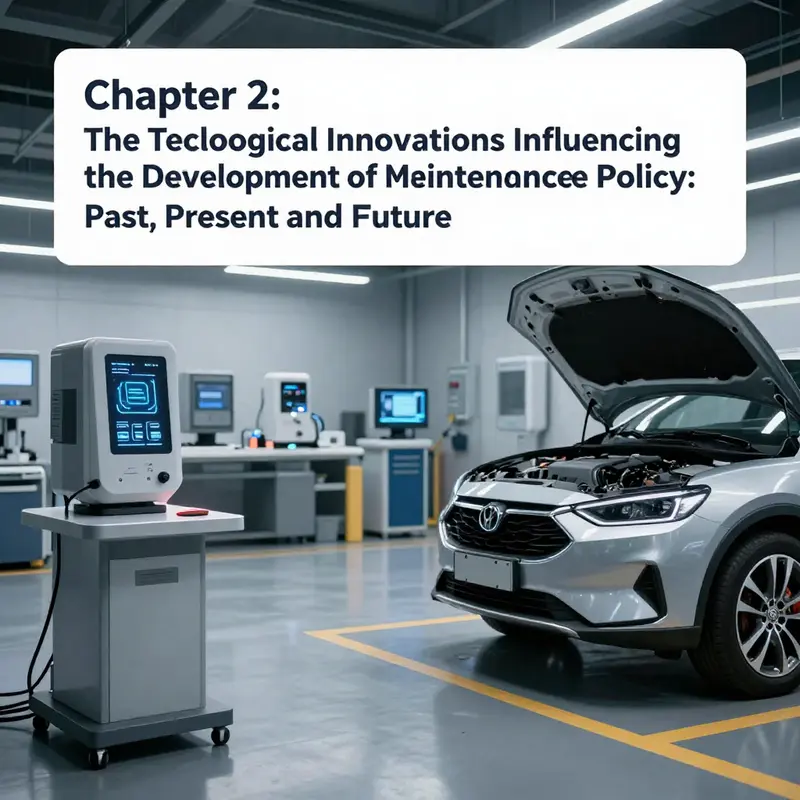
Technology has become the quiet architect behind how vehicle maintenance policy is developed. No longer is upkeep a ritual dictated solely by calendars or miles; it has become a data-driven discipline that listens to streams of information from sensors, controllers, and cloud-connected systems. As vehicles evolved into intricate ecosystems, policy makers faced a new reality: the need to codify not just when to repair, but how to diagnose, monitor, and anticipate failures before they disrupt lives. This shift from reaction to prediction marks a turning point in regulatory thinking, where standards, diagnostics, and governance converge to align safety, environmental stewardship, and consumer rights with the realities of modern mobility.
At the heart of this transformation lies a quiet but powerful force: material and computational innovation that redefines what counts as a maintenance event. Advances in material technology, including nanotechnology-driven durability and energy absorption improvements, are not merely about making cars safer; they influence how maintenance is planned and performed. Research into cellular materials with superior energy absorption for side-impact protection illustrates a broader truth. When structures are engineered to withstand higher energy demands, inspection and maintenance protocols must adapt to verify that those advanced features retain their protective performance over time. While such innovations originate in the lab or the design studio, their downstream effects ripple through maintenance standards, demanding more precise inspection criteria, non-destructive testing approaches, and evidence-based maintenance intervals that reflect real-world wear rather than theoretical expectations. The International Journal of Crashworthiness highlights performance indices for these materials, signaling a future where structural integrity becomes a criterion for policy as much as for safety regulators. In practice, this means maintenance programs will increasingly need to validate not only mechanical wear but the continued effectiveness of safety-relevant architectures under varying conditions.
Parallel to these material breakthroughs is a surge in diagnostic intelligence. Predictive maintenance, once a distant aspiration, has become a practical operating model thanks to AI-powered diagnostics and real-time monitoring through the Internet of Things. Modern vehicles are embedded computing platforms that generate constant streams of data—from engine control units, battery management systems, and ADAS sensors to chassis and powertrain controllers. The shift to condition-based maintenance reframes the decision point from “What is the scheduled service due at 30,000 miles?” to “What does this vehicle actually need now, given how it has been driven and how its components are aging?” This is not merely a tale of efficiency. It is responsive governance: repairs and replacements are triggered by actual wear patterns, reducing unnecessary interventions and minimizing waste, while ensuring safety-critical systems remain within specification. In regulatory terms, the emphasis moves from prescriptive schedules toward evidence-based interventions anchored in diagnostic data, a transition that accelerates as data infrastructure matures and becomes more standardized across the industry.
Policy design responds to this reality by embedding diagnostic capabilities into the definition of permissible maintenance activities. A milestone along this path is a standards-based framework that treats diagnostic information as a primary input for decision making. As maintenance tasks become increasingly data-centric, inspectors and technicians must be proficient in interpreting sensor outputs, understanding how software updates affect performance, and validating that electronic systems are functioning as intended. The evolution is not only about what gets serviced; it is about how service providers demonstrate the reliability and safety of those interventions. In other words, policy now requires demonstrable evidence of condition, not merely the passage of time or distance.
The policy architecture also encompasses a robust regulatory environment designed to ensure fair competition, professionalized service, and environmental accountability. The Regulations on the Management of Motor Vehicle Repair, issued in 2021, codify licensing, fair competition, environmental protections, and consumer rights. They require repair facilities to be properly registered with local transportation authorities and prohibit monopolistic practices or forced repairs. This legal framework supports the tech-driven shift by creating a level playing field where diagnostic-led maintenance can be equitably offered and verified. It also empowers owners who may be weighing the costs and benefits of advanced diagnostic services, ensuring they can select qualified providers without fear of loss of choice or quality. In practice, this means policy must accommodate a diverse ecosystem of providers—from independent workshops to certified maintenance centers—while maintaining clear standards for data handling, privacy, and environmental stewardship.
Implementation of these visions has relied on active, ongoing education and dissemination efforts. Government agencies responsible for vehicle repair management have taken a proactive stance in translating complex technological developments into practice. Beijing’s Vehicle Repair Management Office, for instance, has organized extensive training initiatives, including nationwide live webinars reaching thousands of participants. A December 2025 virtual seminar drew more than 3,700 attendees, signaling both the scale of interest and the urgency with which operators and technicians are embracing new maintenance paradigms. Such programs address the practical questions: How do you perform a non-invasive pre-maintenance inspection? Which diagnostic modalities are acceptable for different levels of maintenance? How do you document the condition data and link it to a maintenance action in a way that satisfies regulators, insurers, and owners? The answers are not merely technical; they require governance mechanisms that ensure consistency, traceability, and accountability across the service network.
A core aspect of this governance is the concept of inspection hierarchy and the layering of responsibilities. The GB/T 18344-2025 standard, “Automotive Maintenance, Inspection, and Diagnostic Technology Specification,” represents a pivotal milestone in this regard. Replacing GB/T 18344-2016 and taking effect on January 1, 2026, the standard formalizes a three-tier maintenance framework—daily checks, first-level maintenance, and second-level maintenance—each with clearly defined procedures and mandatory pre-maintenance inspections using non-invasive diagnostic tools. This structure aligns maintenance activity with the actual condition of the vehicle rather than a fixed schedule. It also standardizes the diagnostic approach, ensuring that technicians across the country have a common language for evaluating fault indicators, calibration needs, software health, and sensor performance. The emphasis on non-invasive methods reflects a broader commitment to preserving component integrity while obtaining a reliable picture of the vehicle’s state. In effect, the policy becomes a living protocol that harmonizes technical capability with regulatory expectations, reducing ambiguity for owners and operators and enabling data-driven comparisons across providers.
Yet the policy story does not end with standards and training. It extends into practical adoption challenges and opportunities that arise as vehicles become more software-defined and connected. IoT-enabled diagnostics and over-the-air updates are transforming what maintenance means in the field. A software-driven vehicle requires ongoing calibration of control systems, periodic verification of calibration drift, and secure software management to prevent unauthorized modification. This creates a new dimension to policy: cybersecurity and software provenance. Regulators must ensure that diagnostic data and maintenance records are tamper-evident and that owners have access to transparent maintenance histories that can influence resale value and insurance considerations. The integration of digital maintenance records also supports lifecycle thinking. When a vehicle’s history is preserved in a centralized, interoperable format, manufacturers, fleets, and private owners alike gain a clearer picture of the total cost of ownership, the reliability of components, and the residual value. The promise is clear: more accurate life-cycle forecasting, lower total cost of ownership, and enhanced resale appeal.
As the coverage expands, the trajectory toward a data-centric, predictive, and fully integrated maintenance ecosystem becomes increasingly plausible. Vehicles are becoming mobile computing platforms, capable of streaming diagnostic data, learning from driving behavior, and negotiating software updates with service providers. The industry analyst community, echoed by voices at the Automotive Innovation Forum and other venues, emphasizes that the momentum of technological innovation is shaping policy, even as policy shapes how technology is adopted in practice. The point is not to resist change but to embed it within a coherent, enforceable framework that guards safety, environmental integrity, and consumer autonomy.
For readers seeking a compact statement of maintenance concepts alongside the evolving policy landscape, consider exploring a concise overview of maintenance definitions and purposes at this resource: what is vehicle maintenance. This reference complements the broader discussion by clarifying the core maintenance activities that policy seeks to standardize and govern across diverse contexts.
The future of vehicle maintenance policy, therefore, rests on a triad of technology, regulation, and practice. First, technology must continue to advance in ways that produce reliable, verifiable signals of vehicle health without imposing prohibitive costs or complexity on service networks. Second, regulation must keep pace with these capabilities, preserving safety and environmental objectives while protecting owners’ rights to choose among qualified providers. Third, practice must unify the two through robust training, standardized procedures, and transparent data management. The result will be a maintenance regime that is not only more efficient and safer but also more responsive to the evolving character of modern mobility. As researchers and practitioners push forward—with AI-driven fault prediction, IoT-enabled monitoring, and non-invasive diagnostic tools at the core—the policy framework will continue to adapt, reinforcing a culture of proactive care rather than reactive repair. This is the defining arc of policy development in the era of data-rich, software-defined vehicles.
External resource for further reading: https://www.sciencedirect.com/science/article/pii/S136188692300572X
Regulatory Gateways: How Law, Standards, and Data Governance Shape Vehicle Maintenance Policy
The modern arc of vehicle maintenance policy begins where law, standards, and technology intersect. As vehicles grow more capable—integrating connected features, sensor networks, and increasingly autonomous functions—the rules that govern how we maintain them must advance at a comparable pace. This chapter contends that policy does not simply react to new hardware or software; it is fundamentally a framework that translates complex engineering realities into actionable, enforceable practices. The result is a governance landscape where safety, sustainability, consumer rights, and innovation coexist, each informing the other in a continuous cycle of refinement. Central to this evolution is the adoption of formal standards that codify what maintenance should look like, how it should be performed, and what constitutes acceptable evidence of a vehicle’s health. A pivotal milestone in this trajectory is the GB/T 18344-2025 specification, which redefines maintenance procedures through a diagnostic lens. Replacing the 2016 edition and entering into force on January 1, 2026, this standard structures maintenance into clearly delineated levels—daily checks, first-level maintenance, and second-level maintenance—while mandating pre-maintenance inspections using non-invasive diagnostic tools. The shift from a purely time- or mileage-based regimen to a diagnosis-driven paradigm is not just a technical adjustment; it represents a fundamental rethinking of responsibility for vehicle reliability. The standard’s emphasis on actual condition over calendar or odometer thresholds aligns maintenance with the realities of modern powertrains, battery systems, and advanced driver-assistance technologies. It discourages unnecessary interventions and focuses resources where data indicate genuine need, a philosophy that resonates with insurers, manufacturers, and owners seeking predictable costs and outcomes.
Yet policy development cannot be understood through standards alone. It unfolds within a regulatory ecosystem that governs who can repair, under what conditions, and with what accountability. The legal scaffolding provides the mechanism by which technical guidance becomes enforceable. Regulations on the Management of Motor Vehicle Repair, issued in 2021, offer a comprehensive framework that strengthens licensing requirements, promotes fair competition, enforces environmental protections, and safeguards consumer rights. They require repair facilities to be properly registered with local transportation authorities and explicitly prohibit monopolistic practices or coercive repair tactics. In this way, the regulatory environment ensures that the best technical practices envisioned by standards are accessible to vehicle owners and not gated behind opaque networks. The interaction between standards and regulation is not an academic distinction; it is the practical engine that makes maintenance policy realizable on the shop floor and in the courtroom.
A crucial dimension of this policy ecosystem is data governance. The data produced by modern vehicles are the lifeblood of predictive maintenance, providing the raw material for real-time diagnostics, trend analysis, and fault prediction. The policy question, then, becomes: where should this data be stored, and under whose control? Jurisdiction and data sovereignty emerge as central concerns, because the storage location can influence liability in the event of a malfunction or accident. Policymakers must articulate clear guidelines on data ownership, access rights, and liability for misdiagnosis or data breaches. These decisions are not merely about privacy. They affect who bears the cost of repair, who can verify the condition of a vehicle during resale, and how cross-border service arrangements function when a car is owned in one jurisdiction but serviced in another. Framing data governance with explicit ownership and access rules helps prevent ambiguity in accountability and supports a transparent, auditable maintenance process.
The environmental dimension of maintenance policy has grown in tandem with the electrification of mobility. As the share of new energy vehicles (NEVs) rises, policy must reflect the distinct maintenance needs of electric drivetrains, high-voltage systems, battery packs, and charging infrastructure. Lifecycle thinking becomes indispensable: assessments of battery health, degradation trajectories, and end-of-life recycling must be integrated into standard operating procedures and regulatory requirements. Maintenance intervals must account for battery state of health, seasonal charging patterns, and the unique failure modes that electric powertrains present compared with traditional internal combustion engines. This environmental orientation is not a constraint but a lens that can drive efficiency gains, lower total cost of ownership, and reduce the environmental footprint of vehicle fleets over their lifetimes.
A related thread concerns safety regulation in an era of rapid technological change. Authorities such as those overseeing road transport recognize that pre-approval of modifications remains essential to ensure that changes to vehicles—whether mechanical alterations or software updates to ADAS-related sensors—do not compromise safety or compliance. In jurisdictions where oversight is explicit, modifications must be supported by manufacturer documentation and undergo formal review prior to implementation. This approach is particularly salient for software recalibrations or sensor updates that underpin predictive maintenance strategies. Without a robust approval process, owners risk voided insurance coverage or legal penalties, underscoring how policy design must harmonize safety review with the needs of ongoing maintenance and improvement. The regulatory framework, therefore, acts as a safeguard that keeps speed with innovation while preserving the integrity of the vehicle’s safety envelope.
The global landscape offers instructive contrasts and lessons. In the United States, federal and state agencies have crafted a flexible yet disciplined path for testing and deploying connected and automated vehicles (CAVs). Exemptions and permits enable developers to explore approaches that deviate from established safety standards, provided oversight remains intact and public safety is preserved. This model demonstrates that regulatory agility can coexist with rigorous governance, a balance policymakers will need as maintenance practices migrate toward more sophisticated diagnostics, remote updates, and real-time condition monitoring. The capacity to accommodate experimentation without sacrificing accountability is a blueprint for future policy as maintenance becomes increasingly data-driven and integrated with intelligent transportation systems.
Against this backdrop, a chapter of policy design emphasizes coherence among standards, regulations, and industry practice. The GB/T 18344-2025 standard is not an isolated artifact but a hinge that connects diagnostic technology with procedural rigor, workforce competence, and consumer protection. It provides a shared reference point for repair facilities, technicians, and fleet operators, aligning corrective actions with verifiable evidence of vehicle health. When combined with licensing regimes and anti-monopoly protections, it creates a more level playing field where qualified service providers can compete on quality rather than price alone, and where customers can make informed choices.
In this synthesis, data management and privacy become the connective tissue that binds technical capability to social responsibility. The data generated by diagnostic tools must be stored in a manner that aligns with national and international privacy standards, ensuring that sensitive information about a vehicle and its driver is protected. At the same time, data sovereignty considerations must be resolved so that liability for diagnostic outcomes, repairs, and post-repair performance can be clearly attributed. Policymakers must define who owns the data, who can access it, and under what circumstances it can be transmitted across borders for expert analysis or legitimate repair operations. This clarity reduces disputes and facilitates smoother cross-border collaboration for inspections, certifications, and fleet maintenance programs.
The integrative nature of policy development is further illustrated by the emphasis on consumer rights within the regulatory framework. By guaranteeing access to qualified service providers and prohibiting coercive repair practices, the policy architecture reinforces the idea that maintenance is not a hidden cost or a black-box service. Instead, it becomes a transparent process in which diagnostics, decisions, and outcomes can be scrutinized. The requirement for clear reporting, documented improvement trajectories, and verifiable maintenance records strengthens resale integrity and helps owners understand the value of proactive maintenance after purchase. In short, the regulatory and legal scaffolding turns maintenance into an accountable, auditable activity rather than a ritual repair function performed behind closed doors.
To connect these threads with everyday practice, consider the way owners and operators engage with maintenance policies as a whole. When a vehicle’s condition triggers a non-invasive diagnostic flag, a compliant maintenance provider follows predefined procedures, records the diagnostic results, and proceeds with interventions only when warranted. The pre-maintenance inspection, mandated by contemporary standards, ensures that work is necessary and evidence-based. This aligns with the broader policy objective of extending vehicle lifespans, improving fuel efficiency (where relevant), and preserving resale value. The alignment among standards, regulations, and data governance makes maintenance outcomes more predictable and helps hold the specific parties responsible for those outcomes to account.
For readers seeking a practical touchstone on the efficiency side of maintenance, a related discussion explores how daily upkeep and timely interventions translate into tangible cost savings and fuel efficiency. The linked piece presents a grounded analysis of maintenance decisions and their impact on operating expenses, illustrating how the policy environment supports informed, data-driven choices that benefit owners and fleets alike. How Vehicle Maintenance Saves on Gas Expenses This kind of evidence-based understanding complements the regulatory framework by showing that policy directions toward prevention and precision can produce real-world financial and environmental dividends.
As policy continues to evolve, the interdependencies among standards, law, and technology will become more pronounced. The GB/T 18344-2025 milestone crystallizes a diagnostic-first ethos that delegates routine checks to non-invasive assessments and reserves intrusive procedures for clearly justified cases. Environmental and safety objectives will keep pushing for lifecycle analyses that incorporate battery health, charging compatibility, and end-of-life considerations into maintenance planning. Data governance will remain central, providing the governance model that protects privacy while enabling the data-sharing necessary for robust predictive maintenance across fleets and regions. The global experience, including approaches like the U.S. framework for CAV testing, suggests that flexibility—paired with accountability—will be required as maintenance policy marches toward predictive, data-centric, and fully integrated systems. In this vision, regulators, manufacturers, service providers, insurers, and drivers share the responsibility of keeping roads safe and vehicles reliable, with clear pathways for recourse and continuous improvement.
For those who want to explore how the regulatory and technical dimensions converge in real-world settings, the broader literature and official guidance emphasize that the foundation of effective maintenance policy lies in coherence. Coherence means aligning national legislation with international best practices, integrating environmental goals with safety standards, and ensuring that data management supports trustworthy diagnostics and transparent service. It also means recognizing that maintenance policy is not a static edict but a living framework that adapts as vehicle technology, consumer expectations, and market dynamics evolve. The next chapters will examine how these evolving governance mechanisms interplay with industry norms, workforce training, and the emergence of digital maintenance records that promise to transform accountability and efficiency across the lifecycle of modern mobility.
External resource for further reading: https://www.nhtsa.gov/vehicle-technology/connected-and-automated-vehicles
Anticipating Tomorrow: How Policy Will Shape Data-Driven, Sustainable Vehicle Maintenance
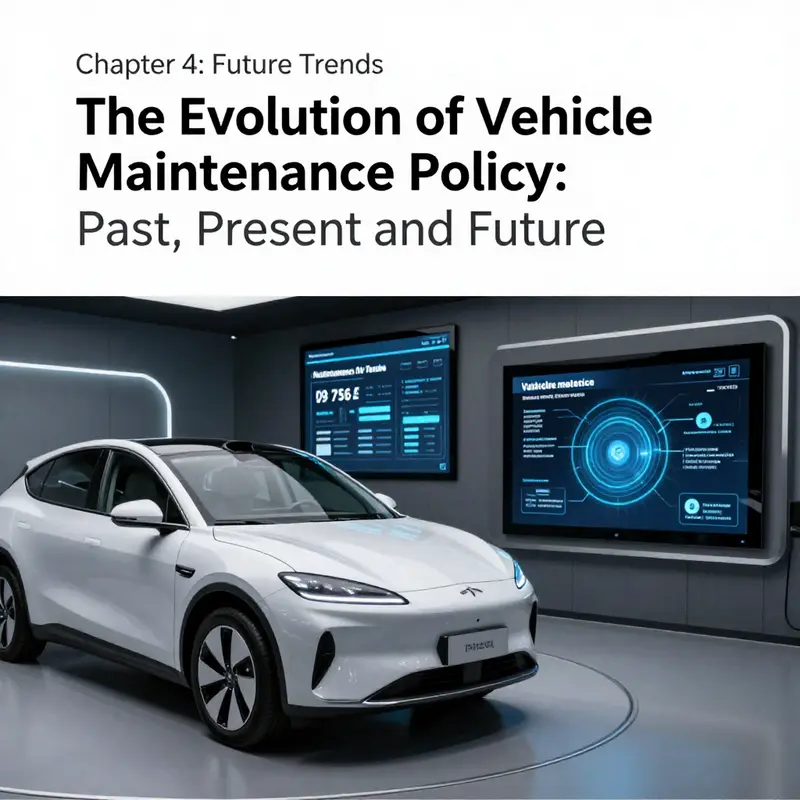
The trajectory of vehicle maintenance policy is moving from fixed schedules toward systems that respond in real time to vehicle condition, software state, and environmental goals. This chapter examines how that shift will take shape, the institutional and technical building blocks that must align, and the practical consequences for operators, owners, and regulators. It traces the policy implications of connected vehicles, electrification, and advanced diagnostics, while underscoring how sustainability and consumer protections will remain central as maintenance practices evolve.
At the core of future policies is a simple principle: maintenance should follow evidence, not habit. Where earlier regimes relied on mileage or time thresholds, modern vehicles generate continuous streams of data about component wear, battery health, brake condition, and software integrity. Policy must channel that data into trusted, standardized processes so that condition-based maintenance (CBM) and predictive maintenance become reliable and auditable. This requires clear norms for what to measure, how frequently to sample, and how to interpret signals across different platforms. It also demands protocols that guarantee data integrity and privacy while enabling authorized technicians to act on diagnostic output.
One immediate policy challenge is defining the legal status of remote diagnostics and software interventions. Over-the-air updates and telematics can identify and sometimes fix faults without any physical service visit. Regulations need to specify when remote actions are sufficient, when physical inspection is required, and who bears responsibility if a remote update creates unintended effects. Policy must address liability across a network of actors: vehicle manufacturers, software vendors, third-party service providers, and fleet operators. Clear rules will help avoid fragmented responsibilities and ensure owners retain agency over decisions that affect safety and warranty coverage.
Standards bodies and regulatory agencies will play a pivotal role. The movement toward internationally recognized technical standards like the GB/T family demonstrates how a science-based, tiered approach to maintenance creates a common language for inspections, non-invasive diagnostics, and repair levels. Future policy will build on such standards by embedding software health checks, secure update procedures, and standardized sensor diagnostics into maintenance specifications. Policymakers must push for interoperable diagnostic interfaces to prevent vendor lock-in and to preserve fair competition among service providers. Interoperability also ensures that independent repair shops can offer condition-driven maintenance without being locked out by proprietary systems.
Data governance will shape much of the policy response. Maintenance policies must define who owns diagnostic data, how long it is retained, and under what conditions it can be shared. Owners should be guaranteed access to their vehicle’s maintenance record in a readable, portable format. At the same time, anonymized datasets can prove invaluable for public safety research, trend analysis, and improving predictive models. Policy must therefore balance individual privacy with the public good, providing standardized mechanisms for consent, secure transfer, and liability protection for data recipients.
Sustainability is another driver reshaping maintenance policy. As vehicle electrification accelerates, batteries and associated electronics become central maintenance concerns. Policy frameworks will need to set standards for battery health monitoring, second-life reuse, and end-of-life recycling. Governments can support circular economy goals by requiring traceable battery histories, incentivizing remanufacturing, and setting certification requirements for refurbished components. These measures reduce lifecycle emissions and lower ownership costs, creating policy levers that align environmental targets with consumer benefits.
A corollary is the growing emphasis on materials stewardship. Maintenance rules will increasingly require environmentally sound practices for handling fluids, rare earth components, and electronic waste. Certification schemes for repair facilities can include environmental compliance as a core criterion, ensuring that technicians are trained not only in diagnostics but also in responsible disposal and reuse. Such standards will prevent hazardous materials from entering informal disposal channels and lock in practices that support broader climate and resource goals.
Technology itself will change how policy is written and enforced. Artificial intelligence and machine learning enable predictive maintenance models that forecast failures days or weeks in advance. Policies will need to set validation requirements for predictive algorithms, including transparency about model accuracy, bias testing, and procedures for human review. Regulators may require that critical safety predictions meet defined confidence thresholds before automated service recommendations are acted upon. This mix of algorithmic governance and human oversight will be essential where decisions affect road safety.
Regulatory flexibility will be essential. Rapid innovation means fixed, prescriptive rules can quickly become obsolete. Instead, policy frameworks should adopt performance-based standards: specify the outcomes required—such as maximum acceptable failure rates or minimum diagnostic coverage—while allowing industry the freedom to choose how to meet them. Regulatory sandboxes and phased rollouts can allow new diagnostic technologies to be tested under real-world conditions before full-scale adoption. These mechanisms encourage innovation while keeping safety nets in place.
Consumer protections must keep pace with technical change. As maintenance becomes more data-driven, consumers need transparent explanations of diagnostic findings, cost estimates tied to condition-based recommendations, and clear rights when disputes arise. Policies should require standardized maintenance reports that explain problems in plain language, show the data that led to a recommendation, and list authorized providers capable of addressing the issue. Such transparency reduces information asymmetry and prevents exploitative practices.
Workforce development is a practical policy area that cannot be ignored. The technician of tomorrow needs software literacy as much as mechanical skill. Training standards and certification programs must evolve accordingly, integrating secure diagnostic practices, OTA update protocols, and battery handling procedures. Public investment in retraining programs and partnerships with industry can smooth the transition for workers displaced by changing service models. Licensing requirements should reflect this new skill mix while avoiding barriers that unduly restrict competent providers from entering the market.
Economic incentives and procurement policies can accelerate desirable outcomes. Governments can tie vehicle procurement to maintainability criteria, favoring vehicles that expose standardized diagnostic interfaces and robust lifecycle documentation. Subsidies and tax incentives can encourage the adoption of remanufactured parts and certified rebuild programs. Insurance and warranty frameworks can also be retooled to reward condition-based maintenance, lowering premiums for owners who participate in verified predictive-maintenance programs that demonstrably reduce breakdown risk.
Finally, cross-sector coordination will determine how smoothly these changes are implemented. Transport authorities, environmental regulators, standards bodies, and consumer protection agencies must collaborate to create coherent policy packages. International cooperation will be especially important for harmonizing diagnostic standards and cross-border data flows. Without coordination, vehicle owners may face a patchwork of rules that complicate maintenance for globally sold models.
The emerging policy landscape promises tangible benefits: fewer roadside breakdowns, longer component lifespans, lower environmental impact, and ownership costs that reflect actual wear rather than conservative guesswork. But achieving this requires careful attention to liability, data governance, workforce readiness, and equitable access to diagnostic services. Policies must be designed to be adaptive, transparent, and inclusive, enabling the technical promise of predictive, software-aware maintenance to translate into safer roads and more sustainable mobility.
For vehicle owners and fleet managers, the move to condition-based maintenance will change everyday decisions. Owners will receive clearer, data-backed recommendations and have more control over where and how maintenance is carried out. For those wondering about the maintenance needs of electrified vehicles, resources that compare electric and conventional maintenance regimes can provide practical perspective and help owners plan for new routines and costs. See this useful guide on whether electric vehicles require less maintenance for further context: do-electric-vehicles-require-less-maintenance.
Policy development is not a one-time rewrite; it will be an iterative process that responds as technologies and market behaviors evolve. The fundamental direction is clear: maintenance rules will become more intelligent, personalized, and environmentally focused. Success will depend on inclusive standards, accountable data practices, and regulatory approaches that encourage innovation while protecting consumers and the environment.
External research continues to inform these shifts. Analysis of recent policy trends in major automotive markets highlights the need for standards that reconcile software-driven vehicle behavior with traditional safety and maintenance practices. For a deeper review of how national policy adjustments influence the automotive sector and maintenance expectations, see this analysis: https://www.sciencedirect.com/science/article/pii/S266638992400015X
Final thoughts
The progression of vehicle maintenance policies reflects a profound evolution driven by technological advancements and regulatory frameworks. Understanding this development not only helps business owners adapt to current practices but also prepares them for the future landscape of the automotive industry. With tools becoming increasingly sophisticated, and regulations evolving, staying informed on these changes ensures a competitive edge. A proactive approach in adopting new technologies and practices can yield significant benefits, enhancing road safety, vehicle longevity, and customer satisfaction. The journey of vehicle maintenance policy development is ongoing, and those who embrace these changes will lead the way in a rapidly changing market.