
Efficient vehicle maintenance is crucial for business owners managing fleets, whether small or large. Keeping track of services, repairs, and costs can significantly impact the longevity and performance of your vehicles. This guide will explore how to effectively track vehicle maintenance using spreadsheets, breaking down the process into five essential chapters. You will learn how to design a structured spreadsheet tailored to your needs, automate repetitive tasks with formulas, utilize existing templates for efficiency, enhance your tracking system with cloud and mobile access, and adopt best practices for accuracy and long-term use. By the end, you will possess a comprehensive understanding of leveraging spreadsheets for seamless vehicle maintenance, ensuring your fleet remains reliable and cost-effective.
Laying the Data Foundation: Designing a Scalable Spreadsheet Skeleton for Vehicle Maintenance
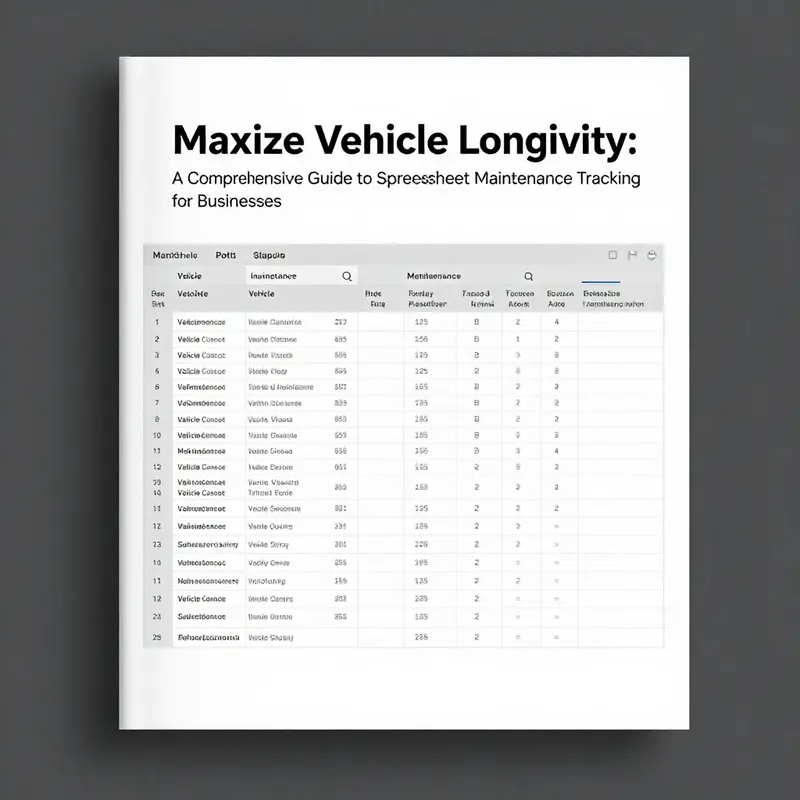
The heart of the structure lies in two coupled sheets. The first is the Vehicle Master List, a compact catalog of identifiers and essential attributes such as License Plate or VIN, Make and Model, Year, and a few additional touchpoints that matter for maintenance. A next service or next due field can be a simple helper that gives a quick visual cue of what is coming up and helps schedule preventive care before problems arise. The second sheet is the Maintenance Log, the operational heart that records each service event. The key columns here are Date of Service, Mileage at Service, Service Type, Parts Replaced, Labor Cost, Part Cost, and Total Cost. A robust log also includes Service Provider or Shop Name and a Notes field for impressions like engine sounds, unusual tire wear, or the discovery of a potential issue during inspection. This is where memory becomes meticulous and traceable. It is worth emphasizing consistency in data entry: use a restricted set of service types and parts names through dropdown menus, standardized part numbers or codes, and a consistent currency format. When you start adding fields, resist the urge to overfit the system with extraneous details; a lean, purposeful set of data points will serve you better than a sprawling ledger that drifts out of date. If the maintenance log grows, you can group service types into a hierarchy or maintain a reference table that standardizes terminology. The aim is to preserve consistency so that your summaries and dashboards remain meaningful. In practice, two sheets should be the home base for your data, with a calendar or dashboards as optional views that help you act with confidence. Finally, consider an optional third sheet for a Scheduled Maintenance Calendar, which translates periodic manufacturer recommendations into a visual timeline to aid planning for oil changes, tire rotations, and inspections.
Automating Vehicle Maintenance Tracking with Spreadsheet Formulas
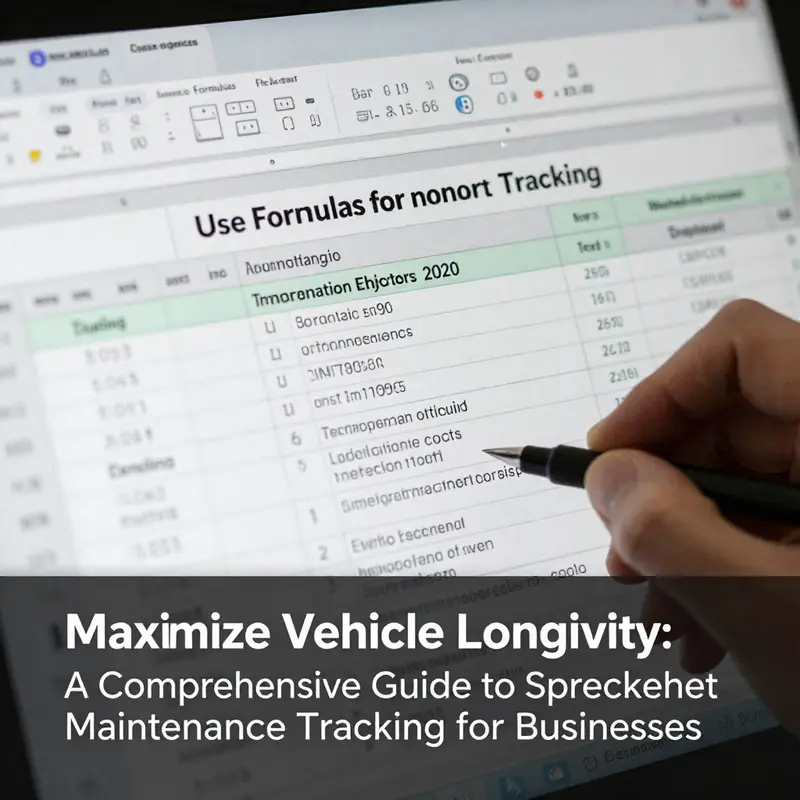
Tracking a vehicle’s health with a spreadsheet becomes more than a ledger when you weave formulas into the data. The goal is to provide signals to a dashboard that fits on a single screen. A thoughtful set of formulas can roll up service history, flag overdue repairs, and translate miles driven into predictable maintenance windows. The result is a living record that grows with each visit to the shop and with every mile traveled. Rather than scanning rows of numbers you see clear indicators of when a vehicle should be serviced, what it will likely cost, and how its upkeep compares to past years. This kind of automation is not a single trick but a coherent workflow that links data entry calculation and visualization into one seamless process. As you shape the spreadsheet you begin to notice patterns that were invisible in manual notes, such as recurring issues tied to a model year or rising tire costs as tread wears. The power lies in turning raw records into actionable intelligence, so you can act before a problem becomes costly or risky. The most effective path toward this clarity is to start with the core maintenance data and then layer in formulas that turn input into timely reminders, precise cost tracking, and forward looking forecasts. A simple, well structured table can be the backbone of a smarter ownership experience, one where you never miss a service because the spreadsheet has already flagged the due date and estimated its impact on your budget. For readers exploring the fundamentals of vehicle upkeep, a concise overview is available at a linked resource that explains what maintenance encompasses and why it matters. See the article What is Vehicle Maintenance for a broader grounding before you dive into the numbers.
null
null
Cloud-Driven Maintenance Tracking: Turning a Spreadsheet into a Real-Time Vehicle Health Network
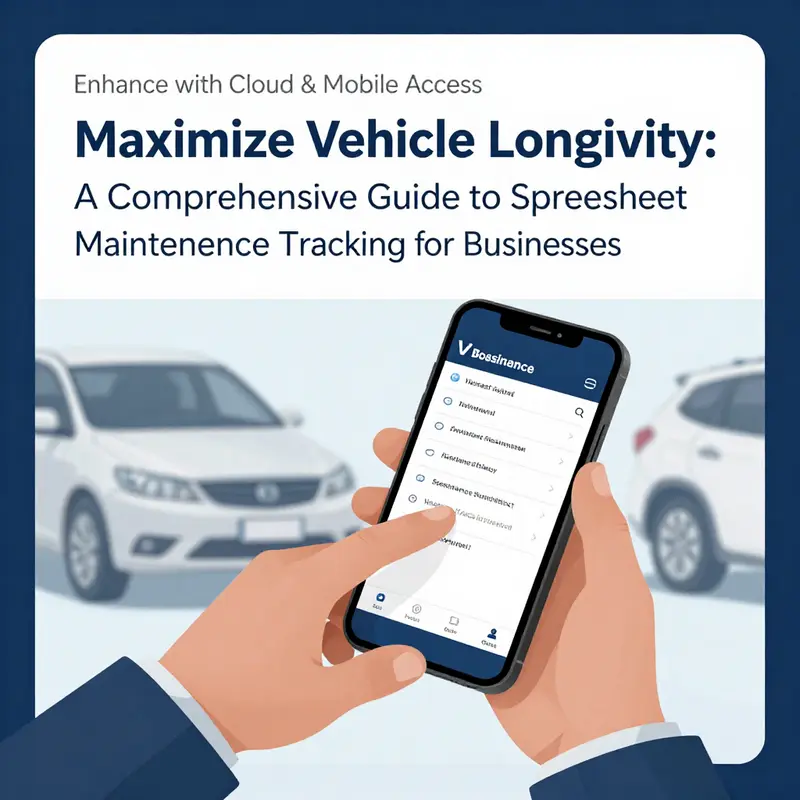
The quiet power of a well-kept spreadsheet lies in its simplicity. Yet when that spreadsheet lives in the cloud and speaks to the road, it becomes something far more capable: a real-time maintenance network for your vehicle. This chapter looks at how cloud and mobile access can elevate a straightforward log into an active system that gathers data, alerts you to risk, and keeps a complete maintenance history accessible from anywhere. The journey begins with a concept you may already know, but it expands into a framework that blends data, devices, and on-the-road reality into one cohesive picture. Central to this expansion is the vehicular cloud model, a triad where a Vehicular Cloud (VC) talks to roadside infrastructure (RC) and to a Central Cloud Server (CCS). In practice, this translates to continuous connectivity between your car, the places you visit, and a secure data center that hosts your records. Real-time data streams, alerting, and historical records become a seamless part of how you care for your vehicle. Real-time alerts about potential issues can arrive while you’re driving or en route to a service appointment, allowing you to act before a minor fault becomes a major outage. This is the backbone of proactive maintenance: the ability to see the signal before the engine light truly means trouble. When you pair a cloud-backed spreadsheet with mobile access, you unlock a practical rhythm of care. You can log a service while you’re in the shop, verify the next due date while you’re fueling up, and review the last tire rotation while you’re in a parking lot. The mobile habit is not a flashy feature; it’s the reliability that makes maintenance consistent. The cloud layer also changes how data is organized and protected. Instead of disparate files stored on a laptop or scattered across devices, your vehicle’s vital information—VIN, Make/Model, year, and a complete maintenance log—travels to a centralized location that each authorized user can access on a phone or tablet. This approach reduces the risk of losing receipts, missing service windows, or forgetting to log a repair. It also makes it easier to share records with a mechanic, a dealership, or an insurer without sending large attachments or emailing scanned copies. The practical implication is straightforward: the better you can see the full maintenance history, the smarter your decisions about service intervals become. A cloud-enabled spreadsheet becomes the single source of truth, while your device becomes the window to that truth wherever you go. In the flow of daily use, the architecture works like this: your spreadsheet keeps the core data in a clean, tabular form. A connected system—whether it’s an app, a form, or a simple data entry interface—pushes data into the sheet as you log a service, replace a part, or record a repair. The CCS stores the master record and provides access control, security, and backup, while the VC and RC layers facilitate timely data exchange from the vehicle itself and the surrounding infrastructure. This setup makes remote diagnostics not a fantasy but a workflow. Modern On-Board Diagnostics (OBD) devices already capture engine performance, fuel usage, mileage, and fault codes. When these devices feed the cloud, you gain a flexible data pipeline: the engine’s “temperature, pressure, and fault state” signals become entries in your maintenance log, with timestamps and mileages attached. It is crucial to design the spreadsheet with fields that align to this stream of information: a Vehicle ID, service date, mileage, service type, parts replaced, labor and parts costs, total cost, service provider, and notes. This structure supports both manual input and automated data arrival, so you’re not forced into one rigid method. You can keep a clean, human-readable log while the system handles the heavy lifting behind the scenes. The next step is to translate signals into actionable reminders. Manufacturer recommendations often specify intervals by either mileage or time. In a cloud-enabled setup, the spreadsheet can calculate the next service date or mileage by applying business rules to the most recent entry. For instance, if an oil change is typically every 5,000 miles, the sheet can compute the next date or mileage by taking the current entry’s values and projecting forward. With mobile access, you can view these predictions at the pump, in a parking lot, or en route to a service appointment, ensuring you do not miss critical maintenance windows. The single source of truth becomes even more powerful when coupled with dashboards and lightweight analytics. A cloud-backed spreadsheet can still present a clean table, but it can also offer visual summaries: monthly maintenance costs, distribution of service types, and mileage trends over time. A simple chart, refreshed automatically as new data arrives, can reveal patterns you might otherwise miss. This is not about replacing professional judgment but about giving you a clearer picture of when and why you should act. In practice, this means integrating cost tracking with the maintenance log and ensuring that receipts are digitized and attached to the relevant row. A cloud-based approach makes this feasible from anywhere: you can scan and upload a digital copy of a receipt, attach it as a link or embed it in the row, and have it accessible when you review a service history later. The result is a robust, portable archive that remains current as new information comes in. From a cost-management perspective, the cloud layer helps you reason about efficiency. By correlating repairs with usage and time, you can identify particularly expensive intervals or recurring issues. You might notice, for example, that certain parts or services cluster around a specific mileage range, which could prompt preemptive maintenance or a search for more resilient components. This is where the notion of a digital twin—an accurate, living model of your vehicle’s health—begins to take shape, not as a distant ideal, but as a practical reference you carry in your pocket. The future of maintenance lies in predictive insights generated from real-use data: engine load, fuel efficiency, and vibration profiles gathered via OBD devices and processed at the edge, with results synchronized to the cloud. When you pair this capability with a spreadsheet, you have a versatile, auditable log that not only records what happened but also anticipates what will happen. In a fleet setting, the value multiplies. A fleet manager can monitor dozens or hundreds of vehicles from a single dashboard, receive alerts about abnormal fuel consumption or unusual engine codes, and assign service work with a few taps. The cloud-enabled spreadsheet becomes a lightweight enterprise tool that remains accessible to technicians, drivers, and managers alike, without requiring a separate, complex maintenance system. This approach aligns with a broader trend in manufacturing and transportation: digital transformation enabled by faster, more capable networks. The 5G-enabled private networks and edge computing environments described in industry discussions make real-time processing and AI-driven insights feasible at scale. The idea is not to replace human expertise but to amplify it: sensors and analytics flag likely issues, the cloud stores a complete, immutable service history, and mobile access brings the data to the hands of those who need it most. For readers seeking deeper context on how cloud platforms and mobile access are reshaping maintenance practices, a robust external resource offers a broader view of this transformation in the industrial sector: https://www.automation.com/articles/2025/12/automotive-manufacturing-digital-transformation-and-5g. If you want a concrete stepping-stone for readers who are ready to take action, you can also point to a practical, ready-to-use example of cost-aware maintenance habits that translate into tangible savings: how vehicle maintenance saves on gas expenses. By connecting daily maintenance activities to a cloud-backed record, you create a feedback loop: better data leads to better decisions, which leads to lower costs and higher reliability. The beauty of this approach is its adaptability. It starts as a simple spreadsheet, grows into a cloud-connected system, and, with mobile access, becomes an always-on companion for your vehicle. You can begin with the core fields—vehicle information and a maintenance log—and progressively layer in automation: automatic uploads of service receipts, alerts for overdue services, and links to digital documents. If your goal is to reduce downtime and extend the life of your car, cloud-enabled tracking offers a practical path that complements the discipline of logging and reviewing maintenance. It is not about replacing the care you would provide in a shop, but about ensuring that every action is timely, documented, and aligned with your vehicle’s actual usage. When you look at the bigger picture, cloud and mobile access widen your confidence in the records you keep and the decisions you make. The spreadsheet remains the backbone, but the cloud connects it to real-world signals, turning routine maintenance into a strategic, data-driven practice. This is how a simple tool evolves into a dependable system that supports smarter ownership, reduces risk, and helps you plan ahead with less guesswork.
Precision and Longevity: Best Practices for Accurate Vehicle Maintenance Tracking with Spreadsheets
A well-constructed spreadsheet can become more than a ledger of services; it can act as a steward for a vehicle’s health, much like a reliable GPS log that keeps a fleet on course. The best practices that ensure accuracy and long-term usefulness in a maintenance-tracking system echo the discipline many teams apply to GPS-based monitoring: precise inputs, consistent updates, and a robust, centralized framework. When you run a single car or a small fleet through a thoughtfully designed sheet, you create a trustworthy record that supports timely maintenance, protects resale value, and reduces the friction of insurance or warranty claims. The key is to design with longevity in mind from the start, so the file remains clean, scalable, and usable as your vehicle history grows deeper and more complex. In practice, this means translating the strong guardrails of reliable hardware and cloud platforms into the human and digital rituals that govern data entry, storage, and retrieval in a spreadsheet.
The first principle is a clean, sensible design that mirrors the logical arrangement of a vehicle’s life story. Begin with a compact but comprehensive vehicle information block that captures identifiers such as a vehicle ID, make and model, year, VIN, purchase date, and insurance expiry. This is your anchor, a stable reference point you can return to when you’re wading through a long history of service entries. Adjacent to that, you should build a maintenance log that records every service event with consistent fields: date of service, mileage, service type, parts replaced, labor cost, part cost, and a total. A single notes field can capture tangible observations like “engine knocking detected” or “front pads near replacement.” A reminder column for the next scheduled service, derived from a manufacturer’s interval, helps you avoid drift in timing, which is the enemy of accuracy. When you design the sheet, keep the data types uniform across rows. Use drop-down lists for Service Type and Parts Replaced, which minimizes typographical errors and standardizes terminology. This standardization is the spreadsheet equivalent of using a known, reliable sensor in a GPS system; it reduces guesswork and makes subsequent analysis possible without reinterpreting entries.
Once the structure is in place, automation proves its worth. The chapter of automation opens with practical formulas that turn manual record-keeping into proactive management. A Next Service Date column can be populated with a straightforward calculation that adds six months or a defined mileage interval to the service date, depending on what your vehicle’s maintenance schedule prescribes. Even if your program uses different intervals for different maintenance types, you can tailor the formula to reflect those nuances, ensuring that the system remains accurate as you accumulate more data. A running Total Cost field, calculated by aggregating all labor and parts costs, reveals the true financial footprint of maintenance over time. More important, an Oil Change or Brake Repair category can be summarized with a single function to expose where costs cluster, allowing you to plan more effectively and recognize when a particular repair category begins to dominate your expenditure. For the curious, a flag or conditional formatting cue can highlight upcoming due dates within a 30-day horizon, keeping you from overlooking a critical service. This isn’t about complexity for its own sake; it’s about turning the raw material of dates, numbers, and service names into a narrative you can read at a glance.
Templates act as trusted scaffolding for this work. Ready-made vehicles’ maintenance trackers in template libraries provide a tested starting point with sensible defaults, pre-configured formulas, and dashboards that render costs and service frequencies in digestible visuals. If you work with a template, treat it as a proven baseline you customize, not a rigid script you follow to the letter. The goal is to keep the structure stable while allowing your data to grow in a controlled way. The moment you stray from a consistent structure, you invite drift, which undermines long-term reliability. Alongside templates, consider a centralized data-entry routine that aligns with your daily workflow. The simpler the entry process, the more consistent your data remains across months and years. An entry habit built on quick, immediate logging after a service is performed is far more effective than retrospective recalls that rely on memory.
Cloud and mobile access further strengthen long-term reliability. Storing the spreadsheet in a cloud location means you safeguard against device failures and soft deletes, and it enables you to track changes as multiple people collaborate. Real-time updates from a mechanic, a family member, or a fleet supervisor are then possible, while version history preserves a trail of edits so you can see when a record was added or corrected. Collaboration is a two-edged sword; it increases data richness but also potential inconsistency. Establish a simple governance rule: one person is responsible for core data entry, while others may append notes or attach digital receipts. By balancing collaboration with disciplined entry, you retain accuracy even as the sheet becomes a living document.
Inactivate or archive old data with care. A long-running maintenance log can accumulate hundreds of rows over time. Periodic archiving—moving older entries to an archive tab or a separate workbook—preserves performance and keeps the active data lean enough to load quickly on any device. Archiving does not erase history; it simply shifts it to a repository you can reference when needed. This practice echoes the importance of data retention in professional maintenance programs, where historical data informs predictive planning and risk assessment. Alongside archiving, digitizing receipts and linking them to the corresponding service line item creates a durable, auditable trail. If a receipt exists as a PDF, attach it to the row in your spreadsheet, using a consistent naming convention for easier retrieval later. These digital copies function as the equivalent of a robust fuel and sensor log in a modern fleet system, giving you confidence that the numbers you see reflect actual work performed.
Accuracy is never a one-time achievement; it requires ongoing diligence. Treat data entry as a habit and a discipline rather than a chore. Record details immediately after a service to avoid memory decay. Use uniform nomenclature for service types and parts to prevent duplication of categories that look similar but are not identical. Keep units consistent—dollars for costs, miles for mileage, and dates in a uniform format. Schedule a monthly review in which you audit upcoming services, total expenditures, and the consistency of the data entries. The review should not merely confirm that invoices exist; it should verify that the maintenance log aligns with receipts, the next service date is correctly computed, and the mileage triggers for maintenance remain faithful to the manufacturer’s guidelines. This is the spreadsheet’s equivalent of a quarterly system check in a physical maintenance program, a practice that preserves precision across time.
The GPS-tracker mindset offers a helpful lens for thinking about reliability. Qualified installation translates to trusted data sources: ensure everyone contributing to the sheet knows how to record a service consistently. Optimal positioning mirrors good data architecture—the log sits where it is easy to locate, with a clearly defined Next Service Date field that prevents misinterpretation. Regular updates resemble firmware checks; they keep the spreadsheet current with the latest maintenance realities. A cloud platform parallels a centralized data hub; it consolidates inputs and protects them from single-device failure. Testing the backup battery mirrors periodic data integrity checks—regular audits reveal if the data relationships still reflect reality, such as whether the next service date aligns with observed wear or miles driven. By applying these guardrails, you create a maintenance record that endures beyond the life of a single device, spreadsheet program, or preferred template.
Finally, the chapter’s practical takeaway is simple but powerful: convert the discipline of maintenance planning into the discipline of data stewardship. A well-run spreadsheet does not just log what was done; it anticipates what will be needed, supports transparent decision-making, and remains trustworthy as the vehicle ages. If you want a concise primer on the broader purpose of maintenance and why data matters, consider examining content that explains what vehicle maintenance is and how it supports overall vehicle health. For readers who want to explore this concept further, a linked resource such as What is Vehicle Maintenance can provide foundational context.
For those seeking an external blueprint that translates maintenance tracking into actionable practice, the principles outlined by seasoned fleet managers emphasize real-time data, historical logging, and automated alerts as core capabilities. They underscore the value of predictive maintenance and the reduction of downtime through timely interventions. As you implement your spreadsheet-based system, these external guardrails remind you that accuracy and longevity come from a blend of thoughtful design, disciplined data-entry habits, and a collaborative but controlled workflow. By embracing these practices, you turn a simple ledger into a proactive, enduring companion for vehicle care. For more detailed information, you can visit Fleet Advisor’s Vehicle Maintenance Tracking Best Practices, which offers a broader perspective on how organizations approach tracking across fleets of various sizes: https://www.fleetadvisor.com/guides/vehicle-maintenance-tracking-best-practices/.
Final thoughts
Mastering vehicle maintenance tracking through spreadsheets enables business owners to minimize costs, enhance the reliability of their fleet, and maintain thorough service documentation for resale or insurance needs. By implementing a well-structured design, leveraging formulas for automation, utilizing efficient templates, enhancing accessibility with cloud services, and following best practices for accuracy, your business will gain a significant edge in vehicle management. This proactive approach not only extends the life of your assets but also supports better budgeting and operational efficiency.