
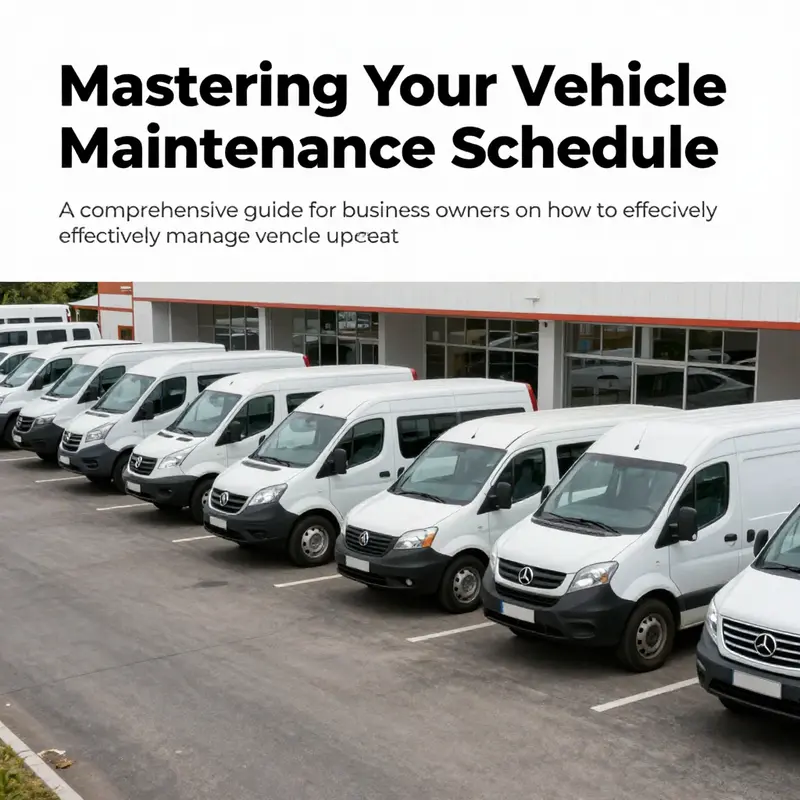
Understanding your vehicle’s maintenance schedule is crucial for business owners who rely on fleets to keep operations smooth. Regular upkeep not only ensures safety but also prolongs the lifespan of your vehicle, optimizing your investment. This guide explores the best ways to find your vehicle maintenance schedule, focusing on five key resources: consulting the owner’s manual, accessing manufacturer websites and apps, communicating directly with customer service, leveraging authorized dealerships, and exploring additional resources. Each chapter will provide business owners with actionable insights tailored to their unique needs.
Reading the Owner’s Manual: The Definitive Guide to Your Vehicle’s Service Rhythm
Reading the Owner’s Manual: The Definitive Guide to Your Vehicle’s Service Rhythm
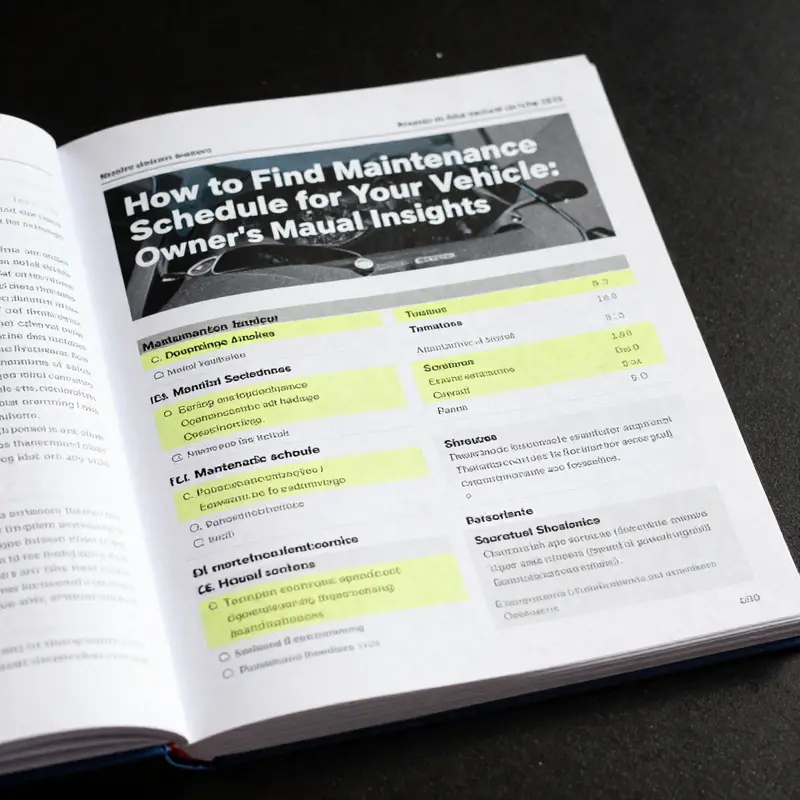
The owner’s manual is the single most reliable place to start when you want the maintenance schedule for your vehicle. It was created by the people who engineered the car and tested it under many conditions. As a result, the manual contains service intervals calibrated to the vehicle’s components, systems, and design limits. That schedule is not a vague recommendation; it maps mileage and calendar time to specific services. When you follow it, you align routine care with what the vehicle actually needs.
A typical owner’s manual presents the schedule in a timeline or table. Each entry links a mileage mark or a period of time to tasks like oil and filter changes, tire rotations, brake inspections, fluid checks and replacements, air filter changes, and more specialized services such as transmission service or timing belt replacement. The manual will also specify different intervals for normal versus severe use. Severe use covers conditions such as frequent short trips, extensive idling, towing, dusty environments, or extreme temperatures. If your driving matches any of those patterns, the manual often recommends shorter intervals or additional inspections.
Beyond listing intervals, the manual explains what each service includes. It clarifies which fluids to use, what grade of oil is recommended, and which systems require professional tools or trained technicians. That information prevents guesswork. For example, the manual may instruct you when to refresh brake fluid, what type of coolant is required, or when to replace the cabin air filter. Those details protect critical systems and help avoid costly mistakes, such as using the wrong fluid type or skipping a procedure that preserves warranty coverage.
If the physical manual is missing, do not assume the schedule is lost. Most manufacturers publish digital copies of owner’s manuals on their official websites. Searching for your vehicle’s year, make, and model plus the phrase “owner’s manual” will usually yield a downloadable PDF. The digital manual contains the same schedule and specifications as the printed version, and it can be saved to your phone or printed. Saving a copy ensures you always have access to manufacturer guidance when planning maintenance.
Modern vehicles often include electronic reminders that complement the printed schedule. These onboard systems track factors beyond raw mileage, such as engine runtime, driving style, and sensor readings. Many use algorithms that estimate oil life or tire service needs based on actual use. Where the printed schedule gives a baseline, the vehicle’s reminder system fine-tunes intervals to real-world conditions. Treat dashboard alerts as authoritative prompts to check the manual and arrange service. They are designed to catch issues between scheduled entries and can be especially useful for drivers who vary their use frequently.
When you consult the manual, pay attention to notes about inspections versus replacements. Some items require only visual checks or system tests at certain intervals. Others mandate part replacement after a set number of miles or years. Knowing which is which helps you budget for maintenance and schedule appropriate appointments. It also clarifies what you can do yourself versus what a technician should perform. Routine tasks like topping up washer fluid or replacing a windshield wiper blade differ from procedures such as bleeding a hydraulic braking system or servicing an automatic transmission.
Maintenance history matters as much as the schedule itself. If you bought a used vehicle, check for a record of past services. A vehicle maintained strictly to the owner’s manual will likely age more predictably. If service records are missing, the manual still tells you what the next steps should be based on current mileage and age. You can also ask a service center to perform a thorough inspection to identify any deferred maintenance and set a prioritized plan aligned with the manual’s recommendations.
For owners who prefer a digital reference, several free online tools can generate maintenance recommendations from a vehicle identification number (VIN). These tools cross-reference manufacturer data with common maintenance practices to provide a customized checklist. Use such a service to cross-check the manual’s schedule or to get a quick list of upcoming tasks. They do not replace the manual, but they can highlight items you might otherwise overlook.
Understanding the difference between manufacturer-recommended intervals and less frequent “lifetime” checks is important. Some components or services are labeled “inspect at X miles” rather than “replace at X miles.” An inspection may show the part is still serviceable, or it may identify wear that requires action sooner than the printed schedule. The manual helps you interpret these prompts and decide whether immediate service is necessary.
A careful reading of the manual also reveals warranty-related requirements. Certain warranties demand proof of scheduled maintenance. The manual lists the intervals and procedures that count toward warranty compliance. Keeping records that show you followed the manufacturer’s schedule preserves coverage and strengthens claims if a covered failure occurs.
For owners who manage multiple vehicles or who share maintenance responsibilities, creating a consolidated maintenance log based on the owner’s manual simplifies planning. Record the date, mileage, and services performed after every appointment. Note differences when the vehicle is used under severe conditions. That log becomes a quick reference and a valuable resale asset. Prospective buyers and service technicians appreciate a clear record showing the vehicle received service when prescribed.
If you encounter confusing language or are unsure how a recommended task applies to your driving, reach out to customer service for clarification. Provide your VIN and a brief description of your driving patterns. A manufacturer representative can confirm whether you should follow the normal or severe schedule and explain any model-specific caveats. If that route is not available, an authorized service department can interpret the manual and advise on an immediate maintenance plan.
Finally, combine the manual’s guidance with on-vehicle reminders and a documented service history to build a practical maintenance routine. Use the manual as the backbone of that routine. Let the vehicle’s sensors and your own observations adapt the schedule as needed. When you do, maintenance becomes predictable rather than reactive, and your vehicle is more likely to remain reliable and efficient over time.
For a quick online check that ties your vehicle’s VIN to a practical service checklist, consider using a trusted maintenance tool to generate a tailored list based on the manufacturer’s guidance.
External resource: https://www.carmd.com/vehicle-maintenance-checkup
Internal link: For a broader look at what vehicle maintenance covers, see this explanation of vehicle maintenance basics: https://vehicletricks.com/blog/what-is-vehicle-maintenance/
Tapping Manufacturer Websites and Apps to Unlock Your Vehicle’s Official Maintenance Plan
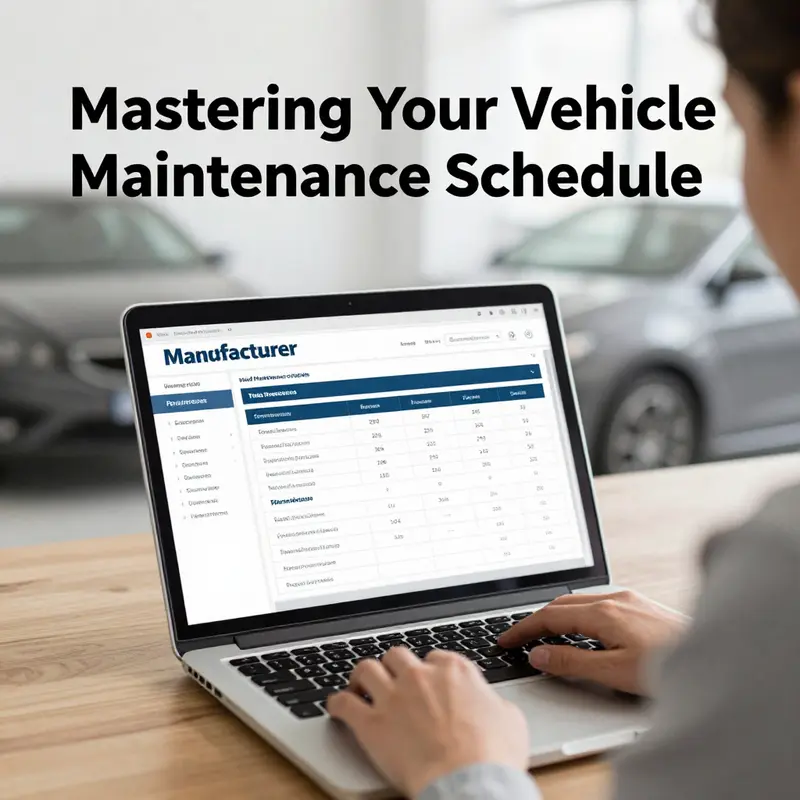
Using the manufacturer’s online tools is the most direct way to get a maintenance schedule tailored to your vehicle. Start with the vehicle identification number (VIN). It is a 17-character code found on the windshield lower left, your registration, or the vehicle’s door jamb. Entering the VIN into an official owner portal or mobile app returns the exact service intervals the factory recommends for your model, year, and powertrain.
On the manufacturer platform you will typically find a digital version of the owner’s manual and a dedicated maintenance timeline. That timeline lists tasks by mileage and time — for example, basic inspections at 5,000 miles, fluid changes at 30,000 miles, and major service checks at longer intervals. These entries go beyond generic advice; they reflect engineering decisions tied to parts, warranty conditions, and emissions rules. Because of that specificity, following the manufacturer schedule is the best way to preserve warranty coverage and to ensure components receive the checks the maker intended.
Creating an account and registering your vehicle is usually straightforward. Use your email and set a strong password. When the site or app asks for the VIN, input it exactly. Once linked, the system can show a personalized schedule, list upcoming services based on current odometer readings, and sometimes provide a recorded service history if previous work was performed at authorized facilities. If you do not have immediate access to the odometer reading, the platforms generally accept current mileage entered manually and will adjust reminders accordingly.
Mobile applications mirror and often expand on the website experience. After linking your vehicle, the app can push notifications for maintenance that is due soon. These reminders are handy because they combine time- and mileage-based triggers. Some apps will also analyze driving patterns — frequent short trips, heavy towing, or lots of stop-and-go traffic can change recommended intervals for certain services. If the app offers condition-based alerts, it may flag recommended inspections earlier than a generic schedule would. The value of this functionality is that it translates factory guidance into actionable to-dos that fit your driving life.
When the manufacturer site lists maintenance items, it usually clarifies what each item entails. For instance, it will specify whether an oil change includes a particular oil grade or filter type, whether a brake inspection requires pad thickness measurements, or which fluids need replacement versus a top-off. Pay attention to those details. Not all shops perform every recommended check by default. If the platform names specific parts or service codes, note them when booking appointments to ensure the work matches the factory instructions.
Manufacturer portals often include online scheduling tools that let you book service appointments at authorized dealers. Use these tools to attach service notes, choose a preferred date, and even request loaner vehicles if offered. When you schedule through official channels, service advisors have direct access to the vehicle’s recommended tasks, and they can confirm whether your car is due for a software update, recall service, or a warranty-covered inspection. That direct connection reduces guesswork and helps you avoid paying for unneeded items.
If you lack a physical owner’s manual, the manufacturer site or app will typically host a downloadable copy. The digital manual contains not just the maintenance schedule but also maintenance-related cautions and instructions. Keep a copy in your email or phone for quick reference during service visits or when checking fluid levels yourself. The manual also explains maintenance that depends on driving conditions — for example, items labeled as required under “severe” or “special” conditions may require more frequent attention if you drive in extreme heat, dusty environments, or in heavy towing scenarios.
Privacy and data considerations matter. When you register a vehicle, the platform may collect mileage, driving behavior, and service history. Review the privacy settings and opt out of any data-sharing that isn’t necessary. Also, keep login credentials secure and enable two-factor authentication where available. If you sell the vehicle, remember to unlink it from your account to prevent future owner notifications from arriving in your profile.
Not every situation is resolved by the website or app. If the portal cannot locate your vehicle using the VIN, check the number for transcription errors, and try alternative VIN locations such as the engine bay or vehicle paperwork. If problems persist, contact the manufacturer’s customer service and provide the VIN and proof of ownership. Representatives can locate the correct maintenance program and advise on warranty specifics. For owners who prefer human assistance, authorized dealerships can retrieve the same manufacturer data directly from their service systems; they can print schedules or add service reminders to your account.
Use these online tools to build a maintenance routine that fits your calendar. Combine the factory schedule with reminders in your personal calendar or the app’s scheduling function. Keep a simple log of services done: date, mileage, items performed, and the shop name. A clear record helps when it comes time to sell the car and substantiates that the vehicle received factory-recommended care.
There are a few common pitfalls to avoid. First, do not rely on third-party generic schedules found on forums or non-official sites. Those may be useful starting points but can omit model-specific tasks. Second, avoid assuming older vehicles require no schedule — many older models still have detailed manufacturer intervals that matter for longevity. Third, when using the app, confirm that reminders are set to the correct regional settings; maintenance intervals sometimes differ by market due to regulation differences.
Finally, understand how maintenance records and digital schedules interact with service centers. A service performed at an authorized dealership will often be logged into the manufacturer’s database, creating a verified history. If you use an independent shop, ask them to provide receipts and, where possible, request that the shop uploads the work to the vehicle’s online record or provides clear service codes and part numbers. That documentation strengthens resale value and keeps your maintenance log aligned with the factory timeline.
If you want to learn how a manufacturer walks owners through booking routine service in an app, see an official customer support guide on scheduling service appointments: https://www.tesla.com/support/service-appointment
For a simple primer on what routine vehicle maintenance covers, consult this internal guide to what vehicle maintenance is and why it matters: https://vehicletricks.com/blog/what-is-vehicle-maintenance/
Direct Lines to the Schedule: Harnessing Manufacturer Customer Service to Lock in Your Vehicle’s Maintenance Timeline

When you set out to keep a vehicle performing at its best, the maintenance schedule is your compass. It tells you not just when to change oil or rotate tires, but when to inspect brakes, test fluids, and verify protective systems. Many drivers start with the owner’s manual, which is the official playbook from the manufacturer. It lays out intervals tied to mileage and time since purchase, and it describes the exact services that the factory expects you to perform. Yet there are moments when you want a personalized path—one that reflects your model, year, engine type, and real-world driving conditions. In those moments, direct communication with the manufacturer’s customer service can be a reliable, efficient route to the most accurate and up-to-date maintenance schedule. This approach keeps you aligned with factory recommendations while benefiting from centralized records and tailored reminders that speak to your car’s unique story. As you engage this channel, you’ll discover a process that is less about guessing and more about confirming the precise cadence your vehicle requires for safety, reliability, and long-term value.
To begin, treat customer service not as a last resort but as a primary touchpoint that complements the owner’s manual. You can reach out through several channels—phone, email, or online chat—depending on your brand and locale. The goal is clear: obtain a personalized maintenance plan that accounts for your exact vehicle, its usage, and any updates the manufacturer has issued since you bought it. When you make that first contact, approach it with a calm, precise description of your needs. It’s not a sales call; it’s a data request, and the more precise your data, the better the guidance you’ll receive.
What you’ll need to provide is more than just a model name. Have your VIN handy, along with the license plate number if requested, and the approximate model year. The VIN is the single most important identifier because it unlocks the precise configuration of your vehicle—the engine type, transmission, emission equipment, and any regional variations that affect maintenance. Some brands can also look up your service history by using the VIN, which means you’ll get a maintenance plan that reflects what has already been done and what remains due. If you’ve moved recently or if your records are scattered across a shop network, tell the agent that you want a consolidated schedule that incorporates available past service data. A careful reproduction of your driving conditions—city commuting, highway travel, heavy payload, or frequent short trips—can also help tailor the cadence, especially for wear-prone components.
With this foundation, the conversation naturally shifts to the scope of guidance you’ll receive. While there is a broad baseline common to many brands—oil changes every five thousand to seven thousand miles, more often with conventional oil and varied with synthetic oils—manufacturers recognize that there are many variables. Engine design, turbocharging, and even the presence of start-stop systems can shift maintenance needs. Some engines tolerate longer intervals when synthetic oil is used, while others may require more frequent inspections. The customer service representative will translate these factors into a schedule that is specific to your model. They can also spell out the checks that should accompany each interval, such as the frequency of brake inspections, tire rotations, and fluid replacements. In practice, this means you won’t just get a generic list; you’ll receive a checklist aligned with your exact configuration and usage profile.
Beyond the routine intervals, the guidance you receive can cover broader maintenance categories that contribute to sustained performance. For example, the representative can outline when to inspect braking systems, test and rotate tires, and refresh fluids such as coolant, brake fluid, and transmission fluid. They can also indicate when air and cabin filters should be changed, and how often to inspect belts and hoses that can degrade with heat and age. In many cases, the conversation opens the door to additional services that help you stay on track. You may be offered email or text reminders before an upcoming service, which can be a helpful guardrail for busy schedules. Some brands enable you to schedule appointments directly from the same channel, while others provide links to authorized dealerships or service centers that can perform the work and maintain a seamless record of your vehicle’s service history. The goal is not just to tell you what to do but to streamline the process so you can act quickly when a service is due.
The value of this route extends into the realm of record-keeping and warranty protection. Following the manufacturer’s guidelines helps preserve your vehicle’s performance and safety, and it protects warranty validity by ensuring that required services are completed on schedule. In recent updates, many brands have integrated customer service platforms with digital service histories. This integration means you can access a real-time view of past services and upcoming milestones, even if you move between owners or service locations. When a schedule is anchored in a company’s official records, you gain a reliable frame of reference for maintenance decisions, which is particularly valuable if you plan to sell the vehicle or keep it for many years.
If you prefer the immediacy of online tools, the path through customer service often aligns with the brand’s digital ecosystem. Many manufacturers offer owner portals or mobile apps that echo the same information you receive from a live agent. By logging in with your account and entering your VIN, you can access a personalized maintenance schedule and, in some cases, receive automated reminders as due dates approach. This digital extension of the schedule tends to be especially helpful for busy families, fleet managers, or anyone juggling multiple vehicles. It also offers a pathway to review or download maintenance checklists and links to official service manuals, ensuring you have a ready reference at your fingertips during a trip to the shop. If you do use an online portal, consider pairing it with the human guidance you receive from customer service. The combination is powerful: the agent confirms the precise intervals, and the portal keeps you on track with timely notifications.
Throughout this process, it remains valuable to consult a concise overview of maintenance concepts if you’re new to car care. A straightforward resource exists at what is vehicle maintenance, which can anchor your understanding of why certain intervals matter and how they interact with your vehicle’s systems. This foundational knowledge makes the subsequent conversation with customer service more productive because you’ll be better equipped to ask informed questions and interpret the recommendations you receive. Linking these ideas to the concrete, model-specific schedule you obtain from the manufacturer ensures you stay aligned with the factory intent while adapting it to your personal driving realities.
Another dimension worth noting is the potential for direct, brand-specific support portals to connect you with the right people. If you’re seeking faster resolution, you can use the brand’s official website to access live support, where the chat or callback options are designed to handle maintenance inquiries. For example, some brands provide an integrated path from the general support page to the maintenance information you need, with clear prompts to begin a service plan or to log a service history. When you combine this with the VIN-based lookup, you create a very precise, individualized maintenance roadmap that supports ongoing reliability and safety.
In practice, a well-handled interaction with customer service might unfold like this: you call or chat, present your VIN and model year, describe your typical driving conditions, and request the official maintenance schedule tailored to your vehicle. The agent confirms the core intervals and then adds any model-specific checks that would be prudent given your configuration. They may offer to email or text a copy of the plan and can guide you to authorized dealers where you can schedule appointments, or they can provide links to download a maintenance checklist and the official service manual. If you want to explore more about the general maintenance landscape, you can reference the online resource that explains what maintenance encompasses, and then return to the brand’s personalized plan for your car. The synergy between broad knowledge and model-specific precision is what makes this route so dependable.
Linking to consistent, user-friendly access points also supports continuity if you ever need to verify a past service or understand why a certain maintenance item is due earlier or later than you expected. Confidence grows when you know your maintenance timeline is rooted in the manufacturer’s official guidance rather than a remote estimate. And when digital records are in play, you gain a transparent trail of what has been performed and what remains due, which is invaluable for warranty considerations and resale value alike.
For readers who want to explore beyond the direct conversation, the route to online support—whether through live chat, email, or a dedicated owner portal—remains a useful companion to the phone or in-person exchange. It’s about building a robust, dual-channel approach: use the human advisor to confirm and customize, then use the digital tools to monitor, remind, and execute. In this way, the maintenance schedule evolves from a static list into a living plan that travels with you, adjusts to your use, and persists across service visits. If you’re curious about the general framework behind vehicle maintenance, you can refer to the resource linked above, and then return to this channel for the model- and VIN-specific guidance that only manufacturer customer service can securely provide. Finally, when you finish a transaction or receive your schedule, consider saving the official confirmation and marking your preferred reminder method so you won’t overlook an upcoming service.
Internal reference for readers seeking foundational concepts: what is vehicle maintenance. For deeper, brand-level support, you can also explore a manufacturer’s dedicated support portal and its maintenance information hub, which often includes direct contact options and easy access to personalized schedules. External resource: Ford’s official support and maintenance information serves as a practical example of how these systems integrate with digital records and real-time guidance. Learn more through the brand’s support portal: Ford Customer Service & Maintenance Information.
Trust the Source: Unlocking Your Vehicle’s Maintenance Schedule Through Authorized Dealerships

Finding the maintenance schedule for a vehicle is more than keeping a calendar of oil changes. It is about understanding the lifecycle of a machine designed to deliver reliable performance for years. The owner’s manual remains the most authoritative source, but authorized dealerships sit at a crucial crossroads where official guidance meets real-world practice. They translate broad manufacturer recommendations into model-specific timelines, taking into account your exact vehicle configuration, its history, and how you actually drive. This makes the dealership route a powerful complement to your manual, offering a precise, up-to-date roadmap that reduces guesswork and protects your investment. When you combine the manual’s baseline with the dealership’s VIN-driven tailoring, you gain a maintenance plan that feels both authoritative and personal, a plan that can be followed with confidence rather than fear of missing an important service window.
Dealerships are stewards of large, continuously updated databases that feed from the manufacturer’s service networks, engineering bulletins, and recall notices. They can distinguish between trim levels, optional equipment, and regional operating conditions that subtly shift service needs. When you pull up a schedule using your Vehicle Identification Number, you are not just seeing a generic calendar; you are accessing a personalized blueprint aligned with warranty terms and long-term health goals. This is why the authorized service center is often the most reliable source for a precise, current plan, especially for complex powertrains, advanced driver-assistance systems, and hybrid or electric configurations where maintenance intervals can diverge from the old one-size-fits-all approach. The staff can interpret intervals for items such as oil changes, brake inspections, transmission service, coolant refreshes, and even tire rotation patterns that match your wheel-and-tire setup. In short, the dealership is the gateway to the brand’s official guidance translated for your car’s specific life story, turning a ledger of parts into a practical, actionable schedule.
Accessing this information is straightforward but benefits from a small amount of foresight. Begin by contacting the dealership’s service department and asking for a VIN-based, detailed maintenance plan. If you’re prepared, you can bring the vehicle in for an on-site review, or simply share your VIN and a few minutes of basic driving history over the phone. The goal is to obtain a plan that mirrors the exact features and systems in your car and to confirm any warranty implications. The advantage here is twofold: you receive a precise, up-to-date schedule, and you gain an ally who can remind you of upcoming services before they’re due, reducing the risk of missed intervals. Beyond the VIN, a dealership consult can clarify whether software updates, newly recommended fluids, or revised service intervals have emerged since your car left the showroom. This nuance matters because some intervals shift with drivetrain configurations, new engineering guidance, or regional wear patterns. A dealership’s responsiveness to these changes helps ensure your maintenance plan remains relevant as your car ages.
Manufacturers also publish broad maintenance timelines online and offer owner portals that pull VIN-linked data into personalized dashboards. For readers seeking a starting point, these tools provide general guidelines that map to routine items—oil changes, brake inspections, air-filter replacements, and tire rotations—tied to mileage and time. The real power appears when the dealership adds the personal layer: cross-referencing your service history to prevent duplications, flagging items due soon due to recent repairs, and highlighting region-specific requirements. A dealership-generated plan, shaped by your car’s history and usage, becomes more than a checklist. It becomes a strategy for longevity and retained value. If you want to understand maintenance from a broader perspective, consider this context. There is a concise explainer that helps frame why maintenance schedules exist and how they serve both safety and cost efficiency. What is vehicle maintenance?. The description helps you appreciate why tailored dealership guidance often outperforms generic, mileage-based calendars.
To illustrate the process in practice, imagine a driver with a mid- to late-model sedan visiting an authorized dealership. They provide the VIN, and the advisor can confirm standard intervals for the next two years while highlighting any exceptions tied to the car’s trim, engine type, or transmission. The resulting schedule typically specifies oil-change frequency—taking into account the choice between synthetic and conventional oils—along with brake inspections and a tire rotation pattern that fits the current tire setup. It may also call for periodic coolant checks, air-filter replacements, and battery health assessments that align with the car’s electrical system. The value of relying on a dealership plan becomes clear when you consider how easily a routine service could be overlooked if you relied on memory or a general rule. A dealer-focused approach minimizes gaps and aligns maintenance with the warranty framework, because dealer guidance operates within the brand’s prescribed boundaries and can flag items that could affect warranty eligibility if neglected.
Beyond the initial visit, authorized dealerships deliver lasting benefits. They can archive your service history within the manufacturer’s ecosystem, ensuring that future technicians, or even prospective buyers, have a complete record. They can also provide reminders through the brand’s app, the dealer portal, or opt-in communications, making it easier to stay on track with your plan. This move from reactive maintenance to scheduled care pays off over time with lower repair costs, better fuel efficiency, and a smoother driving experience. If you ever question where your schedule originated, you can verify the source by examining the manufacturer’s guidance alongside the dealership’s personalized plan. The result is a transparent, harmonized maintenance strategy that respects the vehicle’s engineering intent while supporting your budget.
While the dealership route is a trusted path, it remains part of a broader ecosystem that includes the owner’s manual and the brand’s official digital channels. The manual provides the baseline intervals the manufacturer considers safe and effective, while the VIN-specific plan adapts those guidelines to your real-world driving. A quick online check of the brand’s maintenance page can reinforce what counts as routine service, and a conversation with the service advisor can clarify any region- or model-specific variations. If you’re curious about the general concept behind maintenance schedules and why they matter, the article linked above offers a helpful framework. For reference and a practical starting point, you can consult the external resource from the manufacturer’s maintenance portal: Ford’s Official Maintenance Schedule Page.
External resource: https://www.ford.com/support/vehicle-maintenance/
Charting Your Vehicle’s Health: A Practical Guide to Locating and Verifying the Official Maintenance Schedule
Finding the maintenance schedule for a vehicle is less about guessing and more about reading the map the manufacturer provides. The document you’ll rely on first is usually the owner’s manual, the official playbook that lays out the recommended services at specific mileage marks or time intervals. This isn’t a random checklist; it’s a carefully calibrated plan designed by engineers who know how a given model behaves under different conditions. Oil changes, brake inspections, tire rotations, and fluid replacements are not occasional luxuries. They are essential maintenance events that keep the car performing safely and efficiently over the long haul. The manual typically explains how these services are structured—often by mileage bands like every 5,000 miles or every six months, sometimes with more nuanced steps based on the vehicle’s use, climate, and drivetrain. If you still have the original booklet, you can flip to the maintenance section and see a table that translates years and miles into actionable service steps. If the manual has gone astray, the same guidance usually lives in a digital version on the manufacturer’s official site, waiting for you to access it with a few clicks. The digital path is simple: locate the owner resources or manuals section, and search for your exact make, model, and year. There, a cleanly organized schedule awaits, often with downloadable PDFs or an interactive guide you can navigate by entering your mileage and time since purchase. The intent is to give you a clear baseline you can trust, a starting point from which you can personalize as your driving reality evolves.
Beyond the paper or PDF, many manufacturers have moved toward personalized maintenance planning through official portals and vehicle apps. Rather than a static list, these tools tailor the schedule to your car’s configuration and your actual usage. You enter your Vehicle Identification Number, and the system pulls the precise intervals that apply to your model. Some platforms even connect to onboard diagnostic systems, translating live alerts into service reminders. Instead of wondering when a part will wear out, you receive timely prompts that reflect how your car is currently aging and performing. In practice, this means your maintenance calendar becomes a dynamic ally rather than a one-size-fits-all chart. It’s important to keep the vehicle’s records in sync with these tools. When you complete a service, log it in the portal or app so the system can recalibrate the upcoming needs based on real history rather than assumed mileage.
If you ever cannot locate the schedule online or your VIN can’t be pulled into the system, don’t hesitate to contact the manufacturer directly. A customer service representative can look up the exact maintenance plan for your vehicle in their database. They may request your VIN and some basic details about ownership, but once they confirm the model and year, you’ll receive the official intervals tied to your exact configuration. An authorized dealership can also help in this regard. The dealership service desk has access to the manufacturer’s database to pull up the complete schedule and past service history. A quick VIN check or a quick appointment can turn a lost document into a precise, up-to-date plan that’s aligned with factory recommendations. In fact, this approach is often the fastest way to verify a schedule when paperwork or digital access is missing or incomplete.
But a reliable schedule isn’t something you should rely on in isolation. Independent verification adds a practical layer of confidence. Reputable automotive databases and associations publish service intervals based on industry-wide testing and expert consensus. These sources can help you understand whether a manufacturer’s schedule errs on the conservative or aggressive side. Cross-checking against one or two trusted third-party guides can reveal subtle differences in how intervals are interpreted, especially for drivers with unusual duties, such as frequent towing, extreme climates, or heavy stop-and-go city driving. Organizations and guides that frequently appear in discussions about maintenance provide a useful yardstick for your own schedule. They aren’t replacements for the manufacturer’s specifics, but they offer a reality check to ensure you aren’t under- or over-servicing.
Alongside these pillars, practical knowledge from experienced technicians remains invaluable. A seasoned mechanic who sees thousands of vehicles can spot patterns that the printed schedule might not fully capture. For routine checkups, they’ll look at your specific wear and tear, fluid condition, brake pad thickness, tire tread, and even subtle changes in pedal feel or steering response. If these real-world observations conflict with the book, they can help you tailor the schedule to your car’s health. This approach is especially important when your driving environment is unusual—constant heavy traffic in hot conditions, long highway hauls, or frequent off-road use can accelerate certain wear patterns. In such cases, discussing your routine with a trusted technician can lead to a schedule that protects safety and keeps maintenance costs predictable over time.
Documentation is the quiet backbone of a reliable maintenance routine. Keeping receipts and service records is more than bookkeeping; it supports warranty claims and can preserve resale value. A well-documented service history makes it easier to prove timely maintenance to potential buyers or warranty providers and helps future technicians pick up where you left off. Digital records, where available, offer the convenience of searchability and shareable access, but a well-organized physical file remains equally valuable. If you do rely primarily on digital tools, back up your records in a secondary location—such as a cloud storage folder or an offline drive—so they’re resilient against device or account losses.
In practice, assembling your schedule is a unifying exercise. Start with the owner’s manual to establish the baseline, then bring in the manufacturer’s online tools or app-based planners for personalization. If you’ve misplaced the original documents, contact the dealer or manufacturer to obtain the official intervals, and corroborate them with independent sources to understand the broader industry view. As you build your calendar, incorporate reminders for both time-based and mileage-based upkeep. A practical cadence is to set alerts for essential services that run on mileage, while also scheduling reminders every six months to check fluids and inspect safety-critical components. This dual approach helps ensure you don’t miss crucial steps simply because your miles aren’t rapidly ticking upward.
For a concise overview of what maintenance encompasses, you can explore foundational explanations of vehicle upkeep, which illuminate how maintenance translates into reliability and safety. What is vehicle maintenance. It offers a grounded framework for understanding why a schedule matters and how different tasks contribute to long-term performance. While the chapter focuses on general principles, the core idea is clear: a maintenance schedule is a living document that should reflect both the manufacturer’s recommendations and the realities of how you drive.
Of course, the journey from schedule to steady practice is highly personal. It requires balancing official guidance with practical realities and staying attentive to the car’s signals. If a warning light appears, don’t dismiss it as a mere nuisance. Many maintenance needs are forewarned by dashboards or subtle changes in how the vehicle behaves. Addressing these signs early often preserves the integrity of more expensive components later. The goal is not to chase every single notification in a panic but to respond with informed, timely action. When in doubt, a structured approach—check the manual, confirm the plan with official tools, verify with a trusted technician, and document the outcome—will carry you smoothly from uncertainty to confidence.
As you integrate these resources, remember that the maintenance journey also serves a broader purpose: safeguarding your investment and ensuring everyday driving remains safe and predictable. Whether you’re preparing for a routine service or aligning a revised plan with a long road trip in mind, the method stays consistent. Start with the primary source, supplement with verification from independent guides, lean on professional judgment when needed, and keep a thorough record of everything that’s been done. In this way, your vehicle’s maintenance schedule becomes not a rigid rule but a reliable framework that evolves with your car, your habits, and the conditions under which you drive.
External verification and personal diligence together form a resilient approach to car care. For readers seeking additional guidelines and structured checklists from a reputable consumer resource, AAA’s Vehicle Maintenance Guide provides extensive, practical recommendations to complement manufacturer guidance. https://www.aaa.com/autorepair/articles/vehicle-maintenance-guide
Final thoughts
Navigating your vehicle’s maintenance schedule is an essential part of responsible business ownership. By leveraging the owner’s manual, manufacturer websites, customer service outreach, authorized dealerships, and additional resources, you can stay informed about necessary upkeep. This proactive approach not only ensures your vehicles remain reliable but also protects your investment and maintains operational efficiency. Remember, a well-maintained vehicle fleet is a backbone of successful business operations.