
The advent of automatic vehicles, largely represented by electric vehicles (EVs), is reshaping the landscape of automotive maintenance. With fewer moving parts and simpler components, many businesses are considering the implications of these innovations on maintenance requirements. Each chapter in this guide will deepen your understanding of how maintenance needs differ between automatic vehicles and traditional internal combustion engine (ICE) vehicles. We will explore the impact of fewer moving parts, analyze cost differences, examine the role of regenerative braking, and review findings from recent studies that underscore the advantages of maintenance for EVs. By the end of this article, business owners will grasp how transitioning to automatic vehicles can influence their operational efficiency and overall cost-effectiveness.
Rethinking Routine Care: Do Automatic Vehicles Truly Demand More Maintenance?
Maintenance is a language of cost and reliability that every driver learns early. It shapes decisions about when to trade in a car, how to budget for upkeep, and how to balance daily convenience with long-term value. When people ask whether automatic vehicles require more maintenance, they often mix up the idea of an automatic transmission with broader questions about powertrains in general. The short answer, supported by a growing body of evidence, is that automatic vehicles—particularly electric ones—tend to require less maintenance over time than traditional internal combustion engine (ICE) cars. This is not a universal rule, but it rests on clear mechanical realities: fewer moving parts, simpler drivetrains, and a design that minimizes routine upkeep rather than adding it. The narrative around maintenance is evolving, moving away from a fixation on a single service event to a broader view of lifetime costs, reliability, and the kinds of problems drivers are likely to encounter as vehicles age. In this sense, the maintenance story of automatic vehicles is less about a one-off checklist and more about a shift in where and how care matters most.
To ground this discussion, it helps to consider the mechanical design of automatic transmissions and their contemporary electric counterparts. Automatic transmissions reduce the complexity of gear shifting by relying on planetary gear sets and hydraulic controls rather than manual clutch operation. This design inherently reduces certain kinds of wear, notably those associated with clutch systems that manual transmissions require. Modern automatic transmissions also employ advanced materials and refined lubrication systems that, in many cases, translate into longer replacement intervals and fewer repairs. When paired with an electric propulsion system, the picture shifts even more in favor of reduced routine maintenance. Electric drivetrains eliminate the oil changes, fuel injectors, spark plugs, and exhaust-system repairs that have long defined ICE maintenance. The absence of a traditional engine means fewer routine service events and fewer components susceptible to fatigue, which explains a substantial portion of the maintenance cost advantage observed in longer-term analyses.
Of course, the reality is more nuanced. A key caveat in the maintenance calculus for automatic vehicles is fluid health. Even as overall maintenance demands shrink, automatic transmissions and electric drivetrains rely on lubrication and cooling fluids to keep systems within safe temperature and friction ranges. Transmission fluids in traditional automatic transmissions, for example, play critical roles in cooling, lubricating, and cleaning contaminants. If those fluids deteriorate or leakage occurs, overheating and gear wear can follow, potentially leading to slipping gears or, in worst cases, transmission failure. The research materials framing this chapter emphasize that neglecting fluid maintenance can negate the durability advantages gained from simpler moving parts. Regular checks of transmission fluid level and condition, adherence to service intervals, and prompt addressing of leaks or unusual heat are essential to preserving the long-term reliability that most drivers expect from automatic systems. Even with that caveat, the general trend remains favorable: fewer parts meeting the wear-and-tear cycle translates into fewer routine service events and a reduced likelihood of major, unexpected failures, especially when fluid maintenance is kept current.
Beyond the transmission itself, other subsystems in automatic and electric vehicles tend to require less attention than in ICE vehicles. For instance, regenerative braking systems—which convert kinetic energy back into stored electrical energy—reduce brake pad wear significantly in many EVs. This means drivers may not need to replace brake components as often as with conventional brake setups that rely entirely on friction. Fewer brake replacements translate into lower maintenance costs and less downtime for service visits. The simplification extends to the absence of exhaust systems, catalytic converters under typical failure modes, and the complexities of a multi-component fuel delivery and ignition subsystem. In short, many of the maintenance headaches associated with ICE powertrains simply do not exist in the same way in automatic or electric architectures. The long-term maintenance cost advantage observed in studies, including a 2023 analysis by a national laboratory, aligns with this broader mechanical logic: fewer complex components, fewer routine service events, and more predictable wear patterns generally yield lower lifetime maintenance outlays.
Yet, the maintenance landscape for automatic vehicles is not merely a mirror of ICE economics in reverse. There are important category-specific issues that owners should monitor. For one, the health and condition of high-voltage batteries, thermal management systems, and electric motors require careful, often specialized inspection. While routine oil changes disappear from the maintenance timeline, these high-voltage systems do demand periodic diagnostic checks, software updates, and some fluid preservation tasks—such as cooling circuit maintenance—that are distinct from classic engine service. The result is a maintenance profile that shifts rather than vanishes: the types of upkeep necessary change, the frequency may wax and wane, and the service expertise required can differ from what many gas-powered vehicle owners expect.
The practical implication of this shift is best understood through a life-cycle lens. Owners of automatic or electric vehicles typically experience lower annual maintenance costs in the early and middle years of ownership. The risk of large, surprise repair bills in these years tends to be smaller because the fundamental subsystems—the engine and many manual transmission components—have been simplified or removed. However, as the vehicle ages, maintenance costs can rise in new ways. Battery health may become a focal point for EVs, especially in models with older cells or extreme climates. High-voltage components, control software, and battery thermal management systems may require expert care that is not as common in older ICE vehicles. In this sense, amortized maintenance costs over the life of the vehicle still tend to favor automatic configurations, but the tipping points—where costs rise sharply—can occur in different domains than those tracked for ICE cars.
The broader pattern is reinforced by policy and research findings. A 2023 study from a national energy laboratory highlighted that EVs, as a category, tend to maintain lower long-term maintenance costs largely due to the absence of complex mechanical components typical of gasoline-powered cars and the simplified drivetrain. The study also points to the importance of routine checks and sustained adherence to maintenance schedules as a counterbalance to potential increases in battery-related expenses. In other words, the maintenance advantage is conditional on attentive care: fluid health for transmissions, cooling system upkeep for electric drivetrains, and timely software updates that optimize performance and safety. These elements together create a maintenance narrative that is less about one dramatic service and more about disciplined, predictable care over time. For readers seeking a concise synthesis of this point in accessible terms, a detailed discussion on whether electric vehicles require less maintenance provides a clear, evidence-based perspective on the broader maintenance question, including practical considerations for new owners. do electric vehicles require less maintenance.
To translate this into everyday practice, drivers of automatic vehicles should adopt a maintenance mindset that emphasizes prevention and routine fluids checks. Transmission fluid, cooling fluids for the drivetrain, and regular service intervals remain essential. The specific intervals differ by vehicle make and model, but the underlying principle is universal: keep the fluids clean, at the correct levels, and within the specified temperature ranges. Clean cooling circuits prevent overheating that can degrade battery packs and transmission components alike. Regular inspections of seals, hoses, and connections help prevent slow leaks that erode performance and complicate future repairs. These checks are not glamorous; they are practical, sometimes overlooked tasks that maintain the reliability advantages of automatic systems. In parallel, owners should remain mindful of tire condition, alignment, and suspension health. While these elements do not belong exclusively to the transmission or propulsion system, they contribute directly to efficiency, ride quality, and safety. A well-maintained suspension and properly aligned wheels reduce uneven wear, improve braking effectiveness, and support predictable handling—benefits that are particularly important as the vehicle ages and the number of annual miles increases.
Another important dimension is the information ecosystem around maintenance. Manufacturer guidance remains the gold standard for what to do and when. The landscape of third-party advice, consumer guides, and automotive research confirms the core truth: automatic and electric drivetrains demand fewer traditional maintenance events but require a different skill set and a proactive maintenance approach. This shift can be challenging for drivers accustomed to a familiar ICE routine. It can also be an opportunity to rethink maintenance budgeting, choosing service plans or extended warranties that align with the distinctive needs of automatic or electric powertrains. The result is a maintenance experience that is less about reacting to wear and tear and more about anticipating and mitigating wear through timely fluid management, diagnostic checks, and software-driven optimization. In the end, the maintenance burden is not simply lower or higher; it is differently distributed across components, with clear advantages for reliability when care is consistent.
For readers who want a concise, external perspective on best practices, reputable guidance emphasizes regular fluid checks and adherence to manufacturer schedules. These resources underscore that while the mechanical complexity of traditional engines has diminished in automatic and electric configurations, attentive care remains essential. The practical takeaway is simple: your maintenance plan should reflect the technology you own. If you drive an automatic or electric vehicle, prioritize fluid health, keep current with diagnostics, and maintain a proactive stance toward software updates and battery health. The payoff is lower risk of major repairs, steadier performance, and more predictable ownership costs over the life of the vehicle. As the maintenance landscape continues to evolve with new materials, new battery chemistries, and smarter thermal management, the core message endures: routine care matters, and it is the key to sustaining the reliability advantages that automatic vehicles promise.
External resource: https://www.aaa.com/automotive/vehicle-maintenance/automatic-transmission-maintenance/
Fewer Moving Parts, Fewer Fixes: Reassessing Maintenance in Automatic Vehicles
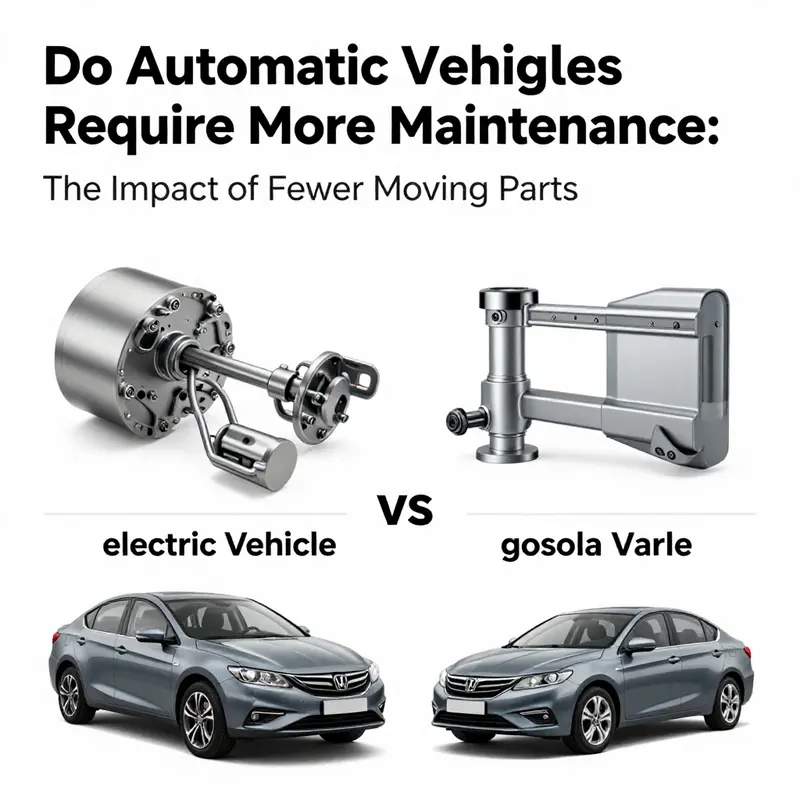
Maintenance is a practical lens through which we measure the promise and the limits of any new technology, and when we talk about automatic vehicles—especially those powered by electricity—a pattern tends to emerge: fewer moving parts, fewer points of failure, and a lighter maintenance footprint over the vehicle’s lifetime. This is not simply a chorus praising costs saved; it is a nuanced observation grounded in how electric drivetrains differ from traditional internal combustion engines. The engine bay that used to be crowded with pistons, belts, oil pans, and an expansive exhaust system becomes a leaner landscape in an automatic, typically electric, vehicle. In practical terms, that simplified design translates into less routine service. Oil changes, fuel-system repairs, spark plug replacements, and exhaust work—that familiar triad of ICE maintenance tasks—disappear from the calendar of what needs to be done. The absence of these routine interventions has a tangible impact on maintenance planning, downtime, and the long-term costs that accumulate for a vehicle owner. For many drivers, this shift can be as compelling as the immediate performance benefits they feel at the wheel. The most cited upshot is straightforward: fewer parts with fewer opportunities to degrade means less frequent visits to the shop for mechanical repairs.
That reduction in mechanical complexity is not simply about removing parts; it reflects a rethinking of how a car is built and how it experiences wear. An electric motor has far fewer moving components than an internal combustion engine. There is no multi-gear transmission in the traditional sense, no clutch pedal, and no intricate timing belt to fret over. With fewer gears to grind and fewer pumps to clog, the drivetrain’s life tends to be more predictable, which makes maintenance scheduling more straightforward. In this context, the research landscape often highlights the long-term maintenance savings associated with automatic vehicles, particularly EVs. A 2023 study by a national energy research program underscores that EVs generally incur lower long-term maintenance costs than gasoline-powered cars, attributing much of that advantage to the absence of complex mechanical systems and to reduced wear that comes from having a single, robust electric motor rather than an array of pistons and high-pressure components. This body of evidence aligns with the practical experience of many owners who notice fewer discretionary maintenance events clustered around the drivetrain. It is not simply about parts and services; it is about reliability, predictability, and the daily reality of keeping a vehicle on the road. As a practical matter, the reduced maintenance demand also interacts with how people use their cars. An automatic vehicle, with its simpler propulsion system, tends to require fewer specialized repairs and less downtime for mechanical overhauls, which matters for households that depend on dependable transportation for work, family, and daily life.
Yet the story is not a one-way triumph lap. The same engineering choices that yield benefits in mechanical reliability also shift maintenance toward areas that demand new kinds of attention. A core consideration is the battery pack and the associated thermal management system. Battery health remains a critical and sometimes costly concern. While most owners enjoy a long life between major battery-related interventions, the eventual replacement or refurbishing of a high-voltage pack is a reality that can weigh on long-term ownership costs. Battery degradation is gradual and depends on usage patterns, climate, charging habits, and pack chemistry, but it is a factor that sits in the background of every maintenance discussion. This is not a foregone conclusion that batteries will be a perpetual maintenance avoidance story; it is a reminder that the structure of the maintenance landscape has shifted toward electronics, software, and battery health rather than engine wear. The question becomes not whether you will service a battery, but how that service is planned, how warranties protect you, and what preventative measures can extend the battery’s useful life.
Following that thread, there is also the matter of routine system upkeep that is more familiar to modern cars but presented in a new light. EVs and other automatic vehicles lean heavily on electronics and software to manage everything from battery temperature to regenerative braking efficiency and adaptive cruise functions. Those systems benefit from regular software updates that can improve performance and reliability, sometimes delivering enhancements rather than repairs. They also demand a different kind of diagnostic approach. Instead of chasing a leaky valve cover gasket or a failing spark plug, technicians may focus on battery management software, controller calibrations, and sensor health. This shift can be a relief for some owners who dislike mechanical maintenance rituals while presenting a new frontier for others who worry about the reliability and cost of advanced electronics. The critical point is that maintenance expectations evolve with the technology.
The regenerative braking systems that many automatic vehicles employ are a particularly salient example of how maintenance needs shift. Regenerative braking reduces stress on traditional friction brakes by recovering energy during deceleration, which can noticeably extend the life of brake pads and rotors. In routine terms, that translates to longer intervals between pad replacements and less frequent brake service. It does not, however, eliminate brake maintenance altogether. The pads will still wear, especially in heavy traffic, hilly terrain, or aggressive driving. In some cases, brake systems in electric vehicles can even require attention to the brake fluid and the electronic stability controls that interact with the braking behavior. For drivers who depend on these technologies for safety, regular checks remain essential to ensure that the friction and electronic subsystems are performing as designed.
If the story stopped at brakes and batteries, the maintenance narrative would feel simpler than it is. Tires, for instance, deserve a more prominent role in this discussion than casual observers might expect. The mass and weight distribution of many automatic vehicles, driven by a substantial battery pack, can influence tire wear. Heavier vehicles can wear tires differently, and that means more mindful rotation schedules, alignment checks, and tire health monitoring. The upshot is that while you may enjoy fewer mechanical repairs, you cannot ignore the basics of tire maintenance. A flat tire or a worn tread can negate the reliability gains that come from fewer engine-related repairs. In other words, the maintenance picture remains pragmatic and hands-on, just focused on different components.
As with any broad generalization, there are caveats worth acknowledging. The upfront costs associated with maintaining advanced electronics and software systems can be higher than the traditional services many drivers have come to expect. Diagnostics for high-voltage systems, battery thermal management components, or sophisticated infotainment and driver-assistance electronics may require specialized tools and trained technicians. While these services can be more expensive on a per-visit basis, they are often less frequent and can be offset by the reduced need for engine maintenance in the ICE sense. The broader economic calculus hinges on how much one values fewer mechanical repairs, longer intervals between routine service, and the price stability of servicing electronic systems.
Evidence from research helps anchor this narrative in a broader context. A widely cited resource on the topic notes that automatic vehicles, especially electric vehicles, typically require less routine maintenance than gasoline-powered cars. The absence of oil changes, spark plug replacements, and exhaust system repairs contributes to a lower maintenance burden, while regenerative braking further reduces wear on braking components. The result is a maintenance profile that is often smoother and more predictable over the life of the vehicle. For readers who want a concise synthesis, credible sources and ongoing industry analyses align with the long-term, real-world experiences that many drivers report. At the same time, it is essential to recognize that the maintenance ecosystem has not vanished; it has transformed.
Beyond the mechanical and electronic dimensions, the maintenance narrative must also consider ownership economics and lifecycle planning. The short-term attraction of lower maintenance costs can be offset by higher upfront purchase prices for many automatic vehicles, particularly those with large battery packs. This dynamic influences decisions about which vehicle to buy and how long to hold it before replacement. For households weighing a purchase, it is helpful to look at total cost of ownership over a span of years rather than focusing solely on annual maintenance bills. In this sense, the automatic vehicle can function as a hedge against rising prices for traditional maintenance tasks tied to ICE engines, even as new forms of upkeep emerge around software updates and battery health.
From a reliability perspective, this general trend toward fewer mechanical components translates into tangible benefits: fewer unexpected breakdowns of core propulsion hardware, shorter downtime for routine service that would disrupt daily routines, and a greater likelihood that maintenance visits align with routine battery health checks, software updates, and inspection schedules. The practical reality is that many drivers experience fewer disruptive repairs, which improves overall satisfaction with ownership. Yet this does not mean maintenance becomes optional or unimportant. Regular tire checks, alignment, brake fluid maintenance, cabin air filtering, and attention to charging habits remain crucial. The broader lesson is not that automatic vehicles eliminate upkeep but that they remodel it—shifting emphasis from frequent mechanical interventions toward preventative care for high-voltage systems, battery health, software integrity, and the tires that keep every ride safe and comfortable.
As the technology matures, the maintenance landscape will continue to evolve. Advancements in battery technology, more robust thermal management, and increasingly reliable software ecosystems will likely reinforce the maintenance advantages while also demanding new competencies from automotive technicians and owners alike. In the meantime, the core takeaway remains clear: automatic vehicles, particularly electric ones, offer a pattern of maintenance that is generally lighter on routine mechanical service, more oriented toward electronics and battery care, and increasingly guided by remote software updates and predictive diagnostics. This shift can yield meaningful long-term cost savings, smoother ownership experiences, and greater reliability for many drivers, even as it invites careful attention to battery health, tire wear, and the evolving toolkit of electronic maintenance. For readers seeking a concise, credible synthesis of these ideas, the broader literature and ongoing industry analyses underscore the same core message: the absence of a complex, multi-part ICE drivetrain translates into fewer mechanical repairs, while new forms of upkeep—centered on batteries and software—shape the contemporary maintenance landscape.
From Gears to Batteries: Do Automatic Transmissions Still Drive Higher Maintenance in the EV Era?
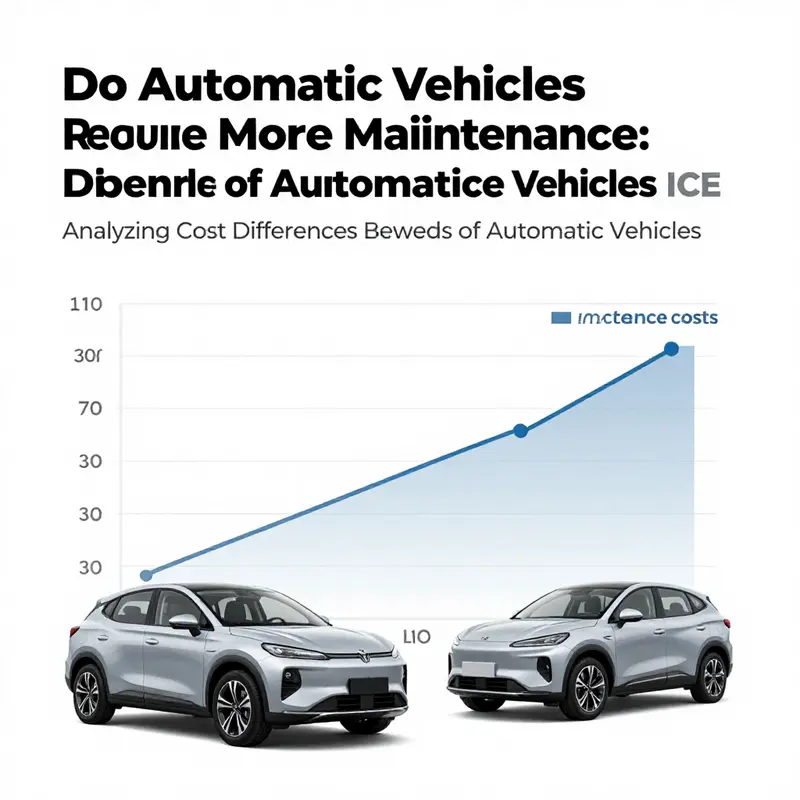
When people ask whether automatic vehicles require more maintenance than their manual counterparts, the question often overlooks a larger shift in how cars are built and cared for. In this chapter, we look beyond the cadence of a transmission’s shifts and toward the broader maintenance landscape that now extends from the engine bay to the battery pack. In practical terms, the word “automatic” in today’s mainstream discourse usually refers to automatic transmissions (AT) rather than autonomous or self-driving technologies. That distinction matters because the maintenance story for ATs sits atop a larger framework: one where electric propulsion redefines reliability, wear, and long-term costs. The result is a nuanced conclusion: automatic transmissions can add maintenance complexity compared with manuals, but the leap from internal combustion engines (ICE) to electric powertrains produces a far larger shift in overall maintenance burdens.
To understand this, one needs to appreciate the mechanical anatomy of an automatic transmission. ATs are intricate assemblies containing torque converters, multiple planetary gear sets, clutches, solenoids, hydraulic circuits, and a constant flow of transmission fluid. The fluid not only lubricates but also assists in pressure generation and gear engagement. Over time, fluid can degrade, seals can wear, and electronic controls can drift, leading to failures that require diagnostics, fluid changes, or more extensive repairs. These realities help explain why, in the traditional sense, automatic transmissions have carried higher maintenance costs than manual transmissions—especially in older designs with fewer reliability safeguards. Manuals, by contrast, rely on a simpler set of moving parts: a clutch and a straightforward gearset. With fewer hydraulic circuits and no torque converter to heat and wear, many drivers historically faced lower long-term costs in manual transmissions. Yet this clear dichotomy has softened as automakers refined AT design. Modern automatics employ more robust materials, more precise sensors, and better transmission control modules, often backed by generous warranties. The net effect is a shifting curve: older ATs could be costly to repair, while many contemporary ATs offer reliability on par with, or even surpassing, manual units under typical ownership timelines.
Even as ATs retain some maintenance heft, the broader frame surrounding vehicle upkeep is tilting decisively toward electric propulsion. Electric vehicles replace a large subset of ICE components with a far simpler, more streamlined drivetrain. The engine, exhaust, oil systems, timing belts, spark plugs, and many ancillary components simply do not exist in the EV architecture. This structural simplification translates into tangible maintenance advantages. There is no regular oil change to schedule, no spark plug replacement interval to track, and no timing belt to worry about. The absence of exhaust systems in EVs also removes a family of corrosion-prone repairs tied to corrosion and emissions control. The consequence is a reduced baseline of routine maintenance tasks across the life of the vehicle.
Among the most consequential differences is the braking system. EVs typically employ regenerative braking, which recovers energy during deceleration and reuses it to recharge the battery. This design tends to reduce wear on traditional brake components, extending intervals between pad and rotor replacements and lowering maintenance costs associated with braking systems. It is not that brakes vanish from EVs; rather, their wear patterns shift. Brake inspections and pad checks remain essential, but the frequency of heavy brake service generally declines compared with ICE vehicles. This brake dynamic is one of the clearest, recurring advantages cited by researchers and owners alike when comparing EV maintenance to ICE upkeep.
Another domain where EVs diverge meaningfully is software and battery management. EVs operate as highly software-driven platforms, with vehicle control units delivering updates that improve efficiency, performance, and safety features over time. Routine software updates can be delivered remotely, reducing the need for dealer service visits and enabling improvements without hardware changes. Battery health, often perceived as a looming maintenance concern, has proven to be much less perilous in practice than many fear. Batteries are engineered with extensive safety margins, and manufacturers typically back them with long warranties—commonly eight to ten years or more. While battery replacement can occur, it is not a frequent event for the typical ownership horizon, and warranties help cushion early-life depreciation of battery capacity.
These EV-specific maintenance dynamics interact with the transmission question in meaningful ways for the broader consumer calculus. If you combine the added maintenance considerations of automatic transmissions with the EV’s fundamentally different reliability profile, the overall maintenance burden shifts toward the EV side in the long run. The United States Department of Energy’s National Renewable Energy Laboratory (NREL) underscored this in a 2023 assessment, noting that EVs tend to have lower long-term maintenance costs than gasoline-powered cars. The absence of transmissions and engines, plus the reduced need for certain mechanical repairs, contributes significantly to this advantage. In the same vein, Consumer Reports has summarized maintenance data showing that EV owners spend substantially less on maintenance and repairs in the first decade of ownership compared with ICE vehicle owners. While the precise figures vary by model and driving pattern, the directional signal is consistent: the mechanical heart of ICE vehicles drives more frequent and expensive maintenance tasks compared to EVs, especially as vehicles age.
That broader maintenance trajectory helps explain why many drivers who weigh AT maintenance concerns against EV adoption ultimately come to a common conclusion: the shift from ICE to EV delivers a more substantial reduction in maintenance demands than the move from manual to automatic. The cost delta tied to transmission type—while not negligible—becomes comparatively small beside the long-term savings realized when the powertrain becomes electric. In practical terms, this means the argument for choosing an EV often rests more on fuel and efficiency economics, battery warranties, and software-enabled enhancements than on a fear of greater AT-related upkeep. It also clarifies why many automakers now optimize automatic transmissions for reliability and longevity, recognizing that consumers are balancing a broader maintenance equation than traditional transmission costs alone.
To connect this assessment with actionable considerations for owners, it helps to reflect on where maintenance dollars actually accumulate over a typical ownership span. First, tire wear and alignment are universal expenses, and drivers should expect to rotate tires on EVs at intervals similar to ICE vehicles. Second, the brake system on EVs, while seeing less pad wear, still requires occasional inspection to catch caliper drag or rotor issues that can arise from the vehicle’s overall weight and braking dynamics. Third, software updates—while convenient—do require occasional service attention when updates necessitate reprogramming or when diagnostic checks reveal software-related issues. Fourth, the battery and charging ecosystem remain a critical focal point for long-term costs, but the health of the battery is generally well protected by warranties and monitored through a suite of sensors and vehicle health management software. These realities together shape a maintenance profile for EVs that is more favorable overall than ICE vehicles, even when AT maintenance costs are included in the EV’s equation.
From a policy and consumer education perspective, the maintenance story benefits from a careful separation of terms and expectations. When shoppers hear that automatic transmissions are more complex than manual ones, they might assume a relentless maintenance burden that outweighs any EV advantage. Yet the broader context—where EVs drastically reduce the number of parts that can fail and where software-driven improvements can extend life and efficiency—often flips the script. The reality is that the maintenance equation is not a single dial to be turned in isolation; it is a composite of powertrain design, system redundancies, warranty coverage, and the evolving role of software as a maintenance lever. In this light, the automatic transmission factor remains a valid consideration, but it does not eclipse the far more consequential maintenance shift brought by electrification.
For readers who want a deeper, data-driven perspective, consider the evidence that links maintenance costs to vehicle type rather than to transmission preference alone. The Consumer Reports analysis on maintenance costs for EVs versus gas cars provides a grounded reference point, illustrating how the total cost of ownership equation tilts in favor of EVs over the long run. Meanwhile, the NREL study offers a rigorous benchmark showing how the long-term maintenance burden shrinks when the drivetrain is electric. These sources complement the practical observations about AT complexity by situating them within a broader, longevity-focused framework. Together, they underscore a clear takeaway: while automatic transmissions can introduce maintenance considerations separate from those of manual transmissions, the shift to electric propulsion yields the more decisive reduction in maintenance requirements. For readers seeking a concise synthesis of these maintenance dynamics, the question is less about a single component and more about how the powertrain ecosystem changes the way we maintain vehicles over time.
If you want to explore a deeper dive into the maintenance advantages of electric powertrains, see the detailed discussion on this topic here: Do Electric Vehicles Require Less Maintenance.
External data and further reading can provide additional context on the maintenance differential between EVs and ICE vehicles. For a comprehensive external reference, you can consult the following resource: https://www.consumerreports.org/cars/electric-vehicles-vs-gas-cars-maintenance-costs-a279463/. The article synthesizes maintenance cost data across a broad range of models and ownership experiences, offering a practical counterpoint to the transmission-specific considerations explored in this chapter.
Less Wrenching the Way: How Automatic Vehicles Trade Maintenance Burden for Regenerative Braking and Smarter Design
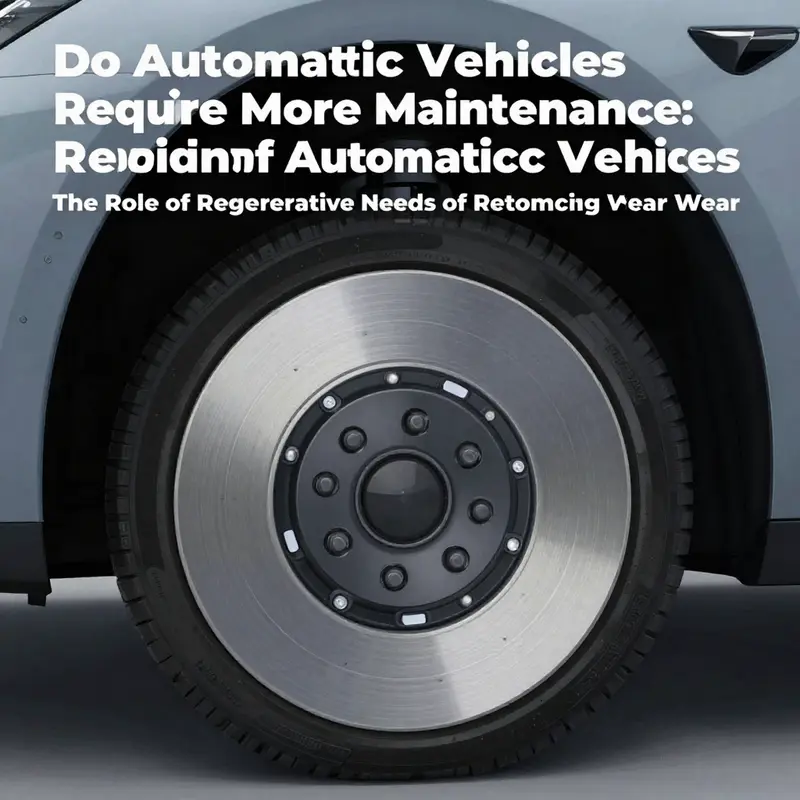
The question of maintenance for automatic vehicles often yields a cautious yes, a story retold in the particulars of model and technology. In electric and hybrid models, the maintenance burden is typically lighter in several domains. Fewer moving parts, the absence of routine oil changes, and a drivetrain designed around electric motors instead of complex multi-speed transmissions all contribute to lower ongoing upkeep. But as one digs deeper, regenerative braking emerges as a keystone in the maintenance narrative. It is not only a clever energy recovery mechanism but a practical driver of reduced wear and longer service intervals. This shifts maintenance from a purely reactive cost to a more proactive, efficiency-oriented discipline.
Regenerative braking deserves close attention because it reshapes one of the most familiar maintenance touchpoints: the brakes. In conventional friction braking, pads, rotors, and drums wear as metal surfaces convert kinetic energy into heat. The more you drive, the more these parts degrade. In many automatic electric and hybrid vehicles, regenerative braking provides a substantial portion of deceleration by using the motor as a generator. This process recycles energy that would otherwise be heat, reducing the workload on friction brakes and therefore the frequency of pad and rotor replacements. What this means in practical terms is a meaningful reduction in brake wear and lower maintenance costs over the life of the vehicle.
From a maintenance-management perspective, regenerative braking interacts with environmental and social considerations. Fewer brake wear particles translate into improved air quality and less particulate matter in urban settings. When fleets adopt regenerative braking at scale, the aggregated reductions contribute to broader environmental strategies and public health goals. The maintenance narrative thus expands beyond cost to include environmental stewardship—a dimension increasingly valued by buyers who weigh lifecycle impacts in their purchasing decisions.
But the story does not end with brakes. Electric and hybrid drivetrains typically require no regular oil changes, no spark plugs to replace, and often rely on simpler or absent transmissions. These factors can result in a maintenance calendar that diverges meaningfully from traditional internal combustion engines, delivering a long-term maintenance advantage that is borne out by comparative cost analyses. A number of studies have shown that electric vehicles often enjoy lower long-term maintenance costs despite concerns about high-voltage systems and battery health. The key message is that the maintenance burden shifts toward high-voltage safety, battery health checks, coolant levels for battery and powertrain cooling, and software diagnostics.
In short, regenerative braking is a central mechanism by which automatic vehicles reduce maintenance needs, especially in brake wear, while the broader maintenance calendar shifts toward monitoring battery health and software integrity. The upshot is a lifecycle maintenance profile that is typically cleaner, cheaper, and more predictable, even though there are new kinds of checks and potential failure modes to manage. The overall conclusion remains favorable: automatic vehicles, particularly electrified ones, frequently offer maintenance advantages that outweigh the new tasks they introduce.
Rethinking Reliability: Do Automatic Vehicles Truly Demand More Maintenance?
When people ask whether automatic vehicles require more maintenance, they are tugging at a stereotype that long predated current automotive technology. The image of a clattering, clutch-snapping manual transmission lingers in popular imagination, while automatics have evolved into highly refined, tightly sealed systems. The practical truth, echoed by recent studies and industry observations, is more nuanced: automatic vehicles—especially modern ones and nearly all electric vehicles—tersistently show a maintenance advantage over traditional manual and internal combustion engines. The core reasons are straightforward, even if the full picture remains layered. Automatic transmissions remove the clutch as a wear component, reduce the number of moving parts in the powertrain, and pair with advanced fluids and control electronics that harmonize operation. In the broader context of the maintenance landscape, this translates into fewer drivetrain issues, lower long-term costs, and less unplanned downtime over a vehicle’s lifetime. Yet there is a caveat: maintenance still exists, and the nature of that maintenance shifts as technology migrates toward electrification and advanced driver assistance systems. Understanding these shifts helps drivers plan smarter, not merely cheaper, upkeep across the life of the vehicle.
Among the most compelling observations from recent research is that automatic vehicles, by virtue of their design, tend to accumulate fewer drivetrain problems than their manual counterparts. The hierarchy of wear is different, and modern automatics are built with more durable materials, refined gear sets, and fluid systems that support longer service intervals. This is not merely a theoretical claim. A comprehensive study conducted by the American Automobile Association (AAA) indicates that automatic transmissions experience fewer drivetrain-related issues over their lifespans, which in turn contributes to lower long-term maintenance costs. That kind of finding resonates with the broader industry sentiment that automatic designs, when properly engineered, deliver durability aligned with real-world driving, not just laboratory expectations. J.D. Power and Consumer Reports, two stalwarts of automotive reliability assessment, reinforce the same trend. They note that modern automatic transmissions incorporate improved materials and controlled lubrication that reduce wear, while electronic controls optimize shift timing and torque delivery to smooth out operation under a wide range of conditions.
Even as the overall maintenance burden lightens, maintenance schedules for automatic transmissions are not abolished. Transmission fluid changes remain a standard maintenance item, albeit at healthier intervals than in the past. The typical guidance places automatic transmission fluid changes in the range of roughly 30,000 to 60,000 miles, with the precise interval contingent on driving style, climate, and load. In heavy-use scenarios—think frequent stop-and-go traffic, mountainous terrain, or commercial fleets—the requirement for fluid service can occur earlier. The important point is that these fluid changes, while necessary, usually do not carry the same cascading maintenance costs that come with a failing manual clutch or a worn manual transmission’s other components. This nuance helps explain why the net maintenance burden of an automatic vehicle remains lower than that of a manual counterpart, even when accounting for routine fluid service.
The dialogue surrounding maintenance grows more sophisticated when electrification enters the frame. Electric vehicles, which almost uniformly employ automatic-like drive systems or single-speed transmissions, take the maintenance conversation to another level entirely. With far fewer moving parts than internal combustion engines, EVs reduce not only engine service but many ancillary checks that have historically taxed maintenance budgets. Battery technology has matured in tandem with drivetrain control systems, delivering longer life and more predictable degradation patterns. The regenerative braking systems common in many EVs reduce brake abrasion, further lowering the frequency and cost of brake service. The combination of fewer mechanical wear points and optimized electronic control translates into meaningful lifetime maintenance savings. A 2023 assessment by the National Renewable Energy Laboratory (NREL) underscores this, highlighting that EVs typically incur lower long-term maintenance costs than gasoline-powered cars. The report points to the near absence of oil changes, spark plug replacements, exhaust system repairs, and similar routine tasks, all of which contribute to a leaner maintenance profile over the vehicle’s life.
From a broader research perspective, even as the vehicle powertrain becomes simpler, the maintenance ecosystem becomes more technologically intricate. Modern automatic and electric drivetrains rely on sophisticated software, sensors, and electronic control units. The maintenance equation now includes software updates, calibration of sensors after maintenance work, and occasional recalibration of driver-assistance systems like adaptive cruise control and lane-keeping assist. These software-centric maintenance tasks are not immune to cost or time implications, but they differ fundamentally from mechanical repairs. Software updates can optimize efficiency and safety, while recalibration can address performance drift in sensors or cameras. This shift marks a new kind of maintenance burden—one that is often less invasive and costly than replacing a mechanical component, but one that requires regular attention in the form of updates and occasional recalibrations.
Another aspect of the maintenance conversation is how adoption patterns influence average costs. The industry has observed a notable role for hybrids and electric vehicles in driving down maintenance needs over time. Hybrid systems, which often feature automatic transmissions paired with electric traction elements, exemplify a hybrid reliability model: fewer internal combustion components in conjunction with robust electric motors. Electric vehicles, with their simplified drivetrains, further reinforce this trend. The International Council on Clean Transportation (ICCT) has highlighted that EVs require roughly half the maintenance of conventional gasoline-powered cars across their lifetimes, a figure that captures the cumulative impact of reduced wear in the powertrain, brakes, and cooling systems, as well as centralized maintenance savings from fewer engine-related repairs. Taken together, the data points converge on a consistent narrative: automatic transmissions and electrified powertrains are catalysts for lower maintenance burdens, even when accounting for the evolving maintenance needs of software and high-voltage systems.
The practical implications for owners and prospective buyers move beyond abstract cost comparisons. When people evaluate total ownership costs, maintenance is a major driver, but it is not the only factor. Fuel savings, depreciation, insurance, and the cost of specialized service all interact with maintenance to shape what a vehicle costs to own. In automatic vehicles, the reliability gains from reduced mechanical complexity often translate into fewer unexpected repair trips, lower downtime, and more predictable budgeting. For EVs and hybrids, the calculus shifts again: while the maintenance profile is lighter, the need for occasional battery checks, high-voltage system inspections, and software-driven updates becomes part of the planning. In this sense, the maintenance advantage of automatic and electric drivetrains is real, but it arrives with a new set of responsibilities—more attention to software health, more awareness of battery health, and a greater tendency to have service visits tied to software lifecycle events.
Within this evolving landscape, a practical takeaway for drivers is that maintenance should be framed not as a one-size-fits-all regime, but as a set of targeted expectations shaped by the vehicle’s propulsion system and usage. For drivers who prioritize longevity and lower annual upkeep, automatic vehicles—particularly those with electrified powertrains—offer a compelling proposition. Yet the specifics matter: urban commuters under heavy stop-and-go conditions may benefit from the reduced brake wear in EVs and the smoother operation of automatics, whereas long-haul drivers should pay particular attention to fluid intervals, motor cooling, and software health. The maintenance plan, in other words, should reflect the product architecture and the actual operating environment rather than relying on an inherited assumption about transmissions alone.
For readers seeking a concise synthesis tied to broader maintenance conversations, consider the notion that automatic does not equate to maintenance disadvantage. In many cases, automatic designs relieve the drivetrain of the most tire-splitting wear points found in manuals, and electrification compounds that relief with an even simpler, cleaner drivetrain. There is still a cost to regular service—the fluid changes for automatics, periodic checks of cooling and electrical systems, and the ongoing need for software updates—but these are often offset by the reduced likelihood of major mechanical failures. This is not to sweep away concerns about maintenance altogether. Instead, it reframes the maintenance debate around the sophisticated balance between mechanical wear and digital health, a balance that modern manufacturers and service networks are increasingly prepared to manage.
As the conversation continues, it becomes clear that the question of maintenance is inseparable from the vehicle’s technology trajectory. The move toward automatic and electric drivetrains aligns with a broader industry push toward reliability, predictability, and lower lifetime costs. The maintenance narrative—once dominated by clutch wear and engine oil—now involves a spectrum of checks that span fluids, high-voltage systems, battery health, software integrity, and sensor calibration. When read together with the AAA and ICCT findings, the larger story emerges: automatic vehicles, particularly when they incorporate electric propulsion, do not demand more maintenance than their predecessors. They often require less, with the caveat that maintenance tasks shift toward areas that are better served by scheduled software updates and targeted component checks rather than broad-based mechanical overhauls.
To ground the discussion in actionable terms, it helps to recognize how the maintenance schedule looks in everyday driving. Routine auto maintenance remains essential, but its emphasis has shifted. You will likely encounter longer intervals between major mechanical failures, a greater need for transmission fluid checks at prescribed milestones, and increasing attention to battery and software health in electrified models. For readers curious about the deeper maintenance economics of this shift, a useful starting point is to explore how electric-drive maintenance differs from traditional engines. See the discussion linked here: do-electric-vehicles-require-less-maintenance. While every vehicle will present its own maintenance profile, the overarching trend is clear: automatic and electric drivetrains tend to reduce the risk of costly, drivetrain-related failures, while introducing new maintenance dimensions that are more about software stewardship and system health than replacing major mechanical parts.
In sum, the maintenance burden of automatic vehicles does not rise with the sophistication of the powertrain. The modern automatic, especially in the EV or hybrid family, tends to reduce wear, simplify mechanical failure modes, and smooth the path toward predictable upkeep. The shifts in maintenance rhetoric—from oil changes to battery checks, from clutch wear to sensor recalibration—reflect a broader evolution toward intelligent, durable, and efficient mobility. For the reader considering a future purchase, the implication is hopeful: you are likely to spend less time paying for major repairs and more time on preventive upkeep that protects the investment over many miles of driving. As the landscape continues to evolve, the best approach is a maintenance plan built around the vehicle’s propulsion system, its software ecosystem, and the realities of your daily routes. External resources and industry analyses offer a broader perspective on long-term costs, and they reinforce the sense that automatic vehicles—when well maintained—offer a reliable path to lower upkeep over the vehicle’s lifetime. For a broader view, see AAA’s maintenance tips as a practical reference for everyday servicing and budgeting.
External resource: https://www.aaa.com/automotive/vehicle-maintenance-tips
Final thoughts
In conclusion, automatic vehicles, particularly electric vehicles, present significant advantages over traditional internal combustion engine vehicles when it comes to maintenance. With fewer moving parts, lower long-term costs, and innovations like regenerative braking that reduce wear and tear, adopting these vehicles can transform business operations. As maintenance costs increasingly favor electric vehicles, business owners should consider the long-term cost benefits of transitioning to automatic vehicles in their fleets. Embracing this shift not only enhances operational efficiency but also aligns with a growing commitment to sustainability and innovation within the automotive sector.