

For business owners who rely heavily on vehicles for operations, understanding tax deductions available for vehicle maintenance is crucial. Among maintenance tasks, brakes are a significant concern, given their role in ensuring safety and vehicle reliability. However, questions arise: Are vehicle brakes classified as normal maintenance when filing taxes? This article delves into the deductibility of vehicle brake expenses according to IRS regulations and guidelines, explores how the type of vehicle usage influences deductions, and contrasts two approaches for claiming these expenses – actual expenses versus the standard mileage rate. Each chapter will build upon your knowledge and clarify how vehicle brake maintenance fits into your overall tax strategy.
Brakes on the Balance Sheet: Normal Vehicle Maintenance and the Tax Treatment
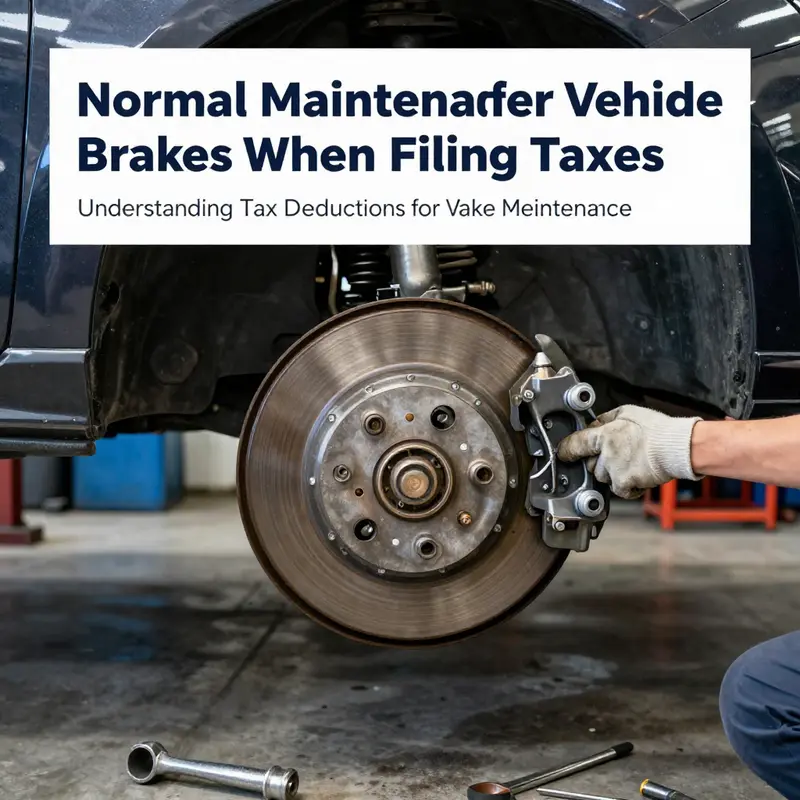
Maintaining a vehicle used for business activity sits at the intersection of day-to-day operating costs and the formal accounting that accompanies tax reporting. When you think about the brakes, you picture a safety-critical system that keeps you and others on the road from harm. In the eyes of the tax code, brake maintenance can be a deductible expense if the vehicle plays a genuine role in your business. This chapter connects brake upkeep to how you use the vehicle for business and the accounting method you choose for expenses.
Under the general rule, ordinary and necessary business costs for operating a vehicle are deductible to the extent they are allocated to business use. Replacing worn brake pads, flushing brake fluid, or resurfacing rotors as part of routine upkeep is deductible in the business portion when the vehicle is used for business. If the vehicle is used exclusively for personal purposes, brake costs do not qualify for a business deduction. If use is mixed, you allocate based on the business-use percentage.
Two pathways can lead to a deduction. The actual expenses method requires you to tally all deductible costs, including brake repairs, fuel, oil, tires, insurance, and maintenance. The business-use percentage is crucial here. For example, if the vehicle is 60 percent used for business, you may deduct 60 percent of the brake-related costs, provided the expenses are ordinary and necessary for business use. This method can yield a larger deduction if maintenance costs are high, but it requires careful tracking of receipts and miles.
The second pathway is the standard mileage rate, which is a per-mile deduction that already accounts for wear and tear, including typical brake maintenance, within the rate. If you choose this method, you generally cannot deduct brake repairs as separate expenses because the mileage rate covers those costs. The choice between methods affects recordkeeping, how you attribute costs, and long-term planning for tax purposes.
A practical distinction exists between routine maintenance and major work. Routine brake upkeep—pads, rotors, fluid—keeps the car in ordinary operating condition. Major repairs or brake-system upgrades may be treated differently and could be depreciable or capital in nature. The tax code requires careful judgment and thorough documentation to support any deduction.
Recordkeeping is the backbone of any credible deduction. Save receipts for brake parts and labor, and maintain a maintenance log with dates, services performed, and odometer readings. In mixed-use scenarios, maintain a log of business miles versus total miles to determine the business-use percentage. When preparing your return, apply the business-use percentage to the brake costs under the actual-expenses method, ensuring only the business portion is claimed. If you later switch to the standard mileage rate, follow the method’s rules to avoid conflicts.
Ultimately, brakes are a practical example of how normal maintenance translates into a legitimate business deduction. Regular upkeep helps reduce the risk of downtime and unexpected repair costs, while the tax treatment aligns with the broader principle that ordinary upkeep is a deductible business expense when the vehicle is used for business.
Brakes, Deductions, and the Balance of Business Vehicles: Decoding Maintenance Costs for Tax Filings
Brakes are the one system you hope never gets a call for attention, but when it does, you want to know how much of the expense may be treated as a normal, deductible maintenance cost on your taxes. The core idea across jurisdictions is straightforward: if a vehicle is used for business, routine maintenance and operating costs are typically deductible. The brakes, as a crucial safety feature and a component that wears with use, usually land in the maintenance category. The nuance is less about brakes themselves and more about how the vehicle is used, how you allocate expenses between business and personal use, and which method you choose to calculate deductions. In the United States, the Internal Revenue Service (IRS) makes this principle explicit. You can deduct expenses for maintaining and operating a car used for business, and this includes routine repairs and maintenance such as brake replacements, oil changes, tire rotations, and other services necessary to keep the vehicle in safe working condition. The critical condition is clear: the vehicle must be used for business, not purely for personal travel. If your car sits primarily in the driveway for family errands, the brake costs aren’t deductible in the same way, because the business-use percentage is effectively zero. When business use exists, the deduction follows one of two paths: you can claim actual expenses, including brake repairs, or you can use the standard mileage rate, which already factors wear and tear and maintenance into the per-mile deduction. The guidance further emphasizes that the rules hinge on business use rather than the specific part involved, and it is the overall connection to earning income that justifies the deduction. For a borrower of guidance, the IRS Publication 463 (Travel, Entertainment, Gift, and Car Expenses) is the official touchstone. It confirms that car expenses used in business can be deducted and that routine maintenance, including brake repairs, falls comfortably within this framework when the vehicle is employed for business purposes. While this description comes from the U.S. tax system, the underlying logic—maintenance costs related to business activity can be deductible—resonates in other tax regimes as well, with jurisdiction-specific rules about record-keeping and the precise mechanics of allocation. The emphasis remains on two pillars: business use and documentation. If a vehicle is used exclusively for business, the deduction is more straightforward. If the vehicle serves both business and personal needs, you must allocate the cost according to the proportion of business use. For many self-employed individuals or small business owners who rely on a vehicle to visit clients, transport equipment, or shuttle between work sites, these maintenance costs become part of the ordinary business expenses. The practical upshot is that brake repairs or replacements are not extraordinary or capital in nature by default; they are ordinary upkeep essential to keeping the vehicle viable for business tasks. They become deductible in the same manner as oil changes or tire rotations, subject to the business-use percentage. From a planning perspective, the choice between actual expenses and the standard mileage rate matters. If you report actual expenses, you tally every relevant cost—the brake repair, the oil change, the tires, the insurance, the depreciation (if applicable), and other operating costs. If you opt for the standard mileage rate, you receive a fixed rate per mile driven for business purposes, which incorporates wear and tear including routine maintenance. Each approach has its benefits and drawbacks, especially when the vehicle’s maintenance needs fluctuate from year to year or when business mileage varies significantly. The choice may depend on the mix of personal and business travel, the level of record-keeping you can sustain, and the overall tax picture you seek to optimize. To readers seeking a broader sense of how maintenance fits into the larger framework of vehicle expenses, consider exploring educational resources that describe the fundamentals of what constitutes regular upkeep. In particular, you can delve into explanations of “what is vehicle maintenance” to ground your understanding of which costs are typically treated as ordinary and deductible. This helps ensure that brake-related expenses, when they arise, are evaluated through the same lens as other routine services, rather than as miscellaneous or capital costs. For a more practical navigation of these concepts, think about how you would explain maintenance to a client who asks whether a brake pad replacement qualifies as a deductible repair. The answer hinges on the business-use percentage and the purpose of the drive, not on the specific nature of the repair alone. If you have a business trip that required driving to a site where you deliver services, the brake replacement you performed to ensure safe operation is part of the operation of the vehicle used for that business activity. You can read more on the broader maintenance concept here: what is vehicle maintenance. Naturally, the precise execution of these rules varies by country, and the two governing bodies—IRS in the United States and the Australian Taxation Office (ATO) in Australia—illustrate the common theme with their own nuances. In Australia, the ATO similarly allows deductions for the cost of repairing or replacing vehicle parts, including brakes, when the vehicle is used for business purposes and the expense is incurred in earning assessable income. The private use caveat is central here as well: if a vehicle is used partly for private purposes, you must determine the business-use percentage through a logbook or diary and claim only that portion of the brake repair cost. The ATO’s guidance underscores that travel between home and a regular workplace is typically private use, unless you operate a home-based business and the trips were for business purposes. These considerations—keeping precise records, determining business-use proportions, and applying the correct deduction method—are universal in spirit even as the details differ across tax regimes. When planning, it helps to keep clear evidence of when brake-related work occurred, what was repaired or replaced, and how the vehicle was used during that period. It is this documentation that transforms a routine maintenance event into a deductible business expense. As a practical note, you should distinguish routine maintenance from more substantial repairs or upgrades that could be treated differently for tax purposes. Replacing brake pads after normal wear is typically maintenance. Replacing rotors, addressing brake hydraulics, or repairing a worn brake line remains maintenance if it’s part of restoring the vehicle to its standard operating condition. However, if a repair constitutes a capital improvement—an enhancement that extends the vehicle’s value or extends its useful life beyond the ordinary—different tax rules can apply, including depreciation over time rather than a straightforward deduction in the year of service. This differentiation, while technical, matters for the accuracy of your tax return and for optimizing your deductions over multiple years. The heart of the matter, then, is clear: brakes are not a special-case expense; they are a routine maintenance item. The deductibility arises from the vehicle’s business use and the meticulous recording you maintain to back up that use. For those who operate their own business or use a vehicle as part of their work, a disciplined approach to documentation—receipts, service invoices, and a log of business mileage—serves as the backbone of any claim. It is worth noting that the decision between actual expenses and standard mileage rate is not a philosophical one but a practical choice anchored in your typical mileage and the complexity of your bills. In practice, most business owners find that maintaining a robust record-keeping habit makes audits less stressful and tax reporting more predictable. The parallels between the US and Australian treatments remind us that the essence of the rule is universal: the maintenance costs tied to earning income are deductible, but the extent of the deduction depends on your demonstrated business use and the quality of your records. This shared logic helps drivers who operate across borders or who move between tax jurisdictions to apply a consistent mindset to maintenance costs like brake repairs and replacements. If you want to explore a broader context of how maintenance fits into a vehicle’s lifecycle and tax treatment, consider reviewing the general guidance on vehicle maintenance and its tax implications. For a constructive, practical frame on this topic, see the broader discussion on maintenance standards and how they translate into deductible expenses in your jurisdiction. Collaboration with a tax professional can further clarify how your specific usage pattern, mileage, and repair history translate into the most advantageous deduction. Internal references can also help you ground your understanding as you prepare to file. For example, you can read more on the concept of vehicle maintenance at this resource: what is vehicle maintenance. In addition, keep in mind the importance of localized guidance when you file: the rules around record-keeping for motor vehicle expenses are emphasized in official guidance from tax authorities. For a detailed, jurisdiction-specific standard, the Australian Taxation Office provides authoritative direction on what records you need to keep when claiming motor vehicle expenses, including brake repairs and replacements. This resource offers practical steps to ensure your records reflect the proportion of business use correctly and support your deduction claims. External resource: https://www.ato.gov.au/individuals/working-and-job-related-expenses/motor-vehicle-expenses/records-you-need-to-keep/.
Brakes on the Balance Sheet: How Vehicle Use Shapes Brake Maintenance Deductions for Tax Filing

Brakes are not glamorous, but they are essential. When you file taxes for a vehicle used in business, brake maintenance sits at the intersection of safety and accounting. The way you use the vehicle determines whether brake repairs and replacements can reduce your tax bill. If the vehicle serves your business, the costs tied to keeping it safe and roadworthy often qualify as ordinary and necessary business expenses. If the vehicle sits idle for personal use, the brake costs tied to that usage are not deductible. The practical upshot is straightforward: the deductibility of brake maintenance hinges on how much you rely on the vehicle to generate business income, and it requires careful documentation so the tax authorities can see the link between maintenance and business activity.
The core guidance comes from the tax authority’s rules on vehicle expenses for business use. In a typical U.S. context, the Internal Revenue Service (IRS) allows a deduction for expenses for maintaining and operating a vehicle used for business. This includes routine repairs and maintenance such as brake replacements, oil changes, tire rotations, and other services necessary to keep the vehicle in safe, working condition. The critical caveat is proportionate deductibility: only the portion of costs associated with business use can be claimed. If you use the vehicle for personal reasons, those costs are not deductible. This principle prevents the deduction from ballooning simply because a vehicle is occasionally used for work.
Taxpayers have two pathways for claiming these expenses. You can deduct actual expenses, which means tallying up the total maintenance and operating costs for the year and applying the business-use percentage to each category, including brake repairs. Alternatively, you can opt for the standard mileage rate, which already factors in wear and tear, including maintenance like brake replacement. The choice between these methods can influence how you treat brake costs. With the actual-expense method, you itemize and allocate every maintenance expense, while the standard mileage rate bundles wear and tear into a single deduction per business mile driven. The decision often turns on which method yields the larger deduction and which aligns better with your record-keeping capabilities. The important point is that brake maintenance, when tied to business driving, can be deductible under either approach, as long as it is properly allocated to business use.
A canonical reference for these rules is Publication 463, which offers guidance on travel, entertainment, gifts, and car expenses. It explicitly states that you can deduct expenses for maintaining and operating a car used for business, and it includes repairs as part of the maintenance category. The practical implication is that brake repairs performed to keep a business vehicle roadworthy are legitimate deductions, provided personal use is excluded from the calculation. A direct link to the IRS guidance is available for those seeking authoritative detail: https://www.irs.gov/publications/p463. This resource helps frame the boundary between deductible business costs and personal costs while underscoring that maintenance is an expected, ordinary expense for vehicles used in business.
From a practical standpoint, most taxpayers who use a vehicle for business rely on the proportion of business use to determine the deductible share of brake costs. The rule of thumb is simple: if your vehicle is used 60 percent for business and 40 percent for private purposes, you may deduct 60 percent of the brake repair cost, along with the proportionate share of other maintenance and operating expenses. The source of this method is not just common sense but a procedural standard in many tax systems. To substantiate the business-use percentage, you typically need a robust log of trips and purposes. A logbook, whether kept on paper or in a digital format, can document dates, destinations, and the nature of each trip. This record-keeping is essential because it provides the numeric backbone to your claimed business-use percentage and helps defend your deduction if questioned by tax authorities.
The importance of accurate records cannot be overstated. If you commute from home to work, that portion is generally considered private use unless you operate a home-based business and the trip is specifically for business purposes. In practice, routine commuting costs, including wear and tear on brakes caused by those trips, are not deductible. This nuance matters because it affects how you allocate brake costs when you mix business trips with personal travel. A disciplined record-keeping approach also helps you avoid the risk of an audit or adjustment from tax authorities who scrutinize claims that appear to blend business and personal use without substantiation. The clearer your logbook, the smoother your tax reporting will feel come filing time.
Beyond the use proportion, there is a subtler accounting nuance: the boundary between maintenance and capital improvement. Brake maintenance is typically treated as a deductible maintenance expense when it is part of regular upkeep and repair, aimed at maintaining the vehicle’s safety and functionality. However, if a repair or upgrade goes beyond routine maintenance—such as a substantial brake system overhaul or an upgrade that extends the vehicle’s life or capabilities—the expense might cross into capital expenditure territory. In those cases, the deduction could be handled differently, potentially requiring depreciation rather than an immediate deduction. The practical implication is that keeping receipts and clearly labeling the purpose of each brake-related expense helps you demonstrate whether it falls under maintenance or qualifies as a capital improvement. This distinction is a familiar point of discussion in tax circles because it affects the timing and extent of deductions and how they impact your taxable income over multiple years.
In day-to-day practice, most small-business owners and self-employed individuals find that routine brake replacements, worn brake pads, rotor resurfacing, or other standard servicing accessible through a reputable shop are straightforward maintenance expenses. When these costs are necessary to keep the vehicle operational for business tasks—such as transporting clients, delivering goods, or traveling to work sites—they are typically deductible according to the business-use percentage. The simplicity of this approach is balanced by the truth that precise calculations matter. If you spread your business use across several vehicles, or if you rotate one vehicle between personal and business tasks with varying intensity, the math becomes more complex. In such cases, a tax professional can help you determine the optimal method—actual expenses versus the standard mileage rate—while ensuring that brake-related costs are allocated correctly and defensible if reviewed later.
This conversation about deductibility sits alongside broader maintenance principles. A useful way to think about it is to treat brakes as part of the ongoing upkeep necessary to run a business-enabled vehicle. If you choose the standard mileage approach, you indirectly acknowledge the wear and tear that comes with business driving, including brake wear. If you opt for actual expenses, you have the flexibility to itemize brake maintenance specifically, alongside fuel, oil changes, tires, and other routine services. Either path demands consistent documentation and a clear demonstration that the vehicle’s business use supports the deductions taken. The goal is not to maximize deductions through guesswork, but to align your numbers with actual usage patterns and legitimate maintenance needs.
Some readers may wonder how this logic translates across borders or in different tax regimes. The Australian Taxation Office, for example, emphasizes the necessity of accurately calculating business-use proportions through a method like a logbook, especially for “repairs and servicing” that maintain the vehicle. The underlying principle—apportioning deductions to the business portion of use—appears in many tax systems. The practical takeaway for readers with cross-border interests is the same: track business use meticulously, and apply that proportion to maintenance-related costs to determine the deductible share. When tax authorities scrutinize returns, a well-kept logbook and clear receipts for brake work help demonstrate that maintenance was performed for business purposes and not for personal convenience.
For readers seeking a deeper dive into the practical maintenance framework, a useful internal resource is a general guide on vehicle maintenance. It provides a broad context for how routine upkeep fits into overall vehicle management and tax planning. You can explore it here: What is vehicle maintenance. This reference offers a layperson-friendly baseline for understanding what constitutes ordinary upkeep, which can help you distinguish between routine brake servicing and more substantial improvements.
From an external perspective, the tax code remains the governing framework for what you can claim. For those who want to verify the official guidance and see the precise language used by the IRS, the Publication 463 resource is the authoritative starting point. Reviewing the publication helps ensure your practices align with the expectations of the tax system and that you are prepared to justify your calculations if ever questioned. The bottom line is that brakes, when tied to business use, are a normal maintenance expense that can be deductible under the right circumstances. The key is to keep a thorough, organized record of how much you drove for business, which trips you took, and how the maintenance costs connect to that business use. This disciplined approach protects you from overclaiming, while still allowing you to reduce your after-tax cost of keeping your business vehicle safe and reliable.
External reference: https://www.irs.gov/publications/p463
Brakes, Maintenance, and the Tax Ledger: Understanding When Brake Repairs Qualify for Business Deductions
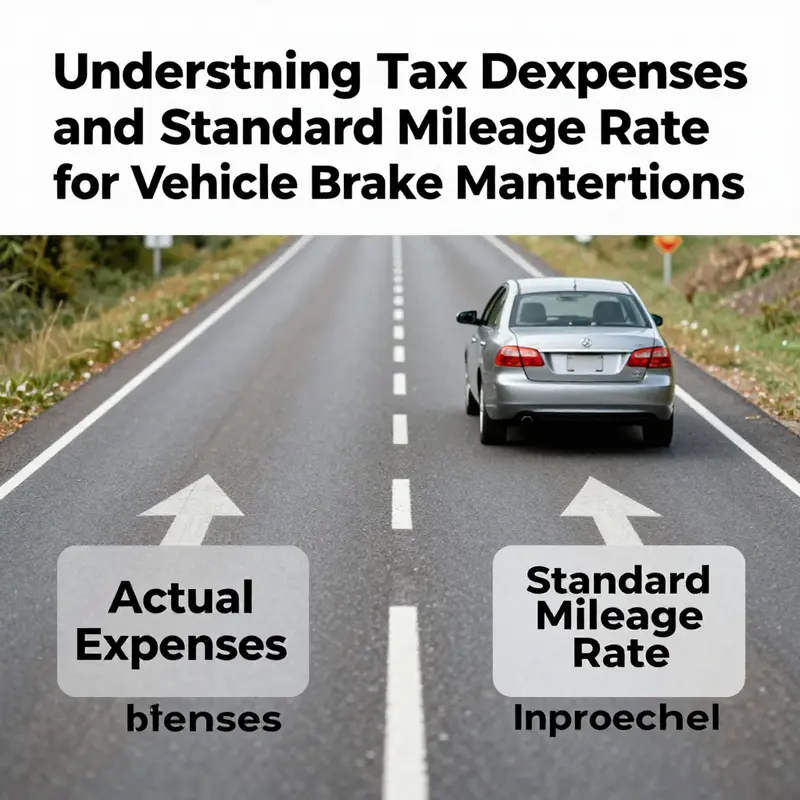
For many taxpayers, the question of whether routine brake maintenance is deductible spills over from the garage into the tax office. The short answer is yes, brakes fall under the umbrella of normal maintenance when the vehicle is used for business. The Internal Revenue Service frames this broadly: you can deduct expenses for maintaining and operating a car used for business. That includes the routine chores that keep a vehicle safe and dependable, like brake pads, rotors, oil changes, tire rotations, and other services tied to keeping the vehicle in safe working condition. The caveat, of course, is simple but essential: the deduction hinges on business use. If the vehicle serves primarily personal purposes, those costs are not deductible. The nuance, as always, lies in measuring and reporting the business use and choosing the deduction method that best aligns with actual costs and record-keeping discipline.
Within this framework, two paths exist for claiming vehicle expenses when you drive for business: the standard mileage rate and the actual expenses method. The standard mileage rate offers a streamlined approach. For 2024, the IRS-set rate is 67 cents per mile. This single figure is designed to cover every category of vehicle cost—fuel, oil, insurance, maintenance, depreciation, and other operating costs. The appeal is clear: you log miles for business, multiply by the rate, and you have your deduction without itemizing every expense. If you drive 10,000 business miles in 2024, the calculation is straightforward: 10,000 × 0.67 equals a $6,700 deduction. This path is especially attractive for people who do not want to chase receipts for every repair or service and who maintain a clean mileage log.
However, brake repairs illuminate why some taxpayers opt for the actual expenses method. When you choose actual expenses, you tally every business-related cost tied to the vehicle and apply the business-use percentage to each category. That means you include brake repairs, fuel, insurance, maintenance, depreciation, tolls, and parking, then apply the fraction of miles driven for business to arrive at the deductible amount. The cost of replacing brake components varies notably by vehicle type and where you shop. On the lower end, you might encounter costs around a hundred dollars for a single brake disc at a cost-conscious shop. On the higher end, especially for luxury or high-performance vehicles, a dealer could run several thousand dollars for a full brake job. The numbers cited in recent data show a wide spread: roughly $100 to $800 per single brake disc, with a full set typically ranging from $600 to $1,000. In some scenarios, particularly when major overhauls or upgraded components are involved, the price can climb into the several-thousand-dollar range. If you opt for the actual expense method, you can deduct the portion of brake-repair costs that corresponds to business use, but you must support the claim with receipts and an accurate calculation of the business-use percentage.
The choice between these two methods hinges on your actual costs and how meticulously you track your vehicle usage. The standard mileage rate offers predictability and simplicity, but it may not fully reflect the true economic hit of maintenance in a year with unusually high repair costs. Conversely, the actual expenses method accommodates higher maintenance bills, including brake repairs, but demands disciplined record-keeping and careful apportionment between business and personal use. If your vehicle shows signs of frequent maintenance—such as recurring brake work, higher tire wear, or regular servicing required to keep it roadworthy—the actual-expenses route can yield a larger deduction. If, however, your vehicle is relatively new, well-maintained, and your business use is moderate, the standard mileage rate often delivers the more efficient path with less paperwork.
To illustrate how this plays out, consider two scenarios. In the first, a driver logs 10,000 business miles and spends $2,000 on brake repairs during the year. If 60 percent of the vehicle’s miles are for business, under the actual-expenses method you could deduct roughly $1,200 of that brake-cost portion, in addition to the proportionate shares of other actual costs. If you were using the standard mileage rate, your deduction would be a flat $6,700 for the miles driven, with no separate brake-repair write-off. In the second scenario, imagine the same 10,000 miles but with $6,000 in brake repairs due to a high-maintenance year or an aging fleet. With actual expenses and 60 percent business use, you could potentially deduct $3,600 for the brake repairs alone, plus your share of other costs. Against the flat-rate route, the brake-heavy year could still leave you ahead under actual expenses, especially if maintenance costs were clustered around business use. These examples underscore a practical truth: the actual-expenses method can better reflect reality when maintenance costs are outsized relative to miles driven, but it comes with the burden of receipts and careful proportioning.
Documentation matters. The IRS expects you to substantiate business use and the costs you claim. For brake repairs, this means keeping receipts, invoices, and any warranty documents, plus a solid method for calculating the business-use percentage. If you operate a single vehicle that you use for both personal and business tasks, you’ll set a proportion based on miles or use, then apply that percentage to each cost category. If you own multiple vehicles or manage a mixed-use fleet, you may need a more structured tracking method, but the underlying principle remains: only the business portion of the expense is deductible. For the brake-repair category specifically, receipts that show the work performed, parts used, and the date of service are essential. In conjunction with mileage logs showing the business miles, these records provide the audit trail that supports your deduction claim.
The decision on which method to use is not purely mechanical. It hinges on your comfort with record-keeping, the volatility of your maintenance expenses, and your broader tax situation. If you frequently drive for business and your vehicle endures heavy wear and tear, the actual-expenses method might yield a larger overall deduction, particularly when brake maintenance is a recurring cost. On the other hand, if you value simplicity and predictability, and your brake-related expenses are modest relative to miles driven, the standard mileage rate often proves the smarter choice. Some taxpayers even switch between methods from year to year, selecting whichever yields the larger deduction given that year’s pattern of miles and maintenance costs. If you anticipate a year with high maintenance bills, you may plan to pursue actual expenses; if you expect stable use and moderate maintenance, the standard rate remains appealing.
Within this framework, you should also think about the practicalities that accompany business vehicle use beyond the math. For instance, if you lease a vehicle for business duties, or if you own a company vehicle used by multiple employees, additional considerations may apply. The allocation of costs by business use for a fleet or multiple drivers can become more complex, and treatment of depreciation may differ depending on ownership and business structure. Even in straightforward cases, you should stay attuned to updates in IRS guidance and mileage-rate adjustments published each year. Reliability and defensibility of your numbers hinge on consistent record-keeping and adherence to the rules laid out by the tax authority.
If you want to ground this discussion in a broader context of maintenance, a quick reference is available in resources that discuss what constitutes vehicle maintenance and its role in tax planning. For readers who want to refresh their understanding of maintenance concepts before calculating deductions, a practical starting point is a concise overview of what counts as vehicle maintenance. See this guide for a plain-language explanation of the basics, which helps connect the maintenance you perform on brakes and other components to their tax implications. This can be a handy precursor to the more detailed, method-specific considerations discussed above. (For more on maintenance basics, visit the resource linked here: https://vehicletricks.com/blog/what-is-vehicle-maintenance/.)
In all cases, the overarching rule remains steady: you can deduct expenses for maintaining and operating a car used for business. Brakes are a clear example of a maintenance expense that ends up in the tax ledger when the vehicle is used for work. The crucial steps are clear: determine the business-use percentage, choose the deduction method that aligns with your costs and record-keeping style, gather receipts and mileage logs, and apply the appropriate percentages to each expense category. With thoughtful planning, brake-related costs do not become an unwelcome surprise at tax time; they become a legitimate component of the cost of doing business on wheels. For official guidance on current mileage rates and deduction rules, see the IRS resource: https://www.irs.gov/publications/p463.
Brakes on the Books: Navigating Routine Maintenance and Tax Deductions for Business Vehicles
When people think about tax deductions for a vehicle used in business, the brakes might not seem glamorous, but they sit at the heart of a practical question: are routine maintenance costs, like brake repairs or replacements, considered normal upkeep for tax purposes? The answer, anchored in the language of the tax code and the guidance that accompanies it, is yes. Brakes fall into the broader category of ordinary and necessary maintenance that keeps a vehicle functioning safely for business use. The IRS doesn’t single out brake work as a special category; instead, it places brake maintenance within the broader framework of vehicle expenses that are deductible when the vehicle is used for business. This perspective matters for anyone who drives a company car, a sole proprietor using a personal vehicle for business, or a fleet manager who wants to optimize how maintenance costs are reflected on tax returns. The practical upshot is straightforward: if the vehicle is used for business, the costs tied to maintaining that vehicle—brakes included—can be deductible, subject to the method you choose and the degree of business use.
The relationship between maintenance, mileage, and deduction hinges on two main methods the IRS provides for calculating vehicle expenses: the standard mileage rate and the actual expense method. The standard mileage rate offers a simple, mileage-based approach. For the 2024 tax year, the rate is 67 cents per mile for business use. This single rate is designed to cover all the ongoing costs of operating a vehicle for business, including wear and tear from daily use, maintenance, repairs, and other ordinary expenses that keep the car running. If a taxpayer adheres to the standard mileage rate for a given vehicle, they can deduct that fixed amount for each business mile driven. Importantly, under this method, you cannot separately claim the actual maintenance costs, even if a brake repair or brake replacement represented a sizable expense. The standard mileage method consolidates maintenance into the per-mile deduction, which can be easier to administer but may not always maximize the deduction for vehicles with high maintenance costs.
For those who prefer a more granular approach, the actual expense method allows you to deduct the business portion of the vehicle’s actual costs. This includes lease payments (for the business-use portion), insurance, depreciation (or the lease inclusion amount, if applicable), fuel, and maintenance and repairs, such as brake work. The important caveat is that once you elect the actual expense method for a vehicle in a given period, you cannot switch to the standard mileage rate for that vehicle during the same period. This choice must be consistent across the entire tax year for that vehicle, and if you have multiple vehicles, you can designate different methods for each, depending on their individual usage patterns. Within the actual expense framework, brake repairs and replacements fall squarely into the maintenance and repairs category, but you must allocate those costs between business and personal use. If the vehicle is used 70 percent for business and 30 percent for personal purposes, then only 70 percent of the brake-related costs are deductible as business expenses under the actual expense method.
A nuance that often arises concerns the nature of maintenance versus major improvements. The IRS guidance emphasizes that routine maintenance—items such as brake pads, rotors (when worn and needing replacement as part of maintenance), oil changes, tire rotations, and other services necessary to keep the vehicle in safe working condition—are deductible when they are part of maintaining the vehicle used for business. By contrast, major overhauls or upgrades—significant enhancements that extend the vehicle’s life beyond ordinary wear and tear—do not fall into the same category and are typically treated differently for tax purposes. This distinction matters because it guides the amount and the type of documentation you must keep if you plan to claim actual expenses. Documenting the date, purpose, and business miles associated with each maintenance event helps substantiate the deduction later and minimizes questions from the IRS during a review.
Recordkeeping, as with many tax matters, is the unsung hero of legitimate deductions. Maintaining a thorough log of business mileage and maintenance expenses is essential. A mileage log that records dates, business purpose, starting and ending locations, and the miles driven provides the backbone for either method. Receipts, invoices, and credit card statements for brake repairs, parts, and related labor become the corroborating evidence for the actual expense method. Without solid records, the deduction risks being reduced or disallowed. In practice, good records translate into smoother tax preparation and a clearer picture of how much of a vehicle’s maintenance costs you’re entitled to deduct in a given year.
Another practical dimension concerns personal use. When the vehicle is not used for business, the related maintenance costs, including brake work, are not deductible. The delineation between business and personal use is the boundary that defines what portion of maintenance can be claimed. If you use your vehicle for both business and personal activities, you’ll need to determine the business-use percentage and apply it to the maintenance costs under the actual expense method, or track your business miles under the standard deduction approach if you opt for that route. The “inclusion amount” referenced in some IRS guidance can also come into play in lease scenarios or mixed-use arrangements. This inclusion amount is designed to reflect the value of personal use of a vehicle that is provided in a business context and can affect how much of the expense is treated as a fringe benefit or included in income, depending on the specifics of the lease and usage.
For readers seeking a plain-language primer on routine care and maintenance, a concise overview can be helpful. A readable starting point is to explore a general overview of vehicle maintenance, which frames how routine work—from brake work to tire care—fits into broader maintenance strategies. This context is especially useful when you’re deciding which deduction method to use and how to apply it to your particular situation. Curious readers might appreciate a quick, practical exploration of what qualifies as maintenance in everyday terms, which can anchor more formal tax decisions with real-world understanding. The goal is not to replace official guidance but to complement it with a grounded sense of how maintenance decisions interact with tax rules.
In this landscape, the role of documentation cannot be overstated. If you’re self-employed or run a business that relies on a vehicle, keeping meticulous records of miles driven for business, the proportion of business use, and the receipts for brake repairs, rotor replacements, and other maintenance tasks will pay off come tax time. Suppose a brake job is performed as part of keeping the vehicle safe for business use—such as ensuring reliable braking for a sales route or service visits. In that case, it is a legitimate business expense when supported by clear documentation. The decision to deduct under the actual expense method or the standard mileage rate hinges on your situation, your tax strategy for the year, and the degree of business use. The key is to stay consistent and precise in how you track usage and expenses so your return reflects a coherent, defensible narrative to the IRS if questions arise.
As you contemplate the mechanics of deduction, consider how everyday maintenance intersects with the broader tax philosophy of business expenses. The tax code recognizes that a vehicle used for business must be kept in operating condition, and routine maintenance is a necessary part of that condition. The brake system, a central component of safe driving, is vouchsafed by the same logic that supports deductibility for other routine upkeep. The focus remains squarely on business use, reasonableness, and substantiation. The conversation about brakes, maintenance, and tax deductions therefore sits at the intersection of practical vehicle management and responsible recordkeeping, a place where understanding the rules helps you optimize a legitimate deduction rather than rely on guesswork or lax bookkeeping.
For readers who want to dive deeper into the official framework, the precise guidance for vehicle expenses is published by the IRS, and it is updated annually to reflect changes in rates, limits, and interpretations. The general principles—deductibility of maintenance for business-use vehicles, the option between standard mileage and actual expenses, and the importance of thorough recordkeeping—remain central to choosing the approach that best fits your situation. If you’re organizing your year-end finances around vehicle use, it may be valuable to align your maintenance decisions with your chosen deduction method, ensuring that brake-related expenses are categorized in a way that supports your overall tax position.
To connect this discussion with a quick, practical reference, you can explore a concise primer on vehicle maintenance at the following internal resource: What is vehicle maintenance. This link offers a straightforward framing of routine upkeep beyond the specifics of tax law, helping you think about maintenance in a broader business context as you prepare for tax reporting.
In sum, brakes are a standard part of maintenance, not a special tax category, when a vehicle is used for business. They can be deductible under the actual expense method, and they contribute to the business-use calculation where relevant. Those who choose the standard mileage rate will have their brake-related wear and tear encompassed within the per-mile deduction, with the caveat that the method applies uniformly for the vehicle across the year. The success of any deduction rests on careful recordkeeping, clear separation of business versus personal use, and an understanding of the method you select. By grounding your approach in these principles, brake maintenance becomes a straightforward, legitimate component of your business vehicle deductions rather than a confusing footnote in the tax return. For ongoing clarity, consult the IRS guidance and keep your records tight, and you’ll find that routine maintenance decisions align with your broader tax strategy rather than stand apart from it.
External resource for official guidance: https://www.irs.gov/pub/irs-pdf/p463.pdf
Final thoughts
Understanding the intricacies of tax deductions related to vehicle brakes as a normal maintenance expense is crucial for business owners. Knowing the rules and guidelines can pave the way for significant tax savings. It’s essential to differentiate between personal and business vehicle usage, which directly affects what can be claimed. Moreover, choosing between actual expenses and the standard mileage rate can have different implications for tax filings. For any vehicle-related queries, IRS Publication 463 stands as a vital resource for business owners navigating their tax obligations. Staying informed ensures compliance while maximizing deductible expenses.