
Uber drivers play a crucial role in ensuring passenger safety and vehicle performance, yet the onus of vehicle maintenance and reporting largely falls on them. This article explores the structure behind vehicle maintenance standards set by Uber, the responsibilities of drivers in reporting issues, the relevant legal frameworks that govern vehicle safety, and the implications of maintenance on overall safety and performance. Understanding these facets allows business owners to better support their drivers and maintain a safer rideshare environment.
Are Uber Drivers Required to Report Vehicle Maintenance? The Silent Duty Behind the Ride
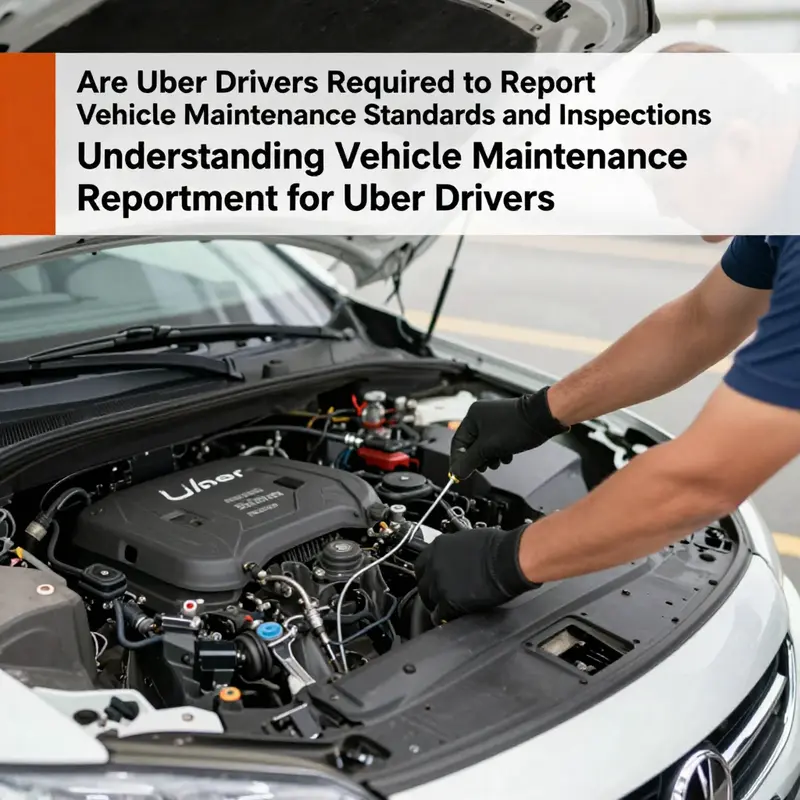
The question of whether Uber drivers are required to report vehicle maintenance has a surface answer and a deeper, more practical one. On the surface, the platform does not run a real-time, driver-facing maintenance log where issues are filed in a formal queue. In practice, the road to driving on Uber hinges less on a moment-to-moment report button and more on a robust expectation: the vehicle must be safe, reliable, and in good working condition at all times. That expectation guides onboarding checks, ongoing verifications, and the consequences of neglect, and it places the driver in a central role as the keeper of their own vehicle’s safety. The result is a quiet but powerful duty that shapes every mile a driver travels, even if there is not a shiny, continuous reporting channel in the app itself.
From the outset, Uber’s safety standards set the framework for what counts as acceptable maintenance. During the sign-up process, a driver must show proof of a valid vehicle inspection if the local jurisdiction requires it, along with car registration and proof of insurance. The vehicle must also pass an initial inspection conducted by Uber, which scrutinizes mechanical condition, safety features, and overall readiness. This onboarding checkpoint signals a clear boundary: a vehicle that cannot meet these baseline standards has no place on the platform. It is not that maintenance reports are summoned to the company in real time; rather, the vehicle must meet the company’s threshold for safety before the driver is permitted to operate publicly through the app.
Beyond onboarding, Uber uses automated systems and third-party tools to verify core vehicle information. License plate checks and Vehicle Identification Number verifications are part of the safety net that helps confirm the vehicle meets minimum safety standards. These automated verifications are not a substitute for upkeep, but they do provide a mechanism for cross-checking that the vehicle in service matches the documentation on file. In several regions, Uber partners with local authorities or service providers to conduct safety checks. These are often independent of a driver’s explicit reporting duties and are designed to catch issues that could compromise safety, even if a driver has otherwise kept the maintenance log tidy. The practical takeaway is that while there is no constant maintenance report stream, the platform still enforces safety through a combination of onboarding, automated data checks, and regional safety initiatives.
The core responsibility, however, remains with the driver. The vehicle must be in a safe, roadworthy condition at all times. Routine maintenance—oil changes, tire checks, brake service, lighting, suspension, and system diagnostics—falls squarely on the driver’s shoulders because the rider’s safety and the vehicle’s reliability depend on it. If a vehicle fails an inspection, if riders report safety concerns, or if Uber’s monitoring systems flag issues that could affect performance, the driver may be required to address the problem before they can continue driving on the platform. The threshold here is not a single inspection score but a continuum of safety, reliability, and regulatory compliance that follows the vehicle into every shift and every trip. When a problem is identified, the response is not a passive wait for a reminder to file a maintenance report. It is an active fix, a repair, or a replacement part, followed by rechecking the issue to ensure that the vehicle once again meets the company’s safety and quality standards.
This design—relying on driver responsibility complemented by periodic checks and automated verifications—reflects a broader truth about ride-hailing safety. The platform creates a safety framework that relies on the vehicle owner’s diligence and on professional standards of maintenance that align with state, local, and national requirements. In many places, fleets or commercial operations must maintain logs that document routine maintenance and the service history of the vehicle. For individual Uber drivers, the legal landscape can be more nuanced. Some jurisdictions require certain mechanical checks or fail-to-function reports as part of broader regulatory oversight. In others, there may be no formal obligation to submit maintenance records to the platform itself, yet there remains a legal and ethical responsibility to operate a safe vehicle. The absence of a live-reporting feature does not erase the obligation. It simply shifts the emphasis to proactive maintenance, honest self-assessment, and timely compliance with inspections and regulations.
What does this mean in practice for someone who is contemplating or actively driving for Uber? It means that the daily routine of vehicle upkeep becomes a vital, ongoing discipline rather than a once-a-year task. Drivers should treat maintenance as part of the job’s core competence: the ability to deliver a safe, smooth, and dependable ride. This includes maintaining tires with adequate tread and proper inflation, ensuring brakes respond promptly, verifying that steering and suspension are free from unusual play, and confirming all lights—headlights, taillights, brake lights, turn signals, and hazard lights—function correctly. It also means monitoring fluid levels, battery health where applicable, and the integrity of seat belts and airbag indicators. The aim is not to satisfy a single audit but to maintain a vehicle that consistently performs at the safety threshold defined by both local regulations and Uber’s own standards.
Internally, many drivers intuitively track maintenance through receipts and service records, creating a personal history that demonstrates ongoing care. A driver who keeps a well-organized log—dates of service, the nature of work performed, parts replaced, and the service provider’s details—builds a reliable narrative that can be referenced if questions arise from riders, regulators, or the platform. Even if Uber does not demand routine submission of maintenance logs, having these records on hand supports quick resolution if a safety concern surfaces. In regions where inspections are required by law or by local authorities, the records become an essential bridge to compliance, ensuring the vehicle continues to operate legally and safely.
For drivers who want a practical mental model, think of maintenance as both a preventive habit and a responsive capability. Preventive maintenance reduces the likelihood of unexpected breakdowns on the road and minimizes rider disruption. It also aligns with the platform’s emphasis on consistent, high-quality service. Responsive maintenance means recognizing when something shifts in the vehicle’s behavior—a wobble in the steering, a groan from the brake system, a flicker in the dashboard lights—and addressing it promptly rather than continuing to drive and hoping the issue resolves itself. In both cases, the driver acts as the steward of the vehicle, the focal point where safety, reliability, and customer trust converge.
The absence of a formal in-app reporting mechanism for maintenance does not translate into an absence of accountability. The driver remains the operator who must know when something isn’t right and take appropriate action. If an issue surfaces that affects safety or performance, it is in the driver’s best interest to pause service if necessary, seek professional evaluation, obtain the required documentation, and, if needed, comply with any re-inspection or recertification process. While Uber’s systems can verify the vehicle’s identity and regulatory compliance, these checks work best when the vehicle and the driver work in tandem toward a shared standard of safety. And when the vehicle is once again deemed fit for service, it is the driver’s stewardship that ensures that fit remains stable as trips accumulate.
The broader regulatory context helps illuminate why the driver’s responsibility is so central. Local laws and regulations sometimes require maintenance logs for commercial purposes or mandate reporting of certain mechanical failures to authorities or to authorities through commercial fleets. The specific obligations vary by jurisdiction, and the line between personal use and commercial operation can blur in ride-hailing. Nevertheless, the legal and ethical obligation to operate a safe vehicle remains constant. This is not a loophole or a workaround but a foundational principle that underpins rider safety, platform trust, and the overall viability of a ride-hailing service.
Embedded in this framework is a quiet but steady reminder: the maintenance of a vehicle in a ride-hailing fleet is never a finished task. It is a cycle of continuous attention, guided by regulatory requirements, professional standards, and the platform’s safety expectations. Even without a standing maintenance-report feature in the app, the driver’s daily choices—when to service, which checks to perform, how to document work, and when to pause service for safety—constitute a living form of reporting through action. The ride’s safety depends on the sum of these actions, from the meticulous pre-shift checklist to the prompt handling of any post-trip concerns.
This approach also foregrounds the rider’s experience. A car that feels dependable, that handles predictably, and that arrives on time with all lights functioning, contributes to a sense of safety and reliability that words alone cannot convey. When riders notice consistent, well-maintained vehicles, their perception of the platform strengthens—a belief that the service is serious about safety, not merely about speed or scale. In that sense, maintenance becomes part of the brand promise, even if the mechanism for reporting is not a button in the app. It is the everyday discipline that makes every trip predictable and safe for both driver and passenger.
For readers seeking a concise summary of the maintenance expectations, one useful step is to explore foundational material on vehicle maintenance itself. A practical starting point is to review general guidance on what constitutes vehicle maintenance and why it matters. This can ground the broader discussion in tangible actions and measurable standards. What is vehicle maintenance provides a clear, readable overview that complements the more specific discussion of ride-hailing safety and reporting requirements. Understanding these basics helps frame the driver’s responsibilities within the larger ecosystem of road safety and regulatory compliance.
In weaving together onboarding requirements, automated verifications, regional safety checks, and driver responsibility, the chapter paints a cohesive picture: Uber drivers are not asked to submit a running maintenance log directly to the company in most cases. Instead, they operate within a safety framework that requires vehicles to be safe and compliant, while giving drivers the autonomy to address issues as they arise. Maintenance becomes a continuous practice rather than a paperwork exercise. The driver’s reputation hinges on the vehicle’s reliability, and the platform’s trust in that reliability is reinforced not by a constant stream of reports but by the alignment of on-the-ground maintenance with standardized safety checks and regulatory expectations. This alignment ensures that every ride begins with a vehicle that has earned its place on the road, not merely one that has passed a one-time inspection.
The practical takeaway for drivers, regulators, and riders alike is straightforward: stay ahead on maintenance. Do not wait for a warning light to illuminate or for a rider to report a concern before you act. Schedule routine service, verify that documentation is in order, and be prepared to address issues promptly when they arise. When in doubt, err on the side of caution. The consequence of neglect can extend beyond a single ride to suspension or deactivation from the platform, a result no driver wants to encounter. The aim is not punitive oversight but a shared commitment to safety, reliability, and the confidence that every journey is built on a solid foundation of vehicle health.
External resource: https://help.uber.com/drive/en-us/faq/1207896353034
Maintaining Trust on the Road: The Essential Duty to Report Vehicle Maintenance in Ride-Hailing

Safety is the thread that holds the ride-hailing ecosystem together. Passengers rely on a driver who shows up not just with a willingness to help but with a vehicle that behaves predictably, stop-by-stop, mile-after mile. In this context, maintenance isn’t merely a personal habit; it is a professional obligation that underpins trust, liability, and the platform’s ability to promise reliable service. The question at the heart of this chapter—are Uber drivers required to report vehicle maintenance?—has a clear answer embedded in policy, practice, and law: the driver bears primary responsibility for keeping a vehicle in safe working condition, and they are expected to address issues promptly. The platform’s standards create a framework that elevates safety beyond a personal preference and into a shared duty among drivers, riders, insurers, and regulators.
From the outset of joining a ride-hailing platform, a driver is drawn into a system designed to verify that a vehicle meets strict safety and quality benchmarks. The signup process typically requires proof of a valid vehicle inspection when required by local regulations, along with registration and insurance documentation. But the process does not end there. Uber, like other platforms in this space, imposes ongoing safety expectations. An initial vehicle inspection may be conducted by the platform, assessing mechanical soundness, safety features, and overall condition. These checks establish a baseline—an assurance that the vehicle is fit for passengers and public road use. Yet the ongoing responsibility falls primarily on the driver. The platform does not maintain a real-time, driver-facing maintenance log or a notification portal that continuously monitors every mechanical nuance. Instead, it relies on a culture of proactive reporting and prompt repair to prevent issues from escalating into safety risks.
The absence of a live, in-app maintenance alert system does not signal a lack of accountability. Drivers are expected to monitor their vehicles continually and to act swiftly when anything feels wrong or when warning indicators appear. A cracked windshield, a malfunctioning brake light, or a tire showing uneven wear are not merely cosmetic concerns; they are red flags that demand attention before the vehicle is put back into service. When a rider reports safety concerns, or when the platform’s monitoring systems detect anomalies, drivers may be required to address the problem or halt service until a qualified fix is completed. In some cases, a vehicle that fails an inspection or presents persistent safety concerns can be suspended from the platform until repairs are made. This consequence—temporary removal from service—reflects the gravity of maintaining safe transport for the riding public.
The legal landscape surrounding vehicle maintenance adds another layer of complexity. Local laws and regulations frequently require maintenance records and, in some jurisdictions, mandatory reporting of mechanical failures. While individual ride-hailing drivers may not be treated as formal commercial fleets with the same reporting mandates, they nonetheless bear legal responsibility for operating a safe vehicle. The intersection of platform policy and local law creates a practical reality: drivers must keep careful, accessible records of maintenance activities and be prepared to furnish documentation if needed to demonstrate that a vehicle remained in compliance with safety standards.
This is not theoretical. Consider a scenario where a warning light signals engine trouble. A driver who refuses to investigate or repair the issue and continues to operate the vehicle invites serious consequences. In addition to the obvious safety jeopardy, there are financial and legal risks. If an accident occurs and it is determined that a known mechanical fault contributed to the incident, the driver could face liability for damages and injuries, potentially exposing them to civil actions or insurance disputes. Insurance providers, for their part, frequently require proof that a vehicle was properly maintained. Failure to document maintenance or to demonstrate ongoing compliance can complicate or even void coverage in the event of a claim. In short, neglecting maintenance is not only risky; it can undermine the financial protections that riders, drivers, and the platform rely on.
The practical takeaway is straightforward: maintenance is a professional duty that extends beyond personal preference. Drivers should treat routine checks as part of a daily workflow, not a quarterly afterthought. The most elemental checks—brakes, tires, lights, windshield wipers, and general performance—serve as the first line of defense against preventable failures. Routine inspections, tire tread assessments, brake pad wear, and fluid levels should be documented with dates and notes. When a driver detects an issue, the right course of action is to stop driving the vehicle until the problem is resolved by a qualified technician. This approach minimizes risk and maximizes safety for riders and drivers alike.
Documentation is essential. A well-kept maintenance log—whether kept in a digital format or in a binder of receipts—provides a traceable history that can be critical in the event of an inspection, a dispute, or an insurance inquiry. The value of documentation extends beyond compliance; it builds a record of professional diligence that can reassure riders about the safety of their ride. Receipts for parts and service, inspection certificates, and notes about corrective actions create a verifiable trail that can be reviewed by regulators, insurers, or the platform itself if questions arise. When drivers take a proactive approach to record-keeping, they reinforce not only their own accountability but the platform’s overarching commitment to safety and reliability.
A central component of this prudent approach is proactive communication. If a driver identifies a maintenance concern, the recommended path is to report it promptly through the appropriate channel. In many cases, this means notifying the platform’s support team about the issue and any actions taken to remedy it, as well as submitting any applicable inspection or service records. While the in-app experience may not provide a live, continuous “maintenance alert” stream, it does provide channels through which concerns can be logged and reviewed. Driving with a known issue—without reporting it or seeking timely repairs—runs counter to the expectations set by the platform and the broader safety standards that govern ride-hailing operations.
The rhetoric of responsibility is complemented by a practical, day-to-day discipline. Drivers should embed simple habits into their routines: perform quick pre-trip checks, schedule regular professional inspections, and keep a separate, easily accessible folder of maintenance records. A pre-trip checklist that includes brakes, tires, lights, and visibility helps catch problems before passengers step into the car. A more in-depth, periodic inspection by a qualified technician ensures that components beyond the obvious—such as steering alignment, suspension wear, and exhaust integrity—remain within safe tolerances. The objective is not to chase perfection but to ensure reliability and predictable vehicle behavior, which directly shapes rider confidence and the likelihood of repeat requests.
To connect these practical habits to policy, consider how the platform frames the obligation in its guidelines. The driver must maintain the vehicle in a safe and reliable condition at all times. This emphasis on ongoing safety is more than a standard of care; it is a framework that supports the platform’s ability to operate as a trusted intermediary. The fact that a formal in-app real-time reporting mechanism may be limited does not absolve drivers of accountability. Instead, it underscores the need for a culture of transparency and proactive problem-solving. A driver who communicates concerns early, documents maintenance activity, and cooperates with the platform and insurers is contributing to a safer ecosystem and, in turn, to the long-term viability of the platform’s business model.
The core idea—maintenance as a professional duty—extends to the quality of service riders receive. A vehicle kept in safe condition reduces the likelihood of in-ride disruptions, unexpected breakdowns, or safety incidents that could erode trust. Riders benefit from the predictability of safe, mechanically sound vehicles, while drivers benefit from fewer cancellations, fewer disputes, and more stable earnings. In this light, reporting maintenance concerns is not a punitive measure but a shared act of stewardship. It is a practice that aligns the interests of drivers, riders, insurers, and the platform toward a common objective: safety, reliability, and accountability on every trip.
The guidance is clear, and it is reinforced by formal references. The official vehicle requirements page outlines the standards drivers must meet, including safety inspections, ongoing maintenance, and the importance of reporting issues promptly. While the exact processes may vary by jurisdiction, the underlying principle remains universal: drivers are expected to act as stewards of their vehicle’s safety. This alignment with professional standards is what enables ride-hailing to function as a credible transportation option, and it explains why the topic of reporting maintenance issues deserves thoughtful, consistent attention rather than vague assurances.
For readers seeking a concise framework that captures the essence of maintenance responsibilities, a foundational resource on what maintenance entails can be a helpful starting point. See What is vehicle maintenance for a practical overview of the kinds of upkeep that tend to matter most in everyday driving. This reference complements the broader policy discussion by clarifying the everyday tasks and records that support compliant maintenance practices. It is important to recognize that while this chapter focuses on the ride-hailing context, the core principles apply to any vehicle intended for passenger service—the discipline of prevention, documentation, and timely action remains constant.
In sum, Uber drivers are not merely participants in a digital marketplace; they are custodians of safety. Their duty to maintain vehicles and to report issues promptly is foundational to the trust that riders place in the platform. The absence of a live, automatic maintenance alert system does not dilute this duty; it elevates it. Drivers are expected to monitor, report, and repair as necessary, and to maintain records that can be presented when required. This approach reduces risk, supports responsible insurance practices, and preserves the integrity of the ride-hailing experience. It is a model that recognizes safety as a collective responsibility—an ongoing, practical commitment that keeps the road safer for everyone involved.
External resource: https://www.uber.com/us/en/drive/vehicle-requirements/
Under the Dashboard: How Reporting, Inspections, and Driver Responsibility Shape Uber Vehicle Maintenance
Safety in the ride-hailing ecosystem is not the result of a single rule but a continuous alignment of standards, inspections, and habits that begin when a driver first taps into the platform and ends, ideally, with riders arriving safely at their destinations. The question of whether Uber drivers are required to report vehicle maintenance is more nuanced than a simple yes or no. It sits at the intersection of driver responsibility, platform policy, and the patchwork of federal, state, and local regulations that govern road safety. At its core, the system expects the vehicle to be safe and reliable, while enforcing practical mechanisms that keep obstacles to that safety visible and addressable. In practice, this means a driver must stay on top of maintenance, and the platform, for its part, provides the tools and the incentives to do so, while regulators set the floor beneath them all.
From the moment a driver begins the onboarding process, the bar is clear: the vehicle must meet safety and roadworthiness standards, and proof of inspection where required by local rules must be supplied. In many jurisdictions, this means presenting a valid inspection certificate, up-to-date registration, and proof of insurance. Uber’s own process adds another layer: an initial vehicle inspection conducted by the platform, focusing on mechanical soundness, safety features, and overall condition. This dual gate—a state or local check plus Uber’s inspection—casts maintenance as both a regulatory obligation and an operational prerequisite. The implication for drivers is straightforward: the vehicle must be in a condition that won’t just satisfy a regulator but will also protect riders and drivers in real-world driving conditions.
Beyond the onboarding gates, the question of reporting maintenance issues becomes more nuanced. Uber does not operate a real-time, driver-to-company maintenance hotline in the sense of a direct, universal alert system for every mechanical hiccup. Instead, the expectation is that drivers will proactively address any issues that could impair safety or performance. If a fault emerges—whether it is a warning light, a suspected brake problem, or a tire with uneven wear—the driver is expected to cease driving if the issue compromises safety and to arrange for repair before resuming rides. This approach mirrors how many regulated fleets operate: the emphasis is on preventing unsafe operation rather than merely documenting every fault after the fact.
The regulatory landscape adds texture to this picture. State rules often require regular inspections for commercial vehicles, with fleets obliged to keep repair and maintenance records. California provides a particularly instructive example. The California Public Utilities Commission sets stringent expectations for ride-hail vehicles, including the submission of documentation proving compliance during periodic inspections. The consequence of noncompliance can be immediate and severe—suspension of driving privileges or access to the platform until the issue is resolved. In New York City, the Taxi and Limousine Commission imposes its own cadence: a comprehensive annual inspection is mandatory for all for-hire vehicles, accompanied by maintained maintenance records. The net effect in cities like San Francisco or New York is that drivers are not merely encouraged but often required to reflect the reality of their maintenance work in a way that a user or regulator can audit.
At the federal level, the National Highway Traffic Safety Administration prioritizes safety but does not directly regulate ride-hailing operations in the way state agencies do. NHTSA’s focus on vehicle safety informs state and local standards and shapes industry best practices, but it leaves room for state governments to adapt a framework to the specific realities of ride-hailing. This dispersion is neither accidental nor inherently problematic; it recognizes that the risk profile and operational model of a single-driver, single-vehicle setup differs from that of a large commercial fleet. For Uber drivers, this means the safety baseline is set by a combination of federal guidance and the more granular, jurisdiction-specific rules that govern inspection frequency, documentation, and permitted operating conditions.
Uber’s internal policies further define how drivers relate to maintenance. There is a clear expectation that drivers will report mechanical issues through Uber’s platform tools and that they will refrain from driving while an issue is unresolved. The digital reporting system, while not a replacement for state inspection logs, provides a crucial layer of safety oversight. It enables the platform to monitor the fleet’s health, flag recurring issues, and demand timely fixes. From a rider-safety perspective, this is essential because it creates a transparent, traceable trail of when a problem was identified, what steps were taken, and whether the vehicle met safety standards before continuing to operate. The emphasis is not on policing every minor hiccup but on preventing unsafe operation and ensuring that major faults are resolved before the vehicle returns to service.
For drivers, this framework translates into practical, day-to-day discipline. Maintaining a vehicle becomes a blend of preventive care and responsive action. Preventive care means adherence to a maintenance schedule that aligns with both manufacturer recommendations and local regulatory expectations. It means scheduling tire rotations, brake inspections, fluid checks, light replacements, and other routine tasks before they become urgent. The driver’s maintenance log—whether a paper notebook, a digital note, or a formal service history—becomes the narrative that shows a vehicle’s health over time. While not every state system requires the driver to file a detailed log with the state, many jurisdictions expect the operator to be able to produce a coherent record if challenged during an inspection or an audit arising from a safety complaint.
The practical consequence of this framework is that drivers must connect maintenance to performance. Worn tires, disc pads approaching the wear limit, or a faulty steering system do not merely threaten safety; they undermine the very reliability that riders rely on when choosing an Uber ride. A vehicle with a known issue is not just an individual risk; it represents potential systemic risk if multiple drivers experience comparable faults within a given period. This is why regulators, the platform, and drivers all emphasize not only addressing problems but also documenting them and ensuring the vehicle is out of service until it is fixed.
One helpful way to view the distinction between reporting and recording is to think of reporting as the moment a problem is identified, and recording as the ongoing, auditable history of what was done about it. The former is an action—telling someone else about a fault so it can be resolved. The latter is accountability—maintaining a transparent trail that demonstrates that maintenance occurred, repairs were completed, and the vehicle remained roadworthy for operation. The discipline of keeping records is especially important for drivers operating under the patchwork of state laws and city regulations. It provides a defendable basis if an inspector asks, or if a regulator assesses the driver’s readiness to continue to operate.
To illustrate the practicalities, consider a driver who notices a soft brake pedal and an unusual noise while braking. The first step is to stop driving, assess the issue, and arrange a professional inspection. The next step is to obtain and preserve documentation: the inspection report, maintenance receipts, parts replaced, and the dates of service. This documentation supports compliance during periodic inspections and helps the driver meet Uber’s internal expectations for safety. It may also align with local rules requiring commercial drivers to maintain maintenance logs or repair records that prove the vehicle has been kept in safe condition. For drivers, developing a routine around this cycle—identify, isolate, repair, document, and resume driving only when safe—helps ensure that both the platform and the regulators see a consistent commitment to safety.
Incorporating a clear, written approach to maintenance does more than satisfy regulatory and platform requirements; it improves engine reliability, fuel efficiency, and overall ride quality. Routine maintenance that anticipates wear and tear reduces the likelihood of roadside breakdowns and the risk of safety-related events. This, in turn, reduces negative rider experiences, which can trigger safety reviews or more stringent checks by the platform. The ripple effect is notable: when drivers routinely address wear and tear, the platform’s algorithmic risk assessment softens, rider trust improves, and the overall operating environment becomes more predictable. The result is not just compliance in the abstract but a tangible improvement in daily operations and rider safety.
For readers seeking a practical baseline, a helpful starting point is to understand what counts as maintenance in this context. This is not a highly technical catalog of every possible part; rather, it is a driver-centered, safety-focused checklist that aligns with both the platform’s expectations and the legislative environment. To ground this, consider the guidance that frames vehicle maintenance as a continuum—from preventive care to reactive repairs. The driver who treats maintenance as a core responsibility rather than a nuisance is the driver who minimizes risk, protects passengers and themselves, and sustains a reliable service.
With this in mind, a simple baseline emerges: maintain tires in good condition with adequate tread and proper inflation; ensure brakes are responsive and free of unusual noise; verify lights, signals, wipers, and mirrors work correctly; monitor fluid levels and leak indicators; and schedule professional inspections at intervals that reflect the vehicle’s age, mileage, and typical usage. Pair this with timely reporting of any issue through the platform’s tools and a diligent record-keeping practice. The result is a clear, auditable trail that supports both regulatory compliance and reliable service delivery. In this environment, the driver’s responsibility is not merely to drive well but to drive safely and to prove it when questioned.
For a concise baseline understanding of maintenance, see What is vehicle maintenance? This resource helps establish the common-sense expectations that guide both driver behavior and the platform’s oversight. The emphasis remains consistent: safety first, documentation second, and routine maintenance as the ongoing practice that keeps the vehicle fit for service. This approach dovetails with the broader goal of a regulated, rider-safe ecosystem where drivers, platforms, and regulators share a common objective: that every ride begins with a vehicle that is in good working order and remains so through the entire journey.
Looking forward, the relationship between reporting and regulation will continue to evolve as local authorities refine inspection cadences and as ride-hailing platforms expand their safety tooling. Some jurisdictions may consolidate reporting with digital inspection records, while others may rely more heavily on drivers to carry and present maintenance evidence at the point of inspection. Whatever the exact mechanics, the underlying truth remains stable: the ride-hailing model hinges on a vehicle that reliably meets safety standards, a driver who understands their obligation to maintain it, and a platform that enforces, records, and supports that standard through both policy and technology. This triad keeps the ecosystem functioning and, more importantly, keeps riders safe on every trip they take.
As drivers navigate this landscape, they should be mindful of the local specifics that apply to their area. DMV regulations, state transportation authorities, and city commissions all contribute to the concrete rules that shape everyday practice. For the most accurate and up-to-date information about maintenance reporting requirements in your area, consult your state’s DMV website or the relevant transportation authority. These sources anchor the more general principles described here in the day-to-day realities drivers face when they park, service, and restart their rides. The alliance of personal responsibility, platform policy, and public regulation is what ultimately sustains safe, dependable ride-hailing services.
External resource: https://cpuc.ca.gov/Consumer-Resources/Transportation/Ride-Hail-Vehicle-Requirements
Maintenance as a Guardian of Safety and Service: How Uber Drivers Navigate Rules, Inspections, and Rider Trust
When people imagine the ride-hail experience, they often picture the route, the conversation, and the capricious moment when a rider hops into the backseat. What remains less visible is a constant, silent discipline: maintenance. For Uber drivers, keeping a vehicle in solid working order is not merely a matter of comfort or thrift. It is a foundational responsibility that supports safety, reliability, and the trust riders place in the platform to deliver them to their destinations without drama or danger. Maintenance, in this sense, behaves like an invisible safety net beneath every trip. It is both a practical routine and a legal obligation, shaped by platform rules, local laws, and the broader aims of safe urban mobility. Understanding this layered obligation helps illuminate why drivers tend to treat upkeep not as optional maintenance but as a core aspect of their professional practice.
From the moment a driver signs up, the maintenance baseline is set by a combination of Uber’s requirements and local regulatory rules. The platform asks for proof of a valid vehicle inspection if the state or region mandates one, along with car registration and proof of insurance. In addition, the vehicle must pass an initial Uber inspection, a process that screens for mechanical issues, safety features, and overall condition. These steps are not merely procedural hurdles; they establish a standard for the kind of vehicle that will be allowed on the app, a standard that translates into safer journeys for passengers and less risk of breakdowns during peak demand. The early emphasis on inspection and safety creates a precedent that many drivers carry forward into everyday operations, reinforcing a culture where issues are confronted before they become service interruptions.
Yet Uber does not maintain a real-time, driver-facing maintenance reporting system in the way a fleet operator might. There is no constant dashboard alerting a driver to a loose brake pad or a wheel that wears irregularly. Instead, the responsibility rests on the driver’s shoulders to notice and address problems proactively. If a vehicle develops a concerning issue—anything that could affect safety or performance—the driver is expected to remedy it before continuing to drive. If a problem is detected by riders, or flagged by Uber’s monitoring systems, the driver may be required to fix the issue, pass a re-inspection, or even temporarily suspend driving until the vehicle is brought back to standard. This dynamic creates a practical incentive for vigilance, because the cost of letting a minor problem go unaddressed can be not only mechanical failure but also a temporary loss of access to the platform that underwrites the driver’s income.
The literature on vehicle safety underscores the seriousness of this approach. National highway safety data consistently show that neglected maintenance increases crash risk, particularly when basic systems such as brakes, tires, and lights fail to perform as designed. The practical implication for ride-share drivers is straightforward: regular checks on critical components reduce the likelihood of dramatic, safety-critical failures. Brakes and tires are obvious focal points, but the same principle applies to lights, fluids, and the battery. A routine, thoughtful inspection routine—checking pad wear, tire tread depth, brake fluid levels, coolant, oil, and the electrical system—acts as a shield against preventable hazards. In this context, maintenance becomes a form of risk management, a quiet but relentless discipline that protects the driver, the passengers, and the broader public.
Beyond safety, maintenance influences performance in tangible ways that matter to riders and to the bottom line. A well-maintained car tends to deliver better fuel efficiency, smoother handling, and more predictable braking and acceleration. These improvements translate into lower operating costs and more consistent ride experiences, which, in turn, support higher rider satisfaction and more reliable ratings. When a vehicle responds smoothly to traffic, weather, and load, a driver’s ability to meet pickup times and deliver a calm, confident ride increases. This is not a cosmetic benefit; it affects the rhythm of daily operations, the frequency of accepted trips, and the overall reliability that riders come to expect from the platform.
From the driver’s perspective, the calculus of maintenance is also economic. A car that breaks down or becomes unreliable imposes downtime, repair bills, and increased fuel costs. It can disrupt a driver’s day, reduce the number of trips completed, and erode earnings—an outcome that defeats the purpose of using a platform that rewards efficiency and availability. Conversely, steady, proactive maintenance minimizes unscheduled downtime and helps drivers stay on the road during peak demand periods. It also reduces the likelihood of price concessions or rider complaints stemming from a rough ride, late arrivals, or uncomfortable, jittery handling. In short, maintenance is not a mere cost center; it is an investment in service consistency and revenue stability.
A critical facet of the maintenance conversation concerns the legal and regulatory frame surrounding ride-share vehicles. Many states require commercial fleets and, in some cases, ride-share vehicles to undergo periodic inspections. While individual Uber drivers may not always be subject to the same formal maintenance reporting regimes as large fleets, the legal responsibility to operate a safe vehicle remains. Public safety and liability laws, insurance requirements, and statutory maintenance logs converge on the same core principle: the vehicle must be in a safe condition to be used for passenger transport. A driver who keeps precise records of inspections, service visits, and repairs can more easily demonstrate compliance if a question ever arises. Moreover, proactive documentation supports transparency with regulators, insurance providers, and, crucially, passengers who want to understand that the vehicle meets safety expectations.
The interlocking nature of platform guidelines and local rules means that maintenance is also a matter of compliance. When inspections reveal issues, or when safety concerns are flagged, drivers often face deadlines to repair and pass re-inspection before regaining access to the platform. The risk of suspension or removal is not merely a punitive measure; it is a blunt reminder that the platform and regulators share a stake in safe operation. The practical effect is that drivers tend to approach maintenance as a continuous obligation rather than a series of periodic tasks. They build routines around tire rotation, brake checks, fluid top-offs, and lighting tests, so their cars remain ready for the demands of a typical workweek. In this way, maintenance becomes a daily discipline, not a once-a-year nag.
The habit of routine upkeep is reinforced by the way maintenance affects the longevity of the vehicle. The American Automobile Association has long argued that regular maintenance extends engine life, preserves performance, and helps retain resale value. While a driver’s primary aim is current reliability rather than long-term asset value, the logic is the same: regular attention to wear and tear reduces the likelihood of major, costlier problems that could interrupt service. For Uber drivers, who rely on the car as a source of livelihood, such long-term considerations translate into practical, near-term benefits: fewer disruptions, steadier fuel economy, and a vehicle that remains attractive to riders who demand dependable, comfortable transportation.
To operationalize these ideas, many drivers adopt a practical maintenance mindset. They keep a simple, ongoing log of service events, track tire tread depth, monitor brake wear, and schedule professional inspections at regular intervals rather than reacting only when a dashboard light blinks. They also gather receipts and document services—oil changes, tire rotations, brake services, and other routine maintenance—so they can readily respond to any question about the vehicle’s condition. This habit is not about neuroses or micromanagement; it is about reducing ambiguity in a job that is already variable—the week-to-week demand, the changing weather, and the unpredictability of urban traffic. A well-maintained car provides a predictable platform for safety and service, and that predictability is highly valued by riders and platform operators alike.
It is worth noting a subtle but meaningful distinction in the maintenance conversation. Uber and similar platforms do not require drivers to report every minor fault instantaneously to the company in real time. Instead, they rely on a combination of proactive upkeep by the driver, periodic inspections, and responsive actions when issues are identified by riders or the platform’s monitoring tools. This arrangement places a premium on driver judgment and responsibility. It invites a culture of self-regulation, where the safest and most successful drivers are those who treat maintenance as part of their professional practice, not as a burdensome obligation. In other words, the system rewards those who anticipate problems and fix them before they become incidents.
Of course, the practical realities of urban driving mean that even the best-maintained vehicles can encounter unexpected issues. A tire puncture, a battery drain after a cold night, or a sensor warning can disrupt a shift. In such moments, the driver must balance immediate safety with the longer-term maintenance plan. A cautious, safety-first response may include pulling over to a safe location, assessing the issue, and seeking professional service before resuming rides. The aim is not to minimize downtime but to prevent a small problem from escalating into a safety risk or a platform violation. This approach aligns with the broader mission of safe, efficient urban mobility and reinforces rider confidence that they are traveling with a driver who takes the vehicle’s condition seriously.
With these principles in mind, drivers often view maintenance as more than a mechanical habit; it is a professional posture. It signals to riders that safety is a shared value, not a private concern. It reassures passengers that the vehicle is equipped to protect them, that the driver is conscientious, and that the journey will proceed with reliability. In a climate where rider trust is currency, the maintenance narrative matters. A car that feels reliable from the moment the door closes becomes a practical ally in a rider’s decision to choose safety and comfort over speed or price alone. The cumulative effect is a ride ecosystem that respects the vehicle as a critical component of service quality, not as a mere platform prop.
For those who want to connect the maintenance habit to a concrete resource, it helps to start with a concise overview of what maintenance entails. A clear definition—regular checks of brakes, tires, lights, fluids, and the battery, plus timely service—provides a baseline for drivers to measure against. It is also useful to recognize that maintenance intersects with safety campaigns and public health in meaningful ways. The National Highway Traffic Safety Administration frames vehicle safety as a shared responsibility among manufacturers, operators, and regulators. When drivers adhere to a maintenance routine, they contribute to lower crash risk and safer roadways for everyone. This broader perspective can reframe maintenance from a private expense into a public good, reinforcing why platform guidelines and regulatory expectations align so closely in the ride-share ecosystem.
The practical takeaway for a driver who wants to seal the habit into daily practice is straightforward. Build a simple maintenance cadence that accommodates the fluctuating nature of ride volume. Schedule periodic inspections with a trusted shop, set reminders for routine checks, and keep a lightweight log of services. Use the log not as a burdensome record-keeping task but as a quick reference that answers one key question before each shift: Is the car truly ready for the demands of the work ahead? If the answer is uncertain, err on the side of caution and address the issue. In this way, maintenance becomes a predictable, repeatable routine rather than a medical emergency waiting to happen on the highway.
For readers who want to explore more on the general concept of vehicle maintenance, a concise primer is available here: What is vehicle maintenance. This resource can help drivers frame maintenance as a practical, daily discipline rather than a quarterly chore. As the chapter moves toward its close, the implications of maintenance for safety, reliability, and rider trust remain central. The objective is not to fetishize upkeep but to recognize it as an essential tool that sustains the entire ride ecosystem. As such, the chapter leaves us with a clear reminder: in the Uber driving profession, to neglect maintenance is to risk more than a breakdown—it is to undermine the very foundation of safety and service on which the platform depends.
External safety perspectives reinforce this view. Public agencies and safety researchers argue that well-maintained vehicles reduce the probability of preventable crashes and improve overall traffic safety. The knowledge that a tire’s tread depth or a brake’s stopping power can determine a passenger’s safety underscores why maintenance occupies a central place in the driver’s professional life. This insight also helps explain why regulators scrutinize ride-share vehicles and why drivers who invest in upkeep often enjoy more stable operations, fewer regulatory headaches, and more consistent rider confidence. In the broader picture, maintenance aligns the micro-level decisions of a single driver with macro-level goals of safer city streets and more dependable urban mobility. It is a quiet stewardship that makes the entire system more resilient, even as individual drivers navigate the unpredictable rhythms of street life.
In the end, the maintenance conversation for Uber drivers is not about ritual compliance but about stewardship. It is about stewarding safety, reliability, and rider trust through deliberate, ongoing care for the vehicle that makes the service possible. It is about recognizing that a well-maintained car is a partner in the ride, not a potential obstacle in the path to the next fare. The driver who treats maintenance as an integral part of the job earns dividends in safety, efficiency, and credibility. In a field where margins are slim and competition is intense, this stewardship can translate into steadier earnings, fewer abrasive surprises, and a smoother path toward the long-term viability of a driver’s business on the platform.
External resource for safety context: https://www.nhtsa.gov/vehicle-safety
Final thoughts
In summary, Uber drivers carry a significant responsibility for vehicle maintenance, impacting not only their own safety but also that of their passengers. Understanding the requirements and implications of vehicle inspections, maintenance reporting, and legal responsibilities helps create a safer rideshare experience. As a business owner with drivers on the road, fostering a culture of proactive maintenance reporting is essential for long-term success and safety in rideshare operations.