
In today’s competitive business landscape, understanding the costs associated with vehicle maintenance is crucial for effective budgeting and operational efficiency. Many business owners rely on vehicles as integral components of their operations, making it essential to grasp the average costs involved in maintaining these assets. As the price of vehicle ownership continues to rise, detailed insights into maintenance expenses can help owners develop financial strategies and make informed decisions about their fleets. This article delves into the average cost of vehicle maintenance, starting by breaking down costs and outlining the various factors that influence them. Additionally, we will perform a comparative analysis across different vehicle types to equip business owners with a comprehensive understanding essential for effective management.
The Price of Peace of Mind: A Deep Dive into the Average Cost of Vehicle Maintenance
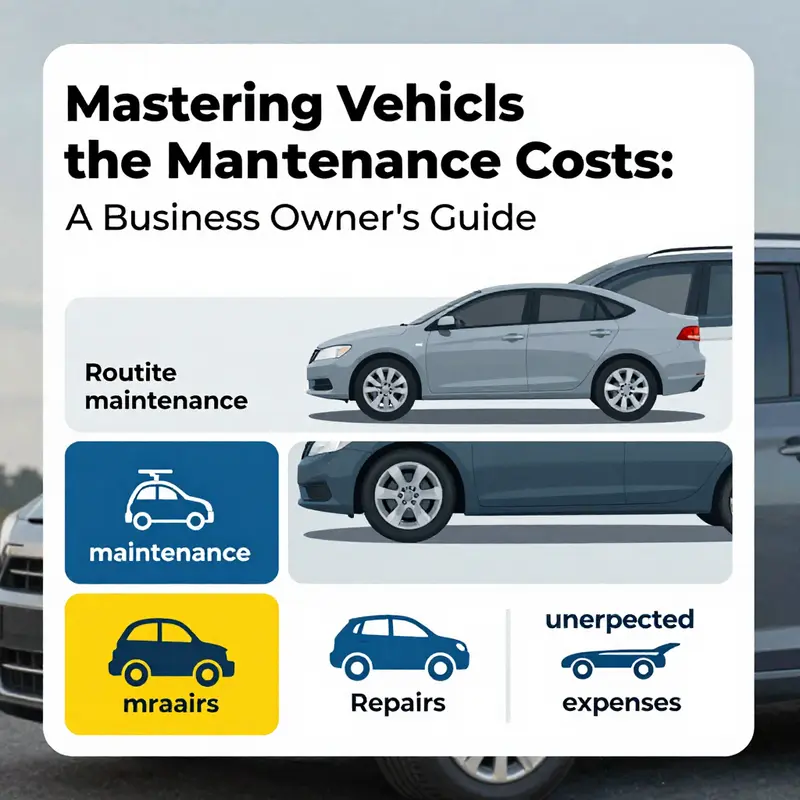
Maintaining a vehicle is a continuing investment in reliability, safety, and predictable finances. The sticker price captures only a fragment of what it costs to own and operate over time. Ongoing maintenance and repairs quietly accumulate, shaping your annual outlay as surely as fuel, insurance, and depreciation. When you look at the big picture, maintenance costs are a central pillar of the total cost of ownership.
Recent research helps anchor these costs in real-world terms. AAA’s Your Driving Costs study provides a practical baseline: across common vehicle categories, the average annual maintenance and repair cost sits in the lower thousands, with variation by age, mileage, and model. The U.S. Bureau of Labor Statistics’ Consumer Expenditures report likewise highlights maintenance as a meaningful portion of total ownership costs. Taken together, these figures show that routine care is a sizable, ongoing expense that deserves budgeting and planning.
The practical takeaway is simple: routine maintenance—oil changes, tire rotations, brake inspections, fluid top-offs, and other scheduled services—tends to be relatively predictable, especially when you follow the manufacturer’s intervals. Unplanned repairs are more variable and tend to rise as a car ages and accumulates miles. By treating maintenance as a regular, budgeted line item and reserving a separate fund for unexpected repairs, you can keep the total cost of ownership more stable over time.
The Cost Equation in Car Care: Factors That Shape the Average Vehicle Maintenance Bill
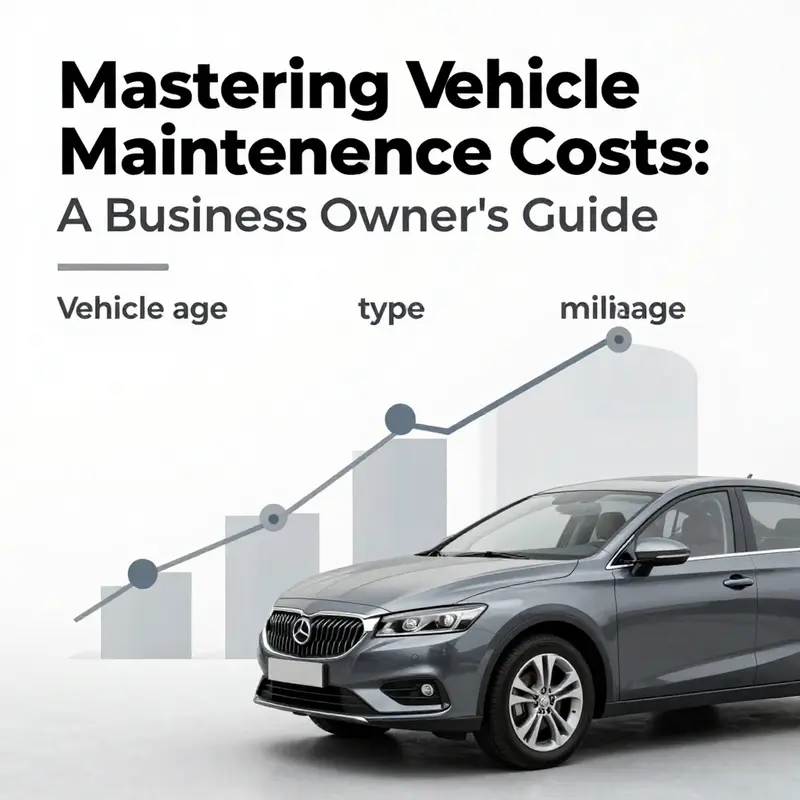
The question of what the average cost of vehicle maintenance looks like is as much about variability as it is about arithmetic. Across the recent data compiled by trusted sources, maintenance and repair costs do hover around a recognizable core, but the true picture for any individual owner depends on a constellation of factors that push the number up or down over the life of a vehicle. To frame the discussion clearly, it helps to start with the best-available averages and then trace how real-world conditions bend those figures. The American Automobile Association’s 2023 Your Driving Costs study provides a solid reference point: when you look at maintenance and repair expenses across the five top-selling models in each of nine vehicle categories, the average annual cost lands at about $1,186. That figure is not a universal price tag for every car, but it serves as a meaningful baseline for budgeting and expectations. It captures the recurring but not all-encompassing price tag of keeping a vehicle in working order, separate from fuel, insurance, financing, or depreciation. The broader context, however, is equally important. The U.S. Bureau of Labor Statistics, in its Consumer Expenditures report for 2022, reports that the average total cost to own and operate a vehicle was about $11,450 per year. Of that total, roughly $3,834 was attributed to “other vehicle-related costs,” a category that includes maintenance, repairs, tires, and other service expenses. Seen together, these figures remind us that maintenance is a substantial line item, yet it remains one among several overlapping costs that shape the true price of car ownership.
To translate these numbers into practical insight, it helps to unpack the factors AAA and government sources identify as drivers of maintenance costs. At a high level, vehicle age and mileage sit near the top of the list, but where you live, how you drive, and even broader market conditions also play meaningful roles. The AAA analysis emphasizes that newer vehicles tend to have lower maintenance costs—often because warranties cover a range of routine services and early-life reliability is high. As cars accumulate miles, components wear, parts wear out, and the probability of more frequent repairs increases. In other words, a four- to six-year-old sedan may cost less in maintenance than a twelve- to fifteen-year-old SUV, all else equal, yet there are exceptions depending on make, model, and how the vehicle has been cared for.
Geography matters in ways that many owners only notice when they shop for service. Labor rates, parts pricing, and the density of service centers vary widely from one region to another. Urban centers with higher living costs typically charge more for labor, while rural areas may offer lower rates but also fewer service options or longer wait times for specialized work. Climate and road conditions compound these effects. Regions with harsh winters, salted roads, or extreme heat can accelerate wear on tires, brakes, suspensions, and cooling systems, nudging maintenance bills higher even when the vehicle’s age and mileage are controlled. Then there are the subtler, less tangible drivers: the way a car is used. Driving patterns that include a lot of short trips, frequent congestion, or heavy towing place unusual strain on engines and transmissions. Aggressive acceleration and aggressive braking habitually shorten the life of brakes, tires, and even engine components. Conversely, steady, gentle driving and consistent preventive maintenance can spread out those repair needs and lower the chance of expensive, unplanned repairs.
The practical takeaway from these patterns is that the maintenance bill is not a fixed number mapped to a particular model; it is a dynamic outcome shaped by how the vehicle is used and cared for, where it lives, and the broader economic environment. The AAA data illustrate the first-order effect: different makes and models have different maintenance profiles, and those profiles shift as a vehicle ages and accumulates miles. For instance, a luxury or high-performance model may incur higher repair costs than a standard sedan, all else equal, due to the complexity of parts and the cost of specialized labor. Yet even within the same category, there can be wide variance based on engineering choices, part availability, and wear patterns.
Mileage, of course, is a natural amplification mechanism. As miles pile up, the likelihood of wear-out failures increases. Routine service such as oil changes, brake inspections, and tire rotations becomes more frequent, and over time owners may encounter more significant components in need of repair or even replacement. Your maintenance budget should reflect this reality: the cost of keeping a high-mileage vehicle roadworthy often rises, not merely due to more frequent service visits but also because the probability of major repairs—like engine or transmission work—increases with age and mileage. This combination of more frequent routine work and occasional larger-ticket repairs pushes the annual maintenance cost upward in a non-linear way as vehicles age.
But the story does not end with age and mileage. The broader market environment has a real bearing on maintenance costs. Inflation, for example, influenced the 2022 period when new car prices surged and used car prices surged even more sharply. The Bureau of Labor Statistics’ data show a jump in vehicle-related expenses in that year, driven largely by higher prices for parts and services, among other factors. While 2023 saw some stabilization in prices, the overarching trend is that the cost of owning and maintaining a vehicle does not stay perfectly anchored to any single baseline year. When planning out a budget, it is prudent to factor in potential price volatility—especially for non-discretionary maintenance items that can be harder to defer, such as brake work, tire replacements, or cooling-system repairs.
The practical implications of these patterns emerge most clearly in long-term budgeting and replacement planning. If you are evaluating a purchase or deciding whether to keep a car longer, the maintenance cost trajectory offers a powerful lens. A vehicle with a strong maintenance history, supported by routine preventive care and timely repairs, can retain its reliability with relatively modest incremental maintenance costs. In contrast, a vehicle that misses regular service or accrues high mileage without consistent care can transform a previously predictable maintenance bill into a series of surprise expenses. This is where the concept of total cost of ownership (TCO) becomes essential. The maintenance component is substantial, but it interacts with depreciation, insurance, fuel, and financing to determine the real economic burden of running a particular vehicle over a given horizon.
From a consumer perspective, there are a few strategic ways to use these insights to manage the numbers. First, think of maintenance not as a default annual line item but as a variable that can be shaped by behavior and planning. Regular preventive maintenance tends to catch issues early and prevent bigger failures that could cause large, sudden outlays. Keeping up with timely brake service, tire maintenance, and coolant system checks, for example, can prevent more expensive repairs later on. Second, recognize that vehicle choice matters. If keeping maintenance costs low is a priority, it may be worth comparing expected maintenance profiles across similar models before purchase, paying attention to what the AAA study notes about how maintenance costs can differ across categories. Third, endurance and mileage readiness matter. If you expect to accumulate many miles in a year or tow a trailer or carry heavy loads, you will want to budget for higher maintenance and part-replacement needs than the baseline suggests. And finally, don’t overlook the regional dimension. If you live in a climate with extreme weather, you should anticipate more frequent service to accommodate seasonal demands—like tire changes, battery health, and corrosion prevention—because those factors can accelerate wear on key components.
To connect the numbers with a practical reference, consider that the maintenance and repair costs are one piece of the broader maintenance landscape. The “other vehicle-related costs” bucket in the 2022 consumer expenditures data includes tires and service costs that go beyond routine maintenance. Tires, for example, while sometimes viewed as a separate expense, are integral to safe operation and overall cost efficiency. It’s not unusual for tire-related maintenance to account for a sizable portion of the annual non-fuel maintenance spend, especially if you drive in challenging road conditions or rotate through tires with different wear rates. The combined effect of tires, preventive maintenance, and repair work collectively defines the year-to-year maintenance burden and can influence decisions about when to replace or trade in a vehicle.
For readers who want a current, model-specific, and region-specific breakdown, the AAA Your Driving Costs report remains the most authoritative resource. It provides an apples-to-apples basis for comparing how maintenance costs break down across models and regions, which is invaluable when aligning your budget with likely outcomes rather than with generic averages. When you read the report, you’ll see how a seemingly modest annual maintenance figure, like the $1,186 cited for top models in nine categories, can diverge substantially when you adjust for age, mileage, and local labor markets. That divergence is precisely why planning for maintenance is not a one-size-fits-all exercise but a personalized projection based on your vehicle’s age, usage, and your local economy. If you’re curious to explore the latest model-by-model data, a good starting point is to review the driving-costs resources from AAA, which synthesize cost components into a coherent annual picture. A concise takeaway is that while maintenance costs are manageable and often predictable with preventive care, they are also highly sensitive to the specifics of how a vehicle is used and cared for.
Incorporating these insights into a personal budget invites a practical framework. Build a maintenance reserve that scales with age and mileage. For a typical vehicle, a reserve aligned with the baseline maintenance benchmark—while also acknowledging higher-mileage or older-vehicle scenarios—helps prevent sudden financial stress when a non-urgent service becomes necessary. Track routine service schedules and major component lifespans, and adjust your reserve as your vehicle approaches mid-life milestones. If you own a model known for particularly favorable maintenance economics, you may still want to allocate a modest buffer for unexpected repairs, since even well-designed vehicles require attention to wear and tear over time. Conversely, if you own a vehicle with a history of repair needs, consider a leaner, more conservative maintenance plan that prioritizes reliability and predictable service intervals. In either case, the overarching principle remains: preventive care is often the most effective cost-management strategy, reducing the likelihood of major, unplanned expenditures.
From a communication standpoint, translating these ideas into a practical narrative for readers means offering them a way to orient future purchases and day-to-day decisions around maintenance economics without losing sight of broader ownership costs. The average annual maintenance figure, while useful, is best interpreted as a baseline around which real-world costs cluster. It provides a starting point for conversations with service providers, insurance advisors, and, crucially, yourself when weighing tradeoffs between a newer vehicle with a warranty and an older, possibly cheaper model with a longer maintenance horizon ahead. The numbers tell a story, but the story gains depth when you consider the structural factors that push costs up or down: age, mileage, geography, behavior, and inflation. Each of these elements can tilt the maintenance equation in subtle, meaningful ways, and together they explain why two nearly identical cars in the same household can produce very different maintenance bills over time.
Ultimately, the aim of this chapter is to illuminate how the averages reported by AAA and the Bureau of Labor Statistics translate into lived experience. The figures are not a prophecy of a fixed fate; they are a framework for planning, risk assessment, and informed decision-making. As long as we recognize the coexisting realities—that maintenance costs are both predictable in their dependence on age and mileage and variable in response to driving habits and regional economics—we can approach vehicle ownership with greater clarity. The best practices emerge from understanding the patterns, applying preventive care, and budgeting with a realistic range in mind. In that sense, the maintenance cost picture becomes not a constraint but a compass, guiding smarter choices about when to service, how aggressively to pursue fuel efficiency, and when to consider a replacement that reduces ongoing expenses without compromising reliability.
For readers who want to explore a practical connection between maintenance and other cost components, consider examining resources that tie maintenance decisions to fuel efficiency and overall operating expenses. This broader lens helps connect the maintenance bill with daily driving costs and long-term financial outcomes. And as you weigh model choices or plan for future ownership, remember that the arrival of new data or revisions to cost estimates can alter the baseline. Keeping an eye on trusted sources and regularly updating your own budgets ensures your maintenance planning stays aligned with reality rather than clinging to static assumptions. In short, the maintenance cost conversation is a moving target, one that rewards attentive budgeting, disciplined preventive care, and an understanding of how age, miles, and environment shape the number you will see on your annual maintenance invoice.
Internal link for further practical context: how vehicle maintenance saves on gas expenses.
External reference: https://www.aaa.com/autocare/driving-costs
Invisible Bills on the Drive: How Maintenance Costs Vary Across ICE, NEV, and EV Ownership
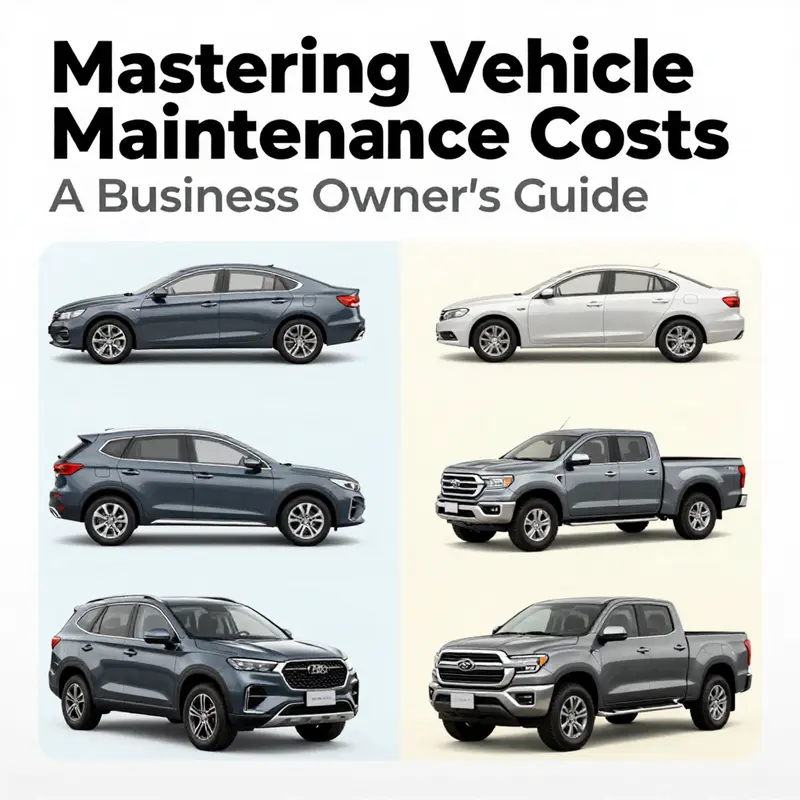
When people calculate the price of owning a car, maintenance often sits in the shadows of more visible expenses like purchase price, loan rates, or fuel. Yet these routine services and repairs accumulate into a substantial line item that can tilt a budget for years. The best way to understand this is to weave together what large-scale studies show about maintenance costs across different vehicle types and then translate those numbers into everyday decisions. Across market lines and continents, the driving cost picture presents a pattern: maintenance and repair costs are not a fixed number; they ebb and flow with the type of propulsion, the age and mileage of the vehicle, and the broader ecosystem of service availability and technology. In the United States, the American Automobile Association (AAA) provides a crucial benchmark. Their 2023 Your Driving Costs survey highlights maintenance and repair as a meaningful slice of annual ownership expenses. On average, the maintenance and repair portion for the five top-selling models in each of nine vehicle categories totaled roughly $1,186 per year. That figure carries the cadence of a typical family car’s upkeep, a useful contrast against the other slice of ownership costs such as fuel, financing, and depreciation. When you step back to view total ownership, the Bureau of Labor Statistics (BLS) Consumer Expenditures data for 2022 paints a broader canvas: the average annual cost to own and operate a vehicle was about $11,450, with roughly $3,834 attributed to “other vehicle-related costs.” Those other costs include maintenance and repairs, tires, and routine service—factors that bridge the gap between a bargain-basement ride and a more refined, higher-maintenance vehicle. Taken together, these data points remind us that maintenance sits squarely in the middle of ownership economics, neither the cheapest nor the most expensive component, but still a driver of long-term financial clarity and risk management.
The cross-border numbers add texture to this story. A 2023 industry report comparing traditional internal combustion engine (ICE) cars with new energy vehicles (NEVs), predominantly electric cars, found a notable divergence in maintenance outlays. In China, the average annual maintenance and repair cost for a traditional gasoline-powered car was about 2,623 yuan, while a new energy vehicle averaged 1,877 yuan. The contrast is not merely a difference in currency; it reflects core mechanical realities. EVs reduce routine maintenance needs—no oil changes, fewer spark plugs, and fewer belt replacements—thanks to simpler drivetrains with fewer moving parts. The numbers align with the intuition that EVs, at least in the routine sense, can be cheaper to maintain, and the broader U.S. data from AAA in 2023 echo this nuance, even as total ownership costs rise with other factors. AAA estimated the overall annual cost to own and operate a vehicle in 2023 at around $12,182, a figure that includes fuel, insurance, depreciation, and financing, alongside maintenance. In this larger frame, maintenance remains a core component but its share shifts with the type of powertrain and the age of the vehicle.
Still, the story is not one-dimensional. The lower baseline maintenance costs often associated with EVs do not come without caveats. EVs replace many routine tasks with higher-stakes considerations. Batteries, high-voltage systems, and condition-sensitive components can become high-value repair targets if damage occurs, especially in the wake of an accident or a severe impact. The research note on the Ora Good Cat, a recent example drawn from industry observations, illustrates a potential risk: minor underbody damage can trigger the replacement of a battery pack in certain EV models. That kind of repair is disproportionately expensive compared to traditional ICE repairs for analogous physical damage. The takeaway is not that EVs are universally more expensive to fix, but that the cost distribution shifts. Routine maintenance may be cheaper, yet the tail risk—where a single incident triggers a battery-related remedy—can be lumpy and unpredictable.
This complexity only deepens in the real world where the cost of maintenance is not static. Vehicle age matters,, as does mileage. Warranties, which often cover certain types of repairs early in a vehicle’s life, can blunt the apparent maintenance costs for newcomers. Newer models frequently bear higher initial maintenance costs, not because they require more frequent service, but because their advanced technology requires specialized diagnostics, more precise parts, and sometimes software-driven updates. In contrast, older ICE vehicles commonly demand more frequent mechanical attention due to wear and tear, yet the cost of each repair often remains predictable and routine. The economics, in other words, depend on what is breaking, when it breaks, and how critical the component is to core operations.
Another layer of the cost puzzle involves the human and logistical infrastructure that supports maintenance. In 2025, a notable shortage of certified EV technicians in some markets has emerged. In China, for instance, there are roughly 100,000 certified professionals against a demand estimated to exceed 900,000. That mismatch translates into higher labor costs, longer wait times for service, and potentially more expensive repairs when a technician with the right high-voltage expertise is scarce or is required urgently. Such shortages are not a theoretical risk; they have tangible consequences on the total cost of upkeep, especially for newer EV models that rely on sophisticated battery packs and high-voltage safety protocols. The broader lesson is that maintenance cost is not only a function of parts and time, but also of supply, skills, and the ability to mobilize service quickly after a failure or an accident.
If we pull these threads together, a few core ideas emerge. First, maintenance costs are not simply lower for electric propulsion; they are lower in routine miles and standard service but can spike under the right kind of failure. Second, traditional ICE vehicles, while faced with more frequent mechanical tasks, tend to present more predictable repair bills, especially as they age and accumulate mileage. Third, the total cost of ownership cannot be divorced from the broader expense envelope—fuel, financing, insurance, and depreciation all influence the perceived value of maintenance savings. A car that requires less maintenance in the long run might still demand a bigger upfront investment or incur higher insurance rates due to its newer technology or perceived risk. The numbers from AAA and the 2022–2023 expenditure surveys remind us that the maintenance line item is meaningful, but it rarely exists in isolation from the rest of the cost structure.
For readers who want a quick sense of how this translates into practical budgeting, consider the contrast between two domestic scenarios. An ICE vehicle, with its older technology and a predictable maintenance pattern—oil changes, brake servicing, tire rotations, and occasional transmission work—tends to deliver a steady but recurring maintenance cadence. The EV side of the ledger often begins with lower routine costs and fewer recurring service visits; there are longer intervals between tire services and, in many cases, less frequent fluid replacements. However, the possibility of battery-related repairs, involves a top-tier price tag. A battery pack replacement, while infrequent, stands as a high-severity cost that can dramatically alter an annual maintenance budget if a single incident occurs. Even with warranties, the risk of expensive high-voltage repairs lingers for owners who experience accidents or severe underbody damage. The probabilistic nature of such events means a maintenance budget for EVs should be constructed with a contingency that reflects the asymmetry of potential losses—a practice that applies across markets and vehicle categories.
Within this broader frame, the role of age and mileage becomes clearer. Newer vehicles, particularly those with advanced driver-assistance systems and connectivity features, can incur higher maintenance costs in the near term due to software updates, sensor recalibration, and the need for specialized diagnostic tools. Yet, as these technologies age into stable software ecosystems, many owners experience a plateau in routine maintenance. Older ICE vehicles, by contrast, often require more frequent routine service and mechanical attention as wear compounds the likelihood of part failures. The predictability of those failures—timing and cost—can make budget planning straightforward, even if the absolute outlay rises over time. This narrative aligns with the AAA view in which newer models may carry higher immediate maintenance costs but potentially lower long-run costs, while older models tend to accumulate a longer, steadier string of maintenance needs.
A practical way to use these insights is to shift from a single annual figure to a probabilistic budgeting mindset. Instead of assuming a fixed maintenance bill, a vehicle owner can model the likely spread of costs across a five- to seven-year horizon, weighted by age, mileage, and the likelihood of high-severity events. For ICE vehicles, this may translate into a consistent yearly outlay with occasional spike costs for major repairs as the vehicle ages. For EVs, the baseline may be lower, but the tail risk of battery or high-voltage repairs—though infrequent—deserves an allocation in the budget. Those considerations become more pressing when financing the purchase, planning for resale, or weighing the total cost of ownership across multiple vehicle options.
Given the diversity of factors, readers should consult both broad cost aggregates and the specialized research that isolates maintenance from the entire ownership equation. The AAA resources cited earlier provide a benchmark for maintenance-specific costs within a larger framework of total ownership. When you combine these data with cross-market comparisons, a more nuanced picture emerges: maintenance costs are not monolithic; they vary with propulsion technology, vehicle age, and the quality and availability of trained technicians. The bottom line for households is that the value of maintenance savings depends on the type of vehicle chosen and the strategies used to manage upkeep—whether that means investing in longer-warranty plans, selecting a model with a simpler drivetrain, or budgeting for the rare but potentially expensive repairs that can accompany advanced high-voltage systems.
For readers who want to explore a concise exploration of how EV maintenance compares to conventional maintenance, a brief explainer highlights the central question: Do electric vehicles require less maintenance? It provides a practical, readable summary of the trade-offs in routine upkeep and higher-stakes repair risk, and it can be a helpful companion as you compare maintenance costs in your own planning. Do electric vehicles require less maintenance?
In summary, the comparative maintenance landscape reflects a balance between routine simplicity and potential high-cost incidents. ICE vehicles offer ongoing, predictable maintenance that can accumulate steadily over time but tends to be less volatile in major repairs. NEV and EV platforms tilt toward lower routine maintenance but carry the possibility of costly, high-impact repairs when the high-voltage system or battery is compromised. Across the global and domestic data, the message is consistent: maintenance is a pivotal, sometimes opaque cost in vehicle ownership, and understanding its different flavors helps households and businesses build more resilient budgets. The broader context provided by AAA and BLS underscores that maintenance is a major component of total ownership costs, a shared thread that ties together diverse vehicle types and markets. With this framework in mind, the next chapters turn to practical strategies for budgeting, maintenance scheduling, and choosing a vehicle type that aligns with personal risk tolerance and financial goals. For now, the key takeaway is clear: maintenance costs are real, consequential, and highly sensitive to the propulsion technology and life cycle stage of the vehicle you choose. The chapter you’re about to read in the broader article will further illuminate how to translate these insights into concrete, actionable plans for managing maintenance spending over the life of a car.
External resource for context and data corroboration: AAA Your Driving Costs
Final thoughts
Understanding the average cost of vehicle maintenance is vital for any business owner looking to optimize their budget and enhance operational efficiency. By breaking down the various costs associated with maintenance and repairs, business owners can strategically plan for both anticipated and unexpected expenses. When considering factors affecting these costs and comparing various vehicle types, you can make informed decisions that align with your business goals. Investing time to comprehend these aspects will ultimately translate into a more sustainable financial outlook for your operations.