

Understanding vehicle maintenance notifications and the workings of Electronic Control Units (ECUs) is crucial for business owners managing fleets or service vehicles. The ‘Maintenance Required’ light often causes confusion as it is commonly misinterpreted as a system malfunction. However, it serves as a proactive reminder to check your vehicle’s condition and maintain its optimal performance, far from being indicative of ECU faults. This article delves into four key aspects: what maintenance reminders mean, how ECUs function, the differences between maintenance alerts and fault diagnostics, and the importance of regular maintenance for overall vehicle performance. Each section builds upon the last to provide a comprehensive knowledge base for maintaining your assets successfully.
Decoding the MAINT REQD Light and the Vehicle ECU: A Cohesive Look at Maintenance Reminders in Modern Cars
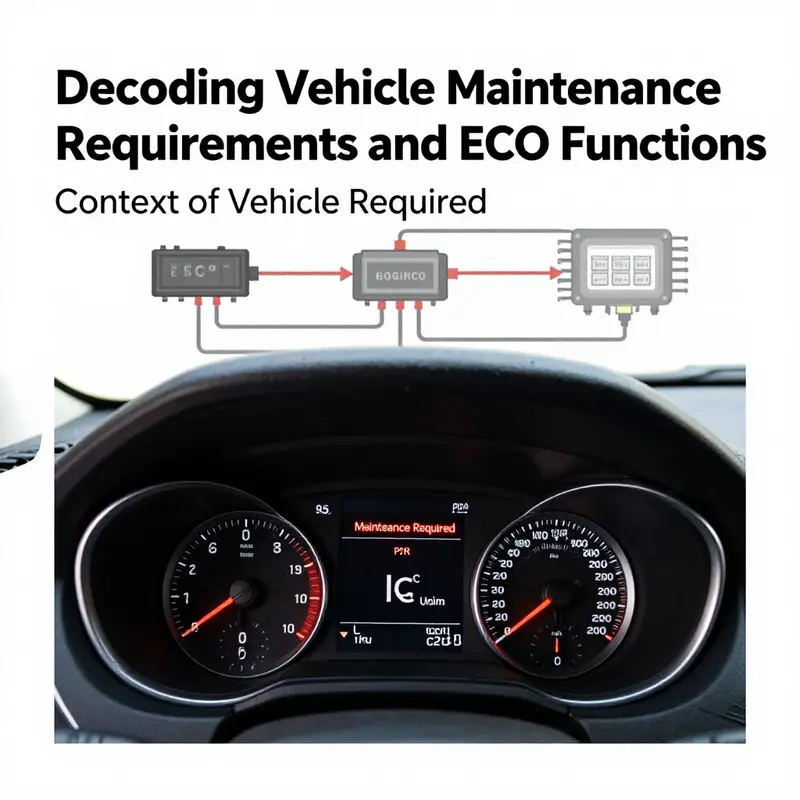
When drivers spot the amber MAINT REQD light on the dashboard, a quiet question often follows: is this a sign of trouble, or simply a reminder that the car needs routine service? The truth is more practical than alarmist. MAINT REQD is a maintenance reminder, not a diagnostic fault. It sits alongside the vehicle’s central computer—the Electronic Control Unit, or ECU—but it does not declare that the engine has failed or that the car’s brain is failing. Instead, it signals that the vehicle has reached a scheduled maintenance interval. Understanding how this reminder and the ECU relate helps drivers avoid unnecessary worry and ensures that routine care stays on the calendar. The chapter that follows weaves together what triggers the light, how the ECU uses its data, and why routine maintenance remains the cornerstone of reliability, safety, and long-term performance. It also clarifies how maintenance data travels through the car’s electrical and software systems, so when the MAINT REQD light glows, you can respond with clarity rather than confusion.
At first glance, the MAINT REQD light and the ECU may seem tangled, but they operate on distinct tracks that converge in everyday driving. The MAINT REQD light is primarily a service reminder. It signals that the vehicle has reached a preplanned interval based on miles driven or time elapsed since the last service. The most common action is an oil change, yet the reminder can also flag brake inspections, air and fuel filter replacements, tire rotations, or a general inspection of critical components. The ECU, on the other hand, is the engine’s central computer. It regulates ignition timing, fuel delivery, emissions controls, and many aspects of transmission behavior. It records fault codes when sensors report anomalies, but it does not, by itself, track when your next oil change is due. In short, MAINT REQD is about planned care; the ECU is about detected faults. Recognizing this distinction helps drivers interpret the light correctly and respond with the appropriate maintenance mindset.
Manufacturers program maintenance reminders around predetermined mileage thresholds or calendar intervals. As you accumulate miles or days, the onboard computer notes the distance since the last reset and triggers the amber indicator at specific milestones. Depending on the model, these milestones commonly fall around every 5,000, 7,500, or 10,000 miles, with variations for driving conditions or time-based schedules. The logic rests on years of service data that correlates routine care with lower wear and more reliable performance. The aim is straightforward: stay ahead of wear before it becomes a fault, and the car serves you better for longer. When you approach or cross one of these thresholds, the light is a polite nudge to schedule the service with a technician or to perform the service if you have the tools and know-how. The reminder’s presence reflects a practical balance between maintenance needs and the realities of daily driving.
Another common trigger you may encounter is the absence of memory after a battery disconnection or replacement. Modern vehicles store service interval data in nonvolatile memory areas. If the battery is removed, or if the system power is interrupted during replacement, the ECU can lose its stored maintenance data. The result is an illuminated MAINT REQD indicator that persists until the system is reset to reflect the current maintenance plan. For most owners, this requires a manual reset or the use of a diagnostic tool to reestablish the correct interval. The reset procedure does not erase service history or render the reminder useless; it aligns the reminder with the actual maintenance plan from that point forward. Performed after the service work is completed, the reset ensures that the schedule continues to reflect real wear and scheduled care. In practice, this means that a routine service followed by a proper reset is the most reliable way to keep the MAINT REQD light meaningful rather than misleading.
Environmental factors also play a role in the reliability of ECU-driven maintenance reminders. Humidity, temperature swings, and moisture ingress can affect electronic components and their connections. While ECUs are designed to be robust and sealed against the elements, harsh environments can, over time, influence sensor readings and data integrity. If the seals or gaskets around connectors degrade or if wiring is damaged during maintenance, the data the ECU uses to judge thresholds could become unreliable. The Maintenance Required light, therefore, depends on both a sound maintenance routine and the integrity of the vehicle’s electrical interfaces. A quick visual check of the engine bay, ensuring tight and clean connections, and a careful seal around vulnerable electronics can help preserve the accuracy of reminders in environments with salt air, dust, or high humidity. The light’s reliability ultimately rests on attentive ownership and competent service practices as much as on sophisticated software logic.
From a diagnostic perspective, technicians often rely on specialized tools to diagnose maintenance reminders and verify that the ECU correctly interprets inputs. A standard OBD-II scan excels at revealing diagnostic trouble codes when a sensor or actuator is failing, but maintenance reminders require targeted procedures that validate the threshold logic itself. In advanced contexts, technicians may use specialized equipment such as an ECU test bench. This controlled platform simulates engine conditions, sensor signals, and environmental changes so engineers can observe how the ECU would respond under mileage accrual and various service states. The bench provides a safe environment to study when thresholds illuminate MAINT REQD and how they clear after service, which helps calibrate the system with real-world wear data rather than theoretical assumptions. Calibration in this space ensures that the reminder remains a useful, timely prompt rather than an offbeat or confusing cue for drivers.
A modern view of maintenance reminders recognizes that the line between a reminder and a fault can blur under certain conditions. If a vehicle exhibits irregular software behavior—glitches in the display, unexpected resets, or inconsistent reminder timing—technicians investigate the broader health of the ECU and its data pathways. Yet the goal is not to declare the MAINT REQD light defective; it is to verify that its logic still reflects actual wear and service needs. The prudent approach is to assess the service history, confirm engine oil condition and level, examine tire and brake wear, and verify the status of filters and fluids. When these checks align with the scheduled maintenance, the reminder earns its place as a timely and informative cue. If discrepancies arise, professionals may recalibrate thresholds, update software, or re-sequence the reset procedure to restore alignment between the driver’s actions and the car’s expectations.
For many drivers, the MAINT REQD light becomes a constructive roommate rather than a nagging fault code. It is a reminder born from a history of vehicle use, a digitized note that routine care should not be postponed. The reminder accommodates variations in driving style, climate, and vehicle configuration, acknowledging that two cars of the same model can accumulate wear differently. Short trips, heavy urban driving, towing, or frequent extreme temperatures can accelerate wear in specific components, influencing when service is due. A driver who interprets the light with context—checking the service schedule, evaluating the condition of critical systems, and planning the service accordingly—will often experience fewer unplanned disruptions and more consistent vehicle performance. The MAINT REQD light thus supports a disciplined maintenance routine that benefits reliability, safety, and overall life-cycle cost.
Understanding maintenance in this light also invites a broader reflection on how to approach ownership in a way that respects the car’s design logic. A well-timed service extends the life of lubricants, preserves engine efficiency, and maintains emissions compliance, all of which contribute to better fuel economy and lower operating costs over time. The reminder is a practical tool that helps you stay on track with these benefits. If you want to connect the concept of preventive upkeep to a wider picture of car care, consider exploring the broader topic of maintenance in general. For a concise overview, see What is vehicle maintenance. This internal link grounds the reminder within a larger framework of how cars stay healthy across years and miles. While each model has its own service calendar, the underlying principle remains consistent: care on schedule reduces risk and keeps the car performing predictably. The ECU’s role is to enforce that schedule, not to complicate it; it manages inputs and thresholds that reflect real wear, while the driver and technician carry out the actual service.
In the grand scheme, the maintenance reminder is a simple yet powerful idea: it formalizes a routine habit that keeps the vehicle’s critical systems in good condition. The reminder’s accuracy depends on accurate input—correct service actions, faithful logging of maintenance, and careful reset after service. When these pieces align, the MAINT REQD light does its job well: to prompt timely maintenance before small issues become big ones. For deeper context on diagnostic practice and standards and how these standards influence the tools technicians use, see SAE International.
External reference: SAE International
ECUs, Maintenance Reminders, and the Quiet Logic of Modern Cars: Understanding the Maintenance Signal in a Highly Digital Vehicle
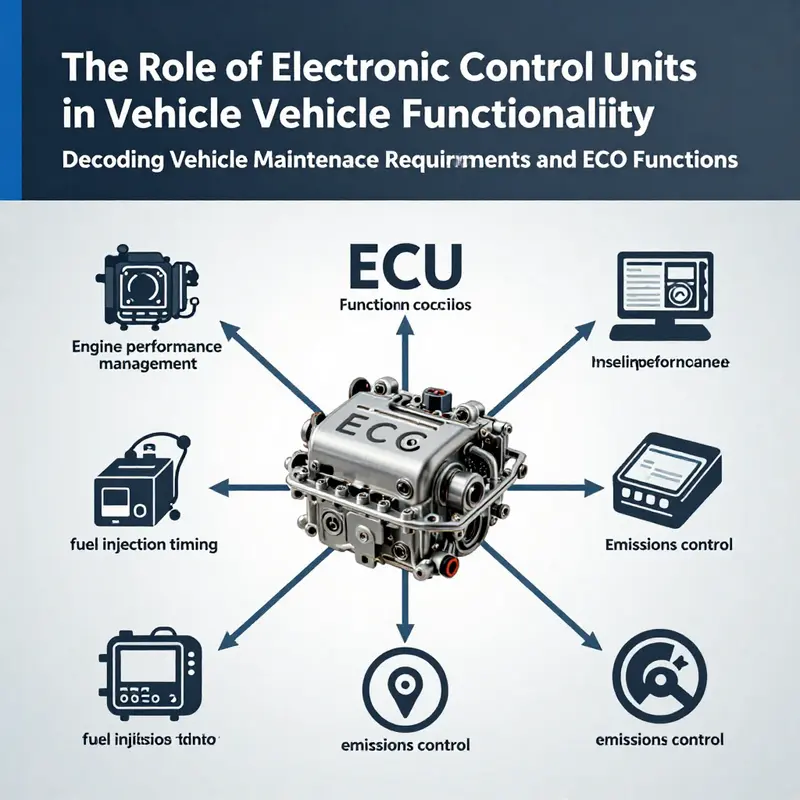
The phrase “Maintenance Required Vehicle ECU” is a tempting shorthand, but it hides two distinct ideas that usually operate in different corners of a car’s intelligence. On one side sits the Maintenance Required indicator, the dependable service reminder that nudges you to schedule routine care. On the other side sits the Electronic Control Unit, the vehicle’s native brain that processes data, makes decisions, and coordinates countless subsystems. This chapter unpacks how these elements relate in a modern car, why they’re often mischaracterized as a single fault or feature, and how the ongoing shift toward software-defined, centralized architectures reshapes both maintenance practices and daily driving.
To begin, it helps to separate the two concepts that most people confound when they see a MAINT REQD light and think of it as a computer fault. The Maintenance Required light is not signaling a malfunction. It is a proactive reminder tied to a maintenance schedule that tracks time and mileage, sometimes specific to oil changes, tire rotations, filter replacements, and brake inspections. In many brands, this light is reset after service, and if the light persists or reappears, it signals that the next maintenance window is due. This is fundamentally a maintenance bookkeeping function, not a diagnostic one.
In contrast, the Electronic Control Unit, or ECU, is the central computer that governs how the vehicle runs. It reads streams of data from hundreds of sensors positioned around the engine, drivetrain, chassis, and body. It decides how much fuel to inject, when to spark, how to shift gears, and how to manage emissions. The ECU also collaborates with safety systems such as Anti-lock Braking Systems (ABS) and Electronic Stability Programs (ESP), and it often ties into more advanced driving aids and comfort features like climate control and infotainment.
The separation matters because a driver could see the MAINT REQD indicator light up even when the engine is running perfectly and the vehicle is performing as designed. That light has nothing to do with a failing engine or a malfunctioning sensor. It is a calendar and mileage-based cue, a little nudge toward regular maintenance that keeps the car’s systems healthy over time. If the light comes on after an oil change, it should be reset according to the service performed. If it comes on at other times, it still generally calls for service within the planned maintenance window rather than signaling a fault.
Understanding this distinction becomes crucial when you consider how ECUs function inside the broader digital architecture of modern vehicles. The ECU is not a single monolith that carries all knowledge about maintenance or wear. Instead, it is part of a distributed network of controllers—each assigned to specific subsystems, from the engine and transmission to the chassis and climate systems. The network is designed to maximize precision, efficiency, and safety by using sensor inputs to compute optimal responses in real time. The driver’s day-to-day experience is that the car feels smooth, safe, and predictable, while the behind-the-scenes software continually optimizes performance.
In this ecosystem, the number of ECUs has historically risen with vehicle complexity. By 2020, the typical passenger car housed more than eighty dedicated ECUs, each handling discrete tasks. That number illustrates how deeply electronic control and software have penetrated even basic driving tasks. Each ECU is a small, specialized computer with its own processors, software, and memory, and every one of them communicates with others to coordinate a seamless drive. This complexity is not merely a curiosity; it translates into tangible realities for maintenance, diagnostics, and even future updates.
Yet the automotive industry is actively working to reduce this complexity without sacrificing capability. One prominent direction is the move toward centralized electronic architectures. In regional efforts, automakers are pursuing designs that consolidate functions from many ECUs into fewer, more powerful controllers. The goal is to cut wiring complexity, improve software update cycles, and enable faster development of new features. A notable example within the literature is the Centralized Electronic Architecture (CEA) approach pursued by a major European group in collaboration with regional partners. The idea is to shrink the overall ECU count by a meaningful margin, enabling more cohesive software environments and more reliable OTA (over-the-air) updates that keep the car current with the latest safety, efficiency, and convenience features.
This transition toward centralization and software-defined architectures brings clear benefits. Fewer ECUs mean less potential for electrical or communication faults, more predictable real-time performance, and more straightforward integration of advanced features such as AI-powered dashboards, higher-level ADAS capabilities, and seamless OTA software delivery. The architecture supports more ambitious development cycles because software can be updated and tested more holistically rather than tinkering with dozens of separate ECUs in parallel. In practice, this translates to quicker feature rollouts, improved user experiences, and a more robust foundation for future innovations.
A key corollary of this architectural shift is the relationship between maintenance reminders and software. The MAINT REQD indicator is not a diagnostic output produced by the ECU in the sense of DTCs or fault codes. Diagnostic Trouble Codes (DTCs) are generated when sensors, actuators, or subsystems detect a fault that compromises safe operation or performance. These codes travel through the vehicle’s diagnostic networks to the onboard computer, which can translate them into warning lamps, messages, or service procedures. The maintenance reminder, by contrast, is a scheduling signal that tracks service intervals based on calendar time, mileage, or both. It is often managed by a separate subsystem that records service events, logs the odometer reading, and triggers a reminder when the next interval is reached.
Despite this separation, the two systems coexist and cooperate. A driver may take the car in for service, and the technician may perform an oil change, replace a filter, rotate tires, or inspect brakes. The service action updates the vehicle’s service counter, which in turn resets the MAINT REQD indicator in many brands. The ECU never uses this maintenance counter to diagnose a malfunction; rather, it benefits from well-timed maintenance to preserve engine efficiency, emissions control, and system longevity. If a vehicle’s maintenance schedule is neglected, not only can performance degrade gradually, but certain subsystems can drift out of calibration, potentially affecting efficiency or emissions. In this sense, the MAINT REQD light plays an important, pragmatic role in sustaining reliability, even as the ECU ensures the car’s brain remains accurate and responsive.
To make this more tangible, consider the practical implications of the ongoing integration between maintenance reminders and ECU-driven control. When you approach a service interval, you expect the oil to be fresh, air and cabin filters to be clear, and tires to have adequate tread. The light is a cue to perform these tasks; the actual performance of the engine, fuel system, and braking remains under the ECU’s vigilant management. Conversely, if a genuine fault arises—say a sensor begins to edge outside its calibration—the ECU will likely generate a diagnostic trouble code and illuminate a fault indicator separate from the MAINT REQD reminder. In modern cars, these cues are designed to be distinct to avoid alarm fatigue and to promote timely, appropriate action. The result is a driving experience that feels intuitive and reliable, even as the underlying software and hardware become more intricate every year.
From a design perspective, the evolution toward centralized architectures is especially compatible with the idea of maintenance reminders as lightweight, timing-based signals. Centralized systems can manage the service timetable more consistently across regions, while still honoring individual manufacturer requirements. The same architecture supports software-defined features such as AI-enabled cockpits, enhanced ADAS, and the ability to push updates over the air. For the driver, this means a car that remains easier to keep up to date, not more prone to confusing fault lights. It is a shift from a patchwork of discrete, often competing ECUs to a cohesive, software-first approach that preserves performance and safety while simplifying maintenance logistics.
In this context, it is also useful to revisit the practical guidance a driver should follow when the MAINT REQD indicator lights up. If you are driving a vehicle that follows conventional maintenance cues, plan a service appointment at the earliest reasonable opportunity. A clean oil change, fresh filters, and a tire check can prevent longer-term wear and help maintain optimal engine efficiency and emissions performance. If the light persists after a service, or if you notice unusual performance—unsteady idle, reduced power, or unusual noises—treatment that includes a diagnostic check is prudent. The aim is not to chase a mystery fault but to confirm that routine maintenance is current and that no underlying condition is beginning to affect performance. For readers seeking a concise primer on what maintenance actually entails and why it matters, a quick read on the topic can be found here: What is vehicle maintenance.
The broader narrative of ECUs and maintenance reminders is inseparable from the digital turn in automotive engineering. The ECU’s role as the central organizer of engine behavior, fuel economy, and safety systems has only intensified as vehicles embrace greater connectivity and more sophisticated software. The move toward centralized architectures is a natural extension of that trend. Fewer ECUs, more capable software, and more reliable communications networks translate into vehicles that can offer richer features, more precise control, and safer operation, all while requiring maintenance in a way that is predictable and manageable. The maintenance reminder, in this sense, remains a practical, human-centered cue that complements the car’s digital brain rather than competing with it.
For a deeper look into how these centralized architectures are being realized in industry practice, see the broader discussion of centralized electronic architectures and their impact on future vehicle electronics. This external resource provides a technical overview of how manufacturers are reimagining the “brain” of the car to enable faster software updates, more cohesive systems, and smarter interfaces for drivers and passengers alike: https://www.volkswagen-group.com/en/technology/centralized-electronic-architecture
In sum, the MAINT REQD light and the ECU inhabit different layers of the vehicle’s intelligence. The light is a practical reminder tied to maintenance intervals, while the ECU is the engine of real-time decision-making that keeps the car safe, efficient, and comfortable. As the industry moves toward centralized, software-driven architectures, the relationship between maintenance signaling and control systems will likely become even more integrated in a way that preserves clarity for the driver while delivering richer capability behind the scenes. The driver’s daily experience—reliable starts, smooth acceleration, precise braking, and a cabin that adapts to comfort preferences—rests on this careful balance between scheduled upkeep and continuous, software-informed control. If you want a concise primer on what maintenance actually entails and why it matters to the vehicle’s long-term health, you can read more about it here: What is vehicle maintenance.
From Reminders to Real Signals: Distinguishing Maintenance Alerts from ECU Diagnostics in Modern Vehicles
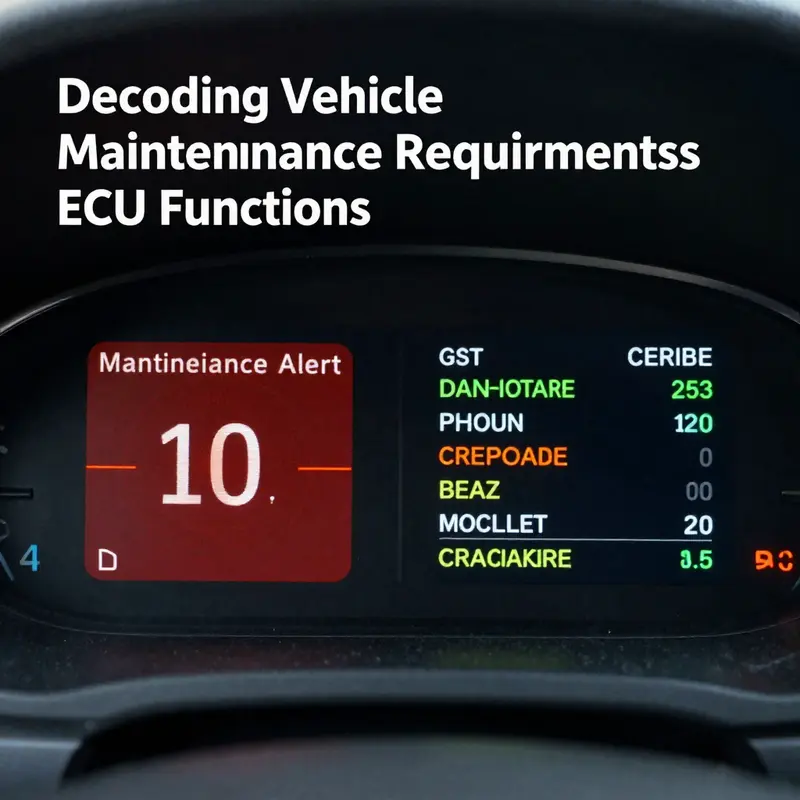
On a modern car, the dash acts as a translator between the driver and a complex network of systems. It uses symbols, lights, and brief messages to convey what the vehicle needs and what it is capable of. Two phrases that often get tangled in the mind are maintenance reminders and ECU diagnostics. People sometimes hear maintenance required vehicle ecu and assume they are describing a single issue or a single component. In reality, these terms point to two different parts of how a car stays healthy over time. The distinction matters, shaping how a driver responds, how service is scheduled, and how the vehicle performs across years and miles. Understanding why the maintenance reminder exists and how the engine control computer works can clear up confusion and keep driving both safe and economical.
Maintenance reminders, commonly labeled MAINT REQD on many dashboards, are proactive notices. They are not warnings of a malfunction. They are reminders that a scheduled service is due based on time, mileage, or a combination of both. The most familiar example is the oil change interval. When the service timer reaches its preset threshold, the MAINT REQD light lights up as a nudge to schedule maintenance. But the scope of MAINT REQD often extends beyond oil to other routine tasks that help keep the car in optimal condition. Tire rotation, brake inspection, air and cabin filter replacements, and fluid top offs can all fall under the maintenance umbrella. The intent is preventive care: to preserve efficiency, performance, and safety before issues arise.
There is a practical everyday way to think about MAINT REQD. It is less a diagnosis and more a calendar prompt. Many manufacturers encode the reminder into a maintenance schedule that was developed during vehicle design and testing. It aligns with recommended service intervals, which are backed by engineering data about how long lubricants last, how wear progresses, and what inspections catch emerging problems early. When you see MAINT REQD, you should consult the owner manual or your service schedule, pick a service window, and plan the visit. Ignoring or postponing a reminder can lead to gradual wear, slightly higher operating costs, and, over time, reduced resale value. Yet the reminder itself does not indicate an imminent breakdown. It signals a point in the maintenance cycle where attention is prudent.
Against this background, the Electronic Control Unit, or ECU, operates on a very different axis. If the engine is the heart of the car, the ECU is the brain. It is the central computer that coordinates engine performance, fuel delivery, ignition timing, emissions control, and even transmission behavior in many vehicles. The ECU continuously ingests data from a thousand sensors and compares what is happening against expected performance. When data drift or sensor faults appear, the ECU logs diagnostic trouble codes, or DTCs. Those codes become the basis for the Check Engine Light or a related diagnostic signal on the dashboard. The purpose of ECU diagnostics is corrective and analytical: it points to a fault, identifies its likely location, and guides the technician to fix it. This diagnostic pathway exists to protect performance, emissions, and safety by catching issues that the vehicle’s normal operation cannot tolerate.
Although the two systems share the broad aim of keeping a vehicle reliable, their roles and signals are distinct. The MAINT REQD alert is not produced by the ECU fault detection logic. It is more akin to a maintenance calendar alert that a service interval has passed. The CEL, or Check Engine Light, is a direct outgrowth of the ECU fault detection process. It lights up when the ECU determines a sensor is out of spec, a component is failing, or a condition is unsustainably out of range for safe operation. A car can display MAINT REQD without a single DTC in its memory, and conversely a car can be full of DTCs with the MAINT REQD light still off if the maintenance schedule has not yet reached its threshold. The important takeaway is that MAINT REQD is preventive by design, while ECU diagnostics are reactive to observed faults.
This separation helps explain why drivers can be tempted to panic when both signals appear in quick succession. If a light glows for maintenance, it does not automatically mean something is broken. If a CEL glows, it usually signals that something merits investigation or repair. The two signals can even occur together on the same journey: you could have recently serviced the car and still have an ECU fault surface during operation. In practical terms, the two systems are not enemies; they are teammates in a broader health map of the vehicle. The maintenance reminder keeps the car from slipping into wear induced trouble, while the ECU driven diagnostics protect against faults that could escalate or cause emissions failures.
To navigate these signals well, drivers benefit from a few grounded habits. First, treat MAINT REQD as a reminder to schedule routine service, not as an immediate safety hazard. It is an invitation to plan ahead and maintain the car’s long term health. Second, take any Check Engine Light seriously and seek a diagnostic check if you notice symptoms such as rough running, engine misfires, hesitation, or a drop in fuel efficiency. Even if the car still feels drivable, a fault code can point to issues that might worsen with time. Third, remember that the diagnostic codes produced by the ECU require context. The same code might have different implications across makes and models. A technician uses the code as a map, not the final verdict on the repair. The path from code to fix often involves corroborating tests, sensor readings, and sometimes component replacement, followed by code clearing and a confirmation that the fault is resolved.
Conscious drivers also benefit from recognizing how maintenance and diagnostics interact in daily driving. Regular maintenance keeps vital systems within their designed operating envelopes. Fresh oil reduces friction, maintains cooling performance, and helps the engine tolerate load. Clean filters improve airflow and fuel air balance, which makes it easier for the ECU to manage combustion efficiently. Good maintenance reduces the chance that the ECU will interpret benign wear as an anomaly. In turn, when the ECU detects a genuine fault, the trained technician has better signal quality to work with because the baseline health of the vehicle is strong. This synergy matters because a poorly maintained vehicle can complicate fault diagnosis, masking the true source of a malfunction or creating misleading readings that prolong repair time.
What does this mean for non experts who want to approach these signals without fear or confusion? It means you should respond to each message in its own right. If MAINT REQD appears, consult the service schedule and arrange maintenance at the next convenient interval. If the Check Engine Light appears, reduce load if safe and seek a diagnostic evaluation promptly. It also means arming yourself with a couple practical steps. Keep your owner manual handy for model specific interpretations and intervals. Consider investing in a basic OBD II scanner if you want to understand fault codes at a high level before visiting a shop, but avoid attempting complex repairs or code clearing without professional guidance. Codes can be nuanced, and a proper diagnosis often demands both equipment and experience that go beyond hobbyist tools. In short, maintenance reminders and ECU diagnostics are not enemies; they are complementary signals that together describe the vehicle’s health.
The practical side of this distinction extends into everyday decision making. A MAINT REQD message is a cue to schedule service within a reasonable window. It is not a warranty that a part is failing. If you delay service too long, you may experience accelerated wear or degraded performance, but the risk is a function of time and usage rather than an instantaneous failure. On the ECU side, a fault code demands a more urgent, targeted response. It is a sign that something in the sensing or actuation chain is not performing properly. The driver’s role in this context is to seek a formal diagnosis rather than a guess, because guessing can lead to wasted parts, higher costs, and, in some cases, unsafe vehicle operation.
Another layer to consider is the way different vehicles implement and display these signals. Some automakers have integrated maintenance reminders into the same dashboard areas as the ECU driven indicators, while others keep them clearly separated to reduce confusion. The exact thresholds for MAINT REQD can vary by model, reflecting different service intervals for oil, tires, brakes, and fluid checks. Meanwhile, DTCs are standardized in the sense that the OBD II system requires a consistent set of fault codes, but the interpretation, recommended repairs, and service actions still depend on the vehicle’s manufacturer specific diagnostic routines. This is why a code that seems straightforward on one car might map to a different root cause on another. When in doubt, defer to trained technicians who are familiar with the specific model and its software ecosystem.
If you want a concise way to anchor your understanding, think of the two systems as two layers of a health plan for the vehicle. The maintenance reminder is the preventive care plan it follows—periodic checkups, oil changes, air filter replacements—designed to keep the machine running smoothly long before wear becomes a problem. The ECU driven diagnostics are the reactive care plan—the tests, the sensor checks, the fault codes—intended to catch and correct problems that arise despite preventive care. When both layers function together, the vehicle enjoys better reliability, smoother operation, and longer life. When one layer falters or is neglected, the stress is redistributed to the other layer, and the overall health map becomes less reliable.
For readers seeking to strengthen their practical understanding beyond the basics, consider the broader discussion of preventive maintenance and diagnostic reasoning. Preventive care is not merely about following a schedule; it is about mapping car health to real world operating conditions—fuel quality, driving style, climate, and miles traveled. The maintenance schedule has to work in concert with the vehicle’s diagnostic systems to deliver consistent results over time. A well maintained car is easier to diagnose and repair when needed, and its diagnostic signals are more actionable because baseline conditions are stable. A vehicle that escapes routine maintenance, however, can show subtle symptoms that masquerade as unrelated faults, leading to unnecessary repairs and extended downtime.
If you would like to explore a broader introduction to the basics of vehicle upkeep and how it fits into the car’s overall system, there is a resource that discusses what maintenance actually covers and how it functions within the car’s broader context. This link anchors the concept of preventive care with everyday driving realities and can be a starting point before diving into more technical details about diagnostic procedures and service planning.
As you map out a maintenance plan, remember that MAINT REQD is meant to be a practical cue for care, not a crisis signal. The ECU, with its DTCs and MIL, is designed to catch faults that matter now. The best approach for a driver is to respect both pathways: keep to the scheduled maintenance so the baseline remains strong, and address real faults quickly so performance, emissions, and safety are not compromised. With this dual awareness, the vehicle becomes less of a mystery and more of a predictable partner that rewards timely attention with consistent, dependable operation over many years and miles.
External references can provide additional perspectives on maintenance planning and practical decision making for owners and technicians. For a broad, reputable overview of maintenance planning and the rationale behind preventive service, refer to the Maintenance Tips resource from a trusted consumer focused source. This external reference offers actionable guidance on when to service, how to talk with technicians about maintenance needs, and how to balance preventive care with diagnostic responses in everyday driving. See the linked external resource for a broader context on preventive service and how it fits into vehicle health.
null
null
Final thoughts
In conclusion, understanding the distinction between maintenance alerts and ECU management is essential for any business that relies on vehicles. The ‘Maintenance Required’ light is a valuable reminder to ensure that routine checks and services are performed, supporting both the vehicle’s longevity and operational efficiency. As we have explored, while the ECU is responsible for crucial systems management, it is essential to focus on regular maintenance tasks that prevent potential ECU errors and ensure seamless vehicle performance. Proactive maintenance leads to better reliability, enhanced safety, and minimized downtime for your business fleet.