
Understanding whether a vehicle maintenance allowance is taxable is crucial for business owners aiming to manage their expenses effectively. With the right insights, you can navigate the complexities of tax implications, identify the right reimbursement strategies, and avoid pitfalls that could affect your bottom line. This article provides a detailed examination of various aspects including tax implications, accountable plans, exceptions, documentation requirements, and IRS guidelines—everything you need to ensure compliance and make informed decisions regarding vehicle maintenance allowances in your business.
Under the Hood of Employee Perks: Navigating the Tax Status of Vehicle Maintenance Allowances
When an employer provides a vehicle maintenance allowance, it arrives as more than a simple perk. It sits at the intersection of compensation and business expense, and its tax treatment hinges on the structure of the payment and the purpose behind it. For many workers, maintenance costs are a necessary part of keeping a vehicle ready for work duties. For employers, offering a maintenance allowance can be part of an overall compensation package intended to cover the cost of keeping employees mobile and productive. Yet the tax code treats these funds with a careful eye toward whether they are truly reimbursements for actual costs or discretionary payments that effectively augment wages. In practice, the distinction matters because it determines how the money is taxed, reported, and ultimately whether it reduces or adds to the employee’s take-home pay. The question, simply stated, is this: is a vehicle maintenance allowance taxable, and under what conditions can it escape taxation as ordinary wages? The answer lies in the details of how the arrangement is structured and how strictly the employer adheres to the rules that define an accountable plan versus an open-ended allowance.
At the core, a maintenance allowance is taxable income if it is paid as compensation for expenses without strict substantiation. In many standard arrangements, the employer simply adds a fixed amount to the employee’s paycheck to offset the costs of keeping a vehicle in working order. That fixed amount becomes part of gross wages and is subject to federal income tax as well as Social Security and Medicare taxes. The underlying logic is straightforward: when the payment is unconditional and not tied to actual expenditures proven by receipts, it functions like extra wages and must be taxed accordingly. This is the simplest path for the employer, but it is also the path that most directly increases the employee’s tax liability unless there is a formal mechanism to exclude it from taxable income.
The most meaningful exception, and the one that often requires careful implementation, is the accountable plan. An accountable plan is a formal reimbursement arrangement under which the employee must substantiate actual qualified business expenses and return any excess amounts. If the vehicle maintenance costs claimed are genuine business expenses and the employee provides receipts or other records showing how the money was spent, and if any leftover funds are returned to the employer, the reimbursement is not considered taxable income. When a maintenance expense is funded under such a plan, the amount is treated as a reimbursement rather than wages, which can significantly alter the employee’s tax picture. The terms of the accountable plan must be clear and consistently applied, with proper documentation maintained to prove that the expenses were business-related and properly substantiated. Without that substantiation, the favorable tax treatment evaporates, and the reimbursement reverts to taxable income.
From the employer perspective, the accountable plan route is not only about tax efficiency for employees. It also has practical implications for how the company records the expense. In many jurisdictions, payments made under an accountable plan for actual maintenance costs—oil changes, tire replacements, brake work, and other repairs tied to business use—can be deducted as a business expense. The deductibility hinges on the costs being reasonable, directly related to business use, and properly substantiated as legitimate vehicle maintenance. This alignment between expense and business purpose helps ensure the tax treatment remains favorable and the company’s books reflect reality. It also places a premium on meticulous record-keeping, because the line between a true reimbursement and taxable wages can blur when receipts are missing or misallocated.
A related concept, though not universal in every case, is the standard mileage rate. The IRS sets a per-mile rate each year to simplify reimbursement calculations when mileage is used to determine tax-deductible business costs or per-mile reimbursements. The standard mileage rate underscores the broader principle that reimbursements tied to verifiable business use, supported by logs or other substantiation, tend to enjoy more favorable tax treatment. If an employer leans on mileage metrics to calculate a maintenance-related reimbursement rather than issuing a flat, unconditional payment, the likelihood of keeping the payment non-taxable increases, provided the employee keeps accurate records of business miles and maintenance relates to those miles. The mileage framework also encourages alignment between reimbursement amounts and actual costs, reducing the chance that a pay-out strays into taxable territory.
The landscape, however, becomes more nuanced when considering certain specialized allowances that are explicitly excluded from gross income in specific contexts. For example, some cost-of-living allowances granted to employees stationed outside the continental United States or in Alaska are not included in gross income if approved by the President. Likewise, allowances for representation expenses for foreign service employees are tax-free under particular conditions. These exclusions illustrate the narrow corridors that can exist within tax law, where the purpose, location, or nature of the allowance triggers a distinct treatment. They are not a general shelter for all vehicle-related payments, but they demonstrate that tax outcomes can hinge on precise eligibility criteria and the official status of the allowance. In everyday practice, though, the typical vehicle maintenance allowance falls into the general category: taxable unless it is structured as an accountable plan that passes the substantiation test.
For the employee who wonders how to navigate this terrain, the practical path is to seek clarity before accepting or negotiating a maintenance payment. If the company offers a flat maintenance allowance, ask whether it is intended as a reimbursement under an accountable plan or as taxable income. If the plan exists, request details on the substantiation requirements: what receipts or records are needed, what timeframe applies, and whether any excess funds must be returned. If the plan is missing or vague, consider proposing a formal accountable plan as part of the compensation policy. This approach protects the employee from unexpected tax outcomes and gives the employer a defensible framework for deductions and compliance. It is not merely about avoiding tax; it is about aligning compensation with actual business use and ensuring that the accounting reflects the true cost of keeping a vehicle ready for work.
There is also a broader modeling question that both parties should confront. How should maintenance costs be allocated when a vehicle is used for mixed purposes—some days strictly for business and others for personal errands? In a world of precise lines drawn by statute and regulation, accurate allocation matters. If an employee’s vehicle is used 60 percent for business and 40 percent for personal use, then maintenance costs might reasonably be allocated proportionally to reflect that business use. Under an accountable plan, the employee would submit documentation supporting the business portion and return any excess meant for personal use. Under a flat allowance, the same proportionate approach still matters for overall tax considerations, but the unsubstantiated portion of maintenance costs could become taxable income if the plan fails to meet the accountability criteria.
The tax manuals emphasize the importance of documentation. The employee should maintain receipts, keep a contemporaneous log of business miles, and retain any records that demonstrate how the vehicle’s maintenance ties to work activities. For employers, enforcing a robust documentation regime protects both sides of the arrangement. The accountable plan framework thrives on consistency and audit readiness. It is these habits—detailed receipts, mileage logs, and timely reporting—that transform a maintenance stipend from a potential burden into a clean, compliant reimbursement mechanism. And because tax treatment can hinge on these details, both parties should view record-keeping not as paperwork but as a central pillar of financial discipline and compliance.
To connect the theory with everyday practice, consider the concept of vehicle maintenance as a line item in a broader discussion of how businesses keep people mobile. The maintenance costs that support fieldwork, client visits, or on-site service calls are legitimate business expenses when the vehicle is employed for work. When reimbursement is properly documented and tied to actual costs, the employee avoids the drag of double taxation on personal time and business use. When it is not—when receipts are missing, or when a flat allowance is paid without accountability—tax authorities may treat the funds as ordinary wages, subject to withholding and employment taxes. That distinction is not merely a compliance footnote; it directly influences the employee’s net take-home pay and the employer’s payroll administration. The best practice is clear: design maintenance reimbursements with accountability at their core, and keep every element on the record trail that leads to that conclusion.
If a reader wants to explore a practical, employee-focused explanation of vehicle maintenance concepts and their broader implications, a detailed resource on the fundamentals of maintenance can be a helpful companion. For a concise overview, see the article What is vehicle maintenance, which provides context for understanding what counts as deductible or reimbursable maintenance under a work-related framework. What is vehicle maintenance offers a useful baseline lens through which to view maintenance costs as part of a worker’s mobility toolkit. This connection between maintenance fundamentals and tax mechanics helps illuminate why the accountable plan approach matters so much in real-world compensation discussions.
In close, the question of whether a vehicle maintenance allowance is taxable does not have a one-size-fits-all answer. The key determinants are structure and substantiation. A straightforward, unconditional payment tends to be taxable as wages. A payment that qualifies as a reimbursement under an accountable plan, backed by receipts and an obligation to return excess funds, can escape taxation as income. Employers benefit from this clarity, and employees gain from having a predictable framework that aligns compensation with actual business costs. For those navigating this space, the guiding principle is simple: tie every payment to verifiable maintenance expenses, document carefully, and seek professional guidance when drafting or negotiating plans. Precise planning now prevents tax surprises later, and it keeps the vehicle—and the business it serves—running smoothly.
External resource: https://www.irs.gov/pub/irs-pdf/p525.pdf
Tax-Free Pathways for Car Care: How Accountable Plans Shape Vehicle Maintenance Allowances
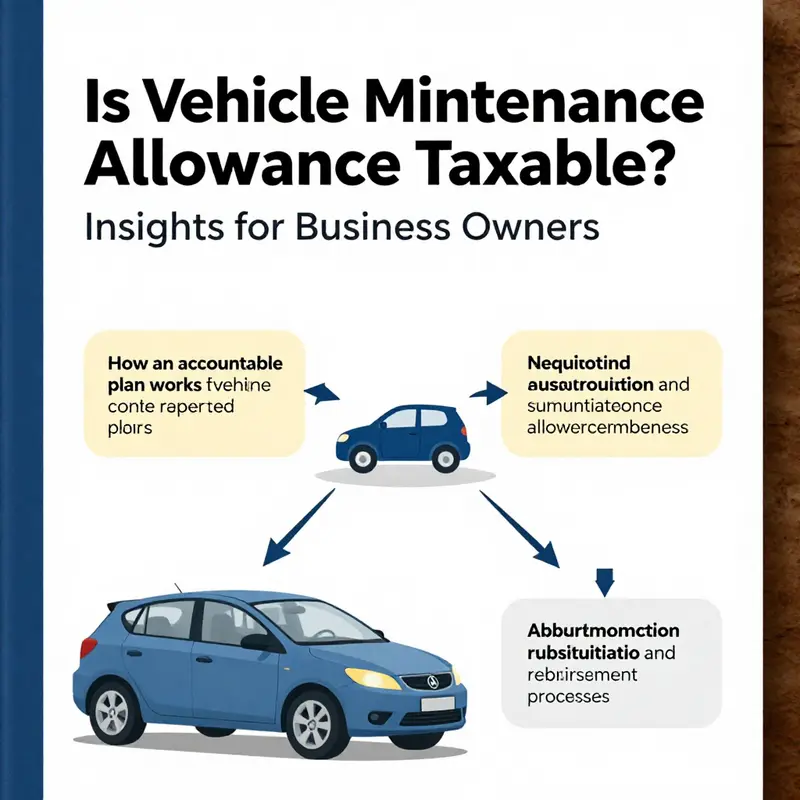
The question of whether a vehicle maintenance allowance is taxable often hinges on the design of the plan behind the payment. In plain terms, the same check sent to an employee can be treated as taxable wages or as a non-taxable reimbursement, depending on the evidence that accompanies it and the structure that governs it. The critical distinction is whether the employer’s arrangement qualifies as an accountable plan, one that expects employees to substantiate expenses and to return any excess amounts. When that accountability exists and the rules are followed, the reimbursement—often including what is labeled an allowance—can escape taxation. When it does not, the money tends to become taxable compensation, subject to payroll withholding and income tax. This isn’t merely a theoretical concern. Misclassifying a vehicle maintenance payment can affect take-home pay, payroll planning, and the way an employee reports income on their return. The practical takeaway is simple: understanding the mechanics of an accountable plan matters, because it changes how much of a maintenance allowance remains in the employee’s hands and how much becomes tax that has to be paid to the government.
An accountable plan rests on three pillars. First, there must be adequate documentation proving that the expenses were incurred for legitimate business purposes. For vehicle maintenance, that means receipts for oil changes, brake repairs, tire replacements, and similar costs, along with records showing the business use of the vehicle and the purpose of trips. The documentation should demonstrate not only the amount spent but also the business context that justified the expenditure. In many workplaces, mileage logs, trip logs, or maintenance work orders are the standard records used to establish legitimacy. Second, payments under the plan must be timely. Reimbursements should follow soon after the expenses, ideally within a month or two, so the employee isn’t bridging a long gap with pre-tax cash that could otherwise be accounted for. Third, the reimbursement amount must not exceed actual expenses incurred. The goal is to reimburse only the real costs tied to business use of the vehicle, not an anticipated or arbitrary budget for upkeep.
When these elements are in place, the line between a maintenance allowance and a reimbursement blurs in the employee’s favor. The IRS recognizes that reimbursements under an accountable plan are not included in gross income, provided the substantiation requirements are met. The employer then records the payment as a reimbursement rather than as a wage, and the employee reports the expenses on a form that matches the substantiated costs. The practical effect is that the employee’s taxable income does not get inflated by maintenance costs that were, by design, business-related expenditures rather than compensation for services.
The alternative is the non-accountable plan. If the employer provides a fixed maintenance allowance without a requirement to substantiate expenses or return any excess, the Internal Revenue Code typically treats the entire amount as taxable wages. There is no exemption for the allowance in this scenario, and payroll withholding applies as with any other taxable income. The absence of substantiation removes the potential shield that an accountable plan provides, converting what could be a simple cost-reimbursement into a taxable benefit. This distinction matters not only for tax reporting but also for budgeting both on the employer side and for employees who rely on these funds to keep a vehicle in service for work-related duties.
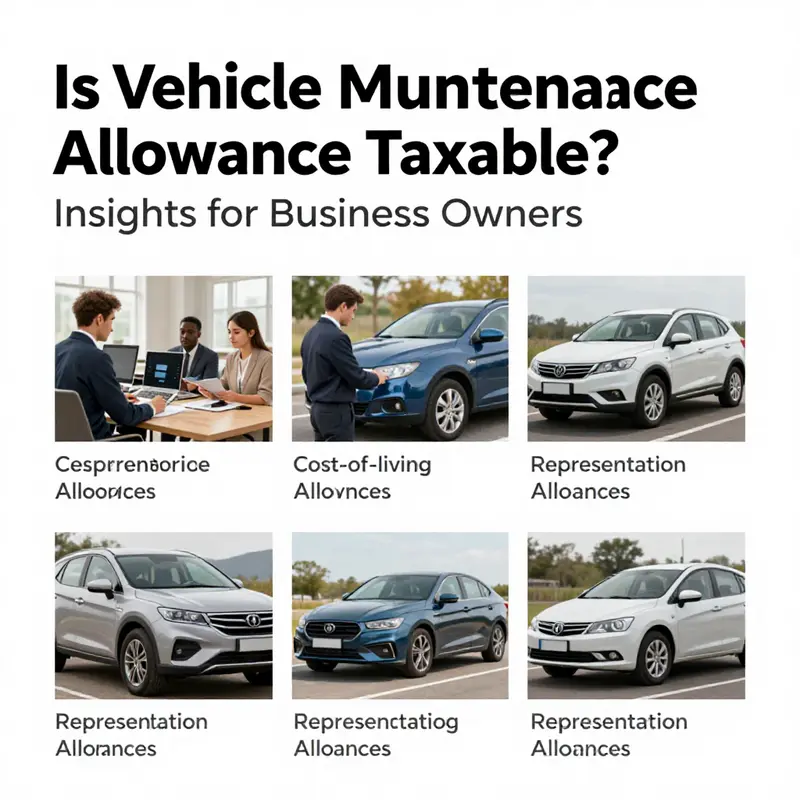
Beyond the core accountable-plan framework, there are special exclusions that may apply in some circumstances. Cost-of-living allowances for employees stationed outside the continental United States, as well as certain representation allowances for foreign service employees, are specifically excluded from gross income under U.S. tax law when they meet the governing criteria. In other words, some maintenance-related or cost-of-living payments can be tax-free if they are part of a qualified plan or an explicitly excluded category, and if the payments are approved under the applicable regulatory framework. This nuance is why many international assignments involve carefully structured compensation packages that include specific tax provisions designed to keep certain allowances outside the realm of taxable income.
To bring this to a practical level, imagine an employee who uses a company-provided vehicle for a mix of business and personal trips. If the employer pays a monthly maintenance stipend with no requirement to document expenses or reconcile the amount to actual costs, that stipend is typically taxable. If, however, the employee submits maintenance receipts and mileage logs, and the company pays or reimburses costs up to the actual maintenance spend in a timely manner, the same payment can be treated as a non-taxable reimbursement under an accountable plan. The mechanics of the program—substantiation, timing, and alignment with actual costs—determine the tax outcome, not the label attached to the payment.
The practical implications extend to how HR and payroll teams design and administer these plans. A well-constructed accountable plan reduces the risk of unexpected tax withholdings and simplifies year-end tax reporting for employees. It also clarifies what counts as a business expense versus a personal expense. In many organizations, there is a shared understanding that vehicle maintenance costs associated with business trips, client visits, fieldwork, and company-driven travel are legitimate business expenses. Yet without proper documentation and timely processing, those costs can slip into taxable territory as if they were pure compensation. Managers and finance teams should ensure the plan’s language explicitly requires receipt submission, maintenance of logs, and a clear method for reconciling actual costs with paid amounts.
For readers curious about what constitutes legitimate vehicle maintenance in a tax context, a foundational reference helps bridge theory and practice. A concise primer on the topic is available at What is Vehicle Maintenance. It offers a practical sense of which upkeep items typically qualify under maintenance and which costs tend to fall outside. What is Vehicle Maintenance provides a baseline understanding that can support employees in gathering the right documentation and that can help employers craft a more precise reimbursement policy.
In addition to the core mechanics, there is a broader perspective worth keeping in view. Tax law recognizes that certain allowances are designed to reflect living costs or representational needs rather than to cover ordinary business expenses. When such allowances are used in contexts that match their statutory purpose—and when they are documented and administered in line with the accountable-plan requirements—they can remain non-taxable. Conversely, a poorly engineered plan that pays a fixed amount regardless of actual costs, with no substantiation, risks becoming taxable income. This difference underlines the importance of the plan’s structure: documentation standards, timing, and reimbursement limits that reflect real-world expenses tied to business activity.
Another layer of complexity comes from how personal use of a company vehicle interacts with business use. If an employee pays for personal maintenance out of pocket, those costs are not reimbursed under the accountable plan. The business side should then expect the employee to treat any reimbursement strictly as a business expense, and any personal portion would either be excluded or handled through a separate, non-reimbursable arrangement. In practice, this means separating the accounting for business and personal use, or applying a reasonable method to allocate costs between business and personal use when reimbursement is warranted. Clear documentation becomes essential here: a mileage log indicating business trips, coupled with maintenance records tied to those trips, helps ensure the reimbursement aligns with business costs and remains non-taxable under the accountable plan.
For readers seeking definitive guidance, IRS Publication 535, Business Expenses, is the primary resource that outlines the rules governing vehicle-related reimbursements and the conditions under which they can be excluded from an employee’s gross income. The publication delves into the specifics of accountable plans, substantiation requirements, and the treatment of reimbursements versus allowances, offering a framework that employers can implement in practice. While the publication provides authoritative guidance, every organization should tailor its plan to fit its own payroll structure and the particularities of its workforce. Consulting with a tax professional can help ensure that the plan remains compliant as laws evolve and as the company’s mix of employee roles and vehicle usage changes over time.
In the end, the taxable fate of a vehicle maintenance allowance rests not on the badge it wears—whether it is called an allowance or a reimbursement—but on the way the plan operates day to day. Adequate documentation, timely payments, and strict adherence to actual costs create a pathway for non-taxable reimbursements within an accountable plan. When these elements fail to align, the consequences extend beyond a higher tax bill; they also shape how employees perceive the fairness and clarity of the compensation system. A well-designed plan, communicated clearly and implemented consistently, can help both sides navigate the tax code with confidence. The result is a practical framework that supports business operations while optimizing tax outcomes in a way that reflects the real costs of keeping a vehicle ready for work.
External resource: For authoritative guidance, consult IRS Publication 535, Business Expenses. https://www.irs.gov/publications/p535#enUS2023_publink1000149867
null
null
Keeping It Tax-Free: Documentation and Structure for Vehicle Maintenance Allowances
When organizations issue a vehicle maintenance allowance, the tax consequences hinge on how the payment is framed and documented. The central question—is the allowance taxable?—is not answered by a single rule, but by a careful look at the arrangement’s structure, the purpose of the funds, and the controls that ensure the money is used for legitimate business costs rather than a generic stipend or a personal perk. In many cases, a maintenance allowance given as compensation for vehicle-related expenses linked to work can be treated as taxable income. The critical distinction lies in whether the payment is treated as ordinary wages or as a reimbursement under an accountable plan that requires substantiation and adherence to specific rules. When an employer designs the program with these constraints, the reimbursement (including what is labeled an allowance) can escape taxation, provided the conditions are met. Conversely, if the funds are not tied to actual costs, lack substantiation, or resemble a broad, non-specific stipend, they typically become taxable wages. This nuance is not a matter of opinion but of established tax rules that guide how reimbursements, allowances, and fringe benefits are treated for payroll and income tax purposes.
To navigate this landscape with any confidence, it helps to situate the discussion in the broader framework of accountable plans and the kinds of exclusions that higher-level tax policy sometimes grants. An accountable plan requires employees to substantiate expenses and to return any amount that exceeds actual costs. When an employer uses such a plan for a vehicle maintenance allowance, the payments can be non-taxable so long as the substantiation is rigorous and the excess is refunded. This is not a theoretical exception but a routine approach in many organizations that seek to align compensation with real business needs while maintaining compliance with tax law. The emphasis is on documentation, traceability, and a clear linkage between the funds disbursed and the costs incurred in the service of business objectives. For a practical view of how these rules are applied, see the guidance that frames fringe benefits, including vehicle maintenance reimbursements, within the employer’s tax guide to fringe benefits. The emphasis is on demonstrating that payments are tied to actual, necessary, and reasonable business costs—repairs, maintenance, insurance, fuel, depreciation, and similar expenses that arise from operating a vehicle used for work.
A core element in this framework is the maintenance log. A comprehensive log isn’t just a ledger entry; it is a documented exhibit of business use. Employers should capture business mileage, dates, destinations, and the nature of the business reason for each trip. The costs claimed or paid under the allowance should be traceable to specific expenses such as routine maintenance, unexpected repairs, or insurance premiums tied to the vehicle’s business use. Receipts and invoices should be collected and stored to substantiate the amounts paid. When an employee reimburses or is reimbursed for costs, the documentation must show that the payments are directly connected to those costs and that personal or non-business expenses are excluded from the claim. This discipline helps ensure that the program remains aligned with tax rules and does not drift into taxable wage territory simply because a flat amount was allocated without a clear accounting of expenses.
The 2026 landscape adds a layer of precision to these requirements. The IRS expects the employer to maintain records that demonstrate the payments are for actual business-related vehicle costs, and not for general compensation or personal benefit. In practice, this means a robust system: substantiation for every expense, the ability to audit the claims, and proof that any excess funds are returned or handled as required by the accountable plan. The documentation should cover the spectrum of costs associated with vehicle operation in a business context. Repairs may include tire replacements or brake work necessary for safe operation; maintenance can cover oil changes and routine servicing; insurance costs should be allocated appropriately to business use; fuel expenses should reflect business travel; and depreciation should be calculated with clear attribution to the business portion of vehicle use. Such granularity helps ensure the allowance remains tax-free to the extent permissible under the law.
For practitioners and policy-makers within organizations, the practical takeaway is simple in concept but demanding in execution: the value of the allowance is not judged solely by the amount, but by the integrity of the process that accompanies it. A well-structured plan does more than prevent taxation on reimbursements; it also reduces the risk of payroll errors and audit exposure. When a company commits to detailed mileage logs, precise expense records, and timely reconciliation of the amounts paid with the actual costs incurred, it builds a defensible, transparent program. The process reduces ambiguity about what the funds cover and discourages the use of the allowance as a broad, non-specific bonus. In many families of fringe benefits, such accountability is the hinge on which tax treatment swings from taxable wages to non-taxable reimbursements. As such, the documentation requirements are not mere bureaucracy; they are the architecture that supports a tax-efficient compensation strategy for employees who rely on a vehicle for work.
The discussion would be incomplete, however, without acknowledging special exclusions in the tax code that can alter the fate of a vehicle maintenance allowance in particular circumstances. For foreign service employees, certain cost-of-living allowances approved by the President are explicitly excluded from gross income. Likewise, allowances for representation expenses for foreign service employees can be tax-free when framed within statutory exclusions. These cases illustrate how the same broad category of support—an allowance for travel, housing, or related costs—can be treated differently depending on its purpose, the governing plan, and the statutory provisions that exist for particular postings or roles. They underscore a central theme of tax compliance: not all allowances are created equal, and the route to tax-free status is often carved by the specifics of the plan and the nature of the costs involved.
In applications closer to the everyday workplace, the question of whether the vehicle maintenance allowance remains tax-free hinges on a clear, demonstrable link to business expenses. If the program cannot show receipts, logs, and a direct correlation to work-related driving, the likelihood increases that the funds will be treated as taxable wages. The opposite—an accountable plan with substantiation and return of any excess—tends to preserve the tax-free status. This is not merely a matter of preference or tradition; it is a reflection of how the tax system views compensation related to the use of an employer-provided asset for business purposes. For readers seeking authoritative, practitioner-level guidance, the IRS publication on employee business expenses provides a detailed map of what constitutes proper documentation and how to apply the rules to vehicle-related reimbursements and allowances. Practitioners should consult that resource as a baseline, and consider additional advice from a tax professional to account for any organization-specific nuances or state-level considerations.
For those who want a concise entry point into the underlying rules, a practical reference is the publication known for its comprehensive coverage of fringe benefits and the documentation that supports tax-free treatment for reimbursements and allowances. This resource lays out the requirements for substantiation, the treatment of excess payments, and the conditions under which a vehicle maintenance allowance can be considered tax-free. It is essential reading for payroll professionals, human resources leaders, and managers who design, implement, or audit such programs. The guidance reinforces that the right combination of careful planning, precise record-keeping, and strict adherence to the accountable-plan framework can preserve the tax advantages of well-structured vehicle allowances, even as business needs evolve and the regulatory environment becomes more nuanced.
To tie the discussion back to practical action, organizations should start by reviewing their current vehicle maintenance allowance policies. Do they require receipts for every maintenance item? Is there a mileage log that ties costs to business travel? Do excess payments get returned promptly? Are there explicit procedures for categorizing expenses and for distinguishing personal use from business use? Answering these questions helps determine whether the current approach already meets the documented standards or requires refinement. For employees, understanding the system is equally important. They should know what receipts to save, how to log business mileage, and the process for ensuring that any reimbursements received align with actual costs rather than being treated as salary. The goal is to create a coherent, auditable trail that satisfies both the letter of the law and the practical needs of the business.
Internal linking note: for a broader context on what constitutes vehicle maintenance and its role in business operations, readers can consult a dedicated overview that explains what qualifies as vehicle maintenance and why it matters for budgeting and compliance. Read more here: What is vehicle maintenance.
External resource: authoritative guidance is consolidated in the IRS’s fringe benefits materials, which provide the foundation for how to structure reimbursements and allowances in a compliant, tax-efficient way. For official, up-to-date details, see the IRS Publication 15-B, Employer’s Tax Guide to Fringe Benefits, available at https://www.irs.gov/publications/p15b.
Tax Fate of a Vehicle Maintenance Allowance: When It Becomes Taxable Income
When a company pays an employee a vehicle maintenance allowance, the intention behind the money and the way it is structured largely determine how it will be treated for federal tax purposes. In practice, the line between compensation and reimbursement is where the tax treatment runs either smoothly or into friction. In many workplaces, a maintenance allowance is offered to help cover the cost of keeping a vehicle ready for work-related use. If the payment is a broad, fixed sum that the employee can spend as they see fit, without requiring documentation of actual expenses, the Internal Revenue Service (IRS) is more likely to treat that money as taxable income. In other words, it becomes part of the employee’s gross wages and is taxed accordingly. The logic is straightforward: if money is provided as compensation for possible vehicle costs, and there is no direct link to substantiated expenses, it operates like regular wages rather than a reimbursement of specified outlays. The result is simple for payroll departments and tax software to process, but it also means the employee must account for this extra cash in the year it is received, with withholding and reported wages accordingly.
That practical distinction—between fixed, non-accountable allowances and true, substantiated reimbursements—rests on the concept of an accountable plan. An accountable plan is a formal arrangement under which employees must substantiate their actual expenses and return any excess amounts received. When an allowance falls under such a plan, and the employee confirms, through receipts or other verifiable evidence, the actual costs incurred and refunds any overage, the reimbursement is typically not taxable. In many cases, this means the vehicle maintenance costs that the employee incurs are effectively treated as a business expense, not as income. The employee’s ability to document expenses, the employer’s obligation to reimburse only substantiated amounts, and the requirement to return any excess are the levers that convert a payment from taxable wages to a tax-free reimbursement under the right conditions. To the reader, this is not simply a question of how much money changes hands, but how that money is justified and verified in relation to actual, demonstrable expenses.
Despite the neat theoretical boundary that an accountable plan creates, many maintenance allowances do not fit neatly into that framework. Some employers provide a fixed monthly or annual sum—say, $100 a month or $500 a year—with the understanding that the employee may use it for maintenance costs but is not required to present receipts for every repair. In those cases, the amount is generally treated as taxable wages, regardless of whether the employee ultimately spends it or not. The lack of a direct, verifiable link to specific repairs or maintenance expenses means the allowance does not meet the requirements of an accountable plan. The IRS tends to view such payments as compensation for personal vehicle use, and thus they are reported as wages on the employee’s Form W-2 for the year in which they are paid.
The tax landscape becomes even more nuanced when we widen the lens to special allowances that the IRS explicitly excludes from gross income under certain conditions. For example, some allowances related to foreign service are treated differently. Cost-of-living allowances granted to employees stationed outside the continental United States or in Alaska, when approved by the President, are not included in gross income. Similarly, allowances for representation expenses for foreign service employees are also tax-free. These exclusions are targeted and specific, designed to acknowledge the additional burdens and costs of serving in a foreign capacity. They demonstrate that the tax system does not automatically tax every travel or cost-support arrangement; instead, it distinguishes between ordinary compensation, reimbursed business expenses, and narrowly defined foreign service allowances that receive special treatment. In the context of a vehicle maintenance allowance, such exclusions would apply only if the payment clearly fits one of these qualified, explicitly excluded categories rather than a general, personal maintenance stipend.
For most employees and employers, the key takeaway remains clear: if the maintenance allowance is not part of a qualified, substantiation-based plan, and it is not one of the expressly excluded foreign service allowances, it will usually be treated as taxable wages. The practical implication is straightforward. The employee should expect the amount to be included in gross income for the year and subject to withholding, payroll taxes, and appropriate reporting on Form W-2. This is not merely a theoretical stance; it affects take-home pay, tax planning, and the way employees assess whether a provided allowance is a benefit or a tax burden.
To navigate these complexities, both employees and employers benefit from consulting the authoritative IRS guidance on vehicle-related expenses and reimbursements. In particular, IRS Publication 463 (Travel, Gift, and Car Expenses) offers a comprehensive framework for understanding which costs related to vehicle use are deductible or reimbursed and under what circumstances. Publication 463 delves into the treatment of a broad set of vehicle expenses, including lease or loan payments, insurance, fuel, maintenance, and upkeep, and it clarifies the boundaries between reimbursed expenses and taxable compensation. For business owners who also use vehicles for business purposes, the publication outlines how deductible costs can be treated when the vehicle is used predominantly for business. For employees, it emphasizes that mere reimbursement without substantiation falls short of non-taxable treatment; maintaining receipts and keeping a detailed log of actual expenses is essential for any claim to be considered non-taxable under an accountable plan. While the publication dissects many scenarios, the kernel remains that proper substantiation and alignment with the plan structure determine tax outcomes.
Beyond the precise rules, the decision on whether a vehicle maintenance allowance is taxable hinges on the interaction between the plan’s design, the employee’s actual costs, and the unique exclusions that might apply in extraordinary circumstances, such as foreign service costs. In practice, workers should scrutinize the language of their employer’s policy. If the policy requires receipts, maintains a clear cap on reimbursements, and compels the return of excess funds, it is more likely to be treated as non-taxable. If, however, the policy simply hands out a fixed amount with no documentation requirements or true-cost alignment, it should be treated as taxable income. The employer’s payroll department, tax professionals, and internal policy documents thus play a pivotal role in determining the tax outcome for any given year. For employees who want to dig deeper, a quick, helpful resource is a general explainer on vehicle maintenance to contextualize what counts as maintenance and why substantiation matters; see What is vehicle maintenance.
For anyone facing ambiguity—whether you are negotiating the terms of an allowance with your employer or preparing to file your tax return—the prudent course is to consult the primary IRS materials and seek professional advice. IRS Publication 4012 (Business Expenses) offers foundational guidance on business expenses, while Publication 463 provides the vehicle-specific guidance that shapes how those expenses translate into tax outcomes. By understanding the nuances—the difference between reimbursed expenses and allowed allowances, the requirements of an accountable plan, and the narrow exclusions for foreign service allowances—employees can better anticipate how a maintenance allowance will impact their tax situation. Employers, in turn, can reduce confusion and potential payroll tax exposure by designing plans that meet the accountable-plan criteria when the objective is to minimize tax consequences and maximize clarity for staff.
In sum, the tax fate of a vehicle maintenance allowance is not determined by the mere existence of a payment earmarked for car upkeep. It is determined by the structure, documentation, and context of that payment. A fixed, non-reimbursed sum tends to be taxable wages; a properly documented, substantiated reimbursement under an accountable plan tends to be non-taxable; and special foreign-service exclusions may apply in limited circumstances where the allowance aligns with specific statutory criteria. This is not a one-size-fits-all answer but a nuanced decision tree that hinges on careful policy design and diligent record-keeping. As you move through the process—whether drafting a policy, negotiating terms, or preparing tax returns—keeping these distinctions in mind will help you avoid surprises and ensure compliance. For the latest, authoritative guidance, consult the IRS resources cited above and the official publications they contain. External reference: https://www.irs.gov/publications/p463#enUS2024
Final thoughts
The tax treatment of vehicle maintenance allowances can significantly impact your business finances. Business owners must be knowledgeable about the rules governing these allowances. By understanding the distinction between taxable and non-taxable allowances, adhering to IRS requirements, and maintaining thorough documentation, you can optimize your financial strategy while remaining compliant with tax regulations. Staying informed through continuous education and seeking professional guidance will empower you to make the right decisions regarding vehicle maintenance allowances.