
Understanding the maintenance costs of vehicles is crucial for business owners who rely on transportation for their operations. Each component—ranging from fuel expenses to insurance premiums—can significantly impact your overall budget. This comprehensive guide walks you through the intricate process of calculating these costs, empowering you to make informed decisions and ensure your vehicles remain operational without breaking the bank. We’ll delve into fuel costs, insurance premiums, regular maintenance, and repair expenses while highlighting strategies to optimize each area for greater efficiency and cost-effectiveness.
Fuel as the Ledger of Ownership: Calculating the Core of Vehicle Maintenance Costs
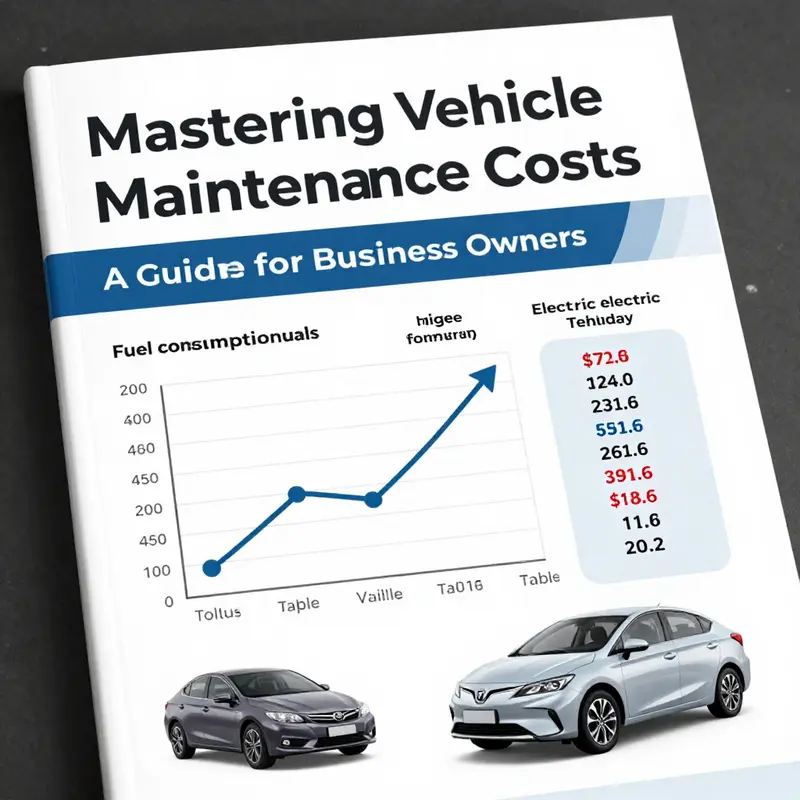
Fuel is more than a line item in a maintenance budget; it is the heartbeat of the total cost of ownership. When you consider maintaining a vehicle, the decisions you make about driving habits, routes, and even vehicle choice ripple through your fuel bills. This is why the most practical approach to calculating maintenance costs starts with fuel. Understanding fuel cost gives you leverage to optimize not just the gas or electricity you burn, but the pacing of every other expense that follows. The chapter that follows blends theory with hands-on methods, enabling you to translate daily driving into a tangible, controllable line on your budget. It also connects fuel costs to the broader maintenance picture, so you can see how small changes in consumption aggregate into meaningful long-term savings. In essence, fuel cost is the loudest bell in the maintenance hall, and learning to ring it precisely can transform how you plan, drive, and invest in your vehicle.
At the heart of fuel cost calculation lies a straightforward premise: multiply how far you drive by how efficiently your vehicle uses fuel, then multiply by the price of that fuel. Yet the practical reality is more nuanced. Efficiency varies with speed, load, tire pressure, engine condition, and even weather. Distance is rarely uniform; a week of city stop-and-go driving can inflate fuel use compared with a steady highway cruise. Price fluctuates with markets, taxes, and regional supply. Because maintenance costs repeat over time, it is essential to turn this fluid, real-world data into a stable estimate that you can rely on for budgeting and decision-making. When you treat fuel as a data-driven input rather than a vague concept, you illuminate the path to lower total ownership costs and a more predictable maintenance horizon.
The simplest starting point is the classic formula most readers have seen elsewhere: Fuel Cost = (Annual Mileage ÷ 100) × Fuel Consumption (L/100km) × Fuel Price (per liter). In practice, this converts distance into a fuel quantity, and fuel quantity into dollars. If your vehicle uses 8 L per 100 km and you drive 15,000 km in a year, at a fuel price of $7 per liter, the math is (15,000 ÷ 100) × 8 × 7 = 8,400 dollars. That is a stark illustration of how a single parameter—fuel price—can dominate the annual maintenance burden. For electric vehicles, the parallel is Electricity Cost = (Annual Miles ÷ 100) × kWh/100 miles × Electricity Price (per kWh). In many markets, EVs average roughly $10-$20 to travel 100 miles, a different but equally decisive cost signal for long-term budgeting. The contrast between the two propulsion strategies is not merely about emissions or performance. It is a fundamental input to the maintenance cost ledger, shaping which vehicles remain financially viable across ownership cycles.
The most robust way to anchor fuel cost estimates in reality is to use real-world data from your own refueling and driving records. The Fill-to-Fill Method is widely regarded as the most reliable approach because it ties fuel consumption directly to actual driving, not to laboratory test cycles or marketing numbers. This method requires careful record-keeping: note your odometer reading and the exact amount of fuel added each time you fill the tank completely. After you drive a substantial distance, repeat the process. The result is a precise picture of how many liters you use per kilometer, grounded in your driving conditions, vehicle condition, and fuel choices. The formula for fuel cost per kilometer in this method can be expressed as: Fuel Cost per Kilometer = (Total Fuel Cost for Fill-up * Fuel Price per Unit) / (New Odometer Reading – Old Odometer Reading). This calculation directly yields the unit cost of fuel for the actual miles you drive.
To illustrate, suppose you spend $240 on fuel to refill after driving 500 km and the price you paid for fuel was $1.50 per liter. The first step is to determine liters used: Liters = 240 ÷ 1.50 = 160 liters. Next, compute the fuel cost per kilometer: Fuel Cost per Kilometer = 160 ÷ 500 = 0.32 liters/km. Finally, convert back to dollars: 0.32 liters/km × 1.50 dollars/liter = 0.48 dollars/km. This result—roughly 48 cents per kilometer—reflects your actual operating conditions, including traffic patterns, terrain, and how well your vehicle responds to your driving style. Because this figure is grounded in real refueling events, it tends to be far more trustworthy than generalized efficiency estimates, which can overstate or understate real-world costs due to variations in load, tire pressure, climate, and maintenance status.
Beyond the math, several factors modulate fuel costs in practice. Driving style emerges as one of the most influential levers. Aggressive acceleration and brisk braking can raise fuel consumption by as much as 10% to 30%, depending on the vehicle and conditions. Traffic conditions matter as well; stop-and-go urban driving often increases fuel use by 20% to 50% compared with steady highway cruising. Vehicle load matters, too: a full car creates additional rolling resistance and weight, typically pushing consumption up by 5% to 15%. Slight but meaningful changes in tire pressure alter rolling resistance; underinflated tires can lift fuel use by 3% to 8%. The fuel type and price you pay—whether gasoline, diesel, or electricity—also shape the cost outcome, as does the relative efficiency of your powertrain across speeds and loads. In addition to these behavioral and mechanical factors, external conditions such as climate significantly influence consumption. Cold starts, for example, demand more energy, especially in EVs where battery efficiency and cabin heating can materially affect the energy draw.
For readers who want a practical path to integrating fuel costs into the broader maintenance budget, two complementary approaches can work in tandem. First, maintain a running fuel log using the Fill-to-Fill method described above. This not only yields a per-kilometer cost but also builds a historical record that you can analyze for trends, seasonal effects, or changes after maintenance work. Second, translate that per-kilometer figure into a per-interval estimate aligned with your maintenance schedule. For example, if you follow a 10,000-km service interval, multiply your current Fuel Cost per Kilometer by 10,000 to project fuel expenditure between services. This approach helps you compare total ownership costs across different service levels, vehicle models, or driving regimes and makes fuel a tangible input in trade-off decisions about wear items, tires, and transmission servicing.
In practice, a robust fuel-cost plan also accounts for the realities of price volatility. Fuel prices do not stay constant; they rise and fall with geopolitical events, refining margins, taxes, and seasonal demand. A disciplined budgeting approach includes building a modest cushion to absorb spikes, and it may include scenario planning: what would happen if fuel prices rose 15% or 30% during a typical year? This kind of planning helps not only with the current vehicle choice but with evaluating long-term ownership costs when considering upgrades or downsizing to a vehicle with better efficiency. An important part of this plan is how you negotiate your driving environment itself. Carpooling, routing optimization, and shifts in commuting patterns can reduce annual fuel consumption substantially, sometimes making the difference between a budgeted and a breached maintenance line.
To anchor your understanding and to access a broader framework for fuel costs, you can explore reliable, third-party data resources that collect and publish real-world fuel-use data. The official resource from the U.S. Department of Energy’s Fuel Economy website provides tools and calculators based on real-world data and can help you cross-check your own logs against regional averages and vehicle classes. This external resource can be a valuable companion as you calibrate your own estimates and refine your budgeting process: https://www.fueleconomy.gov/
As you develop a habit of tracking fuel costs, you begin to see how the fuel line interacts with the other lines in the maintenance ledger. Insurance premiums, routine maintenance, and depreciation each respond to the level of use, but fuel cost is the only line that tends to move with your daily decisions as a driver. The total annual cost of ownership then becomes a composite of fuel plus the more predictable items—insurance based on vehicle value and driver profile, maintenance based on scheduled services, and depreciation that captures the asset’s value loss over time. In practice, the annual cost can be approximated by: Total Annual Cost ≈ Fuel + Insurance + Maintenance + Estimated Repairs + Depreciation (annualized) + Parking/Tolls. While fuel and insurance are readily calculable, depreciation and repairs require careful estimation because they depend heavily on brand, model, maintenance history, and the age of the vehicle. The most realistic approach blends the precise, real-world fuel-cost data with conservative estimates for the other components, ensuring your budget remains resilient under a range of conditions.
In closing this fuel-focused examination, consider how your driving choices today influence tomorrow’s maintenance burdens. A steady, moderate driving style can reduce wear and tear, extending tire life and reducing brake usage, which in turn lowers maintenance costs and the need for major repairs. A well-maintained engine, properly inflated tires, and a disciplined fueling routine produce a lower per-kilometer cost and a more stable overall budget. Remember that the goal is not to minimize fuel cost in isolation but to integrate it into the broader maintenance strategy in a way that yields the lowest possible total cost of ownership over the vehicle’s life. For readers seeking a concise path to applying these insights, you can refer to a detailed discussion on how vehicle maintenance saves on gas expenses through practical fuel-management practices, which provides additional tactics for reducing fuel waste and aligning driving habits with cost goals.
Internal link to related discussion on fuel-saving maintenance practices: how-vehicle-maintenance-saves-on-gas-expenses
For a broader, authoritative framework on fuel costs and real-world data, consult the official resource: https://www.fueleconomy.gov/
Under the Hood of Maintenance: Insurance’s Quiet Role in the True Cost of Keeping a Vehicle
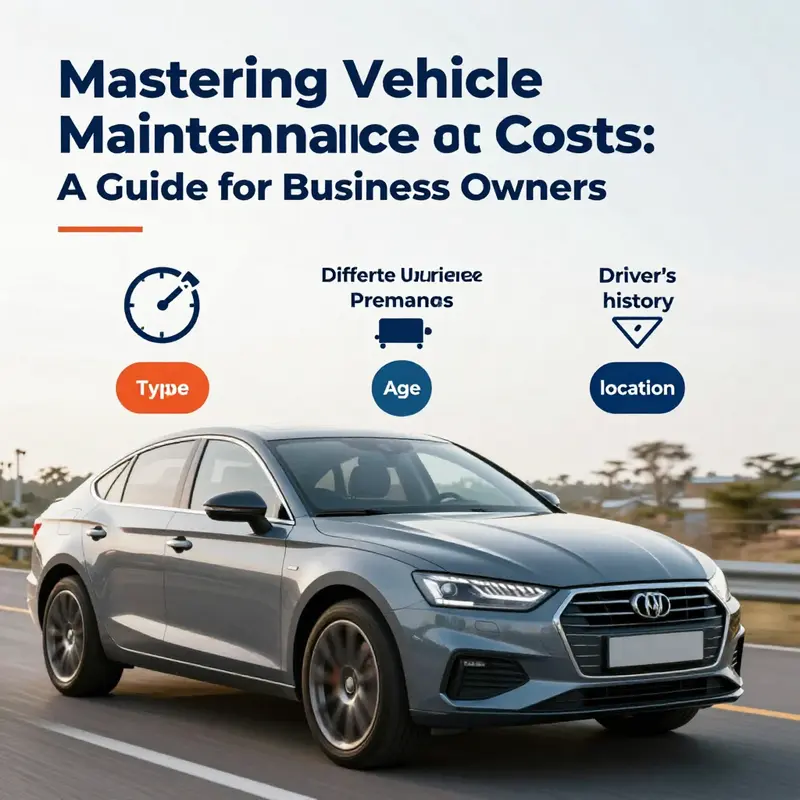
Every driver knows fuel and tires eat into a monthly budget, but the most opaque piece of the cost puzzle often sits in the shadows: insurance. When people calculate the price of keeping a car on the road, they tend to think in terms of upkeep tasks and periodic repairs. Yet insurance premiums can loom just as large, fluctuating with factors that aren’t always obvious or directly tied to mechanical wear. The real story lies in how maintenance interacts with risk, perception, and policy design. A well-maintained vehicle doesn’t just run better; it can influence how much you pay to keep it on the road, sometimes in ways that feel indirect but are economically meaningful over the life of the car. To understand this, imagine maintenance not as a single line item, but as a conversation between the car’s condition, the driver’s behavior, and the insurer’s calculation of risk. In that dialogue, maintenance functions as a signal: a vehicle that remains in prime mechanical health tends to be a safer, more predictable asset for the insurer, even if the maintenance bill itself is a distinct expense on your ledger. When you see maintenance costs in the context of total ownership, the insurance piece begins to look less arbitrary and more systematic, a variable that can be actively managed alongside fuel, depreciation, and repairs.
The central premise is straightforward: insurance premiums reflect risk. They are not a direct function of how much you spend on maintenance, but they are influenced by the observable outcomes of maintenance—the car that brims with fresh brakes, healthy tires, and reliable lights is statistically less likely to be involved in incidents per mile. This is why insurers pay attention to maintenance habits as proxies for driver behavior and vehicle condition. A vehicle kept in excellent mechanical health signals lower probability of sudden failures that could lead to claims, and it can translate into discounts or more favorable terms through traditional underwriting or telematics-based programs. The implication for owners is practical: by documenting and sustaining a maintenance routine, you don’t just preserve performance; you can also shape the cost of risk you are insuring against.
To grasp how this works in practice, consider the typical components of a maintenance plan and the way insurers view them. Regular servicing—oil and filter changes, brake inspections, tire rotation, and fluid checks—creates a predictable maintenance history. When a vehicle has a clean service record, it tends to stay out of the shop for avoidable faults, which reduces the chance of minor incidents that escalate into claims. Brakes that are inspected and replaced on schedule, tires that maintain tread and proper alignment, and lighting that is consistently functional are not glamorous to think about, but they map directly onto safety outcomes that insurers value. In other words, keeping the car in excellent working order doesn’t guarantee a lower premium in every case. However, many insurers recognize and reward responsible upkeep through discounts, safe-driver allowances, or telematics programs that monitor the vehicle’s health and driving behavior in real time.
There is a practical choreography to balancing maintenance with insurance costs. Start with the basics: maintain the vehicle according to the manufacturer’s schedule, using quality parts and documented service records. Collect receipts and keep a service log so that when you renegotiate coverage or shop for a policy, you can demonstrate a continuing commitment to vehicle health. Some carriers will ask for proof of regular maintenance or offer lower premiums if you’ve installed certain safety features such as anti-lock braking systems, multiple airbags, or advanced driver-assistance systems. While these features are not a substitute for responsible maintenance, they typically accompany lower risk profiles. The effect is cumulative: a well-kept vehicle reduces the probability of claims, the driver’s history remains favorable, and the combination often yields a more favorable premium over time.
Another crucial channel is the growing world of usage-based insurance, or telematics. In this model, a small device or app collects data on how you drive—speed patterns, braking habits, acceleration, and even how the car health systems are engaged during trips. When combined with maintenance data, telematics can paint a compelling picture of risk. A driver who demonstrates smooth driving alongside a car that is consistently serviced tends to receive lower rates or additional savings. The insurance company isn’t judging maintenance in isolation; it is assessing how maintenance interacts with driving style to create a lower likelihood of costly incidents. For many drivers, this can be a meaningful pathway to reducing annual insurance costs while simultaneously supporting a responsible maintenance routine.
From a budgeting perspective, it helps to frame insurance alongside maintenance as two halves of the risk equation. Maintenance reduces the chance of unexpected breakdowns and reduces the severity of certain failures, especially if preventive parts wear out together or at predictable intervals. While a major repair can still pop up—engine work, transmission issues, or battery replacements are all possibilities—regular maintenance tends to shift the risk curve toward the predictable and the manageable. Insurance costs, meanwhile, are driven by a combination of vehicle value, safety features, driver profile, geography, and policy structure. Location matters: urban areas with higher accident frequency might push premiums higher, but the same city often offers more comprehensive safety infrastructure and quick access to service centers that can support timely maintenance. A well-kept vehicle in a higher-risk location might still fare better than a neglected one in a low-risk locale because the insurer better understands the vehicle’s reliability and the driver’s habits.
What does this mean for someone calculating the true annual cost of vehicle ownership? It means you should incorporate the maintenance-insurance feedback loop into your model. Start with a realistic baseline for insurance, specific to your vehicle type, age, location, and coverage level. Then overlay a robust maintenance plan that aligns with the manufacturer’s intervals and your driving patterns. As you accumulate miles, update the maintenance log with every service, every part replacement, and any safety-system checks. When it’s time to renew, you’ll be in a position to compare not only the sticker price of the policy but the long-term value of the discounts earned through a disciplined upkeep approach. If you can demonstrate that your vehicle is consistently maintained, you may unlock telematics-based discounts, loyalty credits, or bundle pricing that would not be available to an owner who neglects maintenance, even if the nominal premium looks similar at renewal.
The discipline of maintenance also feeds into another practical reality: depreciation, another heavy driver of costs that interplays with insurance. Cars that are kept in pristine condition tend to depreciate more gradually, especially if the upkeep extends to keeping the car’s exterior, interior, and safety features in good shape. While depreciation affects the resale value rather than the annual insurance premium directly, it indirectly matters when you consider the overall cost of ownership. A vehicle with a lower rate of depreciation reduces the total financial exposure if you decide to sell or trade in the future, and a well-documented maintenance history can support a higher residual value in a trade-in or sale. This is relevant to the broader discussion about maintenance costs because it reframes the insurance line item as part of a larger ecosystem of risk, value preservation, and future liquidity.
To translate these ideas into a concrete approach, adopt a few practical steps. First, maintain a formal log of maintenance events. Record the date, mileage, services performed, parts used, and the service provider. This log becomes a narrative of care that you can present to an insurer if needed, and it underpins arguments for any discounts tied to vehicle condition. Second, invest in essential safety improvements when your budget allows. Anti-lock brakes, stability control, high-quality tires, and reliable lighting do not just improve on-road safety; they improve risk metrics that insurers use. Third, explore telematics options if you value the potential discount and if your driving style is steady and cautious. For some drivers, the combination of routine maintenance and telematics can produce a premium structure that is materially friendlier than a standard, non-telematics policy.
It is worth noting that the relationship between maintenance and insurance costs is not a simple cause-and-effect equation. There are many moving parts: the cost of the policy, the level of coverage chosen, the use of the vehicle (personal, business, or mixed), your driving record, and even regional factors such as road quality and accident frequency. Yet the core idea remains valid: responsible maintenance is a signal of lower risk, and risk is what premiums measure. When you approach this chapter as part of a holistic cost strategy, you gain a clearer understanding of where to allocate resources. If your goal is to minimize long-term ownership expenses, you should treat maintenance not as a sunk cost but as an investment in risk management that can pay off through insurance savings, fewer unexpected repairs, and better resale value.
In practical budgeting terms, you can treat the insurance portion of maintenance as a variable that can drift up or down with your maintenance discipline. If you notice your premiums creeping up, one actionable response is to audit your maintenance and safety features. Are you performing the minimum required services on time? Are tires with adequate tread and proper alignment? Are brakes responsive, and are there any warning lights that have been ignored? Addressing even small gaps can reduce risk, which may be reflected in favorable premium adjustments at renewal. Conversely, if you improve driving habits and demonstrate consistent maintenance, you might unlock more favorable terms without needing to switch providers. The key is to maintain transparency with your insurer and to document improvements with receipts and service histories.
If you seek to anchor this discussion in a broader research context, consider how maintenance and insurance intersect with the total cost of ownership. The literature on cost modeling emphasizes that fuel, insurance, maintenance, and depreciation together create a dynamic landscape where small improvements in one area can yield outsized benefits in another. For example, a driver who lowers the accident rate through careful maintenance and vigilant driving may see compounding savings as they renew policies over several years. And while the exact dollar amounts vary by locale and vehicle type, the principle holds across markets: a disciplined maintenance program can be a strategic lever in controlling the true cost of keeping a vehicle on the road.
For readers who want a more technical dive into maintenance-driven insurance strategies, the underlying idea is to quantify risk reductions from maintenance activities and map them to premium adjustments through a discount framework or a telematics program. Start with the maintenance plan that aligns with the manufacturer’s recommended schedule. Add in safety improvements, and evaluate whether your policy supports discounts for such features. If you are in a market that supports usage-based or telematics insurance, consider enrolling to capture potential savings tied to both driving behavior and vehicle health data. In parallel, keep a careful record of all maintenance activity to simplify any renewal negotiations and to provide a credible basis for any premium changes tied to risk assessment.
Ultimately, the call to action is practical and straightforward: treat maintenance as part of a broader strategy to manage risk and cost. The maintenance bill may be a recurring line item, but the insurance premium attached to that vehicle is a variable that can be influenced by your diligence. The more you invest in keeping the vehicle in peak condition, the more you create levers to pull when negotiating with insurers or evaluating policy options. And as you become more deliberate about maintenance, you also enhance the long-term reliability and value of the car, which makes the total ownership experience more predictable and less distressing when the next renewal arrives.
For a clearer baseline on what maintenance entails and how it fits into the cost calculus, see What is Vehicle Maintenance. This reference helps anchor the broader narrative of upkeep that feeds into the insurance conversation without getting lost in the minutiae of each service interval. As you plan your year, keep in mind that the aim is not to chase a lowest possible premium alone, but to balance a robust maintenance routine with smart insurance choices that reflect your actual risk profile. That balance, when achieved, yields a much more resilient ownership experience—one where the car performs reliably, the costs are predictable, and the insurance framework rewards prudent behavior rather than punishing neglect.
External resource: For additional perspectives on cutting car insurance costs and maximizing value, you can consult expert guidance such as Investopedia’s tips on saving more on car insurance, which complements the discussion by outlining practical steps that drivers can take in parallel with maintenance planning. https://www.investopedia.com/articles/personal-finance/102715/15-tips-cut-car-insurance-costs.asp
Beyond the Sticker Price: A Deep, Integrated Estimate of Regular Vehicle Maintenance Costs
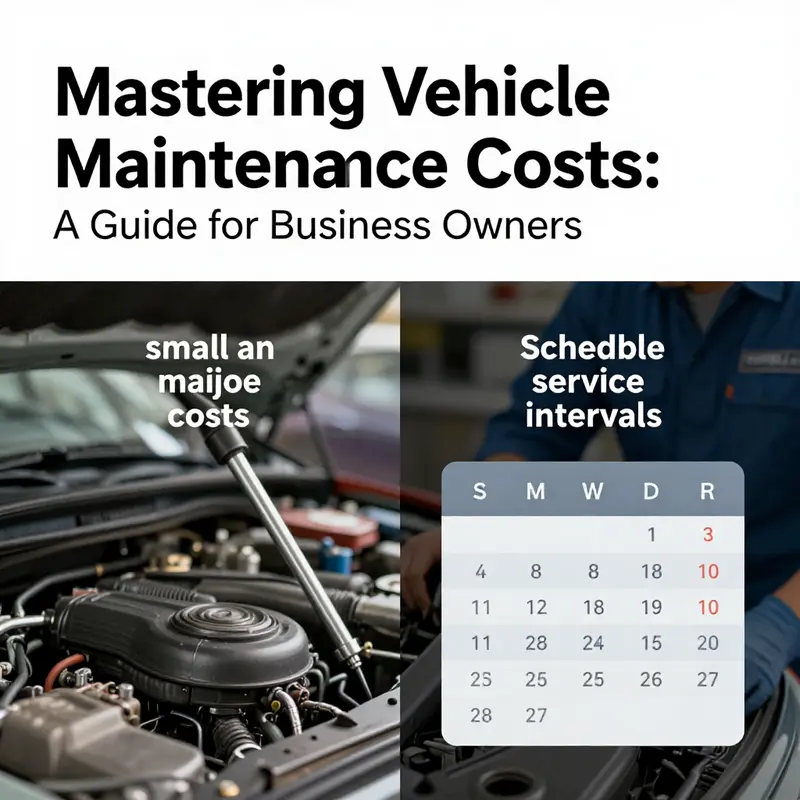
Maintenance costs are part of owning a vehicle, yet they’re often misunderstood. A practical budgeting approach treats maintenance as an ecosystem of recurring costs: fuel, insurance, routine service, repairs, depreciation, and other incidentals. This chapter explains how to estimate each component, then combine them into a realistic annual figure tailored to your vehicle, usage, and local prices. It also discusses how to update estimates over time as conditions change, and it suggests a simple formula you can adapt for your planning: Total Annual Cost ≈ Fuel + Insurance + Maintenance + Repairs + Depreciation (annualized) + Parking/Tolls. By grounding numbers in your actual driving and regional costs, you move from guesswork to a robust ownership plan.
Repair Costs Reframed: A Cohesive View of Labor, Parts, and Fees in Vehicle Maintenance Calculations
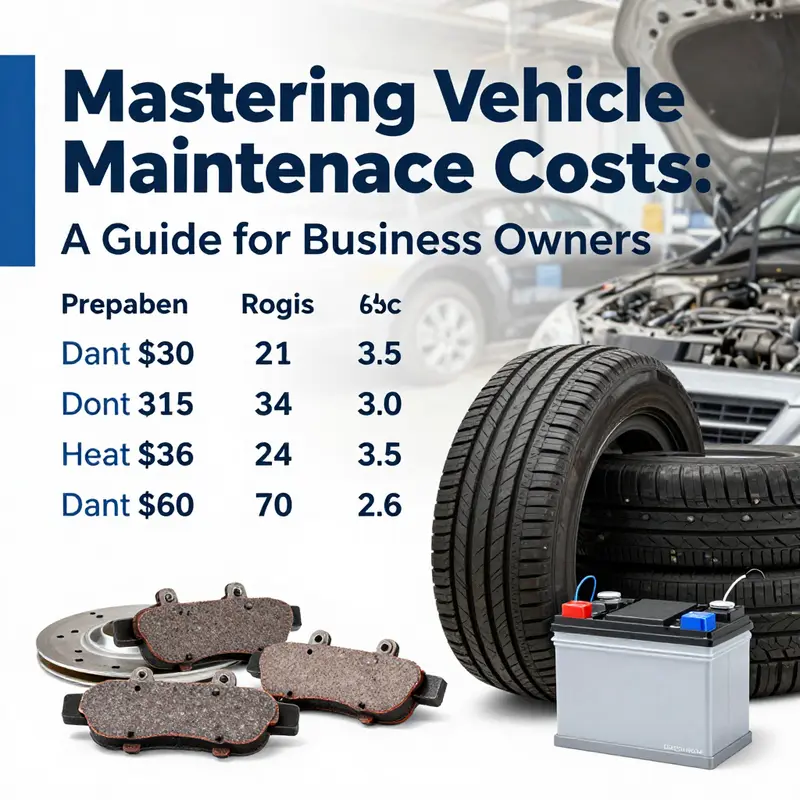
Repair costs sit at the heart of any realistic maintenance plan for a vehicle. They are not a single line item but a small ecosystem of charges that, together, determine how much owners actually spend to keep a car reliable, safe, and road-ready. When you model maintenance not as a vague concept but as a concrete calculation, you gain a clearer sense of financial exposure and the levers you can pull to manage it. This chapter unpacks repair costs as a three-part system—labor time, parts, and the handful of additional fees that quietly add up—before showing how to fold those costs into an annual maintenance budget. The goal is not to frighten readers with potential bills but to empower them with a dependable framework for anticipating, quoting, and negotiating repair work, so maintenance costs become a predictable, controllable part of vehicle ownership.
At the core lies a straightforward, widely used formula that frames the total repair cost in tangible terms: Repair Cost = Labor Cost + Parts Cost + Additional Fees. This isn’t mere arithmetic. Each component reflects a different dimension of the repair process and a different type of value exchange between the vehicle, the shop, and the owner. The labor component captures the expert time and skill required to diagnose and correct issues. The parts component covers the actual components and consumables used to repair or replace worn elements. The additional fees account for the assorted charges that arise from regulation, handling, and logistics. While the sum appears simple, the true challenge—and opportunity—resides in understanding how each part behaves in practice and how it responds to the vehicle’s age, the repair shop’s business model, and the owner’s decisions about where to have work performed.
Labor cost is the most visible element of repair pricing for most owners. It is calculated as Work Hours × Hourly Rate, but the language behind that calculation reveals more than a simple product. Time allowances, or the “work quota,” are assigned by technicians based on job complexity, safety considerations, and the test procedures necessary to verify that the repair actually resolves the problem. The hourly rate is shaped by the shop’s classification—whether it is an independent repair shop, a regional chain, or a dealership—and by local wage levels, facility costs, and business strategy. In practice, a standard repair shop might charge around ten dollars per hour, with a typical variation of about thirty percent up or down depending on regional demand and the shop’s specialization. Dealers, by contrast, commonly set higher rates, reflecting brand-specific service standards, factory training requirements, and the infrastructure of a 4S environment. Those differences matter most when a job spans several hours or when it involves intricate diagnostics that require factory tooling or specialized software. When owners are trying to estimate costs before authorizing work, it helps to think in terms of hours rather than days: a repair that takes two and a half hours at a shop that charges ten dollars per hour yields a labor cost of roughly twenty-five dollars, with higher rates at other facilities or for more complex tasks.
The parts cost, by comparison, is not purely a function of the part price. It includes the base price of new, used, or rebuilt parts and, frequently, a markup that compensates the seller for procurement, handling, and inventory risk. The variability here is substantial. OEM parts typically carry higher sticker prices than aftermarket equivalents, but they come with assurances about fit, warranty, and supply chain continuity that can be worth the premium for some owners and some vehicles. In most markets, the final parts cost is multiplied by the quantity needed—whether you’re replacing a single filter or multiple components in a brake system. A further reality is the common practice of applying a management fee or markup on parts, which can range from roughly 12% to 18% depending on the region and the shop’s purchasing arrangements. That markup can be a critical driver of total repair cost, especially for repairs that rely on several parts or when the repair requires high-value components like complex sensors, electronic modules, or transmission hardware. A practical way to approach this is to think of parts cost as a two-step calculation: first, determine the base price of the required parts (and their quantity), then apply the expected markup to arrive at the final parts cost. For example, if a replacement air filter costs $25 and the shop uses one filter plus a cabin filter at $40, the base parts cost is $65. If the regional parts markup is 15%, the final parts cost would be $65 × 1.15 = $74.75. If you add in installation materials or a small consumables line item, the total grows accordingly, underscoring how even modest part choices can produce outsized impact on the bill when multiple components are involved.
The third component, additional fees, is often the most overlooked by owners who focus on labor and parts alone. Yet taxes, disposal fees for old parts, environmental charges, shop supplies, and sometimes a small miscellaneous markup on the service itself are all common elements of the final invoice. These items reflect regulatory and logistical realities that shops navigate daily. They can include environmental disposal charges for old fluids, recycling fees for metal, or even a modest charge for the shop to cover the cost of maintaining tools and sanitation in the workspace. While each fee may seem minor in isolation, they accumulate over time, especially for vehicles with frequent service needs or those that require expensive parts and longer service visits. The key is to view these fees as predictable if you work with transparent shops that itemize them clearly on the invoice. When a shop presents an all-inclusive quote, break it down by labor, parts, and fees to assess where the cost pressure is coming from and how you might negotiate or adjust your approach, such as choosing a different part supplier or requesting a breakdown that reveals the markup on parts distinctly.
Together, these components shape the actual expenditure you face when a repair becomes necessary. The practical challenge is not just calculating current costs but forecasting future repair expenses. For that, a probabilistic approach helps: you consider the vehicle’s age, mileage, reliability history, and maintenance records, then estimate how often the car will require repairs of varying severity. A smaller, routine issue—like replacing brake pads—occurs with some regularity, while more expensive repairs, such as transmission work, typically become more likely as the vehicle ages beyond its early service life. The interplay of these factors feeds directly into your maintenance budget and, ultimately, into decisions about whether to keep a vehicle longer or transition to a newer model.
To translate this into practice, consider the repair-cost framework as part of a broader maintenance plan. Begin with a transparent estimate that separates labor, parts, and fees. Obtain quotes from multiple shops to understand regional pricing baselines and identify shops that offer clear line-item invoices with no hidden surcharges. When you compare quotes, look not only at the bottom line but at how the numbers are composed. A lower labor rate may be offset by a higher parts markup or an extra disposal fee, for example. The ability to interpret line items gives you leverage in negotiations and helps you identify opportunities to reduce costs without sacrificing safety or reliability. If you are unsure about a proposed repair, requesting a diagnostic review that includes a documented test plan and an explanation of the expected failure mode can save money in the long run by avoiding unnecessary replacements or premature service choices. The goal is to empower you to make informed decisions that balance immediate cost with long-term value, recognizing that not every repair decision should be driven solely by the lowest upfront price.
As with the broader maintenance calculation discussed in other sections of this article, the Repair Cost formula gains its real value when you apply it systemically. Track the repairs your vehicle has undergone, the parts used, the labor hours billed, and the fees charged over the life of the car. When you build a history, you uncover patterns: which systems tend to fail sooner, which parts are high-cost culprits, and how much you truly pay for maintenance in aggregate versus the sticker price of a single repair. With this data, you can calculate expected future repair costs with greater confidence and integrate them into your annual maintenance budget alongside fuel, insurance, depreciation, and routine services. The result is a holistic financial plan that reflects the vehicle’s actual lifecycle costs rather than isolated incidents. For a broader view of the maintenance concept itself, you can read more about What is vehicle maintenance. What is vehicle maintenance.
From a strategic perspective, the chapter’s discussion of repair costs dovetails with the earlier emphasis on depreciation and major service intervals. Depreciation, often the largest hidden cost of vehicle ownership, does not disappear when a repair is completed; instead, a successful repair preserves the asset’s value by maintaining reliability and avoiding further deterioration. Conversely, frequent repairs for an aging vehicle can accelerate maintenance costs as failure risk and parts prices rise. In practice, this means that a budget-aware owner treats repairs not as isolated line items but as part of a lifecycle management strategy. It also means recognizing the trade-offs behind decisions such as choosing dealer service versus independent shops, selecting OEM versus aftermarket parts, and weighing the value of extended warranties or service plans against the incremental cost they add to the repair bill.
In the realm of planning and budgeting, there is room to optimize even the more opaque elements of repair costs. For instance, some owners discover meaningful savings by choosing independent shops that specialize in certain brands or types of repairs, where lower overhead translates into lower labor rates without compromising quality. Others benefit from pre-purchasing a limited set of common replacement parts and keeping them in a well-organized garage to avoid premium on expedited sourcing. There is also value in strategic timing: consolidating preventive maintenance and minor repairs into a single visit can reduce the overall number of service charges and align parts procurement with bulk pricing. These choices reflect a broader philosophy: maintenance costs are not merely a series of billable events but a purposeful, ongoing program that balances risk, reliability, and cost. The repair-cost framework described here provides the analytical guardrails to navigate those choices with clarity.
As you integrate repair costs into your total annual cost, remember that the numbers are estimates anchored in real-world shop practices. They are not forecasts carved in stone, but well-informed projections that improve with data. The more you document—your vehicle’s history, the parts you’ve used, the repairs performed, the mechanics or shops you’ve visited—the more accurate your future-cost projections become. This steady data collection also improves your bargaining power when obtaining quotes and planning major repairs, because you can point to your vehicle’s documented maintenance trajectory and demonstrate that you are a thoughtful, organized owner who wants value and safety in equal measure. The result is a maintenance approach that treats repair costs as a predictable component of your vehicle’s overall lifecycle economics, not as an unpredictable shock that disrupts financial plans.
For readers seeking additional practical context, consider how this repair-cost framework interacts with broader maintenance budgeting. When you add repair costs to regular maintenance expenses such as oil changes, tire rotations, and brake inspections, you get a more complete picture of how much your vehicle truly costs to own per year. You may also adjust your estimates based on the vehicle’s make, model, age, and typical reliability. Some brands have lower maintenance costs because of simpler designs and more accessible parts; others may require more frequent service intervals or higher-cost components, causing the repair-cost line to rise relative to a baseline. The key is to anchor your expectations in data and to revisit your estimates periodically as the vehicle ages and as market prices for labor and parts evolve. The continual refinement of these estimates strengthens your ability to plan, save, and allocate resources for future needs while preserving safety and performance on the road.
External reference: For broader data on typical repair costs and maintenance budgeting approaches, see industry sources such as Edmunds, which provide practical context and benchmarks that complement the framework outlined here. https://www.edmunds.com/
Internal reference: A broader discussion of maintenance philosophy and cost modeling can be enriched by exploring foundational explanations of vehicle maintenance and management, such as the concept described in What is vehicle maintenance. What is vehicle maintenance.
By embracing this repair-cost perspective, you gain both a granular understanding of where your money goes and a strategic angle on how to reduce exposure over time. The integration of labor time, parts pricing, and ancillary fees into a coherent model makes it possible to simulate different scenarios—such as choosing a lower-cost shop for routine work, or investing in higher-quality parts for critical systems—and to compare outcomes in terms of reliability, resale value, and total ownership cost. In the end, the aim is not to eliminate maintenance costs but to manage them with foresight and discipline. With a clear payback path for preventive measures and a transparent approach to quotes, you can preserve vehicle performance while keeping maintenance spending aligned with personal priorities and financial plans. A well-constructed repair-cost calculation thus serves as a compass for ongoing decisions about service frequency, provider selection, and part choices, ensuring that maintenance remains a safeguard rather than a surprise.
Final thoughts
Calculating vehicle maintenance costs accurately is a vital part of managing your business expenses. By breaking down fuel costs, insurance premiums, regular maintenance, and potential repairs, business owners can make informed choices that protect their bottom line. Implementing these strategies not only enables you to anticipate expenses but can also lead to significant savings over time. Monitoring each category closely helps ensure you keep your fleet running efficiently and economically, ultimately contributing to the growth of your enterprise.