

The Electronic Stability Control (ESC) system in your Jeep Compass is more than just a safety feature; it’s a critical component that ensures optimal vehicle handling under various driving conditions. For business owners who depend on their vehicles for day-to-day operations, understanding the ins and outs of the ESC system is vital. This guide will delve into the functionality and features of the ESC system, explore common issues and troubleshooting tips, and highlight maintenance best practices to ensure your Jeep Compass remains in peak condition. A well-maintained ESC system not only enhances safety but also preserves the value of your vehicle, making this guide an essential read for any business owner relying on the performance of their Jeep Compass.
Unraveling the Service ESC System in the Jeep Compass: A Functional Guide to Stability, Control, and Safety

The Jeep Compass has ESC as a standard feature across its trim lineup, underscoring how central stability and control have become to the design and safety philosophy of a modern compact SUV. In practice, ESC works in concert with a suite of technologies that share the common goal of maintaining directional control. ABS, or antilock braking, prevents wheel lock during hard braking; Traction Control helps maintain grip by modulating wheel torque when the tires are slipping. Electronic Brake Distribution distributes braking force where it’s most needed. Together, these systems create an integrated safety net that covers everything from a routine lane change on a wet highway to a sudden swerve to avoid a road hazard. Because this integration is so seamless, many drivers rarely think about ESC explicitly. They just drive, while the system quietly does its job in the background. The Compass’s ESC is designed to be active by default, a default mode that most drivers rely on every day. Yet there is a control switch—usually located on the dashboard—that allows a temporary deactivation for specific driving scenarios. The manual, which is the most authoritative source for model-year specifics, cautions that turning ESC off is not recommended for routine driving. There are moments, such as when the vehicle is stuck in deep snow or mud, where some drivers may choose to temporarily deactivate ESC to free up wheel spin. Even then, the risk is that without ESC, control can become more challenging, and the vehicle may respond in ways you don’t expect when traction is finally restored. This nuance—between automatic stability and intentional wheel spin—highlights why ESC exists in the first place: to keep the driver in command while smoothing the vehicle’s response when the road or the maneuvers demand extra precision.
To understand ESC in the Compass, it’s helpful to see how it threads through the broader framework of vehicle dynamics. ESC’s core mechanism relies on a precise read of multiple signals: steering input, yaw rate (the rotational motion of the vehicle around its vertical axis), lateral acceleration (how hard the car is pushing to the side), and wheel speeds. The vehicle’s control unit analyzes these inputs moment by moment. If the readings indicate the vehicle is deviating from the path the driver intends to follow—such as tracking wide in a corner or beginning to slide on a slick surface—the system vectorizes a correction. The correction is delivered by selective braking of individual wheels and, if necessary, a transient reduction in engine torque. Braking one wheel more than the others creates a braking torque that counteracts the unwanted yaw, guiding the vehicle back toward the intended trajectory. Reducing engine torque lowers the demand on the tires to grip the surface, which helps minimize overcorrection and reduces the risk of tailspin or loss of control on slippery pavement. The orchestration of braking and throttle is akin to a choreographed dance performed in milliseconds, with the goal of preserving steering feel and vehicle control rather than delivering a harsh intervention that would jar the driver’s confidence.
The interplay between ESC and the Jeep Compass’s other driver-assistance and safety systems adds another layer of sophistication. ESC does not operate in isolation. It shares data and intent with the traction control system, the anti-lock braking system, and electronic stability components that govern braking force distribution. The Helmeted layers of safety also connect with more advanced features in some trims, such as hill-start assistance, which helps prevent rollback on an incline, and rollover mitigation strategies that become active when a cornering maneuver might lead to excessive roll risk. In essence, ESC forms the core of a dynamic safety web that keeps a compact, urban-friendly SUV grounded when the road surface or weather tries to push it off line. The result is a vehicle that feels steady and predictable, bridging the gap between nimble handling in good conditions and controlled stability when conditions demand more caution.
From a driver’s point of view, the ESC system in the Compass operates invisibly most days. You notice it indirectly through the confidence you feel turning onto a slick ramp or executing a quick lane-change during a rain shower. In these moments, ESC’s action becomes a story of small, well-timed adjustments rather than dramatic interventions. The goal is not to override the driver’s intent but to align the vehicle’s actual behavior with that intent as closely as possible. When you turn into a curve with the wheel, you expect the vehicle to follow a smooth arc. If the surface is slippery and the tires start to lose grip, the ESC steps in by applying a little braking on the appropriate wheel and easing torque. The car’s path becomes cleaner and more controllable, reducing the risk of understeer or oversteer that could catch a driver unaware. A flashing ESC indicator light on the dash — typically a stability-control icon that resembles a car with wavy lines beneath — is a cue that your vehicle is actively intervening. If the light remains on steadily, or if you hear unusual braking or feel a transmission of vibration or resistance through the pedal, it is a sign that the system has detected a fault or condition outside normal operation and the manual recommends serviced attention. In either case, consulting the official owner’s manual provides model-year-specific guidance to interpret the lights and symptoms accurately. The Jeep Compass Owner’s Manual, accessible through the official Jeep website, remains the most authoritative reference for technical details, operating modes, and troubleshooting guidelines.
The practical upshot of ESC’s design is that most drivers experience a more forgiving ride under a wider range of conditions. On a city street with painted lines and tar that has begun to shed its grip, ESC helps you keep your wheels at the point where traction begins to fail rather than letting the car drift into a skid. On a winding rural road in misty air, it can keep you from overcorrecting in a manner that would unsettle the vehicle’s balance. On wet surfaces, it helps you maintain the line you intended to follow even when the tires fight for grip. And on light off-road duty, where the Compass might encounter ruts, damp sand, or a raised rock, ESC helps manage the moment you decide to steer through the obstacle rather than stop and spin. The crucial thing to remember is that ESC is a safety net designed to preserve control, not to replace careful driving. It does its job best when you drive with awareness of the road, anticipate changing conditions, and respect the system’s role as a partner in safety rather than a substitute for attentive driving.
In terms of user experience, the system’s authority is tempered by clear user controls and diagnostic feedback. The dashboard switch to disengage ESC, when present, is there for scenarios in which a driver may need more wheel spin, such as attempting to rock the vehicle free from sand or snow. Still, the official guidance underscores that deactivating ESC should be rare and temporary. The vehicle’s stability indicators—whether a flashing light during a correction or a steady warning when a fault is detected—provide drivers with a readable signal of what is happening. If the system senses that a sensor is failing or that a critical component is not providing reliable data, the warning is likely to persist until service is performed. In the context of ownership, this underscores the importance of routine maintenance and familiarity with the owner’s manual. The official documentation is indispensable for model-year-specific details about how the ESC integrates with other components, how to interpret indicators, and how to perform any permitted resets or deactivations described by the manufacturer.
For readers who want a practical path to deeper understanding, a concise pointer can be helpful. The following resource, positioned in the Suggestion section for practical how-tos, provides concrete steps and expert tips on servicing electronic stability control. It can serve as a bridge between everyday driving and the more technical maintenance steps that a qualified technician would perform. For further exploration, you can refer to this guide on how to service electronic stability control (expert tips): how to service electronic stability control (expert tips). This reference helps illuminate common indicators, routine checks, and preventative measures that support ESC performance over time, while also clarifying when professional service is required.
Beyond the mechanical and control aspects, the ESC’s behavior is also shaped by road geometry and vehicle dynamics. A sharp turn taken at speed on a slick surface is where most drivers notice the system’s influence. The car’s tendency to continue steering in the direction of the wheel travel is countered by ESC by applying differential braking and reducing torque, which reorients the vehicle toward the driver’s input without a sudden lurch. In a straight line on a wet highway, ESC works more quietly, intervening only when the vehicle would otherwise begin a destabilizing slide. In light off-road conditions, ESC’s influence can be felt in how manageably the Compass handles small ruts or uneven patches, helping to keep the vehicle from hydroplaning or chasing an errant line. These examples illustrate how ESC is not a single action but a sequence of decisions the vehicle makes within milliseconds to preserve stability and driver confidence. The net effect is that the Compass becomes more predictable, which matters when the weather turns adverse, the pavement is slippery, or you are navigating a curve with limited traction.
The Chapter concludes with a reminder about model-year specifics and the path to authoritative information. While the description here outlines the general roles ESC plays in the Compass, the exact operation modes, warning indicators, and any deactivation procedures can vary with different model years and trim configurations. The Jeep Compass Owner’s Manual, accessible on the official site, is the place to verify the precise details for your vehicle. It contains diagrams of the ESC components, explanations of the warning lights, and step-by-step troubleshooting guidance. By consulting the official manual, you align your understanding with the factory’s guidance, ensuring safe operation and effective response if the system signals a fault or requires service. The manual also reinforces the idea that ESC’s effectiveness rests on a foundation of good vehicle maintenance—tire condition and alignment matters, as does battery health and sensor integrity—so the system can read the vehicle’s behavior accurately and respond correctly when the road presents its challenges.
As a driver in the Compass, your awareness of ESC can be a quiet advantage. You do not need to be an engineer to appreciate that the vehicle’s stability is being watched and adjusted in real time. You should, however, remain mindful of the warning indicators and the conditions under which you might consider leaving ESC engaged. In wet weather or on low-traction surfaces, you may notice the subtle corrections that help you stay on your chosen path without drama. If you encounter a situation in which the indicator shows a fault or if the vehicle behaves in a way that feels unlike its usual stability, the appropriate course of action is to consult the owner’s manual and seek service from a qualified technician. The end goal of ESC in the Compass is simple and important: to help you stay in control, maintain steering accuracy, and reduce the risk of a loss of control in the moments when you need confidence most. For model-year specifics and to gain a richer, more precise understanding, refer to the official Jeep owner’s resources and the companion sections of the manual.
In sum, the ESC system in the Compass is a capable, adaptive safety mechanism that quietly guards your steering and balance on a wide range of surfaces. It is designed to feel unobtrusive most days, yet be ready to intervene with precision when your path begins to drift. The interaction with surrounding systems—ABS, traction control, and braking distribution—offers a cohesive safety package that supports both everyday commuting and light off-road exploration. For drivers who value stability, predictability, and safety, ESC offers a dependable partner in steering, even when the road conditions challenge grip and control. If you want to understand the finer points of how this system behaves, or if you need to verify details for your exact Compass year and trim, the official owner’s manual is the best guide. The document provides diagrams, step-by-step procedures, and troubleshooting tips that bring the broader explanation of ESC into the practical, actionable realm of daily driving. In one sense, ESC is a quiet, technical achievement; in another, it is a fundamental assurance that, when you decide to turn and accelerate, the vehicle stands ready to respond with the stability and balance that make every journey safer and more confident.
As you continue reading, keep in mind that the guidance offered here is framed to be widely applicable across driving conditions you’re likely to encounter. The ESP’s fundamental principle remains unchanged: if the car begins to drift away from the intended path, act to restore the intended line, and do so smoothly. The system prioritizes your steering input while preserving traction and balance. For model-year specifics, always refer to the Jeep Compass Owner’s Manual, accessible through the official Jeep website. This resource offers in-depth explanations of function, indicators, and troubleshooting, including model-specific diagrams and flowcharts that illuminate how the ESC interacts with other safety and driver-assistance features. And for those who want to engage with practical maintenance tips or step-by-step service advice, a curated resource on electronic stability control provides expert insights into upkeep and diagnostic checks that keep the system responsive over time. After all, a well-maintained ESC is a more reliable shield in those moments when the road becomes unpredictable.
External resource: https://www.jeep.com/owners/manuals/
null
null
Maintenance and Mastery: Maintaining Stability Through the Service ESC System in Your Compact SUV
The Electronic Stability Control (ESC) system sits at the center of a vehicle’s safety architecture, working quietly in the background to keep the driver’s intended path from becoming an unintended excursion. In a compact SUV that blends urban practicality with light off-road capability, ESC acts as a guardian that interprets how the car is moving relative to where the driver wants it to go. It does this not by predicting every possible scenario, but by reacting to deviations from the intended trajectory with precise, decisive action. The result is a vehicle that nimbly corrects tip-in, yaw, and slide, preventing situations that could lead to skidding or rollovers when conditions are less than ideal. The system’s influence is subtle most of the time, yet its impact is profound when the road turns slick, the tires struggle for grip, or a sudden maneuver threatens to push the car off course. In practice, ESC works through a harmony of sensors, software, and actuation that speaks the language of control: sense, decide, apply. The sense stage is a chorus of data from wheel speed sensors, yaw rate, steering angle, brake pressure, and sometimes torque and throttle input. The ECU—or electronic control unit—sifts this data in real time. If the vehicle’s motion begins to diverge from the driver’s command, the ESC steps in. It may apply braking force selectively to individual wheels, modulate engine output, or coordinate with the ABS and traction control to restore a stable path. The beauty of this orchestration lies in its speed. Corrections happen in fractions of a second, often before the driver can voice a reaction. As a result, ESC can feel almost invisible in day-to-day driving, yet its absence becomes glaring in a sudden swerving event or an icy lane shift. This quiet reliability is the essence of its value in a compact SUV that must navigate both city streets and occasionally rougher terrain. The system is designed to be active by default, a constant safety feature that you rarely think about—until you do. When the road conditions demand it, ESC takes on the brakes and modulates power to keep the vehicle headed toward the driver’s intended path. This implicit cooperation between man and machine is what makes ESC a foundational element of modern vehicle safety, and it is precisely why its maintenance should be treated with the same care as other life-safety systems.
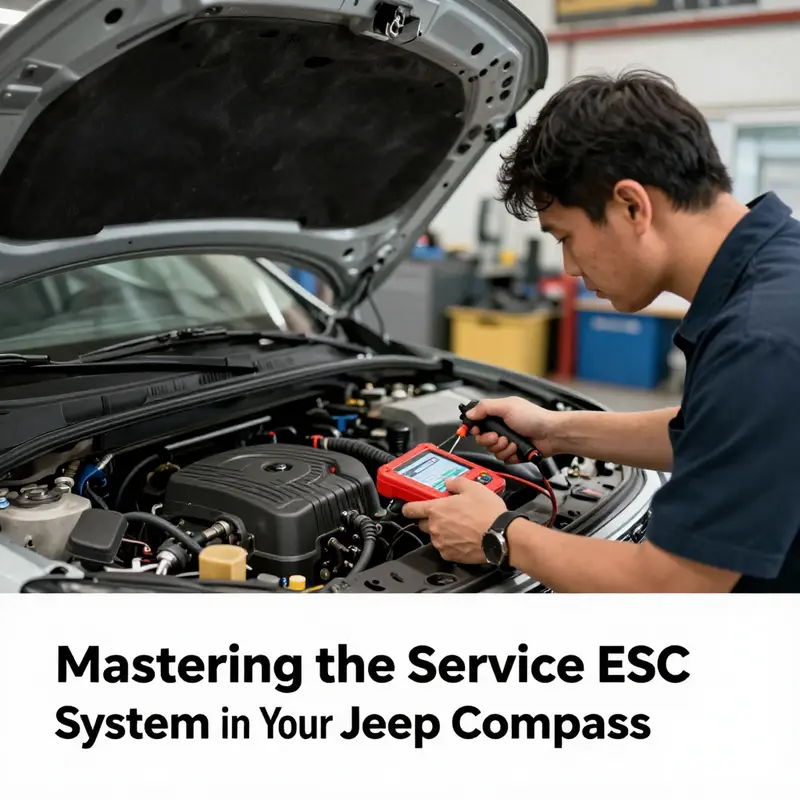
To truly appreciate how to care for the ESC system, consider the full ecosystem that supports it. The sensors are the eyes of the system; the software is the brain; the braking system is the muscles; and the mechanical underpinnings—suspension geometry, steering alignment, and tire contact with the road—are the skeleton that shapes how each decision translates into motion. When this ecosystem operates well, a quick swerve on a rainy street becomes a controlled correction rather than a dangerous departure from the intended line. When something falters—an illuminated warning light, a subtle drift, or a hesitation in response—drivers notice the difference immediately. If you see the ESC or a related indicator light illuminate on startup or while driving, it is a sign that something in the chain may be malfunctioning. A persistent warning light is not something to ignore. It signals that a fault could be lurking in a sensor, a wiring harness, or a control module. The prudent response is to diagnose the system with a diagnostic tool capable of reading the vehicle’s specific codes. A standard OBD-II scanner is a starting point, but more precise diagnostics may require a reader that understands the model’s particular codes and data streams. In many cases, the issue is not dramatic but cumulative—vague readings over time that diminish the system’s responsiveness. Addressing these subtleties early can prevent bigger problems and keep the ESC performing as designed when it matters most.
A practical frame for maintenance begins with regular inspection and a clear understanding of what the system expects from the vehicle’s health. Because the ESC relies on accurate data to function, any factor that interferes with sensor input or with the reliability of the wheel contact with the road can degrade its effectiveness. Clean sensors are a simple yet critical first step. Wheel speed sensors and steering angle sensors are the primary data sources for ESC. Dirt, debris, corrosion, or physical damage to these sensors can produce readings that drift away from reality. A sensor that reports incorrect wheel speed can trigger premature or delayed interventions, leading to a feeling that the car is not responding promptly or, conversely, that it is fighting the driver’s inputs too aggressively. Routine cleaning during service visits, careful inspection for signs of damage, and ensuring wiring connections are secure all contribute to preserving the integrity of the data that ESC relies upon. Tire condition and pressure are inseparable from ESC performance. The system’s corrections are meaningful only if the tires have a reliable grip surface and the pressures are within the manufacturer’s recommended range. Underinflated tires, uneven tread wear, or mismatched tire sizes can not only cause the ESC to intervene inappropriately but can also mask real instability by reducing the tire’s ability to respond to corrective commands. The wear state of the tires can shape the system’s sensitivity. A tire with shallow tread on a wet or snowy surface can behave differently from a fresh, well-tread tire in dry conditions. Keeping tires in good shape—proper pressure, even wear, and appropriate temperature—helps the ESC do its job rather than fighting the vehicle’s own compromised contact with the road. Beyond tires and sensors, attention to the mechanical condition of the suspension and steering is essential. The ESC depends on stable suspension geometry and predictable steering behavior to translate the driver’s intent into precise wheel actions. Components such as ball joints, tie rods, control arms, and bushings wear over time. When these parts drift from their intended geometry, even subtle misalignments can alter the path the ESC tries to maintain. If the suspension becomes lethargic, if steering response grows vague, or if wheel alignment shifts, the ESC’s job becomes harder because it no longer has a faithful map of the vehicle’s motion.
Software updates are another layer of maintenance that deserves attention. The ESC, like other electronic systems in a modern vehicle, relies on firmware that can be updated to improve responsiveness, correct bugs, or refine stability logic in response to real-world data. Dealership service centers and authorized facilities typically manage these updates, but staying aware of the availability and applying updates promptly can unlock improvements in how quickly the system detects drift and executes corrective actions. Some updates may refine how ESC interacts with related systems such as traction control, ABS, and brake distribution, creating a more cohesive stability strategy across all road conditions. It is not unusual for a software update to adjust thresholds for intervention in certain driving scenarios or to improve compatibility with new tire types, light-truck tires, or even seasonal tire changes. When a vehicle behaves a bit differently after a software update, the adjustment is rarely a step backward; more often it is an optimization that aligns with the latest engineering data and field experience.
For any driver, the instinct to modify the vehicle is strong. After all, people want more control, more grip, more response. Yet modifications that alter suspension geometry or wheel alignment can unintentionally disrupt how the ESC interacts with the vehicle’s chassis. Lifting a vehicle, altering ride height, changing dampers, or using aggressive wheel offsets can shift weight distribution and alter the steering geometry enough to confuse even a well-tuned stability control system. Modifications should be approached with caution and ideally discussed with a qualified technician who understands how ESC integrates with chassis dynamics. The objective is not to disable or circumvent the system but to preserve its intention: to keep you stable, in command, and on the intended path, even when the road throws a curveball.
The realm of diagnostic knowledge is not only a technical map but a language that drivers learn over time. When you hear a harsh or unexpected brake application, feel unusual hesitation in a corner, or notice a drift that seems out of character for the road surface, those are signals worth heeding. The best practice is to approach the situation with patience and a process: check for dashboard indicators, pull over safely if you suspect a fault, and seek a professional diagnosis if the warning persists. For those who want to go deeper, professional resources offer guidance on interpreting codes, testing sensor signals, and verifying the integrity of wiring harnesses. The overarching principle is diligence: treat the ESC as a living safety system that requires routine verification just as you would inspect tires, brakes, or the engine oil.
In the daily rhythm of ownership, the ESC’s value is most evident in moments of surprise. A sudden lane-change demand on a slick road, a tight corner on a wet highway, or a traverse over a patch of gravel should not become a drama of instability. Instead, you should feel a quiet confidence that the system is there—monitoring your inputs, reading the surface beneath the tires, and stepping in just enough to keep the vehicle on its intended course. That confidence is the reward of consistent maintenance, thoughtful care of tires and suspension, and timely software updates. It is also a reminder that you are part of the stability equation. Smooth inputs, deliberate speed, and prudent anticipation contribute to the ESC’s effectiveness. The system does not replace good driving; it complements it by reducing the likelihood of a loss of control, especially in conditions that demand precise handling and quick corrective action.
To blend maintenance into a practical lifestyle, think of the ESC as part of the broader safety ecosystem you manage every day. Start with a simple routine: scan for warning lights at startup and during driving, check tire pressures every few weeks or when the weather changes, and schedule regular service visits aligned with the vehicle’s maintenance plan. During service, request a targeted ESC assessment in addition to the routine checks. Ask technicians to verify wheel speed sensors, steering angle sensors, and the integrity of the wiring harnesses connected to the ESC module. Request a software update if available, and discuss any changes in handling you’ve noticed since the last service. If you drive in challenging environments—heavy rain, snow, sand, or off-road trails—consider asking for a more thorough inspection after those sessions, since the system endures more cycles of correction in such conditions. While it is tempting to rely on the system entirely, the most resilient approach combines proactive maintenance with principled driving behavior. ESC is a safety net, not a substitute for caution.
Ultimately, the goal of maintenance is to preserve the ESC’s core function: to maintain directional stability and prevent the vehicle from slipping away from the driver’s intended line. When all parts of the chain—the sensors, the software, the braking hydraulics, and the chassis geometry—perform in harmony, you experience predictable, confident handling across a spectrum of road conditions. That is not merely technical correctness; it is practical safety in motion. And because this system works best when it sees the road surface clearly and the tires firmly in contact with it, the maintenance philosophy is straightforward: keep sensors clean and aligned, keep tires properly inflated and evenly worn, respect the service intervals and software updates, and avoid modifications that shift the vehicle’s geometry away from the original design intent. Any one of these elements, neglected, can degrade ESC performance and reduce the margin of safety in a demanding moment. The payoff for disciplined maintenance is substantial: the car remains a steady partner through unpredictable weather, slick asphalt, and sudden maneuvers, preserving the driver’s control and reducing the risk of loss of control.
For readers seeking a practical resource that translates these principles into hands-on steps, there is a dedicated guide on servicing electronic stability control that breaks down diagnostic steps, sensor checks, and routine maintenance tasks into an actionable sequence. This resource complements the overarching guidance here by offering detailed procedures and tips that you can discuss with a service technician. Access to such a guide helps demystify the maintenance process and empowers you to participate knowledgeably in the care of your vehicle’s stability system. By combining proactive maintenance with informed driving practices, you ensure that the ESC continues to fulfill its promise of stability when you need it most.
As you plan the long-term care of your vehicle, remember that ESC is not a standalone feature but a component of a comprehensive safety philosophy. From tire choice to alignment, from software updates to sensor cleanliness, every factor contributes to a stable, confident drive. The integrated nature of this system means that small, routine efforts—the ones you can do from your driveway or at a routine service appointment—can have outsized effects on everyday safety. The ultimate aim is not to chase perfection in isolation but to cultivate a reliable, responsive safety network that keeps you in command, even when the conditions test the limits. With thoughtful attention to maintenance and a respect for the system’s design, you can maximize the performance of the ESC, sustain its responsiveness, and enjoy the peace of mind that comes with a vehicle that acts as a trusted partner under all driving circumstances.
Internal link for further practical guidance: how-to-service-electronic-stability-control-expert-tips-tricks
External resource for deeper, model-specific guidance: https://www.stellantis.com/en/vehicles/jeep/compass
Final thoughts
In summary, the Service ESC system in your Jeep Compass plays an essential role in securing the stability and safety of your vehicle. By understanding its functionality, recognizing common issues, and applying best maintenance practices, business owners can ensure that their Jeep Compass consistently performs at its best. This proactive approach not only enhances safety on the road but also contributes to the longevity and resale value of the vehicle. With the insights provided in this guide, you’re now equipped to tackle any challenges with your ESC system head-on, keeping your operations running smoothly and securely.