
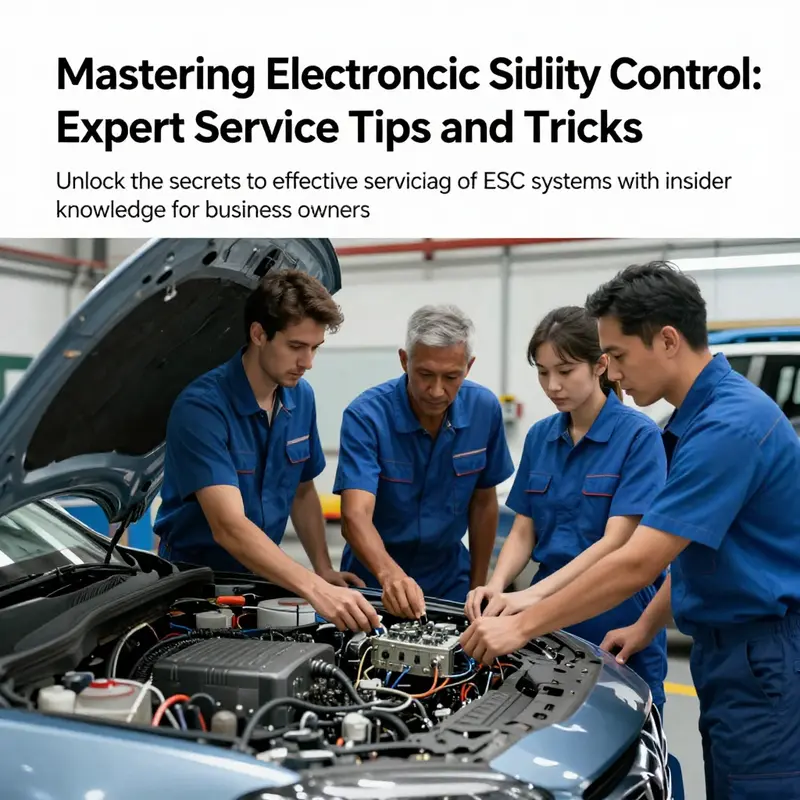
Understanding the intricacies of Electronic Stability Control (ESC) systems is crucial for business owners in the automotive industry. Servicing these systems not only enhances vehicle safety but also improves customer satisfaction and retention. Each chapter of this guide builds on the fundamental aspects of ESC service, from diagnosis to calibration and testing. By following expert tips and techniques, you will equip your business with the knowledge to optimize ESC performance effectively, ensuring reliability and safety across your fleet.
Reading the ESC Light: A Systematic Diagnostic Journey from Warning to Stable Control

Electronic Stability Control (ESC) sits quietly in the background until a tire slips, a wheel spins, or a corner becomes unbalanced. Then it steps into the foreground, orchestrating brake pressure, engine torque, and, ultimately, steering input to preserve traction. Because ESC is a synthesis of sensors, wiring, and control logic, diagnosing its faults demands a calm, methodical approach rather than a rush to replace a single module. The diagnostic journey begins with the simplest questions and expands to the most nuanced checks, all while keeping safety at the forefront. A well-executed diagnosis not only resolves the immediate warning light but also preserves the system’s integrity for the long haul, preventing a cascade of secondary issues that can arise from a misdiagnosis or a rushed repair. The process, grounded in practical inspection and disciplined testing, creates a reliable pathway from the moment the dash light activates to a return to confident, controlled driving.
The first sign of trouble is almost always visible on the dashboard: the ESC warning light. Yet the light’s behavior holds essential clues. A steady illumination is not the same as a flash, and a light that only appears under demanding conditions points to a sensor, connection, or calibration issue rather than a complete module failure. Observing the light’s pattern is a small, critical step that informs the rest of the diagnostic plan. If the light reappears after a temporary reset or a battery-related reset, the fault is likely persistent and tied to a sensor, connection, or network fault rather than a momentary fault within the powertrain. This is why the systematic approach begins with verification of the symptom—watching how, when, and under what conditions the light behaves—before diving into codes or component swaps.
With the warning light’s behavior characterized, the next practical step is to retrieve diagnostic trouble codes (DTCs). A professional-grade OBD-II scanner is the starting point, but the most informative diagnostics often require manufacturer-specific tools that access ESC parameters, calibration routines, and communication ladders not exposed to generic scanners. The codes you encounter may point toward wheel speed sensors, steering angle sensors, the control module, or a broader network fault. For example, a cluster of U-series codes can indicate chassis-control network communication problems rather than a single sensor fault. In real-world cases, such codes reveal that a module is not receiving the expected signals from other control units, highlighting problems in wiring, grounding, or even a poor connection at a harness plug. These codes become a map rather than a final verdict, guiding the technician toward the most plausible culprits while preventing the erroneous conclusion that the ESC module itself is defective. The value of this step lies not in the code itself but in what the code implies about data flow, module communication, and the integrity of the electrical system feeding the ESC.
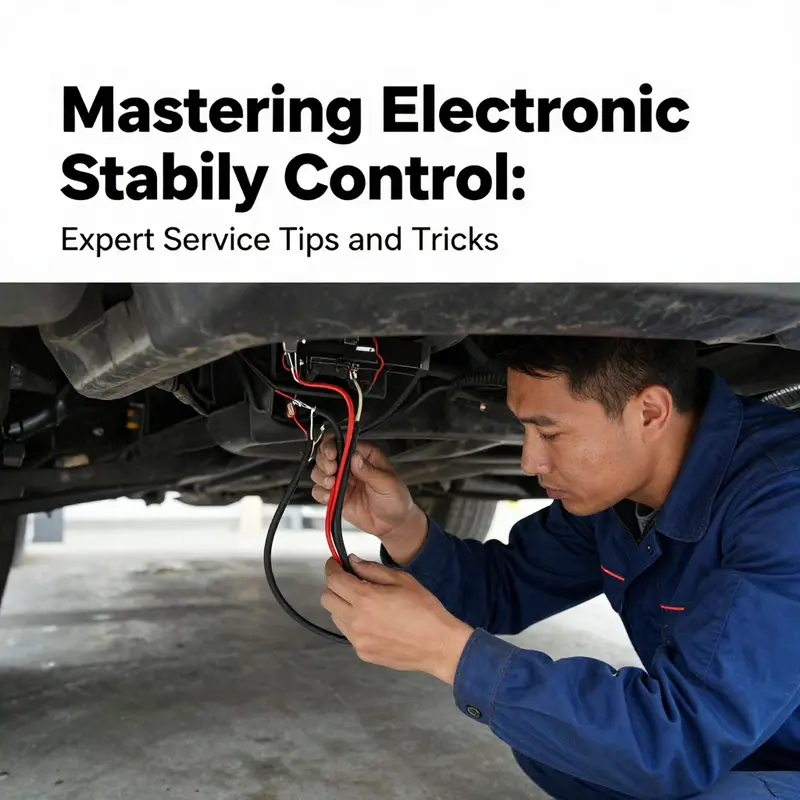
If the codes point to communication or sensor faults, the investigation naturally turns toward physical inspection of the wiring and connections. Ground integrity is one of the most often overlooked yet decisive factors. A loose or corroded ground can create fluctuating voltages along the data bus, producing intermittent errors that mimic faulty sensors or a questionable control module. In a documented repair scenario, a corroded ground at the battery-side grounding point of the electronic brake control module caused unstable network voltage. Once the technician cleaned and tightened the grounding bolt, the network voltage stabilized and the ESC warning disappeared. This kind of case underscores a simple truth: many ESC symptoms are not about a single failed component but about the quality of the electrical backbone that ties every sensor to the brain of the system.
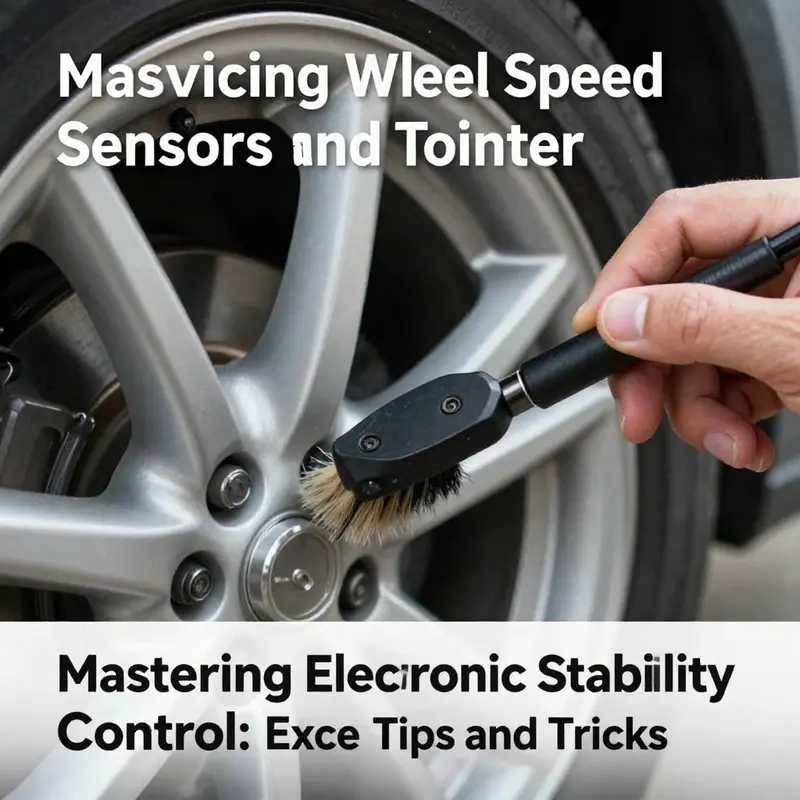
Beyond ground points, the physical condition of the sensors themselves demands careful scrutiny. Wheel speed sensors and their tone rings are a frequent source of ESC misbehavior. Dirt, rust, and grease can obscure the magnetic or optical sensing element, while damaged tone-ring teeth can produce sporadic speed readings that the ESC misinterprets as loss of traction. A routine inspection should include cleaning the sensors with an appropriate cleaner and a soft brush to remove grime without damaging the sensor body. The tone ring should be checked for missing or chipped teeth, and the sensor alignment with the tone ring should be verified. Misalignment, even a few degrees off, can generate signals that are out of phase with the wheel’s rotation, sending erroneous data to the ESC and triggering warnings or intermittent intervention.
The steering angle sensor deserves special attention, especially after wheel or steering column work. The steering angle sensor is the other half of the feedback loop that tells the ESC how the driver intends to steer compared with how the vehicle is actually moving. If the sensor has been disturbed, replaced, or its wiring disturbed, calibration becomes essential. After certain servicing events, the sensor must be recalibrated to align the measured steering angle with the actual turning radius of the wheels. Without proper calibration, rearmost logic may interpret normal steering input as instability, causing persistent warnings or, worse, abrupt and unpredictable ESC intervention. The calibration procedures vary by manufacturer, and many modern vehicles require a precise sequence that must be executed with the correct diagnostic tool. Rushing calibration or using a generic procedure can leave residual fault indications and an ESC that feels out of sync with the driver’s intent.
A thorough ESC diagnosis also means validating the health of the power feeds and the integrity of the data bus that ties essential components together. Electrical connectors near the ESC module, sensors, and the brake system must be examined for signs of corrosion, loose pins, or chafing. A degraded connection is a stealth fault: it can masquerade as a sensor error because a sensor’s signal is temporarily interrupted or attenuated. A careful continuity check with a multimeter and a test for proper grounding can reveal hidden faults that are not apparent from a visual inspection alone. In many cases, restoring solid connections and restoring clean, sound grounds is enough to extinguish the ESC light and restore stable operation, even when a sensor itself is only borderline functional.
As the diagnostic work advances, a broader network diagnostics approach becomes valuable. A modern vehicle’s ESC relies on a complex data bus that communicates across control modules, brake actuators, sensors, and power management systems. A network-monitoring approach—without naming specific tools—helps visualize data flow, identify where signals drop out, show voltage spikes, or reveal inconsistent communication patterns that the codes do not fully capture. These diagnostics can expose intermittent faults that seem random, such as a signal that vanishes momentarily at a particular road speed or load condition. The insights from network monitoring complement the DTCs by confirming whether the fault is isolated to a sensor, a connection, or a module’s perception of data integrity. This step is where the diagnostic journey shifts from simply reading fault codes to understanding the vehicle’s real-time information landscape.
The systematic approach to ESC diagnosis culminates in a functional test, performed in a controlled, safe environment. After the repair work, the vehicle should be driven in a spacious, empty lot at low speed to simulate the conditions in which ESC is designed to intervene. A quick, controlled steering input at modest road speeds can reveal whether the system is still reactive or has regained proper behavior. The ESC should engage as the system detects a potential loss of traction, and the warning light should remain off once the fault is resolved. This test is not a single moment but a careful confirmation that the entire chain—from sensors to grounds to the module and back through the driver’s inputs—has returned to a dependable state.
The tools and techniques described here emphasize the importance of relying on manufacturer-specific diagnostics for critical calibration tasks and deeper parameter access. Generic scanners can reveal basic fault codes and sensor status, but they may not provide access to the ESC’s calibration modes or the precise parameter adjustments required after certain repairs. When the situation demands it, a technician should reference the official service procedures and any technical service bulletins that address a given fault scenario. This ensures that the procedure respects the vehicle’s intended electrical architecture and avoids inadvertent miscalibrations that could compromise safety.
As you apply these steps, integrate the knowledge from hands-on experience with the clear signals from diagnostic data. The goal is not to replace components on a hunch but to verify each potential fault point against a structured set of checks. This discipline preserves not only the integrity of the ESC but the trust of the driver who relies on it every day. And while the immediate repair may seem straightforward—clean a sensor, fix a ground, recalibrate a sensor—the ripple effect of a sound diagnosis is broader: fewer driveability complaints, reduced risk on wet or slippery roads, and a vehicle that remains predictable to operate under all real-world conditions.
For readers seeking a broader context on how diagnostic reasoning translates into practical repair workflows, see the Vehicle Tricks blog. vehicletricks.com/blog/vehicle-tricks/. This resource offers additional perspective on interpreting sensor data, prioritizing safety during electrical work, and leveraging a disciplined diagnostic checklist that aligns with the principles outlined here. The goal is not to overwhelm but to empower technicians and informed hobbyists to approach ESC issues with a calm, data-driven mindset that respects both the vehicle’s complexity and the rider’s safety.
As the diagnostic narrative unfolds, it’s essential to remember that the ESC system is a safety net rather than a single point of failure to be swapped out at the first sign of trouble. The most reliable repairs root out root causes—often grounding, wiring integrity, or sensor alignment—before turning to sensor revolutions or module swaps. This mindset, coupled with a structured workflow, ensures the ESC continues to function as intended, providing stability when it matters most. And while every vehicle presents its own quirks, the underlying principles remain consistent: verify symptom behavior, extract and interpret diagnostic data, inspect electrical health, calibrate when required, test under controlled conditions, and reference manufacturer guidance when available. The result is not merely a repaired light on the dashboard but a renewed confidence in the vehicle’s ability to respond to sudden loss of grip with precise, measured, and timely intervention.
External reference: ESC fault diagnosis techniques
Chapter 2: From Sensor to Stability — Mastering Wheel Speed Sensors and Tone Rings for Reliable ESC
Electronic Stability Control depends on a precise and timely exchange of data between the wheel speed sensors, their tone rings, and the central control module. When you service ESC, the starting point is not the module itself but the data stream that feeds it. A small misread at a wheel can cascade into unnecessary brake interventions or, worse, masked instability. The wheel speed sensors and tone rings form the foundation of this data stream. They translate the mechanical motion of each wheel into electrical signals the ESC interprets to determine whether the vehicle is travelling where the driver intends and whether its yaw behavior aligns with that intent. If the ring teeth wear down, the sensor gap shifts, or dust or moisture creeps into the sensor face, the signals arrive late, or with the wrong slope, and the ESC may either overreact or fail to intervene when it should. That is why meticulous service of these components, done in the right sequence and with proper parts, is the heart of a reliable ESC restoration.
Begin with the diagnostic mindset: ESC issues rarely formulate themselves from a single low signal. In many cases, the fault codes stored in the vehicle’s control unit point toward the wheel speed sensors or the tone rings themselves. Codes in the C12xx family are a common guidepost, indicating problems tied to wheel speed sensing, sensor wiring, or communication with the ESC module. Before you touch a bolt or a connector, confirm these signals with a professional-grade scan tool and verify the system’s communication with all four wheels. The goal is to confirm that the fault is sensor- or ring-related and not a broader control-module failure. If a code points toward the ring or sensor, you can proceed with confidence that your work targets the correct component and avoids chasing a phantom fault that will reappear after a quick fix.
The tone ring, sometimes called a reluctor ring, is embedded in the wheel’s rotating assembly or tucked into the hub area. The ring’s teeth pass by the sensor as the wheel spins, producing a tachometer-like signal that the ESC uses to measure speed at each corner. When that ring is damaged or misaligned, the sensor reads an incorrect speed or a speed that is intermittently garbled. The result is an ESC warning light, a checksum mismatch in the fault log, or an unstable brake-torque pattern that feels like the vehicle is stepping out of line just as the driver initiates a turn. A worn or chipped tone ring is the most common mechanical culprit, but contamination from brake dust, road grime, or moisture can mimic the same symptoms by altering the sensor’s reading as if the wheel had changed speed.
Your servicing procedure must center on cleanliness, correct spacing, and secure mounting. First, visually inspect the tone ring for any signs of deformation, chipped teeth, or missing teeth. A ring with damaged teeth is unacceptable; it will always yield irregular signals. If you find damage, replacement of the tone ring or the entire hub assembly may be necessary. Next, inspect the wheel speed sensor itself. A dirty sensor face or a dirty tone-ring surface can obscure the teeth’s passing and dampen the signal. Use a sensor cleaner and a soft brush to remove brake dust, grease, and moisture. Avoid harsh solvents that could degrade sensor coatings. After cleaning, recheck the air gap—the distance between the sensor tip and the tone ring. OEM specifications typically specify a narrow band, often around 0.5 to 1.5 millimeters. This gap is critical: too close and the sensor can saturate; too far and the signal weakens, increasing susceptibility to noise. A competent technician will measure this gap with a feeler gauge or a dedicated measuring tool and adjust mounting hardware as needed to maintain within spec.
Proper mounting is essential. The sensor must be secured so that there is no flex or stress on its wiring harness. Vibration can shift a sensor over time, gradually changing the air gap and corrupting the signal. If the sensor is loose, even a perfectly clean ring will still deliver a degraded signal. When reseating a sensor, verify the full range of motion of the wheel and inspect the harness for chafing or pin damage. Any damaged pins or corroded connectors can mimic a sensor fault by giving intermittent contact. If corrosion is present, replace the connector or harness segment rather than attempting a temporary fix. The integrity of the wiring harness is often overlooked but is a common source of false codes and unsolved ESC warnings.
A critical aspect of the service is choosing parts that precisely meet OEM tolerances. Aftermarket ring and sensor assemblies may look similar, but the tone ring’s tooth profile, pitch, and the sensor’s operating characteristics must align with the vehicle’s design. Using OEM-approved replacement parts helps maintain the integrity of the signal chain and reduces the risk of mismatched data that could cause the ESC to misinterpret yaw or acceleration signals. If a sensor is suspect but the ring is intact, replacing only the sensor can restore accurate readings as long as the air gap and alignment are re-verified.
Once the mechanical cleanup and reassembly are complete, you must verify the electrical integrity of the system. Inspect all connectors leading to the wheel speed sensors and the ESC module for signs of corrosion, loose pins, or damaged wires. A marginal or intermittent connection can produce a reading that looks like a sensor fault. Use a multimeter to test continuity from the sensor to the control module, and ensure the ground path is solid. Any questionable connection should be cleaned and reseated with proper seating force. If the vehicle’s harness includes additional shielding or seals around the wheel well area, confirm those seals remain intact to keep moisture out of critical connections.
With the hardware in place and electrical integrity established, the next steps focus on calibration and verification. In many modern vehicles, the steering angle sensor calibration depends on precise wheel-speed data and complete system communication. If you’ve had to disconnect the battery or service steering components, you will likely need to recalibrate the steering angle sensor after reconnecting power. If the calibration procedure is skipped, you risk persistent ESC warnings or erratic system behavior even after a successful hardware repair. The calibration is typically performed through a diagnostic tool that guides you through a sequence to set the sensor to the vehicle’s steering geometry. In some applications, the procedure must be executed in a particular order or within a specific vehicle state, emphasizing why OEM-recommended procedures and, when possible, vehicle-specific service manuals are essential to success.
The broader lesson is clear: the ESC’s reliability depends on clean data from the wheel-speed domain. It’s tempting to test the system by spinning wheels or invoking a casual test drive, but you must proceed with a controlled, stepwise approach. After you’ve cleaned and aligned the tone ring, verified the gap, and confirmed the sensor’s fixed mounting, you should perform a static check to ensure no fault codes remain. Clear any codes that may have appeared during the repair once you’re confident the issue has been resolved. Then move to a controlled dynamic test. Start in a safe, empty lot, at very low speed, and gradually introduce gentle steering input to verify that the ESC intervenes when a slip is detected. You’re listening for the subtle but decisive brake application at individual wheels and the engine torque modulation the system uses to restore stability. If the warning light remains on or the system fails to engage when you briefly induce a loss of traction, recheck the data path from sensor to module, revalidate the air gap, and confirm there are no residual wiring issues. If necessary, consult the manufacturer’s diagnostic guidance for any parameter-specific reinitialization requirements or recalibration steps that may be unique to the vehicle’s architecture.
The knowledge you gain from this sequence extends beyond a single repair. It teaches you where to look when ESC behaves oddly in the future. A misreading wheel speed signal can masquerade as a module problem, so your discipline in chasing sensors and rings instead of jumping straight to module replacements will save time and preserve the vehicle’s safety systems. As you gain experience, you’ll recognize telltale signs of sensor wear—the ring’s shallower bite in certain segments, minor misalignment under load, or minor resistance in the signal path. You’ll learn to distinguish a genuine ring defect from a dirty surface that simply needs cleaning, and you’ll understand how to verify the entire data chain is healthy before declaring the ESC healthy again.
A note on reference materials and ongoing training: when you work with active safety systems like ESC, keep manufacturer-specific diagnostic tools and service information close at hand. A robust approach combines fault-code analysis with hands-on inspection and measurement, followed by calibrated reinitialization where required. For further practical guidance, consider resources that discuss related steering dynamics and data interpretation in ESC workflows. dynamic-steering-torque-service-required-urgent-fixes-tips. This link provides a contemporary perspective on how steering geometry and torque management intersect with wheel-speed data under dynamic conditions, reinforcing the importance of a holistic approach to ESC servicing.
When you wrap up the work, document everything you did, including sensor cleaning, tone-ring inspection, air-gap measurements, and wiring checks. Note any calibration steps performed and whether an initial test drive confirmed proper system operation. Documentation makes it easier to reproduce the process if a subsequent problem arises and helps you build a reliable procedural template for future ESC-related services. The goal is not simply to fix a fault but to restore the vehicle’s stability control to a state where the driver can rely on it in complex driving conditions. This reliability is what turns a routine wheel-speed service into a true ESC restoration, aligning with the broader intent of this guide: to equip technicians with expert-level techniques that emphasize accuracy, prevention of misdiagnosis, and respect for the vehicle’s engineering design.
As you advance, you’ll see that the wheel-speed sensor and tone-ring service is a cornerstone of ESC maintenance, but it sits within a wider ecosystem of diagnostics, calibration, and intentional testing. Next, the chapter will turn to how to verify the integrity of the entire ESC loop, including motor torque request handling, brake control logic, and yaw-rate sensor data processing. The continuity of accurate signals—from wheel to ring to sensor to module—remains the thread weaving through every repair, and mastering it is the surest path to long-term ESC reliability.
External resource for in-depth procedures and best practices: ASE (Automotive Service Excellence) offers comprehensive repair information and standards that technicians rely on for consistent quality across makes and models. Visit https://www.ase.com for more guidance on safe and effective repair practices.
The Zero-Point Truth: Mastering Steering Angle Sensor Calibration to Preserve ESC Stability

The steering angle sensor sits at the heart of the Electronic Stability Control (ESC) system, translating the driver’s intention into a digital signal that the ESC computer can use to judge how the vehicle should respond. In modern vehicles, this signal is not used in isolation but is weighed against yaw rate, lateral acceleration, wheel speed data, and vehicle speed. The calibration of the SAS ensures that what the driver feels through the steering wheel matches where the front wheels actually point, and that ESC has a precise reference to determine when its corrective actions are warranted. When the SAS is off by even a small amount, the mathematics of stability control can become skewed. A system that thinks the car is turning more than the driver intends may apply brakes to one wheel unnecessarily, which can provoke torque steer, uneven deceleration, or a jolt that disrupts the driver’s confidence. Conversely, if the SAS reads too little rotation, the ESC might not activate in time to prevent a loss of control during a sudden evasive maneuver or a cornering transition.
Calibration is not a one-and-done event; it is a re-baing of the signal’s zero reference to the actual mechanical geometry of the steering system. The zero-point represents the steering wheel angle that corresponds to straight-ahead and neutral front-wheel direction. Any service that alters the geometry of the steering linkage—such as replacing tie rods or control arms, performing a front-end alignment, or even removing and reinstalling the steering column or wheel—has the potential to shift that zero-point. When such work is performed, failing to recalibrate the SAS is not a minor inconvenience. It is a risk to the whole stability matrix. The first casualty is trust: the driver may notice flaky ESC warnings, unexpected brake pulses, or a tug on the steering wheel when attempting to drive straight. The physics behind this are simple but unforgiving: if the reference point is off, the ESC will misinterpret steering commands and the correlations it builds with lateral dynamics become unreliable.
In the field, the calibrator’s job begins with data, not guesswork. It starts with confirming the root cause using a diagnostic scaffold that can read fault codes, data streams, and system readiness tests. The steer angle sensor does not live in a vacuum; it shares its fate with the rest of the ESC ecosystem. If a wheel-speed sensor or a harness is acting up, or if the control module has limited communication with the sensor, you may see a cascade of fault indicators that confuse the technician more than they enlighten. Here, the professional mindset matters: you verify, verify again, and then calibrate. The calibration procedure itself is rarely universal in the sense of one-size-fits-all; it is a manufacturer-specific ritual with steps that can vary in order, timing, and required test conditions. Yet the underlying principle is the same: you establish and lock in a reference position, ensure the steering column is in its neutral state, and confirm that the front wheels are traveling straight ahead when the wheel is in its central position.
This is where the modern drift from older manual methods becomes apparent. Early stability controls were content with angle data from a mechanical or relatively coarse sensor, relying on broader assumptions about vehicle dynamics. Today’s ESC relies on a symphony of sensors—each feeding a feed-forward and feedback loop that governs how the system detects slip, how quickly it reacts, and how it distributes braking or torque to keep the vehicle balanced. The SAS is the conductor, signaling the intended path. The yaw rate sensor tells the system how fast the car is rotating around its vertical axis, and the lateral acceleration sensor measures the cornering force. All of these inputs must tell a coherent story; any misalignment threatens that coherence. In practice, calibration procedures are designed with this reality in mind. They require a patient, methodical approach, and a respect for the fact that a miscalibrated SAS can degrade, not enhance, vehicle safety.
From a procedural standpoint, the calibration typically begins with ensuring the mechanical state is correct. The vehicle should be level, on a flat surface, and the wheels straight ahead with the steering wheel centered. The technician consults the service manual and enters the SAS calibration function within the diagnostic tool. The tool may prompt for vehicle speed range, steering column position, and confirmation that no drift is present when turning the wheel through its arc. In some makes, the SAS must be calibrated after the battery has been disconnected and reconnected, or after the steering column has been removed and reattached. The steps then proceed to capturing the zero point, which is done with the wheel in the center position and the front wheels pointing straight. The software often validates the new zero with a test pattern, sometimes requiring a brief rotation of the wheel to verify that the sensor readings are tracking the wheel position accurately.
A crucial discipline in this process is to respect the L/R geometry of the steering. When a vehicle uses a rack-and-pinion system, a minor misalignment can tilt the center of the steering angle in a way that seems insignificant at rest but becomes significant at speed. Because the SAS uses a Hall effect sensor or a MEMS-based element to measure angular displacement, the calibration must account for any micro-slip, hysteresis, or nonlinearity introduced by the steering components or by wear. The maintenance path may involve a recalibration whenever a steering rack or tie rod assembly is replaced, and certainly when any alignment service is performed that could alter toe or thrust angles. Without this recalibration, the steering signal that ESC uses to infer driver intent could be offset, causing early or late intervention that undermines handling and stability.
The practical reality is that calibration is as much about verification as it is about setup. After the manufacturer’s calibration routine completes, the technician should perform a dynamic verification in a controlled environment. The car is placed in a safe, wide-open area and driven at a low speed to re-establish the relationship between steering input and yaw response. A deliberate, gentle steering input is applied to see how the ESC responds: the system should intervene when the vehicle exhibits slip or yaw beyond the programmed threshold, and the operator should observe that no warning lights illuminate and no fault codes reappear after the run. If the vehicle exhibits unexpected behavior, it is a sign that the SAS data still do not align with reality, and one must revisit the calibration, recheck the sensor wiring, and confirm that there is no mechanical binding or misrouting of the harness.
In this continuous learning loop, the role of the technician extends beyond mechanical procedures into data interpretation. It is not enough to press the calibration button and walk away. The operator must review live data streams from the SAS, watching the wheel angle and the corresponding values reported by the steering sensor as the wheel passes through its arc, from left lock to right lock. The alignment of the numbers with the wheel position is the testament to successful calibration. If the numbers drift, if the wheel angle increments are not linear, or if the steering wheel position shows a lag behind wheel direction, the calibration has not truly captured the vehicle’s geometry. This level of scrutiny reduces the chance that a future alignment service or a component replacement will require repeating the calibration.
To bring the discussion back to practical wisdom, remember that the driver’s perception of the road is the final calibration standard. The vehicle’s response is the measured result of the sensor fusion that ESC performs in the background. When the SAS is precise, the ESC can detect subtle changes in vehicle dynamics and respond appropriately with minimal disturbance to the driver. When it is not, the system either overreacts or underreacts, and the driver’s confidence erodes. The calibration must be done with respect for this reality, and it must be treated as a critical step rather than a cosmetic check. This philosophy aligns with the broader engineering truth of stability control: accurate sensor data is a prerequisite for reliable, predictable intervention.
For technicians seeking further practical guidance, resources exist that translate theory into workflow. For instance, a widely consulted set of tips focuses on aligning the steering column position and following the manufacturer’s calibration routine with fidelity; this is the kind of guidance that helps technicians avoid common missteps and reduces the risk of miscalibrating the SAS. In practice, many technicians consult established workflow resources such as dynamic steering torque service tips to streamline calibration procedures and avoid common missteps. This kind of reference can help technicians check the alignment of references and verify that the vehicle’s steering geometry is truly centered, and that the SAS zero point matches the front-wheel orientation.
Finally, it is important to anchor calibration within the broader context of safety and ongoing maintenance. Steering angle sensor calibration is not a finish line; it is part of a cycle of maintenance that preserves the integrity of the ESC system across a vehicle’s life. When vehicles age and accumulate mileage, components can wear, connectors can corrode, and harnesses can chafe, all of which threaten the reliability of sensor data. A disciplined maintenance plan treats SAS calibration as a standard service in the same family as wheel alignment or brake service. By routinely validating SAS accuracy during major steering-related repairs or after any event that alters steering geometry, technicians create a robust shield for active safety systems. In the long run, this attention pays dividends in predictable handling, consistent ESC performance across road conditions, and a continuous sense of trust between the vehicle and its driver.
For those who wish to explore the historical and theoretical foundations behind these systems, there is value in looking beyond current practice to broader technical literature. A thorough overview of skid control and the sensor technologies that underpin modern ESC offers both context and depth, helping technicians understand why calibration is essential. See the external resource for a broader understanding of the topic: https://www.sciencedirect.com/topics/engineering/skid-control
From Grounding to Real-Time Response: Ensuring ESC Reliability Through Electrical Connectivity and System Testing
The reliability of Electronic Stability Control rests as much on the quality of its electrical plumbing as on the software that interprets sensor data and commands actuators. Grounding, power distribution, shielding, and the integrity of interconnecting cables form the silent backbone of an ESC network. A 2024 study by V Haak underscores a practical truth: even minor degradation at electrical connection points can raise contact resistance enough to disrupt the real-time data flow that ESC relies on. When the ground is compromised, the ESC control unit may misread wheel speed, yaw rate, or lateral acceleration, or it may delay an actuator’s response just when precision control is most needed. The risk is not a single fault code but a cascade of symptoms: erratic readings, delayed interventions, and, in some scenarios, a difficult-to-diagnose system warning that lingers long after the root cause has been addressed. This is why the first principle in any ESC service ritual is to confirm the strength and reliability of every connection, from the battery ground to the final sensor plug. The goal is not merely to fix a symptom but to restore a robust electrical ecosystem that sustains accurate sensing and timely actuation under all driving conditions.
The ground, in particular, deserves disciplined attention. Ground studs and their accompanying harnesses carry the return pathways that complete the circuit for speed sensors, steering angle sensors, and the central ESC module. When a ground path becomes corroded, loosened, or develops high resistance, voltage drops can propagate through the ESC network. The result can be subtle at first: fluctuating sensor values during cornering, or a faint amber light that flickers under heavy braking and steering inputs. As environments cycle through rain, salt, heat, and road grime, the potential for ground degradation increases. A robust inspection routine, therefore, must begin with a visual audit of the ground connections, followed by precise resistance testing and continuity checks. This is not merely a mechanical precaution; it is a diagnostic shield against data corruption and delayed corrective action during critical maneuvers.
The broader electrical architecture must also be examined. The ESC system draws power from circuits that are shared with braking, steering, and tire pressure monitoring subsystems. A loosely connected or corroded pin on a serviceable connector can mimic a sensor fault, triggering the ESC warning or, worse, causing sporadic system behavior. Modern vehicles deploy a network of sensors connected by both power and signal lines. In practice, technicians follow a simple, repeatable ritual: inspect and clean connectors, verify the integrity of ground paths, and confirm that power feeds to the ESC module are clean and stable. Cleaning is not about removing surface grime alone. It is about removing corrosion products that increase contact resistance and can insidiously escalate under thermal cycling. A sensor cleaner and a soft brush are suitable tools, but the emphasis remains on preserving the metal-to-metal contact that carries critical signals and power with minimal impedance.
Beyond the obvious battery-to-ECU ground, there are more subtle but equally important connections. Coaxial links and shielded signal lines often serve as the conduits for high-frequency data among the ESC control unit, the yaw-rate sensor, and the lateral acceleration sensor. These links are designed to minimize interference and preserve signal fidelity in a harsh automotive environment. Any degradation—whether from damaged insulation, kinks in the cable, or poorly crimped terminations—can introduce reflections, noise, and impedance mismatches. The result is a distorted view of the vehicle’s dynamic state, which the ESC uses to decide when to intervene. In mid-flight terms, it is like watching a blurred radar display; the software can only act on what it realistically receives. Therefore, the integrity of high-frequency connections demands explicit verification through signal integrity checks in addition to the usual power and ground tests.
One nuance that technicians must respect is the practical limitation of certain connectors. A 2025 technical overview of vehicle electrical connectors notes that many PBT-type connectors are common for power distribution in modern cars. They are robust and cost-effective but are typically designed for lower-current applications and are not meant to be serviced with generic tools. This means that a poorly seated or damaged PBT connector may require manufacturer-specific procedures to replace or re-seat correctly. The same document highlights that, for high-frequency signal paths, specialist techniques and specialized equipment are often necessary to ensure coaxial connections meet the required impedance and shielding standards. The takeaway is not to abandon curiosity or to rely on a quick diagnostic code as the full picture; it is to recognize the design realities of the hardware and to deploy appropriate tools and procedures.
With the hardware health in view, testing becomes the logical counterpart to repair. Rigorous testing protocols are essential to confirm that the electrical architecture truly supports reliable ESC performance. A practical testing sequence begins with diagnostic trouble code scans to verify whether any faults still exist in the ESC network. But DTCs are only the first step. Functional checks under a range of driving conditions are equally important. In a controlled environment—a clear, empty lot, well-marked for safety—technicians can perform low-speed maneuvers that provoke transitional dynamics. A drive cycle that involves moderate steering inputs, quick lane changes, and deliberate acceleration and deceleration helps reveal whether the ESC is detecting a loss of traction promptly and whether it is intervening smoothly. During these tests, the ESC’s indicators should behave predictably: a confirmed intervention when thresholds are crossed, minimal intrusion during normal operation, and the absence of ghost warnings when the system is healthy.
Equally important is the verification of signal integrity. Oscilloscopes or specialized diagnostic tools can monitor the quality of the signal lines between the ESC module and the yaw-rate and lateral-acceleration sensors. Technicians look for clean waveforms, stable baseline references, and the absence of high-frequency noise induced by poor shielding or worn cables. A compromised signal path can produce timing errors within the ESC algorithm, which can manifest as delayed activation or overcompensation. When testing, it is critical to consider environmental factors: temperature, humidity, and vibration all influence the electrical system over time. A robust testing regimen includes cycles of hot and cold starts, then a battery of road tests that stress the system in ways that mimic real-world driving. Only by validating both power and signal pathways under realistic conditions can technicians confirm that the ESC network remains trustworthy.
The calibration step that often follows repairs is not a luxury but a necessity. Steering angle sensor calibration, in particular, is known to be required after components are replaced or after battery disconnections. If the steering sensor remains miscalibrated, the ESC will misinterpret steering input, which can lead to overcorrection or undercorrection during critical maneuvers. Calibration procedures vary by vehicle design, but the principle remains consistent: reset the sensor’s reference frame to align with the vehicle’s actual geometry and the ESC’s modeling assumptions. The calibration step should be performed with the appropriate diagnostic tool and a clear set of environmental conditions. It is not uncommon for a vehicle to show a temporary warning that disappears once the calibration takes hold, but if misalignment persists, the ESC’s corrective actions can remain unpredictable. The broader message is that electrical maintenance and calibration work hand in hand; one without the other leaves a gap that the system can exploit during demanding driving events.
In this landscape, the role of manufacturer-specific tools becomes clear. While a technician can perform many checks with generic equipment, certain diagnostic and reprogramming features are only accessible through brand-specific software and procedures. Access to ESC parameter menus, calibration routines, and firmware options is often restricted to authorized tools. This is not an obstacle to service, but a reminder to follow official service manuals and TSBs as the trusted roadmaps for safe, effective maintenance. By approaching the ESC network with a disciplined workflow—verify ground integrity, inspect and clean connectors, test power and signal lines, conduct dynamic functional testing, and perform sensor calibrations with proper tooling—technicians can restore reliability and push the vehicle’s active safety features back toward their intended performance envelope.
To illustrate how this approach fits into a broader learning arc, consider the related steering dynamics topic linked in the field notes. For a deeper look at how steering torque and sensor data interact with ESC logic, technicians may explore resources such as the dynamic-steering-torque-service-required-urgent-fixes-tips article. It offers complementary guidance on the steering subsystem’s role in overall stability, reinforcing how ESC depends on coherent integration across steering, sensing, and control layers. The cross-link underscores a practical truth: ESC is not a single module but a network of interdependent subsystems that must be healthy in both hardware and software to deliver consistent stability performance. dynamic-steering-torque-service-required-urgent-fixes-tips
The narrative around electrical reliability also benefits from awareness of how long-term stability hinges on connector quality and the endurance of the physical layer. Ground studs, tone rings, and sensor grounds all carry a lifetime of thermal cycles, moisture, and road debris exposure. The 2024 Haak study reminds us that maintaining low contact resistance at ground points is not a one-off task but a long-term commitment. A routine inspection schedule, paired with careful cleaning and testing, helps ensure that the ESC network preserves signal fidelity as the vehicle ages. Technicians should document resistance readings, track corrosion development, and validate that protective measures—such as proper sealing and routing of wires to minimize chafing—remain effective. In practice, this means treating every service as an opportunity to rebuild the electrical foundation that supports the vehicle’s most important safety system.
The end goal is a cohesive ESC network where power, ground, and signal paths work in harmony under all operating conditions. When this harmony exists, the ESC can accurately model dynamic vehicle behavior, detect traction loss, and apply corrective actions with the right timing and magnitude. This requires a blend of methodical mechanical inspection, meticulous electrical testing, and disciplined adherence to manufacturer procedures. It also asks technicians to cultivate an eye for the subtle signs of impending electrical issues—small increases in resistance, slightly loosened connectors, or a cable that shows early signs of wear under load. By identifying these indicators early, the service process can preempt more serious faults that would otherwise compromise stability and safety.
In the larger arc of mastering ESC servicing, the electrical layer is not a separate concern but a fundamental enabler of everything that follows. If the electrical architecture is robust, the software’s sophisticated control laws can operate with confidence. If not, even the most advanced ESC logic cannot deliver the intended stability, because the data it depends on is degraded. Understanding this interplay helps technicians adopt a holistic mindset: heeding the data, honoring the hardware, and validating the system through comprehensive testing. The practical discipline established here—grounding checks, connector integrity, signal path evaluation, and calibrated reassembly—positions technicians to deliver real, repeatable improvements in ESC reliability. This is the core of expert tips and tricks in servicing electronic stability control: a durable electrical backbone that supports dependable dynamics, precise sensing, and timely corrections when the road demands it most.
External reference for further reading on electrical quality and long-term stability in automotive networks: https://www.sciencedirect.com/science/article/pii/S187661022400134X
Final thoughts
In summary, mastering the servicing of Electronic Stability Control (ESC) systems is essential for ensuring vehicle safety and reliability. By focusing on effective diagnosis, sensor cleaning, accurate calibration, and careful inspection of electrical connections, business owners can improve service quality and customer trust. Implementing these expert tips will not only enhance the operational efficiency of your fleet but also lead to safer driving experiences for your clients.