

Odometers serve as vital indicators of distance traveled, impacting vehicle maintenance and resale value. For business owners, particularly those relying on fleets, understanding the legal and ethical implications of odometer management is critical. This article dissects the complexities surrounding odometer settings, focusing on the differences between the main odometer and trip odometer. Each chapter will explore the legal landscape, technical considerations, safety implications, and effective management of trip odometer settings to equip business owners with the knowledge necessary to navigate this essential aspect of vehicle operations responsibly.
null
null
The Odometer Conundrum: Technical Realities, Legal Consequences, and Safer Alternatives

If you came looking for a quick guide to turning off the odometer, you’ve wandered into a topic that sits at the crossroads of engineering, safety, and law. The odometer, at its core, is not merely a number on a dashboard; it is a legally protected record of a vehicle’s life, a ledger that helps buyers gauge wear, a cue for maintenance, and a trigger for inspections. In modern cars, the notion of simply disabling the odometer is not only technically fraught but ethically questionable and often illegal. The chapter that follows does not indulge in myths or shortcuts. Instead, it traces the technical realities that make disabling the main odometer impractical, the legal and ethical stakes it triggers, and the safer, legitimate alternatives that align with responsible ownership and vehicle safety. It is a narrative about what the odometer truly does, what tampering would imply, and how to manage mileage information without compromising integrity or safety.
To understand why the main odometer resists disablement, one can begin with the architecture of a modern vehicle. Vehicles no longer rely on a single sensor or a single device to tell a car how far it has traveled. The odometer data is woven into a network of electronic control units (ECUs) through the vehicle’s internal communications system, commonly a CAN bus. The speed sensor, the transmission control module, the instrument cluster, and even the engine control units exchange data in real time. The odometer value is not an isolated channel; it is a data point that travels across multiple modules, feeding not only the speed readout but also maintenance reminders, service interval calculations, and even safety and regulatory signals. Because the odometer is embedded in this interdependent fabric, disconnecting one component or severing a single wire rarely yields a simple off switch. More often, it triggers a cascade of warnings, faults, and degraded functionality that can leave the vehicle with compromised systems or an unsafe operating state. This is not a hypothetical risk. It is a characteristic of the architecture that has evolved with each generation of electronic control. The result is a built-in resilience against tampering that serves both safety and transparency.
That resilience is reinforced by the legal and ethical framework surrounding odometer data. In many jurisdictions, the odometer is more than a feature; it is a legal record. In the United States, federal rules regulate odometer disclosures during vehicle transfers to prevent misrepresentation of mileage. In other countries, similar protections exist, often backed by consumer protection or road-traffic authorities. Tampering with the odometer—whether by physically altering the display, manipulating the ECU, or attempting software edits—can constitute fraud. Even well-intentioned attempts to reset the trip odometer, which tracks short-term mileage for trips or maintenance planning, are different from the main odometer and are designed to be user-resettable. These distinctions matter because the trip counter is a separate function with narrower scope, while the main odometer is a legally sensitive accumulator tied to the vehicle’s core history and value.
From a purely technical perspective, the alleged methods for disabling the main odometer—unplugging a speed sensor, removing the instrument cluster fuse, or disconnecting a module such as ABS—appear straightforward in manuals or on forums. In practice, they are dangerous, unreliable, and almost always counterproductive. When a speed sensor is unplugged or a fuse is removed, the car’s diagnostic systems react. The instrument cluster may go dark, but so might safety-critical systems. Cruise control, anti-lock braking, stability control, and even certain driver-assist features can be interrupted as the vehicle’s ECUs detect a loss of critical data or an abnormal operational state. The dashboard might illuminate a battery of warning lights, but more troubling is the possibility that the car’s safety systems revert to a degraded mode or disable themselves to prevent unsafe operation. In other words, the act of attempting to disable the odometer often creates an unsafe vehicle, rather than a legal or simple solution to a problem.
Another dimension to consider is the reliability and accuracy of the remaining data streams. Even if one could isolate the odometer signal or re-route data in a way that the display no longer shows total mileage, the underlying record still exists in the vehicle’s memory and in the logs that service technicians access. Modern diagnostics will reveal inconsistencies or intent to alter data, and service records often carry a flag when tampering is detected. The consequence extends beyond legal penalties; it touches warranties and insurance. A tampered odometer can void warranties for the drivetrain or electronics, complicate insurance claims, and raise questions about the vehicle’s value and history during resale. The ethical cost—misleading a buyer about wear and mileage—contributes to less trustworthy markets and higher risk for all parties involved. These are not abstract concerns; they shape the practical decision that most owners eventually confront: preserve integrity or pursue a prohibited shortcut that can backfire in unpredictable ways.
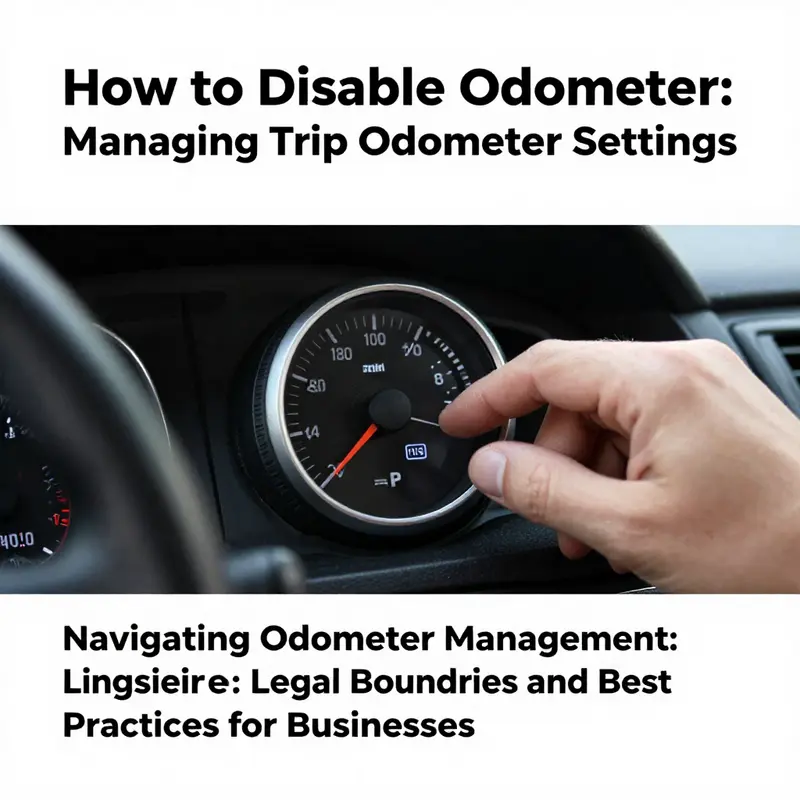
If the impulse to tamper stems from concerns about an aging or high-mileage vehicle, it is worth pausing at this point and reframing the problem. Rather than seeking a way to erase mileage, consider how to interpret it accurately and manage it responsibly. The trip odometer exists precisely to support that process. It provides a clean, resettable counter for trips, allowing drivers to monitor fuel economy, plan maintenance intervals for specific legs of a journey, and log miles for a particular purpose without altering the vehicle’s long-term history. Resetting the trip counter in most vehicles is a straightforward operation: a dedicated button or a mode selector on the dashboard or steering wheel allows the user to cycle to Trip A or Trip B and then reset the displayed value. If a digital cluster is involved, the same action can be performed through a settings menu, where the trip data can be cleared without disturbing the main odometer. This distinction between a temporary log of current usage and the immutable ledger of total mileage embodies a practical balance between the need for current vehicle management and the obligation to maintain an honest, traceable mileage record.
When drivers seek to manage what they see on the dashboard, a close reading of the options becomes essential. The main odometer serves as a historical chronicle of the vehicle’s life; the trip odometer serves as a tool for planning days, weeks, or trips. The difference matters: one is a historical record; the other is a tool for operational planning. If unfamiliar displays or confusing menus create the impression of an incomplete, unreliable readout, the remedy lies not in tampering but in learning the vehicle’s instrument cluster. Owner manuals, service manuals, and dealership technicians can guide the user through the display settings and the trip reset process. In some vehicles, you can even customize what is shown on the display, choosing whether to highlight fuel economy, distance traveled, or maintenance reminders for a given trip. This approach respects the integrity of the odometer while offering practical control over the information a driver uses for daily decisions.
The broader ethics of mileage information also invites reflection. Odometer data affects more than an individual vehicle’s history; it influences fleet planning, insurance pricing, and consumer trust. A culture that embraces transparent mileage reporting supports safer decisions, better maintenance scheduling, and fair valuations. In that sense, the odometer’s power lies not in its ability to reveal all details at once but in its capacity to anchor decisions to an honest history. This is why, even if a technically possible method to disable the odometer existed, it would clash with professional standards, regulatory expectations, and personal safety concerns. The safest and most responsible path is to work within the established frameworks for vehicle data: resettable trip counters for short-term tracking, clear maintenance logs, and polite, transparent disclosures when the time comes to sell or service a vehicle.
For those who encounter odd behavior in their instrument clusters—unexplained warning lights, intermittent readings, or discrepancies between the trip counter and the total miles—it is prudent to seek professional diagnostics rather than intervene with ad hoc alterations. A certified technician can scan for fault codes, recalibrate display modules if needed, and ensure that the trip and main odometer data align with factory specifications. In some cases, what looks like a tampering issue may be the result of a hardware fault, a software glitch, or a miscommunication within the CAN bus network. Correcting these issues preserves safety and reliability, preserves warranties where applicable, and maintains the integrity of the vehicle’s service history.
As this discussion nears its practical edge, a final point resonates: the value of precise, trustworthy mileage data is not solely about legality or resale value. It is about a vehicle’s safety profile, its maintenance roadmap, and the trust that stewards of technology—engineers, technicians, and owners—place in modern automotive systems. In the ongoing evolution of vehicle instrumentation, the odometer remains a crucial, protected component. The temptation to circum- vent it challenges not just mechanics but the social contract around vehicle safety and accountability. The prudent route is to accept the constraints, master the legitimate tools at hand—the trip odometer, the display settings, the service intervals—and advocate for clear, compliant practices in vehicle ownership.
For readers seeking further technical grounding on instrumentation integrity and standardized approaches to vehicle data, standards organizations provide authoritative guidance on how these systems are intended to function and be monitored. See the Society of Automotive Engineers (SAE) standards on vehicle instrumentation for a comprehensive treatment of how odometer data should be treated within the broader network of vehicle ECUs and diagnostic tools. These standards emphasize the importance of data integrity, interoperability, and safety in modern automotive systems, reinforcing why any attempt to disable core measurements is not a viable path forward. External reference: https://www.sae.org/
The Odometer Dilemma: Why Tampering Isn’t a Shortcut to Safety, Law, or Longevity

In the ecosystem of a modern vehicle, the odometer acts like a quiet ledger, recording every mile the car has traveled. It is not merely a nostalgia item or a badge of honor for some owners; it is a data stream that informs maintenance, safety checks, and, ultimately, trust between buyers, sellers, and regulators. The instinct to want a cleaner-looking gauge or a higher resale value can tempt people to imagine a quick fix that hides or disables mileage. Yet the reality is more stern than clever. The odometer, especially in its main form, is welded into the vehicle’s safety and regulatory framework. It is tied to the speed sensor, the engine control unit, and the memory banks that govern service intervals, inspection readiness, and warranty coverage. Tampering with it is illegal in many jurisdictions, and the consequences can ripple across legality, finance, and everyday reliability of the car you depend on. The same tension—between what you might wish to appear on a dashboard and what the vehicle’s systems actually require—drives a practical question: what can you do if the goal is a cleaner display or a more manageable center of information without risking the law or the car’s health? The answer lies not in disabling the odometer but in understanding the roles, limits, and safe alternatives available through the trip counter and the instrument cluster’s display settings. It is a topic that blends ethics, engineering, and everyday maintenance, and it deserves a careful, practical meditation rather than a shortcut that can backfire in unexpected ways.
First, it is important to distinguish between the two mileage readouts that most drivers encounter daily. The main odometer is the vehicle’s total lifetime distance traveled. It is a fixed, cumulative figure that grows with every mile, every burnout of a starter motor, every long highway stretch and every short loop through town. The trip odometer, sometimes labeled Trip A or Trip B, is a separate, temporary counter designed to track mileage for a single journey or a defined period. It is resettable and, crucially, intended for the kind of planning a driver does before a long trip, during maintenance intervals, or when measuring fuel economy over a known distance. This distinction matters because the main odometer is not a feature that a driver should or can disable through ordinary controls. It is interwoven with safety and compliance systems. Attempting to disconnect wires, remove sensors, or manipulate fuses to turn off the main odometer is not only dangerous but often illegal. Modern vehicles rely on a network of electronic control units that verify data integrity. Disturbing this network can trigger fault codes, disable critical functions, or create conditions that fail a safety inspection. The cautions about odometer tampering are not academic; they reflect concrete regulations and the engineering design choices that keep a car predictable and safe on the road.
What drivers often want is an uncluttered instrument panel. In daily use, a busy dashboard can feel distracting, especially on long drives or in fleets where information overload reduces quick, clear decisions. If what you want is a simpler display, you do not need to fight the integrity of the vehicle’s mileage data. Instead, you can tailor what you see by leveraging the trip counter and the display modes offered by your car’s instrument cluster. Display configuration—cycling through different views, choosing between speed, trip distance, fuel efficiency, or a minimal readout—lets you customize the user experience without altering any recorded mileage. Hide or minimize the odometer readout through the vehicle’s settings, if the option exists, and rely on the trip readouts for the day-to-day planning. Remember: hiding the odometer on the display does not affect the data stored in the car’s memory or the ECU. The total distance continues to accumulate privately, and you will still be alerted to service windows, warranty timelines, and inspection readiness by the car’s built-in logic.
For one thing, the legal landscape around odometer data is not a rumor you want to test. In many countries, falsifying mileage is a criminal offense precisely because it undermines consumer trust and vehicle safety. The consequences can include fines, penalties, and civil disputes if a buyer discovers that the displayed mileage was manipulated. A modern car’s maintenance schedule often relies on mileage intervals: oil changes, belt replacements, brake inspections, and more. When the odometer is tampered with, those maintenance cues can slip past, leaving the vehicle more vulnerable to failures that could have been prevented with timely service. A 2025 assessment highlighted how mileage misrepresentation affects vehicle valuation and the trust between buyers and sellers, a reality that can be costly in both legal and financial terms. The broader point is not to fear data, but to respect its integrity and to use the car’s built-in tools to manage information responsibly.
The practical alternatives begin with the trip odometer itself. If your goal is to measure performance, track a route, or measure fuel economy for a defined trip, Trip A and Trip B are designed for this. Resetting them is a standard feature in nearly every modern vehicle, and the method is usually straightforward: locate the trip button or the mode selector on the steering wheel or dashboard. Press or hold the button until the trip counter clears to zero, or use the mode switch to cycle to the desired Trip display and then activate the reset. In some cars, you navigate through the digital menu on the cluster’s settings page, selecting Trip and then Reset or Clear. These steps are not merely cosmetic; they reflect a calibration that ensures the vehicle’s short-term data remains scientifically useful for planning, maintenance, and efficiency tracking. The trip counter is compatible with a driver’s need for precision over a limited horizon—whether it’s counting the miles when you test a new route for a trip planning app, timing a long highway stretch, or checking how far you have driven since your last service.
The topic of display management deserves a careful, technical, but approachable explanation. When the main odometer cannot be disabled, it is not a failure of the car’s design but a deliberate design choice that preserves safety, compliance, and reliability. The instrument cluster is a complex interface that aggregates data from sensor networks, the vehicle’s ECU, tire pressure monitoring, and other critical systems. Modifying any of these data streams outside the manufacturer’s intended operations can create cascading malfunctions. Some older sources suggested hardware hacks—disconnect this, log that, or pull a fuse here—to suppress the odometer. Those approaches are dangerous on multiple fronts: they can cause electrical faults, misreport failure warnings, and invalidate safety inspections. They can also void warranties. Even when a car remains operable after such meddling, you will know you have compromised the reliability that underpins safe driving.
A useful perspective is to consider how the odometer fits into the broader life of a vehicle. It underpins maintenance reminders and diagnostic routines. The total mileage informs the expected timing of parts replacements and service milestones. Consider the maintenance window that appears in a service reminder, a feature that depends on the accumulated distance the car has clocked. In fleets, mileage data can optimize scheduling, route planning, and asset utilization. Tampering with that data, even with the intent of reducing perceived wear, can invite a cascade of consequences, from misaligned service intervals to misrepresented vehicle history during resale. When you separate the desire for a minimal display from the necessity of accurate data, you see why the trip readouts and display controls exist as legitimate tools rather than a forbidden set of tricks.
If you are curious about the broader ethics of vehicle data and how to navigate them, a single, well-informed reference can help. The landscape is not purely technical; it is a governance issue that touches consumer protection and public safety. For readers who want to explore official guidance on odometer fraud and the legal framework that surrounds mileage data, consult reputable authorities that oversee vehicle safety and consumer rights. The underlying message is not to dodge the issue, but to engage with it responsibly—recognizing that the mileage record is part of a vehicle’s institutional memory and that preserving its integrity benefits everyone on the road.
In practical terms, you should view the odometer as a data site you do not manipulate, and the trip counter as a legitimate tool to serve your daily needs. If a dashboard feels too busy, adjust the display settings rather than attempting to alter the data stream. The steps are simple: cycle through the instrument cluster’s display modes using the Mode button or the steering wheel controls, select a view that emphasizes the trip distance or other metrics you value, and reset Trip A or Trip B as needed. If your vehicle uses a digital cluster with a submenu, you will often find a straightforward option named Reset, Clear, or similar under Trip or Odometer settings. The key is to keep the actual odometer data intact and unaltered. By embracing this approach, you preserve the vehicle’s maintenance logic, ensure accurate servicing, and maintain trust with future buyers or inspectors who rely on a transparent history.
For those who are new to this topic, a concise reminder can be helpful. You cannot and should not disable the main odometer through normal controls. Attempting to do so can damage the vehicle’s electrical architecture, trigger safety and warning failures, and run afoul of odometer fraud laws. Instead, use the trip odometer as your short-term mileage tool, and use the instrument cluster’s display options to tailor what you see on a day-to-day basis. If you want an even smoother experience, you can link your dashboard adjustments to your driving routines. For instance, map trips to frequently traveled routes, set up a daily or weekly service reminder, and rely on the trip data to measure efficiency during those intervals. In doing so, you stay aligned with best practices for vehicle health, legality, and long-term reliability.
If you would like to explore more about vehicle data and display settings in a broader context, the following resource can provide additional perspective on how vehicle systems intersect with consumer expectations and regulatory requirements: Vehicle Tricks blog. This reference can help you draw practical connections between everyday dashboard management and a deeper understanding of how cars present information to drivers without compromising safety or legality. For readers who want a formal, external standard on mileage integrity, see the National Highway Traffic Safety Administration’s guidance on odometer fraud, which emphasizes the importance of accuracy and the penalties for fraud. The link below offers official context and guidance from a trusted safety authority.
External resource: https://www.nhtsa.gov/vehicle-fraud/odometer-fraud
null
null
Final thoughts
Understanding how to manage odometer settings is crucial for business owners to ensure compliance with legal standards, enhance vehicle safety, and maintain accurate records of vehicle usage. While tampering with the main odometer poses significant legal risks, learning how to effectively use and manage the trip odometer allows for practical tracking of vehicle usage. By adhering to established legal frameworks and prioritizing safety, businesses can responsibly handle odometer settings to ensure long-term operational efficiency.