
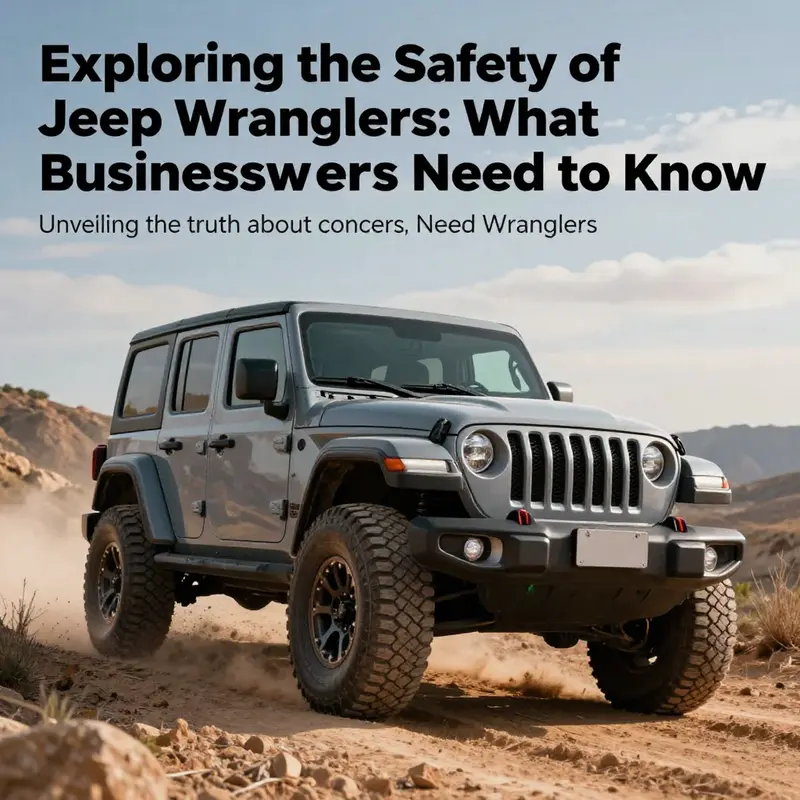
The Jeep Wrangler stands as an icon of rugged off-road capability and adventure. However, for business owners considering this vehicle, understanding its safety profile is crucial. The model’s design, inherent trade-offs, modern technological advancements, and the risks associated with modifications contribute significantly to its safety. This article will delve into these aspects, providing a comprehensive view of how safe Jeep Wranglers truly are.
Rugged by Design, Safer by Engineering: The Real Safety Story of Jeep Wranglers
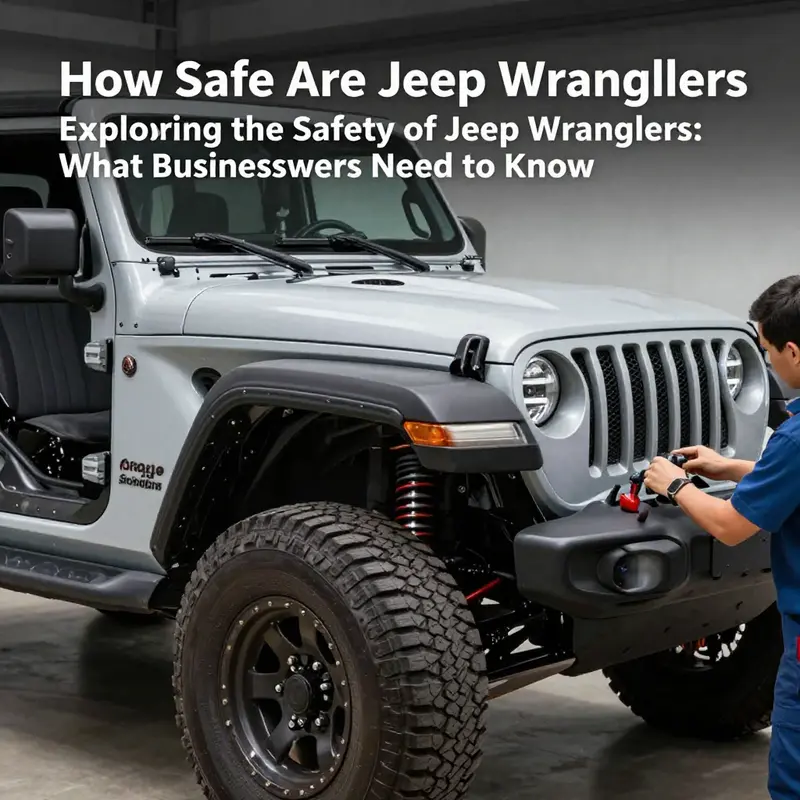
The Jeep Wrangler has long stood as a symbol of freedom and grit, a vehicle that invites exploration where ordinary cars fear to tread. Yet the traits that endear Wranglers to off road enthusiasts, the removable doors, the open top, and a frame built to soak up rough terrain, also raise safety questions. This chapter looks at how structural design, safety tech, and real world trade offs intersect in a vehicle designed to conquer trails and reach everyday destinations.
At the heart is a body on frame architecture, which pairs a rugged ladder frame with a separate passenger cell. The frame can help energy dissipation on rough surfaces, keeping the cabin intact, but it also means energy paths differ from unibody designs. In a straight line, the protection profile may look different from mainstream SUVs, yet on rocky runs and rollovers the frame can offer robust body integrity and strong pillars.
Even with the roof off and doors removed, Wrangler engineers emphasize cabin integrity. Reinforced pillars, sturdy door sills, and a roof structure designed to preserve a survivable cockpit in rollovers all contribute to occupant protection when canopy and chassis are under unusual loads.
Modern Wranglers also increasingly include side curtain airbags, reinforced B pillars, and electronics such as stability control. While the open air design complicates certain assessments, official testing and regulatory expectations have pushed the lineup toward stronger crash performance without sacrificing the off road character.
Modifications can complicate safety in two ways. Lifts and oversized tires raise the center of gravity and can alter braking and handling, while well integrated upgrades that maintain stock safety interfaces can coexist with improved capability.
For buyers, the takeaway is that safety is year and configuration dependent. Newer models with updated restraint systems and ESC tend to deliver stronger protection than older, heavily modified examples. The Wrangler’s safety story is a spectrum rather than a binary verdict, reflecting how design intention, maintenance, and driving choices shape real world outcomes.
Readers seeking practical context on winter driving should consult official ratings and test results, and consider open top use with caution in adverse weather.
Rugged Roads, Safer Journeys: Unpacking the Safety Trade-Off in Jeep Wranglers’ Off-Road Life
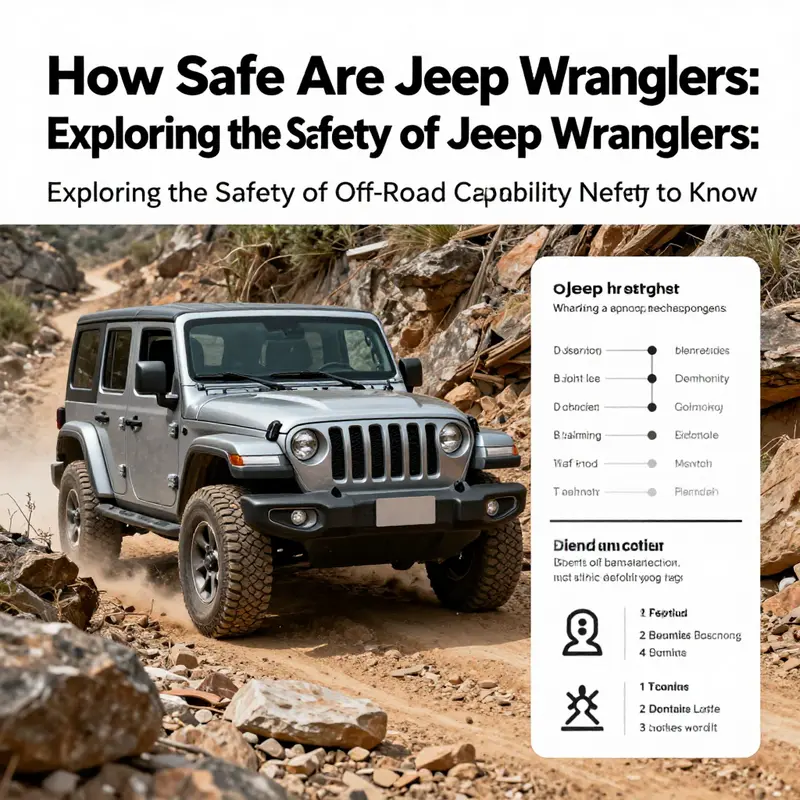
The Jeep Wrangler has always drawn a line in the sand between capability and everyday practicality. Its allure rests on a legacy of rock crawling, water crossings, and the kind of durability that makes other SUVs seem delicate by comparison. Yet behind that formidable chassis lies a complex safety story. It is not simply a matter of crash-test numbers or standard features; it is a broader conversation about how a vehicle designed to conquer rough terrain behaves under predictable road conditions, how its engineers balance weight, frame, and protection, and how owners’ choices—especially modifications—reshape risk. When you look closely, safety in a Wrangler is less a single verdict than a spectrum shaped by model year, trim level, and the careful understanding that off-road prowess can carry unique safety implications on pavement. The narrative of safety, then, is a negotiation between the brute strength needed to survive uneven surfaces and the protective systems expected in a modern family SUV. The chapter that follows takes you through that negotiation, drawing on crash data, design intent, and practical realities of ownership to reveal a truth that is as nuanced as the trails Wranglers were built to conquer.
To appreciate the safety equation, it helps to start with engineering choices that make Wranglers distinct. The core architecture—a body-on-frame construction—delivers unmatched rigidity and a robust foundation for off-road articulation. This design excels when tires meet obstacles, absorbing shocks through a sturdy ladder frame rather than letting the body flex in ways a unibody might. But that same strength can complicate safety in collisions. A body-on-frame setup tends to ride taller and behave differently in side impacts and rollovers, especially when compared with many modern unibody SUVs that integrate crumple zones and sheltering structures in more seamless fashion. Since the Wrangler’s purpose is to stay alive on rough trails, not just on the freeway, the design emphasizes durability and repairability over the kind of integrated passive safety systems that became common in the segment decades ago. In older Wranglers, the absence of some modern features—rearview cameras, automatic emergency braking, and a complete suite of driver-assistance systems—was not unusual. Even as later years brought improvements, the choice to prioritize mechanical robustness over certain comfort or tech features remained a defining thread of the Wrangler’s safety story.
That long view on structure helps explain the mixed crash-test results some models received. When the National Highway Traffic Safety Administration (NHTSA) evaluated recent Wranglers, the results reflected a vehicle that is exceptionally capable in off-road contexts but not always aligned with the best possible outcomes in every on-road scenario. For the 2024 Wrangler, the overall rating hit a four-star status in some configurations, a figure that drew from side-impact performance and rollover resistance that lag behind top mainstream crossovers. The Insurance Institute for Highway Safety (IIHS), meanwhile, offered a more nuanced verdict: good ratings across many categories in frontal and side tests, but a marginal rating in the small overlap test. The small overlap test—one of the toughest on the IIHS agenda—exposed how a Wrangler’s geometry interacts with modern restraint systems in a way that can leave gaps in extreme corner impact scenarios. Taken together, these results suggest safety in Wranglers is not a binary label—it depends on the specific model, the safety features included, and how the vehicle is used.
A critical factor behind these mixed scores is the Wrangler’s relatively high center of gravity. The tall stance, generous ground clearance, and off-road suspension contribute to a posture that can elevate rollover risk on high-speed curves or during evasive maneuvers on wet or uneven pavement. Modern Wranglers have addressed some of this risk with electronic stability control (ESC), roll-over protection systems (ROPS) for certain configurations, and a more capable chassis that can help the driver regain control when balance begins to tilt. Yet even with these aids, the fundamental geometry remains a constraint. In other words, the same traits that let a Wrangler lean into a challenging rock ledge also influence how it behaves when weight shifts suddenly, or tires lose grip on slick pavement. The net effect is a safety profile that benefits from robust electronic aids and stronger structural integrity, but cannot erase the basic physics of a tall, body-on-frame vehicle.
On the safety features front, there has been meaningful progress in recent years. Newer Wranglers have moved closer to the expectations of modern families by standardizing key driver-assistance technologies and strengthening crash protection. Features such as forward collision warning, automatic emergency braking, lane-keeping assistance, and blind-spot monitoring have become more common across trims, addressing a safety gap that once left older Wranglers trailing the pack. The combination of upgraded airbags, enhanced structural elements, and improved occupant protection contributes to a more reassuring highway ride than is often assumed from a vehicle whose roots lie in off-road conquest. These advancements do not erase the Wrangler’s off-road identity; they simply bring the vehicle into closer alignment with contemporary safety expectations, even as the core strengths that appeal to rugged enthusiasts remain intact.
Yet safety is not only about what a new model can offer out of the showroom. For many owners, safety in the Wrangler is profoundly influenced by how the vehicle is used and how it is configured. The enthusiasm for off-road performance commonly translates into modifications that can unintentionally influence safety, particularly when the goal is to maximize ground clearance, traction, or articulation. Lift kits, oversized tires, and modified suspensions can raise the vehicle’s center of gravity and alter weight distribution in ways that degrade handling and braking. In some cases, a properly planned upgrade can improve performance and maintain safety margins if executed with quality components and professional installation. In other cases, the same modifications can undermine stability, especially if they alter suspension geometry, steering feedback, or tire pressures in neglected ways. The safety implications of aftermarket enhancements are a reminder thatWranglers live at a crossroads where mechanical bravery and safety engineering must move in step, not at competing tempos.
All of this maps onto a broader reality noted by researchers and reviewers: the Wrangler’s safety story is as much about context as it is about capability. In routine commuting and everyday driving, modern Wranglers with standard ESC, multiple airbags, and reinforced body structures can offer a reassuring level of protection that rivals many mid-size SUVs. But the same vehicle, when driven aggressively on winding roads, or when equipped with aggressive off-road tires and tall suspensions, can demand more conservative driving and deliberate maintenance. The inherent design choices—emphasizing durability and off-road prowess—mean the Wrangler’s safety performance is best understood as a spectrum rather than a single metric. For buyers, that means making a conscious decision about how the vehicle will be used, what safety technologies are non-negotiable, and how much risk one is willing to tolerate in exchange for trail-ready capability.
Of particular relevance to winter and mixed-weather conditions is the way the Wrangler handles traction and load transfer. A high center of gravity can translate to more pronounced body roll on icy roads, even as four-wheel drive and low-range gearing help grip. In winter contexts, the combination of tall tires and a tall body profile can create a mismatch between tire contact patch and road surface, especially when road salt or slush change the feel of the pavement. This is not a verdict that the Wrangler cannot perform in snow; many drivers find it confident in appropriate conditions and with the right tires. It is, instead, a reminder that safety is a nuanced equation—where the choice of tires, the setup of the suspension, and prudent speeds all interact with the vehicle’s mechanical strengths to determine outcomes on wintry byways. Those who want to explore snow and mud safely should be mindful of this balance and lean on updated safety tech and careful vehicle configuration rather than assuming off-road expertise translates automatically to on-road invincibility.
A practical takeaway for prospective Wrangler buyers and current owners is the importance of aligning expectations with the model year and the safety tech package included. Newer Wranglers, especially those from the 2023 through 2025 window, offer a more comprehensive safety net than earlier builds. They can provide standard forward collision warning, automatic emergency braking, lane-departure warnings, and blind-spot monitoring across multiple trims. These features complement traditional protections like airbags and the reinforced body structure, and they help bridge the gap between the rugged personality of the Wrangler and the safety corridors that modern drivers rely on. The challenge for buyers remains clear: while the core Mojo of off-road prowess is non-negotiable for many, the peace of mind that safety technologies furnish should not be dismissed as a secondary consideration. In practice, a newer Wrangler with robust safety tech paired with thoughtful, professional modifications can deliver a blend of adventure and protection that honors both sides of the coin.
For those who plan to push their Wranglers into more demanding terrain, there is additional wisdom to consider. Modifications that alter the suspension geometry or raise the ride height should be approached with due diligence. A well-planned upgrade—performed by qualified technicians and paired with aligned tires, brake upgrades, and calibrated stability controls—can retain competent handling and braking while unlocking more capability. However, the same upgrades executed hastily or with cheap parts can undermine the vehicle’s braking efficiency, steering precision, and rollover resilience. The psychological allure of more clearance can tempt drivers to adopt riskier speeds on rough backroads, but science and safety data remind us that higher center of gravity, even with sophisticated traction aids, can demand more conservative driving and a higher threshold for caution. In short, the Wrangler’s safety profile improves with modern tech and careful maintenance, but it can deteriorate if the vehicle is pushed beyond what its geometry and systems can safely manage.
The broader picture, then, is this: Wranglers deliver extraordinary capability, a trait that endears them to enthusiasts and adventurers. They also carry safety implications rooted in their architecture and early design choices. The best path to a safe Wrangler life blends two essentials. First, prioritize newer models with a full suite of safety technologies and reinforced occupant protection. Second, resist the impulse to treat the vehicle as a purely off-road toy without recognizing how changes outside the factory can shift risk. In practice, this means choosing a model year with comprehensive safety features, verifying that the vehicle has not been compromised by reckless modifications, and committing to regular maintenance that keeps all safety systems functioning as designed. For anyone seeking high adventure without surrendering on-road protection, this balanced approach offers a credible pathway.
As with many chapters in the story of the Wrangler, the answer to the question “how safe is it?” is not a simple yes or no. It depends on the edition, the equipment, and the choices of the driver. What is clear is that the Wrangler’s safety evolution has moved in step with broader societal expectations for occupant protection and driver assistance, while preserving the unique, go-anywhere DNA that defines the vehicle. If you read the safety landscape through that lens, you arrive at a practical conclusion: Wranglers can be exceptionally safe—when you buy the right model, avoid reckless alterations, and cultivate safe driving habits that respect both pavement and trail. The result is a vehicle that can deliver genuine off-road mastery without abandoning the critical protections that modern motorists rely on every time they roll onto the highway. For readers who want to explore this balance further in the context of winter driving and snow performance, a helpful reference is available here: Are Jeep Wranglers Good in the Snow.
In closing, if safety is a priority and the off-road spirit remains non-negotiable, the Wrangler’s path is not to trade one love for the other but to curate them with intention. A newer model year, a factory-specified safety package, and a disciplined approach to aftermarket upgrades can harmonize the two impulses. This approach respects the vehicle’s heritage and acknowledges the modern demands of road safety, turning the Wrangler from a symbol of rugged independence into a more complete, confident partner for both trail and town. For those who want to delve deeper into how these safety dynamics play out in real-world testing and regulatory assessment, official crash-test results offer a rigorous baseline, while consumer experiences illuminate how these numbers translate to daily use. The truth, as it stands, is that safety in the Wrangler is a moving target—one that advances as engineering, regulation, and driver behavior converge around the same core goals: to protect people while keeping the doors open to the adventure that every Wrangler owner cherishes. External resources from the highway safety world provide the empirical guardrails that help readers interpret the scores and understand what they mean for their own journeys on both remote trails and ordinary streets. External resource: https://www.nhtsa.gov/vehicle/2024/jeep/wrangler
How Safe Are Jeep Wranglers? Modern Safety Tech and Off-Road Freedom
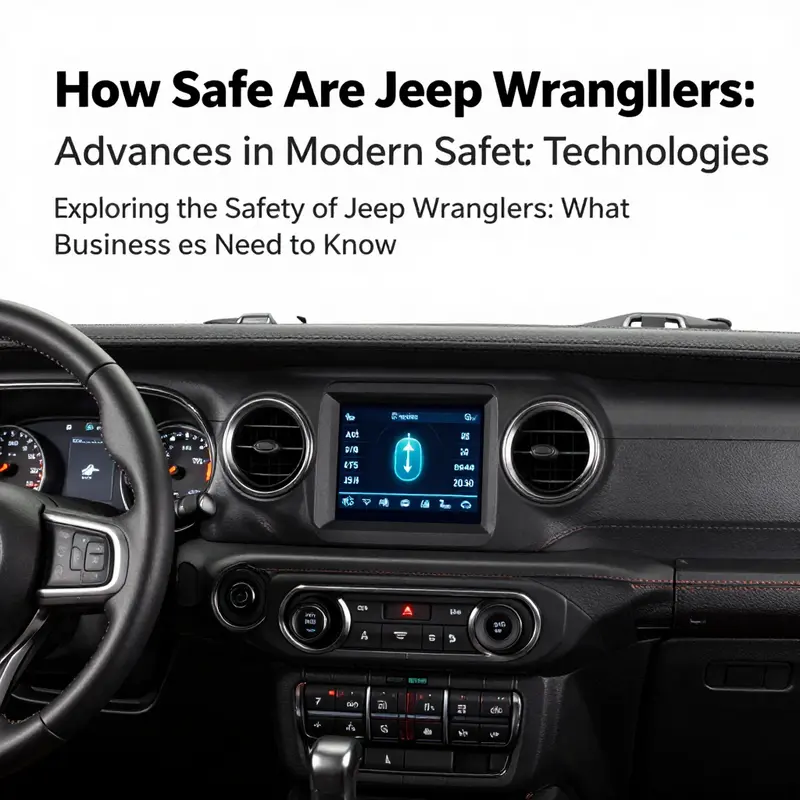
Jeep Wranglers have long prioritized rugged capability over cosmopolitan refinement, and safety is no exception. The latest models marry a sturdy body-on-frame design with a growing suite of driver assistance features that aim to prevent crashes and mitigate injuries without compromising off-road versatility. Key elements include reinforced frames and enhanced airbags, plus versatile electronics such as forward collision warning, automatic emergency braking, lane keeping assist, blind spot monitoring, and adaptive cruise control. These systems are designed to work with the Wrangler’s high center of gravity and solid axle geometry, helping maintain control on wet roads and uneven surfaces while letting the driver enjoy the brand style and trail capability. The trade offs remain: roof and side open cabin exposure, wind noise, and the potential for misalignment with aftermarket modifications. When properly equipped and maintained, newer Wranglers offer protection that aligns well with typical family SUV safety expectations, especially in urban and highway driving. For off road use, the safety emphasis shifts toward ensuring correct tires, suspension tuning, and responsible driving to keep the technology effective without overreliance on electronics. In short, safety in the Wrangler era is about integrating robust structure and active aids with careful ownership and prudent upgrades, delivering a vehicle that keeps its adventurous spirit while offering credible protection on everyday roads.
Safety on the Trail and the Tarmac: The Real Safety Equation Behind Jeep Wranglers and Aftermarket Modifications
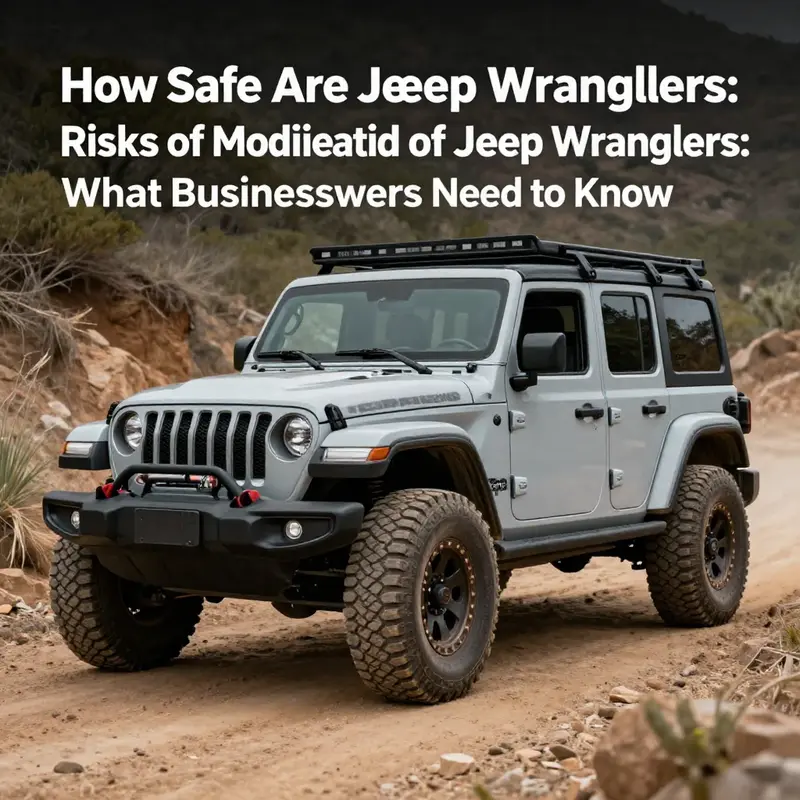
A Jeep Wrangler is more than a vehicle; it is a philosophy translated into steel, tires, and an unmistakable silhouette that invites owners to chase both trails and horizons. That identity—rugged, capable, almost inexhaustible in off-road demand—becomes a double-edged sword when the conversation shifts from crawling over rocks to driving on everyday streets. The safety story of the Wrangler is not a single verdict but a calibration between design intent, structural realities, and the inevitable consequences of popular owner modifications. To understand how safe Wranglers are, one must separate the wishful image from the physics of a body-on-frame SUV designed for rough terrain, then weigh how modern safety tech has narrowed gaps on newer models while acknowledging how modifications can widen them again.
The Wrangler’s body-on-frame architecture, with its solid axles and lofty ground clearance, is precisely what makes it formidable off-road. The same recipe that delivers ground clearance and wheel travel also tends to raise the vehicle’s center of gravity. In everyday driving, that higher center of gravity translates into a different balance profile than you’d find in many unibody crossovers. The result is a higher propensity for dynamic instability under abrupt maneuvers, such as aggressive lane changes, sudden swerve corrections, or brisk cornering on uneven pavement. The stability challenge is not that Wranglers are unsafe in the sense of a lethal flaw, but that their inherent geometry requires more thoughtful driving—especially when the road surface is slick, the weather is poor, or speeds rise above a cautious pace. The off-road DNA, which prizes articulation and traction, becomes a constraint when stability control systems must fight against a tall frame and large contact patches under less-than-ideal conditions.
That tension helps explain why safety narratives around Wranglers have evolved as the model years progressed. Early Wranglers often came with more basic safety features, and some of the mechanical systems that modern shoppers take for granted—advanced airbags, comprehensive driver-assistance suites, and sophisticated electronic stability control—were either absent or less capable in older iterations. Yet even as newer Wranglers carry more protective equipment, the core physics of the frame and suspension remain; the same principles that help a Wrangler conquer a rock garden can complicate on-road stability. The modern conversation, then, is not simply about adding airbags or a few extra sensors; it is about how far a design can journey toward both off-road robustness and on-road predictability, and what the cost of that journey looks like in real-world safety metrics.
In recent years, the balance has clearly tilted toward safety technology, particularly in the 2023–2025 model range. Modern Wranglers have made meaningful strides in protective hardware and crashworthiness. The National Highway Traffic Safety Administration (NHTSA) has credited the latest Wranglers with top safety ratings, including five-star overall crash-test scores for certain configurations. These ratings reflect the integration of standard electronic stability control, multiple airbags, and improved structural integrity—progress that helps the Wrangler approach the safety benchmarks set by more mass-market SUVs. Yet safety ratings are not a single metric that captures every road scenario a Wrangler might encounter. They assess responses to standardized tests that, by design, stress certain crash modes and energy absorption characteristics. Real-world safety also hinges on how the vehicle behaves under dynamic maneuvers outside those test envelopes, and that is where the Wrangler’s distinctive geometry continues to matter.
In parallel with the hardware upgrades, the broader safety conversation has been shaped by industry analysis that leans into the brand’s philosophy of function over form. A 2025 article from a prominent automotive publication highlighted a design ethos that prioritizes mechanical robustness for off-road performance, sometimes at the expense of sealing details and feel-oriented refinements on paved roads. In practical terms, that means Wranglers may exhibit more wind noise or water intrusion in certain environments, but it also signals a willingness to accept certain trade-offs in pursuit of trail capability. For safety, the implication is twofold: on one hand, the vehicle’s mechanical backbone provides a resilient platform that can absorb and distribute crash forces more effectively in some scenarios; on the other hand, features that could reduce weight or complexity—such as a leaner airbag count or a simpler suspension ethos—may still be found in older or more utilitarian configurations. The reality is nuanced: newer Wranglers address many of the early safety gaps while maintaining the rugged integrity that fans expect.
The conversation about safety would be incomplete without acknowledging the elephant in the room for many Wrangler owners: aftermarket modifications. Lift kits, larger tires, and upgraded suspensions are among the most popular alterations, especially for those who insist the vehicle must be equally at home on a trail as it is on a city street. While these changes can improve off-road performance—giving additional ground clearance, improved approach and departure angles, and greater traction in certain terrains—they simultaneously alter critical safety dynamics. The center of gravity can rise with lift kits, increasing rollover risk, particularly at highway speeds or on winding roads with uneven surfaces. Larger tires add unsprung weight, which can degrade the responsiveness of braking and steering systems and complicate the calibration of electronic stability control and traction controls. Aftermarket suspensions, when not professionally installed or properly tuned, can change suspension geometry, steering feel, and brake balance, undermining stability and predictability.
Then there are the safety implications of removing or altering body panels that define a modern vehicle’s protective envelope. Wranglers widely celebrated for their doors that can be removed and their tops that can be taken down, while delivering an open-air driving experience, also reduce side-impact protection and overall crash energy management in certain scenarios. A fixed roof and full side coverage are more than cosmetic; they contribute to how a vehicle can absorb and distribute crash forces, particularly in side impacts and rollovers. Even with doors on, the generous frame rigidity that gives Wranglers their trail-ready stiffness does not always translate into the same unibody crash cage performance that newer mainstream SUVs deliver. These realities are precisely why some safety researchers emphasize that alterations tied to aesthetics or off-road performance can have unintended consequences on real-world crash outcomes.
Scholarly and industry research reinforces this cautionary picture. A 2023 study from a leading safety institute found that older Wranglers and several modified variants demonstrated weaker performance in certain crash modes, particularly side impact and rollover scenarios. The study pointed to mechanical changes in geometry and sensor calibration that could impede airbag deployment or pretensioner effectiveness. It’s not that every modified Wrangler is unsafe by default, but the findings underscore that modifications are not neutral to safety; they can meaningfully alter how a vehicle responds to a collision. Additionally, modifications may void manufacturer warranties, complicating post-crash safety support and evaluations. The bottom line from this line of evidence is clear: while aftermarket enhancements can tailor Wranglers to a specific use case, they carry safety trade-offs that must be understood, evaluated, and managed with care.
All of this converges on a practical takeaway for Wrangler buyers and owners: safety in a Wrangler is deeply contingent on model year, trim level, and the presence or absence of modern safety tech, as well as the maturity and quality of any modifications. For drivers who want the Wrangler’s rugged spirit without surrendering everyday safety, the most reliable path involves selecting a newer model that includes a full suite of standard safety technologies, and resisting the impulse to make modifications that could compromise essential crash performance. It also means recognizing that improvements in one area—such as a stronger protective structure or more airbag coverage—do not automatically compensate for weaknesses introduced by an altered center of gravity or an altered wheel-tire package.
In practical terms, the responsible calculus for Wrangler ownership should foreground restraint in customization. Adhering to factory specifications is not a dull constraint but a safeguard against unintended consequences. When modifications are pursued, they should be undertaken with professional installation and a rigorous safety assessment that considers how the changes affect rollover risk, braking balance, steering response, and sensor calibration. Owners should also be selective about which safety technologies they insist upon with the newer designs and should treat ADAS features as complements rather than optional luxuries. The open-air experience that characterizes the Wrangler should be enjoyed in environments where weather and traffic conditions make the open cabin a harmless aesthetic rather than a liability.
For readers who want a closer look at how Wranglers perform in adverse winter conditions, there is practical value in exploring how these vehicles handle snow and ice. See a focused discussion here: Are Jeep Wranglers Good in the Snow?. This resource highlights how the combination of weight distribution, driveline configuration, and traction control translates into real-world winter performance, offering a useful complement to the safety-focused discussion in this chapter. It is important to connect winter performance with safety realities because, while off-road capability is a Wrangler hallmark, winter driving demands a different balance of traction, stability, and braking control. The goal is not to promote a trade-off but to illuminate how the vehicle’s design choices interact with a wide range of driving conditions. For readers seeking authoritative, exterior verification of safety performance and crash outcomes, the official crash-testing and safety data from regulatory authorities remains the best compass, and the IIHS site provides direct access to standardized test results and safety ratings that help ground expectations in measurable outcomes: https://www.iihs.org/.
In the end, the question “how safe are Jeep Wranglers?” does not yield a single, definitive answer. The latest Wranglers, particularly in the 2023–2025 window, represent a notable advance in crash safety, stability control, and occupant protection. They perform well in controlled crash tests and benefit from a design that emphasizes structural resilience in rugged environments. Yet the Wrangler’s unique off-road emphasis, especially when coupled with common owner modifications, creates a safety landscape that is more nuanced on paved roads than the notoriety of its trails might suggest. The safety story, then, is a tale of choices: the choice of model year and safety equipment, the choice to limit certain modifications or to pursue them with rigorous professional oversight, and the choice to drive with an awareness of the vehicle’s geometry and its limits. For those who prize the Wrangler for its authentic, go-anywhere spirit, safety does not have to be sacrificed; it simply requires a thoughtful approach to how the vehicle is configured, how it is driven, and how it is supported by technology. The road to safety in a Wrangler is not a single upgrade; it is a continuous balance between capability and protection, between the trail’s demands and the street’s demands, and between the car you drive and the stewardship you bring to it every time you turn the key and hit the road.
Final thoughts
In summary, the safety of Jeep Wranglers is contingent upon various factors, including the specific model year, inherent design, and potential modifications. While modern models show significant improvements in safety technology, business owners must consider the implications of the vehicle’s design and their potential aftermarket enhancements. By selecting a newer model equipped with comprehensive safety systems and recognizing the risks associated with modifications, business owners can better navigate the rugged allure of Jeep Wranglers while ensuring safety on every journey.