
Effective vehicle maintenance is critical for ensuring the safety, reliability, and longevity of motor vehicles. For business owners operating fleets or managing transportation logistics, understanding the allocation of maintenance responsibilities can significantly impact both operational efficiency and safety standards. This article breaks down the key roles involved in vehicle maintenance: from routine checks performed by drivers to professional services provided by automotive specialists. By exploring who should handle routine maintenance, inspections, emergency repairs, and long-term contracts, business owners can implement best practices that safeguard their assets and optimize their fleet management strategies.
Between Daily Checks and Expert Servicing: Who Should Maintain Your Motor Vehicle?
A motor vehicle is a machine that lives in the rhythms of use and maintenance, a fact that quietly frames the expectations we set for who should care for it. The road and weather shape the wear, but the responsibility for maintenance is not handed to a single actor. It is shared, with the driver shouldering the daily, practical upkeep, and professional technicians handling the more intricate, technically demanding tasks. This division is not a casual preference but a functional system built on safety, efficiency, and feasibility. It recognizes that the simplest checks can prevent small problems from becoming expensive failures, while recognizing that a skilled technician with proper tools and know-how is needed to perform the kind of servicing that keeps a vehicle reliable over the long term. The result is a practical balance: the driver acts as the first line of defense, and the repair shop or dealership provides the deeper, more technical care that keeps the vehicle healthy beyond the routine, day to day checks.
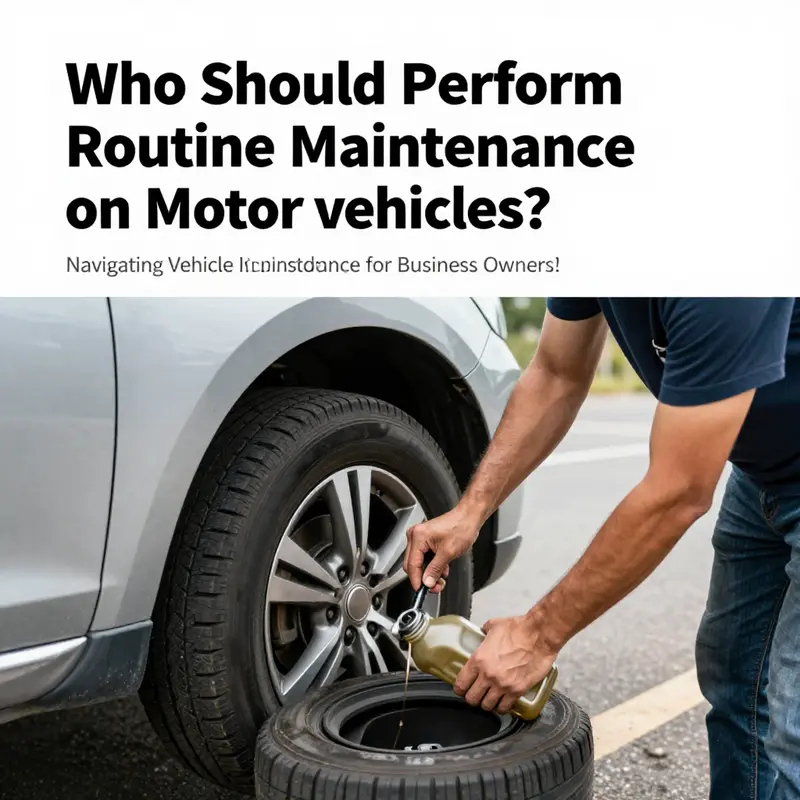
The core idea is straightforward. Routine maintenance, the kind that a vehicle owner should perform regularly, falls to the operator of the vehicle. Before each trip or after a day on the road, the driver can complete a basic inspection that checks essential safety and function. Oil levels, tire pressures, lights, brakes, and fluid levels are the kind of items that sit at the intersection of safety and everyday practicality. When these checks are performed consistently, they create a preventive shield that helps avoid unnecessary breakdowns and reduces the risk of dangerous failures on the highway. This driver responsibility is not optional. It aligns with national regulations and standard practices that place routine maintenance as a component of safe vehicle operation. The driver, in short, becomes the first steward of the vehicle’s condition, ensuring it is safe to operate before it leaves the driveway and again after it returns home.
The evidence supporting driver responsibility for routine maintenance rests in several reliable statements and regulatory expectations. Routine maintenance is described as a system of upkeep that the driver implements, often tied to mileage or time intervals. In this view, the daily maintenance most people perform—checking oil level, monitoring tire pressure, ensuring lighting works, and confirming basic brake function—is explicitly operated by the driver. An implicit logic runs here: the simplest checks that can be performed without specialized tools should be done by the person who uses the vehicle every day. This approach makes sense, because these checks are about immediate safety and functional readiness. When a driver notices a deviation, such as low tire pressure or a dim headlight, the issue is addressed promptly, often with a quick, low-cost fix. This early intervention minimizes risk and extends the vehicle’s usable life while protecting passengers and other road users. The routine checks act as an early warning system, a practical ritual that keeps the vehicle in a safer state between more formal service intervals.
Even with a clear division of labor for routine checks, the overall maintenance ecosystem relies on professional expertise for the tasks that demand specialized tools, calibrated procedures, or deep diagnostic work. More complex tasks—often categorized as secondary maintenance, major servicing, and repairs—require trained technicians, official service centers, and the appropriate equipment. These professionals operate within a framework that includes manufacturer specifications, diagnostic equipment, and technical know-how accumulated through training and experience. In most settings, secondary maintenance is performed at established automotive repair shops or authorized dealerships, sometimes referred to as 4S stores in certain markets. These facilities are equipped to conduct comprehensive services at prescribed intervals, inspect critical systems, test components, and perform precise adjustments that a layperson cannot safely or effectively execute. The boundary here is clear: routine checks stay with the driver, while the more technical, potentially costly, and safety-critical tasks belong to qualified professionals.
This distinction has practical consequences for how owners plan, execute, and budget for vehicle care. A driver who remains attentive to daily or per-trip checks reduces the odds of avoidable wear while extending the reliability of the vehicle. The driver’s checks typically cover the basics that influence safety and efficiency: tire condition and pressure, fluid levels such as engine oil and coolant, brake fluid status, battery health, wiper operation, lighting, and the general condition of belts and hoses. While these checks do not replace professional servicing, they serve as essential early detection tools. They provide the opportunity to address small issues before they escalate into breakdowns, costly repairs, or safety hazards that could affect others on the road.
At the same time, the professional maintenance and repairs layer adds depth and precision to vehicle care. Every vehicle is built with a manufacturer’s maintenance schedule that describes when to perform secondary maintenance and inspections. These service visits are designed to keep the vehicle in optimal operating condition, ensure that wear items are replaced at appropriate intervals, and verify that systems such as steering, suspension, braking, cooling, and electrical networks function correctly. The intervals variably depend on mileage, time, and driven conditions, and the services are conducted by trained technicians who understand the interdependencies of the vehicle’s systems. The professional layer also includes diagnostics for electronic control units, software updates, and the calibration of precision components that affect performance and safety. In short, the professional maintenance framework exists to handle tasks that require expertise, precision, and specialized equipment, which are beyond the scope of routine checks.
Within the interplay of driver and professional responsibilities lies a broader commitment to safety, reliability, and cost-effectiveness. Routine maintenance performed by the driver fosters safe everyday operation and helps early detection of developing issues. It empowers the vehicle owner to take action promptly, preventing minor concerns from growing into major problems. This practice also supports the efficient use of resources by reducing unplanned downtime and extending the life of components through timely checks and adjustments. When issues beyond routine checks are identified—or when the manufacturer’s service interval arrives—professional maintenance becomes essential. The professional layer ensures that the vehicle’s design tolerances are respected, that wear parts are replaced with the correct specifications, and that diagnostic procedures follow established standards. It is through this calibrated collaboration that a vehicle can remain reliable, safe, and efficient over many years and miles.
Navigating this division requires a measured approach to different use cases and ownership models. A private vehicle used for everyday commuting will benefit from a disciplined routine maintenance habit anchored in driver responsibility. A fleet vehicle, meanwhile, may operate under a more formalized maintenance program that aligns driver checks with scheduled professional service, backed by maintenance logs, audits, and manufacturer guidelines. In both cases, the boundary remains the same: keep the roadworthiness of the vehicle as the driver’s daily responsibility, while ensuring that professional maintenance covers the more technical, system-wide needs that require specialized equipment, knowledge, and procedures.
If the reader wonders how to implement this in practice, the answer lies in building a simple rhythm that respects the boundaries without blurring them. Start with a concise, practical pre-drive checklist that includes tire pressures, oil level visibility, lights, and brake feel. Develop a routine after each trip to note any unusual sounds, vibrations, or performance changes. Use a maintenance log to record date, mileage, observations, and actions taken. When the log signals an upcoming service interval or when a problem arises that goes beyond basic checks, schedule a professional appointment with a trusted shop or dealership. While it is tempting to delay professional service because it seems costly or time-consuming, the long-term cost of postponed maintenance tends to be higher due to accelerated wear, reduced efficiency, and the potential for safety hazards. This practical discipline—daily checks by the driver complemented by periodic professional servicing—creates a durable foundation for vehicle longevity and safety.
The relationship between daily maintenance and professional care is also a reminder that responsibility for a motor vehicle is not a single act but a continuum. It starts with the driver who ensures the vehicle is roadworthy before each use. It extends to the professionals who step in at the right times to diagnose, repair, and refresh systems beyond the reach of casual upkeep. It ends in the completion of a carefully balanced maintenance cycle that, when followed, yields a vehicle that performs consistently, uses fuel efficiently, and remains safe in the hands of those who rely on it daily. As owners internalize this division, they can navigate maintenance decisions with greater confidence, knowing that they are following a tested, principled approach that aligns with best practices and regulatory expectations alike. The dialogue between driver and professional becomes a cooperative routine rather than a one-off set of chores, a gentle reminder that well-tended vehicles are the result of attentive operation and informed expertise working in concert.
For a concise definition and a clearer framing of maintenance responsibilities, see What is vehicle maintenance? What is vehicle maintenance?.
External resources and official guidance also help anchor these ideas in broader safety and regulatory contexts. For an authoritative overview of vehicle maintenance practices and safety considerations, see the external resource here: https://www.nhtsa.gov/road-safety/vehicle-maintenance
Professional Maintenance Decoded: Who Is Qualified to Service Motor Vehicles—and Why It Matters
Maintenance governs a vehicle’s safety, reliability, and longevity, yet not all maintenance is created equal. The daily checks a driver performs before setting off—oil level, tire pressure, lights, brakes—are essential for safe operation. But those routine checks sit alongside a broader, more formal system of professional maintenance. This chapter explains who is legally and practically authorized to carry out that level of work, why such distinctions exist, and how owners, fleets, and operators should navigate the landscape to protect people, property, and investment. It is a story of qualifications, accountability, and the modern tools that connect inspection, repair, and quality assurance into a continuous cycle that keeps vehicles dependable on crowded roads and in harsh weather alike. To understand where professional maintenance begins, consider the regulatory frame that governs it and the everyday consequences of adhering to or ignoring it.
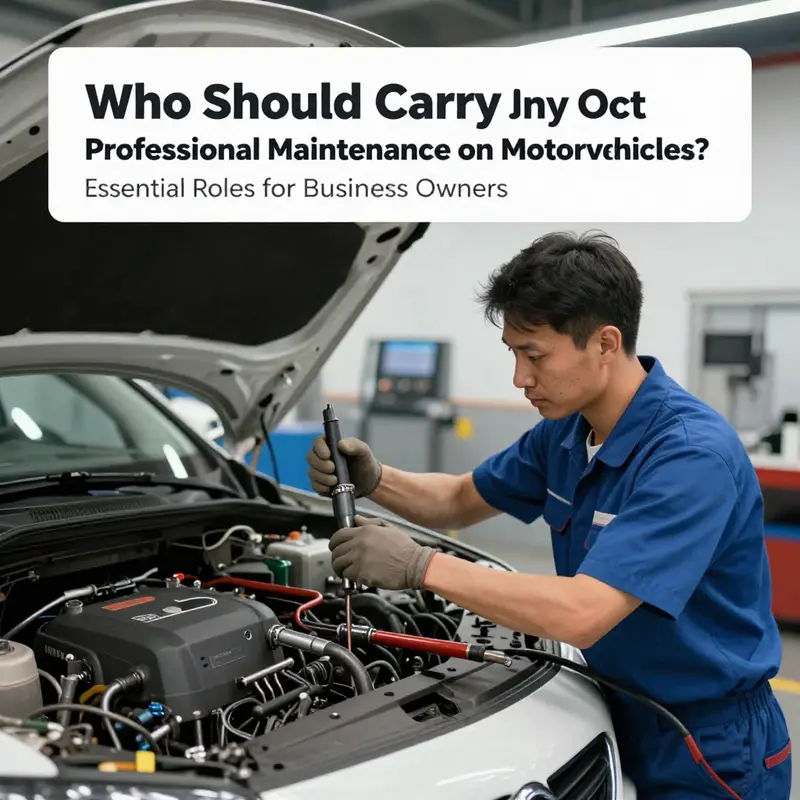
In the regulatory sense, professional maintenance on motor vehicles is bounded by specific rules that assign responsibility to licensed and registered operators. In this context, professional maintenance encompasses secondary maintenance—typically a comprehensive service carried out at manufacturer-recommended intervals, often every 10,000 to 20,000 kilometers or as specified by the vehicle’s maker—plus repairs and inspections that require more than routine checks. The core idea is straightforward: only entities that have legally registered, filed with the local county-level transportation authority, and demonstrated capability may perform this level of service. This is not a vague endorsement of “licensed shops” in the abstract; it is a concrete credentialing regime designed to ensure that every diagnostic procedure, every repair step, and every final quality check is traceable, accountable, and standardized across the industry.
The practical implications of this framework are immense. When a vehicle enters a professional maintenance workflow, it undergoes a sequence of controlled processes that begin with diagnostic inspections before any repair work begins. This pre-repair diagnostic phase is crucial because it identifies not only the immediate issue but also latent conditions that could lead to future failures. During the repair phase, technicians follow prescribed procedures with documented steps, and the final quality inspection confirms that the vehicle meets safety and performance criteria before it leaves the workshop. Such structured sequences help prevent misdiagnosis, improper repairs, and the occurrence of new problems caused by hasty or unqualified interventions. It also helps protect the vehicle owner from the financial and safety consequences of subpar work.
To a lay reader, the notion of “professional maintenance” might seem abstract. The regulations clarify it through two tangible pillars: the workforce and the facility. First, maintenance personnel must hold relevant qualifications, typically evidenced by national vocational qualification certificates in motor vehicle inspection and repair. This credentialing ensures that technicians possess the knowledge and skills to interpret diagnostic data, disassemble and reassemble complex systems, and recognize the interplay between subsystems—an engine’s timing, an anti-lock braking system, or a transmission’s hydraulics. Second, repair facilities must be environmentally conscious and technologically current. The regulations encourage the use of environmentally friendly, energy-saving technologies and modern diagnostic tools. In practice, this means workshops invest in emissions-conscious practices, data-rich diagnostic scanners, and software that can interface with a vehicle’s onboard computer to read error codes, monitor live sensor data, and verify that corrective actions actually restore proper function.
This regulatory architecture serves several purposes beyond the obvious goal of vehicle safety. It creates a clear chain of responsibility. If a repair fails to meet the stipulated standards, the operator bears accountability. If a problem arises because a technician lacked the proper certification, both the technician and the operator may be held liable. And because the process requires diagnostic inspections and a final quality check, there is a documented trail that can be reviewed in case of disputes or warranty considerations. For vehicle owners, this translates into a far more predictable service experience. When you choose a licensed operator or an authorized service center, you are choosing an ecosystem designed to minimize risk, standardize outcomes, and align repair work with the vehicle’s design specifications and safety requirements.
It is important to distinguish professional maintenance from routine, day-to-day upkeep performed by drivers. Routine checks—oil, tire pressure, lights, brakes—are essential, but they are not a substitute for the comprehensive, standards-driven work that professional shops provide. The line is not arbitrary; it reflects the practical realities of modern vehicles. Contemporary cars, trucks, and even certain fleets rely on computer-assisted diagnostics, precise parameter adjustments, and component-level repairs that require specialized tools and training. Without access to calibrated equipment, a non-professional attempt at servicing can unknowingly compromise safety, void warranties, or create performance issues that are expensive to fix later. The regulatory emphasis on trained personnel and accredited facilities is thus not about restricting access; it is about safeguarding safety, ensuring consistency, and sustaining trust in the maintenance system as a whole.
Another facet of professional maintenance is the relationship between service centers and owners or operators. In many regions, authorized service centers and 4S facilities—constructed around the idea of sales, service, spare parts, and surveys—are common points of contact for owners seeking reliable, standards-compliant work. While a dealership-based service network is often associated with higher costs, it also tends to offer structured maintenance programs, access to manufacturer-recommended service intervals, and technicians who stay current with the latest diagnostic tools and software updates. Even when not located within a traditional dealership network, legitimate repair operators must demonstrate the same core capabilities: legally registered operation, qualified technicians, documented processes, and a commitment to final quality verification. This ensures that a vehicle’s health is not left to chance and that every maintenance action is auditable should questions arise later.
For vehicle owners navigating this landscape, a practical approach to choosing professional maintenance is to verify credentials, not just price. Begin by confirming that the repair operator is registered with the local transportation authority and has the necessary business filing in place. Ask about the diagnostic tools the shop uses and whether technicians hold national qualifications relevant to motor vehicle inspection and repair. Inquire about the sequence of the maintenance workflow: pre-repair diagnostics, process inspections during repair, and a final test and quality check after completion. A shop that can articulate this workflow demonstrates adherence to the regulatory framework and a commitment to process integrity. If possible, seek out facilities that provide transparent work orders and test results, so you can see the data behind the repair decisions rather than taking the shop’s assurances at face value.
It may also be instructive to consider the broader objectives of professional maintenance within the regulatory framework. Beyond safety, there is an emphasis on environmental stewardship and efficient technology use. Modern diagnostic tools can reveal inefficiencies, sensor drift, or calibration issues that, if left unaddressed, would gradually degrade performance and waste fuel. By advocating the use of energy-saving technologies and modern diagnostic equipment, the regulations encourage a proactive, rather than reactive, approach to vehicle maintenance. This shift benefits the entire transportation ecosystem: drivers experience fewer breakdowns, fleets operate with better reliability, and communities enjoy safer roads and cleaner air. The professional standard thus serves multiple purposes, intertwining safety, reliability, environmental responsibility, and economic efficiency into a coherent policy framework.
For readers seeking a concrete reference to the regulatory basis behind these standards, official details are accessible through the Ministry of Transport’s Regulations on the Management of Motor Vehicle Repair. The document outlines the legal requirements for repair operators, the necessary qualifications for personnel, and the expectations around diagnostic, process, and final inspections. It is a resource that helps demystify why professional maintenance feels so structured—and why it should feel essential when you are responsible for a vehicle that moves people and goods every day. As you reflect on who should perform professional maintenance, remember that the answer is not merely “the mechanic” or “the workshop.” It is the licensed operator, backed by qualified technicians, following standardized procedures, with clear accountability and a verified end product.
If you would like to explore a broader understanding of vehicle upkeep, you can start with a general overview of vehicle maintenance. what is vehicle maintenance. This resource can help frame how professional maintenance fits into a layered system of care that includes daily driver vigilance and manufacturer-guided service plans. While the everyday checks remain the driver’s first line of defense, professional maintenance represents the next, essential layer that protects safety, reliability, and value over the vehicle’s lifetime.
In short, professional maintenance is not a generic service; it is a regulated practice anchored in trained personnel, registered operations, and rigorous diagnostic and quality-control processes. The goal is straightforward: ensure that every repair is performed to a standardized level of safety and reliability, with a clear provenance for every action taken and every test performed. This does not diminish the importance of driver responsibility; it elevates the entire maintenance equation to a higher standard of accountability, ensuring that vehicles remain safe, efficient, and durable across years and miles. For fleet operators and individual owners alike, recognizing the distinctions and embracing the professional pathway is not only compliant with the law but also sound stewardship of one’s most valuable asset on wheels.
External resource: https://xxgk.mot.gov.cn/2020/zhengce/zhengcefile/202312/t20231218_3647957.html
null

null
Emergency Repairs in Motion: Who Steps In When Time Is Critical in Vehicle Maintenance
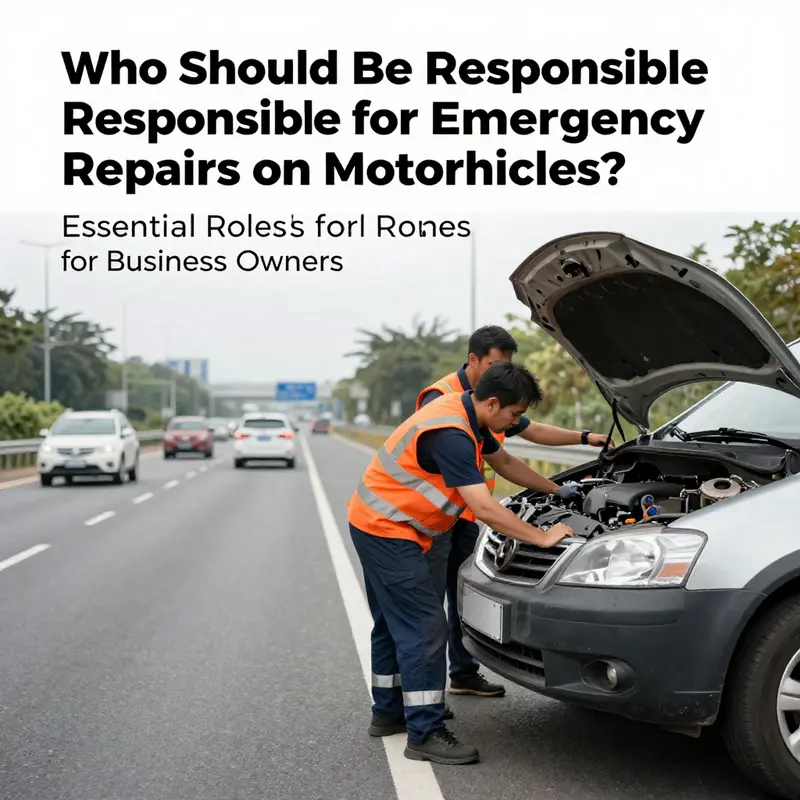
Emergencies in motion test the boundaries of maintenance philosophy and push it from a planned sequence into a rapid, safety-driven response. In the everyday world of vehicle upkeep, drivers perform routine checks before each trip, while qualified technicians at repair shops or dealerships handle the heavier, more technical services. But when a car falters at highway speeds or a sudden fault endangers passengers and other road users, the usual rules bend. The objective shifts from extending a service interval to preserving life and preventing a catastrophe. In those split seconds, the question is not merely who should perform maintenance, but who is authorized to act when delay would magnify harm. The practical answer recognizes that emergency interventions can—and sometimes must—be undertaken by the first capable party available, with the door left open for proper billing and subsequent, full-service maintenance once the immediate danger has passed.
From a driver’s seat, this is a delicate balance between safety and legal clarity. If brakes fade, a steering problem emerges, or an engine overheats in a way that threatens a safe stop, the immediate goal is to avert an accident. Roadside assistance providers, towing services, or a nearby garage mechanic may perform the essential fix that renders the vehicle manageable and moveable to a safer location. They might apply temporary repairs, such as a brake bleed to regain controllability or a tow to a shop where a complete diagnosis can occur without the pressure of ongoing traffic. The cost of these emergency measures is not a mere creditor’s claim waiting to be buried in a pile of paperwork; it is a direct response to a danger that no ordinary maintenance schedule can anticipate. The principal obligation in that moment is to prevent harm, and the law typically acknowledges that necessary emergency work should be paid for, even if it bypassed the owner’s prior consent.
A broader legal frame helps us understand why this is not a free-for-all but a carefully bounded duty. In many civil-law systems, the idea of negotiorum gestio captures the notion that someone may act to manage another person’s affairs in an emergency without formal authority, precisely to prevent harm. The act is not a contract; it is a protective intervention. If the intervention is reasonable and truly necessary to stop a dangerous situation, the actor may be entitled to reimbursement for the reasonable costs incurred. The key phrase here is “reasonable costs.” It anchors the decision in a pragmatic appraisal of the risk, the complexity of the fix, and the resources used to protect life and property. The aim is to avoid unjust enrichment: it would be unjust for the person who intervened to shoulder the expense without being able to recover it from the vehicle’s owner, if the intervention was essential and appropriate under the circumstances.
Concrete regulatory wording from different jurisdictions often reflects this same balance. Consider an example from a regulatory framework addressing motor vehicle repairs: the rule that no individual or unit may compel a vehicle owner to select a particular repairer. That rule protects owners from coercive practices, preserving freedom of choice even in stressful times. Yet the same framework recognizes an important counterpoint: when someone acts to protect property from imminent danger, they should not be left uncompensated. In practice, this means that if a roadside technician makes an emergency repair that prevents a serious accident or injury, the owner will typically be responsible only for reasonable costs that reflect the actual work performed and the risk borne by the repairer. The emphasis is not on penalizing quick, life-preserving action but on ensuring that such action is repaid fairly and transparently when the owner can be informed later.
Three conditions commonly frame the owner’s responsibility in these situations. First, necessity: the repair must have been essential to prevent significant damage or danger. A brake line rupture discovered during a roadside stop is a classic case where delaying action to obtain consent would almost certainly worsen the threat. Second, reasonableness: the costs charged should be reasonable and customary for the type of emergency work conducted. Extreme, extravagant charges would be out of step with the legitimate objective of stopping imminent harm and would invite judicial scrutiny. Third, notification: the person who performed the emergency work should, if feasible, inform the owner as soon as practical after the intervention. This notification helps maintain trust, documents the rationale for the action, and clarifies future obligations for payment and follow-up service. In practice, these criteria reinforce a careful triage mindset: the immediate fix is not the end of the story, but the beginning of a new, informed conversation about proper maintenance and safety checks.
These principles coexist with the persistent duty most drivers have toward routine maintenance. The emergency exception does not re-write the long-term rule that routine maintenance—oil changes, filter replacements, tire inspections, brake system checks, and other manufacturer-recommended services—belongs to trained professionals. It remains the framework that shapes a vehicle’s reliability and safety over the miles. Yet the emergency moment reminds everyone involved that maintenance is not only about scheduled intervals; it is also about preserving safety when time itself is a factor. A driver who encounters an unexpected failure should pursue professional evaluation as soon as the vehicle is in a safe state to move, and the repair that follows should be integrated into a comprehensive service plan that returns the vehicle to full performance. If a roadside technician provides an immediate remedy to stabilize the situation, the subsequent, thorough inspection and necessary repairs should be conducted by qualified technicians who can diagnose underlying issues that may not be evident in the emergency fix.
To keep these considerations grounded in daily practice, it helps to connect them with a simple framework that drivers can use in moments of crisis. First, acknowledge that emergencies demand swift action to protect life and property. Second, recognize that the person who intervened—whether a roadside assistant or a garage technician—bears costs that are reasonable and proportionate to the intervention. Third, ensure that the owner is informed promptly about what was done and why, what external threats were mitigated, and what steps will follow. Because the emergency context often arises when the owner cannot be reached, the assurance that a professional acted in good faith, with safety as the priority, matters just as much as the financial settlement that follows. This approach helps preserve the integrity of the maintenance process and ensures continuity of care for the vehicle after the immediate danger passes.
For readers who want to explore the fundamental idea of maintenance beyond the emergency frame, consider how the baseline responsibilities fit into a broader maintenance philosophy. Routine maintenance and day-to-day upkeep are best handled by professionals and supported by the driver’s pre-drive checks. A practical takeaway is that understanding where emergencies begin and end can clarify expectations for all parties involved—the driver, the repairer, and the vehicle owner. A concise primer on maintenance basics can be a helpful precursor to this conversation: What is vehicle maintenance.
In summary, emergency repairs illuminate a pragmatic corner of maintenance ethics and law. When danger is imminent and time is scarce, action is justified to prevent harm, and the costs incurred are recoverable so long as they are reasonable and necessary and the owner is informed as soon as practicable after the fact. The orderly, long-term maintenance workflow—driven by professional service for routine and major repairs, supported by driver diligence in daily checks—remains the backbone of vehicle reliability. The emergency procedures, far from undermining this structure, complement it by embedding safety as the non-negotiable first priority. As vehicles age and road conditions evolve, these principles offer a flexible, accountable way to navigate the unpredictable moments that testing maintenance boundaries can bring. When the smoke clears and the scene returns to normal operation, the vehicle should be placed back into trusted hands for a full diagnostic and service, ensuring that the emergency fix becomes a properly integrated part of ongoing vehicle health care.
External resource: For a broader legal context on emergencies and unauthorized management, see https://www.law.cornell.edu/wex/negotiorum_gestio.
null

null
Final thoughts
Understanding vehicle maintenance responsibilities is crucial for business owners to ensure the effectiveness and safety of their fleets. By delineating the roles of drivers for routine checks, professionals for in-depth maintenance, certified inspectors for safety assurances, emergency repair teams, and contract managers, business owners can make informed decisions. Prioritizing these divisions of responsibility not only promotes efficient operations but also upholds the safety standards essential for road use. Implementing these best practices in vehicle maintenance will contribute significantly to minimizing downtime, reducing costs, and enhancing overall fleet management.