
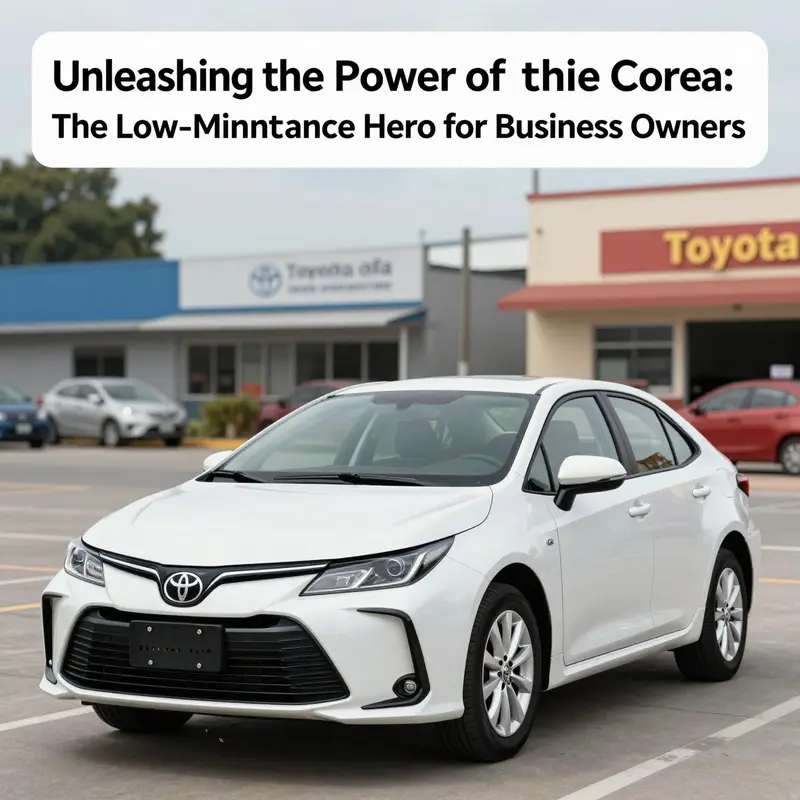
The pursuit of a reliable, low-maintenance vehicle is critical for business owners, particularly those who rely on their vehicles for daily operations. A dependable vehicle not only serves the logistical needs of a business but also contributes directly to its financial health. Among the various options available on the market, the Toyota Corolla emerges as a standout choice, consistently ranking high for its reliability and low operating costs. This article will explore the key insights into the Toyota Corolla’s unparalleled reliability, dissect its maintenance costs, and assess its exceptional fuel efficiency and resale value. By the end, business owners will gain a comprehensive understanding of why the Corolla is the definitive low-maintenance used vehicle for their needs.
Chapter 1: The Quiet Reliability of the Best Low-Maintenance Used Compact
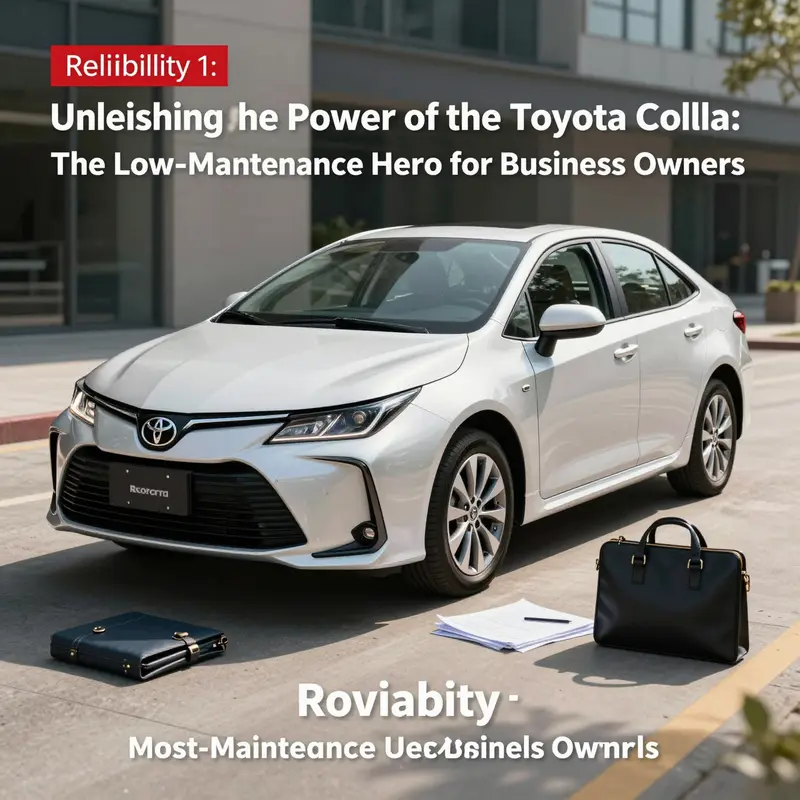
When a buyer shops for a used car with reliability and maintenance ease as the guiding criteria, one option rises to the top in a way that makes risk feel almost theoretical: a compact sedan with a multi-decade track record of dependable operation, economical upkeep, and lasting value. The essence of that choice lies not in flash or novelty but in a simple, enduring equation. Reliability plus low maintenance equals fewer surprises, lower lifetime costs, and a more predictable ownership experience. In a landscape crowded with competing claims about durability and affordability, the leading option for a broad cohort of buyers is the one that has quietly proven itself again and again, mile after mile, year after year. The story of this vehicle unfolds with a clear throughline: minimal complexity, proven engineering, abundant parts, and a nationwide service network that keeps expenses manageable even as the vehicle ages. The result is a car that tends to reward routine care rather than dramatic, expensive repairs, and that reward shows up in the numbers as well as in owner anecdotes and long-term reliability studies from independent reviewers.
What makes this particular choice so compelling is the combination of mechanical simplicity and intelligent feature integration. In a world where electronics and advanced driver-assistance technologies proliferate, there can be a temptation to worry about future repairs and rising part costs. Yet the simplest configurations—the naturally aspirated four-cylinder engine paired with a proven automatic transmission, with optional but unobtrusive modern safety gear—tend to age with far fewer gremlins than their more complex siblings. There are fewer sensors to monitor, fewer high-pressure circuits to maintain, and fewer specialized modules to fail in the middle of a commute. This linear design philosophy has a practical payoff: it keeps labor costs reasonable and parts widely available, so maintenance and repairs remain accessible even long after the warranty has expired. For buyers, that means a reduced likelihood of expensive surprises, a key component of the low-maintenance appeal.
Long-term ownership experiences reinforce the logic. Across multiple decades of real-world use, countless owners report driving well beyond the 200,000-mile mark with nothing more dramatic than routine maintenance—oil changes, tire rotations, brake pad replacements, and timely fluid checks. Such outcomes are not mere anecdotes but part of a broader pattern that takes shape in reliability dashboards, owner surveys, and warranty claim data. When you add up the frequency of minor repairs against the cost of more substantial failures, the advantage of a well-proven design becomes obvious: the car tends to demand less attention between trips to the shop, and when attention is needed, it is typically straightforward, affordable, and predictable to manage.
Maintaining a vehicle in this class is less an exercise in high-stakes repair planning and more a discipline of consistent, low-cost care. The maintenance story is not glamorous, but it is persuasive. It hinges on the practical truth that a robust four-cylinder engine—paired with a transmission designed for durability and smooth operation—can perform reliably for a decade or more when given regular oil changes, timely belt or chain service (where applicable), and attention to cooling and brake systems. The parts ecosystem for this class is broad and mature. Because the model family has been produced in vast numbers and across multiple generations, parts supply is both plentiful and affordable. Shops, too, have decades of experience with it, so routine tasks are efficiently executed at a lower billable hourly rate than for more exotic powertrains. That combination—competitive labor costs and an ample parts supply—translates into one of the clearest, most consistent advantages of owning a vehicle in this category.
Fuel efficiency is another pivotal piece of the maintenance-cost calculus. A vehicle designed around efficiency, yet simple in its core drivetrain, tends to deliver meaningful savings at the pump, which compounds into the overall cost of ownership. High miles per gallon reduce the cost of operation and help preserve resale value by keeping the total cost of ownership attractive for a longer period. The model in question has long been recognized for its frugal fuel use, and contemporary variations continue to push the envelope with efficient engine tuning and aerodynamic refinements. When you couple strong fuel economy with durable components and low repair frequency, you create a virtuous cycle: less money spent on fuel and less money spent on repairs, which together make the vehicle a more attractive long-term investment.
Resale value, an often underrated part of the ownership equation, plays a central role in the overall affordability of a used pick. The model family in focus benefits from a broad, global demand that helps anchor its resale strength. Even after several years on the road, a well-maintained example remains in demand, and that demand translates into a resilient resale price. In practical terms, buyers often see substantial value retention over the first five years, with a sizable portion of the original investment reclaimable when it comes time to trade up or downsize. This is not an accident of popularity but a reflection of the vehicle’s reputation and proven durability. The compatibility of a strong resale position with low ownership costs is a powerful argument for choosing a vehicle whose fundamental design remains steady and reliable across model years.
Speaking of model years, the sweet spot for a used purchase in this category has long been the mid-to-late 2010s. These generations married the traditional reliability and mechanical simplicity that longtime buyers crave with meaningful safety and comfort upgrades. The result is a balanced blend of technology, comfort, and dependability. The earlier 2010s brought improvements in ride quality and efficiency, while later 2010s variants added refined handling and updated safety features without veering into the realm of high maintenance. This convergence of reliability and practical modernity makes the 2014–2019 window a particularly attractive target for shoppers who want the best of both worlds: a car that is easy to live with daily but still current enough to feel modern. What matters most in this context is the real-world experience of ownership—how often the car visits the shop for something other than routine service, how predictive those visits are, and how the overall costs stack up over time. The consensus from reliability trackers, independent reviews, and long-term studies is clear: the mid-to-late 2010s exemplify the strongest blend of durability, efficiency, and cost control.
Beyond mechanical considerations, the value of a comprehensive vehicle history cannot be overstated. Even among highly reliable choices, past abuse or deferred maintenance can erode the innate advantages of the design. A prudent buyer follows the standard precautions: obtain a clean vehicle history from trusted sources, review the complete maintenance log, and verify that essential recall work has been completed. A clean record is a straightforward predictor of fewer problems down the road, whereas a history of repeated neglect can reframe a seemingly positive equation into a more burdensome one. In practical terms, this means checking for a documented routine of oil changes and tire services, confirming that brake work has been performed when needed, and ensuring there are no outstanding issues that could complicate future ownership. The aim is not perfection but a well-documented, predictable maintenance trajectory that aligns with the car’s durable design and the expectations of a low-maintenance ownership experience.
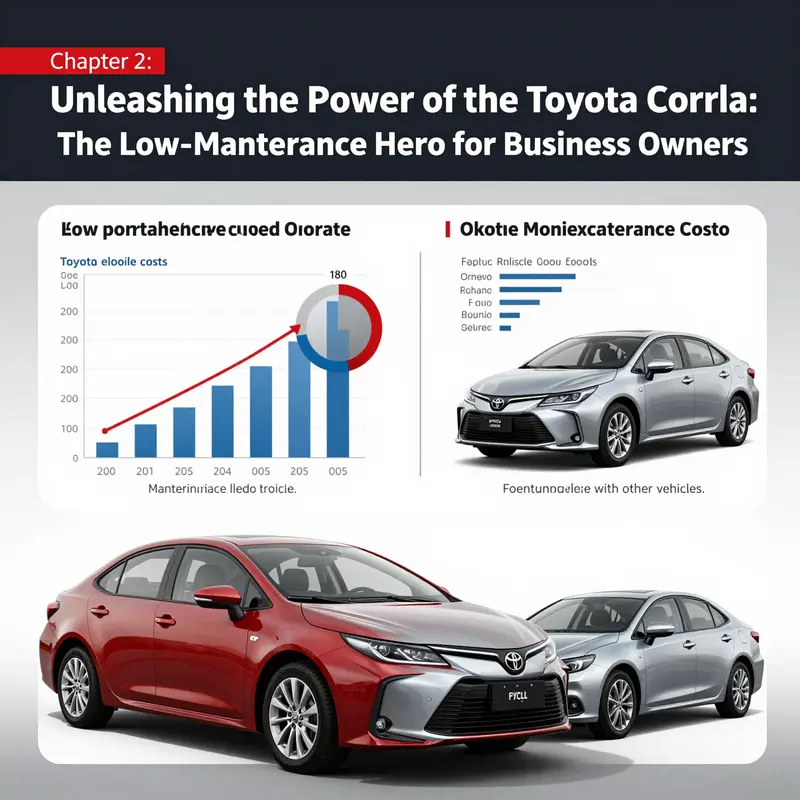
For buyers who want to go deeper into the maintenance economics, the data tell a consistent story. The total ownership cost over time—encompassing purchase price, depreciation, maintenance, repairs, insurance, and fuel—favors the long-lived, simple, well-supported option. In this framework, maintenance costs tend to be among the lowest in its class, reflecting not only affordable parts but also labor efficiency and broad service knowledge. When the car in question remains within the recommended service intervals and receives timely attention to critical systems such as brakes, cooling, and fluids, owners can navigate the years ahead with confidence that the vehicle will respond with reliability rather than frustration. It is this blend of predictable maintenance and durable performance that underpins the broader argument for treating reliability as a practical, measurable asset in the used-car market.
In discussing how to select and evaluate a strong example, it is helpful to anchor the conversation in a few concrete checks that align with the vehicle’s enduring strengths. Start with a thorough history review, looking for consistent maintenance records and no patterns of missed service that would otherwise compromise the engine or transmission. Next, perform a careful inspection of the engine bay and undercarriage for signs of leakage or excessive wear, which can be early warning indicators of looming problems. Then, listen carefully to the engine at idle and during acceleration, noting any unusual noises that could suggest timing or valve concerns, and assess how the transmission shifts at different speeds. Finally, review the electrical systems and safety features; modern iterations include more electronics, yet the core drivetrain remains remarkably robust, so a balance of tech and simplicity is often a good sign of long-term durability.
This approach also dovetails with practical advice about sourcing and cost management. The larger the pool of available parts and the more technicians familiar with the platform, the easier and cheaper future maintenance becomes. A car that benefits from a broad parts ecosystem is less likely to require rare, expensive components when issues arise—an important factor for a used-car buyer who intends to keep maintenance predictable. It is not enough to identify a model with a stellar reputation; the buyer must also confirm that the specific example chosen aligns with the same reliability trajectory and that there is no hidden condition that could throw off the expected ownership costs. A careful combination of documented maintenance history, independent reliability assessments, and a cautious but hopeful inspection can yield a vehicle that remains a dependable companion for many years.
As a closing note on the approach to evaluating the best option in this category, consider the total experience of ownership. The car’s reputation for reliability is not merely a marketing claim; it is the product of decades of real-world operation, a chassis that tolerates wear with grace, and a powertrain that responds calmly to the everyday demands of urban commuting and longer highway trips alike. The equation remains simple at heart: minimal maintenance needs, affordable service, strong fuel economy, durable resale value, and a track record that translates into real-world confidence. In short, for buyers seeking a low-maintenance used vehicle that can perform consistently across many miles and years, this mid-range, well-proven compact stands out as the most compelling and reliable option available.
To ground these insights in actionable steps, buyers should begin with a careful, comprehensive inspection and verification process. Start with a trusted vehicle history report to ensure no hidden recalls or prior accident damage have clouded the car’s record. Then, check the maintenance logs to confirm regular service and timely part replacements. If available, consult long-term reliability data from independent reviewers to cross-check your impressions with broader trends. When you combine a favorable history with a solid performance record and a favorable maintenance cost profile, you arrive at a compelling conclusion: the best choice in the field is the one that has consistently demonstrated its ability to deliver dependable, economical transportation across many miles. In practical terms, this means prioritizing a well-maintained example from the model family that spans the 2014–2019 window, where the balance of modern safety features and proven mechanical reliability coexists with a straightforward ownership experience that doesn’t demand constant attention or costly interventions.
For readers who want to explore how routine maintenance translates into real savings and what the broader data say about utilities and ownership costs, there is additional context worth reviewing. A thoughtful examination of maintenance strategies reveals that regular, disciplined care reduces the likelihood of expensive, unplanned repairs. By staying on top of simple tasks—oil changes, tire rotations, brake service, and cooling system checks—you can preserve the efficiency and reliability that define the best low-maintenance used cars. The relationship between maintenance discipline and financial outcomes becomes clearer when you compare the costs of preventive care with the potential price tags of more extensive repairs later in a vehicle’s life. In this light, the maintenance habit becomes not a burden but a strategic investment that pays dividends in reliability, comfort, and peace of mind over the long run.
For readers who want a concise seal of authority on reliability, a formal, manufacturer-backed reliability evaluation provides additional validation. The official reliability report from the manufacturer presents a structured, warranty-data-driven view of the car’s performance across years and markets. It confirms the durability themes discussed here and adds the credibility of a trusted corporate perspective, aligning with the broader consensus from independent reviewers. If you wish to reference this authoritative source directly, you can consult the official reliability documentation through the manufacturer’s site, which consolidates warranty claims, field reports, and design principles that underpin the car’s enduring reliability.
In closing, the synthesis of evidence—from long-term owner experiences to independent reliability analyses and strong resale dynamics—paints a consistent portrait. The best option among low-maintenance used cars is not the newest or the flashiest, but the one that has proven its ability to perform reliably with minimal intervention. It is a choice built on a stable, time-tested engineering approach, a robust network for parts and service, and a cost structure that rewards regular, modest maintenance rather than expensive, reactive fixes. For buyers prioritizing predictability, affordability, and enduring value, this compact sedan offers a clear path forward. The chapters that follow will build on this foundation by examining other maintenance-centric considerations, including how to assess condition in used-market sales, what to look for in service history documentation, and how regional driving conditions can influence long-term ownership costs. Yet the core takeaway remains straightforward: reliability and low maintenance are not optional extras but the central factors that determine the most dependable used car in this segment.
External resource: If you’d like an official, manufacturer-backed reliability reference to complement this chapter, see the formal reliability report here: official reliability report
Internal resource: For practical guidance on translating maintenance into savings at the pump and shop, explore this practical discussion on maintenance and fuel efficiency here: how vehicle maintenance saves on gas expenses
null
null
Chapter 3: The Quiet Power of Low Maintenance—Fuel Efficiency, Resale Value, and the Toyota Corolla as the Benchmark
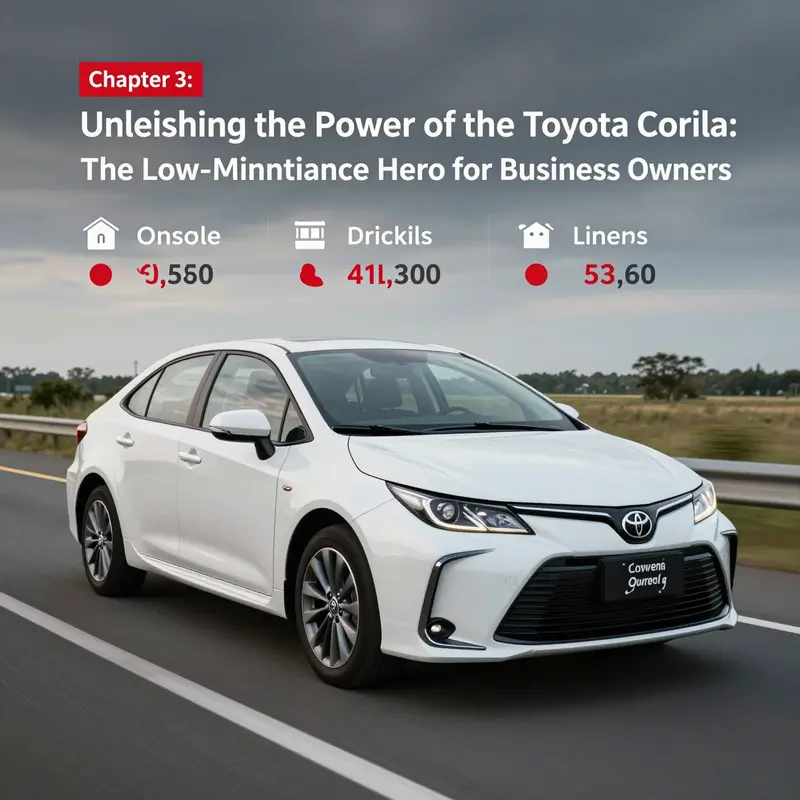
Ask most buyers what they want in a used car, and reliability paired with low maintenance costs tops the list. In that space the Corolla has become a near universal benchmark. Its reputation isn’t built on a single year or a marketing push; it’s earned through decades of steady performance, across continents and climates, with owners repeatedly reporting that routine care is all that’s needed to keep it rolling well past the high-mileage mark. The Corolla’s enduring appeal isn’t flashy; it’s practical. It offers a simple, proven mechanical package, a generous parts and service network, and a cost of ownership that remains predictable as miles accumulate. That combination—reliability plus low maintenance costs—translates into a car that remains affordable to own well into its second and third decade, which is precisely what many buyers are seeking when they ask, “What’s the most reliable low maintenance used vehicle?” The Corolla doesn’t promise novelty; it promises stability, and for many households that balance is the real value of ownership over time.
To understand why this one model has become the yardstick, it helps to think about maintenance not as avoidance but as a discipline. Low maintenance doesn’t mean never servicing the car; it means servicing in a way that prevents the spike of expensive repairs later. The Corolla excels here because it has benefited from a broad ecosystem: a vast network of affordable parts, technicians who have treated countless Corollas, and a design philosophy that prioritizes durability over complexity. This isn’t about a car that never needs work; it’s about a car that tends to break less and, when it does need attention, the fixes are straightforward and economical. For a used-buyer, that translates into lower risk and a smoother, more predictable ownership experience. The evidence isn’t anecdotal alone: long-term data from reliability trackers and market analyses consistently put the Corolla near the top of its class for durability and cost of ownership, across multiple generations and in a variety of driving environments.
A practical lens on maintenance costs helps illuminate the Corolla’s advantage. When a vehicle is engineered to minimize the number of failure-prone systems and to use widely available parts, the total cost of upkeep declines. This is especially meaningful in the used-car market, where the risk of surprise repairs can color a buyer’s confidence. In the Corolla, routine maintenance items—oil changes, brake pad replacements, tire wear, and fluid flushes—tend to align with the expected life of components rather than forcing early, major replacements. This predictability matters: owners know what to budget each year, and the costs don’t balloon with complex electronics or unique parts that may require specialized service. The practical effect is a corollary to reliability: the likelihood of being sidelined by a sudden, high-cost repair drops, and the chance of keeping the vehicle on the road with the least downtime and stress.
Fuel efficiency sits at the heart of the Corolla’s long-term value proposition. Money saved at the pump compounds with every mile, especially for households that drive a lot. The Corolla’s standard 1.8-liter four-cylinder engine paired with a reliable automatic transmission delivers steady, dependable economy. In a typical mix of city and highway driving, many drivers report around 30 miles per gallon in urban conditions and about 40 mpg on the highway. Those figures aren’t just sticker numbers; they translate into real-world savings that reduce annual operating costs year after year. The Corolla’s lightweight construction and efficient aerodynamics contribute to this stability, helping the car maintain its efficiency even as tires wear and weather changes. For buyers drawn to the sensitivity of fuel costs to driving style and route, this consistency is especially reassuring. It’s worth noting that there is a higher-efficiency option within the Corolla family—the Hybrid model introduced in recent years—which can bring fuel consumption into the vicinity of a much lower figure, with real-world results that approach the higher end of efficiency for compact cars. The hybrid option demonstrates that a modern, reliable platform can be tuned for exceptional efficiency without compromising the core strengths that define Corolla ownership. In practice, this means a broad spectrum of buyers can find a configuration that matches their daily patterns while still delivering the reliability and low maintenance that define the Corolla’s reputation.
Beyond the pure numbers, the Corolla’s fuel economy has a tangible impact on long-term ownership economics. Lower fuel costs not only reduce the annual burden but also influence the vehicle’s total cost of ownership over a typical ownership horizon. A car that sips fuel and resists expensive repairs is more likely to be kept in service for many years, and that longevity helps sustain a favorable resale trajectory. Where some compact sedans might begin to show aging-related declines in efficiency or reliability after a decade, the Corolla’s design has tended to resist those shifts when properly maintained. This resilience is precisely why the model remains a common choice for budget-conscious buyers who want a car that can reliably cover long commutes or family duties without forcing repeated mid-life upgrades.
Resale value is another cornerstone of the Corolla’s long-term appeal. In the used-car market, the car’s value retention is consistently strong, a function of its dependable reputation, broad parts availability, and enduring demand. Independent valuations and industry reports frequently indicate that the Corolla holds a meaningful portion of its original value after five years, well above many peers in the segment. A typical five-year residual—approximately mid-50s percent of the original price—reflects more than just branding. It embodies a practical reality: buyers trust the Corolla to remain a reliable transportation option, even as technology evolves. The car’s robust resale value matters for owners who plan to trade up in the future or simply want to recoup a meaningful share of their investment. The predictable depreciation pattern also has a downstream effect on finance terms and insurance calculations, further enhancing the Corolla’s attractiveness as a long-term purchase. While some buyers gravitate toward newer tech or sportier options, those who prize reliability and cost control quickly recognize that strong resale value can be the quiet multiplier that makes a used Corolla an exceptional deal over the span of eight to fifteen years.
This steady performance is not accidental. Toyota’s approach to the Corolla balances conservative engineering with modern safety and efficiency updates, producing a vehicle that remains relevant without drifting into high-cost complexity. In practice, that means a well-maintained Corolla from the last decade can feel modern enough for daily use while still avoiding the risk profile that accompanies more electronics-heavy platforms. The car’s simple, proven powertrain paired with durable chassis components becomes the backbone of its longevity. It’s this balance—modern applicability without undue complexity—that underpins the Corolla’s status as the most reliable low-maintenance used vehicle in its category. The experience of ownership tends to be one of continuity rather than constant adaptation—a quality that resonates with buyers who want to focus less on maintenance and more on the freedom of dependable daily mobility.
Of course, there are trade-offs to consider. The Corolla’s strength lies in reliability and efficiency, not in cutting-edge luxury or instantaneous performance. Some later configurations bring more advanced driver-assistance features and more elaborate infotainment systems, which can introduce newer maintenance considerations if those systems encounter issues. Yet even with increased electronics, the essential mechanicals—the engine, transmission, braking systems, and suspension—remain robust and serviceable. For most buyers, the decision centers on a balance between comfort, features, and the peace of mind that comes with a car that tends to behave predictably through many miles. In short, the Corolla’s reliability and low maintenance are not about sparing all maintenance entirely; they’re about shaping a dependable experience where preventive care and practical parts availability translate into fewer surprises and less stress over the car’s usable life.
In evaluating a used Corolla, prudent buyers prioritize a well-documented service history and a careful inspection routine. A complete maintenance log, consistent with the car’s age and mileage, can provide a clear picture of what lies ahead. Look for routine items that indicate the car has been cared for: regular oil changes with the recommended grade, timely brake service, tire replacements aligned with wear, and periodic fluid checks. Rust, especially in climates with road salt, should be scrutinized, as it can signal longer-term durability concerns that aren’t always apparent from a quick test drive. Transmission history is another critical area; while the Corolla’s automatic transmissions have earned a reputation for durability, any history of abnormal shifts or fluid leaks warrants closer attention. A thorough pre-purchase inspection by an independent technician can uncover wear items that will affect cost and reliability in the near term. The goal is not to chase perfection but to secure a vehicle with a documented track record of sensible maintenance and solid longevity. With that foundation, a used Corolla can deliver years of trouble-free operation and a consistent, affordable ownership experience.
To tie these threads back to the broader topic, the Corolla’s blend of reliability, low maintenance needs, strong fuel economy, and resilient resale value creates a compelling case for buyers who prioritize total ownership costs over shiny new features. The car’s design philosophy—simple, durable, and easy to service—aligns with real-world ownership patterns where unpredictable repairs and rising maintenance costs can erode the appeal of even a well-priced used car. In contrast, the Corolla’s predictable maintenance envelope means fewer late-night trips to the shop, fewer unexpected bills, and more confidence during daily commutes, long road trips, or family errands. That confidence, built over thousands of miles and many years of ownership, is what ultimately makes the Corolla the definitive choice for a reliable, low-maintenance used vehicle. For readers who want to explore how such maintenance thinking translates into fuel savings in practical terms, see a practical explanation in a guide on how vehicle maintenance saves on gas expenses.
External resource note: For broader context on fuel efficiency, the EPA’s Fuel Economy Guide offers official ratings and data for 2025 Toyota Corolla models and related variants. https://www.fueleconomy.gov/feg/Find.do?mdl=2025&mkd=TOYOTA&vtyp=Car
Final thoughts
The Toyota Corolla stands out as the most reliable low-maintenance used vehicle, particularly for business owners seeking efficiency and cost-effectiveness. Its legendary reliability, coupled with low maintenance costs and excellent fuel economy, positions it as a smart investment for any business fleet. The ability to achieve high resale values further cements its status as a wise financial choice. Investing in a Toyota Corolla not only ensures reliable transportation but also reflects intelligent business management, making it a top recommendation for savvy entrepreneurs.