
AI is redefining vehicle maintenance by moving from traditional reactive strategies to a modern proactive approach. By harnessing real-time data, predictive modeling, and tailored maintenance configurations, businesses can significantly improve vehicle reliability and operational efficiency. Chapter one delves into how real-time data analysis and anomaly detection work hand-in-hand to anticipate failures before they occur. Chapter two explains predictive failure modeling and how it allows businesses to forecast maintenance needs effectively, reducing downtime and unnecessary costs. In chapter three, we explore personalized maintenance scheduling, ensuring that maintenance is performed based on real-world usage rather than arbitrary schedules. Finally, chapter four highlights enhanced diagnostics and remote support through AI, empowering technicians to address issues swiftly and accurately.
Live Signals, Silent Warnings: Real-Time Analytics and Anomaly Detection as the Nervous System of Vehicle Predictive Maintenance
In the modern vehicle, a vast constellation of sensors and control modules keeps a continuous whisper of data about the powertrain, the drivetrain, the suspension, the brakes, and even the cabin environment. This stream is not just raw numbers; it is the living nervous system of the machine, capable of sensing slight deviations, learning normal rhythms, and predicting where a fault might emerge next. Real-time data analysis paired with anomaly detection turns that flood of information into something actionable. It shifts maintenance from a calendar or a timer into a performance-informed practice, where decisions are guided by current conditions, historical context, and probabilistic futures. The benefit is not merely avoiding a breakdown; it is maintaining a consistent, predictable ride with fewer surprises, fewer emergency repairs, and a safer journey for drivers and fleets alike.
The backbone of this capability lies in how data is gathered and interpreted. A vehicle today can generate hundreds of streams simultaneously: engine temperature, oil pressure, battery health, hydraulic pressures, brake wear indicators, tire tread and inflation, vibration spectra, steering and suspension articulation, and even software-driven fault codes. When viewed in isolation, each signal may seem ordinary. A rising engine temperature or a small uptick in vibration might be innocuous on its own. The real power emerges when these signals are analyzed in real time as a coherent system. The challenge is to distinguish meaningful patterns from normal variance, to recognize when a trend is just noise and when it is a harbinger of failure. This is where anomaly detection plays a critical role, acting as an early-warning mechanism that keeps the vehicle—and its occupants—out of harm’s way while also protecting the asset.
Anomaly detection in this context is not a single technique but a family of approaches that collectively form a robust shield against surprise failures. Simple threshold-based alerts may flag a temperature reading that crosses a preset limit, but they lack nuance. Modern systems embrace more sophisticated methods that account for context, seasonality, and the vehicle’s unique history. Unsupervised learning models can learn what “normal” looks like by observing long-term patterns across many voyages and conditions. Autoencoders, clustering, and density-estimation techniques help identify data points that do not conform to typical behavior. Supervised and semi-supervised models bring prior fault examples into the mix, refining the system’s sensitivity to specific failure modes. The result is a layered defense: broad monitoring that catches obvious anomalies, and targeted, confident detection of subtle precursors that would escape traditional diagnostics.
Consider a scenario that unfolds on a busy metropolitan route. A slight, recurring uptick in engine vibration in the 1200 to 1500 RPM range might be dismissed by a casual check. Yet the real-time analytics layer, informed by historical data and contextual factors such as ambient temperature, fuel quality, and recent acceleration patterns, might reveal that this vibration correlates with the onset of bearing wear in a particular subsystem. The anomaly detection model recognizes the non-linear relationship between vibration signatures and component health, a relationship that static rules fail to capture. It flags a high likelihood that the remaining useful life of that bearing has shortened, and it estimates a replacement window before the fault could propagate to more critical failures like a seizure, misfire, or loss of lubrication. The vehicle’s maintenance plan can then propose a proactive intervention rather than a reactive one. The driver benefits from a smoother ride and fewer unsolicited stops; the fleet operator benefits from reduced downtime and more reliable dispatch schedules.
The technical elegance of real-time anomaly detection rests on the fusion of data streams with contextual intelligence. Data do not exist in a vacuum. Real-world operation is shaped by weather, road texture, traffic density, payload, and driving style. An effective AI system weighs these factors, updating its predictions as conditions change. A city-dwellers’ stop-and-go pattern produces different wear trajectories than a highway-only pattern, even for identical ages and mileages. By infusing real-time data with contextual data—such as route specifics and environmental conditions—the predictive models gain a richer understanding of what constitutes normal and what qualifies as dangerous deviation. This contextual fusion is not just a clever enhancement; it is essential for maintaining accuracy in diverse operating environments. It is the difference between a model that works well in sunny, dry climates and one that remains reliable in extreme heat or freezing cold, across varying elevations and road surfaces.
One of the most practical expressions of this approach is the continuous monitoring of critical subsystems through a probabilistic lens. Rather than issuing deterministic warnings, real-time analytics assign a probability to various failure scenarios and produce a ranked, actionable set of recommendations. A message might read: “Battery health shows a 78% probability of degrading below optimal performance within 1,200 miles under current driving conditions.” Such a forecast enables maintenance teams to optimize the timing and scope of interventions, balancing cost against risk. It also supports dynamic, personalized maintenance strategies. Because the analytics consider how the vehicle is used, the system can differentiate between a misbehaving part in a taxi’s high-cycle environment and the same component in a long-haul truck that runs steady highway miles. In other words, predictive maintenance becomes a living schedule that adapts to how the vehicle actually operates, not a one-size-fits-all timetable.
The integration of AI and real-time analytics extends beyond mere detection. It informs the diagnostic workflow, empowering technicians with precise hypotheses and recommended corrective actions. When a fault emerges, AI-powered diagnostic tools can quickly narrow down likely causes, propose tested remediation steps, and even provide step-by-step guidance to technicians. In many cases, minor issues can be resolved remotely, without a physical visit to a service center. This capability reduces downtime and keeps wheels turning, a particularly valuable advantage for fleets that operate across wide geographic areas. The combination of rapid remote diagnostics and data-driven maintenance scheduling creates a virtuous cycle: more efficient repairs, shorter service intervals, and a more predictable operating calendar for operators.
To translate data into tangible savings, the industry is embracing a blend of monitoring, prediction, and optimization. Real-time analysis not only detects anomalies but also helps translate insights into actionable maintenance plans. When viewed through this lens, predictive maintenance is a continuum—from sensor data to anomaly signals, to failure forecasts, to dynamic service scheduling, to remote diagnostics, and finally to improved fleet performance. This continuum is supported by robust data platforms that collect, cleanse, fuse, and store information from telematics, service histories, and manufacturing data. The high-quality inputs enable accurate AI predictions, and the resulting insights feed directly into decision-making processes. In practice, this means fewer unplanned outages, more efficient parts inventory management, and smarter allocation of maintenance resources across a fleet.
The broader implications extend to safety and reliability as well. Anomaly detection systems can catch issues that, if left unchecked, might compromise braking performance, steering responsiveness, or critical sensor accuracy. By catching such issues early, the system contributes to safer driving experiences and reduces the likelihood of incidents caused by mechanical failure. The safety advantage is complemented by economic benefits. Industry observers suggest that dynamic, condition-based maintenance can lower maintenance costs by substantial margins compared with fixed-interval servicing. The real-time, context-aware approach often translates into lower overall life-cycle costs, longer component lifespans, and more consistent performance across the vehicle’s uptime.
As these technologies mature, the concept of the vehicle as a self-aware machine becomes increasingly credible. Digital twins, which create a virtual replica of a physical vehicle, rely heavily on AI-driven real-time data to simulate how the vehicle would behave under different scenarios. In practice, this means maintenance strategies can be tested in a risk-free virtual environment before they are deployed in the real world. The combination of real-time data, anomaly detection, and digital twins broadens the horizon for predictive maintenance, opening pathways to more sophisticated, proactive care models that can adapt to emerging failure modes and evolving usage patterns.
In sum, real-time data analysis and anomaly detection are not merely technical features; they are the operational nerve center of modern predictive maintenance. They enable vehicles to move from passive wear-and-tear narratives to proactive, data-informed health management. The result is a safer, more reliable, and cost-effective mobility ecosystem where failures are anticipated and mitigated before they become disruptive. This shift—from reactive repairs to anticipatory care—is the cornerstone of AI-driven predictive maintenance and a strong signal of where the automotive maintenance paradigm is heading.
For readers seeking practical grounding in maintenance concepts as they relate to this AI-enabled paradigm, a foundational resource offers a clear articulation of what maintenance means in the current era: What is vehicle maintenance.
Further reading that underpins the technical backbone of real-time context and anomaly-aware prediction can be found in external research that fuses real-time contextual data with predictive maintenance methods. This work highlights the transformative potential of combining live telemetry with adaptive models to improve predictive accuracy across diverse operating environments. The link provides a detailed exploration of methodological approaches and empirical results that illuminate how real-time streams can be integrated with context to yield robust maintenance insights. https://www.mdpi.com/2076-3417/15/10/8098
Foreseeing Breakdowns: AI-Driven Predictive Failure Modeling for Safer, Smarter Vehicles
Predictive failure modeling in AI for vehicle maintenance has shifted the maintenance paradigm from reacting to faults to forecasting them. It treats every component as part of a living system whose health evolves with use, environment, and aging. This approach rests on a simple premise that under the right data and models, it is possible to anticipate failures with enough lead time to plan intervention, minimize downtime, and extend the life of the vehicle. When viewed through this lens, predictive maintenance becomes a disciplined practice of turning streams of sensor data, historical repairs, and real-world operating patterns into a forward-looking view of risk. The outcome is not merely a warning but a set of actionable insights that translate into safer roads, higher reliability, and lower operating costs for individuals and fleets alike.
At the heart of predictive failure modeling lies data utilization. Modern vehicles collect enormous volumes of information from hundreds of sensors. Temperature, pressure, vibration, oil quality, battery health, brake wear, and even subtle changes in throttle response all feed into models that seek patterns at timescales ranging from seconds to months. The challenge is not merely collecting data but extracting signals from noise. In practice, AI systems learn to identify anomalies and degradation trends that precede failures. A slight uptick in engine vibration, for example, may indicate bearing wear that, if unaddressed, can escalate into a major, costly repair. This capability depends on the fusion of diverse data sources: real-time telematics, service history, and sometimes even manufacturing and environmental data. The richer the data tapestry, the sharper the predictive picture becomes.
To translate data into reliable forecasts, researchers rely on a spectrum of machine learning techniques, with particular emphasis on models that can capture non-linear relationships and long-range dependencies. Variational autoencoders (VAEs) have gained prominence in this space for their ability to model complex, high-dimensional systems. VAEs learn compact representations of normal operating behavior and can flag deviations that signal both anticipated and unseen maintenance needs. They are especially valuable in intricate systemswhere component interdependencies create hidden failure modes. In autonomous or highly automated vehicles, where the interplay among subsystems is dense and dynamic, VAEs help surface subtleties that traditional models might overlook. Yet VAEs are not a magic bullet. Their strength comes from how they are trained and how the latent representations are interpreted in the context of vehicle health.
Beyond VAEs, the broader toolkit includes deep learning and probabilistic modeling that can handle incomplete data, varying sensor quality, and changing operating conditions. A notable insight from recent work is the benefit of incorporating interaction terms into these models. Interaction terms allow the model to explicitly consider how two or more subsystems influence each other’s degradation. In a real vehicle, the health of the battery cannot be fully understood without considering temperature, charging cycles, and load patterns. The same goes for drivetrain components, where torque dynamics, road conditions, and wear evolve together. By accounting for these interdependencies, AI-driven predictors achieve more robust performance, especially in noisy or variable environments where data quality may fluctuate.
The promise of predictive failure modeling is matched by a set of genuine challenges. Data scarcity stands out as a principal hurdle. High-quality, comprehensive datasets that capture a broad range of failure scenarios across vehicle types and operating environments remain hard to assemble and share publicly. This limitation constrains training, validation, and generalization. To address this gap, researchers are actively curating and sharing datasets that emphasize component-level wear and failure patterns. For example, initiatives around large, multi-vehicle datasets aim to accelerate reproducible PdM research by providing standardized benchmarks. Such efforts are essential to move from proof-of-concept experiments to deployable solutions that fleets can trust.
Integration and interpretability pose additional hurdles. AI models work best when they can be integrated into existing data ecosystems, from data lakes to data warehouses, and seamlessly feed maintenance decision processes. Yet as models grow in complexity, so does the challenge of explaining their predictions in a way that technicians and managers can act on. Interpretability is not a luxury; it underpins trust, regulatory compliance, and the ability to justify maintenance decisions to stakeholders. Researchers are therefore balancing sophistication with clarity, developing methods to translate probabilistic forecasts into intuitive maintenance recommendations. The goal is not to replace human judgment but to augment it with transparent, evidence-based guidance.
A powerful concept that complements predictive failure modeling is the idea of a digital twin. A digital twin is a dynamic virtual replica of a physical vehicle, continuously refreshed with real-time data. When AI feeds the twin, it can simulate “what-if” scenarios, test maintenance strategies virtually, and infer how different interventions might alter the vehicle’s remaining useful life. This integration between data platforms, sensor streams, and predictive models enables maintenance planners to explore trade-offs between reliability, downtime, and cost. It also supports fleet-level optimization, where the health of dozens or hundreds of vehicles can be managed in a harmonized, data-informed way.
The practical implications of predictive failure modeling unfold most clearly in how maintenance is scheduled. Instead of rigid, mileage-based intervals, AI-driven PdM generates personalized and dynamic maintenance plans. It considers how a vehicle is used—city versus highway driving, payload, climate, and even the driver’s behavior—as well as its unique service history. A car that spends most of its life in a hot urban environment, for instance, may require different preventive actions than one that logs long highway distances in temperate conditions. The net effect is a tailored maintenance calendar that reduces unnecessary servicing while preventing missed maintenance. Industry studies suggest this targeted approach can cut maintenance costs by a substantial margin, shifting the balance from routine, time-based servicing to condition-based decisions.
For fleets, the benefits scale up. Predictive failure modeling provides a consolidated view of health across the entire operation, enabling centralized scheduling that minimizes downtime and enhances service reliability. Parts inventory can be optimized by predicting demand for wear items such as brakes, tires, or battery packs, reducing stockouts and overstock alike. The ability to prioritize tasks by urgency helps maintenance teams allocate scarce resources more effectively, which translates into fewer unexpected faults, shorter repair queues, and more predictable vehicle availability. In practice, the strongest PdM deployments blend real-time anomaly detection with robust RUL estimates, delivering a proactive rhythm of maintenance that aligns with operational realities rather than calendar clocks.
The narrative of this chapter would be incomplete without acknowledging the informational footholds that make such capabilities feasible. The research corpus emphasizes that data quality and integration are prerequisites for credible predictions. Sensor calibration, fault labeling, and synchronization across disparate data sources are non-trivial tasks. Yet when achieved, they unlock a cascade of predictive benefits: earlier fault detection, precise timing for interventions, and clearer diagnostic reasoning that technicians can follow. Generating reliable RUL estimates requires not only powerful algorithms but also domain knowledge about how different subsystems interact under varied driving conditions.
As readers consider applying these ideas in practice, a practical touchstone is the concept of maintenance literacy. Readers may begin with fundamental questions about what maintenance means for a modern vehicle, including how preventive actions translate into reliability gains. For a concise grounding, see What is vehicle maintenance. This reference helps align everyone—from engineers to fleet managers and drivers—around shared expectations about proactive care and its value in reducing breakdowns. The integration of maintenance literacy with predictive insights creates a more coherent ecosystem in which data-driven forecasts translate into tangible actions and measurable outcomes.
Looking ahead, the trajectory of predictive failure modeling is shaped by both methodological advances and data ecosystems. On the methodological front, continued exploration of hybrid modeling approaches—combining physics-based wear models with data-driven learnings—offers a path to more faithful representations of vehicle degradation. This kind of hybridization benefits from richer datasets and better annotations, reinforcing the importance of collaborative data sharing and standardized benchmarks. On the data side, expanding access to diverse datasets that cover a wide array of operating contexts will be pivotal. The Scania Component X Dataset, for instance, represents a broader movement toward comprehensive, shareable resources that help validate PdM approaches across different vehicle architectures and environments. As these datasets grow in scope and quality, predictive models should become more transferable across makes and models, bringing the promise of AI-enabled maintenance into mainstream automotive practice.
In sum, predictive failure modeling in AI for vehicle maintenance weaves together data science, domain expertise, and practical operations. It transforms raw sensor chatter into a narrative of health, risk, and opportunity. The chapter above traces a path from data to insight to action, illustrating how advanced techniques like variational autoencoders and carefully designed interaction terms can illuminate hidden failure pathways. It also highlights the real-world constraints—data scarcity, interpretability, and integration—that must be managed to move from theory to reliable, scalable deployment. When successfully executed, this approach does more than prevent breakdowns. It reimagines maintenance as a continuous, data-informed conversation between vehicle and operator, one that yields safer journeys, lower costs, and a more resilient mobility future.
For those curious about the concrete mechanics behind everyday maintenance decisions, see What is vehicle maintenance for a grounded starting point that complements the more technical insights in this chapter. This crosswalk helps readers appreciate how predictive signals translate into the routine acts of keeping a vehicle in top condition. As the field evolves, readers will also encounter broader expositions on AI-driven predictive maintenance in vehicles, which explore technologies, challenges, and future directions in greater depth. For a deeper theoretical framing, consult this comprehensive review on AI-driven predictive maintenance in vehicles, which synthesizes current methods and outlines open research avenues: https://www.sciencedirect.com/science/article/pii/S235234092500156X.
From Fixed Schedules to On-Demand Care: AI-Powered Personalization Elevating Vehicle Reliability
The shift from rigid, calendar- or mileage-based maintenance to AI-driven personalization marks a turning point in how we think about vehicle reliability. It starts with data—and lots of it. Modern vehicles are dotted with hundreds of sensors that continuously monitor the heart of the machine: engine speed, oil pressures, temperatures, hydraulic and brake line pressures, tire tread depth, battery health, and an array of vibration and acoustical signatures. When this sensor tapestry is woven together with telematics from the road, remote diagnostics, and cloud-based analytics, a vivid picture emerges of how a car behaves in the wild—across city grids, long highway hauls, brutal heat, and biting cold. Artificial intelligence sits at the center of this data ecosystem, operating as a smart conductor that translates raw numbers into forward-looking guidance. It does not merely flag a fault; it anticipates wear patterns, models the likely remaining useful life of components, and translates those insights into concrete maintenance actions aligned with a driver’s actual usage rather than an abstract schedule.
At the core of personalized maintenance is the recognition that no two vehicles, or two owners, follow the same wear-and-tear script. One car that spends most of its life navigating stop-and-go urban corridors endures different stressors than a counterpart that journeys long distances on steady highways. AI capitalizes on this divergence by fusing driving behavior with environmental context and the vehicle’s historical health record. It learns driving patterns—how often the car is idling, acceleration profiles, and seasonal shifts in use—and couples this with external factors such as ambient temperature, humidity, road quality, and even geographic elevation. The result is a tailored maintenance trajectory that aligns with real-world exposure, not an idealized calendar. This is not merely a more efficient way to schedule service; it is a fundamental change in how reliability is built, preserved, and communicated to the driver.
The predictive core rests on models trained on vast repositories of historical performance, maintenance events, and known failure instances. By digesting these data, AI uncovers nonobvious correlations—subtle upticks in vibration during a particular RPM band may portend bearing wear; a slight but persistent oil pressure drift could herald seal degradation before a leak becomes detectable. The models estimate the remaining useful life of key components such as the battery, tires, and braking system with increasing confidence as more usage data accrues. With this foresight, the system can issue preemptive maintenance recommendations that prevent breakdowns, reduce the risk of roadside failures, and extend the vehicle’s usable life. The practical upshot is a dramatic shift from reactive maintenance or rigidly fixed cycles to a continuous, data-informed dialogue about care needs.
One of the most visible benefits of this approach is the dynamic adjustment of service intervals to the vehicle’s evolving condition. If a vehicle experiences a higher wear rate due to heavy urban friction, the AI system adjusts the schedule so that a tire rotation, brake inspection, or cooling system check happens sooner than a country-average recommended interval. Conversely, for a vehicle that adheres to a more forgiving duty cycle, the system can space maintenance further apart, avoiding unnecessary service that wastes time and money. This on-demand model does not merely optimize costs; it protects reliability by ensuring that service occurs when it truly adds value, rather than at a blunt, mileage-based threshold. Industry insights consistently show that this individualized maintenance can slash maintenance costs by substantial margins, while simultaneously reducing the incidence of preventable failures.
The end-to-end orchestration of maintenance flow is another pivotal aspect of AI-driven personalization. When the system detects an impending need, it can automatically initiate a sequence that streamlines the entire maintenance experience. A proactive reminder is sent to the owner, or even to the fleet manager, with a clear rationale rooted in predictive data. The service appointment can be scheduled through connected vehicle apps, and parts can be allocated automatically based on predicted wear and the vehicle’s maintenance history. This level of automation minimizes downtime and accelerates turnaround times, which is especially valuable for fleets where every hour of downtime translates into lost productivity and revenue. In practice, the benefits extend beyond reliability; they touch the customer experience by delivering smoother, more predictable ownership. The vehicle feels less like a ticking clock and more like a partner that communicates needs and streams through the repair process with minimal friction.
A key component of this capability is the integration of digital twins and robust data platforms. The digital twin—a dynamic virtual replica of the physical vehicle—receives continuous streams of telemetry and service data. AI uses these inputs to run virtual experiments, test maintenance strategies, and forecast the outcomes of different repair or replacement scenarios without interrupting actual operation. This virtual sandbox enables engineers and technicians to optimize plans, evaluate trade-offs, and converge on maintenance strategies that maximize reliability while containing costs. The practical effect is a more precise, data-driven understanding of how a vehicle behaves under various conditions, which translates into smarter recommendations for the individual owner and more reliable performance in daily life.
There is also a broader value proposition to consider. For drivers who rely on their vehicles for daily work, safety-critical reliability is non-negotiable. Predictive maintenance that is personalized to usage patterns means issues are detected earlier, maintenance is scheduled at the right time, and the likelihood of a mid-journey breakdown drops significantly. In practice, studies of AI-enabled maintenance have reported meaningful reductions in fault rates and maintenance costs. It is not unusual to see owners experience fewer unexpected trips to the mechanic and a steadier sense of confidence about their vehicle’s condition. The effect is particularly pronounced for drivers who face strenuous or irregular schedules, where traditional maintenance plans often misalign with actual wear. By aligning care to actual use, AI helps drive safer, more dependable mobility and, by extension, a more resilient transportation ecosystem overall.
Beyond the individual vehicle, the benefits cascade to fleets and service networks. When many vehicles share a similar predictive framework, fleet managers gain a consolidated, real-time view of health across the portfolio. This enables better prioritization of maintenance tasks by urgency, more accurate parts forecasting, and smarter scheduling that reduces emergency repairs and service bottlenecks. For drivers, the result is shorter waiting times, less disruption to daily routines, and a more transparent maintenance narrative. The narrative is substantiated by evidence showing that predictive maintenance, when applied at scale, can substantially reduce faults and optimize service delivery—outcomes that align closely with the broader mission of moving from reactive repair to proactive care in the automotive industry.
As these capabilities mature, the role of connectivity and edge computing will become even more central. With the ongoing expansion of IoT and the rollout of faster, more reliable networks, the responsiveness of personalized maintenance will improve. Edge computing promises to process data close to the source, reducing latency and enabling near-instantaneous decision-making for maintenance actions. For drivers, that means faster, more targeted recommendations and an even shorter feedback loop between sensing deterioration and taking action. The convergence of AI, telematics, 5G, and edge computing heralds a future in which maintenance becomes a seamless extension of normal vehicle operation—an ongoing conversation that preserves performance, safety, and value without interrupting the drive.
Yet, with this promise comes the responsibility to handle data wisely. Personalization relies on collecting and analyzing a wealth of information about how a vehicle is used, where it travels, and how it experiences weather and road conditions. This raises important questions about privacy, data governance, and cybersecurity. The industry must balance the benefits of highly tailored maintenance with robust safeguards that protect drivers and fleets from misuse or unauthorized access. When done with care, the outcome is a more trustworthy and transparent maintenance framework where drivers understand why a given service is recommended and how it ties to their specific usage profile. In this light, AI-driven personalization is not a luxury but a practical, enforceable approach to reliability that respects the vehicle owner’s privacy while delivering meaningful value.
For readers seeking a broader theoretical grounding on the AI foundations of automotive maintenance, a comprehensive review outlines how AI methods, data platforms, and digital twins interplay to deliver predictive insights at scale. This resource delves into the architectures, data governance considerations, and practical deployment challenges that accompany real-world adoption. External resource: https://www.mdpi.com/2076-3417/14/8/3792
In sum, AI-enabled personalized and dynamic maintenance scheduling reframes maintenance as a continuous, adaptive service rather than a once-in-a-while event. It aligns care with actual use, sharpens the accuracy of failure predictions, and streamlines maintenance workflows from notification to repair. The result is a stronger guarantee of vehicle reliability, lower total ownership costs, and a more satisfying ownership experience for everyday drivers and fleet operators alike. When drivers experience fewer surprises and service centers operate more predictably, the road to safer, more sustainable mobility becomes clearer—and more attainable—than ever before. And as the data landscape expands with new sensors, smarter telematics, and more powerful compute, the promise of truly proactive, self-advising vehicles moves closer to everyday reality, transforming both how we maintain machines and how machines maintain us.
Internal reference: for a practical discussion on how maintenance decisions impact fuel efficiency and operating costs, see how vehicle maintenance saves on gas expenses. how vehicle maintenance saves on gas expenses.
Self-Diagnosing Cars: AI-Driven Diagnostics and Remote Support in Predictive Maintenance
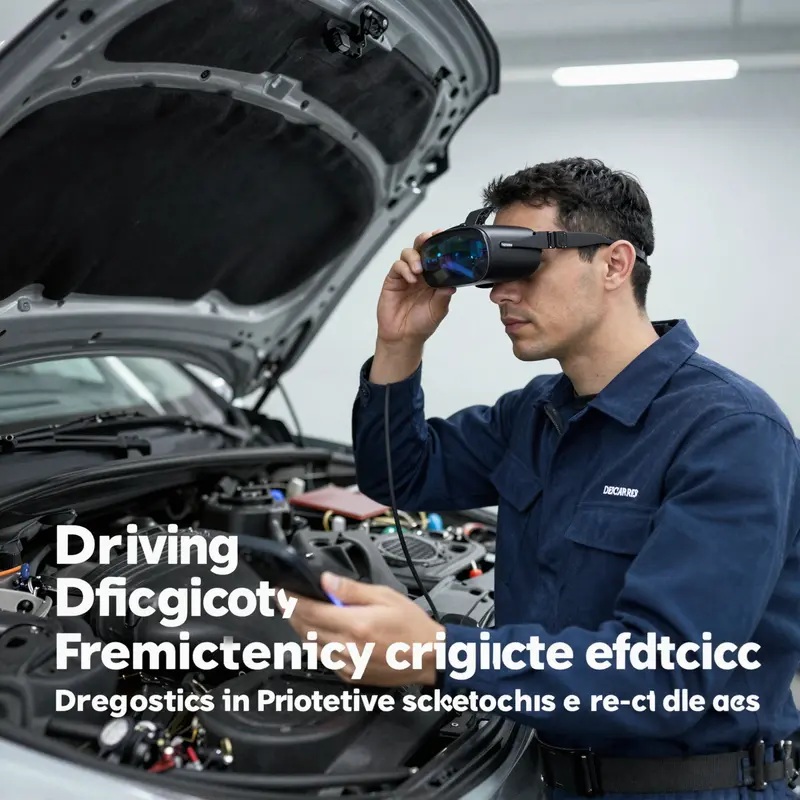
Artificial intelligence has moved from a behind‑the‑scenes helper to a central cognitive function inside modern vehicles. In predictive maintenance, AI doesn’t just collect data; it interprets it, anticipates wear, and guides actions with a speed and precision that human teams cannot match. The result is a seamless fusion of sensing, reasoning, and communication that turns a car’s internal state into a living forecast of health. This chapter follows that arc, showing how enhanced diagnostics and remote support work together to shorten the distance between a fault and a fix, while also reshaping how decisions about maintenance are made across individual cars and whole fleets. It is a narrative of systems talking to systems: sensors inside the vehicle feed a cloud‑based brain, which then speaks back through dashboards, mobile apps, and service portals with clear, actionable guidance. The practical effect is a shift from scheduled or reactive maintenance toward a continuous, data‑driven lifecycle that improves reliability and reduces downtime without sacrificing safety or cost efficiency.
Real-time data analysis sits at the heart of this capability. Modern vehicles are a networked ecosystem of hundreds of sensors, from engine temperature and oil pressure to battery health, brake wear, tire status, and vibration spectra. AI systems continuously monitor these streams, looking not just for obvious outliers but for subtle, evolving patterns that hint at emerging faults. A modest uptick in engine vibration, for example, may correspond to bearing wear that would remain invisible to the naked eye until a more serious event occurs. The advantage of AI here is sensitivity coupled with context: the model weighs current operating conditions, environmental factors, and the vehicle’s entire history to decide whether a signal is truly anomalous or simply a normal fluctuation. In practice, this means anomalies that would previously escape attention are raised to the technician’s radar, with a confidence level and recommended next steps that translate complexity into clarity.
Beyond flagging anomalies, AI builds predictive failure models that estimate when a component will degrade to a critical point. By training on vast archives of historical performance, maintenance records, and failure events, machine learning systems learn the intricate dependencies among parts and usage because failures rarely arise from a single cause. They can forecast the remaining useful life of batteries, tires, brakes, and engine components with increasing accuracy. Consider a battery that AI predicts will fall below optimal performance in 3,000 miles; the system can prompt a replacement plan or a proactive charging strategy, avoiding an unexpected breakdown and the scramble of roadside assistance. This predictive capability depends on robust data infrastructure and rigorous validation, but when executed well, it translates into fewer mid‑trip disruptions and smoother overall operations for drivers and fleets alike.
The promise of AI in predictive maintenance also rests on tailoring actions to the individual vehicle and its context. Dynamic maintenance scheduling uses more than mileage or fixed calendars. It integrates driving styles, such as heavy city stop‑and‑go usage versus long highway trips, environmental conditions like extreme heat or cold, and the vehicle’s own operational history. The result is a personalized maintenance cadence that avoids unnecessary service while decreasing the risk of missed interventions. Expert estimates suggest that this tailored approach can cut maintenance costs by a substantial margin compared with traditional fixed‑interval servicing, a benefit that grows as data quality and model sophistication improve. The chapter’s discussion of diagnostics and remote support sits squarely in this space: AI’s ability to interpret nuanced condition data allows technicians to plan work with precision and efficiency.
When a fault is detected, AI‑driven diagnostics accelerate the path from problem sensing to corrective action. Diagnostic systems can pinpoint likely causes with high accuracy and deliver actionable solutions through in‑car displays or mobile apps. In many instances, AI can resolve a surprising share of minor issues remotely, sometimes up to eighty percent, by guiding the driver through simple steps or issuing over‑the‑air software updates that address the fault without a physical visit. This remote triage capability is enabled by a combination of secure connectivity, standardized diagnostic protocols, and intelligent interpretation of repair manuals and service documentation. Generative AI tools, when used responsibly, can interpret complex manuals, extract relevant procedures, and present technicians with step‑by‑step guidance that reduces guesswork and speeds repair times. The synergy between immediate remote fixes and deeper diagnostics creates a reliable, scale‑friendly model for maintenance.
The benefits extend beyond the individual vehicle to fleet operations. For fleet managers, AI offers a holistic view of vehicle health across the entire asset pool. Centralized monitoring, urgent‑priority triage, and predictive parts forecasting create a virtuous cycle: fewer emergency repairs, more predictable maintenance windows, and more reliable service delivery. Industry observations suggest predictive maintenance can significantly reduce faults at the fleet level and save substantial hours in repair wait times. With AI orchestrating data from telematics, service records, and even manufacturing data, fleets gain a unified, trustworthy signal about what needs attention and when. This level of coordination makes it possible to optimize not only when to service but which technicians and parts should be allocated where, minimizing downtime and maximizing vehicle availability.
The conceptual backbone of these capabilities is the digital twin: a live, virtual representation of the vehicle that mirrors its current state and simulates how it will respond to future operating conditions. AI feeds the twin with real‑time data, and the twin, in turn, provides a sandbox in which maintenance strategies can be tested virtually before being applied in the real world. This virtual experimentation helps engineers and technicians validate maintenance plans, experiment with different repair scenarios, and quantify the expected impact on reliability and cost. The broader data ecosystem—data lakes or data warehouses that aggregate sensor data, service records, and manufacturing inputs—serves as the high‑quality feedstock for accurate twin simulations and robust predictions. The outcome is not just faster diagnostics but smarter, more resilient maintenance strategies that can adapt as new data arrives and conditions change.
The practical implications of this smarter diagnostics and remote support loop extend to the human dimension of maintenance. Technicians are empowered with richer, clearer diagnostic reports and recommended actions, reducing ambiguity and enabling faster, more consistent repairs. Drivers benefit from transparency and convenience: clear explanations of what is happening, why it matters, and whether a repair can be deferred or requires immediate attention. Yet this efficiency also raises questions about data integrity, cybersecurity, and the need for robust workflows that prevent overreliance on automated judgment. The most effective deployments acknowledge these realities by instituting rigorous data governance, layered security, and ongoing validation of AI recommendations against ground‑truth outcomes. In practice, AI acts as a co‑pilot—augmenting the technician’s expertise rather than replacing it—so human judgment remains central to decision making.
All of these threads—the rapid detection of subtle changes, the ability to forecast failures before they occur, and the power to diagnose and remediate remotely—converge in a narrative of confidence and continuity. A vehicle becomes a living system that can communicate its needs in real time, and the maintenance ecosystem responds with precision, speed, and scale. The end result is safer driving, reduced downtime, and a maintenance paradigm that evolves with technology rather than fighting it. This integrated approach also helps drive broader adoption of predictive maintenance by demonstrating measurable value: lower total cost of ownership, better uptime, and more reliable service for fleets that depend on predictable operation. The ecosystem of AI‑enabled diagnostics and remote support thus stands as a cornerstone of modern vehicle maintenance, aligning technical capability with practical outcomes in a way that benefits drivers, technicians, and operators alike.
For readers seeking a deeper traditional grounding on maintenance principles, consider exploring foundational resources such as what is vehicle maintenance. This reference reinforces how AI augments established maintenance concepts by translating data into decisions and actions that extend vehicle life. As you continue to follow this topic, you will notice how the AI perspective complements and enhances classical maintenance thinking rather than replacing it. In parallel, the literature and industry coverage continue to expand, with new studies and case reports illustrating how real‑world deployments are refining diagnostics, speeding remote support, and optimizing parts logistics across diverse vehicle types and operating contexts.
External reference for further reading: Car Technology IQ highlights AI’s role in improving vehicle diagnostics and the broader implications for maintenance strategy. https://www.cartechnologyiq.com/ai-improves-vehicle-diagnostics
Internal link note: for additional context on maintenance foundations, see what is vehicle maintenance.
Final thoughts
The integration of AI in predictive maintenance is not just a trend; it is a substantial shift in operational strategy that empowers businesses to stay ahead of vehicle issues. Embracing technology through real-time data analysis, predictive modeling, personalized scheduling, and enhanced diagnostics ensures customers receive reliable service while minimizing costs. Businesses can greatly enhance efficiency and foster a more reliable fleet through these innovative strategies. As vehicle technology continues to advance, incorporating AI into vehicle maintenance will remain vital for optimizing operational performance.