
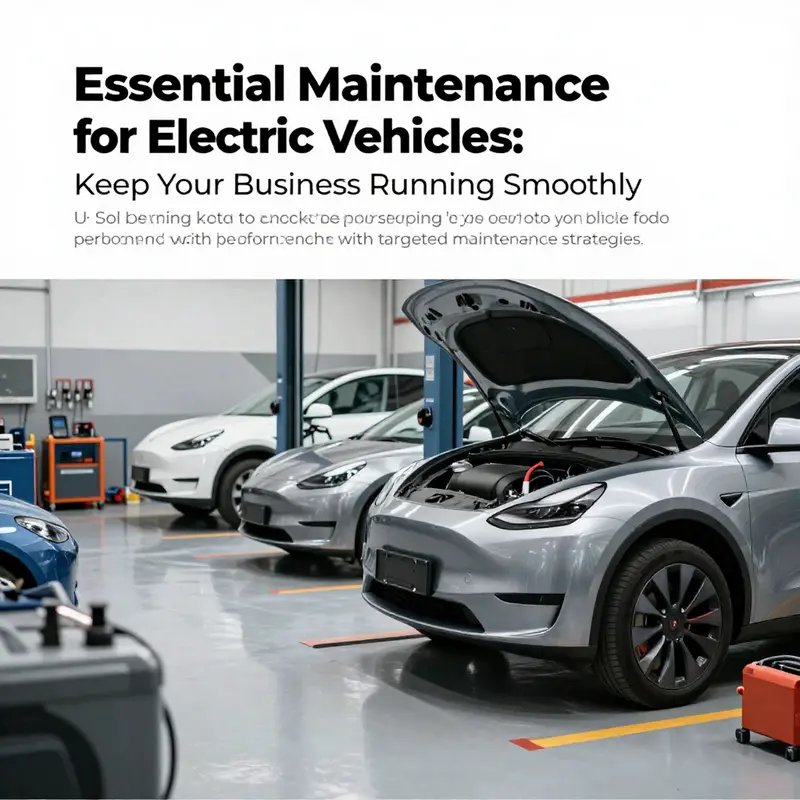
Electric vehicles (EVs) offer business owners a sustainable and cost-effective mode of transportation. However, maintaining their performance is crucial to maximizing lifetime value and ensuring a reliable operation for your business. With fewer moving parts than traditional internal combustion engine vehicles, EVs require less routine maintenance, but specific upkeep practices are essential for optimal performance. This guide will explore vital maintenance tasks, focusing on tire maintenance, battery health, and cooling system checks. Each section will highlight how these practices contribute to enhancing the longevity and efficiency of your EV, ensuring your business remains on the road with minimal disruptions.
Rolling Sustainably: Tire Care as the Moving Core of Electric Vehicle Maintenance
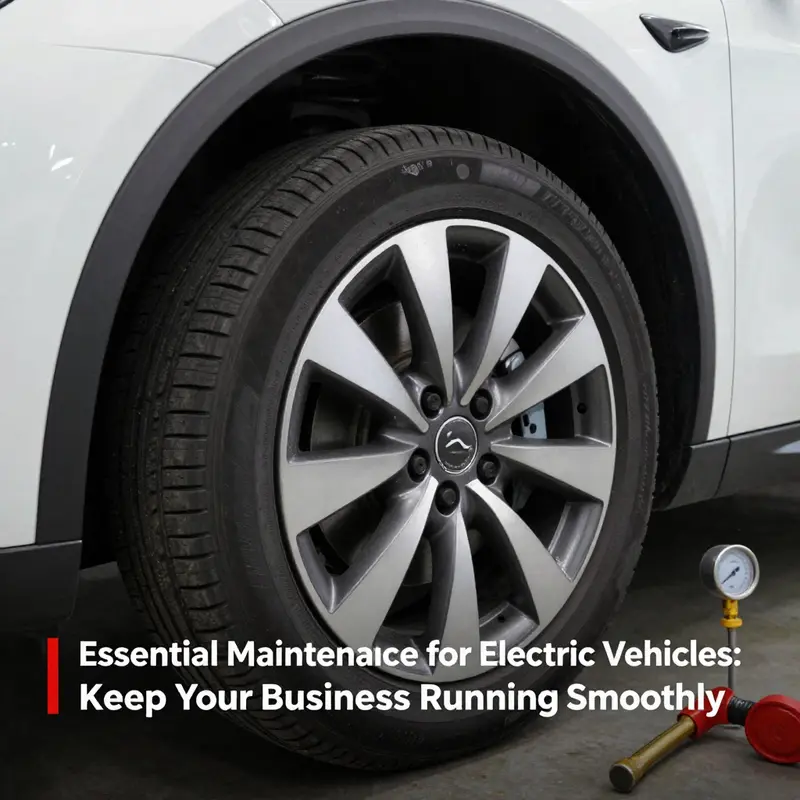
Tires sit at the threshold between engineering and everyday driving, and in electric vehicles they occupy a uniquely consequential role. The weight of the battery pack, coupled with instant torque delivery, places tires under a different kind of stress than in many internal combustion engines. This truth reshapes how owners should think about tire care: it is not merely about avoiding a flat or a squeaky ride, but about preserving range, safety, and longevity in a mobility system that already teaches us to expect efficiency and quiet progress. In the broad arc of EV maintenance, tire care becomes a kind of daily discipline that reinforces every other maintenance decision. The car’s battery, regenerative braking, and software systems depend on tires delivering traction and predictable wear, so maintaining tires well is, in essence, maintaining the vehicle’s nervous system.
The decision around tires begins with selection. EVs benefit from low rolling resistance tires, designed to minimize the energy required to overcome road friction. These tires typically feature smoother tread patterns and special rubber compounds that reduce heat buildup and rolling resistance. The benefit is straightforward: better range per charge and improved efficiency. Yet the flip side—softer compounds that may wear more quickly than standard tires—reminds us that the choice comes with a trade-off. A careful owner weighs the expected mileage, climate, and driving style. If range is the priority in city commutes where speeds are modest and stops frequent, low rolling resistance tires can be a wise match. If, however, the vehicle frequently covers long highway trips or operates in demanding road conditions, the life cycle cost of tires becomes an important consideration. The reality is that EV tires demand a balanced approach between energy savings and wear resistance, and the best choice often reflects both the vehicle’s design and the owner’s usage pattern.
Once the tires are chosen, the practical matter of upkeep takes precedence. Tire maintenance for EVs follows many of the same guidelines as for ICE vehicles, but with heightened emphasis on load management, temperature effects, and wear monitoring. A fundamental early step is tire pressure management. Underinflated tires increase rolling resistance, which eats into range and can cause uneven wear patterns over time. In EVs, where every energy unit counts, maintaining the recommended pressure is not cosmetic; it translates directly into efficiency and safety. For most models, a typical spectrum emerges: front tires in the vicinity of 2.5 to 2.6 bar and rear tires near 2.6 to 2.8 bar. These numbers are not universal and can shift slightly from model to model, but the principle holds: keep tires inflated to factory specifications, and adjust for ambient temperatures. When heat rises in the summer, a small pressure adjustment downward—about 0.1 bar—can compensate for thermal expansion and prevent overpressure as temperatures climb. Conversely, in cold weather, tire pressures may drop; regular checks become a small but important ritual that preserves handling and range.
The next pillar is tread depth, a direct line to safety and performance. Regular tread checks are essential because tread serves multiple purposes beyond mere grip. It channels water away in rain, helps with braking on slick surfaces, and, crucially for EVs, contributes to predictable contact with the road under heavy loads. Experts recommend checking tread depth every 15,000 kilometers, a cadence that balances practicality with safety. When tread depth falls below the legal minimum—commonly around 1.6 millimeters in many jurisdictions—the tire should be replaced immediately. The danger of worn tires in an EV environment is not only reduced traction; it can also undermine the efficiency gains sought through low rolling resistance tires. Worn tires can negate those efficiency benefits by increasing rolling resistance and compromising braking performance. The contrast is stark: well-maintained tires preserve both range and safety, while neglect invites compromised grip and elevated energy use.
Rotating tires is another essential practice, particularly for EVs where weight distribution shifts under acceleration and deceleration, and where the front and rear tires may wear at slightly different rates. Regular rotation helps achieve even wear, which extends tire life and stabilizes handling. The recommended interval for rotation typically falls in the 5,000 to 8,000-mile range, though owners should consult the vehicle’s manual for model-specific guidance. A rotation is not a cosmetic chore; it is a practical investment that keeps the tires performing consistently as they wear. In a vehicle that relies on regenerative braking to augment or even replace some traditional braking tasks, maintaining even tire wear is also a matter of ensuring the efficiency of the braking system and the consistency of tire grip during deceleration.
Speaking of braking, EVs use regenerative braking to convert kinetic energy back into stored electrical energy. This system means less wear on traditional brake components relative to ICE vehicles, a benefit that often reduces the frequency of brake pad and rotor replacements. Yet tire health remains equally critical to stopping performance. The ability of the brakes to grab the road depends on the tires’ traction and temperature. Drivers may notice that aggressive, sudden accelerations and hard braking can heat tires and speed up wear, particularly with low rolling resistance compounds that may offer less material rigidity in aggressive driving conditions. The EV owner thus becomes a tire steward: cultivate smooth throttle application, anticipate traffic, and plan braking so that tires stay within a safe operating temperature window, preserving grip and extending life.
Tire wear is not purely a function of pressure and tread depth; the overall condition of the tire sidewalls matters as well. In the mass of an EV, bulges or visible deformities should never be ignored. A bulge on the sidewall indicates structural weakness in the tire, a risk intensified by the vehicle’s weight. Such defects can escalate into a dangerous blowout under load, especially during cornering or acceleration when lateral forces surge. The prudent approach is to perform a visual check each time you refuel or plug in, looking for abnormal wear patterns, cuts, or any irregularities in sidewalls. Paired with a periodic professional inspection, this simple habit reduces the chances of an abrupt tire failure and supports safe, predictable handling in all weather conditions.
Beyond the tire itself, the wheel and alignment deserve attention as part of a coherent tire strategy. A wheel that is out of alignment or bent from hitting a pothole or curb can cause uneven wear, vibrations, and reduced efficiency. EVs benefit from regular alignment checks, particularly after tire rotations or if you notice pulling to one side or odd tire wear patterns. While alignment services are not usually part of a routine monthly check, they should be considered when you observe persistent wear irregularities, steering pull, or an unusual vibration at highway speeds. In the end, alignment and tire care are two halves of a single responsibility: to ensure that the tires meet the road with consistent contact, translating energy efficiency into a stable, controllable ride.
One of the distinctive advantages of EV tire care is the likelihood that your maintenance routine will be informed by digital tools. Many EVs provide onboard diagnostics or companion apps that report tire pressure, temperature, and even tread wear estimates. This integration makes tire maintenance more precise and timely. When a dashboard alert signals a variance in pressure, temperature, or wear, a quick check can prevent cascading issues—from poor range to compromised safety. The digital dimension of tire care underscores a broader principle in EV maintenance: data and proactive checking are allies, not rivals, to hands-on inspection. Rather than waiting for a tire to fail, proactive monitoring allows owners to time pressure adjustments, rotate tires, or replace worn tires with the least disruption to daily life.
What does all of this mean for the everyday driver who wants to keep an EV performing at its best? It means recognizing that tire maintenance is a daily responsibility, but not an onerous burden. It means choosing tires that align with your typical use—balancing rolling resistance against wear resistance—while staying attentive to pressure and tread depth. It means adopting a cadence of checks and rotations that matches your driving mileage and climate. It means using the vehicle’s diagnostic tools to stay informed and to plan replacements ahead of outdated or unsafe conditions. It also means cultivating driving habits that reduce localized tire stress: smooth acceleration, deliberate braking, gentle cornering, and anticipation of road conditions. These habits, combined with a disciplined tire maintenance plan, create a virtuous circle where better tire care supports better energy efficiency, safer handling, and longer life for essential components.
In the larger tapestry of EV upkeep, tires are a tangible reminder that efficiency is not merely a function of high-tech systems but of daily choices. The engineering of the motor, inverter, and battery can deliver spectacular performance, but without tires that grip and wear predictably, that performance can be wasted or even compromised. The tire becomes, in effect, the translator between sophisticated powertrains and real-world travel. When you keep tires properly inflated, monitor tread depth, rotate regularly, and guard against sidewall damage, you protect more than traction. You preserve range, you sustain predictable handling, and you extend the life of the energy you have invested in the vehicle. This is maintenance that pays dividends in safety, economy, and confidence behind the wheel.
For readers seeking a broader frame on how tire care fits into the overall maintenance landscape for EVs, a concise guide on electric-vehicle upkeep notes that tire health, along with battery health, braking, and software updates, forms a core set of annual or mileage-based checks. The guide emphasizes the same themes: monitor, maintain, and manage components that directly influence efficiency and safety. It also points readers toward official resources for deeper guidance. A deeper look at whether electric vehicles require less maintenance is available here. Do electric vehicles require less maintenance?
As with any robust maintenance plan, context matters. The specifics—rotation interval, pressure targets, and tread depth thresholds—can vary with climate, road conditions, and the vehicle’s design. Always consult the owner’s manual for model-specific guidance, and consider a professional tire inspection during scheduled service intervals to assess wear indicators, damage, and the overall health of the tire and wheel assembly. If you dedicate attention to tires as part of your EV’s routine, you will likely observe immediate and tangible benefits: steadier energy consumption, more consistent braking in changing weather, and a ride that remains quiet and composed as the miles accumulate. The tires no longer feel like a passive component but rather a proactive partner in maintaining performance and safety across a wide range of driving scenarios.
To complement this tire-centric perspective, it is helpful to situate tire care within the broader maintenance ecosystem of EV ownership. Regular checks on the cooling system and battery health, timely software updates, and cautious charging practices all interact with tire performance. For instance, battery management strategies that optimize charging levels can have downstream effects on energy efficiency and, therefore, range, which in turn affects how aggressively one can push acceleration and handle high-load conditions that influence tire wear. Similarly, proper coolant management in the EV cooling loop supports stable motor and inverter temperatures, which indirectly contribute to consistent handling characteristics and tire performance in demanding conditions. The interlocking nature of these systems highlights why a holistic approach to maintenance—one that begins with tires but grows to include electronics, thermals, and software—produces the most reliable, safe, and economical ownership experience.
In closing this thread within the broader maintenance conversation, tire care remains approachable yet essential. It is not merely a maintenance line item; it is a daily practice that affects range, safety, ride quality, and the long-term viability of the vehicle’s powertrain. By choosing appropriate tires, maintaining proper pressure, monitoring tread depth, performing regular rotations, and staying vigilant for signs of tire condition, EV owners fortify the reliability of their entire mobility system. The result is a vehicle that travels farther on a charge, stops with confidence, and maintains its quiet, smooth character mile after mile. Tire maintenance, when treated as a steady habit rather than a checklist, exemplifies the practical wisdom at the core of responsible EV ownership: manage what you can, and let the rest follow from a disciplined approach to care.
External resource: For official guidance on electric vehicle maintenance, consult the U.S. Department of Energy’s guidance at https://www.energy.gov/eere/vehicles/articles/electric-vehicle-maintenance.
Reading the Battery’s Pulse: How Health Monitoring Shapes Maintenance for Electric Vehicles
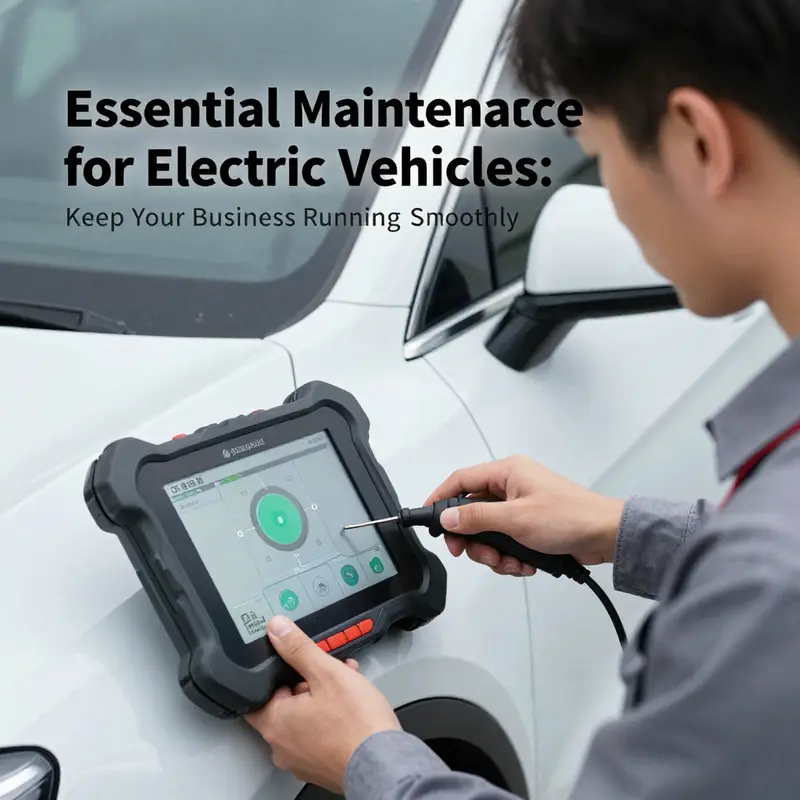
Electric vehicles have shifted the maintenance conversation from routine oil changes and exhaust system care to a more nuanced stewardship of a complex, high‑voltage energy system. At the heart of this shift lies Battery Health Monitoring (BHM), a discipline that treats the battery not as a single component to service on a calendar but as a living system whose state evolves with every mile, charge, and climate shift. As vehicles become more capable and software-defined, BHM stands as the critical interface between the user’s daily driving experience and the long arc of battery life, safety, and performance. When read correctly, the battery’s health becomes a guide for all other maintenance decisions, not a separate, isolated concern. This perspective reframes routine checks—tire pressure, brakes, cooling, software—around how they support the battery and, in turn, how the battery’s condition constrains or enables reliable operation. In short, battery health is maintenance strategy in motion, and its rhythms set the tempo for the entire ownership experience.
From a practical standpoint, two ideas anchor Battery Health Monitoring: state of charge (SoC) and state of health (SoH). SoC is the familiar gauge of how much energy remains in the pack, while SoH measures the battery’s aging, degradation, and residual usable capacity. SoC governs day-to-day range planning and charging discipline, telling you how far you can reasonably drive before needing another session. SoH, by contrast, forecasts the battery’s future performance and the likelihood of unexpected declines. It informs decisions about coolant level checks, charging strategies, and even the timing of professional service. Because SoH is a dynamic, rate‑dependent metric, drivers who understand it can avoid the abrupt surprises that would otherwise catch them off guard. In this sense, SoH becomes a weather report for battery life: it doesn’t predict every gust, but it helps you prepare for the season ahead.
The methods of estimating SoC and SoH are where the science meets the road. Modern BHM systems rely on electrochemical models that reflect the realities inside a lithium‑ion cell: ion transport, reaction kinetics, and the way temperature and current draw influence internal resistance. These models feed data from a suite of sensors—the pack’s voltage and current readings, surface temperatures, and sometimes ambient conditions—into state estimation algorithms. The Kalman Filter, a classic in control theory, blends model predictions with noisy sensor data to yield a more accurate SoC. When conditions are well behaved, the Kalman Filter can track changes quickly and smoothly. But EV dynamics are rarely perfectly linear, so engineers layer in more robust approaches, such as Particle Filters, which can handle non‑linearities and non‑Gaussian noise, or Sliding Mode Observers that tolerate uncertainty with a hard‑edged robustness. The result is a battery health readout that remains trustworthy even as the vehicle operates across a broad spectrum of speeds, loads, and temperatures.
These estimation techniques are not merely academic. They underpin the way a driver interacts with the vehicle and the way a maintenance schedule is planned. With reliable SoC estimates, drivers avoid the hard stops that come from misjudging range. With accurate SoH trajectories, fleets and individual owners can anticipate when a pack’s capacity is approaching a threshold that warrants professional assessment or replacement planning. Predictive maintenance becomes feasible because the data driving SoC and SoH estimates can be correlated with anomalies in cooling performance, unusual heat patterns, or unexpected cooling system cycling. In other words, BHM translates the battery’s internal health into actionable maintenance priorities that extend beyond the battery itself and touch every subsystem the car relies on.
The integration of BHM with broader digital ecosystems is another pillar of modern EV maintenance. Battery health data is increasingly collected, transmitted, and analyzed through connected platforms that blend on‑board diagnostics with cloud processing. Artificial intelligence augments these data streams by identifying patterns that human observers might miss, such as subtle drifts in internal resistance that precede measurable capacity loss. Cloud storage makes long‑term trend analysis possible, enabling predictive maintenance programs for fleet operators and personalized maintenance reminders for individual owners. Yet this interconnectedness carries responsibilities. Data integrity, cybersecurity, and privacy must be safeguarded so that health indicators reflect true vehicle conditions and are accessible to users and technicians when needed. In practice, BHM sits at the crossroads of hardware, software, and services, where each element reinforces the others to create a more resilient, safer, and more reliable EV.
Within the day‑to‑day maintenance routine, the battery’s health informs and sometimes reshapes several familiar tasks. Tire maintenance, for instance, is not merely about grip and efficiency; it also interacts with energy efficiency and range. Poor alignment or underinflated tires increase energy consumption, which, in turn, stresses the battery during frequent high‑demand starts or climbs. When BHM signals higher than expected energy losses or a steeper than typical temperature rise under load, a technician may inspect cooling channels and battery cooling performance, since cooling effectiveness is a key determinant of both SoC accuracy and SoH preservation. Brake inspection, while traditionally viewed through the lens of pad wear and rotor integrity, gains a new dimension in EVs through regenerative braking. Though regenerative braking reduces mechanical wear, it does not eliminate the need for periodic brake checks. A drop in braking performance or uneven wear could indicate thermal management issues that also affect battery health, particularly in hot climates where sustained high currents stress the pack and the cooling system.
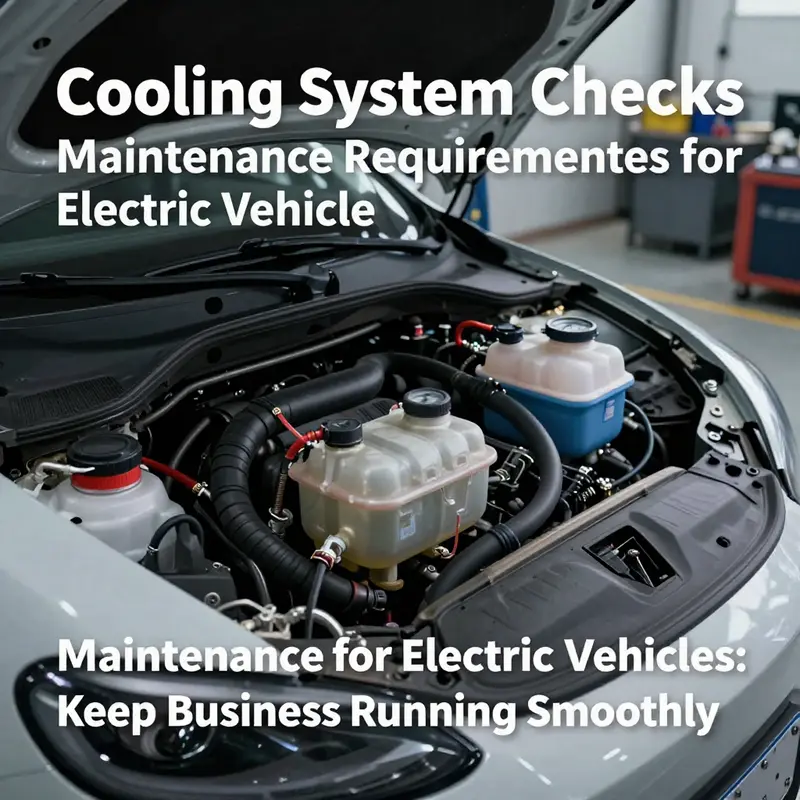
The cooling system itself—the circulatory heart of the EV’s battery thermal management—serves as a crucial link between maintenance and health. The liquid cooling loop regulates pack temperature and, by extension, the rate of aging. Regular checks of coolant levels and condition are essential, typically on a manufacturer‑specified cadence. If the coolant shows signs of contamination or diminished heat transfer, the battery may experience higher internal resistance and accelerated degradation, which the BHM system would detect as a SoH decline. When such signs emerge, the maintenance response is not merely to top up fluid; technicians may recalibrate sensors, inspect heat exchangers, and verify pump performance. In cooler or more temperate climates, these checks help sustain battery performance during cold starts and cold weather operations, where efficiency losses can be more pronounced and SoC estimates can become less precise if the thermal environment is not well controlled.
Software updates form another essential axis of maintenance that often gets overlooked in favor of tangible mechanical tasks. OTA (over‑the‑air) updates can refine battery management strategies, improve SoC and SoH estimation accuracy, and optimize charging algorithms to minimize degradation. An update can adjust the balance between fast charging and thermal safety, or alter how the BMS interprets sensor data during edge cases such as rapid temperature swings. Keeping software current is not optional; it is a maintenance action that preserves the integrity of the health metrics themselves. This is why the health monitoring system and software ecosystem are inseparable from practical upkeep. When an update improves predictive maintenance capabilities, it shifts the entire maintenance plan from reactive to proactive, enabling owners and service centers to intervene before a minor issue evolves into a battery replacement.
The human element remains essential in translating BHM insights into action. A battery health report that reads well in the app or a dashboard is only as useful as the user’s willingness to adapt charging behavior and service routines. One practical implication is charging discipline. If SoH metrics indicate a pack aging pattern that accelerates under frequent exposure to high‑voltage charging, drivers may adopt a charging regime that emphasizes moderate states of charge and avoids consistently charging to 100% in everyday use. Conversely, if the vehicle is rarely used for long trips, a balance between occasional higher SoC windows and midrange charging can help preserve overall health. This is why battery health literacy matters as part of the ownership experience. When owners understand that charging strategy has tangible consequences for long‑term reliability, they become an active partner in maintenance rather than passive recipients of warnings.
The relationship between BHM and the external maintenance tasks can be seen most clearly in a practical sequence of routine checks. Imagine a week of driving that includes a mix of urban stop‑and‑go, highway cruising, and a few steep hills. The vehicle logs data on currents, voltages, temperatures, and charge/discharge cycles. The BHM system uses this data to estimate SoC and SoH, and it flags if the pack experiences unusual heating, rising internal resistance, or unexpected capacity fade. Concurrently, the tire pressures are measured and adjusted to match load and energy efficiency targets. The brake system is inspected not because it wears faster, but because the combination of regenerative braking and occasional thermal load can reveal wear patterns that might indicate the need for a more thorough check of calipers and rotors. If the BHM reports a shift in SoH that suggests accelerated aging, the maintenance plan may prioritize a service visit to review cooling performance, inspect the BMS calibrations, and verify sensor accuracy. The goal is a cohesive maintenance narrative in which battery health not only informs but also optimizes the timing and scope of every service action.
The broader ecosystem of health monitoring is also about reliability and safety. With continuous data streams, technicians can anticipate failures that would previously be encountered only after a fault was logged. For example, a gradual drift in temperature readings or a persistent spike in battery impedance can precede a thermal runaway or a loss of power. Early detection allows for controlled shutdowns, safe towing if necessary, and preventive maintenance that reduces the risk of sudden immobilization. In fleets, this capability translates into more predictable downtime, better route planning, and meaningful cost savings. For individual owners, it translates into greater confidence behind the wheel and a clearer understanding of how to balance daily practicality with long‑term battery preservation. In both cases, Battery Health Monitoring elevates maintenance from a series of tasks to an integrated discipline that aligns energy management with vehicle safety and longevity.
The concept of health monitoring also invites reflection on how information is communicated to the driver. Clear, actionable feedback about SoC and SoH can help people make better charging decisions, select appropriate climate settings, and plan service windows without disrupting daily life. It also invites a broader discussion about privacy and ownership of data. Who should have access to the battery health data—the owner, the technician, or the manufacturer? How can sensitive data be protected while still enabling the predictive maintenance that benefits everyone? A thoughtful approach to data governance is essential to ensure that health information remains a resource for improvement rather than a source of concern. When owners trust the data and understand its implications, they are more likely to engage in the maintainance practices that extend battery life and safeguard safety.
For readers who want to connect these ideas to everyday choices, consider the broader maintenance question: do electric vehicles truly require less maintenance, or do they require maintenance of a different kind? This nuance is worth pondering as you plan maintenance budgets and schedules. A helpful way to think about it is to recognize that EV maintenance shifts from routine component replacement for wear to ongoing health stewardship of a high‑voltage energy system. The single most important habit is to stay attuned to health signals and to respond promptly with the recommended checks and software updates. In other words, by listening to the battery’s pulse, you can keep the vehicle performing at a high level for longer. For a concise discussion that frames this idea in practical terms, you can read a comparative perspective on EV maintenance at Do electric vehicles require less maintenance? which offers context on how these health insights translate into day‑to‑day choices for drivers. Do electric vehicles require less maintenance?
As we look ahead, battery health monitoring will continue to evolve with new materials, smarter sensors, and more powerful analytics. Advances in battery chemistry, such as higher‑energy-density cells and safer electrolyte formulations, promise different aging patterns that will be reflected in SoH models. Simultaneously, advances in edge computing and real‑time analytics will enable even more precise SoC tracking and better early warnings of degradation. The integration of AI, cloud computing, and secure data exchange will support learning networks where insights from one vehicle or fleet can improve health estimates for others, all while preserving privacy and safety. In this sense, BHM is not a single tool but a dynamic framework that grows with technology, expanding the set of actions a driver can take to keep an EV performing well and safely over the long haul.
In closing, Battery Health Monitoring reframes maintenance from a checklist of separate tasks into a coherent, anticipatory practice. SoC and SoH are not abstract numbers; they are the daily language through which the vehicle communicates its needs. By listening to this language and acting on the readings with informed charging practices, cooling system attention, software upkeep, and timely service, owners unlock the full potential of their EVs. This approach makes maintenance more predictable, safer, and more economical, as it targets actions that genuinely influence battery longevity and overall performance. It also aligns with a broader movement in transportation toward smarter, data‑driven decisions that prioritize resilience and sustainability. Reading the battery’s pulse becomes not just a technical skill but a fundamental habit of responsible ownership, one that keeps electric vehicles reliable companions for a future defined by cleaner, smarter mobility.
External reading for deeper context: for a comprehensive treatment of how battery health monitoring is modeled and integrated with IoT and predictive analytics in electric vehicles, see https://www.sciencedirect.com/science/article/pii/S037877532600012X.
null
null
Final thoughts
In conclusion, maintaining electric vehicles involves specific practices that ensure safety, performance, and longevity. By focusing on tire maintenance to ensure optimal driving performance, closely monitoring battery health for reliability, and regularly checking the cooling system to prevent breakdowns, business owners can maximize the operational efficiency of their EV fleet. Prioritizing these maintenance tasks not only enhances the lifespan of the vehicles but also reinforces a commitment to sustainability and efficient business practices.