
A comprehensive vehicle maintenance policy is crucial for business owners managing a fleet. This policy serves as a framework to ensure all vehicles are safe, reliable, and compliant with legal standards. It not only helps in prolonging vehicle lifespan and minimizing downtime, but also protects the well-being of drivers and passengers while adhering to regulatory requirements. In the following chapters, we will explore the importance of vehicle maintenance policies, their key components, legal compliance aspects, and best practices for successful implementation. Understanding these areas will equip business owners with the tools they need to enhance fleet management and operational effectiveness.
Policy as System: How a Vehicle Maintenance Policy Drives Fleet Reliability, Safety, and Compliance
Every fleet operates on a schedule of risk and opportunity, and at the center is a maintenance policy that translates broad safety goals into concrete actions. A well-defined policy does more than set a calendar; it creates a system that aligns daily habits, technical checkups, and strategic decisions around a single purpose: keeping vehicles safe, available, and compliant. When leadership formalizes expectations for maintenance, the workforce gains a shared language for what must be done, when, and by whom. This shift from ad hoc fixes to standardized processes is what turns maintenance from a cost center into a strategic asset. It is the thread that weaves safety, reliability, and cost management into a single fabric, so that each trip is a deliberate investment rather than a risk-laden gamble.
A robust policy begins with a clear vision of preventive maintenance as a baseline, not a reaction to failure. The principle of preventive maintenance—regular inspection, mandatory maintenance, and condition-based repair—frames every subsequent decision. It is a disciplined approach that prioritizes early detection of wear and deterioration, using data and trackable procedures to anticipate issues before they escalate. In practice, this means moving away from crisis-driven servicing toward a planned rhythm of care. Vehicles are treated as assets worthy of continuous attention, and the policy codifies this belief into actionable steps that drivers, technicians, and managers can execute without ambiguity.
To implement such a system, many organizations adopt a tiered maintenance structure that distinguishes everyday checks from more thorough service. A comprehensive maintenance policy not only prescribes what happens but also who does it and how information is recorded. This is where the policy broadens from a maintenance schedule into a management discipline. The approach commonly includes scheduled maintenance anchored to mileage or time intervals, but it also embraces description of inspection procedures, rigorous record keeping, and explicit responsibility assignments. When these elements align, the organization gains a reproducible workflow that supports audit trails, compliance, and performance analysis. In that sense, the policy becomes a living framework rather than a static document.
One practical framework often referenced in industry discussions is the categorization of maintenance into daily, first-level, and second-level services. Daily maintenance is the realm of the vehicle operator or driver, focusing on immediate indicators such as fluid levels, tire pressures, visible leaks, lights, and basic safety checks. This layer is designed to catch small, easily correctable issues before they become safety risks or costlier failures. First-level maintenance goes a step further, involving lubrication, tightening, and checks of critical subsystems like brakes and steering. It requires more technical skill and often a scheduled service window to minimize disruption to operations. Second-level maintenance reaches into more complex territory: component disassembly, thorough diagnostics, and adjustments that protect long-term performance. Examples include wheel alignment, front toe adjustment, tire rotation, and targeted diagnostics that reveal wear patterns and system health. Together, these levels create a proactive, staged approach to vehicle care that keeps fleets operating reliably while distributing work according to risk, complexity, and resource availability.
Crucially, the policy emphasizes accountability and documentation as the backbone of trust and traceability. Detailed maintenance work orders and safety inspection forms become the documentary evidence that every inspection and repair occurred, what was found, what was done, and when. These records are not inert files; they are strategic data that support regulatory compliance, budgeting, and future planning. The responsibility for collecting and archiving this information is often assigned to a dedicated safety and machinery department or equivalent governance unit. In some organizational contexts, a unit such as an Anji Department is charged with receiving, validating, and storing records, ensuring that the fleet’s history is accessible for audits and decision-making. When documentation is standardized, it enables better decision-making about vehicle replacements, component life cycles, and parts procurement. It also strengthens accountability by clarifying who performed inspections, who approved repairs, and who verified that work was completed to standard.
The policy does not exist in a vacuum. It is anchored in regulatory expectations and national standards that shape how fleets must operate. In many jurisdictions, compliance requirements compel fleets to adhere to established norms for maintenance, inspection, and diagnostics. A particularly salient example in recent years is the push toward harmonized technical specifications that guide maintenance complexity, diagnostic practices, and safety testing. The specific standard mentioned in related guidelines—often referenced as a national benchmark—outlines maintenance and diagnostic expectations across different levels of service. Its enforcement and updates strengthen the case for structured policies across commercial and private fleets alike. On a practical level, such standards encourage fleets to implement uniform procedures that are auditable, reducing variance in how different teams service the same vehicle types and ensuring that safety-critical checks are not dependent on individual memory or discretion.
The regulatory environment often reinforces the core aim of a maintenance policy: safety first, prevention-oriented operation. In a city or region that emphasizes road transport safety, the policy is viewed as a preventive instrument rather than a bureaucratic burden. It guides daily decisions, such as when and how to schedule a service, what tests to perform, and what metrics signal a need for deeper investigation. This preventative lens aligns with broader risk management strategies, where reducing the probability and impact of breakdowns translates into fewer disruptions, lower repair costs, and more predictable service levels. Additionally, the policy supports the adoption of modern maintenance practices, including condition-based repair, which leverages data from diagnostics and usage patterns to tailor maintenance timing to a vehicle’s actual needs rather than to a fixed calendar.
Implementing such a policy also demands a disciplined approach to data and systems integration. The ability to track maintenance history, monitor component wear, and forecast future service needs depends on reliable data capture and accessible information systems. A well-designed maintenance policy thus incorporates standardized work orders, checklists, and safety forms that can be entered into a centralized system. This integration enables fleet managers to identify recurring issues, evaluate the effectiveness of specific maintenance tasks, and anticipate parts usage and technician workload. In practice, the policy translates into dashboards and reports that highlight uptime trends, mean time between failures, and cost per mile, turning maintenance from a series of isolated acts into a cohesive performance dialogue with the business.
Beyond the mechanics of the policy, the human aspects matter just as much. Clear responsibility assignments prevent ambiguities that can stall work. Drivers must understand their role in daily checks and reporting, technicians must follow standardized procedures and documentation practices, and managers must ensure that schedules, approvals, and records are aligned with regulatory requirements and corporate risk appetite. Training is essential to establish this alignment. When people understand not only what to do but why it matters, the policy becomes part of the organizational culture rather than a set of imposed rules. The result is a fleet that learns from near-misses, embraces proactive maintenance, and treats service events as opportunities to improve rather than inconveniences to endure.
To illustrate how these principles come to life, consider a regional fleet facing a known wear pattern in a subset of tires and braking components. A policy with daily checks would catch early signs in the driver’s routine, such as unusual vibration or low tire pressure. First-level maintenance would address lubrication needs and brake system checks, while second-level maintenance would bring in diagnostics to verify hydraulic performance, wheel alignment, and tire rotation. If the data show a pattern of premature wear in a particular axle, the policy guides adjustments in inspection frequency, parts stocking, and possibly a design-level intervention, all while keeping records that can be traced back to the specific vehicles and service events. This is how preventive maintenance becomes a strategic advantage: it converts experience and intuition into measurable, repeatable outcomes.
The broader regulatory and organizational context also shapes how policy travels across a fleet. When a city or municipality emphasizes safety and standardization, policies evolve to meet those expectations while remaining adaptable to new technologies and practices. For example, the emergence of standardized diagnostic routines and maintenance procedures helps ensure that even as fleets adopt new propulsion technologies or advanced driver-assistance systems, maintenance practices remain coherent and auditable. The policy thus serves as a bridge between timeless safety principles and dynamic operational realities, providing a sturdy framework that can absorb new requirements without devolving into a labyrinth of ad hoc rules.
In this way, a vehicle maintenance policy is not merely a document to be stored in a cabinet; it is a living contract between an organization and its fleet. It commits leadership to allocate the resources necessary for preventive care, defines the workflows that keep vehicles on the road, and makes safety and reliability intrinsically tied to performance metrics and financial outcomes. It supports a culture of continuous improvement, where data and experience feed updates to procedures, schedules, and training. It also strengthens external trust with regulators, customers, and insurers by demonstrating that the fleet operates under rigorously defined standards and verifiable practices.
For readers who seek a foundational overview that can ground further exploration, a concise guide to vehicle maintenance is available here: What is vehicle maintenance? link. This reference can help readers connect the policy-level concepts described here with the practical, day-to-day actions that keep a fleet healthy on the road.
Ultimately, the value of a vehicle maintenance policy emerges from its ability to turn planned care into measurable results. When a fleet operates with clear schedules, documented inspections, accountable roles, and compliant practices, downtime drops, safety rises, and lifetime value extends. The policy becomes a lens through which every decision—whether a routine oil change or a complex diagnostic—can be evaluated in terms of uptime, safety, and total cost of ownership. It transforms maintenance from a necessary expense into a disciplined act of stewardship, aligning operational performance with strategic objectives and ensuring that the fleet remains a reliable asset in an increasingly demanding transportation landscape.
Regulatory grounding provides the practical ballast for this vision. The Road Transport Vehicle Maintenance Management Regulations, issued by the relevant municipal authority, articulate the expectations that underpin the standardization of maintenance practices. The emphasis on safety-first and prevention-oriented operation echoes throughout the policy, reinforcing the idea that well-maintained vehicles are foundational to public safety and efficient mobility. While the specific legal text may evolve, the underlying principle endures: maintenance is a core governance function of fleet management, not a peripheral activity. For readers seeking to review the regulatory basis, the official document offers concrete requirements, timelines, and responsibilities that inform policy design and execution.
In sum, a vehicle maintenance policy is the operating system of a fleet. It translates safety principles into routine actions, aligns human capability with technical need, and embeds compliance and accountability into every service event. It is where preventive discipline meets data-driven management, and where long-term value is harvested from consistent, well-documented care. By embracing this integrated approach, organizations can sustain high uptime, reduce the risk of costly failures, and deliver reliable transportation that supports their broader mission and service commitments.
External reference: For the regulatory grounding, see the official Road Transport Vehicle Maintenance Management Regulations, which outline the safety-first, prevention-oriented framework that informs policy development. https://jtxj.nanning.gov.cn/xxgk/zfxxgkml/sgzfgb/t17494866.shtml
Vehicle Maintenance Policy: A Living Framework for Fleet Safety and Efficiency
A vehicle maintenance policy is more than a checklist; it is a living framework that aligns safety, reliability, and cost control with real‑world fleet operations. By defining purpose, scope, responsibilities, and preventive‑maintenance schedules, the policy creates a common language for drivers, technicians, and managers. Standardized procedures and digital records ensure consistency, enable data‑driven decision making, and support regulatory compliance. The policy also embraces predictive maintenance, using sensor data and analytics to anticipate failures and optimise downtime. Safety remains foundational, with mandatory pre‑trip inspections, high‑voltage protocols for electric vehicles, and clear emergency response plans. Regular review cycles keep the policy aligned with evolving vehicle types, regulations, and organisational risk tolerance, turning maintenance into a measurable driver of reliability, lower total cost of ownership, and safer roads.
null
null
Building a Reliable Foundation: How a Thoughtful Vehicle Maintenance Policy Drives Safety, Efficiency, and Compliance
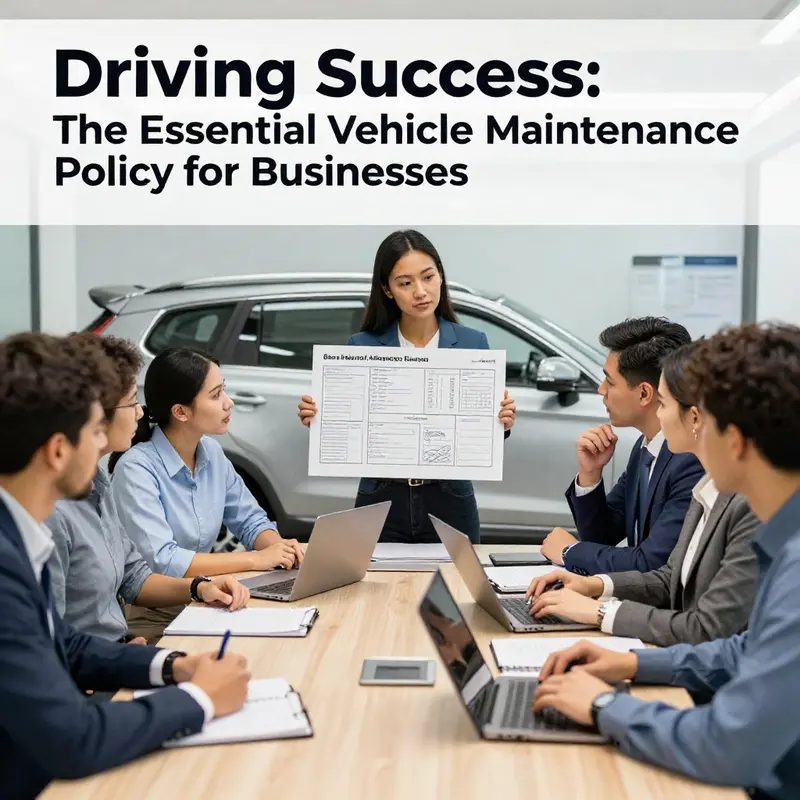
A vehicle maintenance policy is more than a document on a shelf; it is a living framework that shapes daily decisions, fleet reliability, and organizational risk. When an organization commits to a formal policy, it begins a disciplined approach to care that translates into safer driving, fewer unexpected breakdowns, and a smoother flow of operations. The policy acts as a contract between leadership, maintenance staff, and drivers, clarifying what must be done, when it should happen, and who is responsible for each action. In practice, this contract reduces ambiguity at the point of maintenance, turning well-intentioned maintenance into consistent, auditable behavior. This is not about burden for its own sake; it is about creating predictable performance in environments where fleets operate across diverse routes, weather conditions, and duty cycles. The policy thus anchors both safety culture and operational productivity in a single, coherent plan that can adapt as technology, regulations, and fleet needs evolve.
At the heart of a robust policy are clear maintenance intervals. These intervals translate the manufacturer’s guidance and historical fleet data into actionable timing. A typical structure would specify oil changes at set mileage or time intervals, for example every 5,000 miles or every six months, whichever comes first, paired with tire rotations at manufacturer-recommended cadences. Brake inspections should be scheduled on a regular basis; fluid checks, belt replacements, and battery health assessments should be woven into the calendar with defined thresholds. The objective is to catch wear before it becomes failure, to prevent downtime, and to minimize the risk of roadside incidents. By tying intervals to both mileage and time, the policy accommodates vehicles with mixed duty cycles—cars that rack up long highway miles and vans that perform short trips in urban settings—ensuring no vehicle drifts into neglect.
The policy also codifies rigorous inspection procedures. Pre-trip and post-trip checks become routine rather than ad hoc. These checks look beyond obvious indicators and examine critical systems: brakes, tires, lights, fluid levels, belts, and safety systems such as airbags or stability controls. The aim is to identify problems early, document observations, and trigger timely maintenance actions. A standardized inspection framework supports consistency across the fleet, so a technician in one city is measuring the same things as a technician hundreds of miles away. When observations are documented with dates, signatures, and conditions, the organization gains a traceable history that benefits safety audits, insurance reviews, and regulatory compliance.
Record keeping, in turn, is the backbone of accountability. A well-implemented policy requires an auditable trail of every service, repair, part replacement, and diagnostic result. Modern fleets increasingly rely on digital record-keeping that couples service entries with vehicle identifiers, maintenance codes, and parts catalogs. Such records are not mere compliance artifacts; they become intelligence. They enable trend analysis, support warranty claims, and improve forecasting for upcoming maintenance needs. When records are complete and searchable, management can verify that the policy is being followed, identify gaps, and adjust intervals or procedures based on real-world outcomes rather than guesswork. In this sense, the policy moves maintenance from a reactive cost center to a proactive driver of reliability and efficiency.
Responsibility assignment is essential to turning policy into practice. The policy should delineate who schedules services, who performs inspections, who approves repairs, and who maintains the records. Responsibility does not stop at naming titles; it includes defining competencies and ensuring that people have the authority and resources to fulfill their roles. Qualified personnel must oversee maintenance tasks, and there should be clear escalation paths if a defect is found or a deadline is at risk of being missed. When accountability is explicit, it becomes easier to align performance metrics with policy outcomes, such as reduced downtime, longer vehicle lifespans, and better vehicle condition overall.
Digital fleet management emerges as a powerful enabler of policy execution. A centralized software platform can track maintenance schedules, generate automated alerts for upcoming tasks, and consolidate records from disparate sources. With digital visibility, fleet managers can monitor adherence to intervals, identify overdue work, and assign tasks with clear due dates. Alerts can be configured to trigger before a service is due, reducing the chance of postponement. This technologized approach also supports data-driven decision-making: by analyzing maintenance history, mileage, and utilization patterns, organizations can optimize intervals, tailor maintenance to vehicle type, and even predict potential failures before they occur. In short, digital tools help translate policy into timely, accurate action while minimizing human error and administrative overhead.
Training programs are a critical, often undervalued, component of policy success. Drivers must understand the rationale behind scheduled servicing and the proper way to conduct basic checks. Maintenance staff need ongoing education on diagnostic procedures, parts replacement standards, and safe work practices. Training reinforces a culture of care, where drivers promptly report anomalies such as unusual noises, warning lights, or changes in vehicle behavior. Well-designed programs not only improve the quality of maintenance work but also enhance safety outcomes by ensuring drivers recognize and respond to hazards early. When training aligns with the policy’s expectations, compliance becomes second nature rather than a chore, and the fleet moves toward higher reliability with confidence.
Preventive maintenance strategies sit at the intersection of policy and data. A modern maintenance policy embraces predictive techniques that use historical failure data, usage patterns, and environmental conditions to forecast when components will degrade. Rather than waiting for a part to fail, the organization schedules interventions ahead of time. This proactive posture can dramatically reduce unexpected breakdowns, optimize spare-part inventories, and lower total cost of ownership. Predictive maintenance is not a crystal ball; it is a disciplined use of analytics that continuously refines intervals and inspection focus based on real-world performance. When combined with standardized reporting, predictive insights feed back into the policy, creating a cycle of improvement that strengthens fleet resilience over time.
The policy’s standardized reporting system deserves particular emphasis. A unified framework for reporting vehicle conditions enables immediate action where needed and supports continuous improvement. Reports should capture the problem, the vehicle, the urgency, the recommended action, and the accountability trail. This clarity helps mechanics and managers coordinate responses quickly, whether the issue is a minor fluid leak or a potentially dangerous brake concern. The reporting system also supports audits and regulatory checks by providing verifiable evidence of due diligence. By embedding reporting into the fabric of daily operations, organizations turn maintenance into a transparent process with clear responsibility and measurable outcomes.
Compliance considerations sit prominently in any vehicle maintenance policy, especially where regulatory landscapes evolve with new technical specifications. The policy should articulate how national or regional standards inform maintenance intervals, inspection criteria, and diagnostic practices. For example, in a regulatory environment where technical norms are updated periodically, the policy must reflect the current standard and specify how fleet operations will align with it. In such contexts, organizations benefit from building in a compliance calendar that flags impending changes, assigns owners to interpret the new requirements, and schedules updates to procedures and training. When compliance is treated as a core objective rather than a reactive obligation, policy adoption becomes smoother and more enduring, reducing the risk of non-compliance exposure and its potentially severe consequences.
In a concrete regulatory moment, standards can shape how fleets operate across borders and industries. An updated national standard, effective from a future date, may mandate comprehensive maintenance practices for vehicles and diagnostic practices across various maintenance levels. The policy, therefore, should be written with enough flexibility to accommodate such changes while maintaining a consistent core framework. It should describe the process for updating intervals, inspection procedures, and record-keeping practices, so changes are implemented systematically rather than piecemeal. This anticipatory design helps organizations avoid last-minute scrambles and preserves safety and reliability as the regulatory environment shifts.
Emergency response protocols are the policy’s last, but not least, essential pillar. Unexpected vehicle failures or accidents demand rapid, organized reactions. The policy should outline predefined steps for incident reporting, towing arrangements, and the provision of replacement vehicles to minimize disruption to operations. It should also delineate roles during emergencies, specify required documentation, and ensure post-incident reviews that feed back into preventive strategies. The aim is not to create fear of failure but to establish a calm, well-informed pathway that protects people, preserves assets, and maintains service continuity even under stress.
The process of implementing a maintenance policy should begin with leadership endorsement and a clear articulation of objectives: safety, reliability, regulatory compliance, and cost control. Drafting a policy is not a one-time exercise; it is a project that benefits from piloting, feedback loops, and staged rollouts. A practical approach often starts with a core fleet, tight feedback channels, and a timeline for expanding policy coverage to the entire operation. As the policy takes root, the organization can evaluate performance against defined metrics—downtime, maintenance costs, and compliance scores—and adjust the program accordingly. Importantly, the policy should remain accessible and revisitable, allowing for incremental improvements without losing the coherence that a single, comprehensive framework provides.
For readers seeking a concise foundational perspective that complements this discussion, consider the broader definition and purpose of vehicle maintenance: What is vehicle maintenance?. This helps ground the policy in a shared understanding of what maintenance means, which in turn clarifies why each element—intervals, inspections, records, responsibilities, digital tools, training, preventive strategies, reporting, and compliance—matters in concert.
Finally, to connect policy with a broader ecosystem of best practices, organizations can consult external resources that synthesize practical guidance and case studies. A respected repository of fuel and fleet maintenance insights offers extensive detail on how to structure preventive programs, optimize maintenance workflows, and align with evolving standards. External resource: https://afdc.energy.gov/fuels/vehicle_maintenance
In sum, a well-crafted vehicle maintenance policy is a strategic asset. It translates complex technical guidance into actionable, accountable practice. It weaves together intervals, inspections, documentation, responsibility, digital enablement, training, proactive maintenance, standardized reporting, and regulatory alignment into a single, living mechanism. When executed with clarity and commitment, the policy transforms maintenance from a reactive necessity into a high-value driver of safety, reliability, and sustained performance across the fleet.
Final thoughts
Establishing a vehicle maintenance policy is an essential step for business owners looking to maximize their fleet’s efficiency and safety. By fostering a culture of proactive maintenance and compliance, businesses can prevent costly breakdowns, extend the lifespan of their vehicles, and promote a safer environment for everyone involved. It’s not just about keeping the wheels turning; it’s about investing in the future of your fleet and your business. As you embark on this journey, remember that the strength of your policies will directly contribute to the overall success of your operations.