
A Vehicle Maintenance Allowance (VMA) serves as an essential tool for employers who want to support employees using their personal vehicles for work purposes. By providing a structured payment, businesses enable employees to cover costs like repairs, servicing, insurance, and fuel without the administrative burden of tracking individual expenses. The relevance of VMA extends beyond convenience; understanding its calculation, legal implications, and comparative advantages empowers business owners to implement effective policies. Moreover, weighing the benefits against potential challenges can help create a fair system that supports employees while maintaining organizational efficiency. Through the encapsulated chapters ahead, explore how to leverage VMA to optimize fiscal responsibility and employee satisfaction.
Carcare Coverage: How a Vehicle Maintenance Allowance Keeps Work Moving Without Guesswork
A Vehicle Maintenance Allowance is more than a paycheck tweak. It is a structured recognition that using a private car for work imposes real, ongoing costs. When an employer offers a fixed maintenance allowance, often in lieu of a Conveyance Allowance, they acknowledge that the private vehicle remains essential for job duties, even as the company shifts away from supplying a company car. This arrangement shifts the burden of upkeep from the employee’s pocket to a predictable monthly or annual stipend. The cost is not merely about fuel; it encompasses the full spectrum of ownership and operation—from routine servicing and unexpected repairs to insurance and depreciation. The goal is straightforward: provide employees with funds to keep their vehicles reliable enough for work, while simplifying the employer’s accounting and administration. The exact shape of a Vehicle Maintenance Allowance can vary by policy and by jurisdiction, but the core idea remains consistent. It is an in lieu arrangement that recognizes work-related driving as a legitimate expense category and compensates accordingly. For those exploring the concept from a broader perspective of vehicle-related costs, a practical overview of what vehicle maintenance entails can be helpful. See the resource that explains the basics of vehicle maintenance to ground this discussion in everyday automotive care, as a useful preface to how allowances interact with true upkeep. External resource: https://driversnote.com/car-allowance-explained/.
The purpose of a VMA is twofold. First, it compensates employees for the direct, non-discretionary costs of keeping a car in serviceable condition for work. Servicing, tires, brakes, and repairs all count toward the expense of maintaining the vehicle’s safety and reliability. Second, it acknowledges the ancillary costs that come with ownership—insurance, registration, and the gradual depreciation that accrues when a vehicle is driven for business. In this sense, the allowance is not a bonus or perk in the abstract; it is a practical allocation designed to cover what the employee would otherwise pay out of pocket as part of performing their job. When viewed through this lens, the VMA stands as a fair recognition of the intersection between personal assets and professional duties.
From an administrative standpoint, the fixed nature of a VMA delivers simplicity that benefits both sides of the payroll equation. Rather than reimbursing receipts for every oil change or tire rotation, or tracking mileage to calculate a variable payment, the employer provides a predictable amount. This predictability helps with budgeting, payroll processing, and financial forecasting. The employee, in turn, gains financial stability. A steady monthly or annual allowance creates a reliable pool of funds dedicated to vehicle upkeep, reducing the anxiety of fluctuating bills tied to travel demands or last-minute repairs. It also removes the friction of paperwork. There is no need to submit a pile of mileage logs or receipts, provided the policy remains within its defined scope.
Yet the simplification comes with boundaries. The allowance is typically defined by policy language and local regulations. The employer may set a cap or a target range that reflects reasonable maintenance costs for the types of vehicles used for work. Some policies specify that the VMA is intended to cover ordinary maintenance rather than capital expenditures or major overhauls. Others treat the allowance as a general contribution to a broader car-usage cost, with a clear understanding that it does not convert into ownership rights or a permissive override of company car rules. In practice, many organizations see the VMA as a balance between fairness and administrative efficiency. It provides a reasonable baseline that encourages employees to keep their vehicles maintained without inviting excessive, unsubstantiated, or misused funds.
The decision to adopt a VMA often rests on a strategic comparison with other approaches to support mobility. A company might still offer a fleet vehicle or a company car program, but if the business model makes a formal fleet impractical, a VMA becomes an attractive alternative. It can reduce overhead related to fleet management, insurance, maintenance for multiple vehicles, and the complexity of charging and tax reporting tied to a company car. In such cases, the VMA helps preserve the mobility employees need while preserving the employer’s administrative clarity. Crucially, the transition to a VMA should be accompanied by clear guidelines so employees understand what is and is not covered. A well-crafted policy spells out eligibility, the amount or calculation method, and the expectations for maintaining the vehicle in safe, roadworthy condition. It can also outline the process for modifying the allowance if work requirements increase or decrease.
From the employee’s perspective, a VMA offers stability and transparency. A fixed monthly figure means predictable cash flow, which is especially valuable for workers who drive extensively for field duties, client visits, or regional travel. It might also relieve the burden of providing receipts for every single maintenance expense, freeing time and mental energy for core job tasks. However, employees may also weigh the risk that a fixed amount could be insufficient for high-mileage roles or for vehicles with unusual maintenance needs. In such cases, a policy might include provisions for adjustments, exceptions, or additional allowances when justified by usage patterns or policy renewals. An open dialogue between employer and employee about travel demands, vehicle type, and maintenance expectations can prevent mismatches and ensure the VMA serves its intended purpose.
One of the nuanced advantages of a VMA lies in its effect on budgeting for both parties. For employers, a fixed VMA enables tighter cost control and easier financial planning. It reduces the variability that accompanies mileage-based reimbursement schemes, where the payout fluctuates with each trip, each gas price swing, and each minor repair. For employees, the monthly certainty helps with personal budgeting. Without the need to scour receipts and tally miles, they can allocate funds toward routine upkeep, emergency repairs, or strategic maintenance scheduling—such as preventive servicing ahead of busy travel periods. Over time, this can contribute to fewer breakdowns, better vehicle reliability, and more efficient travel planning, all of which feed back into work performance and morale.
The practical realities of implementing a VMA hinge on thoughtful design and ongoing communication. A fair and effective policy should address several core themes. First, eligibility: which employees qualify, and under what driving conditions? Second, coverage: what costs are included or excluded, and what are the assumed maintenance categories—oil, tires, brakes, insurance, and depreciation? Third, amount and adjustment: is the payment a flat amount, or is it benchmarked to vehicle type or expected usage? How often might it be reviewed or increased in response to fuel prices or maintenance costs? Fourth, tax and regulatory considerations: how is the allowance treated for payroll tax, income tax, or social contributions? Does the policy align with local labor laws and er regulation guidelines? Finally, governance: how is the policy communicated, monitored, and updated? A well-structured VMA policy reduces ambiguity and builds trust, ensuring the employee sees the maintenance funds as a reliable support rather than a capped burden.
The narrative around a Vehicle Maintenance Allowance also emphasizes the relationship between personal assets and professional duties. A vehicle used for work is not just a tool; it becomes a component of the employee’s income-producing capacity. When a company contributes to the upkeep of that asset, it is acknowledging that the vehicle’s condition directly influences the employee’s ability to perform. This perspective shifts the conversation from reimbursement after the fact to a proactive partnership in which maintenance health and reliability are seen as critical to job performance. It is a shift that aligns incentives: employees are more likely to keep their vehicles in top form, and employers gain steadier service delivery, fewer delays, and a work environment that respects the integration of personal assets into professional activity.
Policy design, then, becomes a delicate craft. It requires balancing fairness with practicality, ensuring the amount remains meaningful without devolving into an open-ended fund. It invites ongoing data collection—usage patterns, common maintenance costs, and feedback from drivers—to refine the allowance over time. In practice, a well-managed VMA can be more cost-effective for the organization than a company car program with its fleet costs, insurance, depreciation, and administrative overhead. At the same time, it offers employees the dignity of handling their own vehicle with predictable support, rather than being required to navigate a rigid, one-size-fits-all policy.
For readers seeking a broader context on car-related allowances and how they function in different environments, a reliable external resource provides a structured explanation of the mechanics behind car allowances. It helps distinguish between fixed allowances, mileage-based reimbursements, and other forms of work-related vehicle compensation. This background can illuminate how VMA fits within the spectrum of employee benefits and corporate mobility strategy. External resource: https://driversnote.com/car-allowance-explained/.
In sum, a Vehicle Maintenance Allowance is more than a monetary gesture. It is a practical recognition that the vehicle an employee uses for work is a shared asset whose upkeep supports reliability, safety, and efficiency in performing duties. When well designed, it reduces administrative burden, stabilizes budgets, and aligns employer and employee interests in keeping work moving smoothly. It remains essential, however, that the policy remains clear, fair, and adaptable to different vehicle types, travel demands, and regulatory landscapes. To ground this topic in a broader understanding of vehicle maintenance as a concept that touches on daily life and work, consider exploring further the basics of what vehicle maintenance entails and why it matters for long-term performance. See the overview linked above for a concise primer. And as always, clear communication and periodic policy review will ensure that the Vehicle Maintenance Allowance continues to serve its purpose: supporting dependable mobility in the service of business needs while respecting the realities of personal vehicle ownership.
How Employers Calculate and Pay Vehicle Maintenance Allowances: Methods, Rules and Real-World Examples
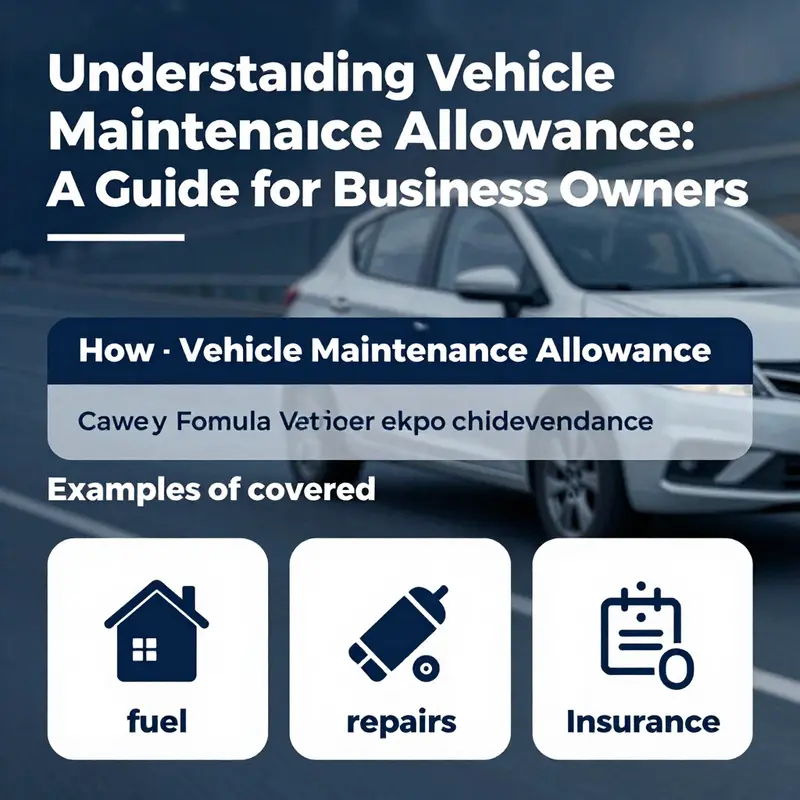
Calculating and Paying a Vehicle Maintenance Allowance
A Vehicle Maintenance Allowance (VMA) is a predictable way for employers to support employees who use personal vehicles for work. The allowance is intended to cover routine upkeep, repairs, fuel, insurance, and the wear and tear that comes from job-related driving. Employers choose a method that balances fairness, administrative simplicity, and tax compliance. The choice affects bookkeeping, employee behavior, and how costs are recognized on tax returns.
Most organizations use one of three clear approaches: a per-kilometer rate, reimbursement of actual expenses, or a fixed periodic sum. Each approach has trade-offs. Understanding them helps both employers and employees avoid disputes and costly errors.
A per-kilometer rate ties payment directly to business distance. Employers set a cents-per-kilometer figure and multiply it by the employee’s business kilometers. This method is transparent and easy to audit. It mirrors the logic that more driving creates more maintenance and fuel expense. Tax authorities often provide benchmark rates to prevent overpayment. When an employer uses an official rate, the allowance can be treated differently for tax purposes than general income. The employee must still keep a log of trips, dates, destinations and odometer readings. In practice, a per-kilometer model reduces paperwork while still fairly matching use to cost.
The reimbursement-of-actual-expenses method reimburses documented costs. Employees collect receipts for fuel, parts, service, tyres, insurance and other eligible items. The employer then reimburses the exact amount or a portion of it. This approach is the most accurate for individual expenses. It also demands the most administration. Payroll teams must review receipts and may need an internal claims process. Employers who use this method avoid overcompensating low-mileage staff. However, they must still define which costs qualify and how depreciation or capital expenses are handled.
A fixed monthly allowance pays the same sum irrespective of use. It is simplest to administer and easy for employees to budget around. But it risks overcompensating employees who drive little for work and undercompensating heavy users. Employers often apply fixed allowances only when travel patterns are fairly uniform across staff or when combined with other controls. Fixed allowances are common where vehicle use is part of the role but varies little month to month.
Regardless of the method, a few shared rules apply. First, the allowance should reflect the full set of vehicle costs it intends to cover. If an employer labels a payment a “maintenance allowance,” it should be clear whether fuel, insurance, registration and depreciation are included. Ambiguity invites double claims or tax mismatches. Second, the allowance must align with local tax laws. In many jurisdictions, allowances paid at or below official rates are treated more favorably by tax authorities. Excess payments become taxable income. Payroll should record the allowance distinctly from wages so tax and benefits are correctly calculated.
Record keeping is non-negotiable. For per-kilometer payments, employees need a logbook or digital record with trip dates, purposes, start and end odometer readings, and destinations. For actual expense reimbursement, receipts are mandatory. Employers should specify retention periods and the format for submissions. Reliable records protect both parties in audits. They also allow employers to review and adjust rates over time.
Payroll processing typically integrates the allowance into regular pay runs. Most employers pay VMAs monthly, alongside salaries. The mechanics depend on classification. If the allowance is treated as a reimbursement of business expenses, different tax rules may apply than if it is added to taxable salary. Employers must calculate payroll deductions such as income tax, social contributions, or pension contributions where required. Some jurisdictions exclude properly documented business reimbursements from payroll taxes, provided official rates are followed.
A common practical step is to create a written policy. The policy should state eligibility, covered expenses, which of the three calculation methods is used, required documentation and the payment schedule. It should also explain what happens when an employee’s personal vehicle is replaced, leased, or otherwise changes status. A clear policy reduces confusion and supports consistent payroll practices.
Consider a few simple examples to see how the methods look in practice. Under a per-kilometer system, an employee who drives 1,000 business kilometers month receives 1,000 times the agreed rate. If the rate is $0.75 per kilometer, the allowance equals $750. Under actual expense reimbursement, the employee submits $680 in receipts for fuel and repairs and is reimbursed that amount. Under a fixed monthly allowance of $400, the employee receives that amount regardless of kilometers.
Choosing a method also involves tax strategy. If local tax rules permit non-taxable treatment for payments at prescribed rates, employers may prefer a per-kilometer model that mirrors the tax benchmark. Conversely, where tax rules are stricter or benchmark rates lag behind real costs, employers might opt to reimburse actual expenses and treat the amounts appropriately for tax and benefits.
Employers must also plan for special cases. For employees who use company-provided vehicles, maintenance is usually a company responsibility. For leased vehicles used personally by employees, the lease contract often specifies maintenance duties. When an employee’s role requires frequent long-distance travel, it may be better to offer a company vehicle or to review allowance levels frequently to ensure costs are covered. Employers should also decide if the allowance covers only business-related use, or if a portion of private use is included.
Disputes often arise from unclear inclusions and tax surprises. Employees may expect out-of-pocket costs to be covered when an allowance is fixed and insufficient. Employers may be audited for incorrectly classifying payments and failing to withhold necessary taxes. To avoid these outcomes, keep the policy current and communicate changes promptly. Use sample calculations in employee onboarding. Offer a short guide to what receipts qualify and how to log trips. These small steps reduce confusion and create trust.
Finally, periodic review is essential. Vehicle costs change with fuel prices, labour rates and parts costs. Employers should review allowance rates annually, or more quickly when markets shift. Data from mileage logs and expense claims can guide adjustments. When changes are needed, share the logic behind them. Transparency maintains morale and demonstrates fairness.
For employees who want to understand what vehicle maintenance typically includes, see this primer on what is vehicle maintenance for an overview of common upkeep tasks and costs. For formal definitions used in employment agreements, legal references such as the Law Insider definition of “Car/Motor Cycle Maintenance Allowance” provide useful wording for contracts and policies: https://www.lawinsider.com/dictionary/car-motor-cycle-maintenance-allowance
Careful design, clear documentation and regular review make a Vehicle Maintenance Allowance an effective tool. When employers match the method to their workforce and follow tax rules, the allowance saves time and reduces friction. It also ensures that employees who rely on personal vehicles for work receive fair compensation for the costs they incur.
How Vehicle Maintenance Allowances Affect Taxes and Employer Liability
Legal and Tax Considerations
A vehicle maintenance allowance can make life simpler for employees who use personal cars for work. But simplicity for paychecks does not remove complexity for taxes and legal compliance. How an allowance is structured determines whether it is taxable income, whether employees can claim deductions, and what employers must report or withhold. Understanding those distinctions helps both parties avoid unexpected tax bills or compliance problems.
At the core is whether a payment is a true reimbursement or an allowance in lieu of reimbursements. A reimbursement reimburses actual, documented expenses. An allowance is a fixed sum paid regardless of receipts. Tax authorities treat these two differently. If an allowance is not backed by substantiation, it will often be treated as assessable income. That creates income tax obligations for the employee and reporting duties for the employer.
For employees, the choice between claiming deductions or accepting an allowance matters. In many systems, you can either treat employer payments as income and then claim work-related vehicle expenses as deductions, or you can treat the payment as a reimbursement that offsets deductible expenses. The results depend on the evidence you keep and the method you use to calculate work-related costs. Two common methods allow for different balances of convenience and accuracy.
One common simplified method is a flat rate per kilometre. This rate is intended to cover all running costs, such as fuel, maintenance, insurance, depreciation, and registration. It eliminates the need to compile every receipt. However, its use may be limited by a maximum number of kilometres and by proof of work-related travel. This method benefits employees with moderate work travel who prefer lower record-keeping burdens. But if your actual expenses are higher, a flat rate may undercompensate you.
The alternative is a logbook or actual-cost method. This requires detailed records over a representative period, often 12 continuous weeks. Each trip must be logged with purpose, dates, odometer readings, and total kilometres. You then apply the work-use percentage to all vehicle costs. This method often yields higher deductions for heavy users, but it demands ongoing documentation and retention of supporting invoices.
Employers face parallel responsibilities. If they pay allowances, they must determine whether these payments are taxable to employees. They must also decide if any withholding is required and how to report them on payroll. Employers should adopt clear policies that define whether payments are reimbursements, allowances, or fringe benefits. A policy should require employees to provide the necessary records when payments are intended as non-taxable reimbursements.
Fringe benefits rules add a layer of complexity where employers provide a vehicle rather than cash. If a company owns a car and makes it available to an employee, fringe benefits tax may apply. But a cash allowance for an employee-owned vehicle usually does not trigger fringe benefits tax. Still, incorrect classification can trigger audits and retroactive liabilities. Employers must therefore adopt careful documentation practices and, when needed, seek specialist advice.
Record keeping is not optional. Tax authorities often require proof to justify tax-free treatment or deductible expenses. Employers should keep allowance policies, employee certifications, and any substantiating evidence submitted. Employees should keep logbooks, receipts, and a clear statement of business use percentages. Many jurisdictions allow electronic records, but they must satisfy statutory requirements for immutability and completeness.
A related consideration is payroll reporting and superannuation or retirement contributions. Where an allowance is treated as ordinary income, it may attract payroll taxes, contributions, or social security levies. Employers must therefore account for these additional costs when setting allowance levels. Employees should check whether allowances are included when calculating entitlements such as leave accruals and retirement contributions. Small differences in classification can change long-term benefits.
Another practical risk is double claims. If an employer treats the payment as a non-taxable reimbursement, employees must not also claim those same expenses as tax deductions. Tax authorities can adjust claims and recover amounts if a double claim occurred. Clear workplace policy and employee guidance help reduce the risk of accidental duplication.
Several cross-border issues arise where employees travel between jurisdictions. Rules vary on what counts as taxable income, how deductions are calculated, and whether allowances can be treated as non-assessable. Employers who operate internationally should harmonize policies with local rules or provide separate, jurisdiction-specific allowances. Employees who relocate or travel frequently should verify the rules that apply where they pay taxes.
Practical steps protect both parties. Employers should document allowance purpose, frequency, and evidence requirements. They should educate employees on record-keeping and the consequences of misclassification. Employees should choose the claiming method that matches their travel pattern and keep required records. When in doubt, seek tailored tax advice.
An allowance can be designed to be tax-neutral for the employee. That requires substantiation, or structured reporting that meets the tax office guidelines. For example, where a tax office provides a cents-per-kilometre rate, using that rate within the prescribed limits and keeping the required proof will simplify compliance. Where the logbook method is available, maintaining a valid logbook can allow precise apportionment of costs.
Common pitfalls include paying a generic monthly sum without requiring logs, failing to update flat rates when official rates change, and treating employer-owned vehicles the same as employee-owned cars. Each mistake can trigger audits, additional taxes, or liabilities for unpaid payroll taxes. Both employers and employees benefit from clarity and conservative record-keeping.
Finally, tax guidance and legal interpretations evolve. Authorities may change rates or documentation standards. Employers should periodically review policies and update them accordingly. Employees should monitor official guidance and adjust claiming methods when beneficial. To learn more about the specifics of claiming car expenses and the methods mentioned here, consult the official guidance provided by your national tax authority. For Australian taxpayers, see the Australian Taxation Office’s vehicle expense guidance at the end of this chapter.
For further reading about keeping a vehicle in service and the costs allowances often aim to cover, see this internal explanation of vehicle upkeep: what is vehicle maintenance?.
External resource: https://www.ato.gov.au/carexpenses
Why Vehicle Maintenance Allowance Stands Apart: A Practical Comparison with Other Employee Allowances
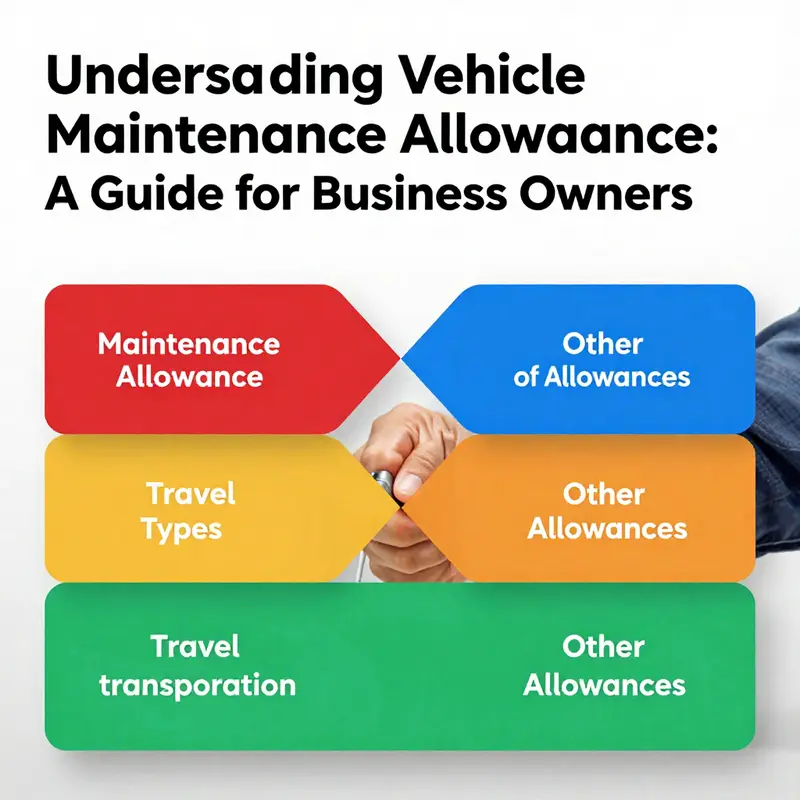
Why Vehicle Maintenance Allowance Stands Apart: A Practical Comparison with Other Employee Allowances
A Vehicle Maintenance Allowance (VMA) answers a narrow, practical need: keeping an employee’s personal vehicle roadworthy for work. Unlike broad strokes of compensation such as housing or meal allowances, the VMA targets routine and unexpected costs tied to vehicle ownership. Those costs include fuel, servicing, repairs, insurance, and depreciation. The difference may seem obvious at first glance, but its implications ripple through payroll, tax, equity and operations.
At the heart of the comparison is purpose. Housing allowances make remote work viable. Meal allowances cover daily subsistence on the road. Travel allowances reimburse the cost of journeys—either per trip or per day. A VMA, by contrast, does not pay for a single trip or a single night’s meal; it supports ongoing, often predictable maintenance. That purpose shapes payment structure, documentation rules, and the employee experience.
Payment structure is the clearest operational distinction. Employers commonly provide VMA as a fixed monthly sum. This approach simplifies payroll and removes the need for itemized receipts. Predictable monthly payments make budgeting easier for employees. They can schedule servicing or buy insurance without delay. Fixed payments also simplify employer accounting, reducing administrative time and transaction costs. Yet this simplicity has trade-offs. A flat allowance may under-compensate high-mileage drivers who face accelerated wear and tear. It may overcompensate employees who rarely use their cars. The fixed model is a convenience, not a perfect fit.
By contrast, travel allowances and some conveyance reimbursements are frequently transactional. They are calculated per trip or per mile, and they often require receipts or mileage logs. This method aligns payment with actual costs. That alignment improves fairness for frequent travelers. It also increases administrative overhead. Verification, processing, and audit effort rise accordingly. For many organizations, the balance between fairness and administrative burden determines the preferred approach.
Meal allowances typically focus on daily living costs during business travel. They are often standardized per diem amounts. These amounts reflect locale and trip duration, not variable usage. The administrative logic resembles that of a fixed VMA: pay a predictable sum rather than settle receipts. Housing allowances function similarly, but on a larger scale. They address regional cost differences and long-term needs. Neither meal nor housing allowances relate to depreciable assets or safety responsibilities. That separation makes VMA unique because vehicles carry regulatory and liability implications employers must consider.
Tax treatment also divides allowances. Some jurisdictions treat fixed maintenance allowances as taxable income. Others offer specific reliefs or allow non-taxable reimbursements when supported by receipts. Travel reimbursements per mile often qualify for favorable tax treatment because they map to official mileage rates. These differences affect take-home pay and employer cost. They also shape employee behavior. If a maintenance allowance is taxed, employees may feel less motivated to maintain vehicles, unless maintenance is enforced through policy. If reimbursements are tax-free when supported by receipts, employees may prefer that route despite its paperwork.
Administrative overhead is another axis of comparison. A VMA reduces paperwork compared to per-trip reimbursements. Fewer claims mean lower processing costs. However, simplified payments can create hidden costs. Employers may face uneven benefit distribution. High-mileage workers might seek additional compensation. Low-mileage workers might receive support they do not need. That imbalance can erode perceptions of fairness and affect morale. Travel allowances tied to actual trips avoid this problem but demand more oversight.
From an operational safety perspective, a VMA creates incentives useful to employers. When employees receive a maintenance stipend, they are likelier to keep vehicles in safe condition. That can lower accident risk and reduce business liability. Conversely, a per-mile reimbursement does not directly encourage periodic maintenance. It compensates use but not upkeep. If an organization values safety and risk control, a VMA complements vehicle use policies and periodic compliance checks.
The choice between a VMA and other allowances also impacts recruitment and retention. For roles with regular fieldwork, a clear vehicle maintenance benefit can differentiate an offer. It signals that the employer understands on-the-ground realities. For remote or office-centric roles, that allowance may look irrelevant. Tailoring allowances to job requirements ensures fairness and clarity. A well-designed VMA can also reduce churn in field positions, as employees feel practically supported.
Equity considerations deserve attention. A blanket maintenance allowance assumes a one-size-fits-all vehicle cost. Yet vehicles vary widely in make, age, and maintenance needs. Employers can address this by tiering VMAs: for instance, providing different sums based on expected mileage bands. Another approach involves hybrid models, combining a modest fixed allowance with mileage-based top-ups. These hybrids preserve administrative simplicity while better aligning compensation with actual costs.
Legal and contractual boundaries matter as well. In some sectors, collective bargaining agreements or statutory rules determine whether an allowance is permitted, taxable, or subject to caps. Employers must align VMA policies with local labor laws and tax codes. Failure to do so risks compliance penalties and employee disputes. Clear policy language in employment contracts prevents ambiguity about whether the allowance replaces reimbursement, serves as a supplement, or compensates for both use and upkeep.
Recordkeeping practices influence both internal control and tax outcomes. Even when a VMA is paid without receipts, employers should maintain documentation of policy rationale, payment schedules, and eligibility criteria. Employers often require proof of license validity or evidence of insurance to validate eligibility. These lightweight checks protect the company and encourage responsible vehicle ownership.
Implementing a VMA alongside other allowances calls for coordinated policy design. If a company already offers mileage reimbursements, it must clarify whether the VMA replaces or complements them. Clear rules prevent double compensation. Similarly, organizations should decide whether VMAs apply to leased vehicles or company-provided cars. Many employers exclude company cars, letting corporate fleets follow separate maintenance schedules and policies. Lease agreements may assign maintenance duties differently, so clarity here avoids disputes.
For employees, the choice between a fixed allowance and receipts-based reimbursement affects behavior. Fixed payments can reduce the friction of maintenance decisions. An employee with consistent monthly support is more likely to address minor issues before they become costly repairs. Receipts-based reimbursements may encourage frugality, but they can also lead employees to delay necessary work to avoid paperwork.
When designing a VMA policy, employers should consider a few practical elements. First, link amounts to expected usage and local maintenance costs. Second, provide a review cadence to adjust allowances in line with inflation and fuel prices. Third, include simple eligibility checks, such as valid insurance and driver licensing. Fourth, communicate the relationship between the VMA and taxable income clearly. Finally, offer a transparent appeals process for exceptions, such as unusually high repair bills.
A VMA occupies a distinct place among employee allowances. It is narrower in scope than housing or meal support. It is more continuous than trip-based travel reimbursements. Its advantages are predictability and lower administrative cost. Its drawbacks are possible misalignment with individual usage and tax treatment complexity. When employers balance these factors and design purpose-built policies, a VMA becomes an effective instrument. It supports safety, simplifies processes, and recognizes the genuine costs of using a personal vehicle for work.
For readers seeking practical guidance on vehicle upkeep and how maintenance ties into allowances, see the primer on vehicle care: what is vehicle maintenance.
For official guidance on tax and allowable expenses, consult HMRC’s Vehicle Expenses and Allowances guidance: https://www.gov.uk/government/publications/vehicle-expenses-and-allowances
null
null
Final thoughts
The implementation of a Vehicle Maintenance Allowance brings forth notable benefits for both employers and employees, streamlining vehicle maintenance expenses and reducing complex reimbursement processes. However, it is crucial to navigate its legal and tax landscapes carefully to ensure compliance and optimal usage. By being informed about how these allowances are calculated and comparing them with other types of allowances, business owners can create a fair and functional policy that not only meets employee needs but also aligns with the organization’s financial health. The knowledge gained from this article can empower businesses to utilize vehicle maintenance allowances as a strategic advantage in workforce management.